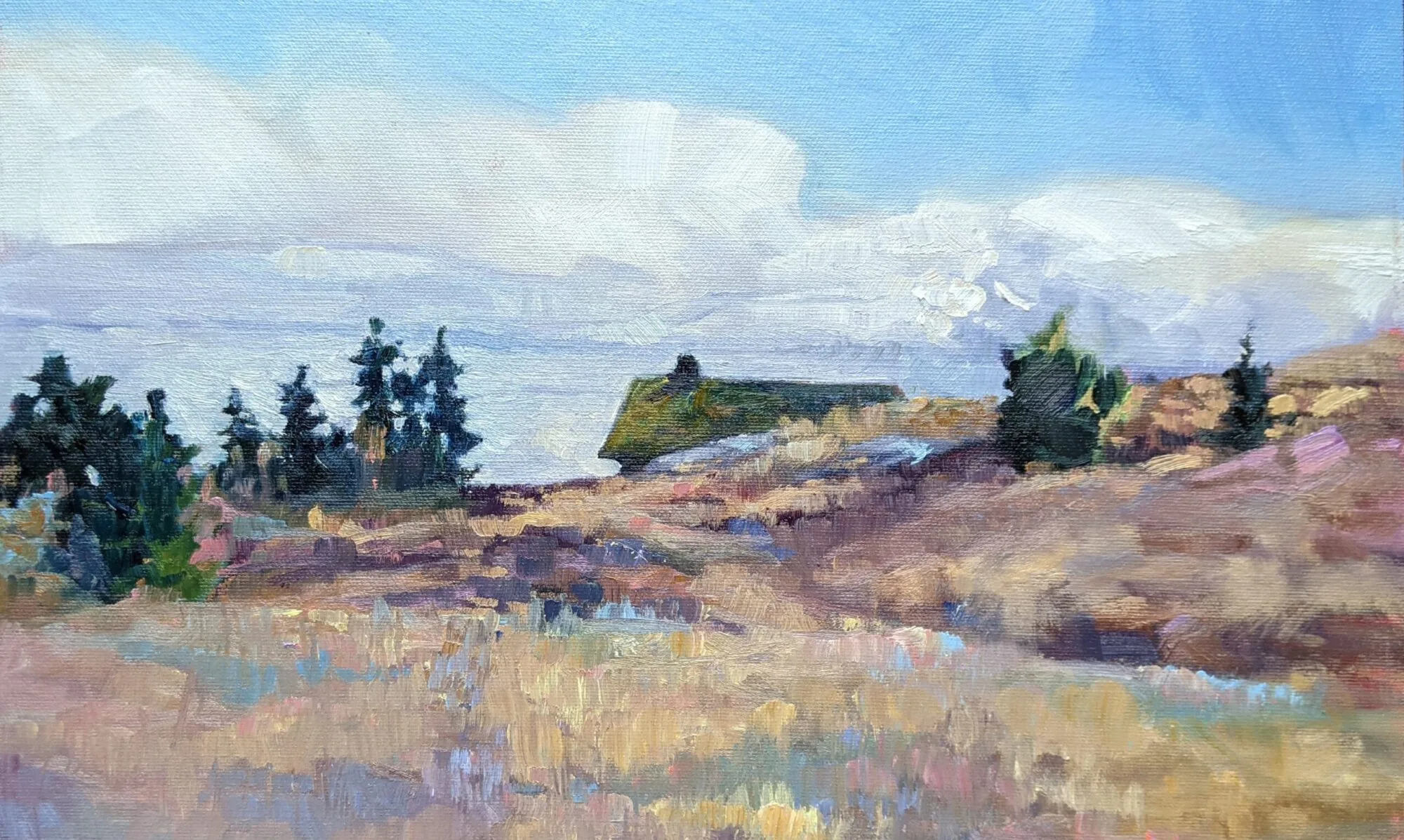
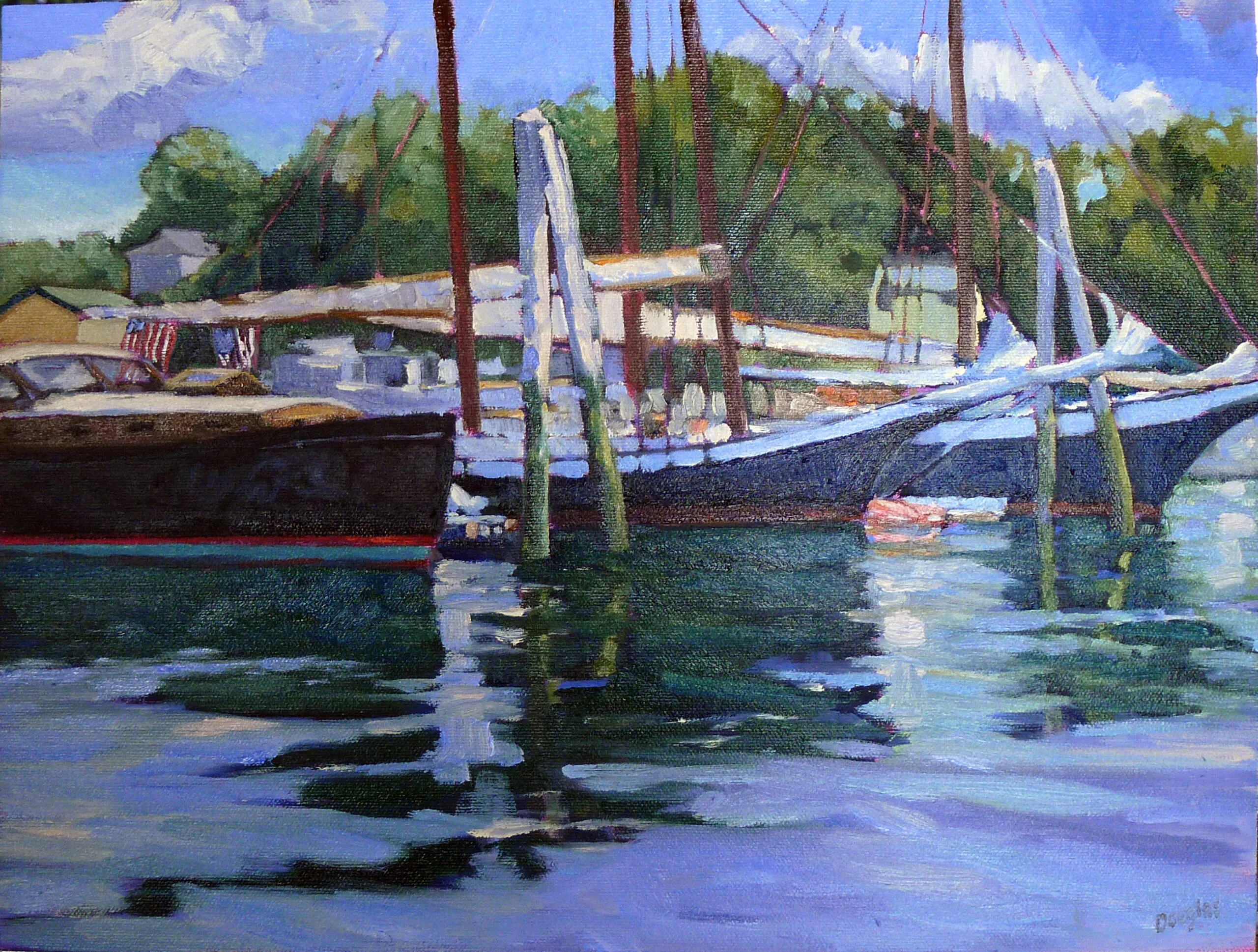
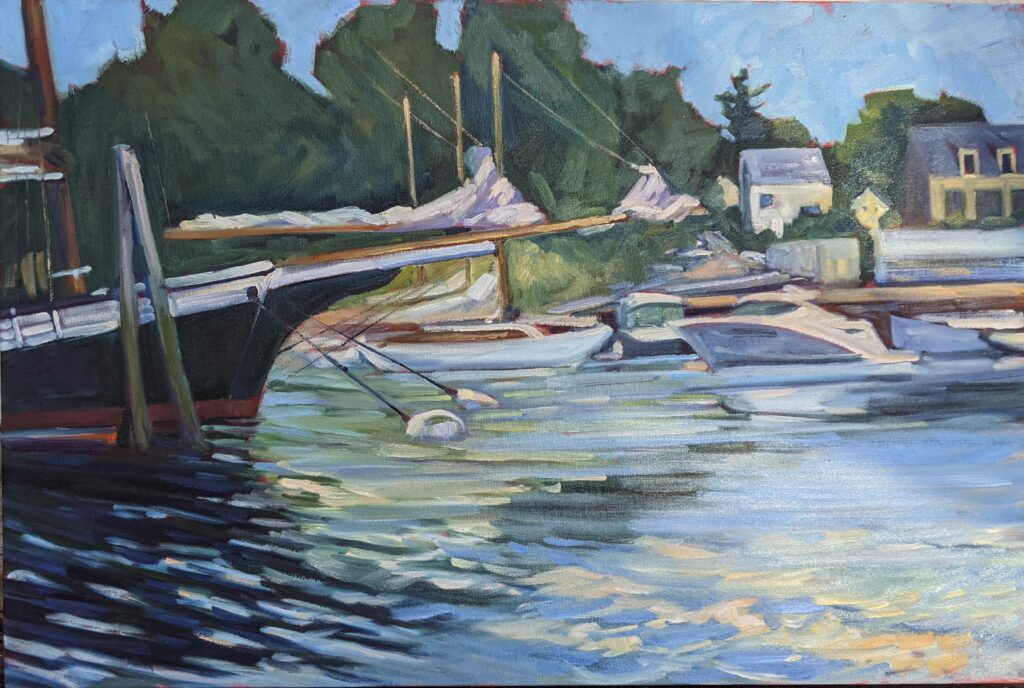
One October morning, my friend, neighbor and student Rachel Houlihan was prompted into soliloquy by a casual comment about talent. “If there’s anything to talent in painting,” she concluded, “it’s the ability to concentrate for long periods of time.”
She’s not the first person to notice that. “Genius is eternal patience,” is a quote attributed to Michelangelo (although its actual origins are uncertain). That points out something important about painting: what looks like extraordinary talent from the outside often consists of an extraordinary willingness to keep working, and to work hard.
“Genius is one percent inspiration and ninety-nine percent perspiration,” was Thomas Edison’s version, although his exact wording morphed over time. An 1898 Ladies’ Home Journal article quoted him saying, “Two per cent is genius and ninety-eight per cent is hard work,” and “Inspiration is perspiration.” He worked and worked it, and eventually got it right.
“That looks like so much fun!”
In the public imagination, artistic talent is as random as a lightning strike. The artist picks up a brush and whips off a masterpiece. It’s all a bit of fluff and fun, and then we go downtown for drinks and dinner.
If you really want to annoy a painter, trot that out. It’s not just annoying, it’s a hindrance to real success.
“A bad picture by a good painter is a betrayal of truth — his own truth,” wrote Dorothy L. Sayers in Gaudy Night. Pah. For every good painting, there is endless dreck that avoids one cliché only to fall headfirst into another terminal error of judgment. Mercifully, history weeds most of these out.
Painting is a slow business, both in the learning and the pursuit. You make a mark, step back, and discover it isn’t quite right. You adjust the value, and now the color looks wrong. You correct the color, and the shape loses its character. You work on the shape, and suddenly you’ve lost the lovely, spontaneous passage you had ten minutes ago. Welcome to the business of painting.
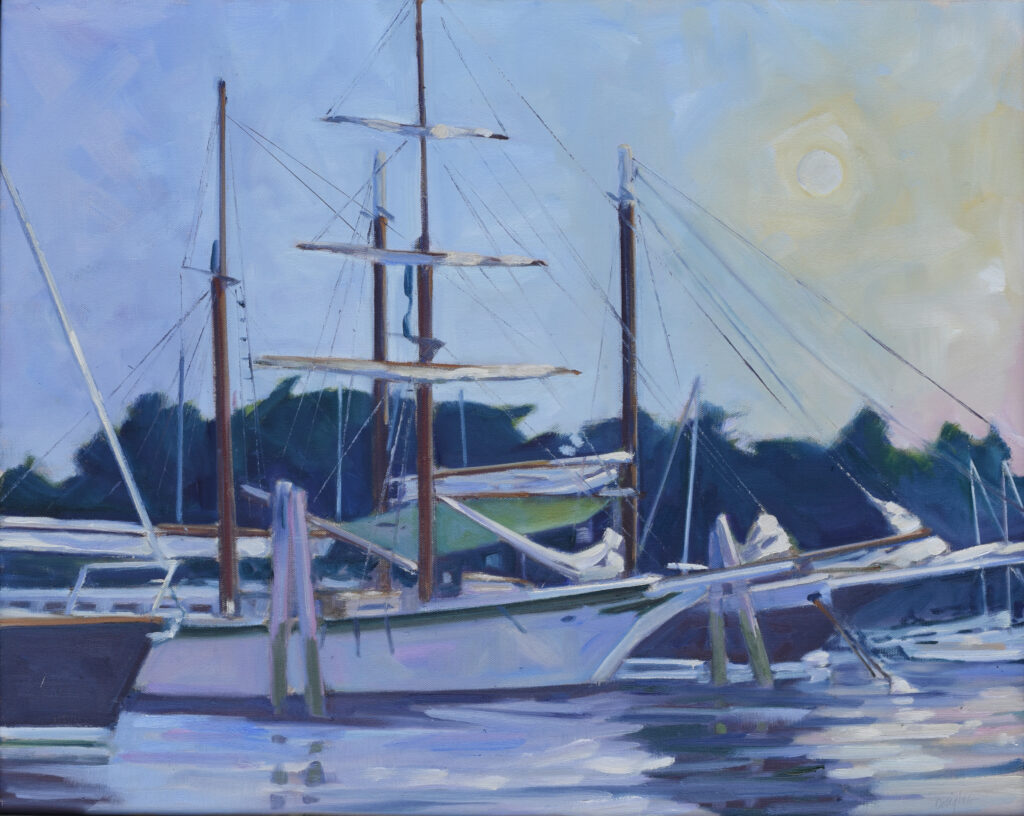
Inspiration is a dog of a master
Patience doesn’t mean sitting quietly until inspiration descends. It means slogging through all the mistakes, staying with the problem long enough to understand it. Surely Miss Sayers, whose work habits were exemplary, understood that.
In every painterly exercise, there comes a point where you begin to see past your own design, and to pursue what’s left with single-minded determination This is where patience becomes more than endurance. It becomes a form of intelligence.
There is, however, a difference between patience and stubbornness. Good painters learn when to persist, when to reconsider, and when to put down the brush.
Laura Bianco-Martinez challenged me to paint a 12X12 canvas in one hour. (If I ever get home, I’ll unpack my paintings and show them to you.) I brought it in just under the timer. Carrying it away, I was complimented by several people, who asked the inevitable question, “how long did that take?” It’s about the only time that I’ve ever trotted out that old saw that ends, “—and sixty years of experience.” There was no way they could understand it otherwise.
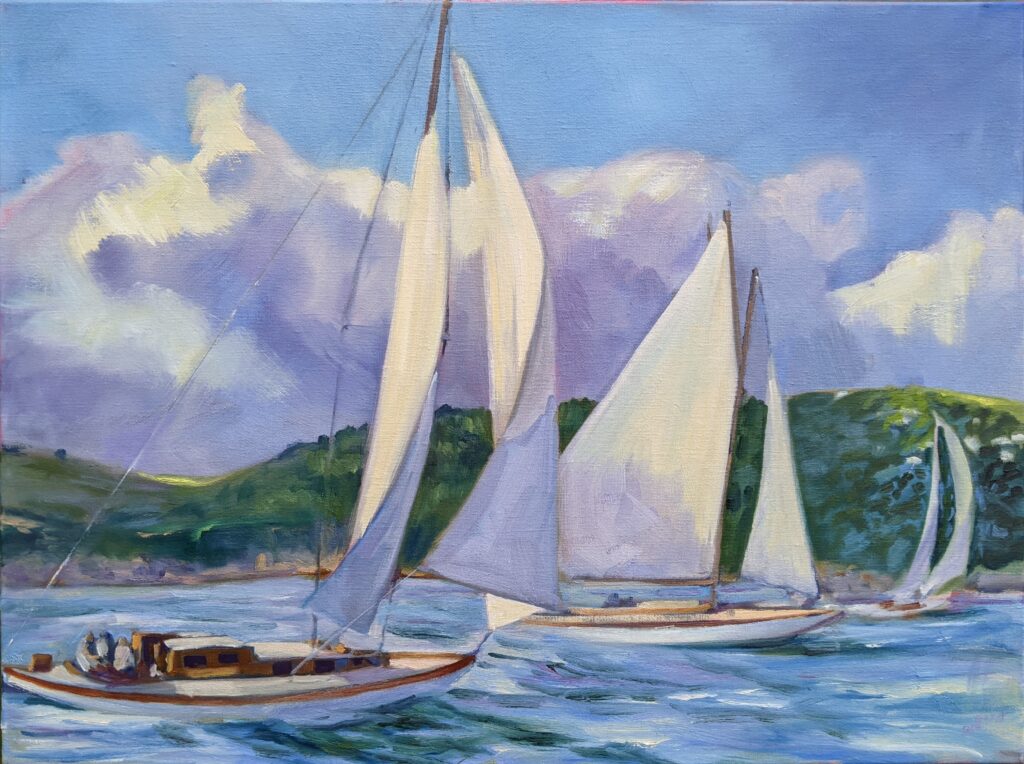
Patience doesn’t guarantee a masterpiece
Art is full of failed experiments, awkward passages and paintings that fail to gel. But each attempt should teach us something, provided we’re willing to look honestly at what happened.
The real advantage belongs to the painter who can tolerate uncertainty. What if I try this? What happens if I simplify that shape? What if I leave this passage alone? Curiosity keeps us working when certainty fails us.
Thank goodness you don’t need genius to be a great painter. You need to pay attention, make decisions, evaluate the results, and keep learning. You need to accept that your eye will develop faster than your hand, so that you can see everything wrong with a painting long before you know how to put it right.
A footnote
Last night, Sedona was under a mandatory evacuation order for flooding. Say a prayer for our friends in Arizona. They’re not having a great time.
There’s still room in this class:
- Painting Nocturnes, Monday evenings, 6-9 PM for three weeks starting November 30.
I have one workshop already scheduled for 2027! Reserve your spot:
- High-Desert Light & Monumental Form | Sedona, AZ, Apr 26, 2027 – Apr 30, 2027
Can’t commit to a full workshop? Work online at your own pace:
“artistic talent is as random as a lightning strike. The artist picks up a brush and whips off a masterpiece. It’s all a bit of fluff and fun, and then we go downtown for drinks and dinner.”
That’s exactly how I experience it – don’t you???? 🙂
Sure it is!
Hit the nail on the head with public perception versus the artist experience!
Thank you!