Painting the Dark Sky: the art of nocturne painting

Forest Service Road 761, oil on archival canvasboard, 14X18, $1753, available through Sedona Arts Center.

As I was cleaning up after a day painting at Plein Air Litchfield, I received a text from Stephen Florimbi. Thinking my retort would be much funnier in person, I drove over to where he’d set up to paint a nocturne.

I was slightly surprised to find myself unpacking my kit and setting up to paint with him.

There’s a rooftop bar on the building behind Cobble Court. Our pals from the event were there to party. Meanwhile, Stephen and I were having a hoot down on the street, watching them in the fading light.

I’m a morning person. When events require nocturnes, I usually get up before dawn to paint them. But I’ve been on a nocturne painting jag for a while now, and I’m finding that staying up late to paint isn’t killing me.
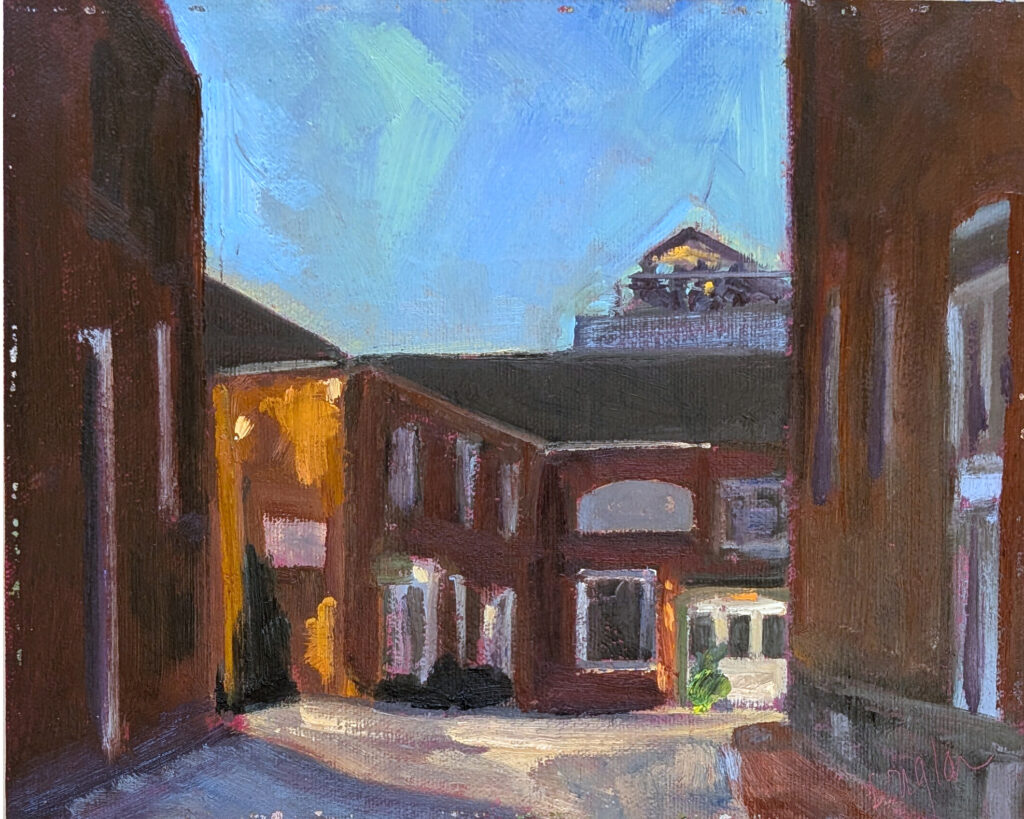
Cobble Court at dusk, 8X10, oil on archival canvasboard. Most of our buddies were up in that high rooftop bar.

Painting nocturnes for Sedona

I leave for the 22nd annual Sedona Plein Air Festival a week from today, driving cross-country and camping along the way with my friend Laura Martinez-Bianco. We’re doing this as a convoy because we each have too much equipment to share a vehicle.

Sedona Arts Center asks us to hang two paintings before the event begins. I have lots of beautiful paintings of Sedona since I paint and teach there every year.

But this time I decided to create work especially for the festival.

My criteria were simple:

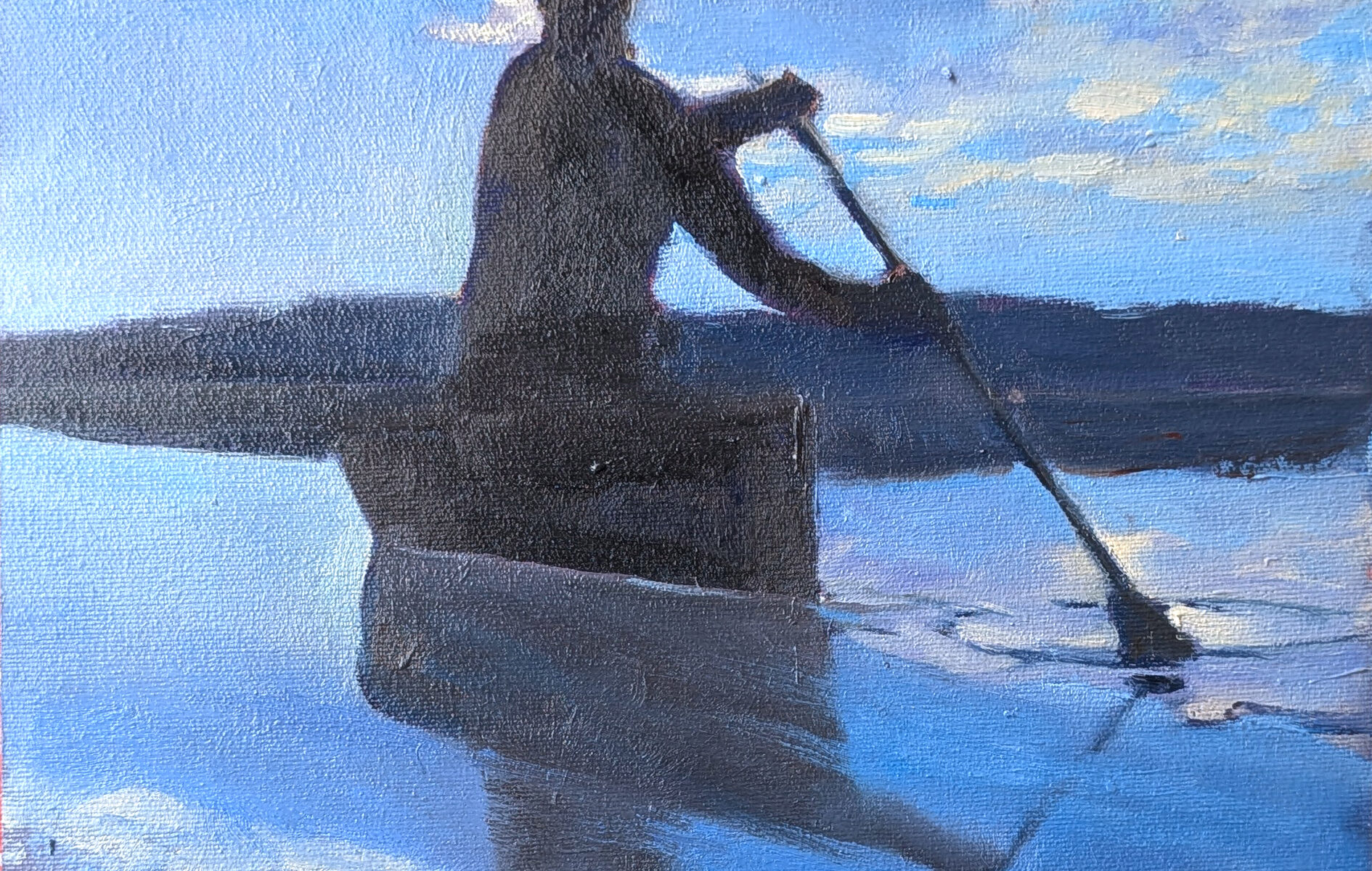
  • Each painting should include a figure.
  • They should be narrative.
  • They should be nocturnes.
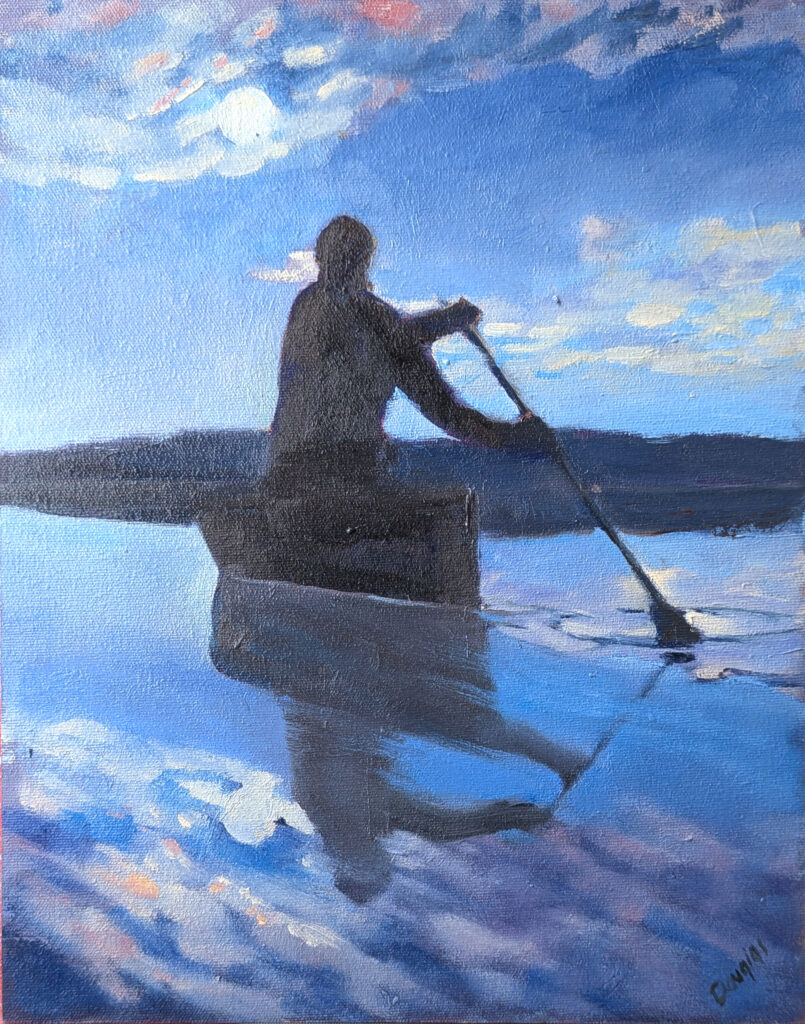
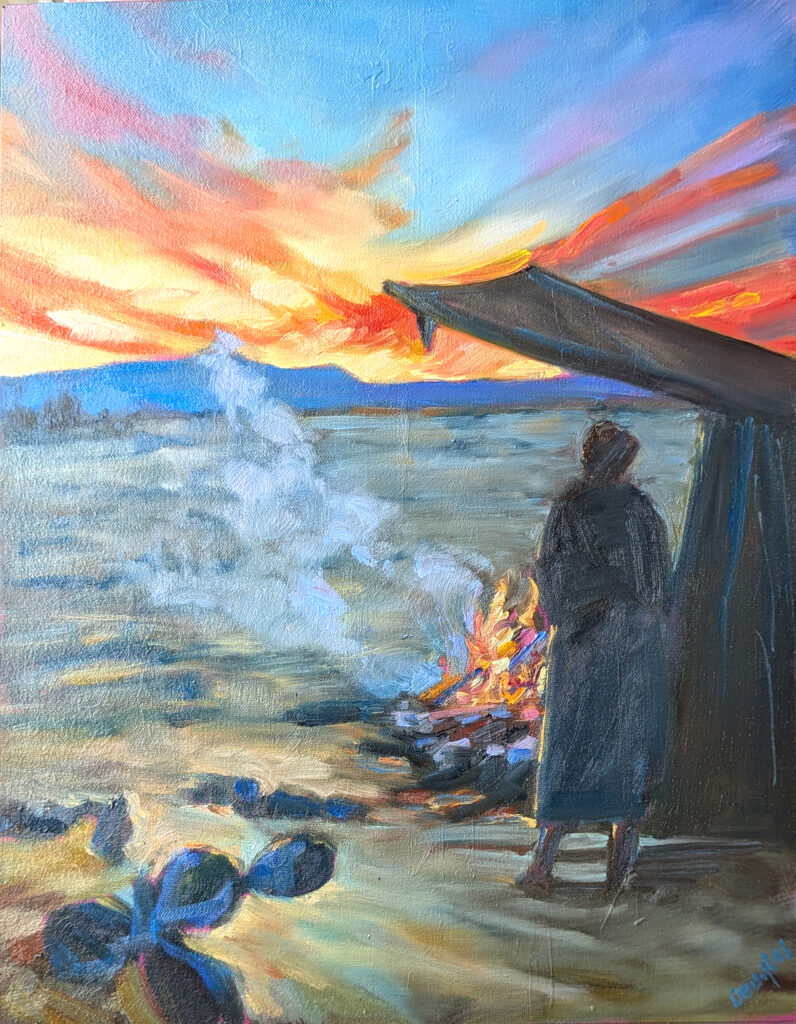
Night Travel, 11X14, oil on archival canvasboard, $1195, available through Sedona Arts Center. This painting was inspired by a night long ago when Chrissy Pahucki and I rented a campsite just to paint the moonlit night. Her painting of her daughter making S’mores that night is among my treasured possessions.

Frederic Remington’s nocturnes

My approach arose from a deep dive into Frederic Remington’s experiments in nocturnes.

Remington is best known for his paintings and sculptures of the American West: cowboys, cavalrymen, Native American scouts, horses and Western landscapes. But late in his career, he became fascinated with painting at night.

For Remington, the night wasn’t merely a setting. It was part of the subject.

His earlier Western paintings were relatively straightforward narrative paintings. In his nocturnes, he increasingly withheld information.

You see a rider, but not necessarily where he’s going. You see figures looking toward something you can’t see. You see a wolf reacting, but to what?

That uncertainty is what makes Remington’s nocturnes so compelling. The darkness creates the possibility of unseen danger. The viewer knows that something is happening, but doesn’t necessarily know what.
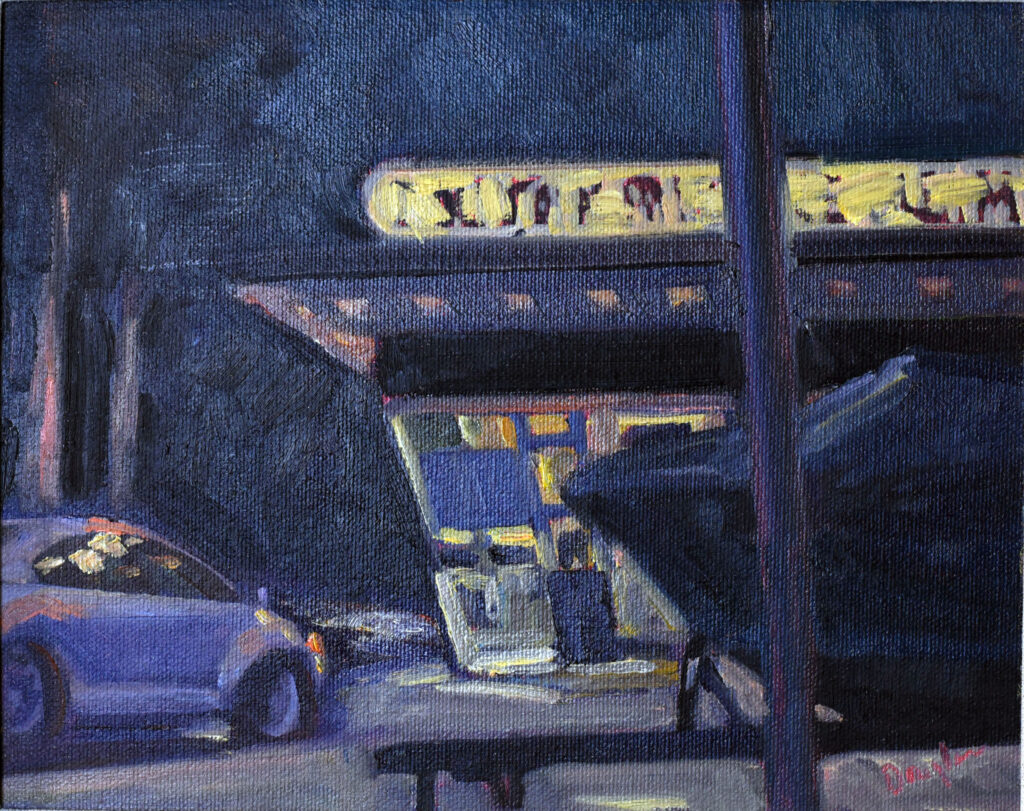
Ice Cream Stand, oil on archival canvasboard. For more information, click on image.

What makes a nocturne different?

The subject of a nocturne doesn’t have to be the person, animal or event depicted in the painting.

It can be the state they’re in: waiting, listening, watching, approaching, searching, hiding, isolation, danger or anticipation.

This is one of the things I find most interesting about nocturne painting. The darkness gives the painter permission to leave things unresolved. A rider can disappear into the night. A distant light can raise a question. A figure can be watching something beyond the edge of the painting. A landscape can become less about describing a place and more about creating an experience.

That’s why Remington’s nocturnes feel surprisingly cinematic. He uses what the viewer cannot see as part of the composition.

Painting the dark sky

Remington was also painting at a fascinating moment in history. Just as cowboy culture was fading into history, electric lighting was coming into its own. It changed people’s experience of darkness, making it more a thing to be feared and avoided. Remington’s nocturnes engage not only with the beauty of nighttime but with the changing meaning of darkness itself.

I like wilderness camping. My husband thinks I’m nuts, but is along for the ride.

I’m coming full circle from where Remington was. For Remington, electric light was changing the experience of night. For me, the dark sky is an escape from the electrified world.

I don’t know where this nocturne painting experiment is going. Maybe that’s part of the attraction.

I’m enjoying staying up late, looking into the darkness, and figuring it out one painting at a time.

There’s still room in these classes:

I have one workshop already scheduled for 2027! Reserve your spot:

Can’t commit to a full workshop? Work online at your own pace:
Seven Protocols for Successful Oil Painters

Painting as mythmaking

South Truro Post Office, 1930, Edward Hopper, courtesy Christies.

Whenever I sail into Bucks Harbor in Brooksville, ME, I tell my students about  Robert McCloskey‘s One Morning in Maine, which was set there. McCloskey has had an inordinate influence on me. As a kid, my husband looked and acted like the eponymous hero of Homer Price, my first and favorite chapter-book. It took me decades to realize I’d married my childhood crush.

I’ve pored over every detail of McCloskey’s books, because every object is a fascinating window into an America that was fading when I was a child and is largely gone today.

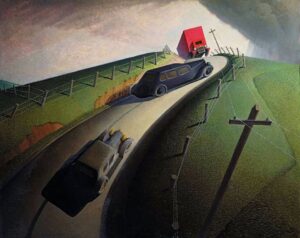
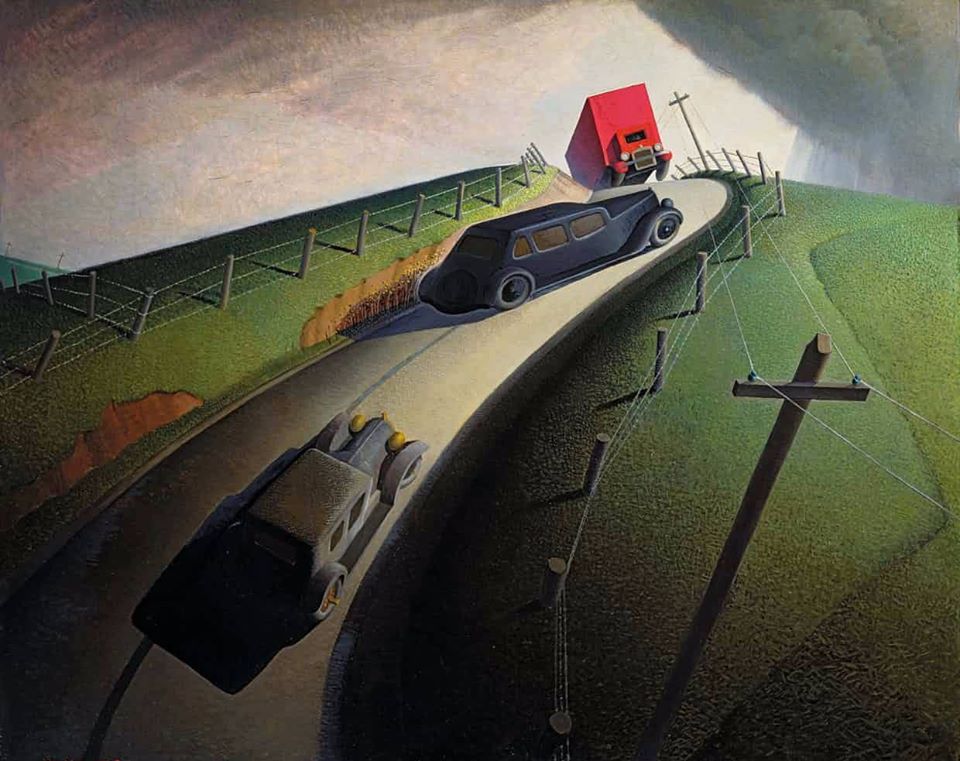
Death on the Ridge Road, 1935, Grant Wood, courtesy Williams College Museum of Art

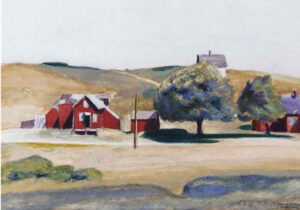
I recently spent some time considering Edward Hopper‘s Truro, Massachusetts paintings. He and his wife Jo had a summer house there, and he spent at least four months a year in Truro from 1930 to his death in 1967. While I respect his urban scenes as revolutionary, challenging and dramatic, it’s the Truro paintings I gravitate to. They are prosaic country scenes-barn, church, farmhouse, post office-but with brilliant composition and elegiac light. They are so universal in design that they could have been painted in almost any part of the United States, but the overarching theme is early 20th century America.

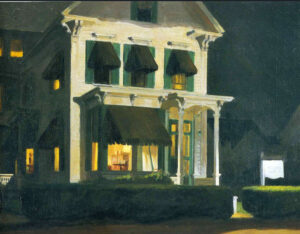
Rooms for Tourists, 1945, Edward Hopper, courtesy Yale University Art Gallery

I have a similar response to Hopper’s Rooms for Tourists, above. It’s a quintessential Maine boarding house, except that it was really in Provincetown, Massachusetts. Not that it really matters; boarding houses were once common in New England and New York. In fact, I romanticize them. I think I might run one someday, until I remember that I don’t much like changing beds and I hate to cook.

I posited to my aforementioned husband that my love of the countryside and Maine in particular was probably shaped by paintings like these. “I think most of us were shaped by television,” he replied, and he’s probably right, except that I grew up without it. Anyways, I never see people seeking out Gilligan’s Island or The Brady Bunch, but I sure know a lot of folks who are jazzed by old gas stations, tourist cabins, farms and lighthouses.

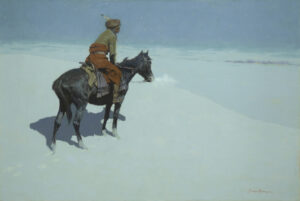
The Scout: Friends or Foes, 1902-1905, Frederic Remington, courtesy Clark Art Institute

Mythmaking is as old as art itself, but in America it can be laid at the feet of the Hudson River School painters, who used the Romantic idea of sublimity to say that the American landscape, with its patches of agriculture juxtaposed with nature was the very reflection of God himself. It’s at least one of the roots of the idea of American Exceptionalism.

They were, of course, painting a landscape that was fast disappearing. Artists have always been drawn to that which is either gone or going. That make sense when you think of how difficult we find the world in which we live. Perhaps in fifty years, people will find fields of solar panels or modern windmills beautiful, but right now they make us uncomfortable. That nostalgic kick is part of the enduring charm of the two older Wyeths, Frederic Remington and Norman Rockwell, among many others, but their work was actually nostalgic right from the start.

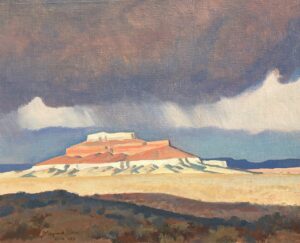
Thunder Over Shiprock, Maynard Dixon, courtesy Steven Stern Fine Arts

I think of the places I like the most, like the Great White North, and how I saw it first through the eyes of the Group of Seven and Rockwell Kent. I love farm country, especially the Midwest as seen by Grant Wood, and the West as seen by Edgar Payne or Maynard Dixon. Artists are above all mythmakers, and I am just beginning to understand how deeply they’ve influenced my goals, dreams and sense of place.

There’s still room in these classes:

I have one workshop already scheduled for 2027! Reserve your spot:

Can’t commit to a full workshop? Work online at your own pace:
Seven Protocols for Successful Oil Painters