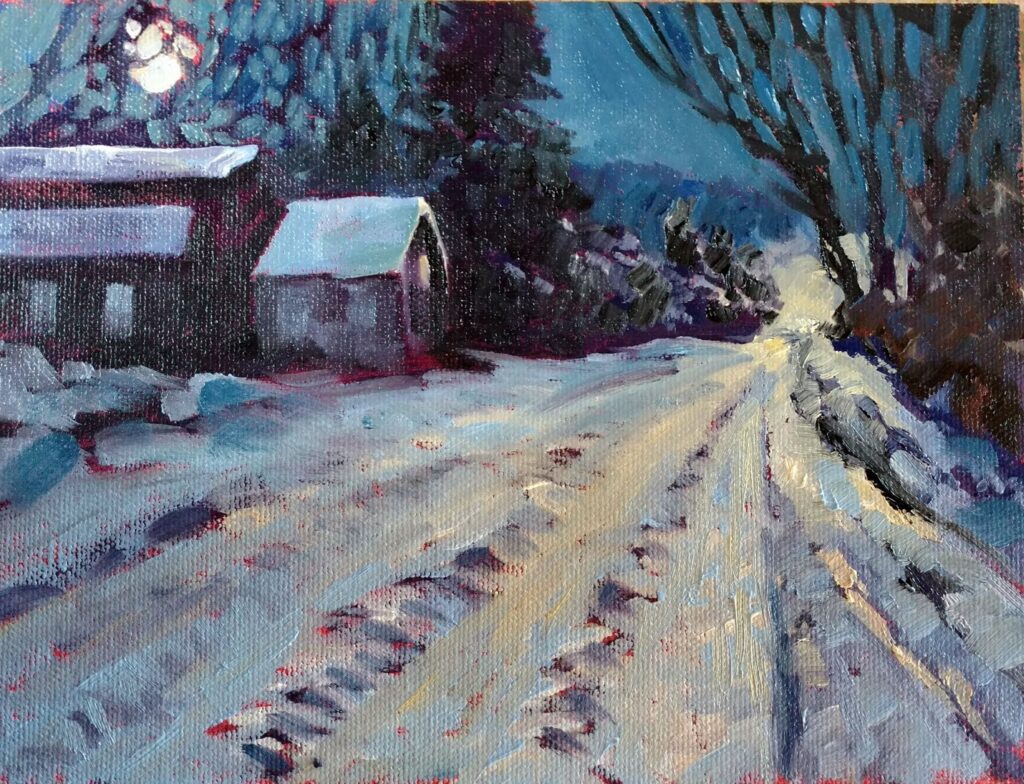
Laura Martinez-Bianco and I are convoy-camping to Sedona Plein Air. I’m excited, because the night sky is magical.
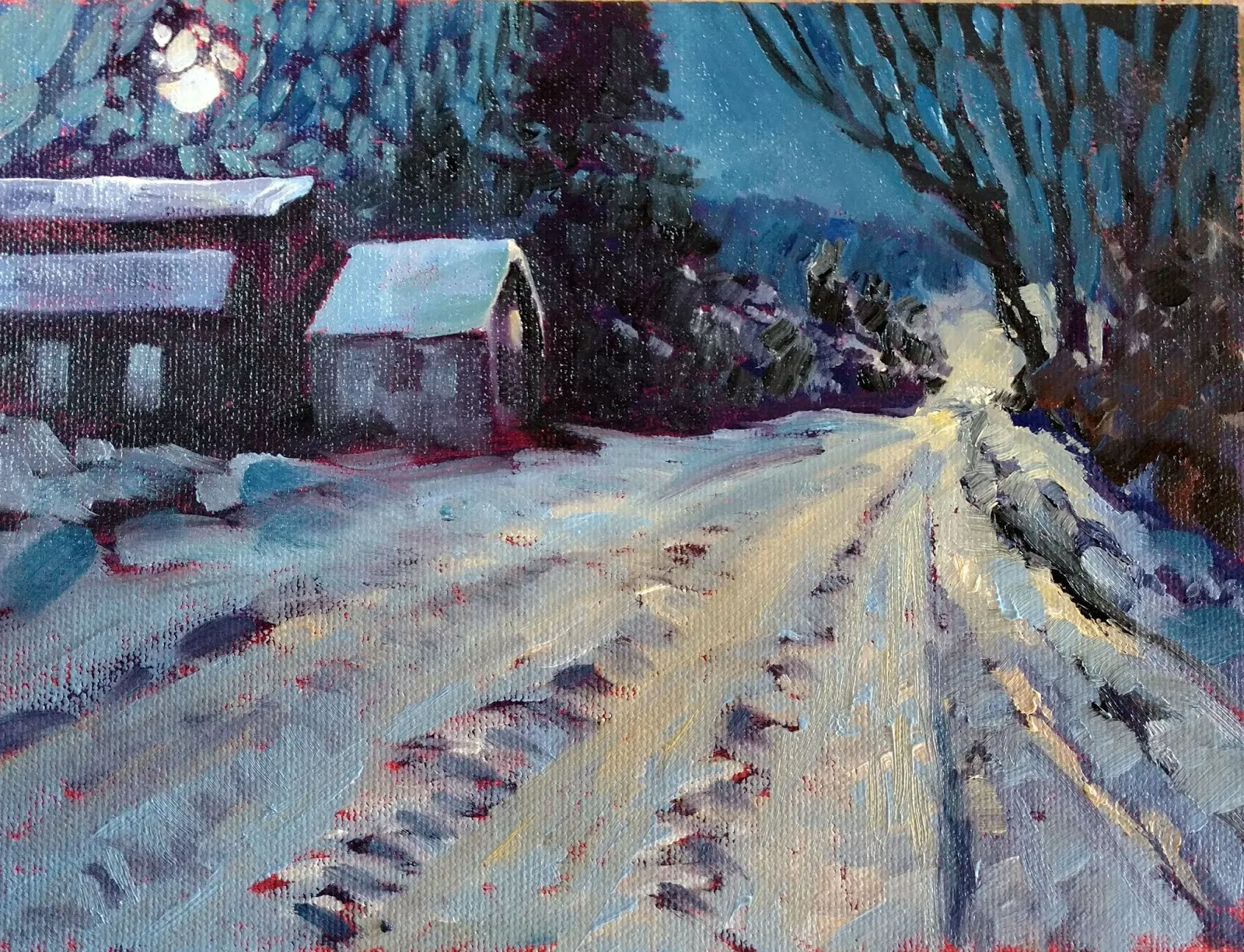
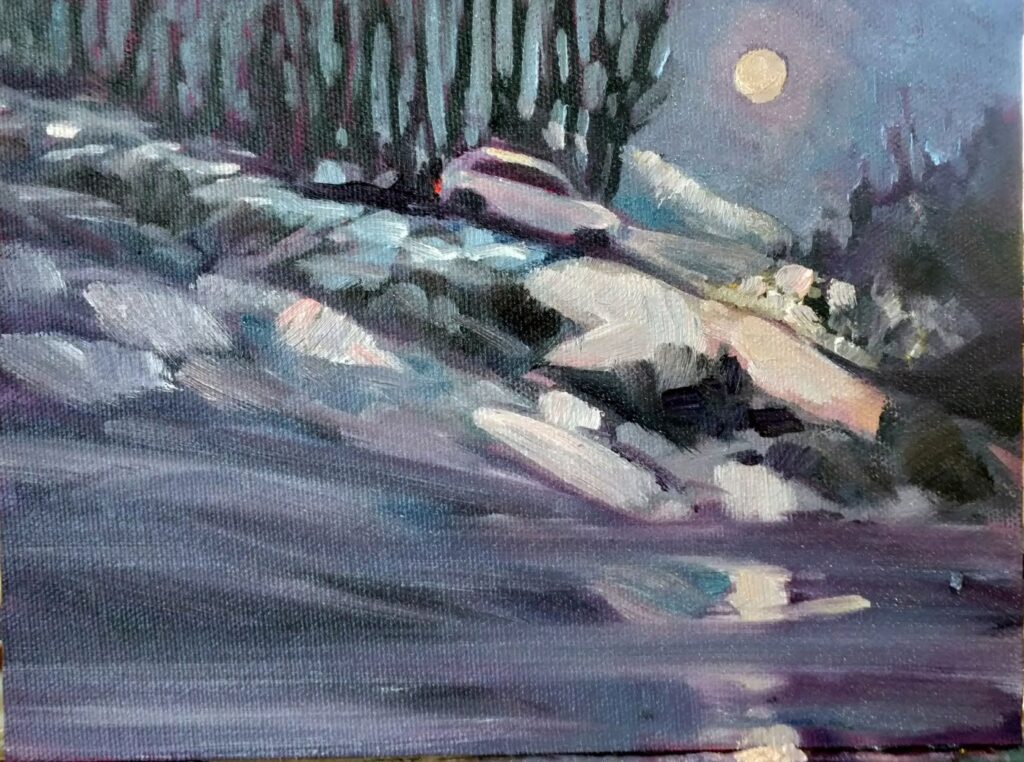
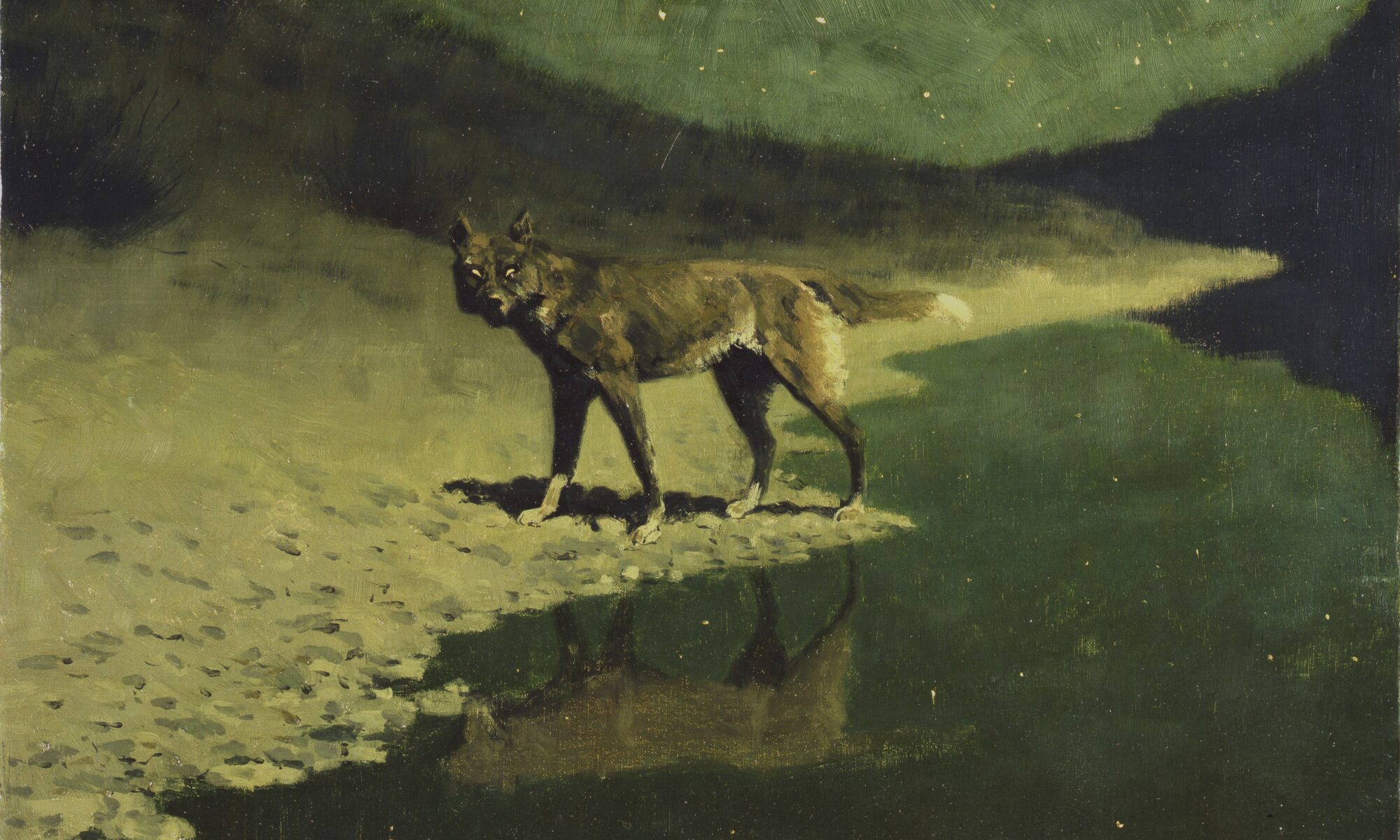
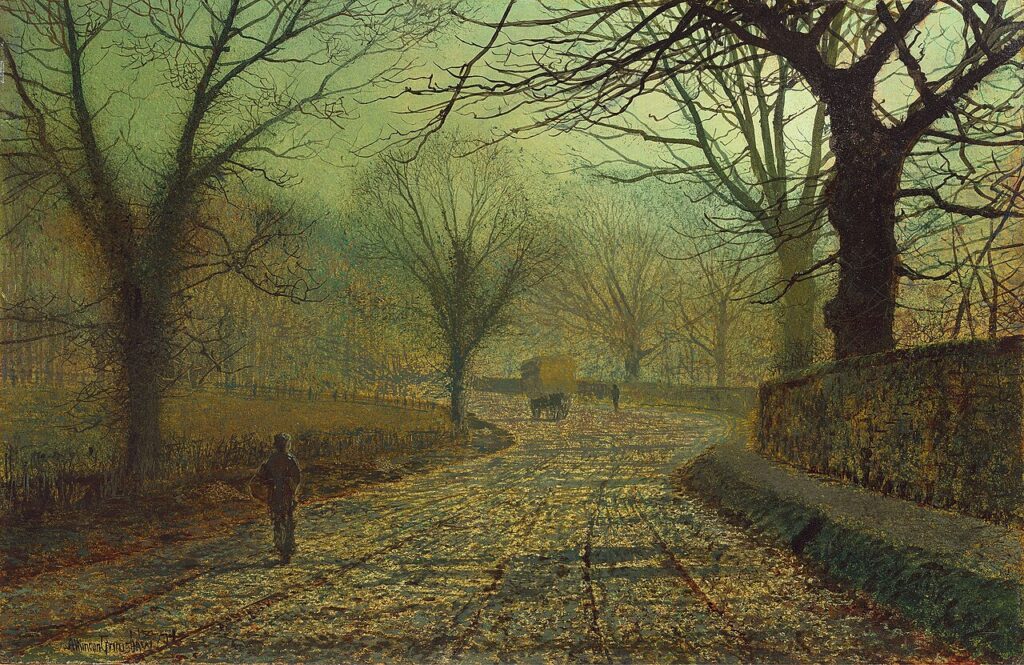
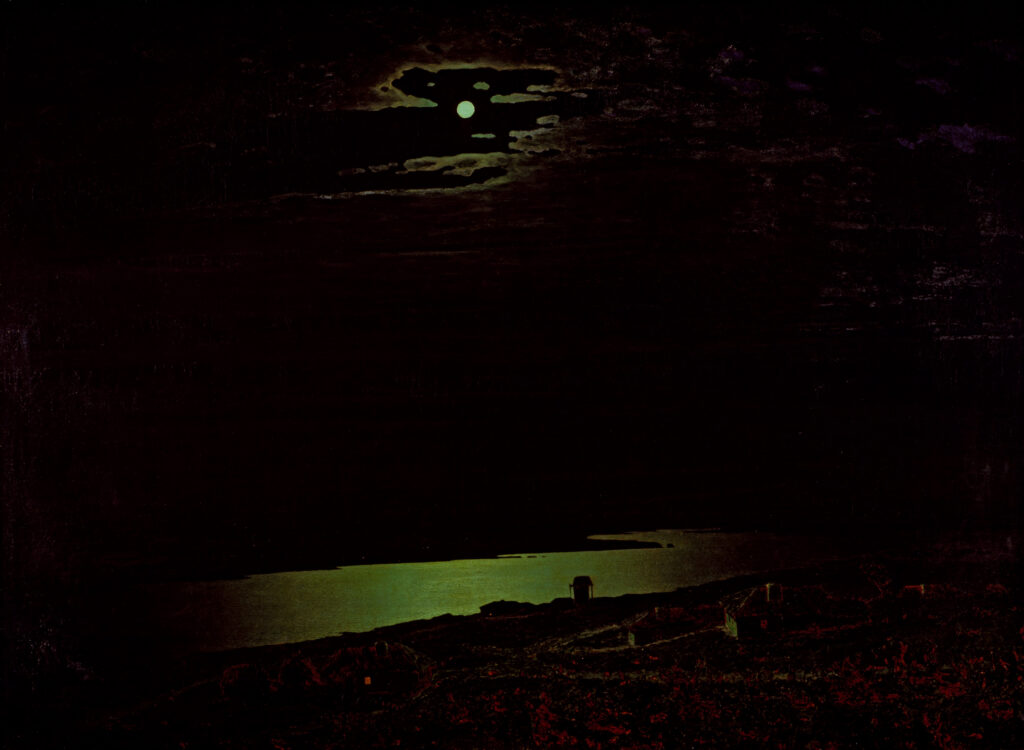
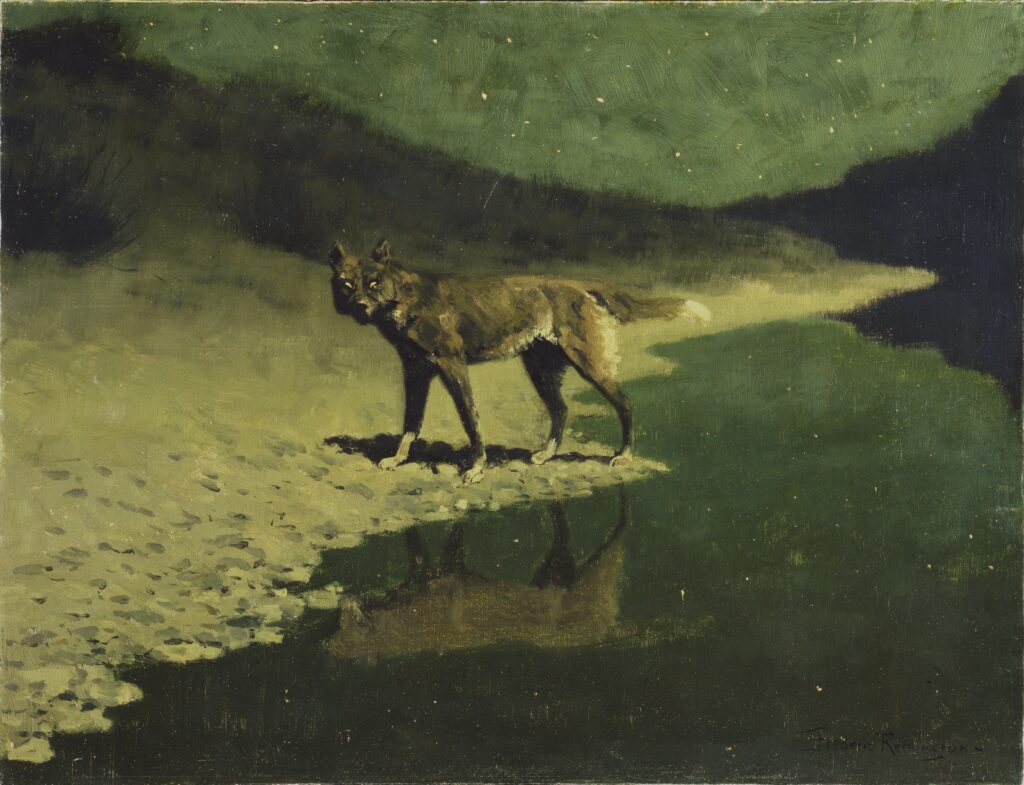
In my previous nocturne painting class, we discussed the colors artists have used to paint the night sky. Painters including John Atkinson Grimshaw and Frederic Remington used green to suggest moonlight. That observation prompted a discussion with my students about what we actually see in the night sky.
Painting student Jay Grate took the question further, researching the science of night-sky color and comparing it with his own observations. “People see the night sky as blue at twilight as it gets darker and assume it’s blue all night.” He noted that colored artificial lights warp color perception, and that historically, artificial lighting was very warm (candles or campfires). Seeing a dark sky in red light makes us perceive it as blue.
Cultural biases
We have a strong cultural bias towards seeing the night sky as blue. Photographers frequently adjust it that way. Especially with digital photography, the resulting image isn’t a true record of what the eye perceives.
Jay drew my attention to Color of the Night Sky by astrophotographer Roger N. Clark, who says the night sky contains a surprising variety of colors. Depending on atmospheric conditions, the light source and what we’re observing, those colors can include blue-gray, green, red, yellow, and warm brown. The night sky is not simply black and is rarely blue when the moon is absent.
We tend to simplify the night sky into a single color, but nature is rarely that easy.
Nocturne Green
Jay suggests that the blue-gray color Clark describes in connection with zodiacal light is what we’ve seen in paintings is what Jay coined Nocturne Green.
Zodiacal light is sunlight scattered by dust in the solar system. It can contribute a subtle, pale glow to a dark sky. Our atmosphere also produces light through a phenomenon, called airglow. Solar radiation energizes atmospheric atoms and molecules, which subsequently emit light as they return to lower-energy states.
To learn more, watch this short video about atmospheric airglow from student Michael Prairie
None of this means that there is green in every night, but rather that green is a scientifically-plausible component of the natural nighttime palette. That’s an invitation to observe rather than assume.
Why do our eyes see different colors at night?
Our vision changes as light fades. In daylight, the cone cells in our eyes provide detailed color vision. In very dim conditions, rod cells become increasingly important. Rods are especially sensitive to blue-green wavelengths, but they don’t provide the same color discrimination as cones. This shift helps explain why nighttime color can be difficult to judge.
Clark explores these issues further in his article on color vision at night.
Our eyes are remarkably good at detecting subtle differences in green under appropriate lighting conditions. But we shouldn’t assume that the color we perceive in darkness is necessarily the same color a camera records, or that either color is objectively ‘true’.
Jay described seeing Nocturne Green in clouds illuminated by a nearly full Moon behind a high cloud layer. He also observed a greenish cast in the evening sky while driving through northern California beneath storm clouds.
Those observations are interesting precisely because they didn’t come from photographs. Human vision and photography don’t usually agree, especially under unusual lighting conditions.
What does this mean for painting nocturnes?
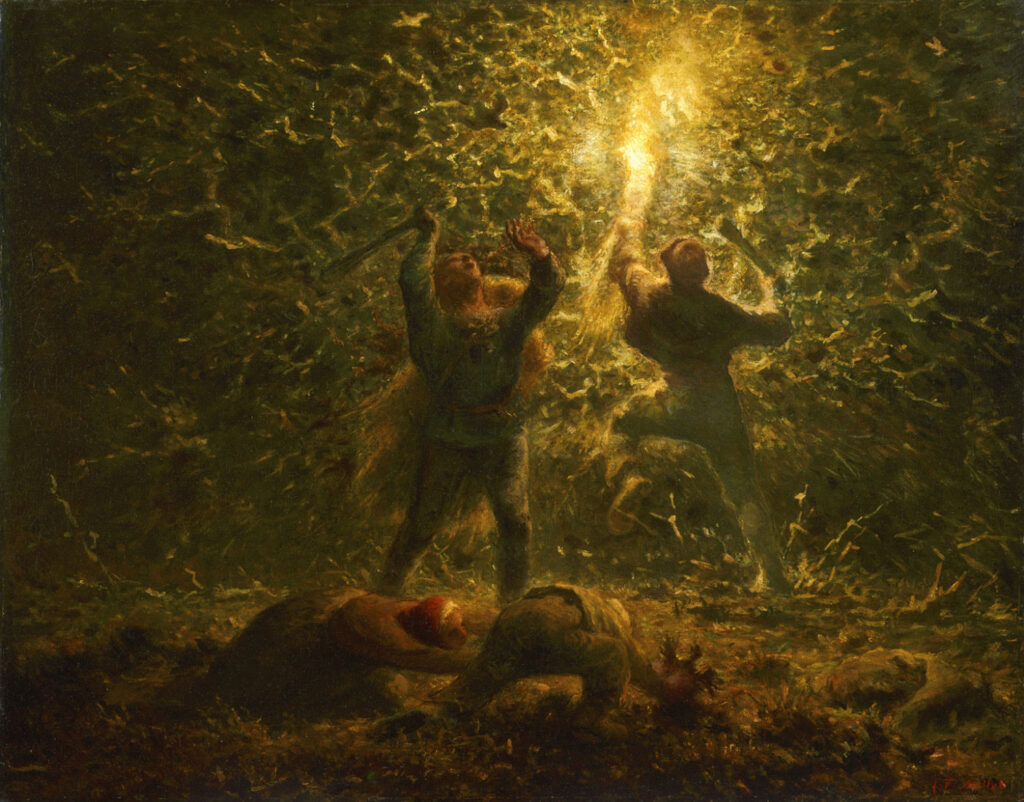
Don’t automatically paint the night sky black, blue or green. Look for variations in temperature, value, and hue. A sky might shift from a greenish gray near the horizon to a cooler blue-gray overhead. Thin clouds illuminated by the moon may have a different color from the open sky behind them. Airglow, atmospheric scattering, moonlight, and distant artificial lights can all affect what you see.
Dust in the Milky Way can contribute warm tones, and stars and nebulae introduce their own colors. The sky is not a uniform backdrop; it is a collection of different light sources and atmospheric effects.
Learn to see the night sky like a painter
The point isn’t to establish a new rule of night sky color. Instead, question your assumptions. Look carefully at the sky. Compare the color near the horizon with the color overhead. Notice what moonlight does to clouds, buildings, trees, and water. Pay attention to the difference between what you expect to see and what is actually there. Remember that a photograph is just one data point.
If you’d like to put these ideas to work in your own paintings, join me for my upcoming Painting Nocturnes Zoom class. We’ll explore the colors, values, and light effects that make nighttime landscapes convincing. You’ll learn to see beyond black and blue and develop a more thoughtful approach to painting after dark.
There’s still room in this class:
- Painting Nocturnes, Monday evenings, 6-9 PM for three weeks starting November 30.
I have one workshop already scheduled for 2027! Reserve your spot:
- High-Desert Light & Monumental Form | Sedona, AZ, Apr 26, 2027 – Apr 30, 2027
Can’t commit to a full workshop? Work online at your own pace: