

A recent op-ed piece by Waldemar Janusczak says that J.M.W. Turner would defeat John Constable in three rounds, based on his early talent, his breadth of travel and style and his influence on future painters. Stuff and nonsense, I say.
Modern plein air painting
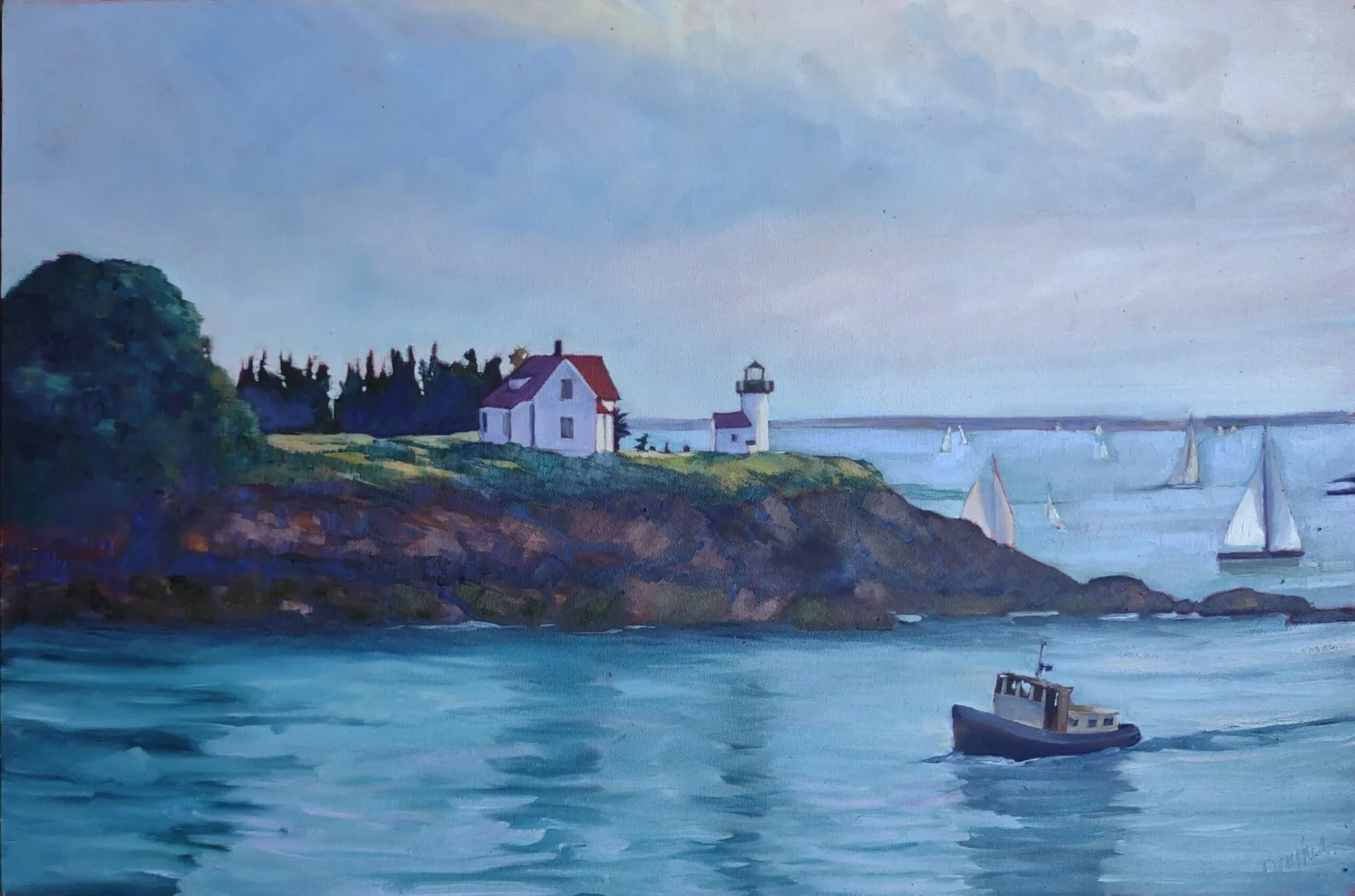
Artists have been sketching outdoors for as long as there has been art, but Constable was the seminal figure in making it a movement. He made outdoor painting central, systematic, and intellectually serious. Since plein air painting has been the most important movement in figurative art since his time, that makes his influence at least as important as Turner’s influence on abstraction.
Before Constable, outdoor work was preliminary. Field sketches were to be improved, idealized, romanticized and rearranged in the studio to suit classical taste. The natural world was a reference, not the final authority.

Constable believed that nature itself was the subject. He painted it as investigation, not as rough notes. His famous cloud studies were often dated, timed, and annotated with weather conditions. His approach was revolutionary.
In the early 19th century, working outdoors at scale was unheard of. So was taking the landscape of your home seriously. Instead, aspiring artists (like Turner) made the obligatory grand tour of Europe, focusing on Italy. The real issue is how far they traveled artistically, and the answer for both is: very far indeed.
French painters at the 1824 Salon were stunned by the freshness of Constable’s palette, his broken brushwork and the rawness of his field studies. These could only come from the real observation of nature. This directly inspired the Barbizon School painters, who in turn passed these ideas along to Impressionism. Constable may seldom have left England, but his work sent ripples across Europe. Without his insistence on painting outdoors, modern landscape painting would look very different today.

Today, plein air has a vast global influence, being both participatory and accessible. What it isn’t is avant garde. Perhaps that makes it less important to art critics.
False framing
Turner was born in April, 1775 and Constable in June, 1776, making these their 250th birthdays. It’s tempting to see them as rivals, but any kind of competitive comparison is a false framing. It misrepresents what art and artists are all about.
Turner and Constable were very different painters, not opponents in a zero-sum game. Yes, there’s a famous story from the Royal Academy Exhibition of 1832 where Turner saw Constable’s warm canvas set against his own cool canvas. The legend goes that Turner slapped a blob of red onto his canvas at the last moment and Constable quipped, “He has been here, and fired a gun.” But that says more about gossip culture than it does about the two men.

Why do winner-loser narratives persist in the world of art criticism? They’re easy clickbait. They fit tidy tropes but they distort a deeper truth. There is no hierarchy of greatness when it comes to painters. They all have audiences to whom they speak and lessons they impart.
Framing art in terms of competition is pernicious, whether that competition is a local art show or a master-painter designation by an organization. It makes painters take fewer risks, work towards the mainstream, and constantly look over their shoulders.
I have just two workshops left in 2026! Reserve your spot:
- New! Color Clinic 2026 | Rockport, ME, October 3-4, 2026
- New! Composition Week 2026 | Rockport, ME, October 5-9, 2026
- High-Desert Light & Monumental Form | Sedona, AZ, Apr 26, 2027 – Apr 30, 2027
Can’t commit to a full workshop? Work online at your own pace: