Learning to see

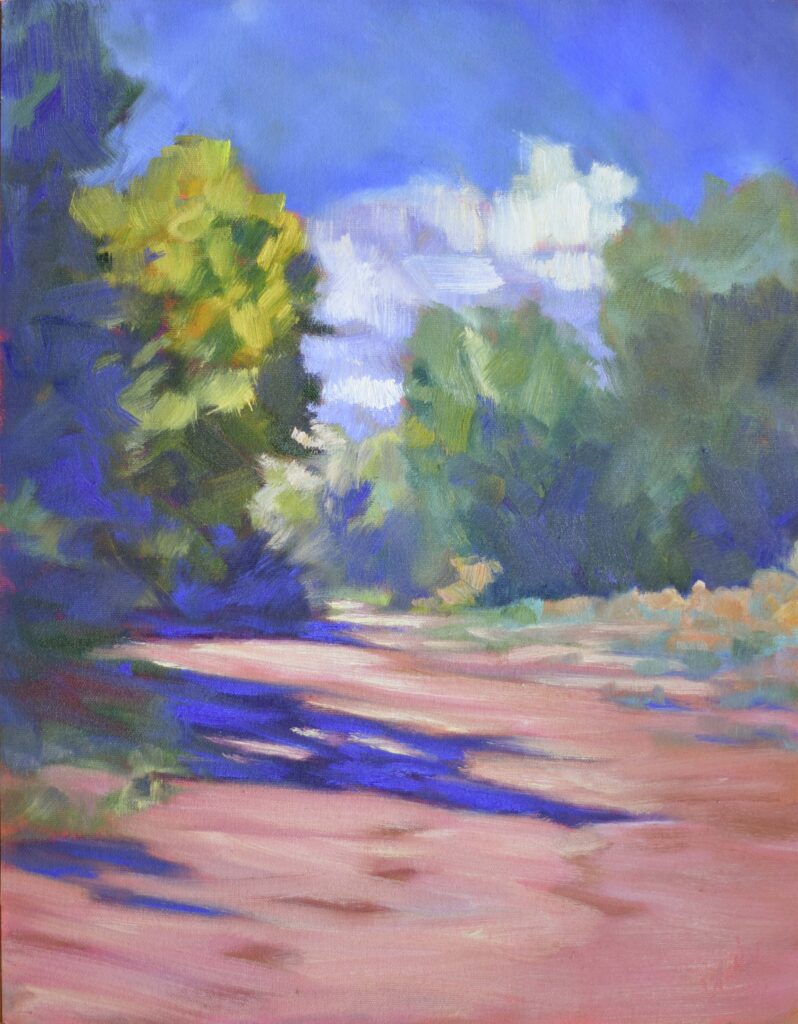
Cowpath in Patagonia, 9X12, oil on Baltic birch, click on image for more details.

My husband and I are ramping up our daily hiking mileage in anticipation of Britain’s Cotswold Way next month. It’s my favorite way to visit a new place, and I hike for the same reason I paint: to slow down enough to actually see.

We spend a lot of time on the trail even when we’re not training—4.5 miles a day, through Erickson Fields Preserve and Beech Hill Preserve. (Maine, by the way, has the highest concentration of land trusts per capita of any state.)
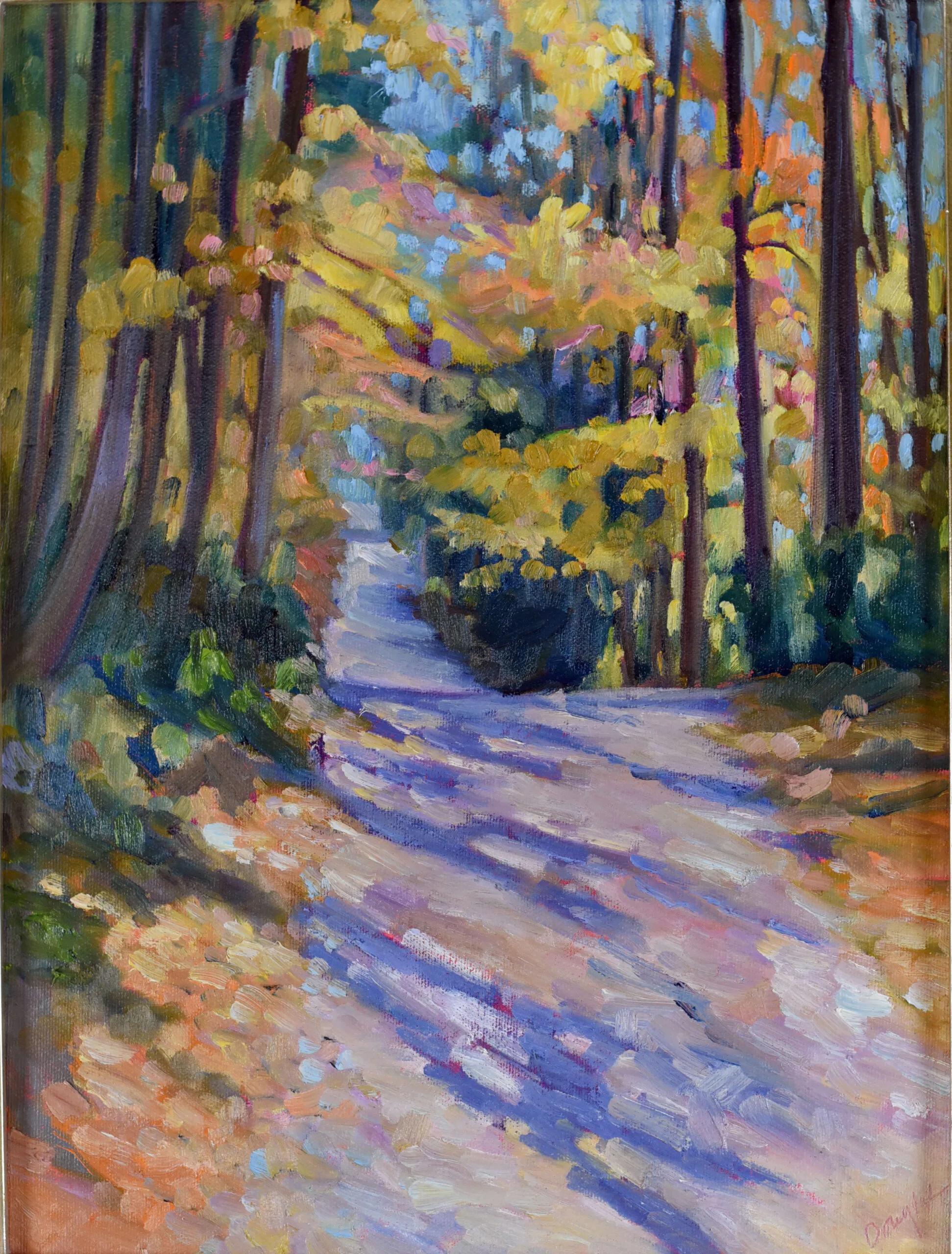
Country Path, 14X18, oil on archival canvasboard, click on image for more details.

Being in the woods every day can be miserable, especially in hard winters. Then we complain about the footing, the north wind and the intense cold. But even cold days can be engaging. After more than a decade, I know these preserves intimately, but they are never boring. They demand attention with their uneven footing, the shifting light on the ocean and weather changes. There’s no multitasking and certainly no playing with your phone. If I want to stay upright, I have to watch where I’m going.

There are a thousand small events in the woods, and they require learning to see. Right now, the moss is turning emerald green and the tops of the trees are a warm smudge of swelling buds. Almost all the snow is gone. I look every day for the first shoots of ferns poking out from drifts of pine needles and leaves; it will mean the soil has finally thawed. But with that comes frost heave, which means roots and rocks where there were none before.
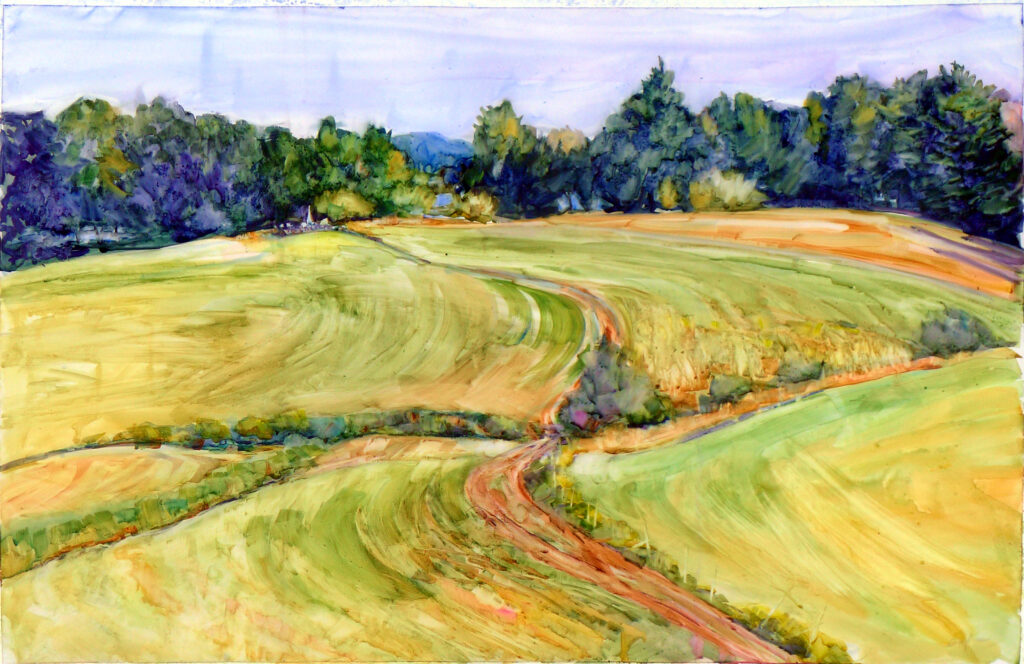
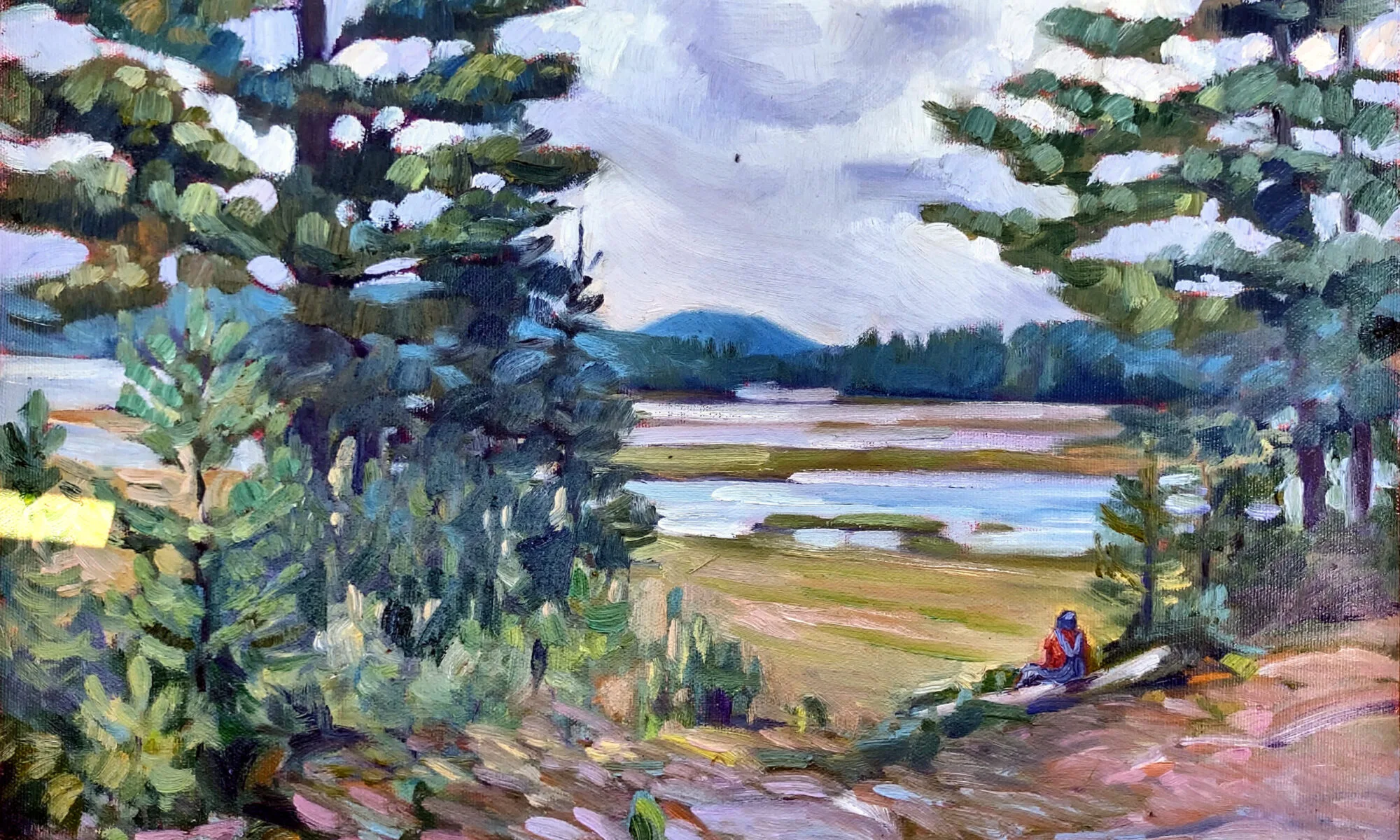
Path to the Lake, ~24X36, watercolor on Yupo, framed in museum-grade plexiglass, click on image for more details.

Painting asks for the same attention

In the studio or plein air, painting requires the same attention in learning to see. Painters who start relying on what they think they know end up being caricatures of themselves. Painting isn’t about what you think you see or know; it’s about what’s actually there.

What’s actually there is always deeper and more complex than what we expect. For example, shadows can be a surprising range of cools and warms, the combination of the absence of light and reflected color. Out my window the bare maples are are a million shades of blue-grey, with shifting edges and values in the rising sun. Just like on the trail, when I slow down and really look, the ordinary becomes complex and, more importantly, beautiful.

Slow down, you move too fast

Our brains are wired to be efficient, to compress information. It’s highly useful to recognize “Man-eating tiger” and follow that up with “Run!” That might be a lifesaver but is the enemy of deep looking. Painters constantly fight that biological imperative.

Successful painters resist that first read. They question spatial and value relationships, draw, think, look and draw again. They develop the habit of visual concentration.

Seeing clearly is difficult. We all have blind spots; we all fall back into shorthand. We can spend months or years repeating the same mistakes.
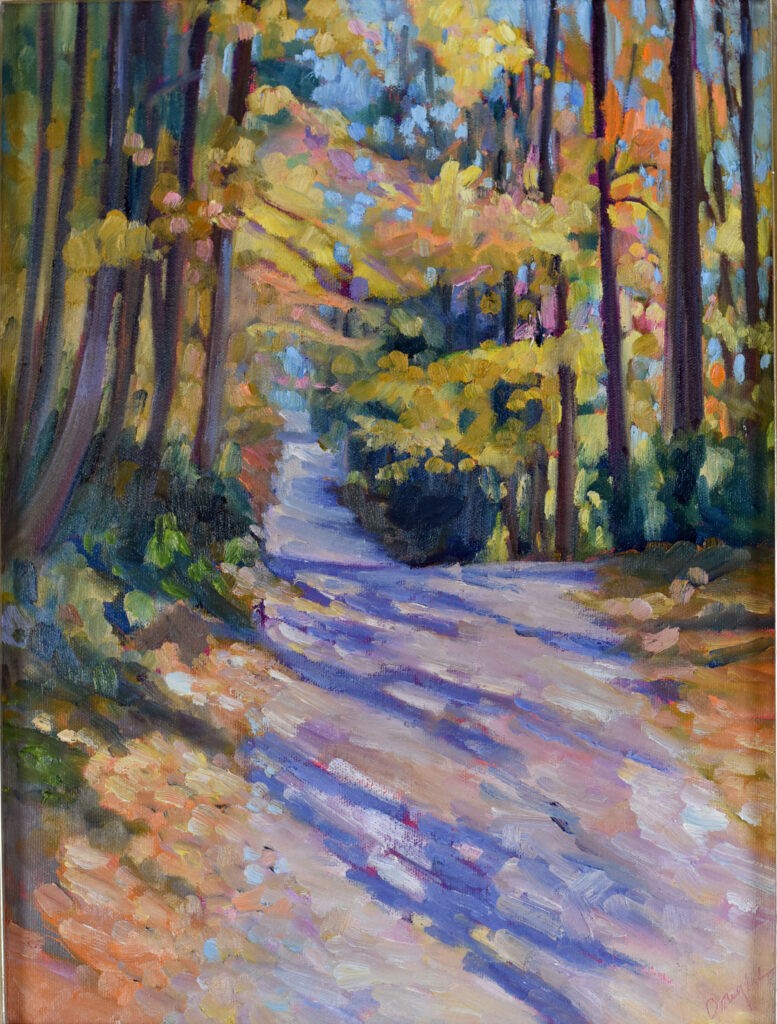
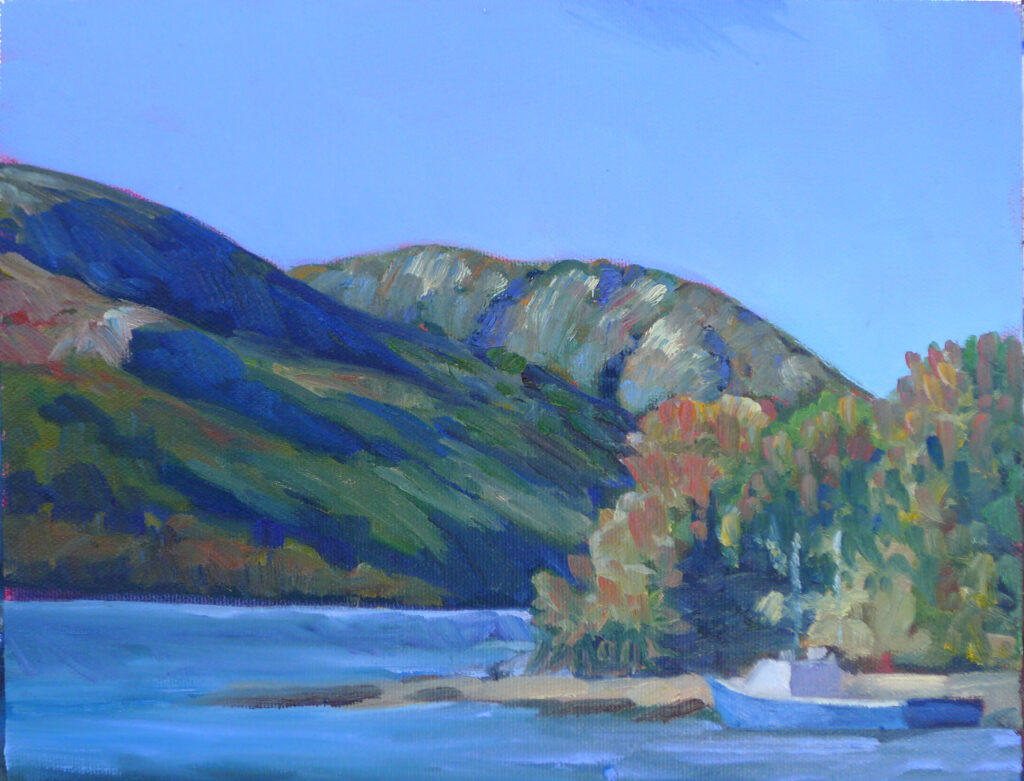
Beauchamp Point, Autumn Leaves, 12X16, oil on archival canvasboard, click on image for more details.

An unbiased eye

Good critique doesn’t tell you what’s wrong; it teaches you how to see differently. It slows you down in the same way a rocky trail does. It forces you to notice what you’ve been skipping over.

If you’re ready to sharpen your eye and start seeing your paintings with more clarity, I invite you to join my Fresh Eyes Critique Zoom class on Tuesday evenings, 6-9 PM on April 14, 21 and 28. After that, you’re on your own for a while, because I’ll be in the Cotswolds, looking.

Registration is now open for workshops in 2026! Reserve your spot:

Can’t commit to a full workshop? Work online at your own pace:
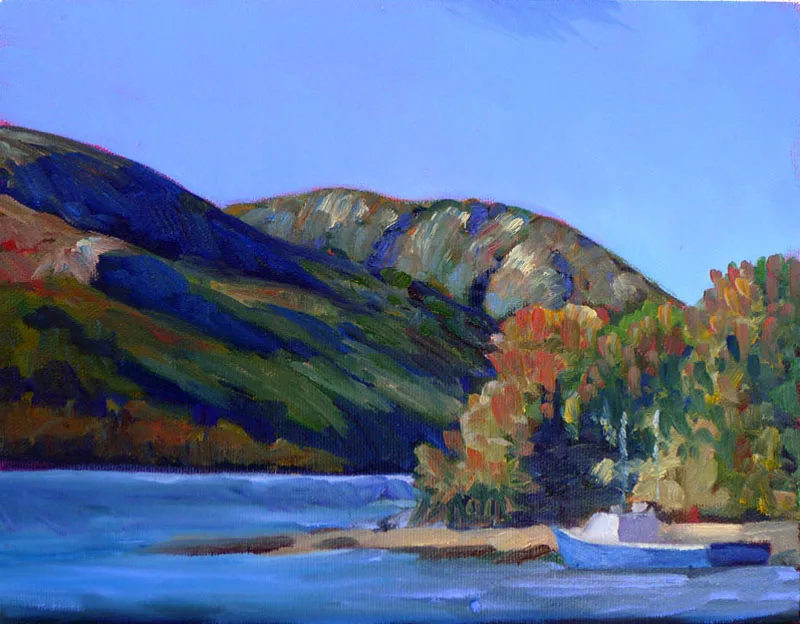
Seven Protocols for Successful Oil Painters

Monday Morning Art School: critique is executive function for the artist.

Pink Carnation, 8X10, oil on Baltic birch, is heading out west for Courageously Created Fine Art Show & Auction, Washington State.

Executive function is a core concept in psychology. It means a set of mental processes and skills that allow us to manage tasks, regulate our emotions and achieve goals. These help us plan, focus and multitask.

Executive function is also a core concept in painting. It’s the ability to critique our work as we’re doing it. We secretly fear outside criticism. But without some way to measure ourselves against artistic principles, we repeat the same mistakes.

Each of us has experienced harsh or unfounded criticism. But harsh words have no place in formal criticism, which is a structured, time-tested tool for growth. (I became a happier person the day I forgave those people, but that’s another story, one of slowly learning to extend the same grace to others that I want for myself.)

Cottonwoods along the Rio Verde, 9X12, oil on archivally-prepared Baltic birch, , is heading out west for Courageously Created Fine Art Show & Auction, Washington State.

“Do you like this work?”

When we submit our work to thoughtful analysis, the question, “Do you like it?” becomes almost irrelevant. However, a strong negative reaction can mean something. The work may be objectively failing or it may prick others’ beliefs or values.

How can you set your ego aside to figure out which is happening? Ask how the work measures up against the elements of design and design principles. Once we learn to ask these questions while our work is in process, we have developed the ability to self-critique. This pulls us out of the haze of subjectivity.

These design elements and principles transcend style and preference; they are the bones of painting.

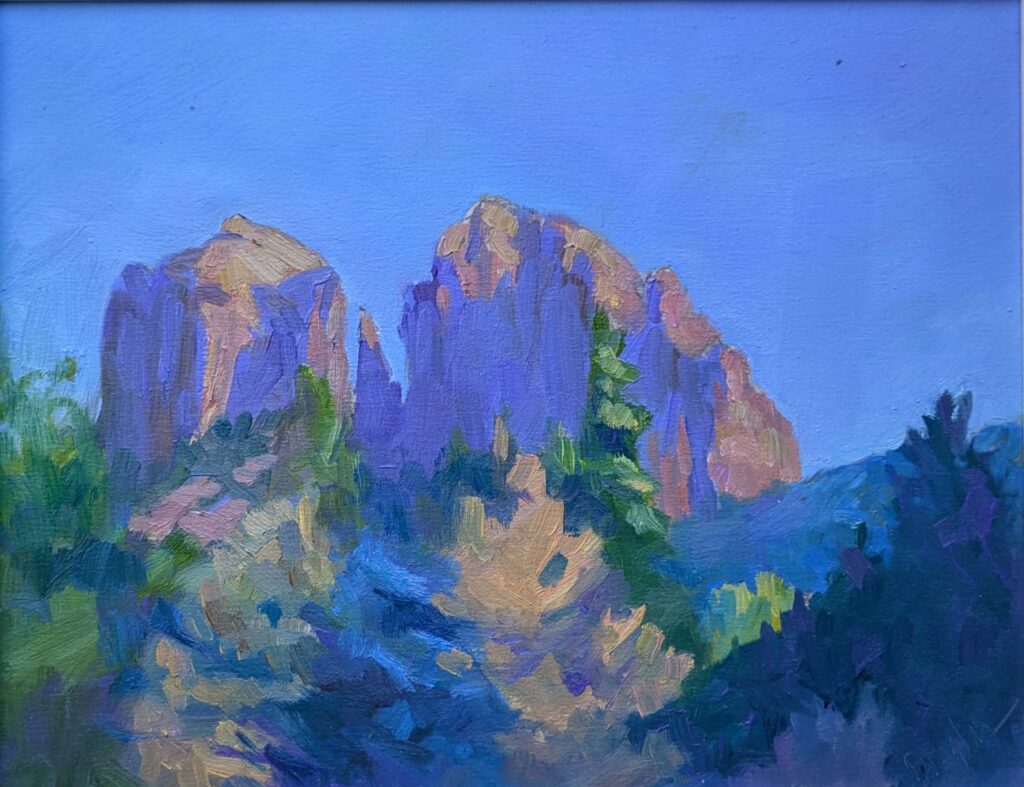
Blue and purple, Sedona, 11X14, oil on archivally-prepared Baltic birch, click on image for details.

What are the elements of design?

The elements of design are line, shape, color, form/mass, edges, texture, perspective/depth/space. No painting excels in every area; we are mere humans. However, each of these can be strengthened as we get better at critiquing our own work.

What are the principles of design?

The principles of design are pattern, dominance/emphasis/focal points, unity/variety, harmony, balance, contrast, and rhythm and movement. These are different from the elements of design because they operate on a sliding scale, where neither end is best. For example, serenity and energy are both beautiful, but each serves different goals. The question is whether your painting goals are met by your approach.

Fresh eyes

My Painting Clouds class sold out in 24 hours; its goal is easily understood. That doesn’t make it more useful than Fresh Eyes (Critique). Critique is for experienced painters who want to get better, who want to develop that inner voice that guides their painting.

Not all critique is useful, and that goes double for self-doubt. That is vague, overly personal and usually just plain wrong. Disciplined critique is specific, grounded in the elements of design and delivered with clarity, objectivity and respect. It identifies strengths as well as weaknesses. Knowing what works is just as important as knowing what doesn’t.

Cape Breton Highlands, 8X10, oil on archival canvasboard, click on image for details.

This is for everyone who’s ever asked me for private lessons

When you analyze someone else’s painting, you sharpen your own visual literacy. You begin to see patterns: what creates movement, what deadens a composition, how color relationships sing or collapse. You learn the language of art criticism. That transfers directly back into your own work. You become both painter and editor, creator and critic. You’re able to diagnose problems before they harden into habit. The shared experience accelerates learning in radical ways.

You’ll bring your own work to Fresh Eyes (Critique) and we’ll analyze it together. You’ll learn how to self-critique effectively, creating that executive function for painting. This is a short Zoom session (April 14, 21, 28) meeting from 6-9 PM, EST. If you’re ready to stop second-guessing and start seeing your work clearly, register now.

Registration is now open for workshops in 2026! Reserve your spot:

Can’t commit to a full workshop? Work online at your own pace:

Seven Protocols for Successful Oil Painters

Two short Zoom painting classes coming soon

Hammerhead cumulonimbus cloud over Posse Grounds Park, 9X12, oil on canvasboard, private collection.

My daughter Laura had convinced me to not teach a short intersession class in late April, but then I realized I’d be away for six weeks total. (I’m off to do my annual hike before the summer season starts in earnest, this time in the Cotswolds.) I’m worried that six weeks is too long; students will want instruction and the camaraderie of a class and I won’t be there to provide it.

I’ve only got three weeks available so I’ve chosen two subjects that are suitable for a shorter session.

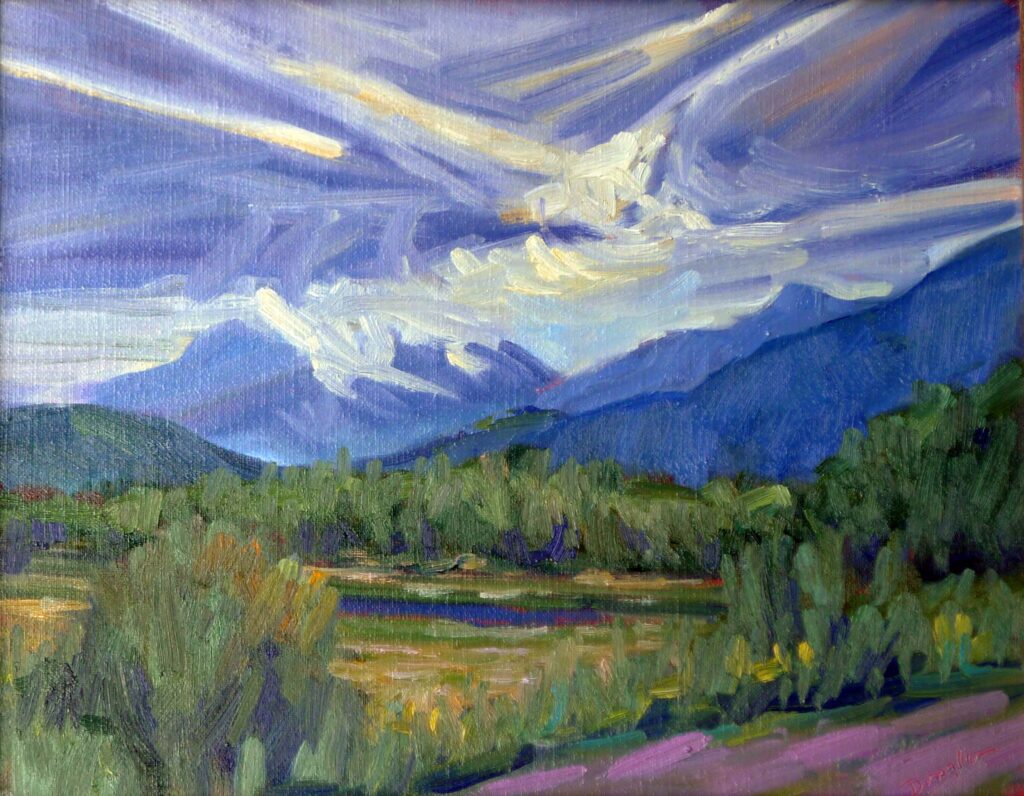
Fog over Whiteface Mountain, 11X14, click on image for more details.

Monday evenings, April 13-27, 6-9 PM: Painting clouds

Clouds are ephemeral, constantly shifting, and yet governed by perspective and structure. In this focused Zoom class, we’ll break clouds down in terms of value, color temperature, atmosphere, edges and movement.

You’ll learn how clouds form in the sky and how that affects how they look from the ground. We’ll concentrate on simplifying their complex shapes and building subtle transitions that give clouds weight and light. We’ll talk about how weather, time of day and perspective change what you see, and how to translate that into paint without fussing it to death.

This is not formulaic painting. It’s based on observing patterns in nature, editing, and confident brushwork. As always, you’ll get direct feedback, practical demonstrations and the benefit of working alongside a thoughtful, supportive group of your painter peers. All media are welcome and all sessions are recorded so you can revisit them anytime.

This short, 3-session class is designed to be a low-pressure way to sharpen your eye. Because of the shorter format, it’s also the perfect opportunity to give weekly Zoom classes a try.

If skies have been your sticking point, this is your way forward.

Sign up now and start painting clouds with clarity and purpose.

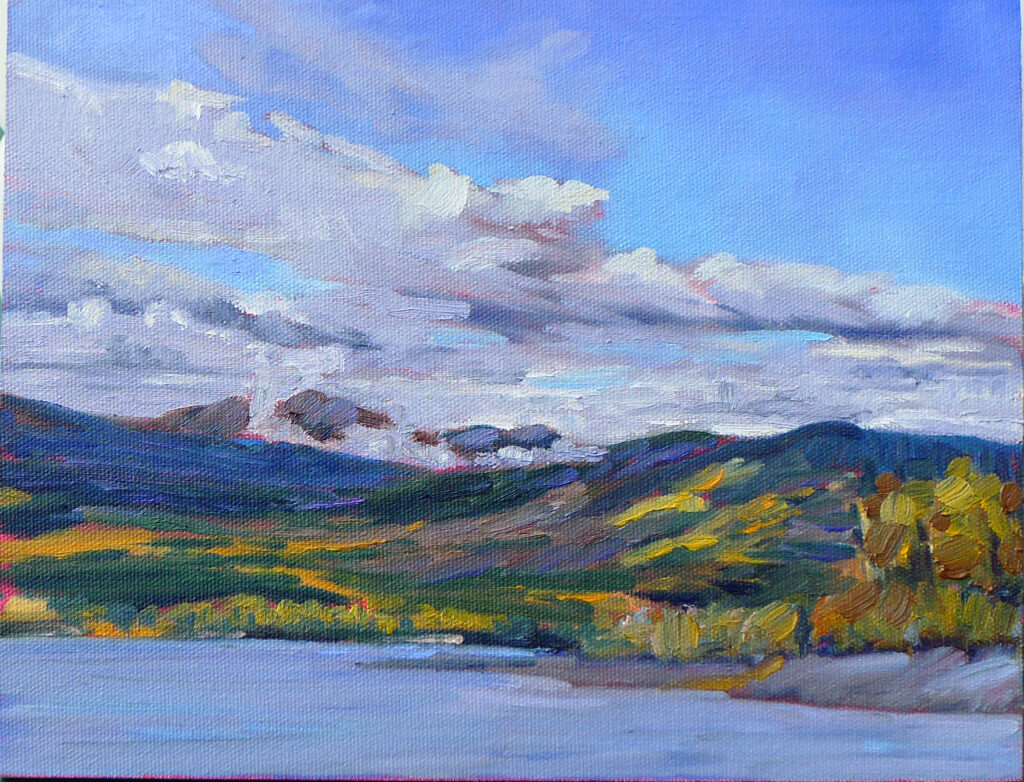
Teslin Lake, 8X10, oil on archival canvasboard, click on image for more details.

Tuesday evenings, April 14-28, 6-9 PM: Critique

Every artist eventually hits a wall where they can no longer see their own work clearly. Formal critique is the most effective tool we have to break through those plateaus—it isn’t about subjective likes or dislikes, but about the disciplined, systematic analysis of a painting.

In this Zoom critique class, you’ll bring your finished work and we’ll look at it together with fresh, objective eyes. We’ll cut through the noise and get to the core issues: composition, value structure, color relationships, and intent.

More importantly, you’ll learn to critique your own work in progress, rather than work yourself into a state of frustration because ‘something isn’t right.’

You’ll learn just as much from others’ work as your own. Seeing how different painters solve (or create) problems sharpens your judgment far faster than working in isolation. It’s a collaborative, thoughtful environment where honest feedback moves everyone forward.

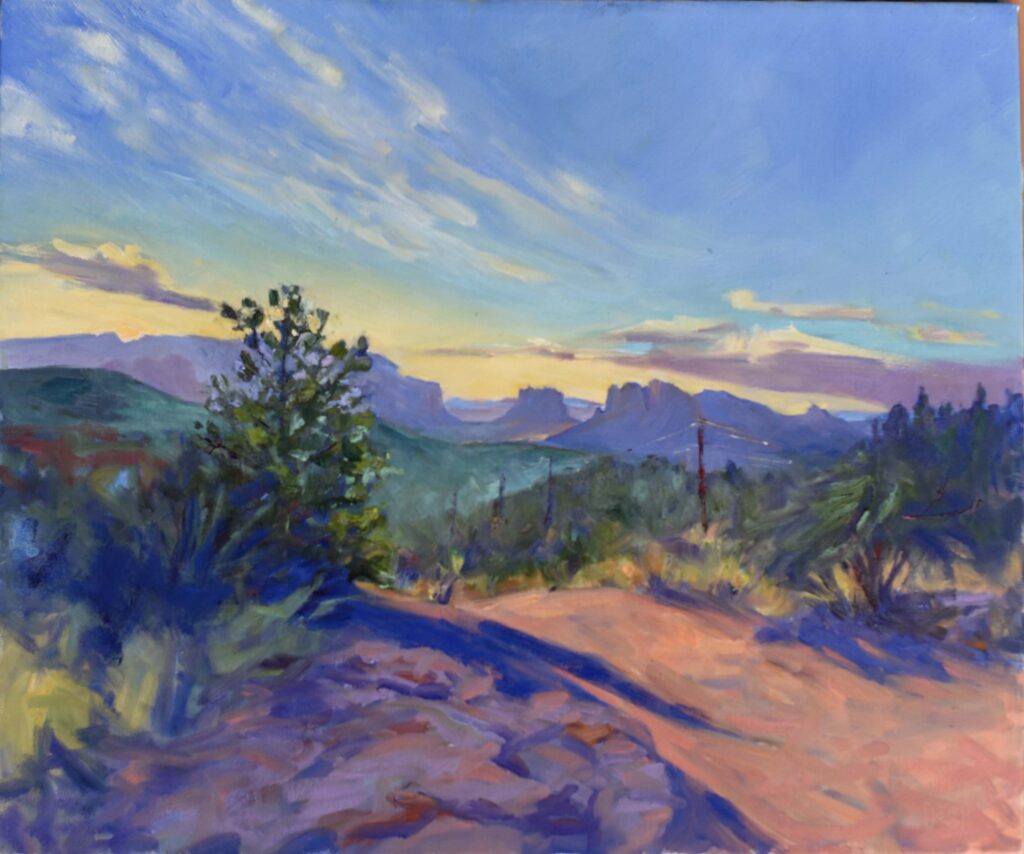
Dawn along Upper Red Rock Loop Road, Sedona, 20X24 oil on canvas, click on image for more details.

Critique, by the way, is never about tearing work down. It’s about building your ability to assess, edit, and strengthen your paintings with confidence.

Students will bring work they’ve done on their own for analysis within the group. If you’ve never experienced a formal critique, this 3-session series is the perfect entry point. As a group, we’ll put our minds to the problems you’ve been struggling to solve alone. This shorter format is also an ideal way to test-drive a Zoom-based class.

Reserve your spot now and start seeing your work the way it really is—and what it can become.

Registration is now open for workshops in 2026! Reserve your spot:

Can’t commit to a full workshop? Work online at your own pace:
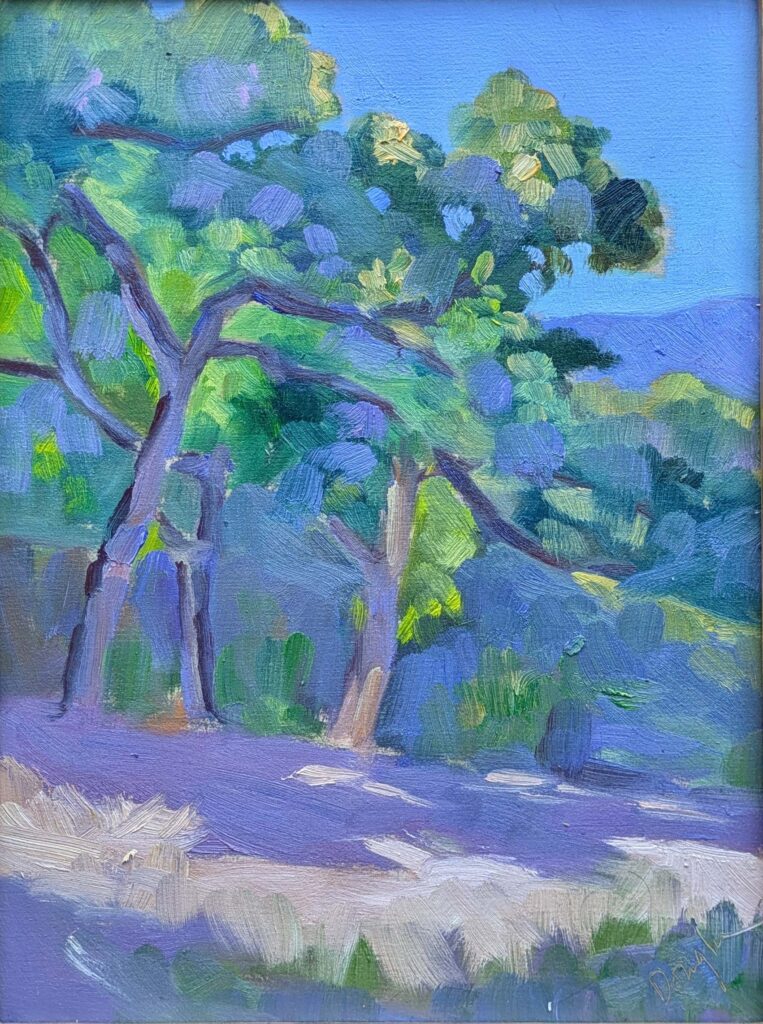
Seven Protocols for Successful Oil Painters