Periodically, I come across a quote that seems so apropos to painting that I save it to share with you. Here are three of my favorites:
Genius is a screw-up
“Have you observed, Emily, that talent only fluctuates about its own middle line whereas genius nearly always makes great walloping bloomers?” (Ngaio Marsh)
Look no further than the career of Winston Churchill for proof; the same man who saved England also oversaw the disastrous naval attack on the Dardanelles.
In painting, there’s tremendous freedom in the willingness to fail spectacularly.
I’m a great fan of Édouard Manet, but if you want to see some significant screw-ups, look at his seascapes. I love A Bar at the Folies-Bergère but I really don’t know what he’s on about in Le Déjeuner sur l’herbe. Both are statements about sexual politics, but I (and most art historians) don’t pretend to understand the latter.
If you look at most great painters’ oeuvres, you’ll find some stinkers. Students often ask how to avoid bad paintings. That’s the wrong question. The goal should be to avoid safety and mediocrity.
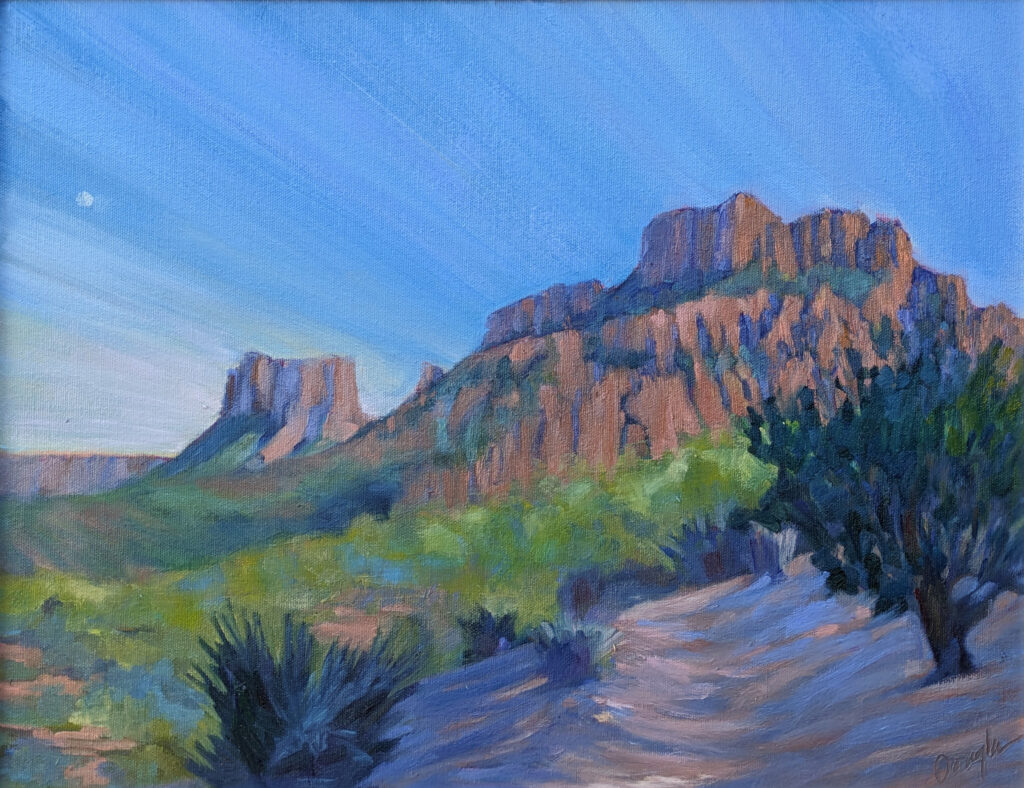
Let me pull a rabbit out of my hat
“The most important tool the artist fashions through constant practice is faith in his ability to produce miracles when they are needed.” (Mark Rothko)
When I sit down in my studio, I generally haven’t a clue what’s gonna happen next. I’m in a constant fight with my anxiety. It’s not such a big deal when I’m experimenting; it can be nerve-wracking when I’m up against expectations, mine or others.
Notice that Rothko doesn’t say talent or skill are the artist’s greatest tools. He says faith, fashioned through constant practice. That requires courage, which I have in differing amounts depending on the day.
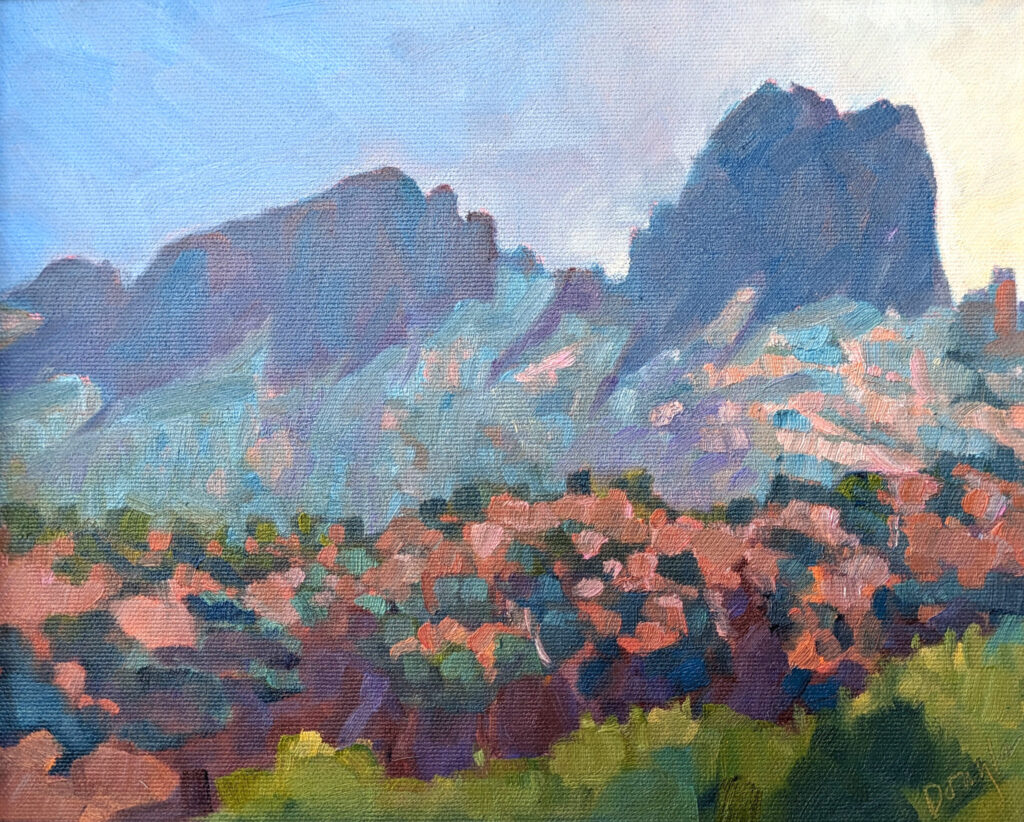
“It didn’t come out like what’s in my mind,” my friend and student Cheryl Ryan told me recently. It never does, I’m afraid. But that doesn’t matter because nobody else can see what’s in your mind; they only see what you put on the canvas.
Meanwhile, we paint studies that don’t quite work. We wrestle with impossible ideas and compositions that collapse under their own weight. Eventually, we’ve solved enough problems that we’re just resigned; there’s no more energy for panic.
Faith in this context means the accumulated experience that lets you paint your way through uncertainty. Faith is trusting that your hands and eyes have learned enough to find the answer.
That kind of confidence only grows one painting at a time.
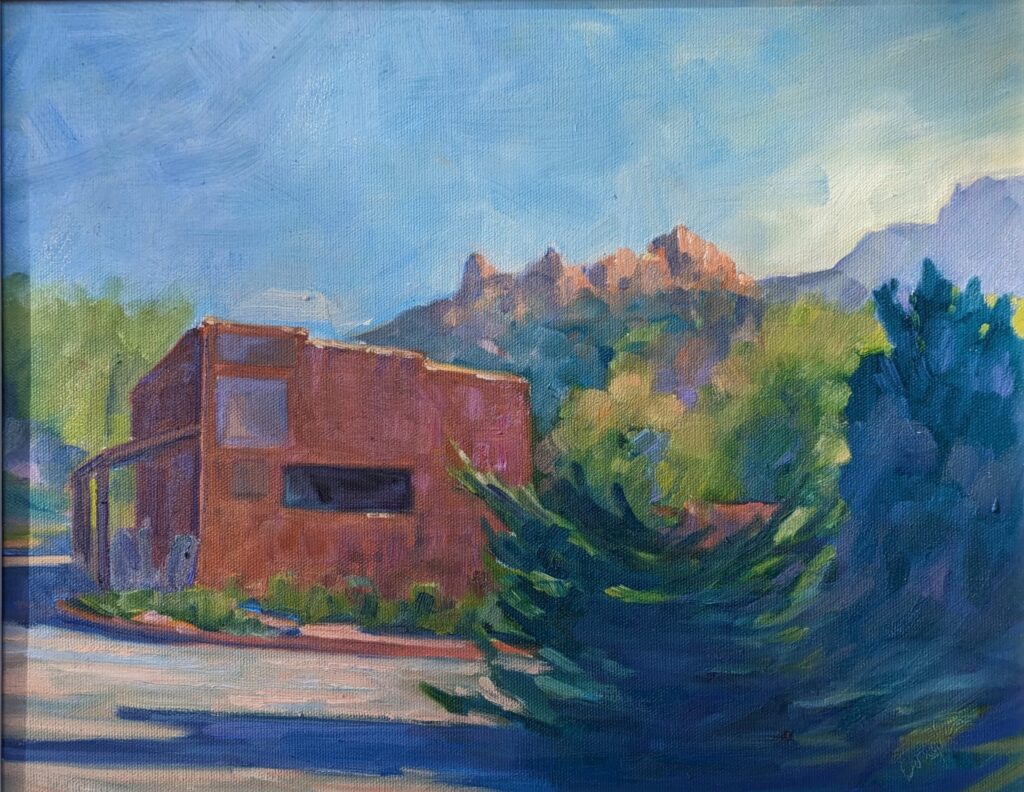
Less is more
“He swallowed his chagrin and summoned up the professionalism that he had once sourly defined as an infinite capacity to notice less and less with more and more accuracy.” (Ngaio Marsh)
As experience grows, you notice less. You’re editing automatically, on the fly.
I don’t ignore detail because I can’t paint it. In fact, the older I get, the more hyperrealism annoys me, unless it’s married to surrealistic ideas. I ignore detail because there’s a difference between information and noise.
Art is all about priorities. Every brushstroke ought to say, ‘this matters more than that other thing.’ The fewer things you choose to emphasize, the more convincing the whole painting becomes.
Perhaps that’s where these three quotations meet. Practice gives us faith. Faith gives us courage to make spectacular mistakes. Those mistakes teach us what deserves our attention and what can safely be left out.
I have just two workshops left in 2026! Reserve your spot:
- New! Color Clinic 2026 | Rockport, ME, October 3-4, 2026
- New! Composition Week 2026 | Rockport, ME, October 5-9, 2026
- High-Desert Light & Monumental Form | Sedona, AZ, Apr 26, 2027 – Apr 30, 2027
Can’t commit to a full workshop? Work online at your own pace: