
Before I get into this morning’s post, a whole bunch of people have asked me for the dates of my 2027 Sedona plein air painting workshop. The trouble is, I no longer remember everyone who raised the question. If you were one of them, it’s April 26-30, 2027, and the link is below. That’s the only 2027 workshop date I’m committing to now; I have a daft idea up my sleeve and I’m waiting to see if it comes off. That doesn’t mean I’m not going to teach much in 2027, but if it comes off (a long shot) I’ll have to do some scrambling. I do still have two 2026 workshops in October.
Watch but don’t copy
I used to stand near Alfred Colella in class at the Art Students League (ASL). He had a handwritten sign in his paintbox that read, “don’t copy.” It was directed at himself (not me) but it was a good reminder to all of us that we could be unduly influenced in that small, crowded room by the painters who were near us.
Still, the shared mutual energy in plein air painting workshops can accelerate your learning in ways that are difficult to duplicate when you’re working by yourself. You learn by watching other painters.
It was from another fellow ASL student that I learned about Michael Wilcox’s Blue and Yellow Don’t Make Green. (No, you don’t need to buy it; you’ve got this blog.) And just last week I saw something arresting in a watercolor by Russ Whitten that I’ve filed under ‘lighting, cool ideas for’.
When you paint or study with other people, suddenly, you have ideas that spark your own thinking.
Accelerating the learning curve
“The shared mutual energies in plein air painting workshops help accelerate the learning curve,” Frank Costantino pointed out to me. He just took my Schoodic workshop in August. That both mystified and delighted me, since he’s a well-known architectural illustrator.
I go back and forth on the idea of synergy between painters. Painting is essentially solitary work, but it’s also a form of communication.
On the one hand, painting alone is wonderful. Nobody is looking over my shoulder. I can experiment, scrape out a painting, start another, or spend three hours painting one tree if that’s what I feel like doing. And therein, of course, lies the danger. It’s easy to get stuck, to perseverate on some dumb detail or another.
Plein air painting workshops are creative laboratories
Good plein air painting workshops aren’t me demonstrating and going “blah, blah, blah,” although I certainly can talk a lot. It’s an opportunity to address specific problems as a group. A good teacher is a facilitator of ideas as much as anything. Adult students come into painting from a wild array of backgrounds, with amazingly varied experiences. I often say I learn as much from my students as they do from me. What I’m doing is creating the environment for us to all spark off each other.
That energy begets more energy. That in turn leads to new ideas, and to the courage to try them out. Instead of learning only from your own successes and mistakes, you’re learning from the successes and mistakes of an entire group.
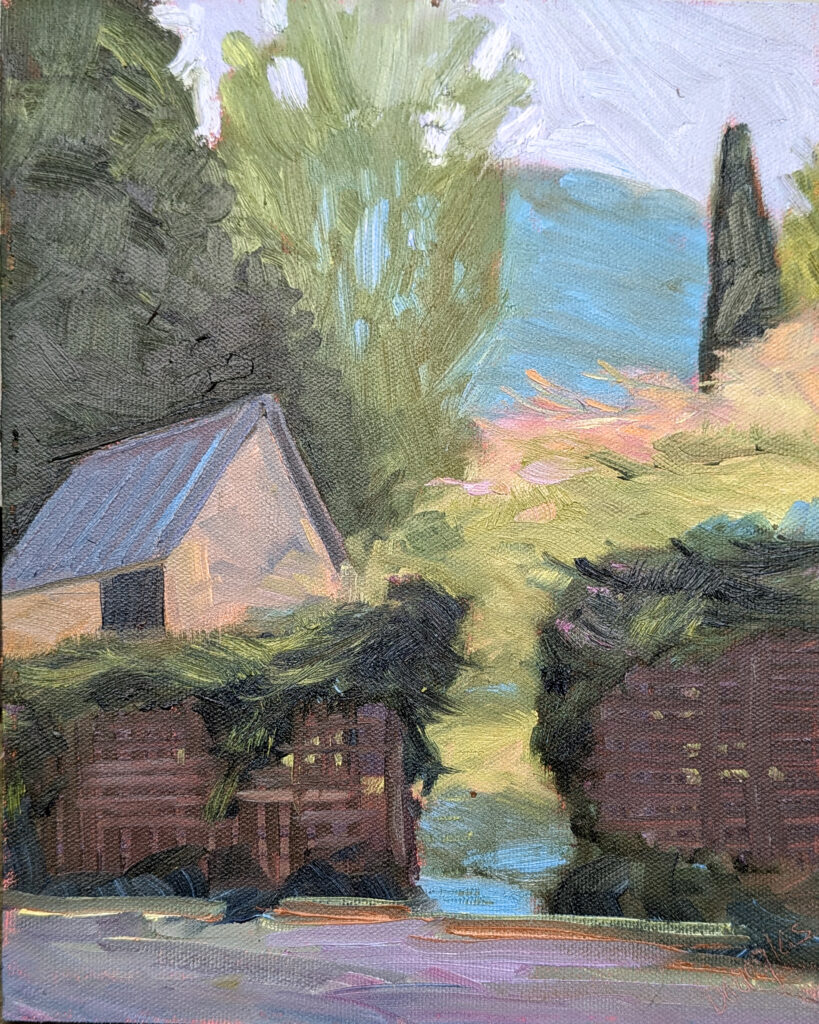
Then there’s the scenery
I’m experienced enough that I get to teach in Paradise, whether that’s Maine or Sedona. That means my students get to visit these places. And painting in them means they get to slow way down and see them in ways they would never experience if they were mere tourists.
I truly believe you can make a great painting anywhere, but, heck, new places are energizing. They give you new visual problems to solve. The compositions, questions and colors are all different from back home. What matters in this place? What can you leave out? What is the color of the light?
Painters need to learn to ask these questions. The problem with painting in our own backyards is that we know it so well, we don’t go back to these first principles. My goal is for you to return home with the ability to frame these questions every day, no matter what the subject.
I have just two workshops left in 2026! Reserve your spot:
- New! Color Clinic 2026 | Rockport, ME, October 3-4, 2026
- New! Composition Week 2026 | Rockport, ME, October 5-9, 2026
- High-Desert Light & Monumental Form | Sedona, AZ, Apr 26, 2027 – Apr 30, 2027
Can’t commit to a full workshop? Work online at your own pace: