In the old days, my highest-rated blog post was this essay on folding plastic bags to fit in your kit. (Now it’s this debunking of tetrochromacy; don’t ask me why.)
Today, 12 states have plastic-bag bans: Maine, Vermont, Rhode Island, Connecticut, New York, New Jersey, Delaware, Colorado, Washington, Oregon, California, and Hawaii.
My county was an early adopter, and I supported the plastic bag ban. Not because it cut down on plastics; grocery bags comprise a miniscule part of America’s plastic consumption. I was sick of seeing bags hanging from trees, fences and shrubs. The prevailing winds in coastal Maine blow towards the ocean. Sea urchins, jellyfish and the other denizens of tidal pools don’t need to be dodging plastic bags.
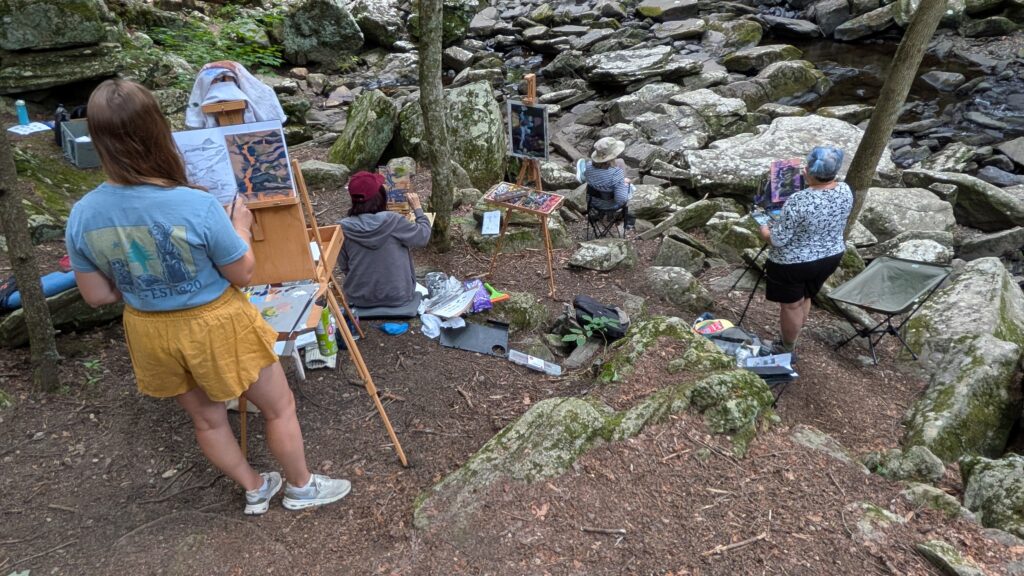
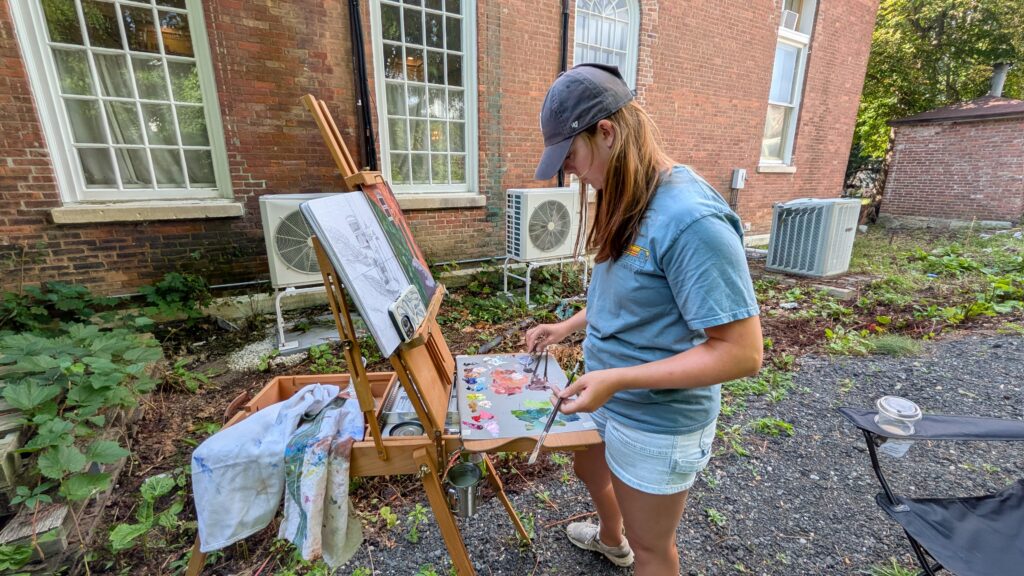
However, I’ve noticed in recent workshops that my students have a harder time dealing with plein air painting waste now that plastic grocery bags are less plentiful.
Short weekly class session starts next Monday
Claim your spot in Painting Water, Monday evenings or Painting Nocturnes, Tuesday evenings. Both are 6-9 PM, starting the week of August 17, 2026, which is next week.
This is my last Zoom session until I get back from Sedona Plein Air at the end of October. That’s because I’m teaching and eventing non-stop until then.
I upload videos of these online classes and you have access to them for as long as there’s YouTube. That means you can review them if you need a refresher or have to cut out early.
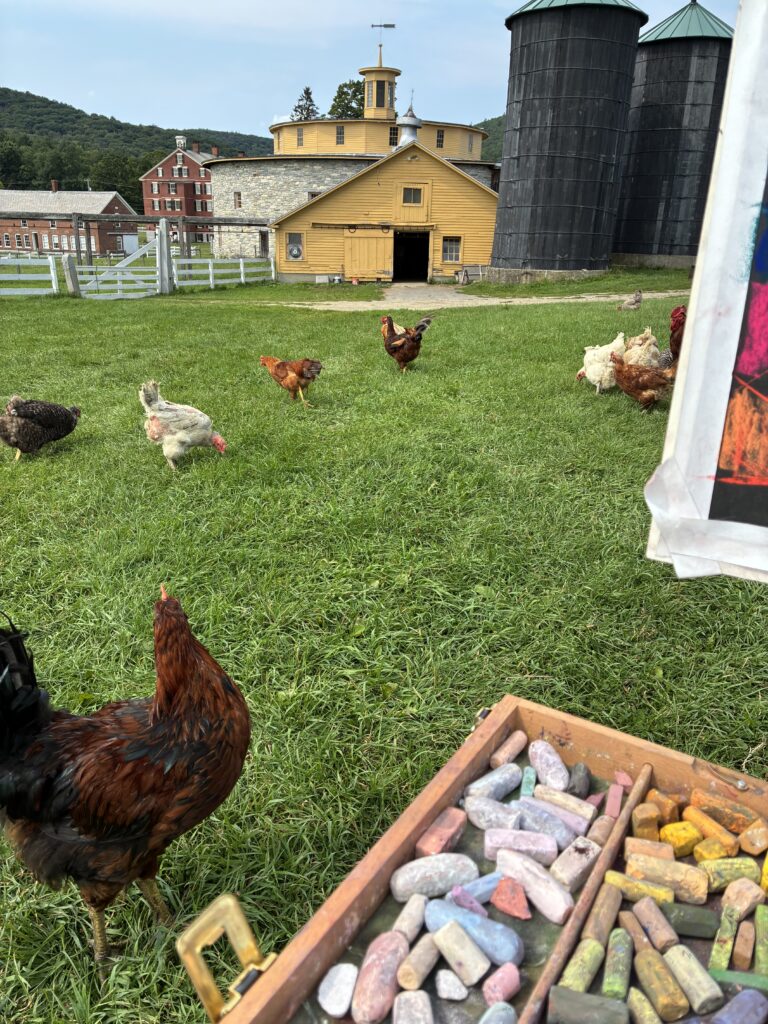
BYOB (Bring Your Own Bag)
Obviously, we want to carry in, carry out. We’re stewards of the landscape, after all.
I don’t like the lightweight trash receptacles that are meant to hang from your easel. They’re heavier and bigger than a plastic bag. Emptying them in a trash can may be no big deal in Manhattan, but it’s a pain in less civilized areas. They tumble around in your car until you empty them. That’s an opportunity to get paint on the upholstery. Then you have to fold them and remember to put them back in your kit.
Washable reusable bags put pigments into the water stream. Paper bags leak. The humble plastic bag remains the most practical answer, but in the bag-ban states, we have to buy rolls of 1-gallon trash bags. I’ve resigned myself to it.
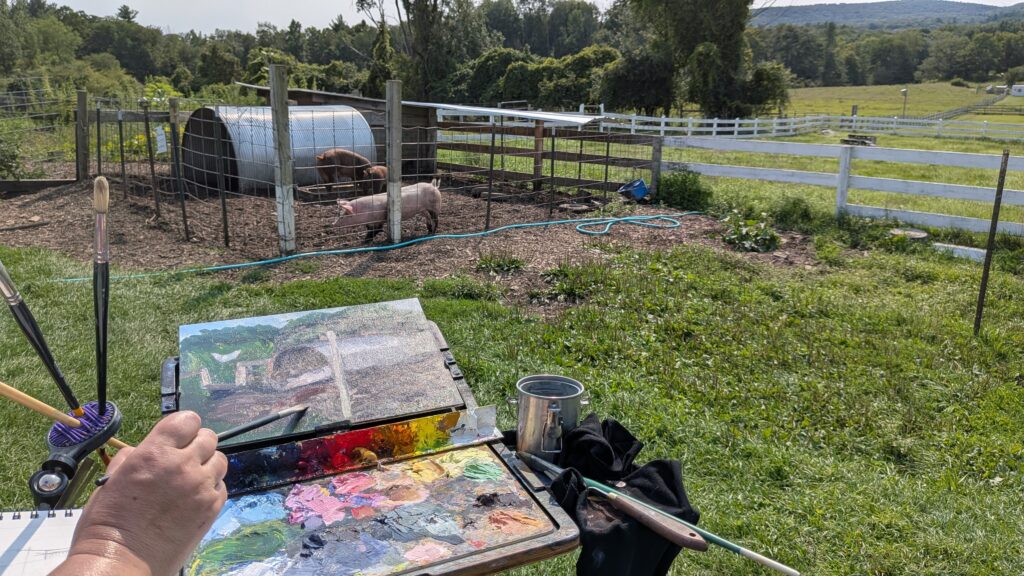
Trash is tough if you forget the bag
Without a trash bag, plein air painting waste can be difficult to manage. Used paper towels and rags accumulate quickly. There are foul, sticky palette scrapings, bits of tape, plastic gloves, sandwich wrappers, tissues and other trash.
I’ve been forced to tuck dirty rags into my pockets. Worse is to set them down until you pack up. They get paint on the ground and can blow away. A dirty paper towel isn’t just unsightly litter. Pigments shouldn’t be added to the landscape.
One of the pleasures of plein air painting is that you develop an intimate relationship with a particular piece of land. That means you also notice the garbage. I hike daily and find coffee cups, soda cans, dog poop, candy wrappers, tissues, etc. along the trail.
Your painting kit should contain everything you need to make the painting and everything you need to pack up and leave no trace. We are guests in the landscape. Our goal should be to leave our little patch of earth looking as we found it, if not better.
Online classes start again soon!
- Cozy Winter Painting, Monday evenings, 6-9 PM for three weeks starting November 2.
- Painting Figures in Real Spaces, Tuesday evenings, 6-9 PM for six weeks starting November 3.
- Painting Nocturnes, Monday evenings, 6-9 PM for three weeks starting November 30.
I have just two workshops left in 2026! Reserve your spot:
- New! Color Clinic 2026 | Rockport, ME, October 3-4, 2026
- New! Composition Week 2026 | Rockport, ME, October 5-9, 2026
- High-Desert Light & Monumental Form | Sedona, AZ, Apr 26, 2027 – Apr 30, 2027
Can’t commit to a full workshop? Work online at your own pace: