Monday Morning Art School: accelerating your learning curve

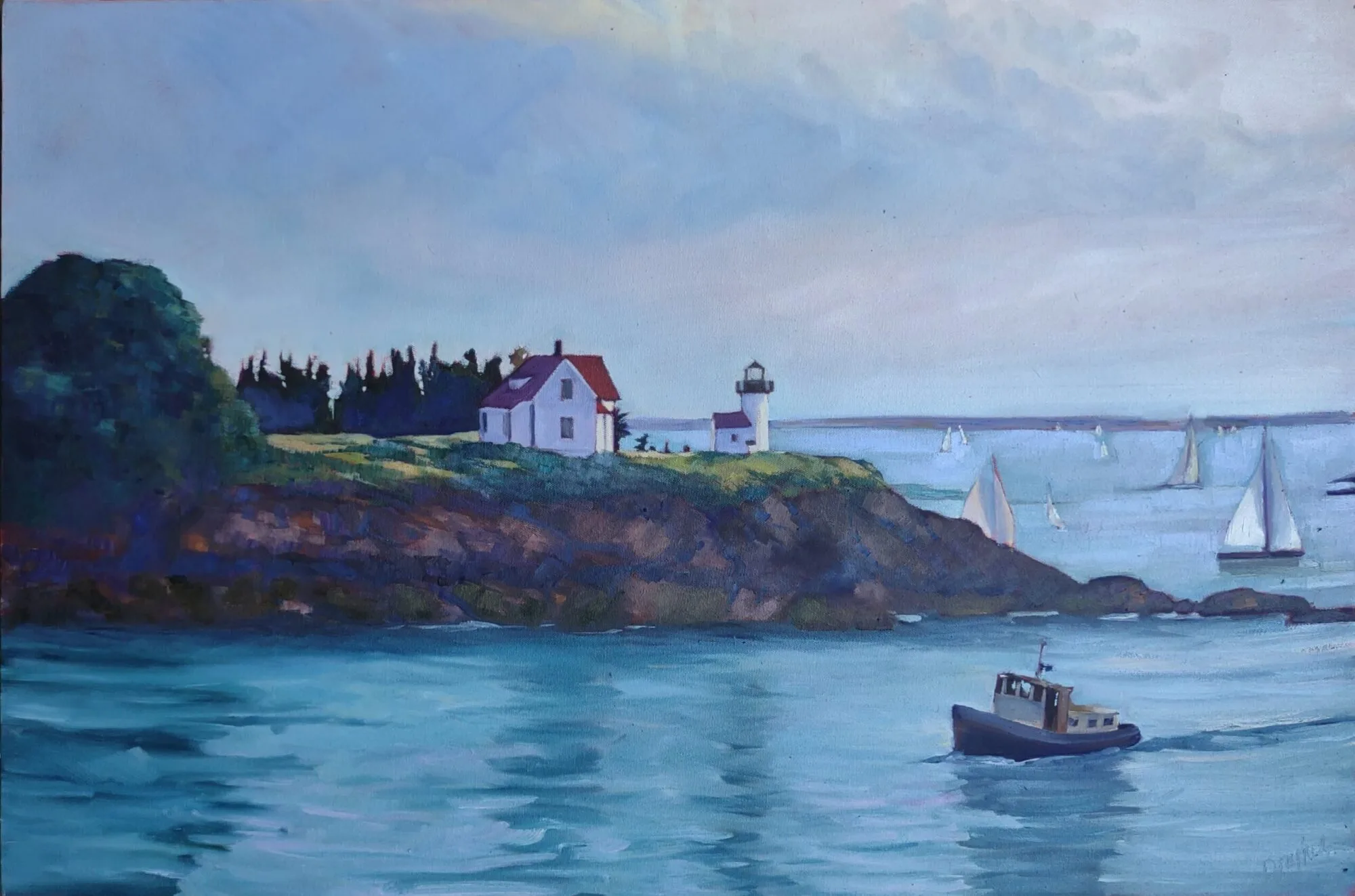
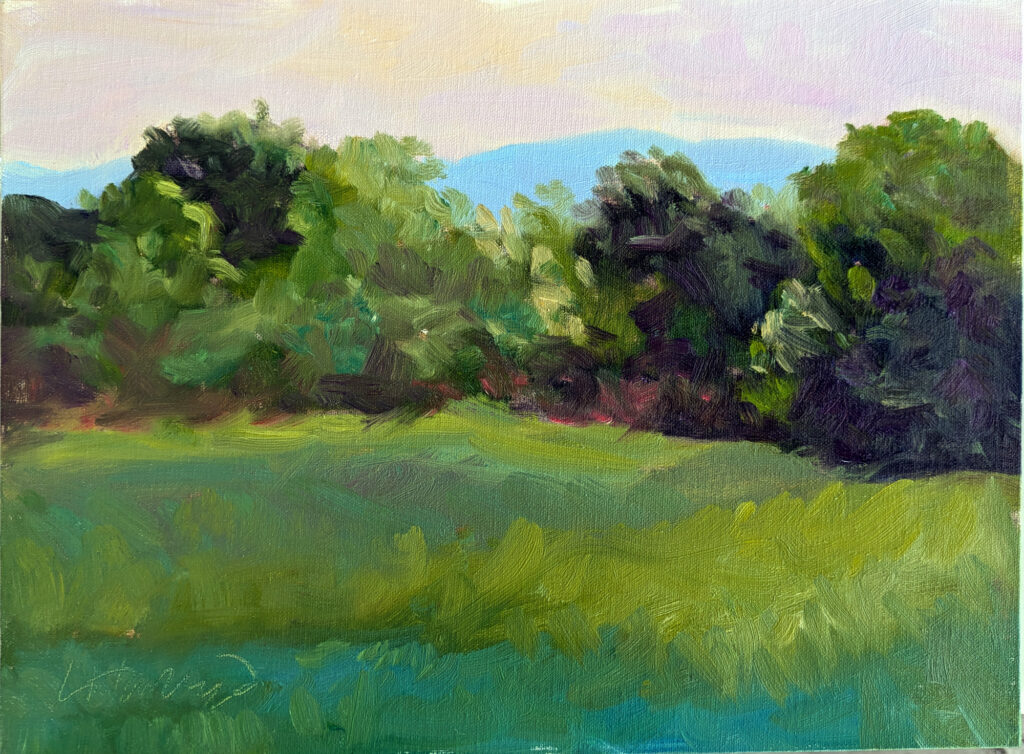
Thomaston, ME, 14X18, oil on archival canvasboard. Click on image for more information.

Before I get into this morning’s post, a whole bunch of people have asked me for the dates of my 2027 Sedona plein air painting workshop. The trouble is, I no longer remember everyone who raised the question. If you were one of them, it’s April 26-30, 2027, and the link is below. That’s the only 2027 workshop date I’m committing to now; I have a daft idea up my sleeve and I’m waiting to see if it comes off. That doesn’t mean I’m not going to teach much in 2027, but if it comes off (a long shot) I’ll have to do some scrambling. I do still have two 2026 workshops in October.
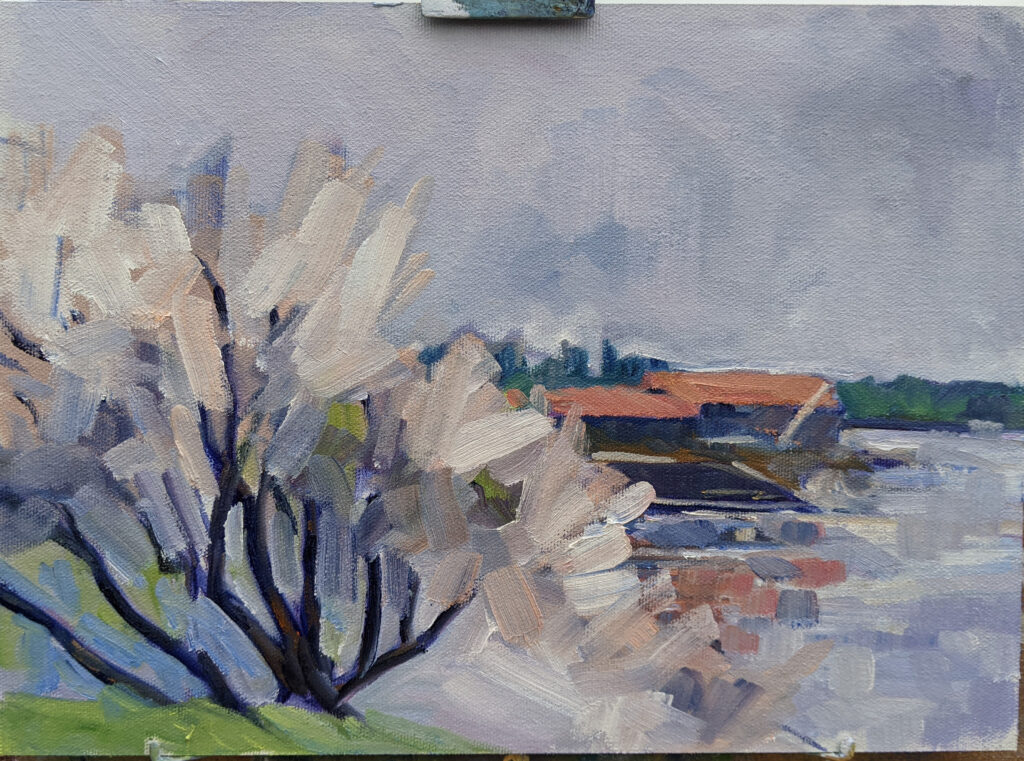
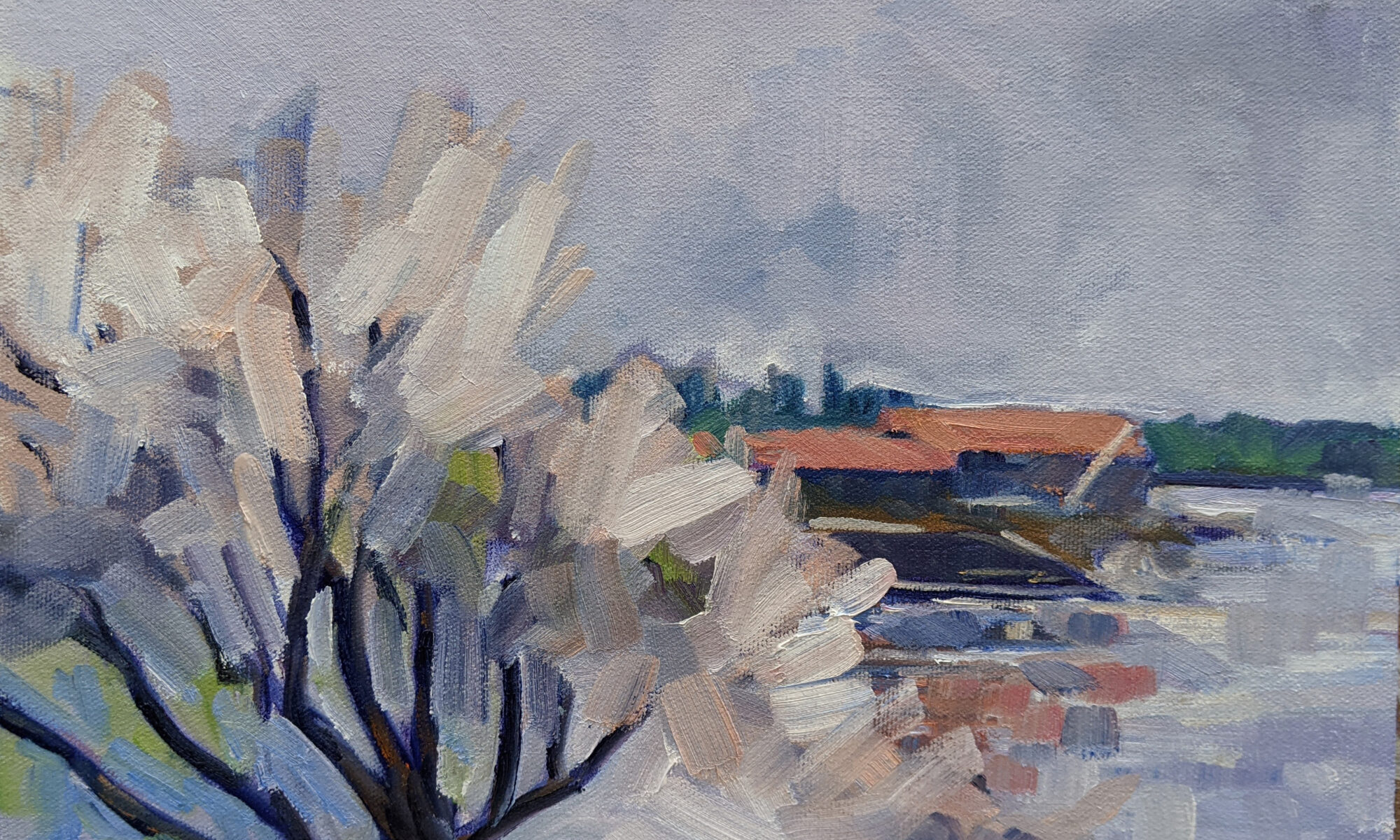
Spring blossoms, Thomaston, 9X12, available but for some reason I’ve forgotten to list it on this website. I’ll get to that…

Watch but don’t copy

I used to stand near Alfred Colella in class at the Art Students League (ASL). He had a handwritten sign in his paintbox that read, “don’t copy.” It was directed at himself (not me) but it was a good reminder to all of us that we could be unduly influenced in that small, crowded room by the painters who were near us.

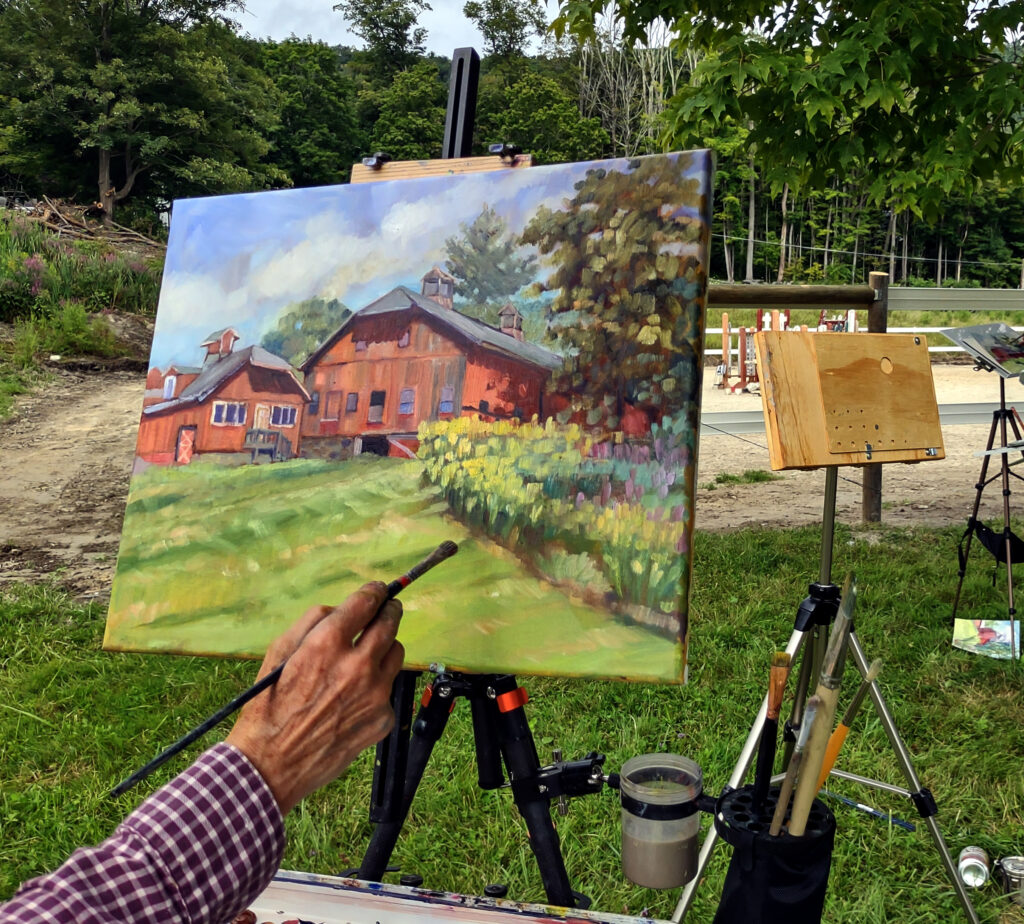
Still, the shared mutual energy in plein air painting workshops can accelerate your learning in ways that are difficult to duplicate when you’re working by yourself. You learn by watching other painters.

It was from another fellow ASL student that I learned about Michael Wilcox’s Blue and Yellow Don’t Make Green. (No, you don’t need to buy it; you’ve got this blog.) And just last week I saw something arresting in a watercolor by Russ Whitten that I’ve filed under ‘lighting, cool ideas for’.

When you paint or study with other people, suddenly, you have ideas that spark your own thinking.
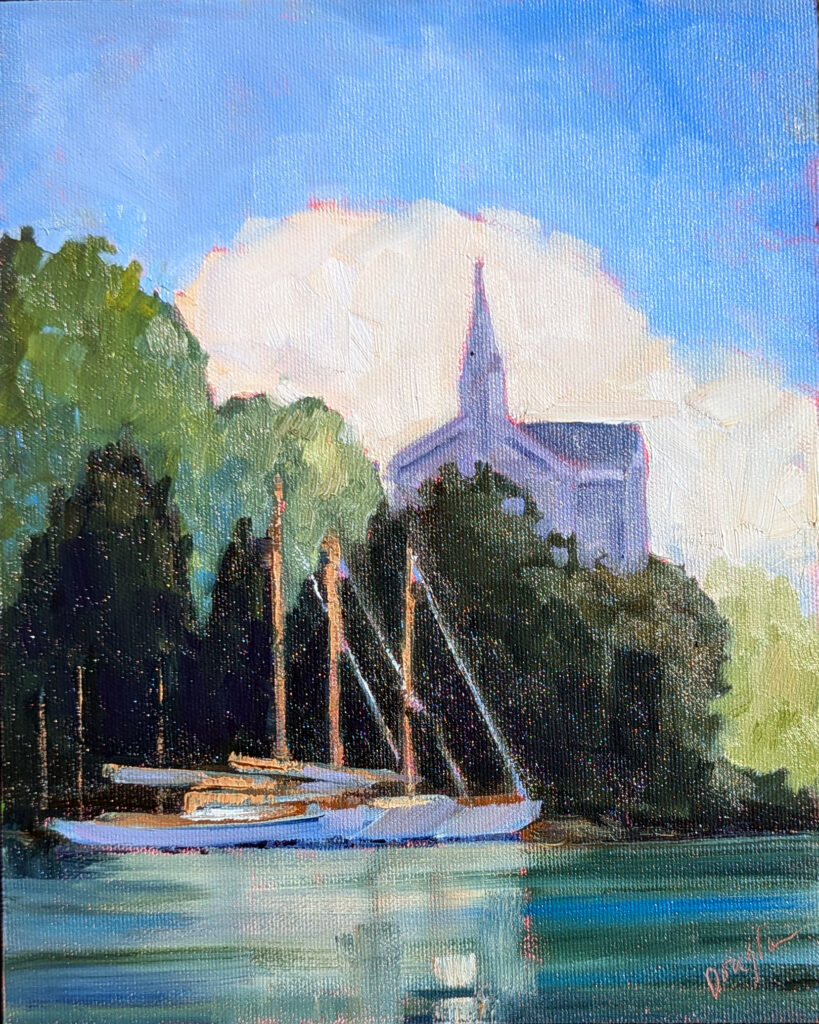
Maine Coast, 8X10, oil on archival canvasboard, for more information, click on image.

Accelerating the learning curve

“The shared mutual energies in plein air painting workshops help accelerate the learning curve,” Frank Costantino pointed out to me. He just took my Schoodic workshop in August. That both mystified and delighted me, since he’s a well-known architectural illustrator.

I go back and forth on the idea of synergy between painters. Painting is essentially solitary work, but it’s also a form of communication.

On the one hand, painting alone is wonderful. Nobody is looking over my shoulder. I can experiment, scrape out a painting, start another, or spend three hours painting one tree if that’s what I feel like doing. And therein, of course, lies the danger. It’s easy to get stuck, to perseverate on some dumb detail or another.

Plein air painting workshops are creative laboratories

Good plein air painting workshops aren’t me demonstrating and going “blah, blah, blah,” although I certainly can talk a lot. It’s an opportunity to address specific problems as a group. A good teacher is a facilitator of ideas as much as anything. Adult students come into painting from a wild array of backgrounds, with amazingly varied experiences. I often say I learn as much from my students as they do from me. What I’m doing is creating the environment for us to all spark off each other.

That energy begets more energy. That in turn leads to new ideas, and to the courage to try them out. Instead of learning only from your own successes and mistakes, you’re learning from the successes and mistakes of an entire group.
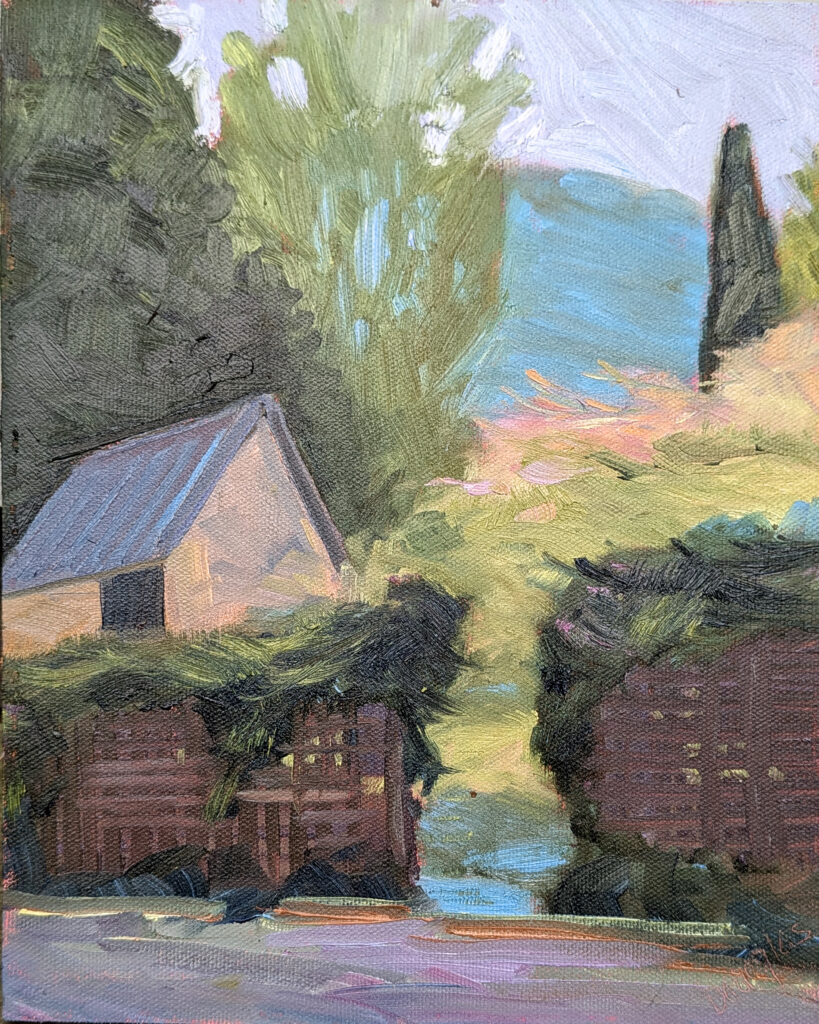
Off Pearl Street, 8X10, oil on archival canvasboard, for more information, click on image.

Then there’s the scenery

I’m experienced enough that I get to teach in Paradise, whether that’s Maine or Sedona. That means my students get to visit these places. And painting in them means they get to slow way down and see them in ways they would never experience if they were mere tourists.

I truly believe you can make a great painting anywhere, but, heck, new places are energizing. They give you new visual problems to solve. The compositions, questions and colors are all different from back home. What matters in this place? What can you leave out? What is the color of the light?

Painters need to learn to ask these questions. The problem with painting in our own backyards is that we know it so well, we don’t go back to these first principles. My goal is for you to return home with the ability to frame these questions every day, no matter what the subject.

Online classes start again soon!

I have just two workshops left in 2026! Reserve your spot:

Can’t commit to a full workshop? Work online at your own pace:

Seven Protocols for Successful Oil Painters

What does it mean to paint with your own artistic voice?

Carol L. Douglas painting at Acadia National Park
Lauren Hammond painting this lovely landscape at last year’s Berkshire workshop.

What does it mean to paint with your own artistic voice? For many of us, that question remains even after years of making art. We learn technique, we study the masters. But deep down, we want to know what makes our work uniquely ours.

Voice vs. style

Your artistic voice is different from your style. Your voice is your personal, authentic point of view—what you want to say through your work. It reflects your values, interests, emotional tone, and subject matter choices. Your voice comes from who you are, not what you do.

Your style, on the other hand, is the visual language you use to express your voice. Style includes recognizable elements like brushwork, color palette, composition, and technique.

While style is what viewers notice first, it’s not fixed; it evolves and changes. Your artistic voice is much more important. It’s what you’re saying and why.

Cassie Sano’s painting of Undermountain Farm’s Victorian barn from the Berkshire workshop.

Teasing out your artistic voice

That’s the heart of Find Your Authentic Voice in Plein Air, a five-day immersive plein air painting workshop the second week of August. It will be held in the pastoral beauty of the western Massachusetts Berkshires, a place I really love.

Finding a style is illusory; it’s a moving target and nothing you should concentrate on. This plein air painting workshop invites you to leave behind mimicry and perfectionism. Instead, step confidently into your own creative point of view. I’ve designed it not just to improve your technique, but to reconnect you with the why of painting—to discover what moves you, and to translate that honestly onto the canvas.

The Berkshires provide a perfect setting for this kind of deep creative work. Rolling hills, shaded glens, historic farms, orchards and vibrant meadows offer subjects that are varied but never overwhelming. We’ll work outdoors each day, with each different location designed to capture different moods and light.

The Berkshires are calm and contemplative, although they have their dramatic moments. But I assure you that no two days are the same, and no two paintings will come out alike.

We’ll start with quick value studies, gesture sketches and color notes. From there, we’ll move into longer painting sessions. While these are to some degree self-directed, I’ll be making rounds, offering personalized feedback and encouragement.

Topics range, but we’re always addressing the core question: What are you really trying to say with this painting? Of course, I don’t really want you to answer that with words, but with visual imagery.

If a subject speaks to you, paint it. If a painting starts to veer in an unexpected direction, follow it. This plein air painting workshop encourages risk, revision, and rethinking, all in the service of finding something true.

The Berkshires landscape ranges from the pastoral beauty of Shaker communities to wilderness.

By the fourth day of every workshop, common patterns begin to emerge. You might notice you’re interested in the patterns of dark and light, or you may love quiet compositions. These patterns are signposts pointing toward your authentic voice.

I’ve been teaching plein air painting workshops for a long time, and I’ve noticed that by the end of the week, students are painting better and more confidently. They know what elements call to them, and they have the tools to answer that call with clarity and presence.

Find Your Authentic Voice in Plein Air is more than a plein air painting workshop; it’s a creative reset. It’s for painters who are ready to go beyond technique and into expression. It’s for those who want to see the landscape—and themselves—with new eyes. And it’s for anyone who’s ever asked, “What do I have to say as an artist?”

On a completely different note

Disco Fever
Thursday, July 17, 2025, 5-7 PM
19 Elm Street, Camden

Tomorrow is our disco night for Camden’s Third Thursday Art Walk. We’ll be at Lone Pine Real Estate, at 19 Elm St., Camden from 5-7 PM. My buddy Nate Quinn will be the DJ, and we’re featuring paintings by Rachel Houlihan (who has been giving me the gimlet eye about this disco idea all month), Stephen Florimbi and me.

In that we’re shooting for a Studio 54 vibe, I’m bringing champagne along with soft drinks and wine.

For all of you who’ve asked, here are my Betsey Johnson sequinned platform sneakers. I’ll only be wearing these if I’m NOT painting.

Online classes start again soon!

I have just two workshops left in 2026! Reserve your spot:

Can’t commit to a full workshop? Work online at your own pace:
Seven Protocols for Successful Oil Painters