Memory and judgment

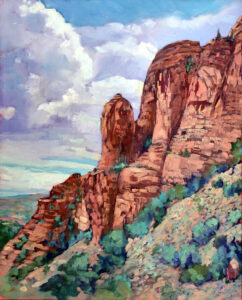
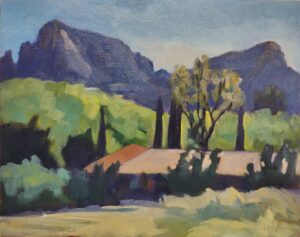
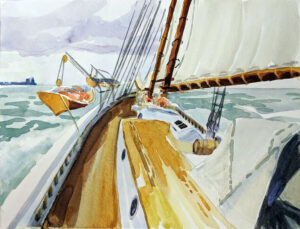
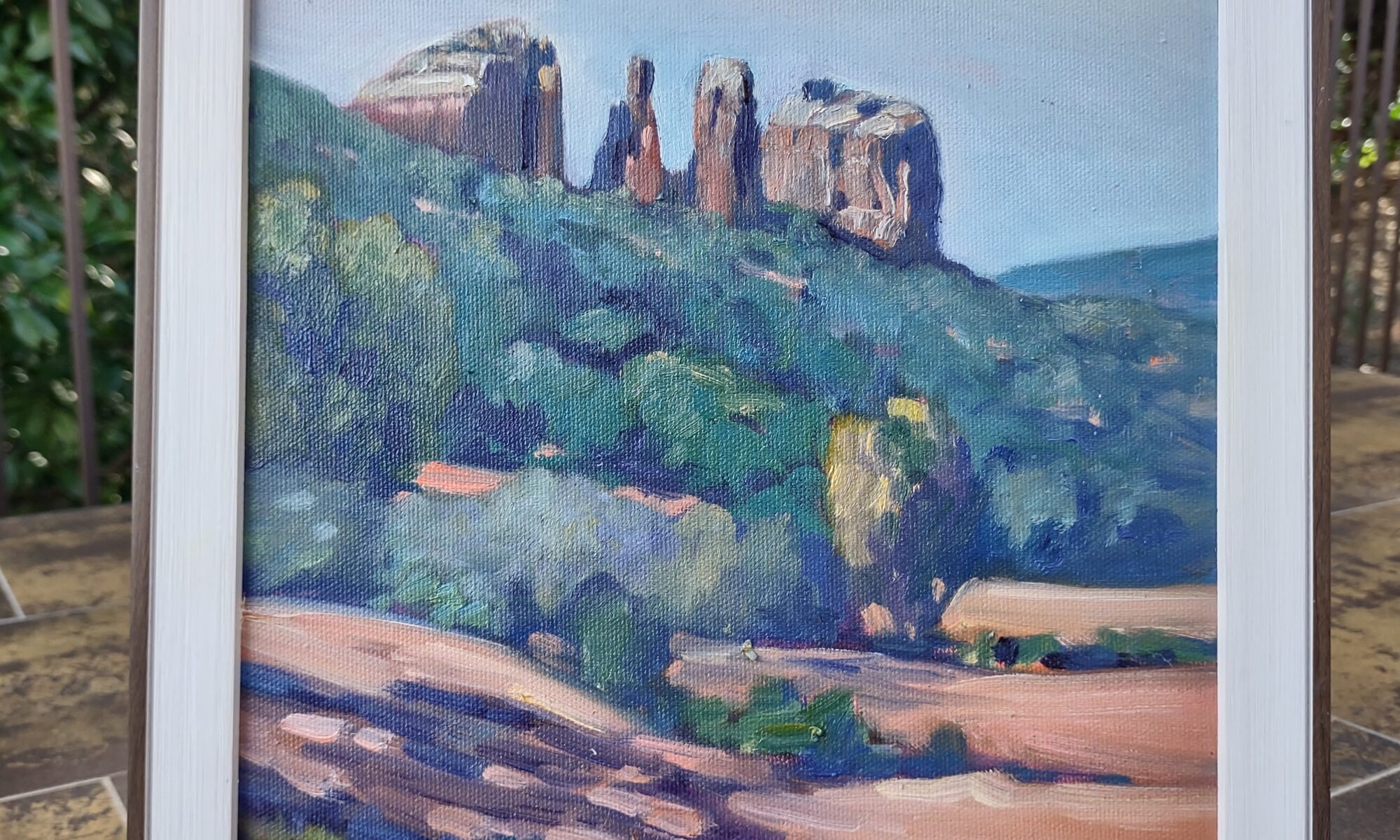
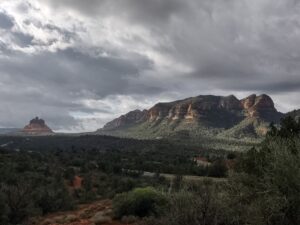
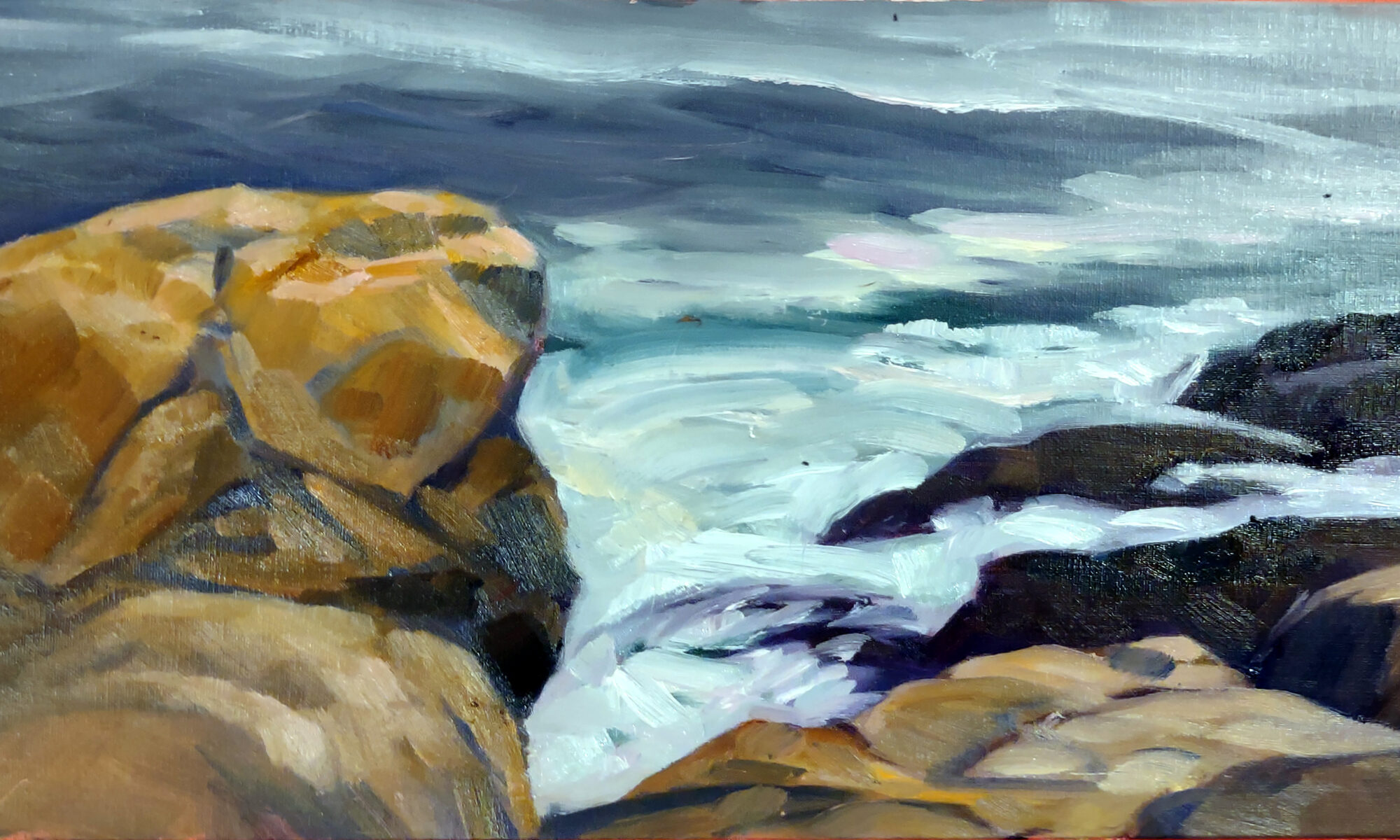
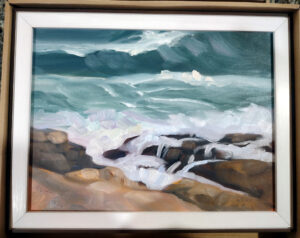
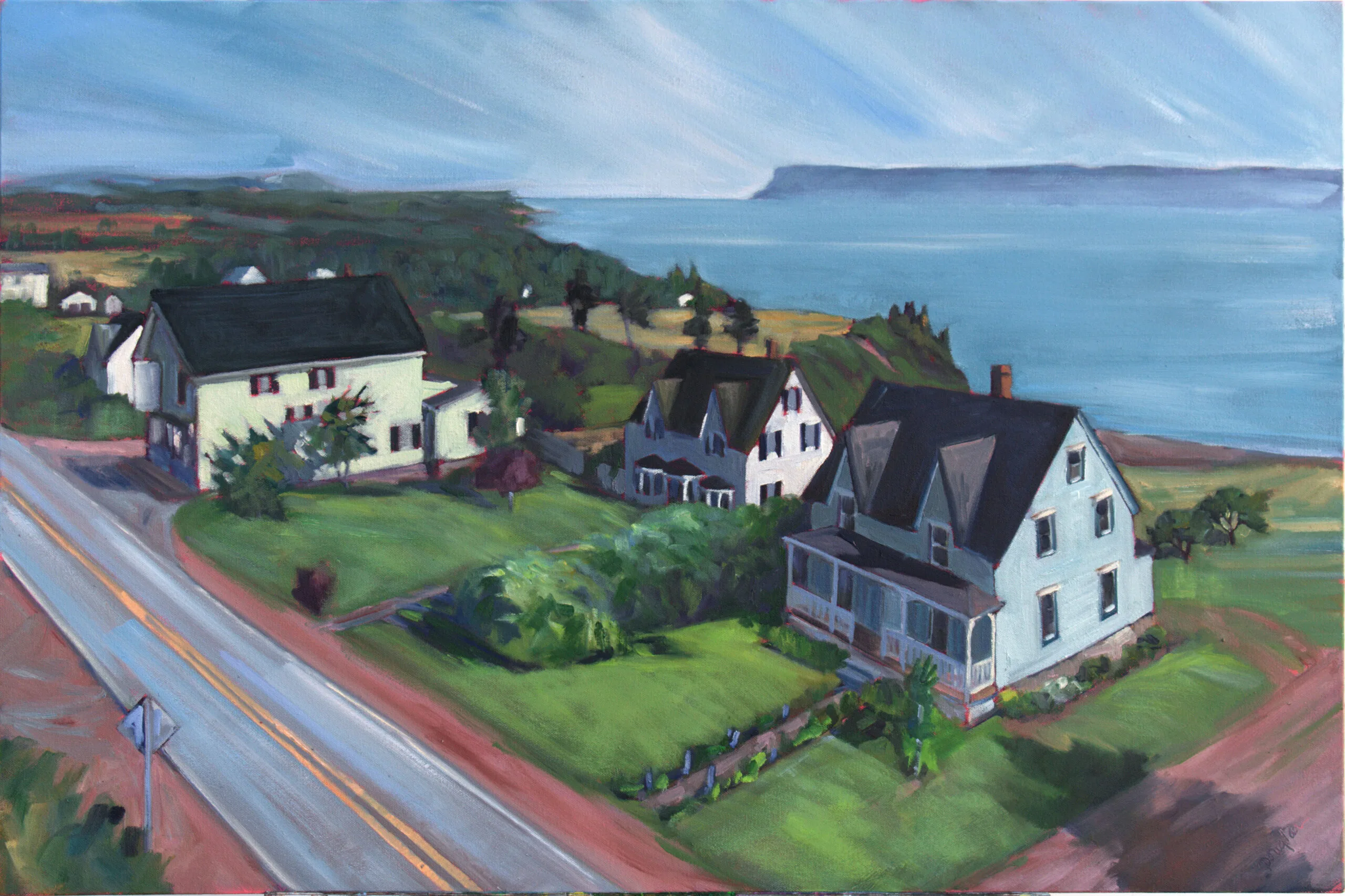
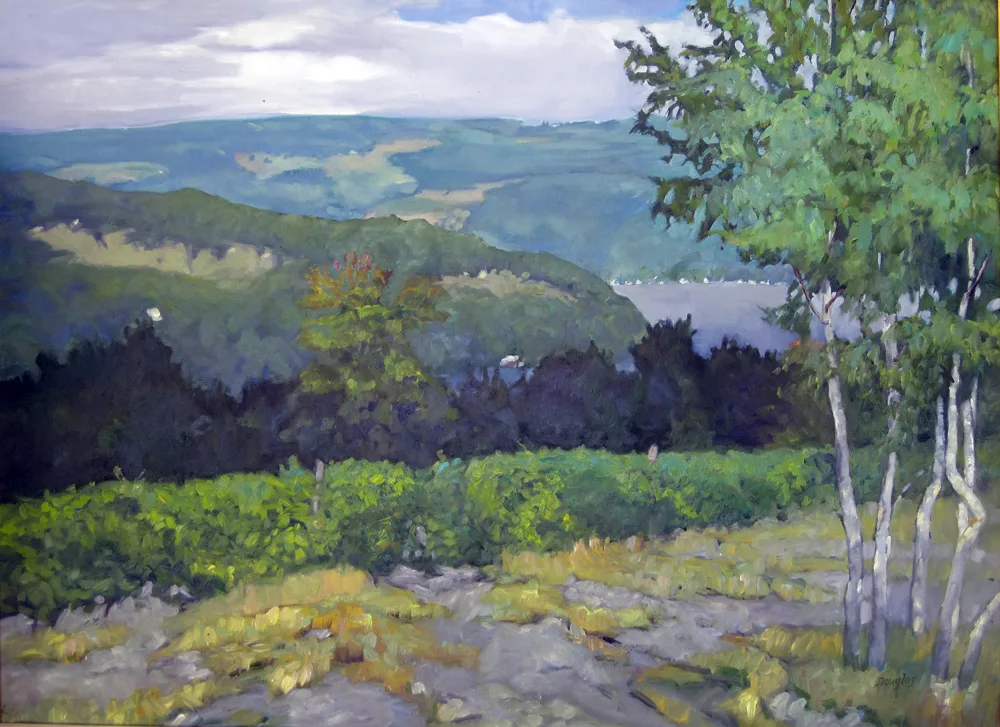
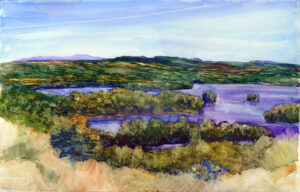
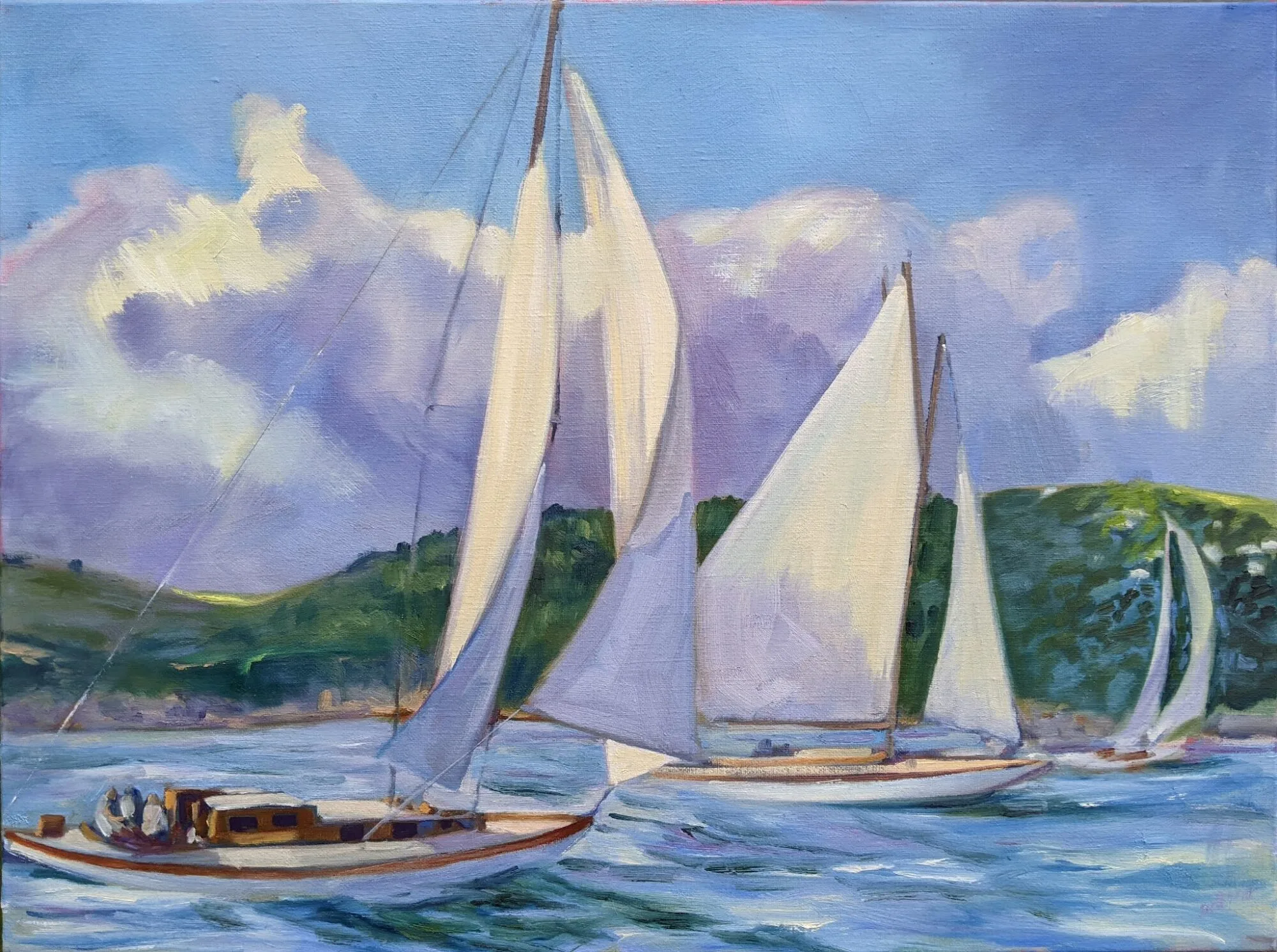
Midsummer along the Bay of Fundy, 24×36, $3188 unframed, available.

“Sometimes I just have such a wonderful, fulfilling time painting a certain place, I conclude it must be my best painting ever, because I had such a good time,” a reader wrote. “Then when nobody seems interested in it, I realize I was just getting all those good vibes from the painting but other people didn’t, because it actually wasn’t such a good painting. I have been trying to still keep my focus on making a painting a ‘good’ painting, and not just a record of my fun. Just because I had a good time doesn’t mean I produced a good painting; that still requires work.”

I have a related problem: the more a painting or situation challenges me, the better I believe the painting to be. Thus, a painting that I had to hike for, or one where the subject refused to compose itself are the ones that continue to fascinate me.
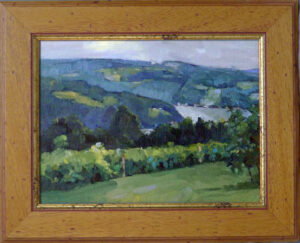
Viewers seldom agree, because I haven’t necessarily defeated the challenge; often it has defeated me.

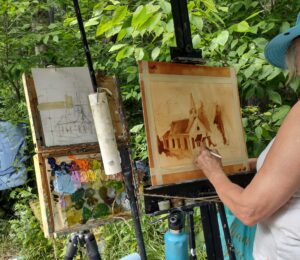
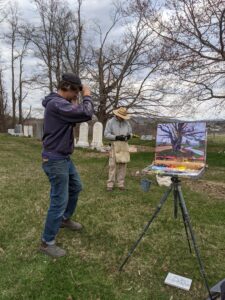
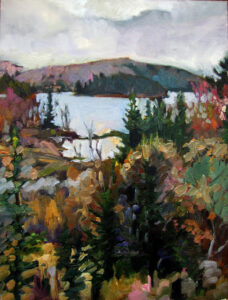
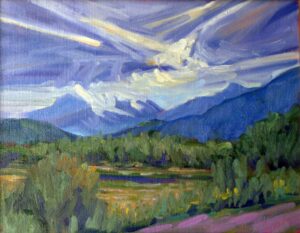
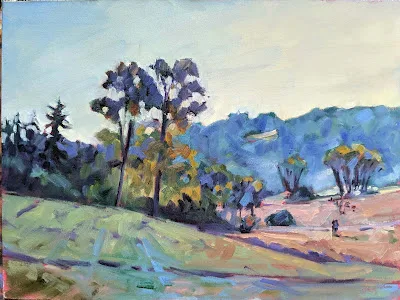
My own experience painting with Sandra Hildreth and Nancy Brossard at Madawaska Pond bears out the idea that memory colors our critical judgment: my painting skips right over its putative focal point so the composition is awkward. The treeline is disjointed. However, it’s a recording of a lovely day, far from the madding crowd. There’s a wee little figure (Nancy) in it, so I like it. I won’t pitch it or sand it out just yet.

Fog over Whiteface Mountain, 11×14, $1087, available.

Meanwhile, Sandy’s painting of the same subject (which you can see here), was right on the money: it accurately depicted the open sky, the enormity of the watershed, and the mood of the place. The public agreed; she sold it before the evening was out.

By and large, painting is not performance art. We hope to bring a whiff of mountain air into our work, or the raking light of evening, but these are illusions and memory.

Yet I still can’t bring myself to believe that the ancillary experiences that went into a painting’s making do not somehow inform the final result. Nor do I think that we or the immediate public are always the best judges of whether a painting is good or not. Had Vincent van Gogh relied on contemporary public opinion to judge his work, he’d have been dead wrong.

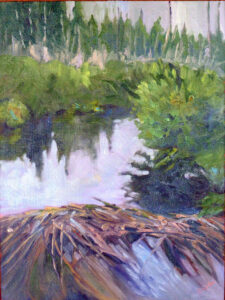
Quebec Brook, 12×16, oil on canvasboard, $1449 available.

I did another painting with Sandra Hildreth years ago. This one was of Quebec Brook, on the same watershed as Madawaska Pond but many miles away by road or canoe. It was a sunny summer day and I again had a lovely time. I was relaxed enough that I didn’t worry that my focal point-the beaver dam-was at the very bottom. Being chill allowed me to take a compositional risk.

The painting at the top of this post, Midsummer, was done from the edge of a cliff in Port Greville, Nova Scotia, over two days. The soil being soft, I managed to slide over the edge with my easel, landing in a patch of alders about ten feet from the rim. Had nature not put that ledge near the top of the ridge, I’d have splatted on the road below me. Yes, that experience has changed my view of the painting, but for good or ill, I cannot say.

Monday Morning Art School: scaling up a field study

Vineyard, 30X40, oil on canvas, $5072 framed.

“I’m wondering if you would do or have done a blog post about transitioning from in-the-field studies to larger studio paintings of the same subject. Or is it better to paint larger in the field?” a reader asked.

If you have the time and stamina to do a large field painting, they’re a great experience. Everyone should try it to see if they (and their equipment) are up to the challenge. However, there are limitations. You can’t finish a large painting in less than one very long day. The light, the tide, and even the weather will change. You can break the painting into two or three morning or afternoon sessions, but you’ll often be painting in radically-different conditions.

Keuka Lake vineyard study, oil on canvas, 9X12, private collection.

My go-to field easel is an Easy-L pochade box. It can hold a canvas up to 18″ high. To go larger, I switch to a Take-It easel, which can hold a very large painting. In high winds, that sometimes needs to be pegged down, or it will go sailing.

In watercolor, I work small on my lap. When I work larger, I use a Mabef swivel-head easel because it can hold a full sheet of paper and it swings absolutely flat in a second.

These are expensive options. If I were testing whether I wanted to work big outdoors, I’d lug my studio easel outside, or borrow a friend’s easel to try.

Henry Isaacs simply throws his work at his feet. “I never use an easel, whether the canvas is 8×8″, or 80×80″. I simply place the canvas on the ground, sand, or grass, and continually walk around it painting from all sides, all at once,” he said.

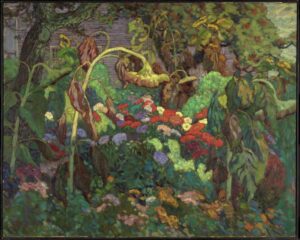
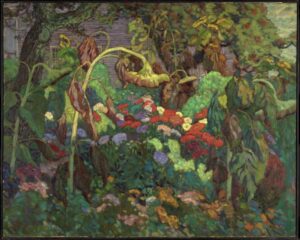
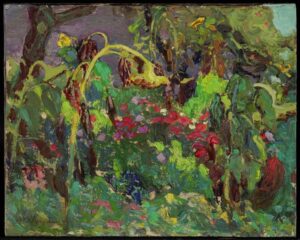
The Tangled Garden, JEH MacDonald, courtesy National Gallery of Canada.

Even with equipment and stamina questions answered, there are good reasons to start small and work your way up. Small studies are an excellent way of understanding the subject. They capture light and form better than a photograph. They allow you to work on the edge of abstraction, not overworking the material.

When scaling up the painting, it makes sense to grid up from your drawing instead of from a photograph. Make your grid on a bit of plexiglass or clear acrylic instead of on the original painting. I once did a study of boats in watercolor in a notebook and put crop marks over it in Sharpie. Later, I realized it was a bad crop, but it’s unrepairable. You can see that watercolor in this post about the mechanics of scaling up a painting.

Study for The Tangled Garden, JEH MacDonald, JEH MacDonald, courtesy National Gallery of Canada.

The Indigenous and Canadian collection at the National Gallery of Canada has an excellent collection of small Group of Seven field studies. Among these are JEH MacDonald‘s study for his iconic The Tangled Garden. The study is small, around 8×10″ and done on cardboard mounted on plywood. The finished painting is wall-sized, around 48×60″. MacDonald worked out his design, including the complementary color scheme and graceful arching sunflowers, in his field study. The large painting is remarkably faithful to his original idea.

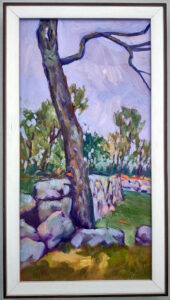
Sometimes it makes sense to add elements to the larger painting to break up the expanses. I’ve included a field study of my own along with its larger painting, at top. The subject was a vineyard along Keuka Lake in New York’s Finger Lakes. I enlarged the tree and added the characteristic rock scree of the Finger Lakes to the foreground. I’m not sure I’d do the same thing today.

Therein lies another lesson: the way we approach painting is constantly evolving, or we become a caricature of ourself. I look at old paintings and often think, “I’d do that differently now.” That doesn’t necessarily mean better; it just means I’ve changed.

Intimations of Autumn

Autumn Farm, Evening Blues, oil on canvasboard, $1449 framed.

Here in the northeast, we’re seeing the first intimations of autumn-the earliest scarlet leaves starting to drop on the forest floor, staghorn sumac sporting red velvety fruit, goldenrod and fireweed popping up in unmowed fields.

There is a subtle difference in the color of leaves. In a dry summer, that’s exacerbated, but by the third week in August, there will always be maples sporting a halo of red, and the birches have tempered into olive-green.

Autumn farm, oil on canvasboard, $1449 framed.

Even evergreens change color with the seasons. New growth is a very different color from the dormant needles of midwinter.

I’m leaving this morning to teach in the Adirondacks. It’s even cooler in Paul Smiths, New York (41 F as I write this) then here in coastal Maine. That should kick the swamp maples into their absurd fuchsia finery. It also means I’m going to repack my suitcase with warmer clothes before I take off.

We’ll be concentrating on the shift in greens. My students are familiar with all the exercises I give them to mix greens, because doing it accurately makes all the difference to eastern landscape painting. (The inverse, the ability to mix reds, is equally important in New Mexico and Arizona.)

Even in the height of autumn in leaf-peeping country, green remains the predominant color. But it will not be the same green as in May or July. These subtle changes will ground a painting with a sense of season, as well as a sense of place.

Beaver Dam, Quebec Brook, oil on canvasboard, $1449 framed.

I take great joy in weather, even when it’s hot or bitterly cold. I love being outside, feeling air on my skin. Recently, I’ve found my enjoyment is sometimes blunted by the endless, repetitive news cycle of catastrophic or record-breaking heat waves or winter storms. (I’m from Buffalo. I’ll see your snowstorm and raise you a blizzard.)

This is not to deny that the climate is changing-it is, and that will continue. But most weather records are relatively recent things, meaning it’s not hard to get windier, colder, hotter, or wetter than what we’ve already measured.

Bunker Hill Overlook, watercolor on Yupo, approx. 24X36, $3985 framed.

Poppy Balser and I were both raised on family farms. During the last heat wave we talked about haying, as it even harder than painting in beating sun. Putting up hay the old-fashioned way, with square bales, is the essence of summer heat. It may not be particularly enjoyable to stand in a hay loft, drenched in sweat, covered by infinitely small and scratchy particles of hay dust, sneezing. But it is memorable, and I’m glad I grew up doing it. In fact, I’d do it again if they’d just make bales that weighed fifteen, rather than fifty, pounds.

Weather is far more pleasant if you experience it. It’s still hot where you live? Go get an ice-cream cone and enjoy it. Autumn is really just around the corner.

Why does anyone paint plein air?

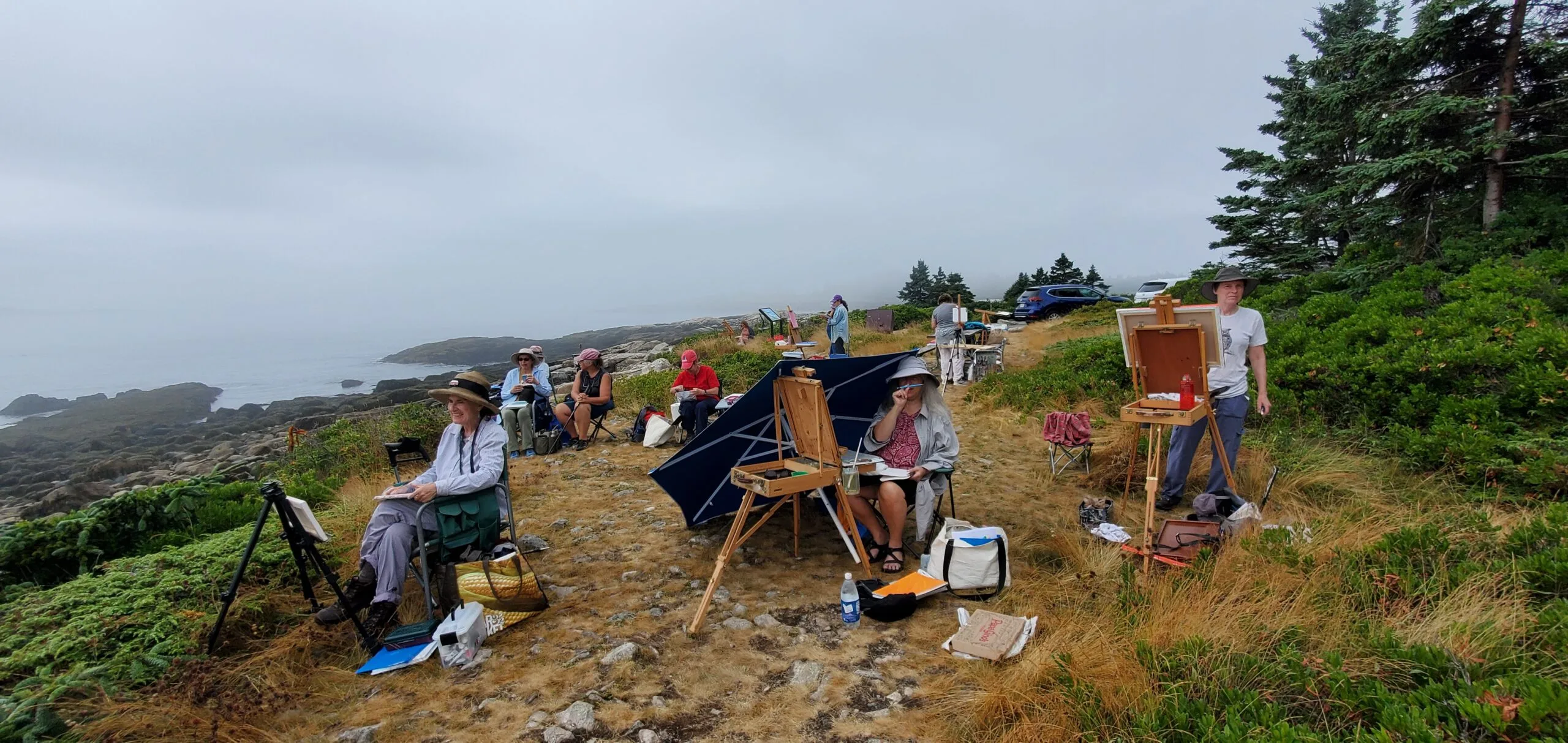
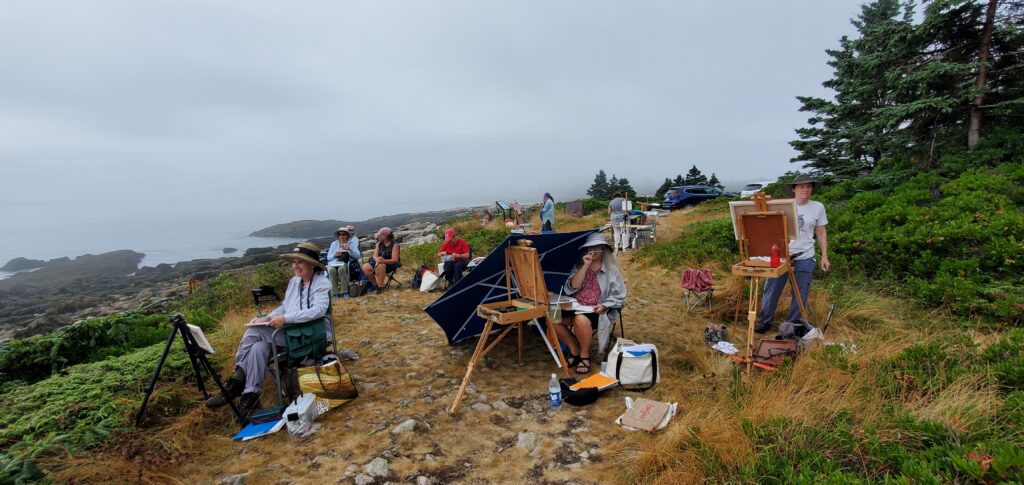
Painting the fog at Blueberry Hill Painting the fog at Blueberry Hill
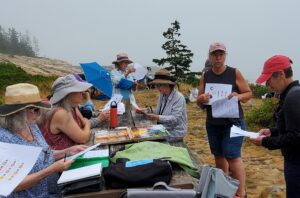
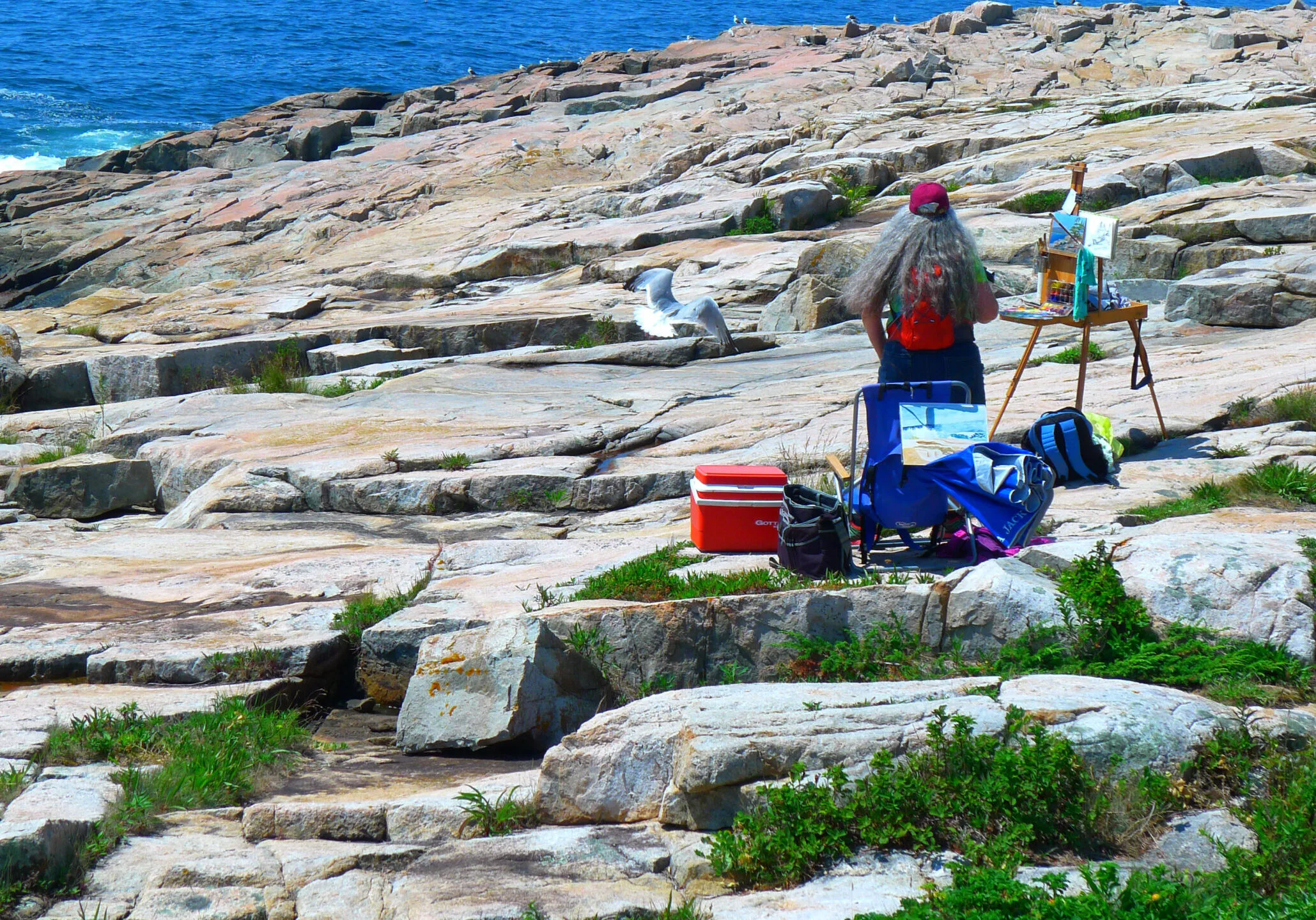
I’m in Acadia teaching my annual Sea & Sky workshop, and yesterday was a fog-bound day. We were at Blueberry Hill. The great granite slope, the spruces, and Schoodic Island drifted in and out of their wrap of soft wool. Not only do I love painting in this atmosphere, but it is a wonderful sensory experience. Fog can be grey or greenish or blue or even pink. It’s cool on the skin, sound is deadened and distorted, and one feels a sense of peace and solitude (assuming one isn’t attempting to navigate a tricky channel without satnav or radar).

“There is no extra charge for the facial,” I told my students.

Talking color theory with my homies. All photos courtesy Jennifer Johnson.

At around 11, the fog started to burn off. The sea glowed blue against the pink rocks. Offshore, every spruce on the island was picked out in relief. A regular observer of the coast would have bet that it was clearing for the day-and would have lost the bet. In as much time as it would take to redraft a painting to reflect these new optics, the fog settled back in.

It was ebb tide when we arrived. Blueberry Hill has wonderful irregular tidal pools rimmed with seaweed. Long fingers of granite reach down into the sea, and a spit of surf-worn cobbles stretches out into East Pond Cove. They’re a design delight, but you have to work fast. By the time we finished for the day, the sea had come in, covered every rock, and was receding again.

“Why does anyone paint plein air?” asked a student in exasperation. “It’s always changing!”

The world’s best classroom.

That is, of course, the point. There is dynamism in these changes, whereas reference photos are never more than a vague approximation of what happens in nature. Yes, I sometimes paint from photos-we all do-but it’s never as informative or energizing as painting outdoors.

I see Dennis during my Sea & Sky workshop. He’s accompanied his wife Paula for the past few years. While we’re painting, Dennis goes birding and hiking. “I saw a family of sharp-shinned hawks,” he told me yesterday. I was curious about how he identified them, and he told me about the app Merlin Bird ID. Last night I put it on my phone.

When you spend a lot of time standing in one spot outdoors, you hear lots of birds, and you meet a lot of birders. Hikers, bicyclists and kayakers amble through your field of vision. Our disciplines are united by a common reverence for nature, so we always have something to talk about.

Shelly paints a nocturne.

Radical changes in weather can be disconcerting. I won’t paint outdoors in a snowstorm or an electrical storm, for example. Extreme heat can be just as dangerous, but luckily, it’s not part of my everyday experience.

Last night, we met to paint a nocturne. On the way over, Cassie saw a black bear cub. That’s an experience you’d never have in your studio.

We set up at 8 PM outside Rockefeller Hall. It’s elegant and old, and we could turn on interior lights. We distributed headlamps and easel lights. I settled down in a corner, excited to spend time with my watercolors after a day teaching. Nocturnes in watercolor are challenging in their own right, and even more so in the damp of a foggy night. It can be like painting into a wet paper towel.

Forty-five minutes later, the skies dumped on us. Our gear, our paintings, and our composure were all soaked to the bone. We scrambled to pack up, laughing and chattering in the cold rain. Yes, we could have been in our rooms painting from photos, but instead we had a convivial adventure, and a new story to tell.

Alone or apart?

A painting class or group is good for your mental health.

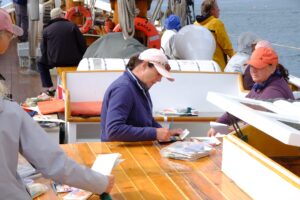
Painting aboard American Eagle last September.

I’m puzzling out a problem, so I’ve been peppering Ken DeWaard with texts. It’s just as likely to be Bobbi HeathJane Chapin or Eric Jacobsen on the receiving end of one of these barrages, but it was Ken’s unlucky week. They’re all smart cookies whom I trust with my confidences-in short, my friends. And how do I know them? Through plein air painting.

Painting is a fundamental contradiction in work style. It’s solitary, but it’s also a form of communication. Most artists I know are sociable beings, but we’re required to spend long hours alone to achieve our goals. That push and pull can be tough on the psyche.

Main Street, Owl’s Head, available, click for details. I started this painting with Eric Jacobsen.

Artists invented work-from-home, so a study that analyzed the effects of work-from-home during the pandemic should be of particular interest to us. The majority of people working remotely said they experienced adverse impacts on their mental health, including isolation, loneliness and difficulty separating from the job at the end of the day.

The workplace is a strong influence in modern culture. We no longer live in a society that’s village- or church-centered. Work takes up the biggest part of our waking lives. Often, people struggle to make and maintain friendships outside of the formal workplace, especially those who are socially-anxious or buried under family responsibilities. Work colleagues often share the same background, education, interests and values. They may not be our closest friends, but they usually understand us.

Mountain Fog, available, click for details. I painted this with Sandra Hildreth.

When one paints full time, work friendships are far harder to create. Yet there are times when only a colleague or peer gets it. Facebook is a poor substitute for that kind of conversation.

When I moved from Rochester to Maine, my former students wanted to keep painting together. They formed a group and called themselves Greater Rochester Plein Air Painters. That’s since morphed into a dynamic, active painting group with a few hundred members. It couldn’t have happened had I stayed in Rochester, because as their painting teacher I stood in the way of creating a peer group.

Quebec Brook, available, click for details. I also painted this with Sandra Hildreth.

However, people make lasting friendships in painting classes. I still have friends from my student days, and I’m blessed with students who like and support each other outside our classes and workshops.

A group or class can be healthy, but it also has the potential to be subtly overwhelming. Groupthink is the tendency of members of small, cohesive groups to value consensus over truth. That can stifle artistic development. If the ‘stars’ of your group all paint exactly the same way, you might be in a group or class where conformity is too strong a value. The answer, of course, is to find a different class or group, and luckily, that’s not too difficult-they’re everywhere!