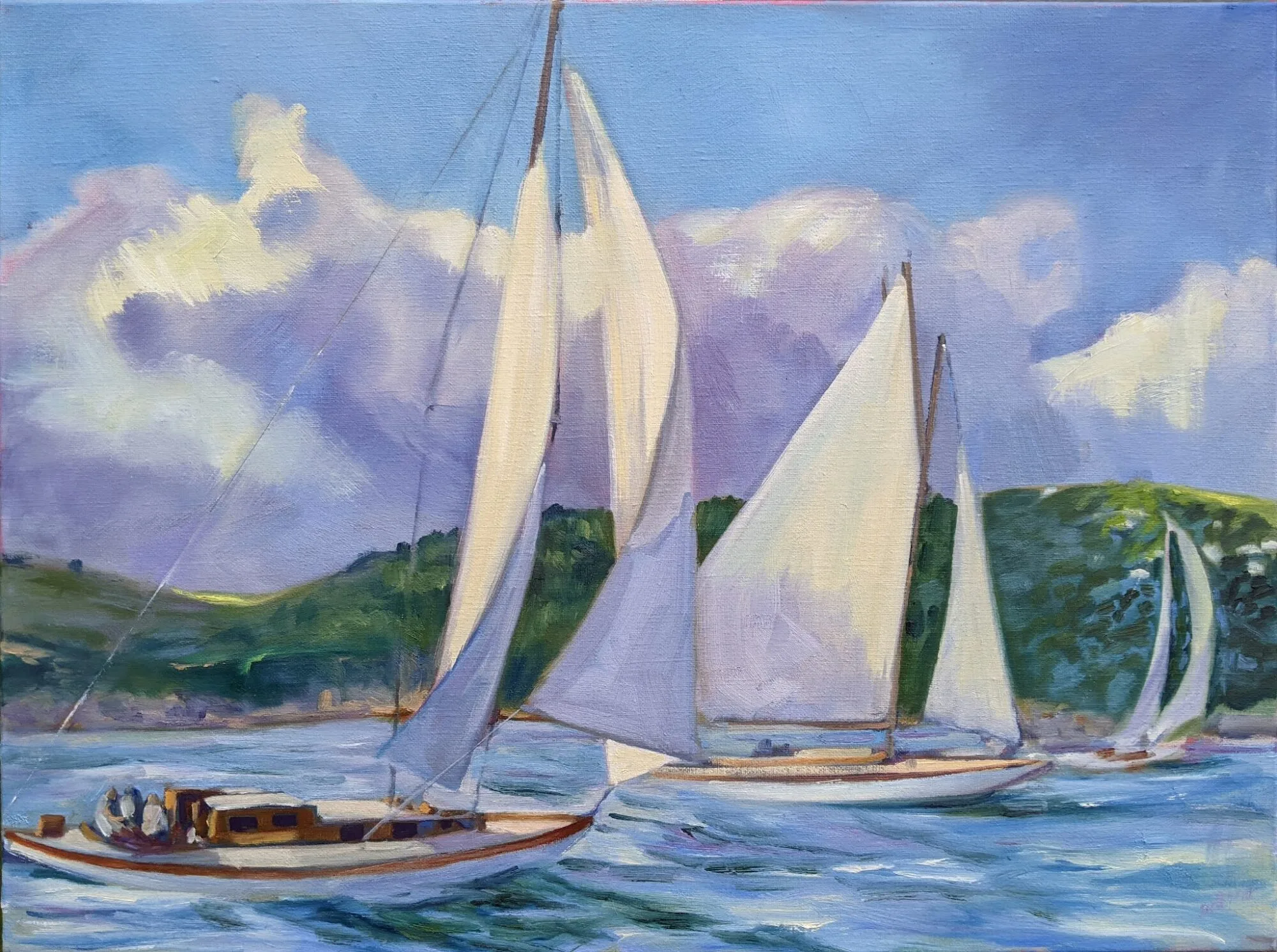
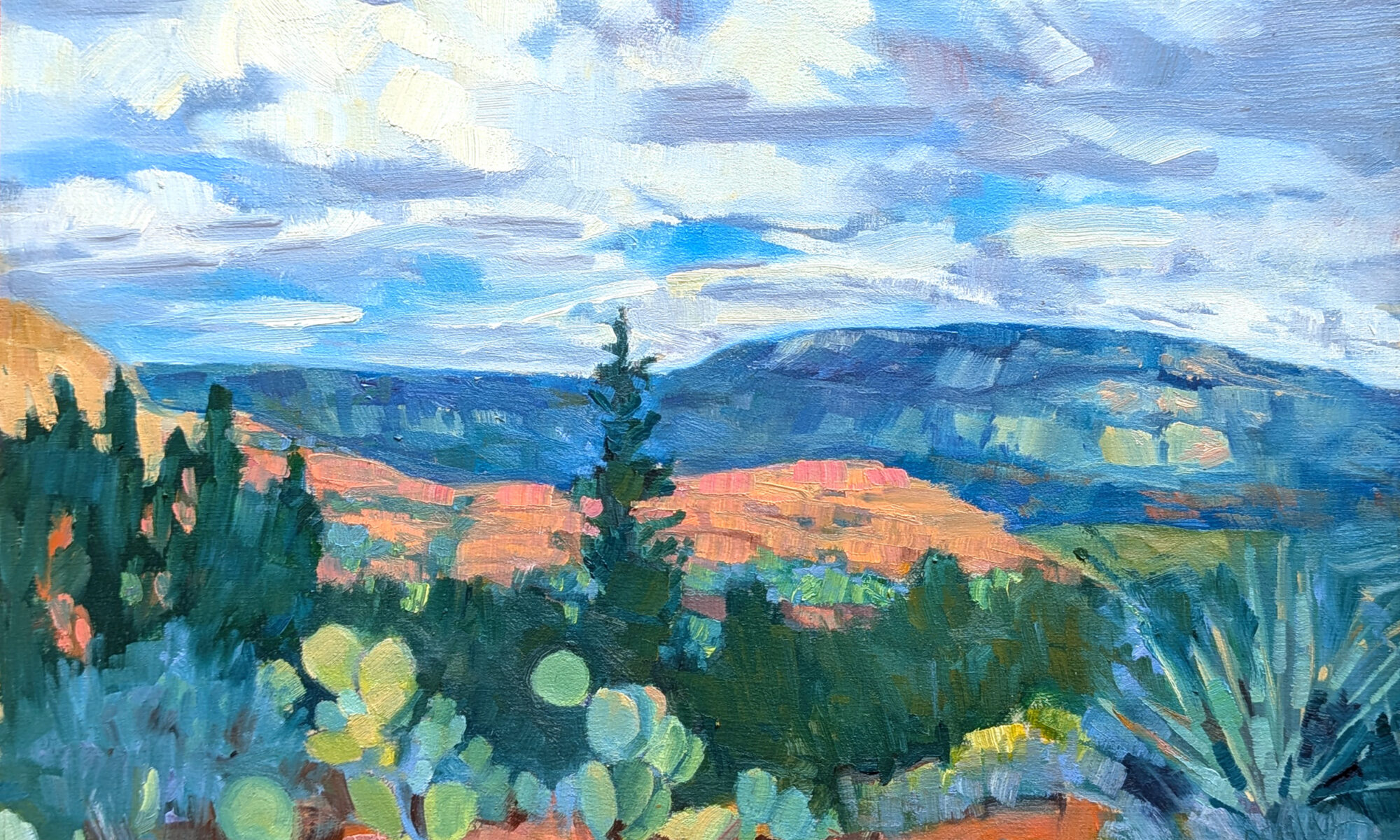
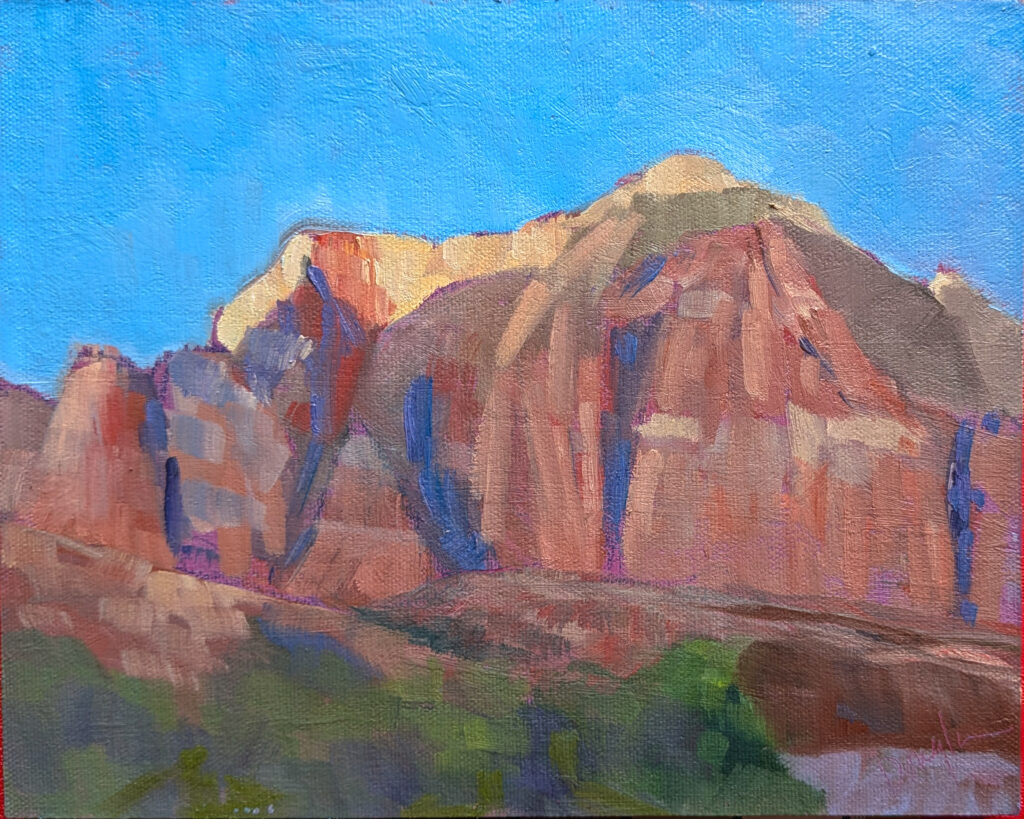
(It’s gonna take two days to show you the rest of the work I did out west. Bear with me.)
“You seem to always find something to like in your own paintings,” Laura Martinez-Bianco said to me while we were at the Sedona Plein Air Festival. It hasn’t always been that way, but I tend to see the good in others’ paintings, so why not my own?
Artists are, in most cases, an anxious lot. Beginners are particularly good at this. (I’m looking at you, Trix.) Most of these worries are perfectly normal, but some of them can get in the way of learning to paint.
Here are ten things artists fret about, and a few thoughts on what deserves our attention instead.
Am I talented enough?
Believe it or not, even experienced artists can fall into the trap of asking whether they’re talented enough.
Painting is a learned skill. You need to be willing to work hard. I’ve done my part to demolish the pernicious myth of talent, starting here and here, but it’s a hydra: cut off one head and two more grow back to take its place.
Am I doing it right?
There is an order of operations to painting, but it isn’t a paint-by-numbers exercise. Learning why something works is more useful than memorizing how someone else does it.
Why doesn’t my painting look like what’s in my mind’s eye?
Part of the beauty of painting is the difference between what you’re seeing (both in front of you and in your mind) and what emerges in your work. Beginners often assume that good painting means reproducing reality. If that were true, where would the art be?
What if I wreck it?
“If you can paint it once, you can paint it 1000 times,” I tell my students. Fear of failure makes painters timid. They stop before the painting has had a chance to develop. If you haven’t ruined something wonderful, you’ve never tested your limits.
What colors should I use?
Learning to navigate color space takes practice. There’s no substitute.
Another tube of paint won’t solve your color problem; in fact, too many choices can make it worse.
Why does my painting look amateurish?
Beginners compare their work to paintings by experienced artists and wonder why they aren’t there yet. Excellent painters compare their work to recognized masters and feel the same way.
Those artists have all thrown away more bad paintings than you can imagine. Give your own failures time to catch up.
What will other people think?
Is it good enough to show? Will anyone like it? Am I allowed to call myself an artist? (Yes; an artist is a person who makes art, period.)
The opinions of others can be useful, but you can’t build a painting around trying to please everybody. The more you paint, the more likely you are to be criticized. If nothing else, it helps you develop a thick skin.
What art supplies do I need?
Brushes, easels, canvases, paper, paints, mediums, palettes… there’s no end to the ways you can spend time and money buying art supplies.
Art supplies are a $3.7 billion/year market in the US. A lot of that is based on the seductive idea that buying more stuff will make you a better painter. You need just enough to get started.
Why isn’t my painting improving faster?
When a painting goes badly, artists can think they’ve regressed. In reality, learning to paint often involves an uncomfortable period when your eye improves faster than your hand. You can see what’s wrong, but you can’t yet fix it.
That’s progress, even if it doesn’t feel like it.
Am I done yet?
I know I’m finished with a painting when I start noodling. Or, worse, I’m bored. But more practically, ask yourself: what problem am I trying to solve? Have I succeeded? If so, then you’re finished.
There’s still room in this class:
- Painting Nocturnes, Monday evenings, 6-9 PM for three weeks starting November 30.
I have one workshop already scheduled for 2027! Reserve your spot:
- High-Desert Light & Monumental Form | Sedona, AZ, Apr 26, 2027 – Apr 30, 2027
Can’t commit to a full workshop? Work online at your own pace: