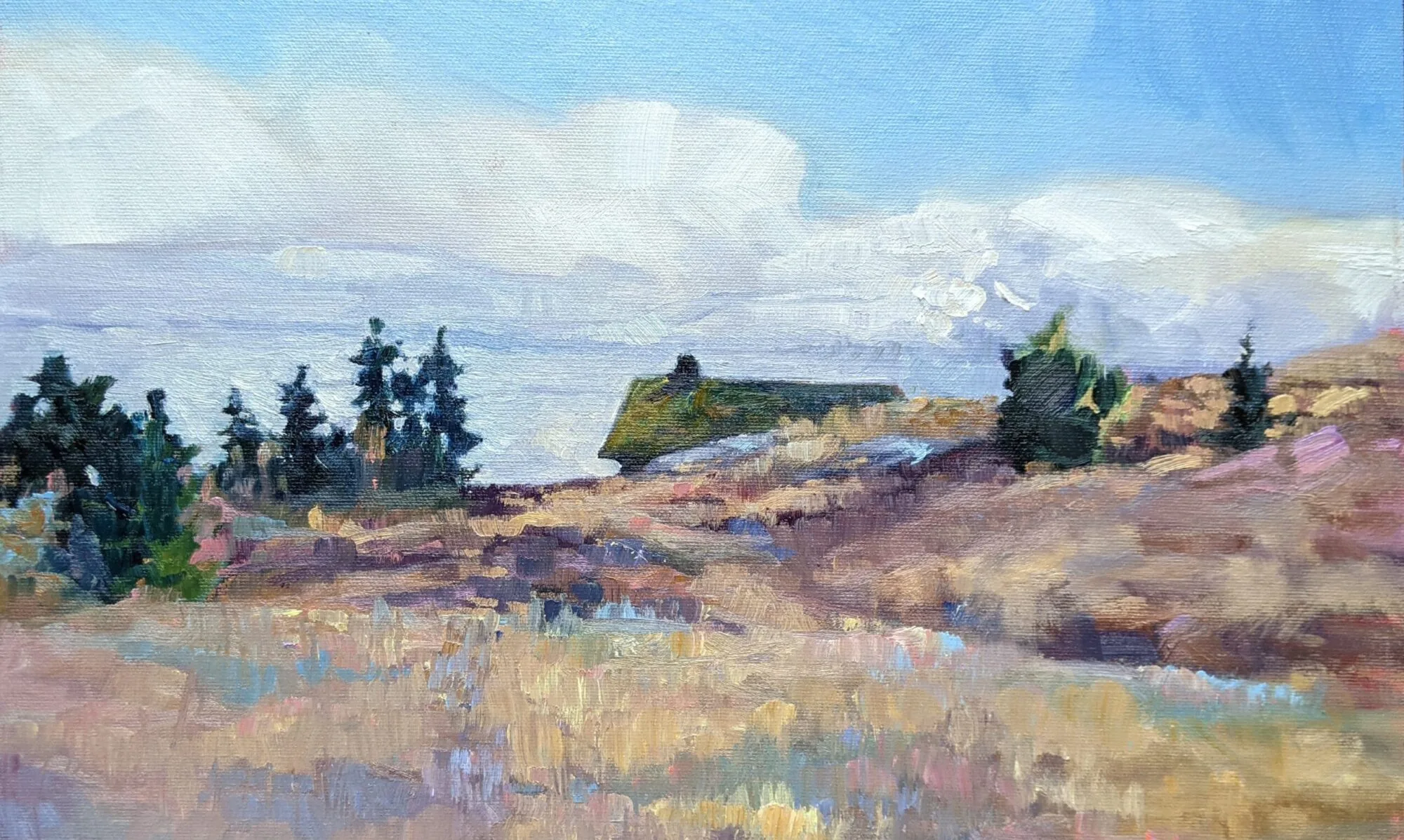
Left to their own devices, the voices in our heads take up a litany of “I can’t do this, I don’t know what I’m doing, all my work sucks.”
 |
|
Glacier Cagliero from Rio Electrico, 12X16, oil on canvasboard, Carol L. Douglas, $1159 unframed |
“At the core of true leadership is the idea that high value is placed on empowering people to become all that God has destined them to be,” said Pastor Bryan Carle this weekend. He went on to discuss how affirmation and validation are powerful tools to accomplish this.
To ‘affirm’ means to confirm or state positively. To ‘validate’ means to recognize, establish, or illustrate worthiness or legitimacy. “Affirmation is one of the most powerful aspects of the human experience,” said Bryan.
 |
|
Fogbank, 14X18, oil on canvasboard, Carol L. Douglas, $1275 unframed |
The power of words spoken over us was keenly demonstrated by my friend Helen, who’d been classified as ‘learning disabled’ as a child. Having taught her for many years, I know she was anything but slow. But when things got difficult, she would retreat into a shell of “I can’t do this; I’m stupid.” It was impossible to reach her when she got into that angry knot of self-loathing.
That doesn’t mean that classifications aren’t important in education; they obviously are. But we live up or down to the labels that others apply to us.
Helen tried to start a blog. I encouraged this by sharing it on Facebook. One of my friends sharply criticized Helen’s poor grammar and spelling. She never published her writing again. It was a loss to her, but an even greater loss to the rest of us. She had insights from the population permanently living in poverty. We frequently read writing about them, but seldom from them.
 |
| Beach Erosion, 8X10, oil on canvasboard, Carol L. Douglas, available through Ocean Park Association. |
I never learned my multiplication tables. That and my gender, coupled with my apparent talents in the arts, morphed into a label of “she can’t do math.” It became part of my self-identity until I returned to college as an adult. There, I found that I loved mathematics, particularly calculus.
A lot of hay is made about the dumbing-down of modern education, but positive affirmation is a tool I would have welcomed in my school days. How much more helpful a kind word would have been than the ruler across my knuckles. (Yes, I’m really that old.) Kindness and support changes mindsets from “I can’t do this,” to openness.
Years of teaching have disabused me of the notion that some personalities make better painters than others. We all have experiences and traits that can contribute to great art. The only telling factors are a willingness to work hard and openness to correction. Ironically, many of the most talented students fail because they protect their little nut of competence too fiercely. They’re afraid their teacher will invalidate them as artists.
 |
|
Bracken Fern, 9X12, oil on canvasboard, Carol L. Douglas, $869 in a gold plein air frame |
There isn’t a painter alive who hasn’t entertained self-destructive thoughts. Left to their own devices, the voices in our heads take up a litany of “I can’t do this, I don’t know what I’m doing, all my work sucks.” It’s particularly easy to fall into this in painting, because we generally work alone. Moments of validation—sales and prizes—are all too infrequent.
If professional artists can feel invalidated and alone, how much harder is it for painting students? That’s why teachers should be more interested in pointing out what’s right than in belaboring what’s wrong.