Season of mists and mellow fruitfulness,
Close bosom-friend of the maturing sun;
Conspiring with him how to load and bless
With fruit the vines that round the thatch-eves run…
(To Autumn, John Keats)

Here in the Northeast, we’re entering my favorite season. Nights are cool enough to justify the woodstove, but the days are golden-warm. The plant world begins its slow parade to dormancy. Already the early maples and sumacs are blazing; the blueberry barrens are turning red. The bunchberry (creeping dogwood) shines crimson against the leaf litter. Asters and goldenrod throng the meadows. The birches and beeches will soon turn brilliant, glittering yellow. Last to appear will be the bronze of the oaks, after which the landscape settles into the browns, plums and evergreen of November.
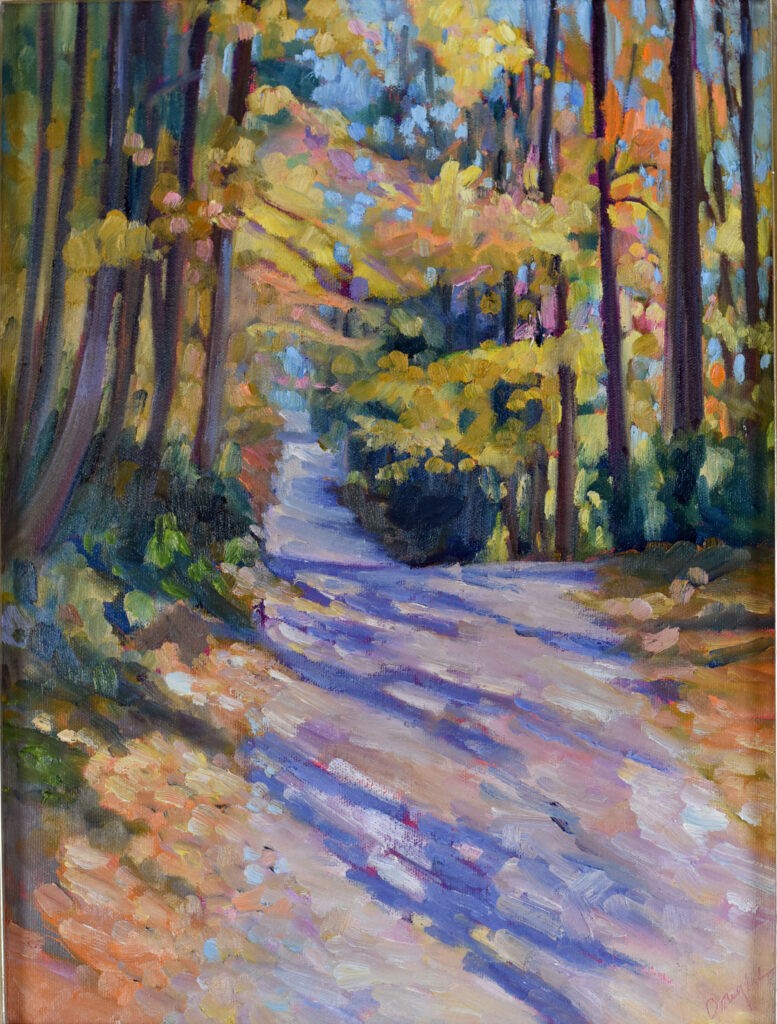
Painting fall foliage is always exhilarating and sometimes intimidating. Here’s a clear process to help you tackle autumn scenes without being overwhelmed:
Start with a strong value sketch
(You knew I’d say that.)
Before you touch your paints, make a quick drawing in pencil or greyscale marker. Identify your darkest darks, your mid-tones, and where the lightest lights fall. This study is the scaffold for your painting. By sticking to those values as you add color, you’ll keep your painting solid no matter what changes.
Block in the big shapes first
Pick out the brush you find comfortable, and then grab one that’s twice as big. In this first layer of painting, think in terms of masses, not individual leaves. Lay in the large shapes of warm color next to their surrounding cools. Keep your strokes broad.
Control color temperature
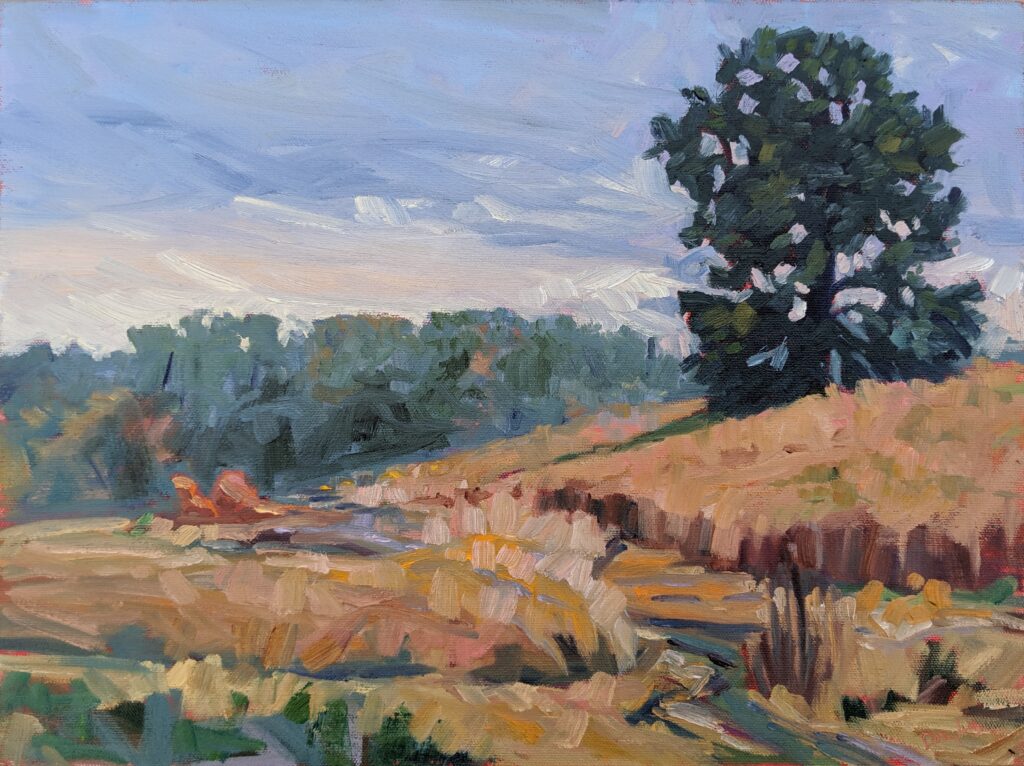
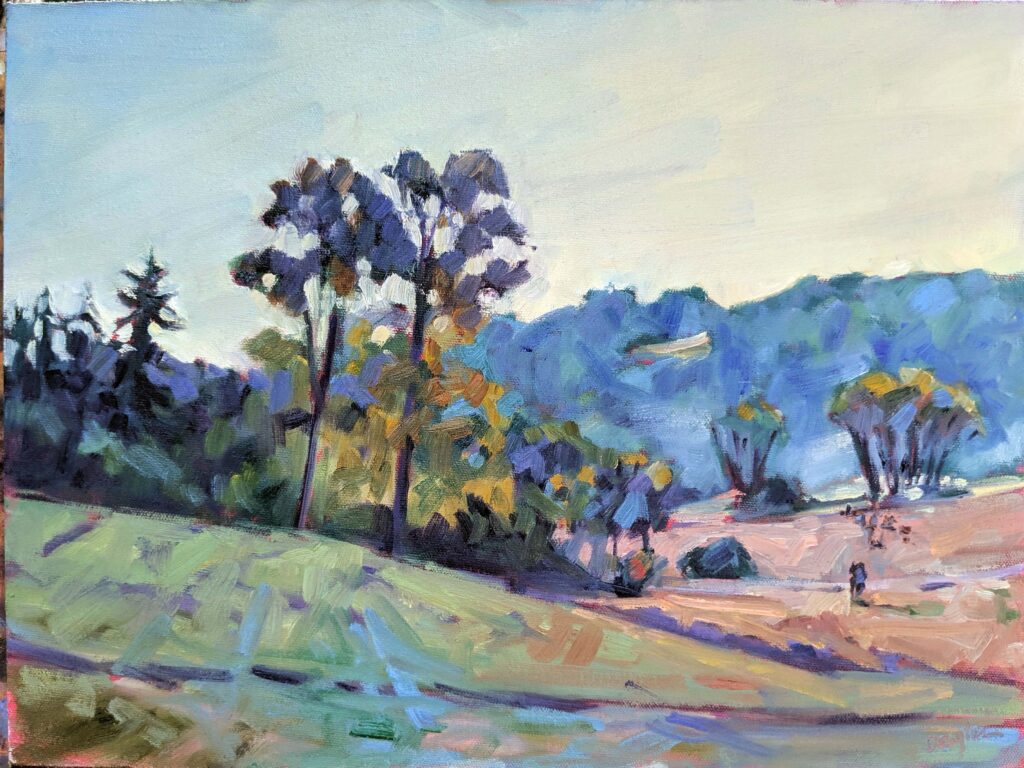
Autumn is about warm colors, not just in the foliage but in the light. Seek out cool colors for balance, such as sky blue, long violet shadows, evergreens and grey-blue tree trunks. These will give the warm colors in your painting something to vibrate against.
There’s a lot of green still out there
Even in the height of fall foliage, there’s still a lot of green. It might be in the understory, the evergreens, or in trees that never really lose color. Every spring I show you how to mix beautiful greens. Don’t ignore that just because it’s fall.
Use chroma intelligently
I’m the last person to suggest low-chroma painting; it’s dated both technologically and culturally. Still, you need to use intense color with some restraint. A hillside that’s all brilliant red-orange isn’t going to have the same kick as one set against the more restrained blues and greens of nature.
Please don’t paint every leaf
Once the big masses are in, add texture with broken strokes, scumbling or palette knife. A few flicks of color are enough. Leave the major parts implied.
Step back often
Autumn color is so strong that it can overwhelm you at close range. When you step back from the easel, ask yourself: is my value structure holding? Are there clear focal points? Is there integrity to the color scheme? If yes, you’re on track for a great painting.
Want to learn more?
Want to practice these techniques while the leaves are at peak? Join me for my last workshop of the year, the October immersive workshop in Rockport. We’ll paint the blazing colors of Maine on location. You’ll get lots of one-on-one attention and a whole week to immerse yourself in fall painting. Since space is limited, sign up today!