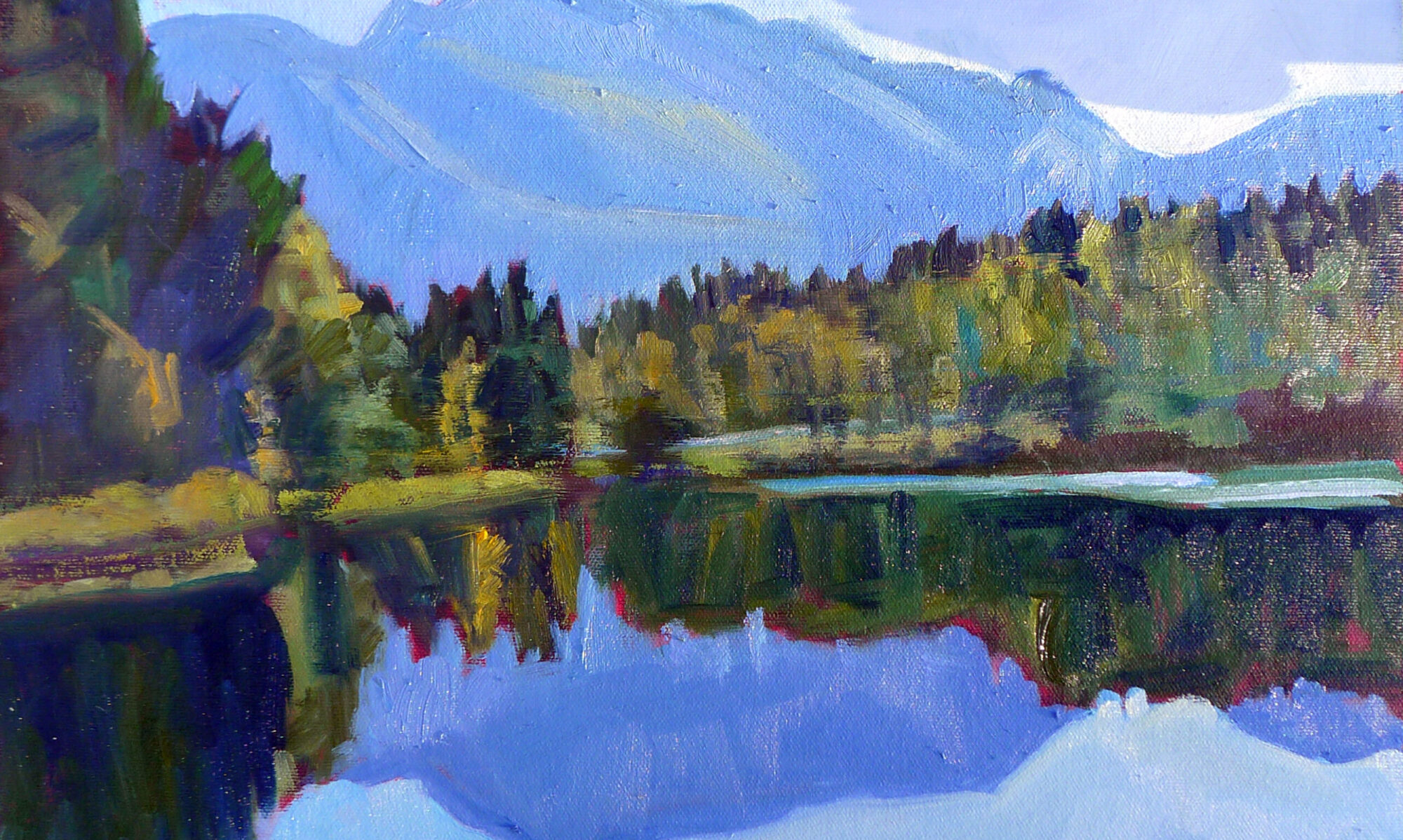


My October Immersive In-Person Painting Workshop is not like other workshops. This is in part because I take students to the Farnsworth Art Museum, where we do a deep dive into plein air painting.
In the mid-1800s, the Hudson River School painters came north to Maine, drawn by the wilderness and the coast. They were our first plein air visitors, and they were here before there were even proper roads.
A generation later, Winslow Homer set up shop at Prouts Neck. That transformed his painting, because Maine was nothing like the places he’d previously visited and painted.
Then came art colonies and summer visitors. Suddenly, the Maine coast was dotted with easels. Robert Henri, George Bellows, Edward Hopper, and countless others tested themselves against our sharp light and raw landscape.
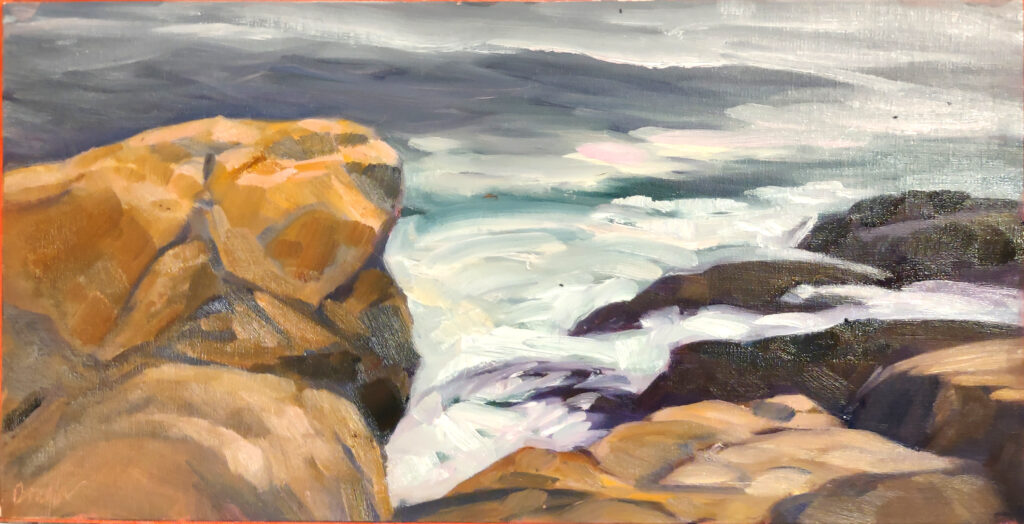
Why Maine? The light is part of it, as is the coast, which endlessly shifts with fog and tide. The working landscape is another: boats hauled out, traps stacked high, houses weathered by salt and time, blueberry barrens changing color with the seasons. Here, the everyday is always in flux.
And painters still come. Maine has never stopped being a proving ground for artists who want to measure themselves against the natural world.
What can I learn in a museum that I can’t see on the internet?
As a painting workshop teacher, I of course focus on technique. But that’s only part of the battle; the greater issue is vision.
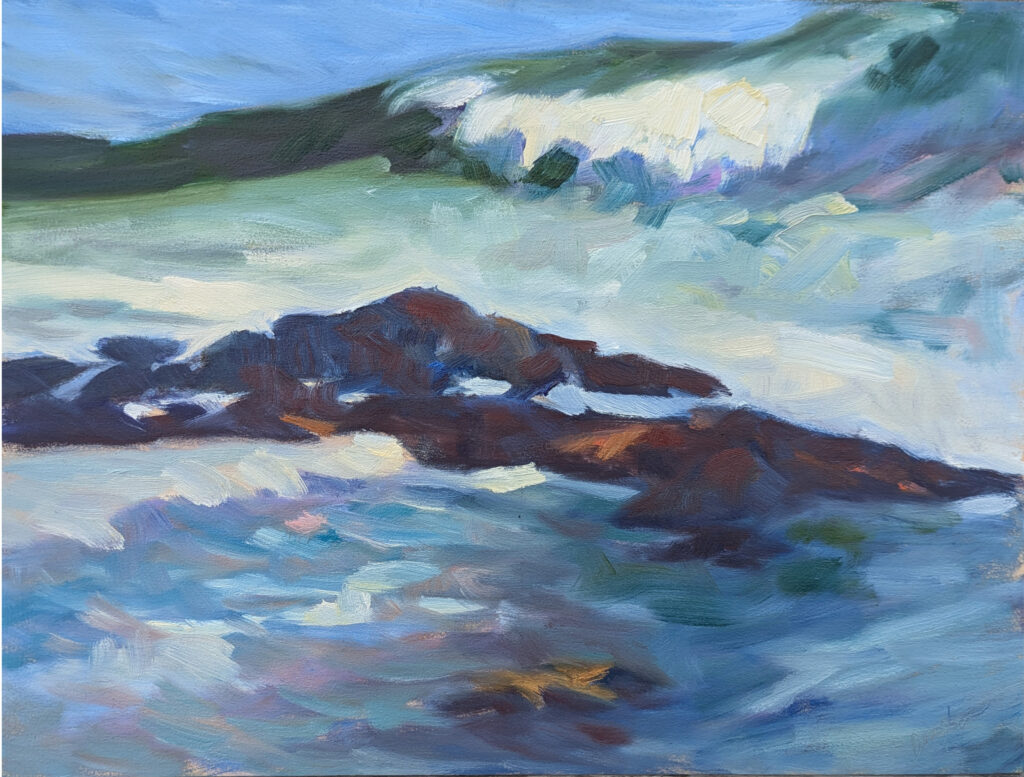
Standing in front of a masterpiece, we see color, scale, and brushwork in a way no reproduction or screen can deliver. Photographs and online images flatten and diminish paintings. Seeing those same paintings in person is a shock to the system.
Andrew Wyeth’s superb plein air watercolors are an example (and the Farnsworth owns many). They are radically different from his tempera paintings—wild, loose and luminous. They’re visceral and physical, and you’d never get that from just seeing a small image on a screen.
Art museums pull us out of our comfort zones. The biggest thing you notice is scale; suddenly you’re not as interested in the confines of a small canvas. But real-life paintings also emphasize the power of composition and confident brushwork. We begin to ask ourselves: What can I borrow? What can I try?
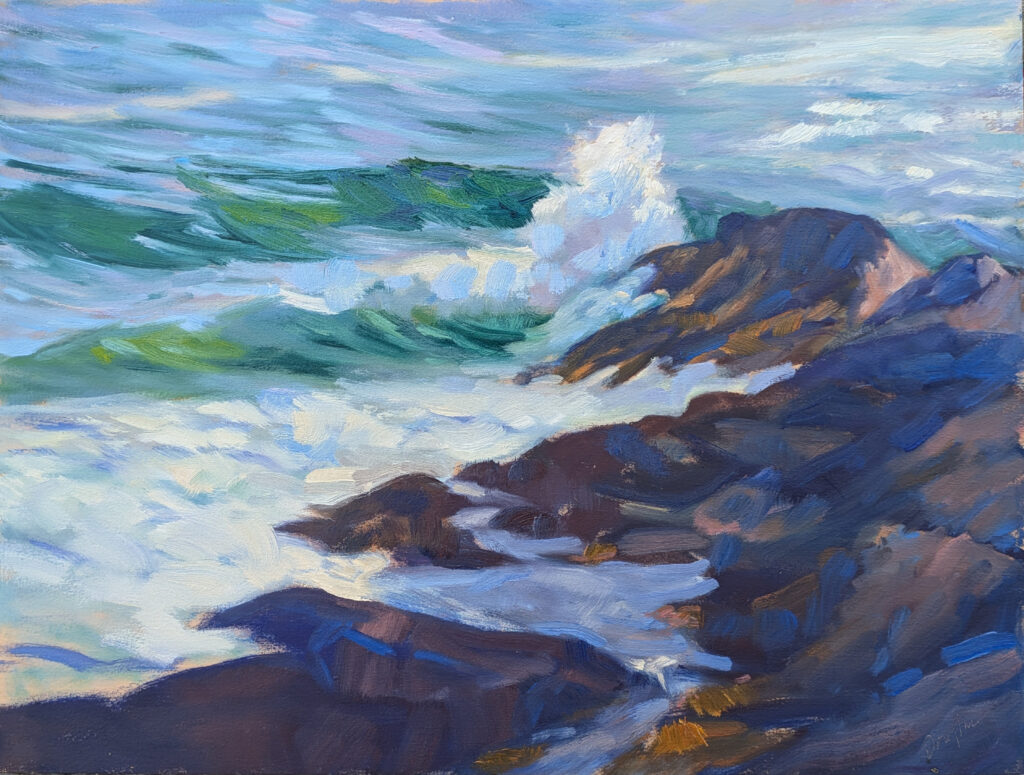
A museum visit changes how you see your own work. When you notice how Homer lets the sea crash out of the frame, or how Fairfield Porter sets figure or object against beautifully-designed negative space, it sparks fresh ideas. You start to ask yourself how you could integrate those ideas into your own painting.
Surrounded by several centuries of art, you understand that you’re part of a centuries-long conversation. That perspective can be humbling, but it’s ultimately freeing.
For me, taking students to the Farnsworth is a vital part of teaching my painting workshop. I’m not just training painters to mix specific colors; I’m trying to teach painting at a higher level.
That’s exactly why my October Immersive In-Person Workshop in Rockport includes a museum visit. We’ll spend a full week painting together, but also stepping into galleries to stand face-to-face with great art. Because sometimes the fastest way to grow as a painter is to let yourself be inspired by the masters.
Don’t wait—join me in Rockport this October. Spaces are limited, and I’d like to get supply lists to you as soon as possible.