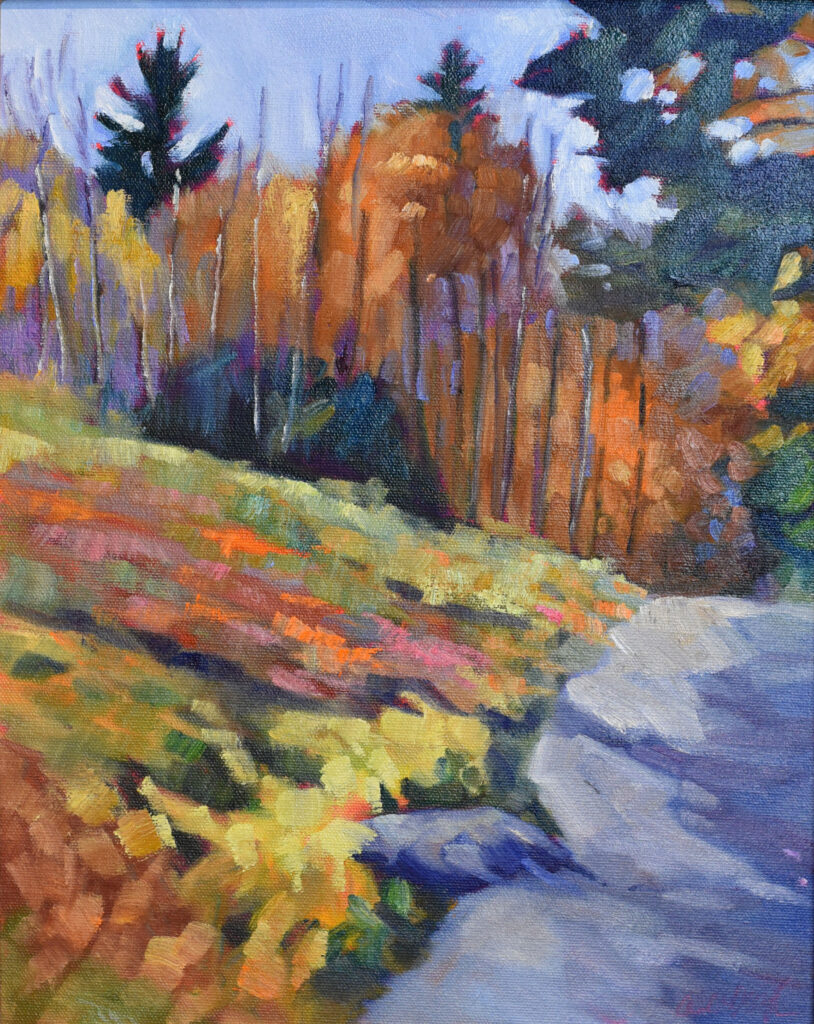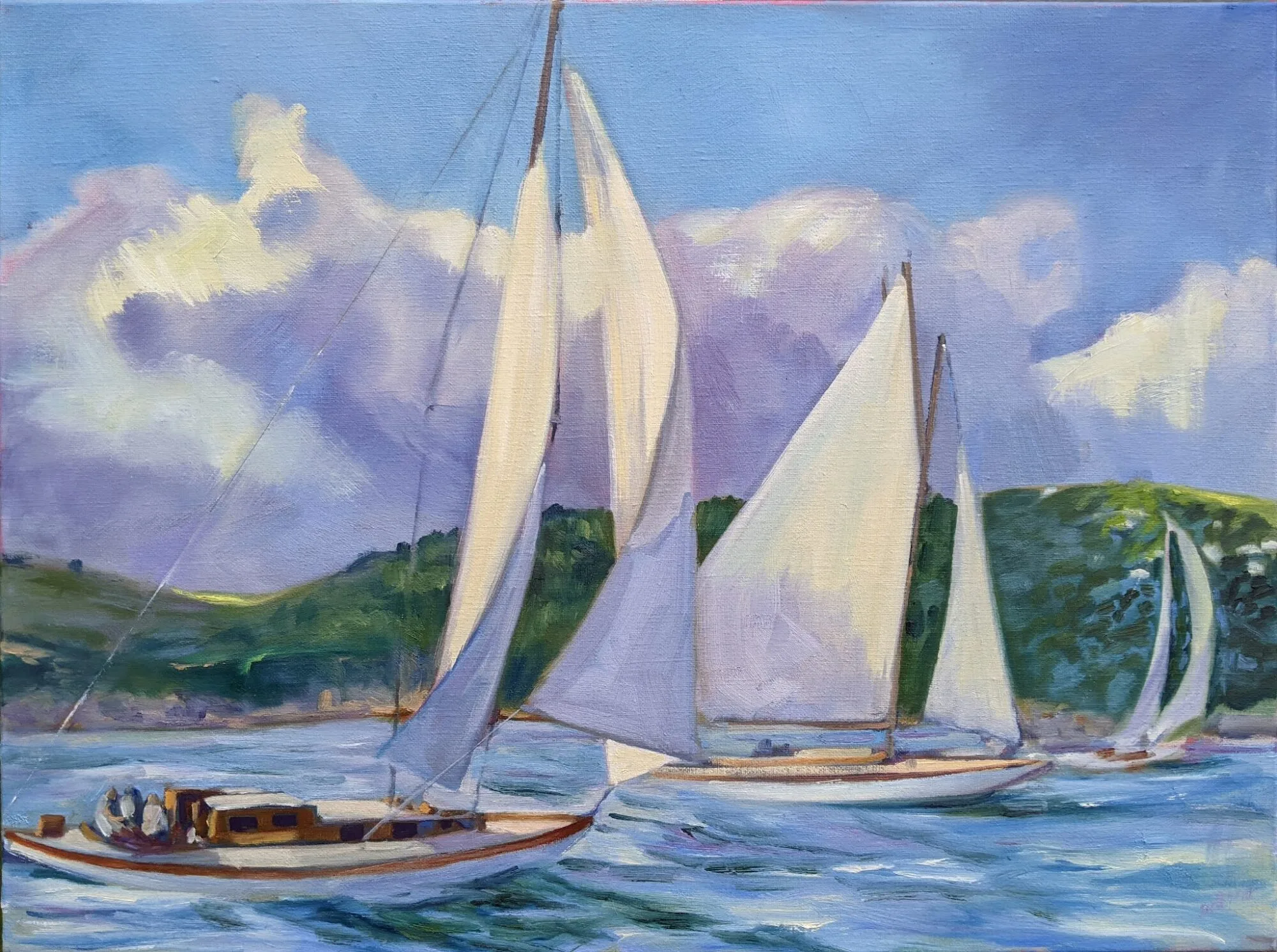
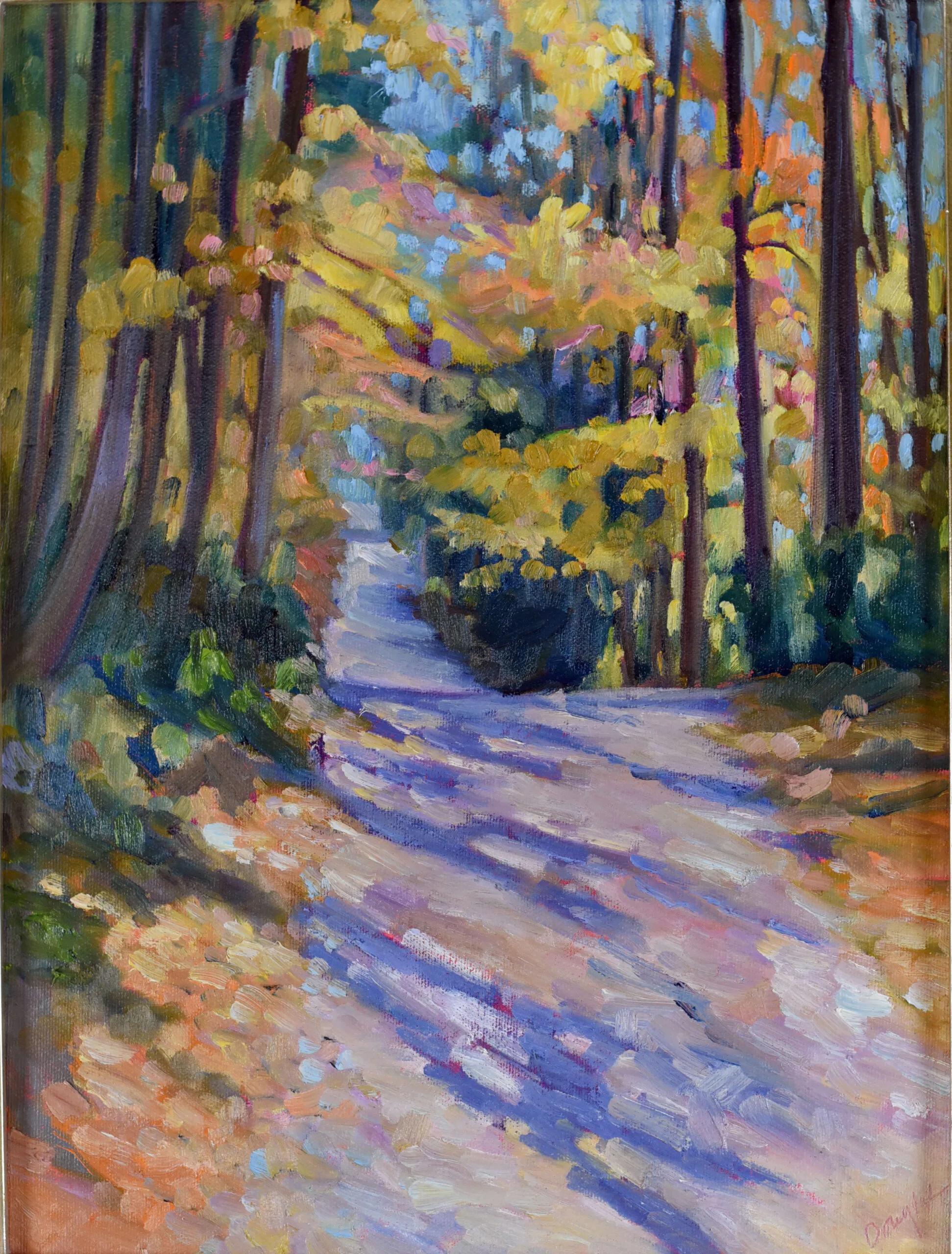

My husband and I are ramping up our daily hiking mileage in anticipation of Britain’s Cotswold Way next month. It’s my favorite way to visit a new place, and I hike for the same reason I paint: to slow down enough to actually see.
We spend a lot of time on the trail even when we’re not training—4.5 miles a day, through Erickson Fields Preserve and Beech Hill Preserve. (Maine, by the way, has the highest concentration of land trusts per capita of any state.)
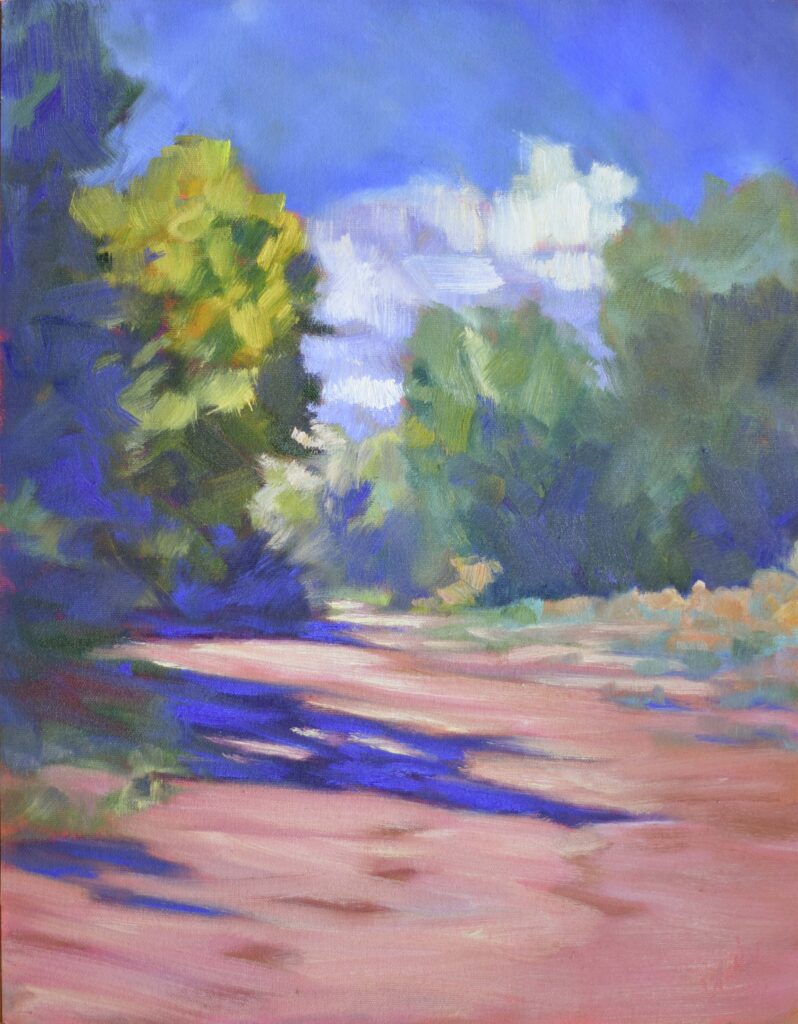
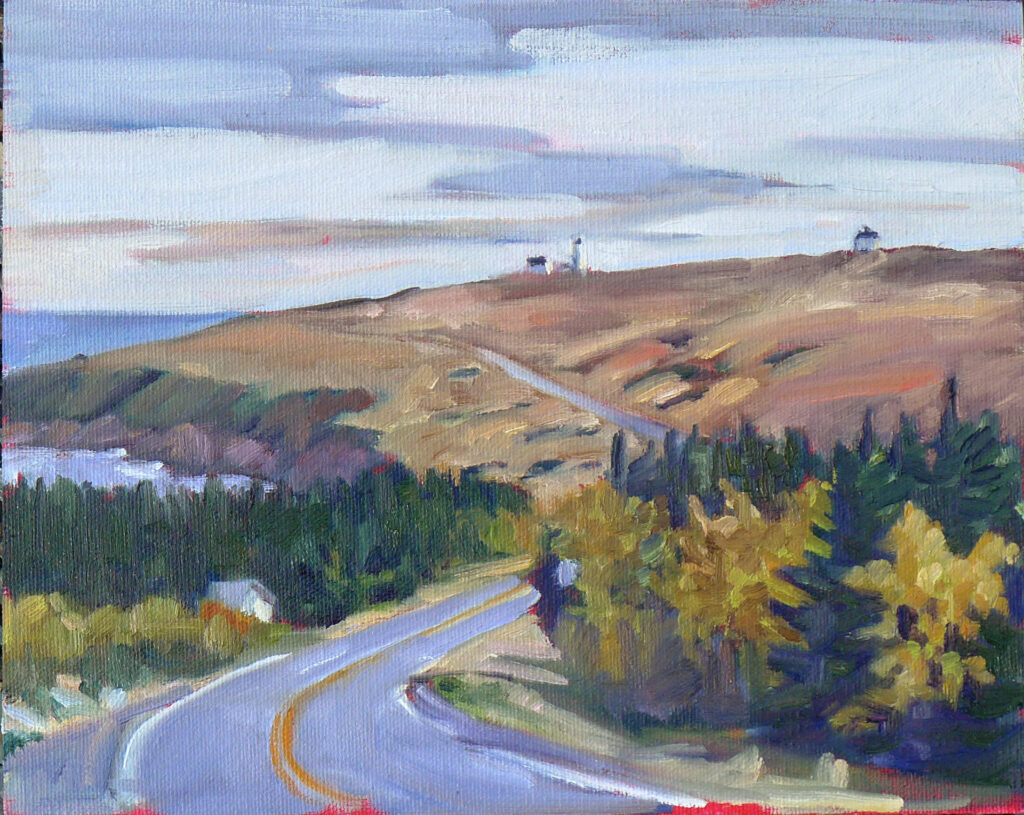
Being in the woods every day can be miserable, especially in hard winters. Then we complain about the footing, the north wind and the intense cold. But even cold days can be engaging. After more than a decade, I know these preserves intimately, but they are never boring. They demand attention with their uneven footing, the shifting light on the ocean and weather changes. There’s no multitasking and certainly no playing with your phone. If I want to stay upright, I have to watch where I’m going.
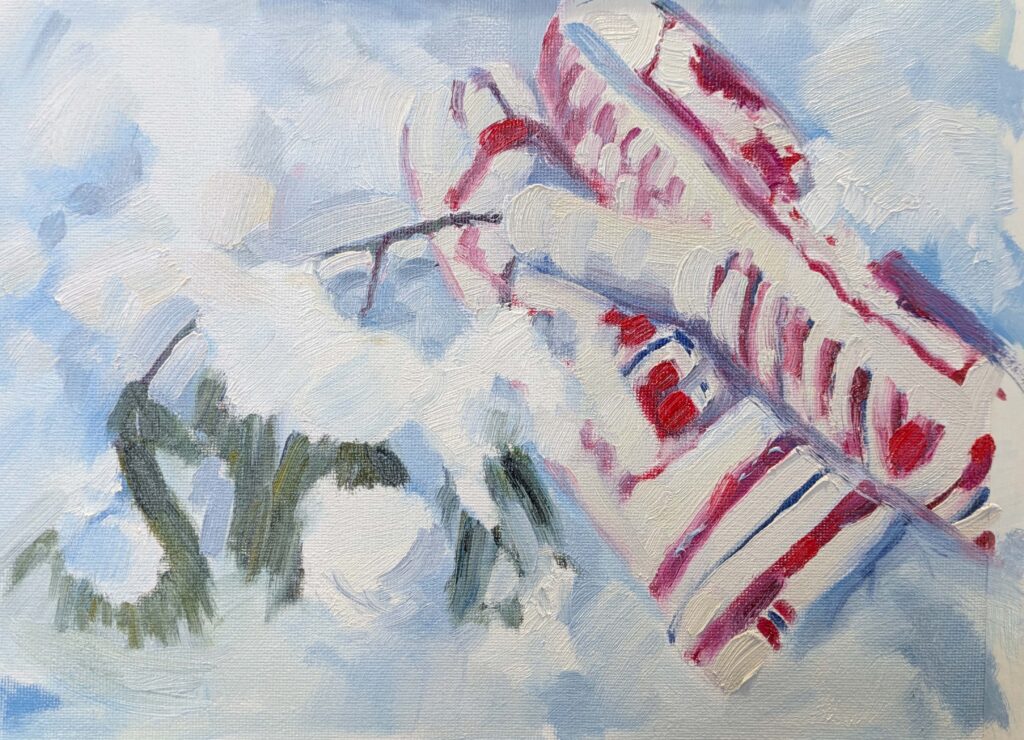
There are a thousand small events in the woods, and they require learning to see. Right now, the moss is turning emerald green and the tops of the trees are a warm smudge of swelling buds. Almost all the snow is gone. I look every day for the first shoots of ferns poking out from drifts of pine needles and leaves; it will mean the soil has finally thawed. But with that comes frost heave, which means roots and rocks where there were none before.
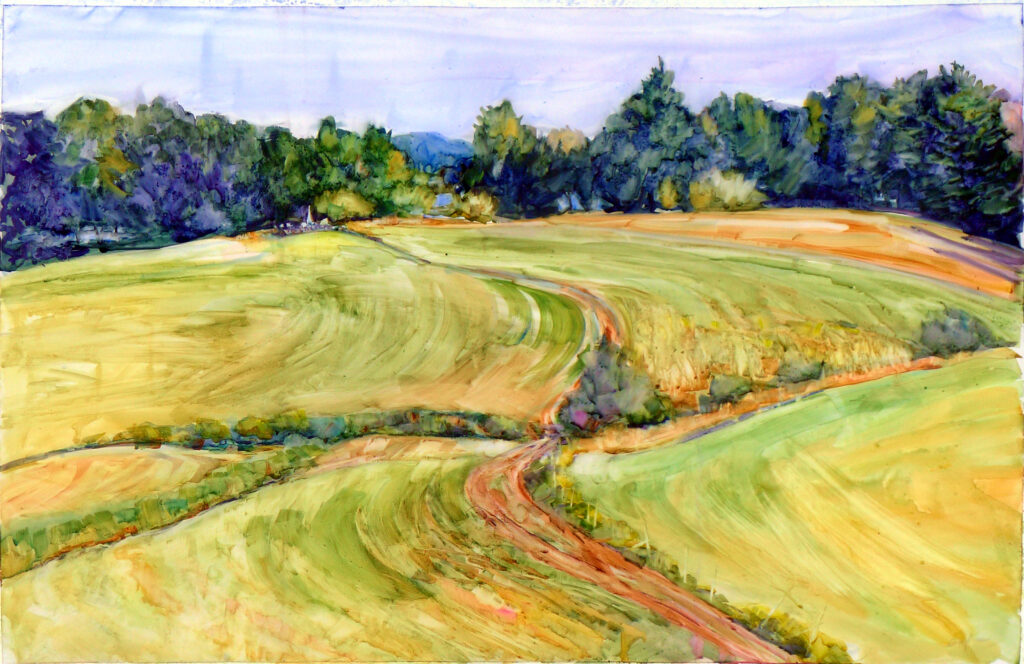
Painting asks for the same attention
In the studio or plein air, painting requires the same attention in learning to see. Painters who start relying on what they think they know end up being caricatures of themselves. Painting isn’t about what you think you see or know; it’s about what’s actually there.
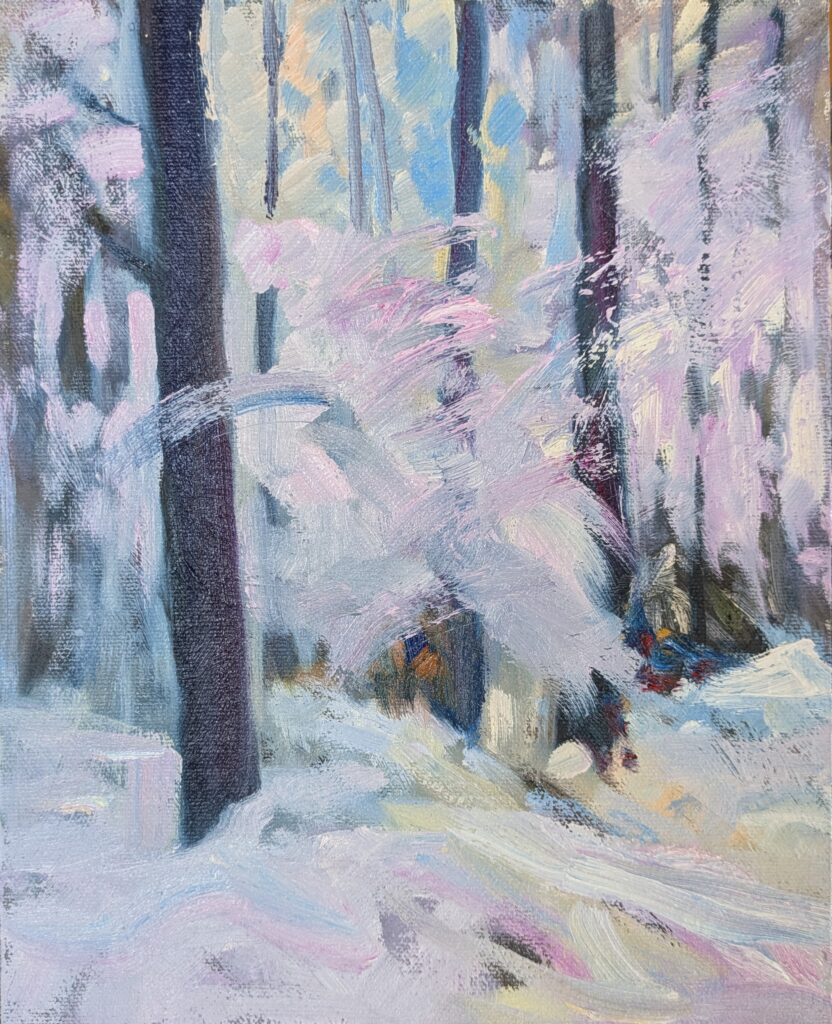
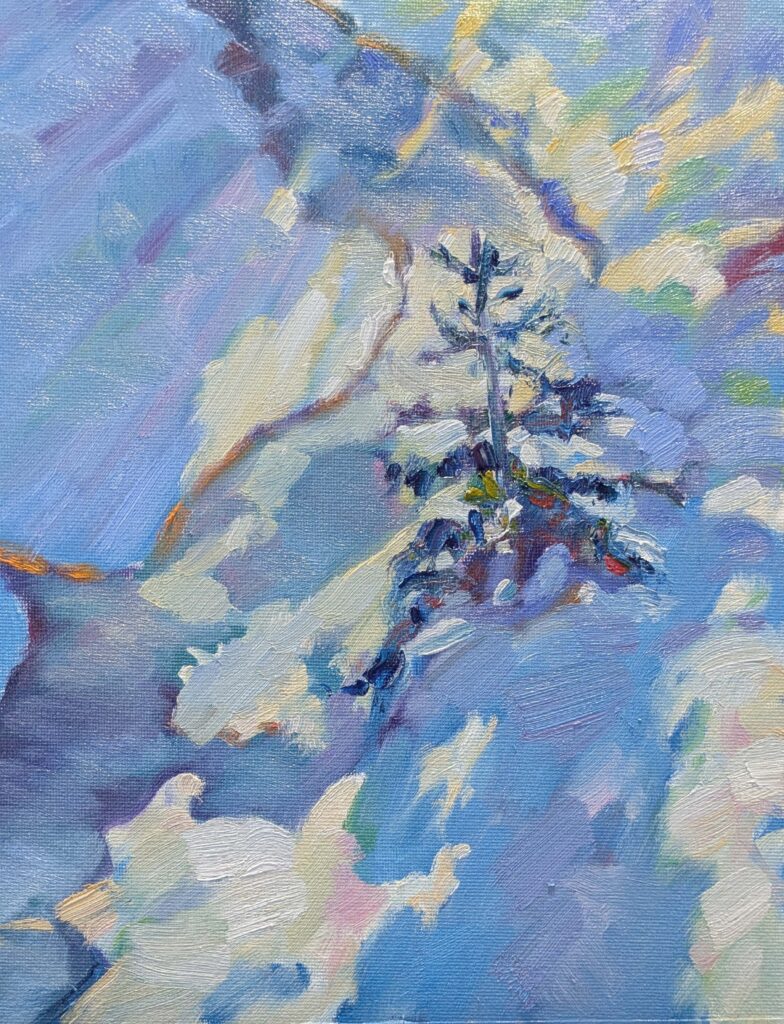
What’s actually there is always deeper and more complex than what we expect. For example, shadows can be a surprising range of cools and warms, the combination of the absence of light and reflected color. Out my window the bare maples are are a million shades of blue-grey, with shifting edges and values in the rising sun. Just like on the trail, when I slow down and really look, the ordinary becomes complex and, more importantly, beautiful.
Slow down, you move too fast
Our brains are wired to be efficient, to compress information. It’s highly useful to recognize “Man-eating tiger” and follow that up with “Run!” That might be a lifesaver but is the enemy of deep looking. Painters constantly fight that biological imperative.
Successful painters resist that first read. They question spatial and value relationships, draw, think, look and draw again. They develop the habit of visual concentration.
Seeing clearly is difficult. We all have blind spots; we all fall back into shorthand. We can spend months or years repeating the same mistakes.
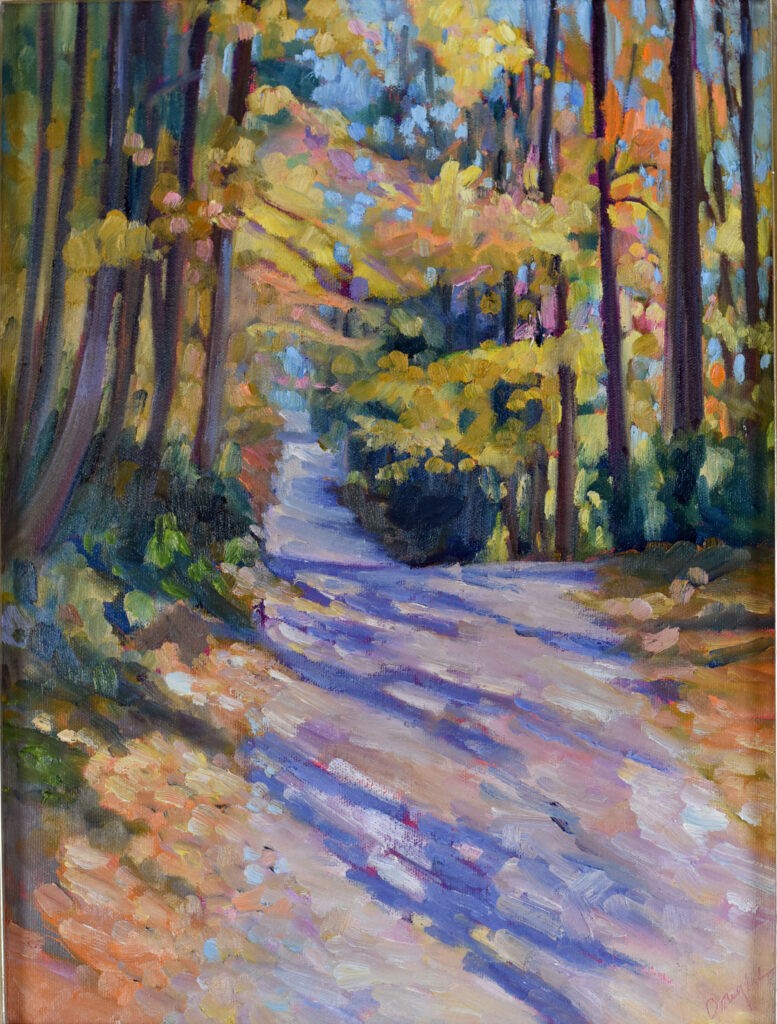
An unbiased eye
Good critique doesn’t tell you what’s wrong; it teaches you how to see differently. It slows you down in the same way a rocky trail does. It forces you to notice what you’ve been skipping over.
If you’re ready to sharpen your eye and start seeing your paintings with more clarity, I invite you to join my Fresh Eyes Critique Zoom class on Tuesday evenings, 6-9 PM on April 14, 21 and 28. After that, you’re on your own for a while, because I’ll be in the Cotswolds, looking.
Registration is now open for workshops in 2026! Reserve your spot:
- Find your Authentic Voice in Plein Air | Berkshires, MA, August 10-14, 2026
- New! Color Clinic 2026 | Rockport, ME, October 3-4, 2026
- New! Composition Week 2026 | Rockport, ME, October 5-9, 2026
Can’t commit to a full workshop? Work online at your own pace: