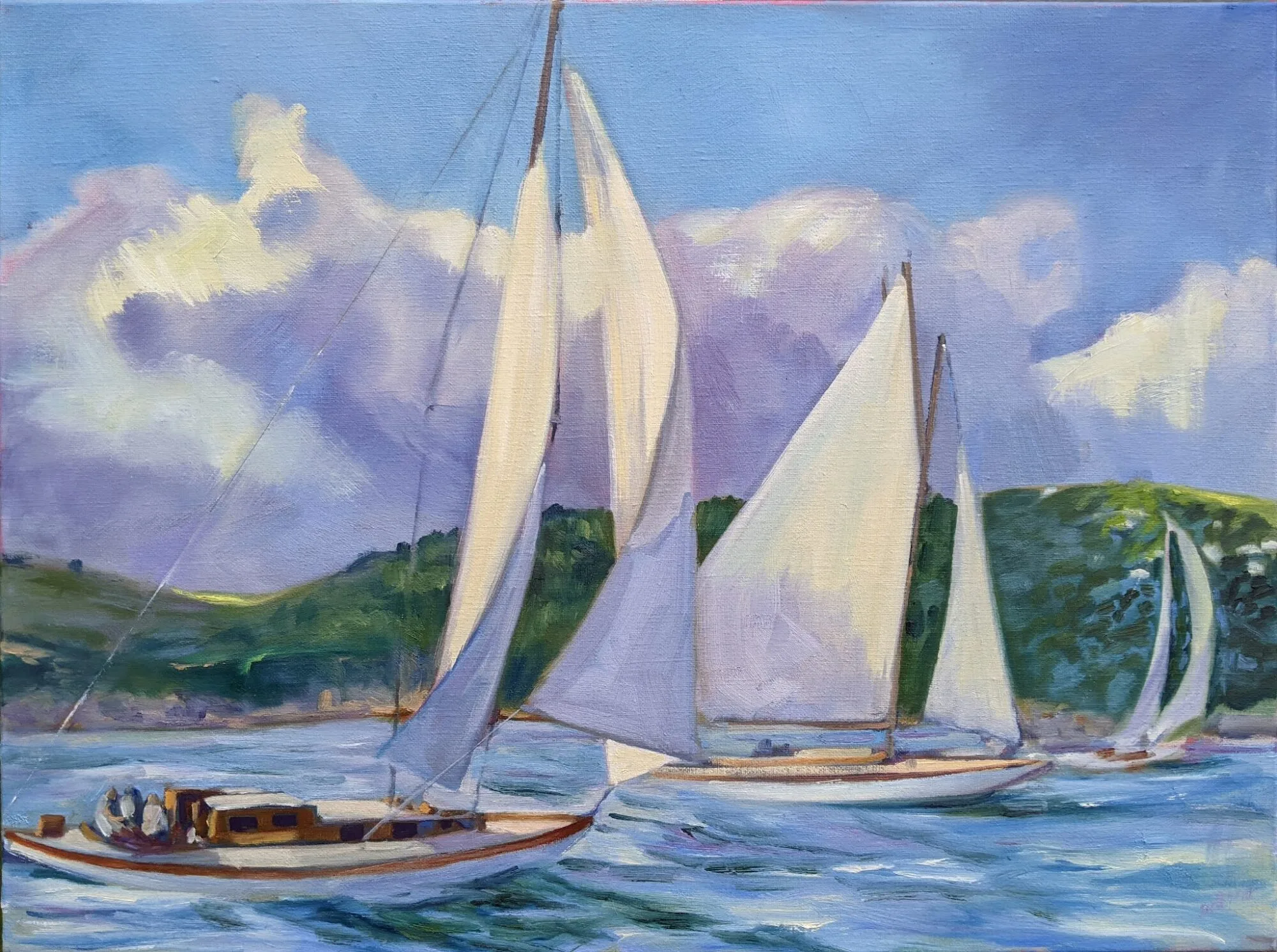
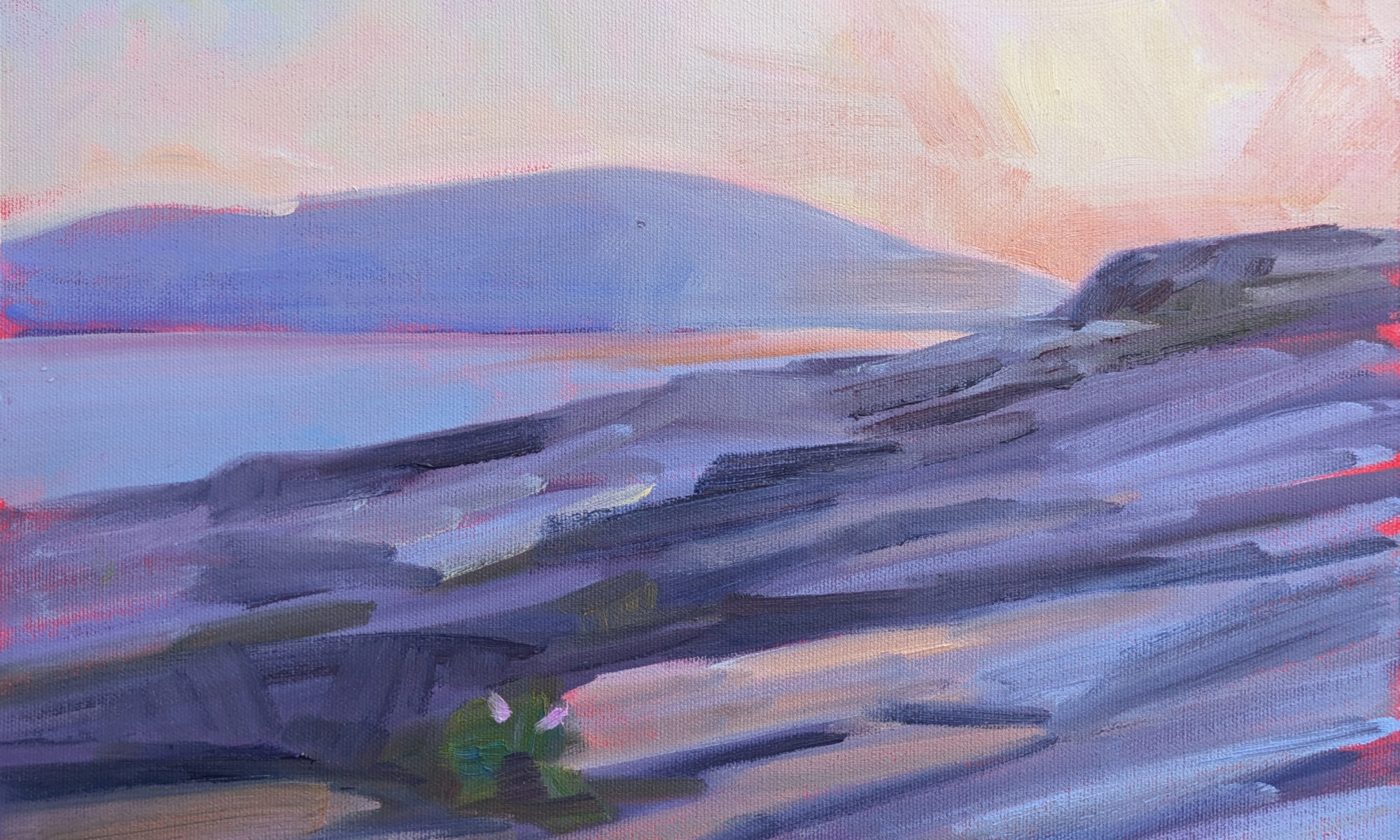
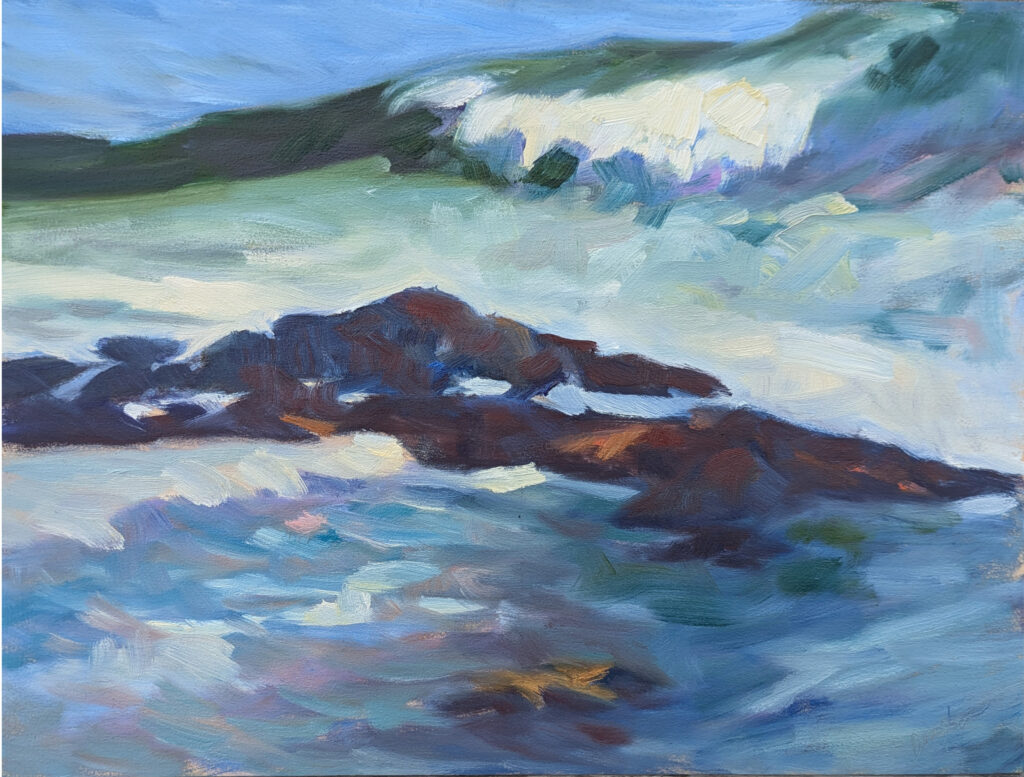
(The answer, of course, is ‘yes.’)
Students ask me how to paint water, portraits, clouds, trees, rocks, animals and many other things. That’s thinking in nouns, not visually. Getting hung up on a subject (for example, “I can’t paint people”) is just psyching yourself out.
Every subject is equally difficult, or easy. While there are things to learn about the properties of these subjects, the overall process is universal:
- Observe carefully through drawing;
- Create a compositionally-strong value sketch;
- Organize color harmony;
- Commit to canvas or paper in the most-economical brushwork possible.

Strong paintings are built on a foundation of strong shapes. The world doesn’t compose for you. Even the desert offers abundant visual imagery rather than austere elegance. Your job is to edit that down.
Think in terms of masses, not objects
Children paint in those aforementioned nouns—car, sun, tree, house, rainbow. When we paint what we know instead of what we see, we’re falling back into that childhood habit. But painting works better when you think in shapes and values.
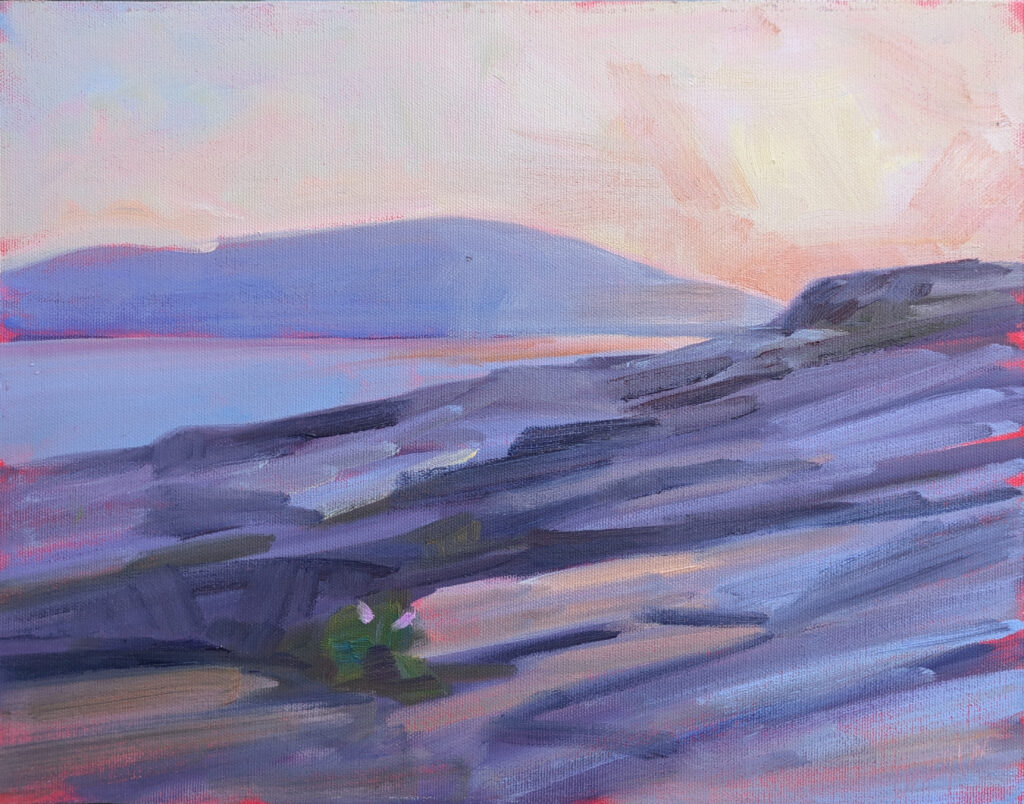
When you shift from object-thinking to shape-thinking, drawing gets easier and composition starts to organize itself. “Every good picture is fundamentally an arrangement of three or four large masses – a design of masses or large blocks of color – light, dark and half dark or half light,” wrote John F. Carlson. If those shapes are clear and well-arranged, the painting will hold together, even without detail.
Painting by design
A perfectly copied scene will still feel flat or confusing if the shapes aren’t well-organized. Feel free to move things around. Adjust the size of a shadow. Merge shapes. Eliminate distracting elements. Strengthen a silhouette.
Ask yourself:
- Does this shape help or hinder the design?
- Is there a clearer, more attractive way to group these elements?
- Where do I want the viewer to look first? Second? Third? How am I encouraging that?
Simplification is about emphasis. When everything is important, nothing is.
Use edges and contrast to reinforce your shapes
Once you’ve established strong shapes, protect them. Avoid breaking them apart with unnecessary edges or fussy detail. Keep your major masses intact. You can always add complexity later, but it should sit on top of a clear structure.
Focal point is established by line and by contrast in value, hue and chroma. No intricate detail can draw the viewer’s eye as effectively as a sharp edge between two radically-different color masses.
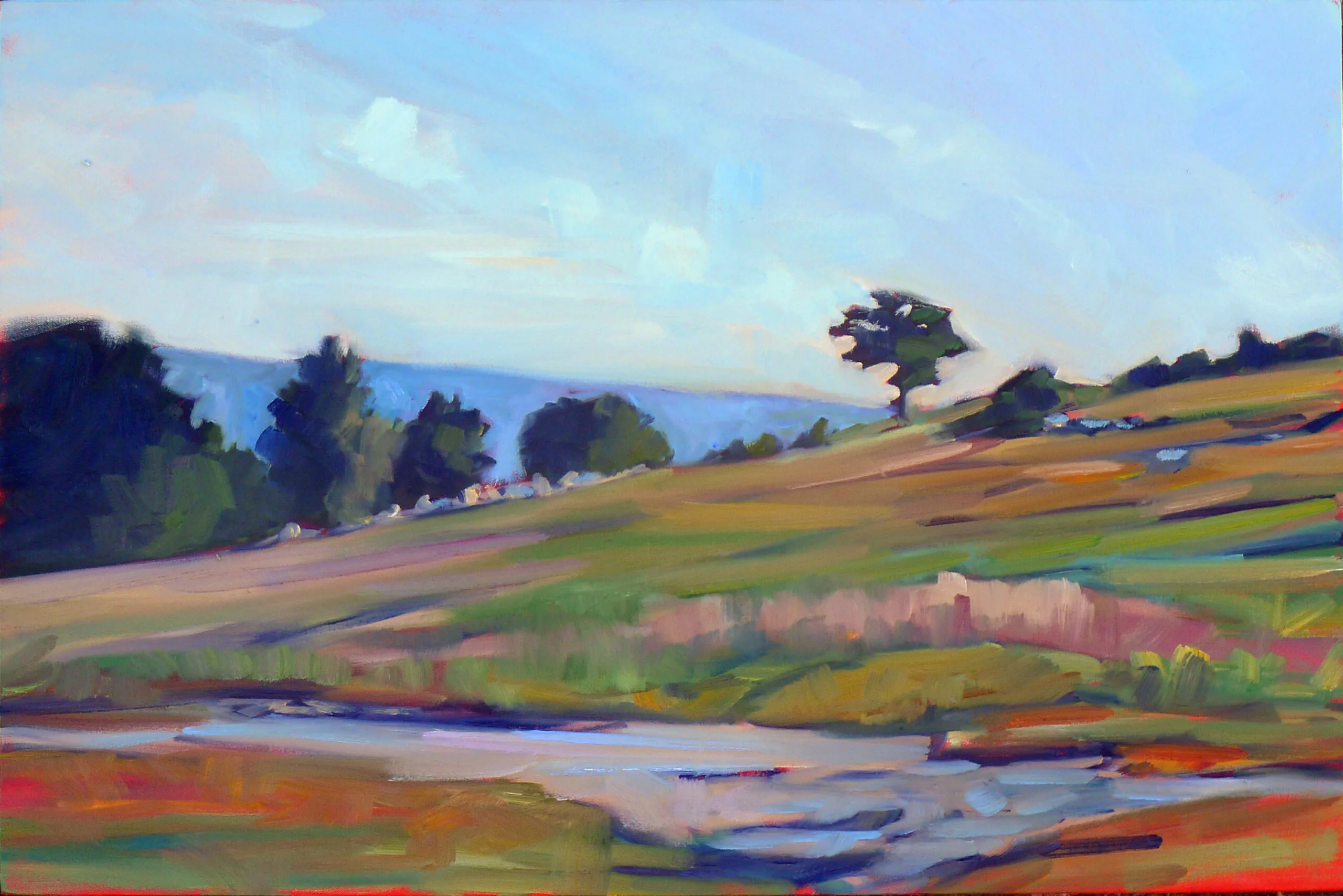
The value of value sketches
Practice doing quick, simplified sketches that map out value relationships. That means no color, no details, and just a few value levels. This trains your eye to see what matters.
Ultimately, painting is about seeing those relationships, and once you can do that, you can paint any subject with equal confidence.
These are skills I stress in my workshops (below) and online classes. Turning a complex subject into a paintable scene is not a talent questions. It’s a decision-making process you can learn, practice and refine.
I have just two workshops left in 2026! Reserve your spot:
- New! Color Clinic 2026 | Rockport, ME, October 3-4, 2026
- New! Composition Week 2026 | Rockport, ME, October 5-9, 2026
- High-Desert Light & Monumental Form | Sedona, AZ, Apr 26, 2027 – Apr 30, 2027
Can’t commit to a full workshop? Work online at your own pace: