How to choose the right painting class or art workshop

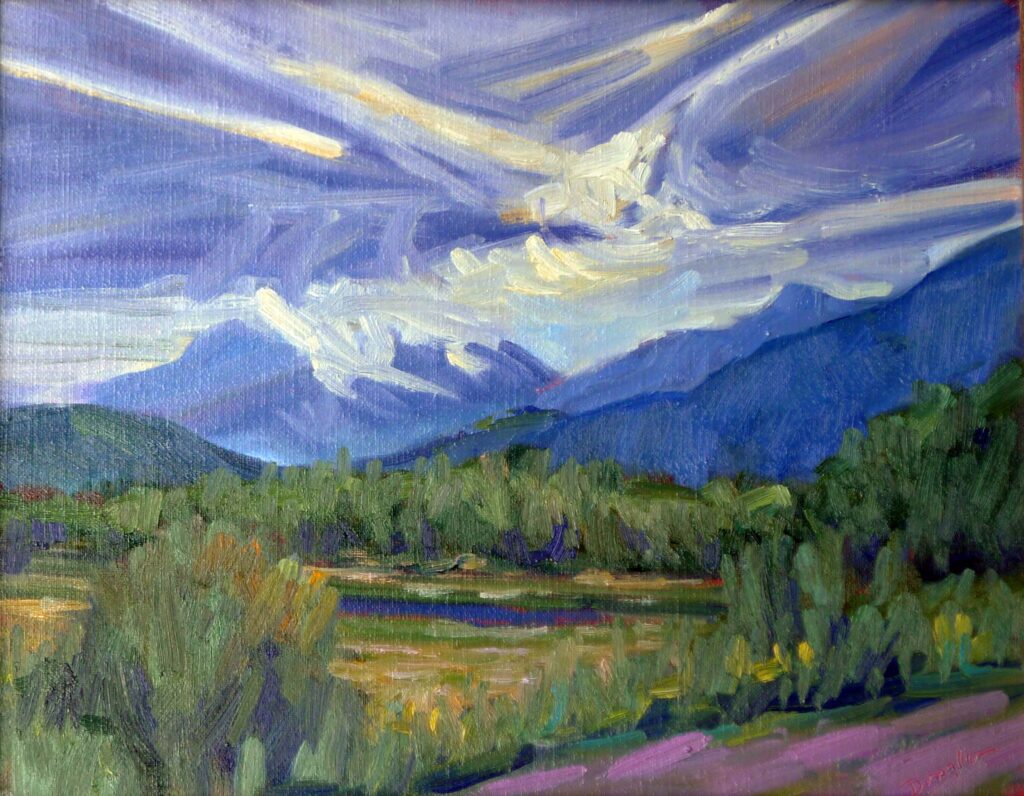
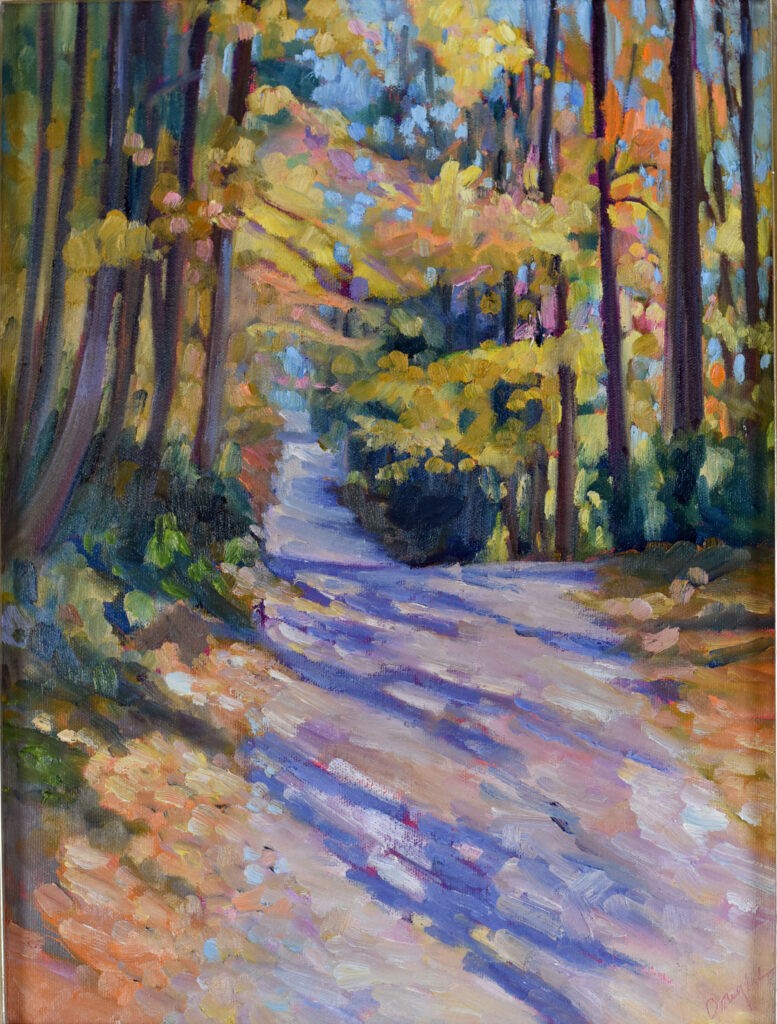
Beauchamp Point, Autumn Leaves, 12X16, oil on archival canvasboard, $1449 framed includes shipping and handling in continental US.

Choosing the right painting class or art workshop can dramatically improve your painting skills β€” but with so many online art classes, in-person workshops, and video courses available, how do you know which one will actually move your work forward?

I recently spent time helping my friend Karen figure out which of my upcoming classes would best serve her. That decision wasn’t about whether she was a beginner or advanced painter. It was about identifying what she needed to learn next.

The best painting instruction meets you at your next developmental step, not your current skill level.
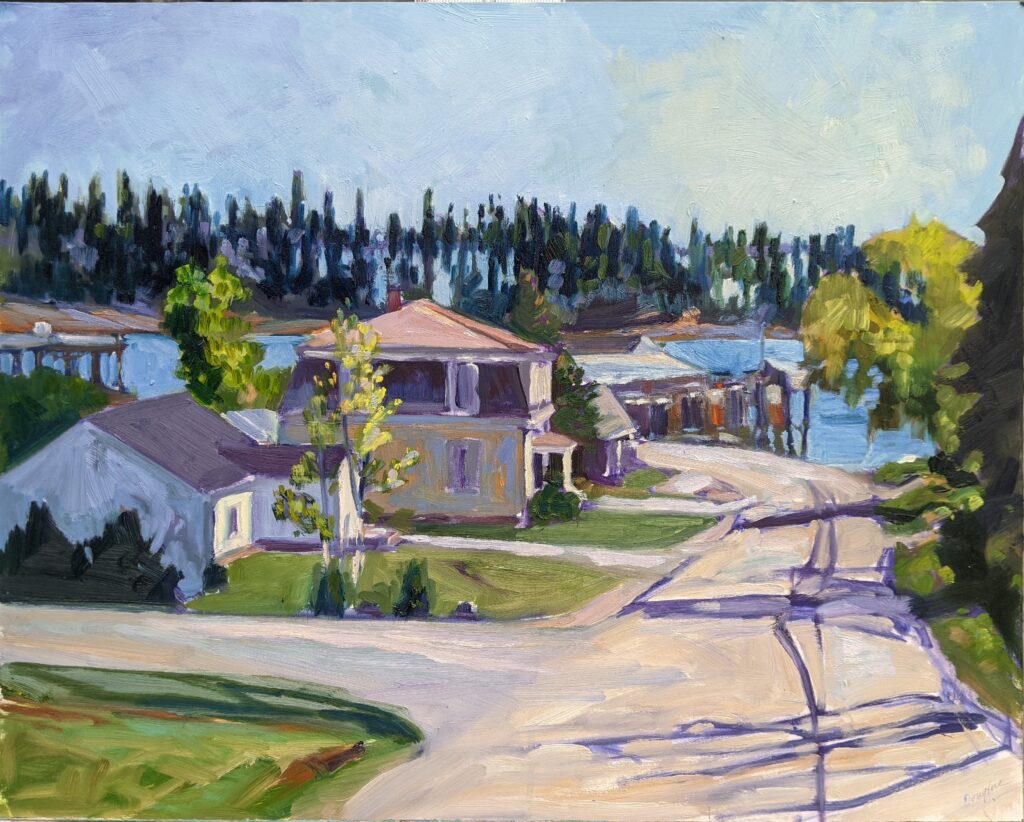
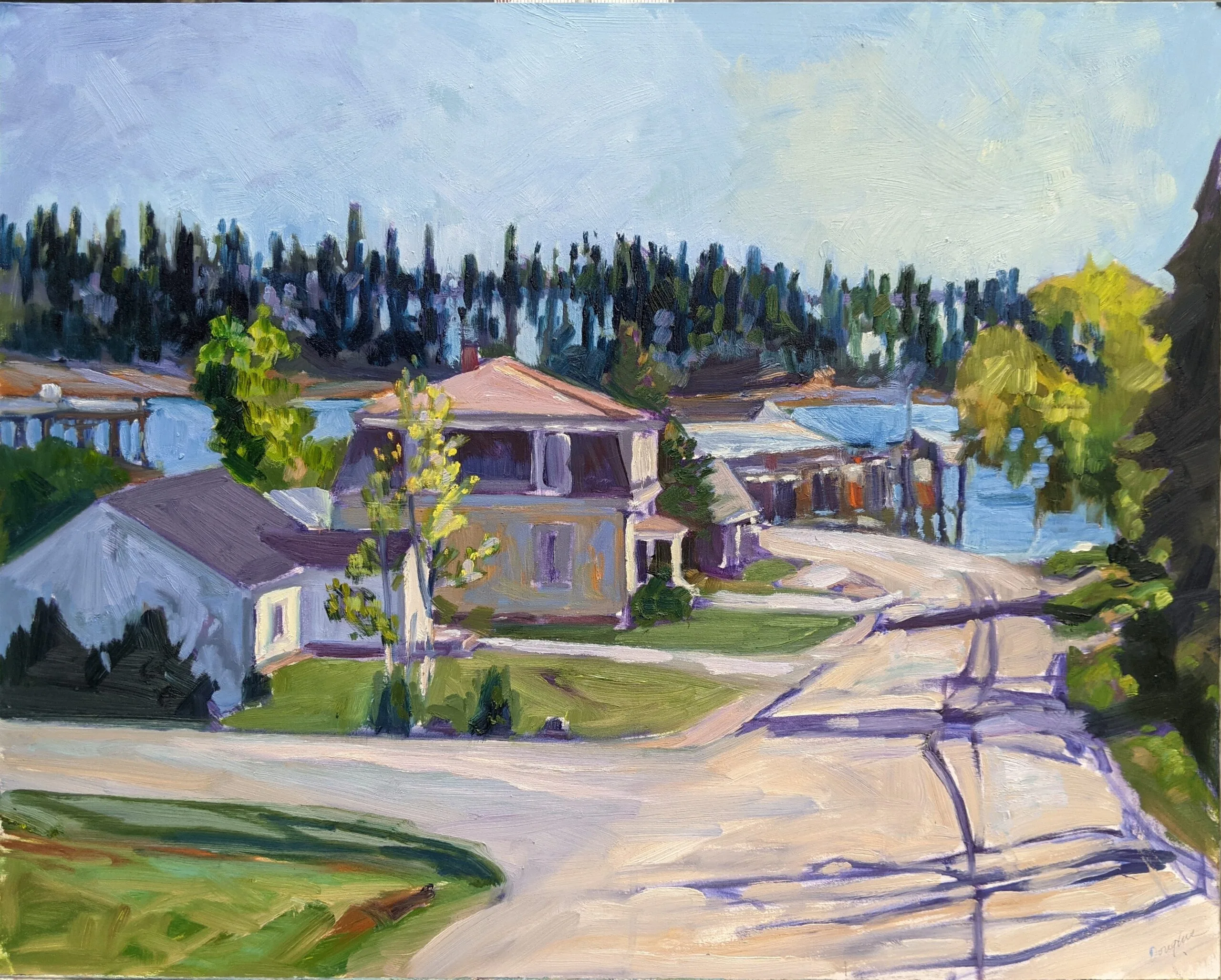
Main Street, Owl’s Head, oil on archival canvasboard, $1623 includes shipping and handling in continental US.

What matters most when choosing a painting class

Clear skill goals
Before you sign up, ask yourself: what do I want to improve? Do you want stronger observational skills, better composition, more color confidence or more expressive brushwork? The most effective painting classes focus on specific, teachable skills and provide a roadmap so you leave with measurable progress, not just inspiration.

A teaching style you connect with
Some art instructors teach step-by-step demos. Others emphasize design principles and independent problem-solving. Look for classes where the style of instruction feels clear, encouraging, and tailored to your pace. And personality matters. Even a brilliant painter won’t help you grow if the teaching environment feels tense or dismissive.

Feedback and interaction
Interactive painting workshops accelerate learning far more than passive video lessons. Zoom classes and workshops that include real-time critiques and Q&A are especially valuable.
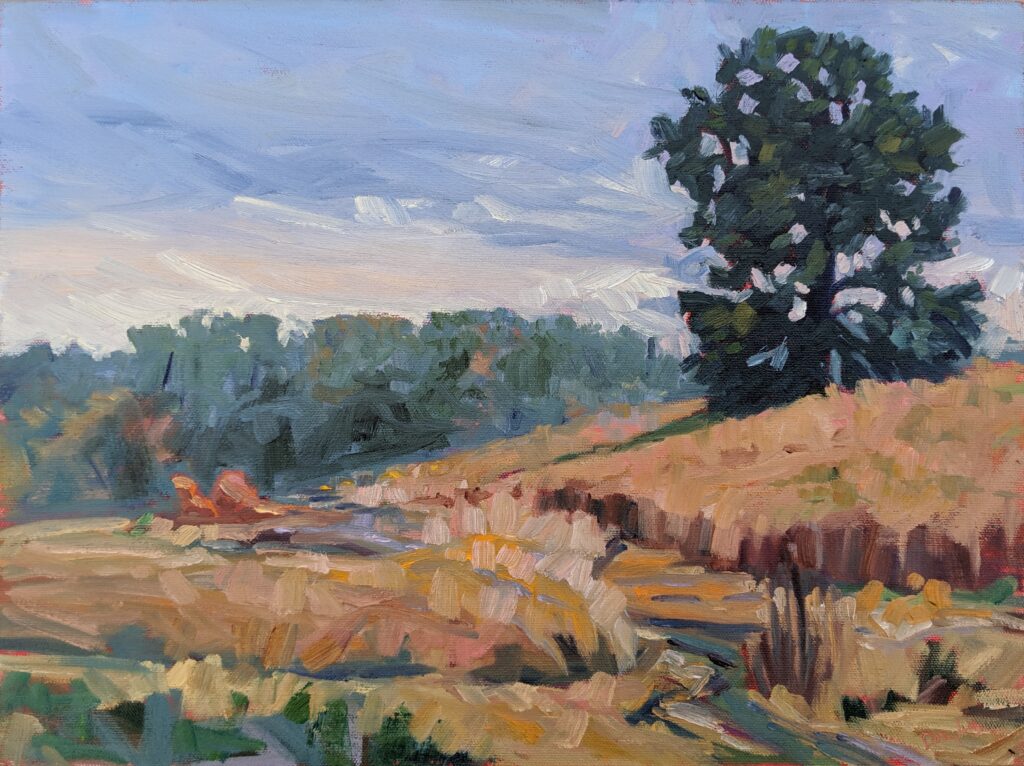
Autumn farm, oil on canvasboard, $1449 framed includes shipping and handling in continental US.

Of course, live instruction isn’t always feasible. That’s why I also offer Seven Protocols for Successful Oil Painters. It’s a structured foundation in oil painting principles designed to strengthen your independent studio practice. It’s not a replacement for live instruction, but it builds essential fundamentals.

Community and accountability
Learning alongside others builds motivation and accountability. Workshops and classes with peer interaction help you stay inspired and keep practicing long after the class ends.

Focus on fundamentals and expression
Good painting instruction balances foundation (how to see, how to plan, how to mix color) with artistic expression (style, gesture, brushwork). Technique alone doesn’t create strong art. A great class also teaches you how to see and how to interpret.

Checklist for choosing a painting class

  • Read the course description carefully. Does it clearly match your goals?
  • Make sure the instructor can articulate process, not just demonstrate it.
  • Check class size. Too large means no feedback. Too small leads to the hovering by the teacher.
  • Choose classes that include critique and interaction.
  • Commit to practicing between sessions. That’s where real artistic growth happens.
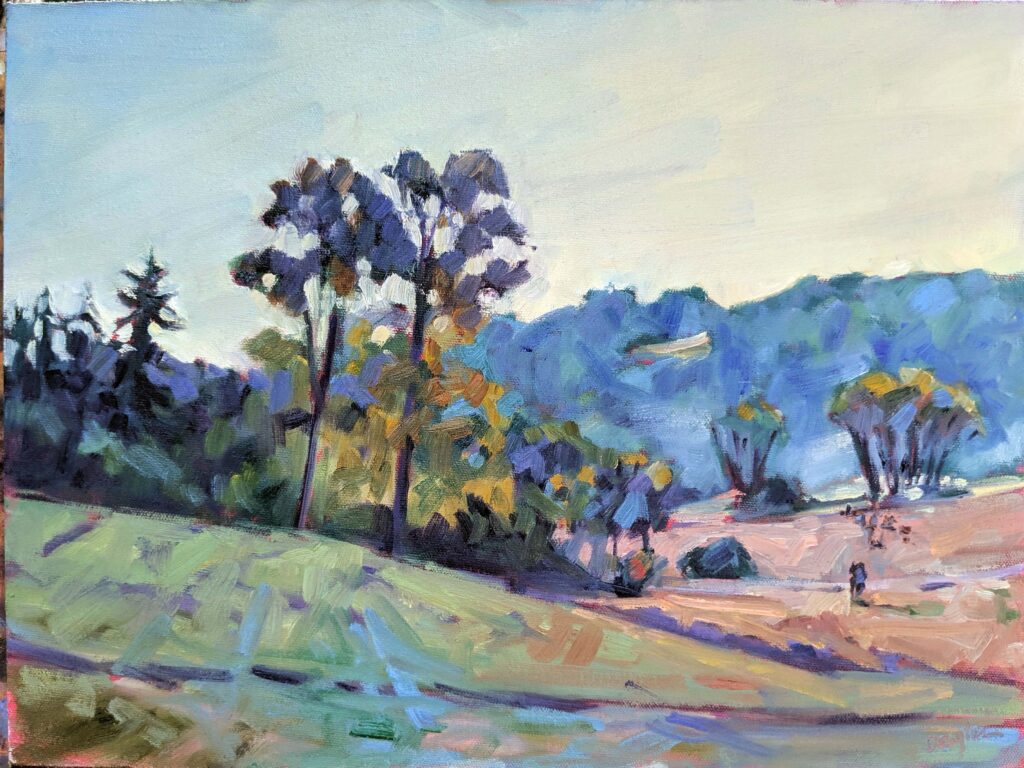
Autumn Farm, Evening Blues, oil on canvasboard, $1449 framed includes shipping and handling in continental US.

How to see like a painter

One of the biggest leaps any painter can make is learning to see like an artist sees β€” not just looking at reality, but interpreting it. That’s where my Zoom class How to see like a painter shines.

This class helps you:

  • Train your observational eye;
  • Break complex forms into rhythmic patterns of shapes and values;
  • Understand structure;
  • Look with intention, not assumptions;
  • Work from photos without being a slave to them.

Whether you’re a beginner painter or have decades of experience, improving how you see will transform how your work reads on canvas. The class meets on Monday evenings starting next week. Here’s more information, including a link to enroll.

Painterliness, looseness and bravura brushwork

One of the most common questions I’m asked is how to put confident, lively strokes down so your painting feels energized rather than stiff. That’s the focus of my Zoom class Painterliness, looseness and bravura brushwork.

In this class you’ll learn:

  • How to loosen up your hand and mind;
  • Techniques for dynamic, expressive brushwork;
  • Balancing control and freedom;
  • Creating dynamic surfaces.

This class is for painters of all levels. The class meets on Tuesday evenings starting next week. Here’s more information, including a link to enroll.

(Note: both classes have a bye-week March 9-10 while I’m in Sedona, AZ teaching Canyon Color for the Painter.)

Registration is now open for workshops in 2026! Reserve your spot:

Can’t commit to a full workshop? Work online at your own pace:
Seven Protocols for Successful Oil Painters

Monday Morning Art School: painterly, loose brushwork

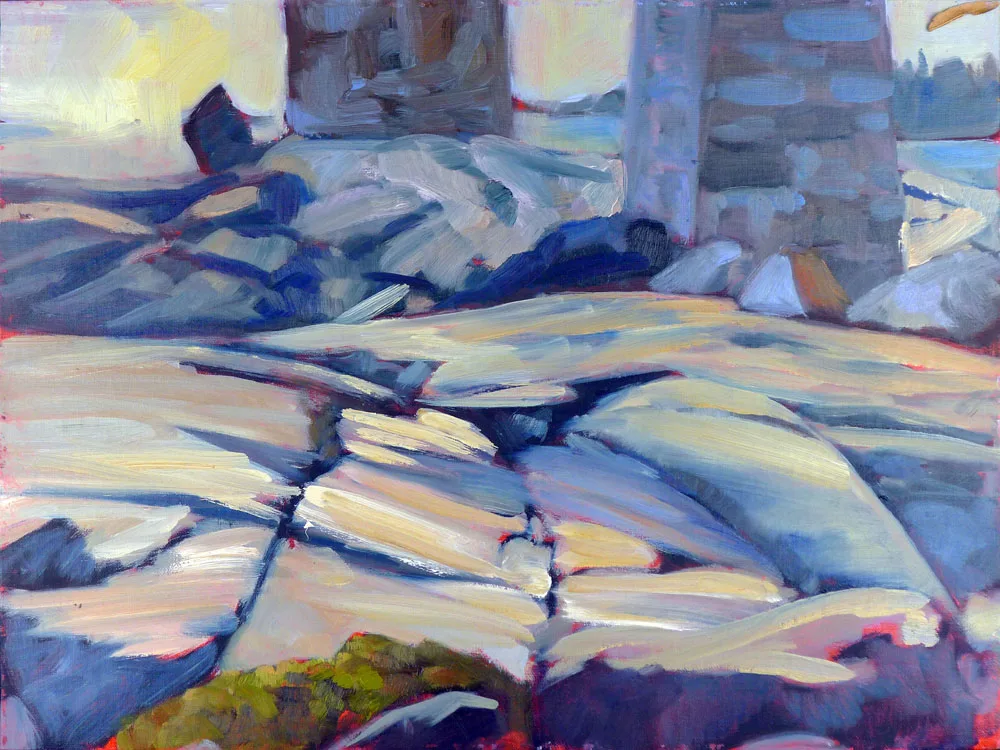
Marshall Point Rock Study
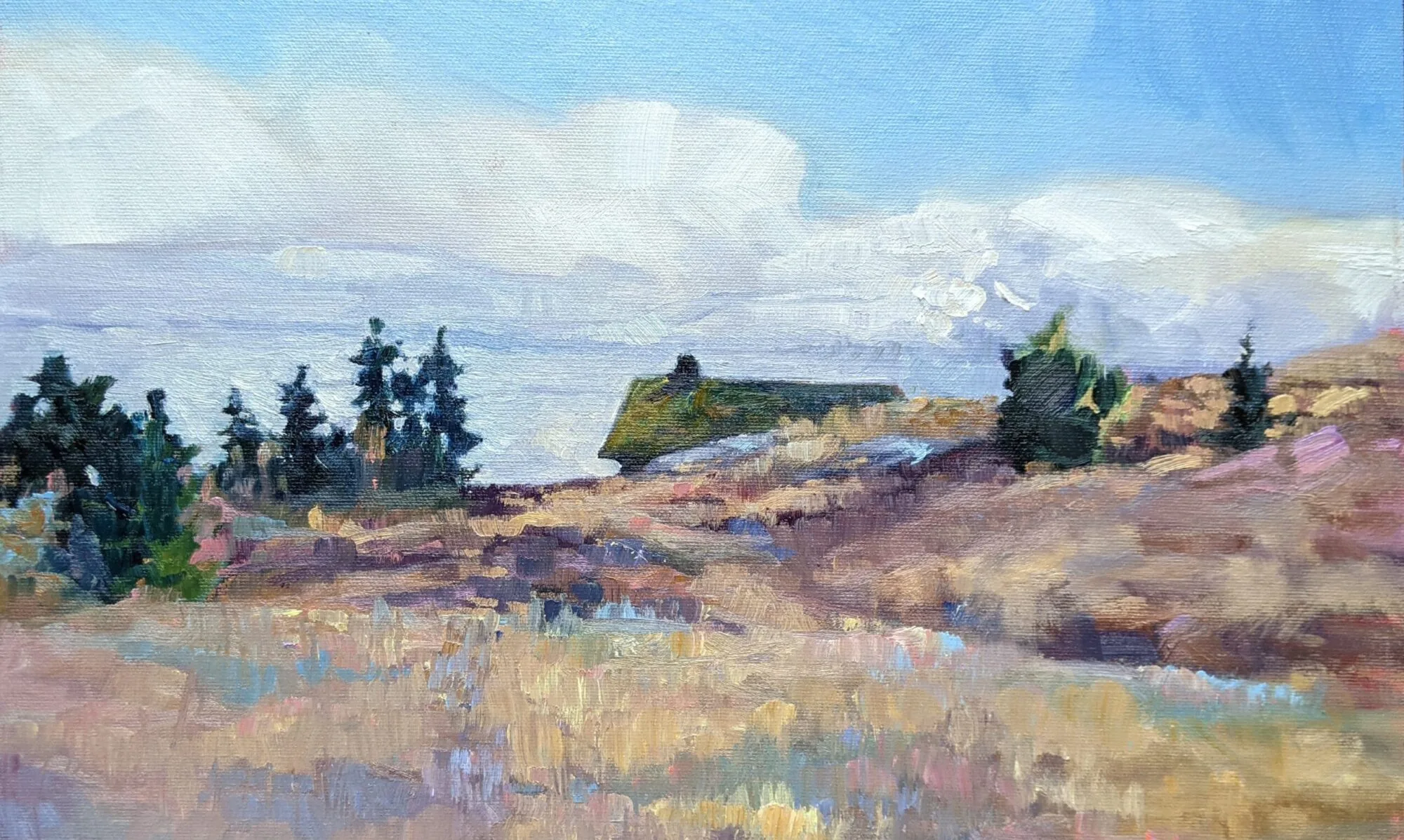
Marshall Point, oil on archival canvasboard, 9X12, $696, includes shipping and handling in continental US.

Today is Candlemas, one of the oldest feasts in Christendom. It came to North America through the Pennsylvania Dutch as Groundhog Day. That’s also the midpoint of astronomical winter.

Northerners know the whole β€œsix more weeks of winter” thing is hooey. Winter ends at the spring equinox; this year that’s March 20. Yes, that’s six weeks away, but we’ve been known to have snow into May.

Traditionally, Candlemas is observed by eating crepes because there’s nothing like carb-loading this time of year. I plan on having wild blueberries with mine.

Now, to work

Two paintings by Lauren Hammond, courtesy of the artist.

In last week’s Zoom class, Lauren Hammond showed two paintings, above. One was a careful study of storm clouds over Lake Winnipesaukee. The other was a small abstraction of the same subject. The first is more factual; the second is more tempestuous. β€œIt took me fifteen minutes,” she protested when I told her I loved the abstraction. That’s not true. She should include the hours it took her to do the carefully-realized painting as well, because all simplification rests on getting it right in the first place.

Loose is not easier

Loose brushwork isn’t sloppiness. Instead, it’s a confident economy that only comes after one truly understands the composition, values and color relationships.

Loose brushwork looks effortless because the artist has already figured out what matters and what doesn’t. He or she has internalized the way shapes interact, the rhythm of edges and the push and pull of light and dark. Once that happens, they can let go and paint with abandon. Mark-making is no longer tentative; it is the result of decisive choice. That’s the heart of painterliness.

Sometimes painting students seek looseness before they’re ready. You cannot break rules that you haven’t yet mastered. Without good structure, amorphous marks just look confused. True looseness is an informed choice. It’s a freedom that arises from discipline, not in spite of it.

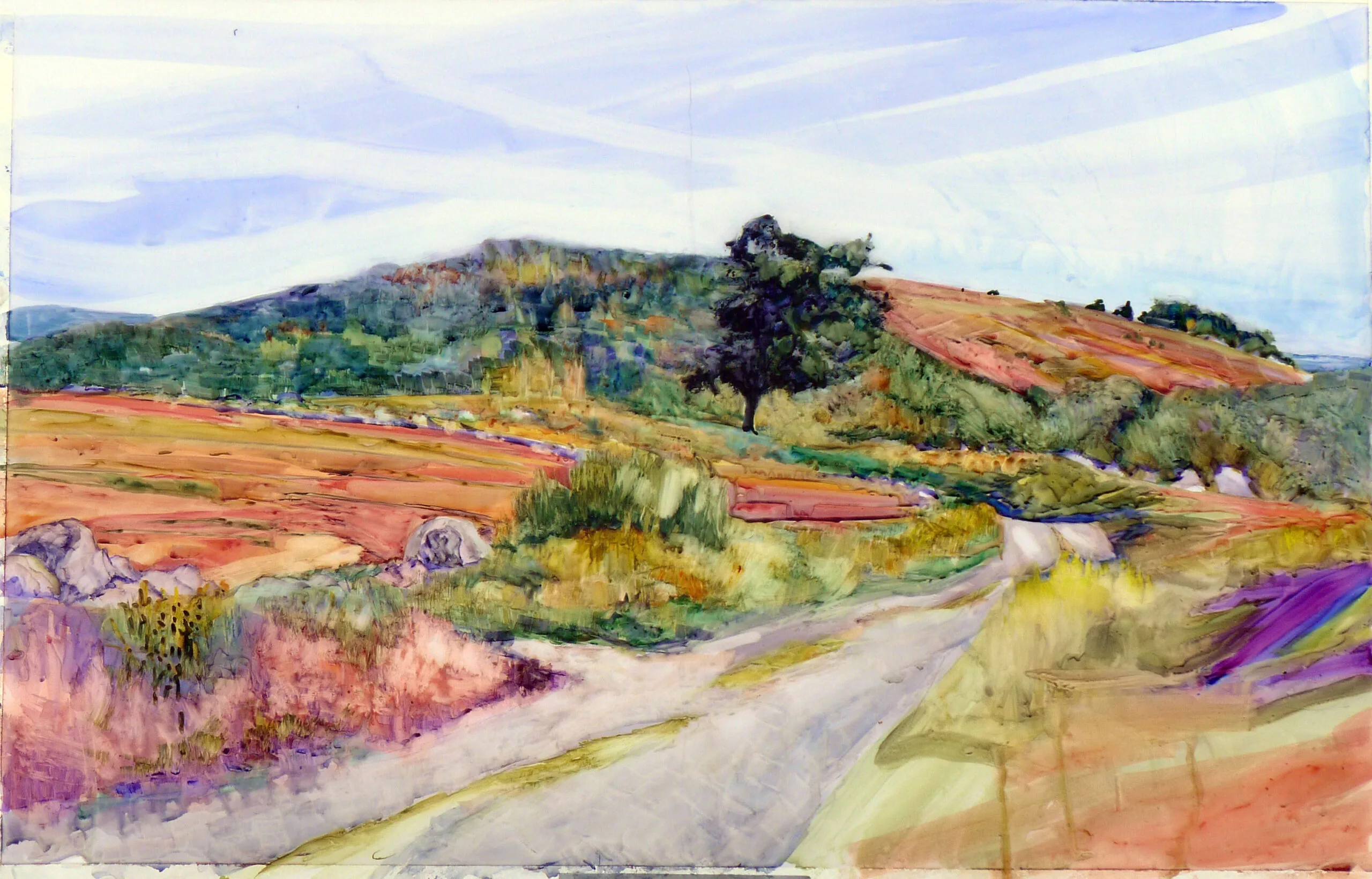
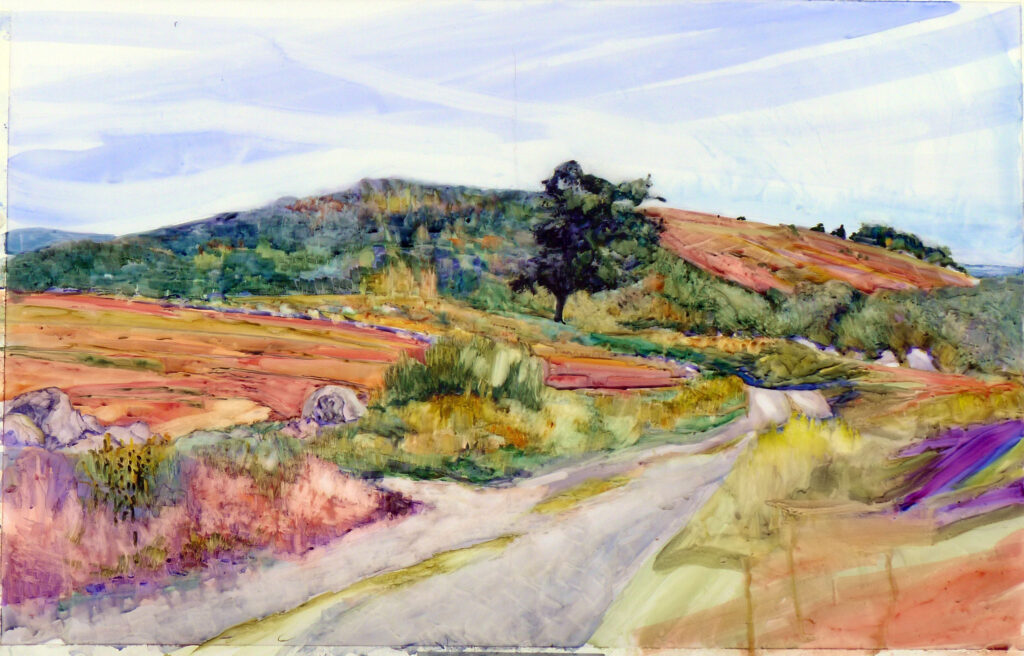
Clary Hill Blueberry Barrens, watercolor on Yupo, ~24X36, $3985 framed includes shipping and handling in continental US.

Clarity

You can’t be genuinely loose until you are utterly clear on the subject you’re painting. Before you add bravura brushwork, you must establish the composition’s anchor points: the big shapes, the value relationships that give your painting weight and coherence and the color harmonies. These are the scaffolding of painting and can never be ignored. Build well and you give yourself the freedom to break out in dynamic ways.

This is just like learning a language. First you master vocabulary and grammar. Only after you are comfortable with structure can you play with idiom and nuance. Without that basis there’s no poetry in either painting or language.

Fog over Whiteface Mountain, 11X14, $1087 framed includes shipping and handling in continental US.

Good juicy, gestural marks aren’t by accident. They should be well-placed in the context of the composition and support the goals of the painting. This can be intuitive or subliminal, but it’s always the result of experience. The experienced painter knows when to let loose and when to hold back.

If you’re ready to move beyond tentative marks and learn to paint with clarity and confidence, I’ve created a class specifically to guide you. In Painterliness, Looseness and Bravura Brushwork, we break down the principles that allow expressive looseness to emerge. You’ll learn how to see what truly matters in your painting, and how to let go with purpose and vitality. This Zoom class runs on Tuesday evenings from 6-9 PM, from February 24 to April 7, and is strictly limited in size so that I can give each of you the attention you deserve.

Registration is now open for workshops in 2026! Reserve your spot:

Can’t commit to a full workshop? Work online at your own pace:
Seven Protocols for Successful Oil Painters

Seeing, brushwork and color are the painter’s trifecta

The Fleeting Hand of Time, 9X12, oil on archival canvasboard, $696 includes shipping and handling in continental US.

Most painters stall because they’re trying to solve too many problems at once. Students make real leaps forward when they start building skills in a sensible order. That’s what this trio of learning opportunities is designed to do.

Color, brushwork and composition are a three-legged stool. You must learn to see, orchestrate color and express your ideas with confidence.

Mather Point at dawn (Grand Canyon), oil on canvasboard, 9X12, , $696 includes shipping and handling in continental United States.

How to See Like a Painter (Zoom class)

Everything starts with perception. If you can’t see clearly, no amount of technique will save you. How to See Like a Painter is an interactive online painting class focused on visual analysis. That’s a skill most artists ignore, yet need the most.

We will dig into value relationships, shape and focal hierarchy, edges andβ€”most importantlyβ€”the difference between what you think you know and what you’re actually seeing. Once you understand how to simplify complexity, your decisions will get stronger and faster.

The class meets Monday evenings, 6-9 PM EST on Feb 23-March 2 and March 16-April 6.

Here is more information and online registration.

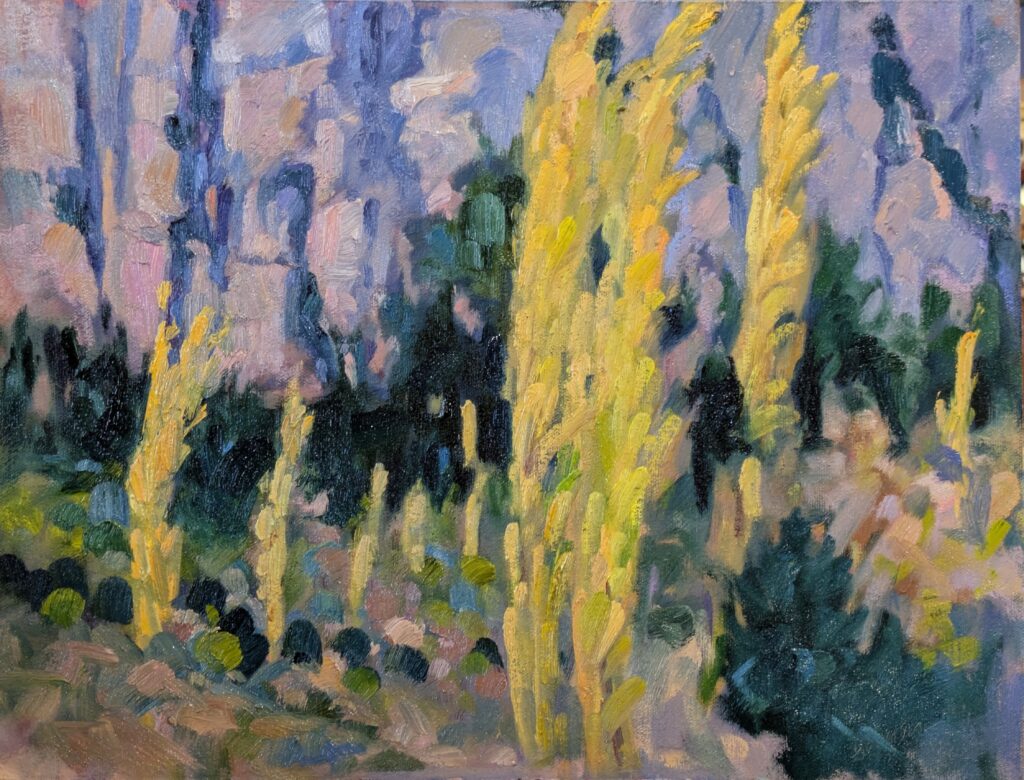
Poplars, 12X16, oils on archival canvasboard, $1159 includes shipping and handling in continental US.

Painterliness, looseness and bravura brushwork (Zoom class)

Painterliness, looseness and bravura brushwork is an interactive online class devoted to expressive paint handling. We talk about economy, confidence, and when to set it and forget it. Looseness isn’t sloppiness; it’s clarity delivered with energy.

This class helps you escape overworking and replace it with confident, readable brushwork. You’ll learn how to load the brush, commit to a stroke and let your surface do some heavy lifting. If your paintings feel tight, stiff or hesitant, this class is for you.

The class meets Tuesday evenings, 6-9 EST on Feb 24-March 3 and March 17-April 7.

Here is more information and online registration.

For either Zoom class, we have had students from across the US and Canada and Great Britain. If you can tune in at those times and are fluent enough in English to talk about art, we’d love to have you join us.

Canyon Color for the Painter: A Sedona Plein Air Workshop

Why is there a one-week break in middle of these Zoom classes? I’m heading to Sedona, AZ to teach Canyon Color for the Painter: A Sedona Plein Air Workshop, March 9-13.

Sedona is one of the most demanding and rewarding outdoor classrooms on earth, which is why I love it. The desert doesn’t forgive lazy color thinking. Light is strong, shadows are crisp, and color temperature shifts happen fast.

In this workshop, we focus on color strategy: how to simplify without dulling, how to exaggerate without lying, and how to organize color so your painting reads brilliantly from across the room. You’ll apply new skills directly to the landscape, with real-time feedback and lessons. I keep my workshop numbers low enough to give every person individual attention. Sign up quickly, as this workshop is filling fast.

Cottonwoods along the Rio Verde River, $696 unframed, oil on Baltic birch.

Which one should I take?

In a perfect world, you’d have the time and energy to take all three. Together, they address the core problems all painters face: unclear seeing, timid execution and confused color. But I know that’s not practical.

Ask yourself which of these core problems you need the most work on: brushwork, composition or color. And then register for the class which will help you the most. If I can help you with your choice, email me.

(Frankly, looking at this weekend’s brutal temperatures in the northern US, I’d also factor in the desert warmth. Southwest has a fare sale until Friday. πŸ˜‰)

Registration is now open for workshops in 2026! Reserve your spot:

Can’t commit to a full workshop? Work online at your own pace:

Seven Protocols for Successful Oil Painters

Monday Morning Art School: what we can learn from JMW Turner

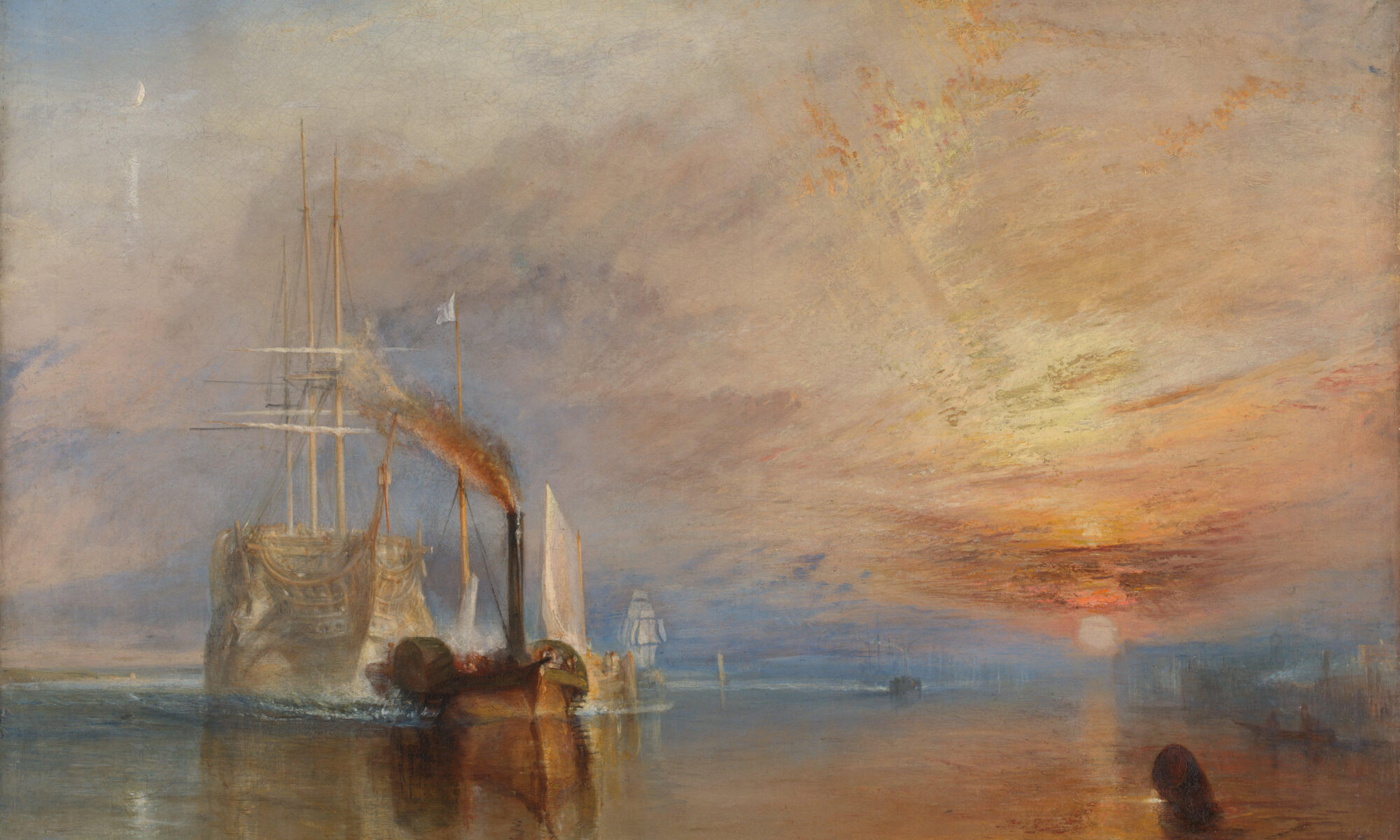
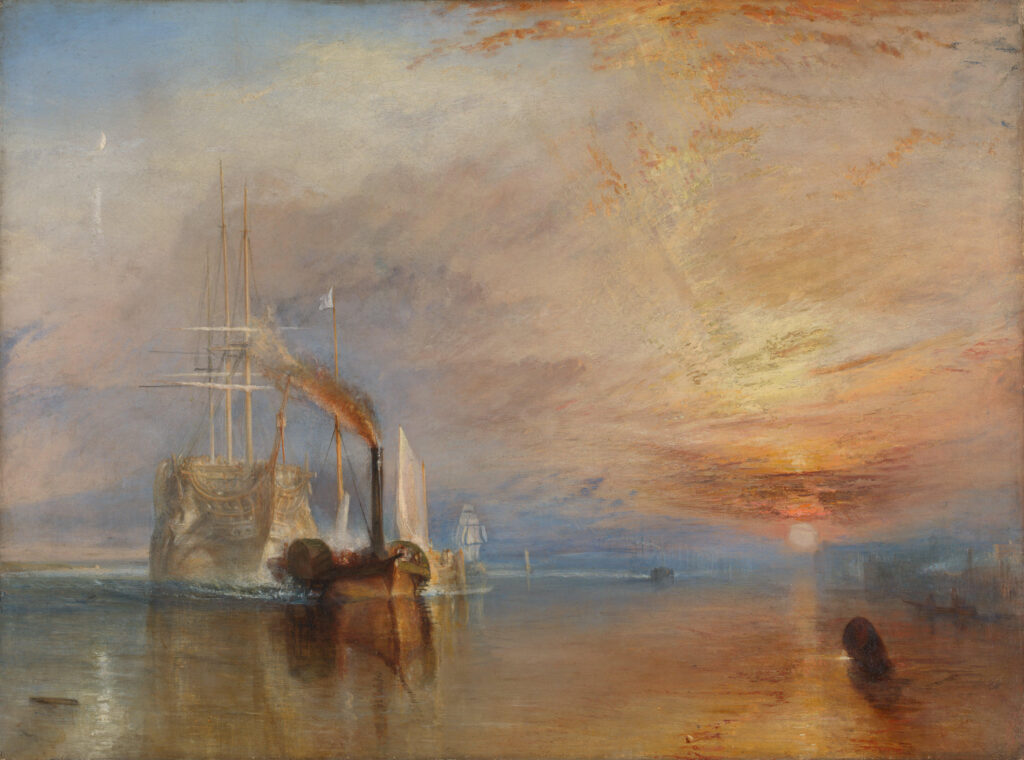
The Fighting Temeraire tugged to her last berth to be broken up, 1838, J. M. W. Turner, courtesy National Gallery

We’ve just marked the 250th birthday of Britain’s great Romantic artist, Joseph Mallord William Turner. As with so many great painters, Turner really didn’t become Turner (the prefigurer of modern painting) until he was closing in on old age. While there are many lessons to be learned from his work, here are two that stand out to me:

The Fighting Temeraire

The Fighting Temeraire was once voted Britain’s favorite painting. It’s featured on the Β£20 banknote, which also includes the Turner quote, β€œLight is therefore colour.”

The painting shows the 98-gun HMS Temeraire being towed up the Thames by a paddle-wheel steam tug, to be broken up for scrap. The Temeraire was one of the last second-rate ships of the line left from the Battle of Trafalgar in 1805. Her role had been pivotal in the deadly sea battle between the British Royal Navy and the fleets of Spain and France. Vice-Admiral Horatio Nelson was killed when his flagship, HMS Victory, was battered by the French ship Redoutable. In response, Temeraire surged forward, raking Redoutable with grapeshot, causing her to strike her colors. The victory confirmed British naval supremacy and prevented Napoleon from ever again considering invading England.

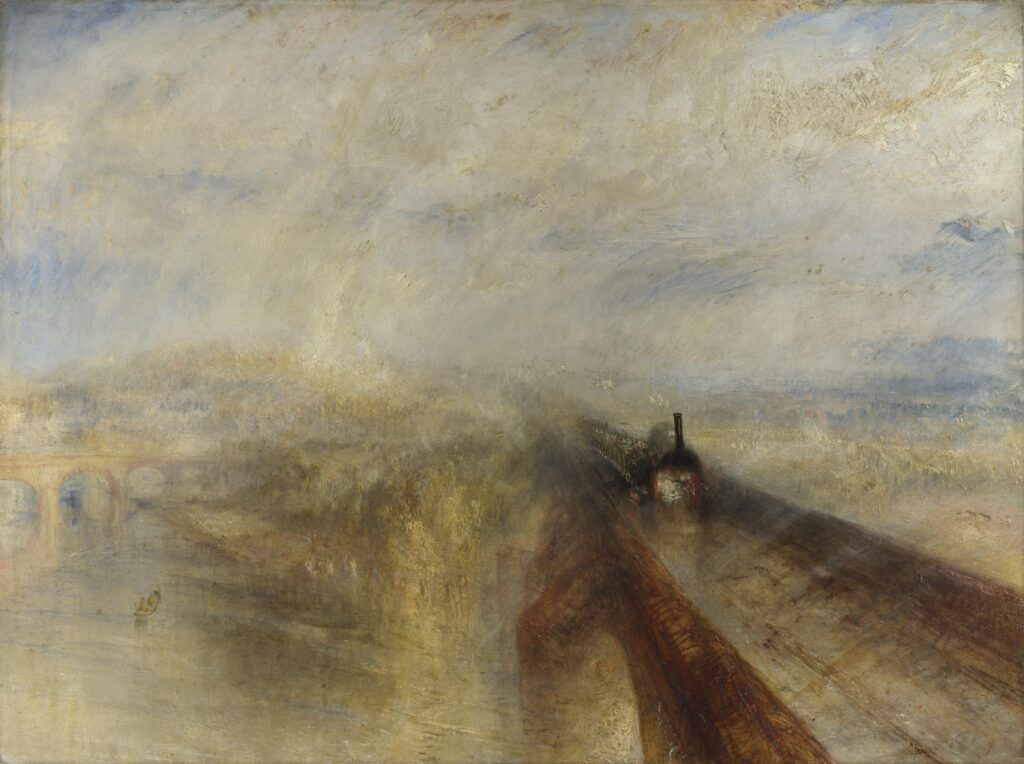
The Fighting Temeraire is generally taken as an elegy for faded national glory. But modern interpretations focus on Turner’s admiration for newness, as epitomized in Rain, Steam and Speedβ€”the Great Western Railway. In that view, Turner was actually painting the steamship and arguing for leaving the past behind.

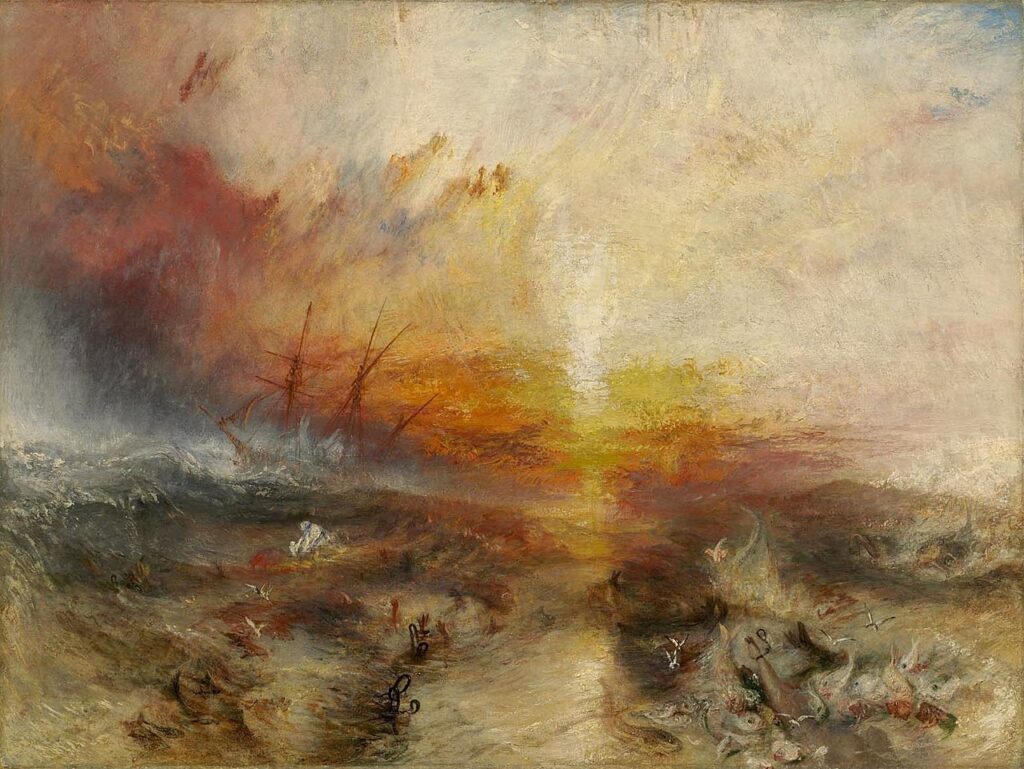
The Slave Ship, 1840, J. M. W. Turner, courtesy Museum of Fine Arts, Boston

The focal point is not always the subject

Yes, the main focal point of The Fighting Temeraire is inarguably the steamship; it’s the passage with the greatest contrast. (It, and the amorphous shape in the foreground right and the sun on the horizon are the three focal points, forming a strong triangular composition.) But that doesn’t make it the subject of the painting. Turner explicitly tells us otherwise with his title and the careful prep work he did for the painting. The moonlight, the wrecker’s flag (not the Union Jack) and the detail on the Temeraire tell us we’re to read this all of a piece, together. Long before anyone talked about focal points and subject, he was playing them against each other to make a complex statement.

Rain, Steam and Speed – The Great Western Railway, 1844, J. M. W. Turner, courtesy National Gallery

Making the jump from linear to painterly

Painterly vs. linear is not a quality distinction, but rather a stylistic distinction.

A painting is linear when it uses skillful drawing, shading and contour to create the illusion of dimensionality. Painterly means there are visible brushstrokes, less control, and more impulsive color. While there have always been artists on the painterly side of the divide, the real historic divide is with the Impressionists, who slewed off into painterliness in the latter half of the 19th century. We have, for the most part, stayed on that side ever since.

Like his peers, Turner was a linear painter until sometime in the mid-1830s, when suddenly he wasn’t anymore. The mature Turner stopped painting line and became a painter of mass, tone and light. He treated land, air, and water, as if they were all one. β€œIndistinctness is my forte”, he said. This being the onset of Victorian England, with its rising tide of realism and of sentimental Landseers and Pre-Raphaelites, it’s hard to imagine how he struck out in such a unique direction.

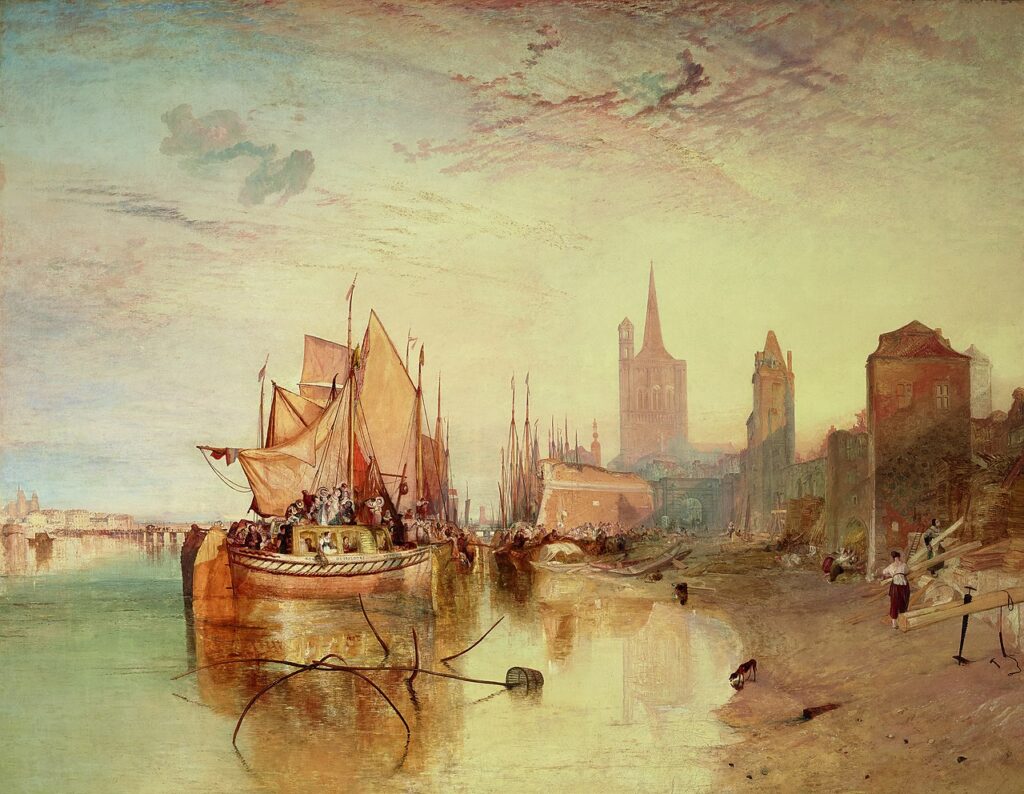
Turner when he was linear: Cologne, the Arrival of a Packet Boat in the Evening, c 1826, J. M. W. Turner, courtesy The Frick Collection

Did Turner wake up one morning and decide to make soft miasmas of color? No; you can see hints of this in earlier paintings. Somehow, by poking at it, day in and day out, he came up with something new to himself and everyone else. We can learn a lot about painterliness from studying his paintings, but ultimately we have to do the studio time, too.

Registration is now open for workshops in 2026! Reserve your spot:

Can’t commit to a full workshop? Work online at your own pace:
Seven Protocols for Successful Oil Painters