Painting the Dark Sky: the art of nocturne painting

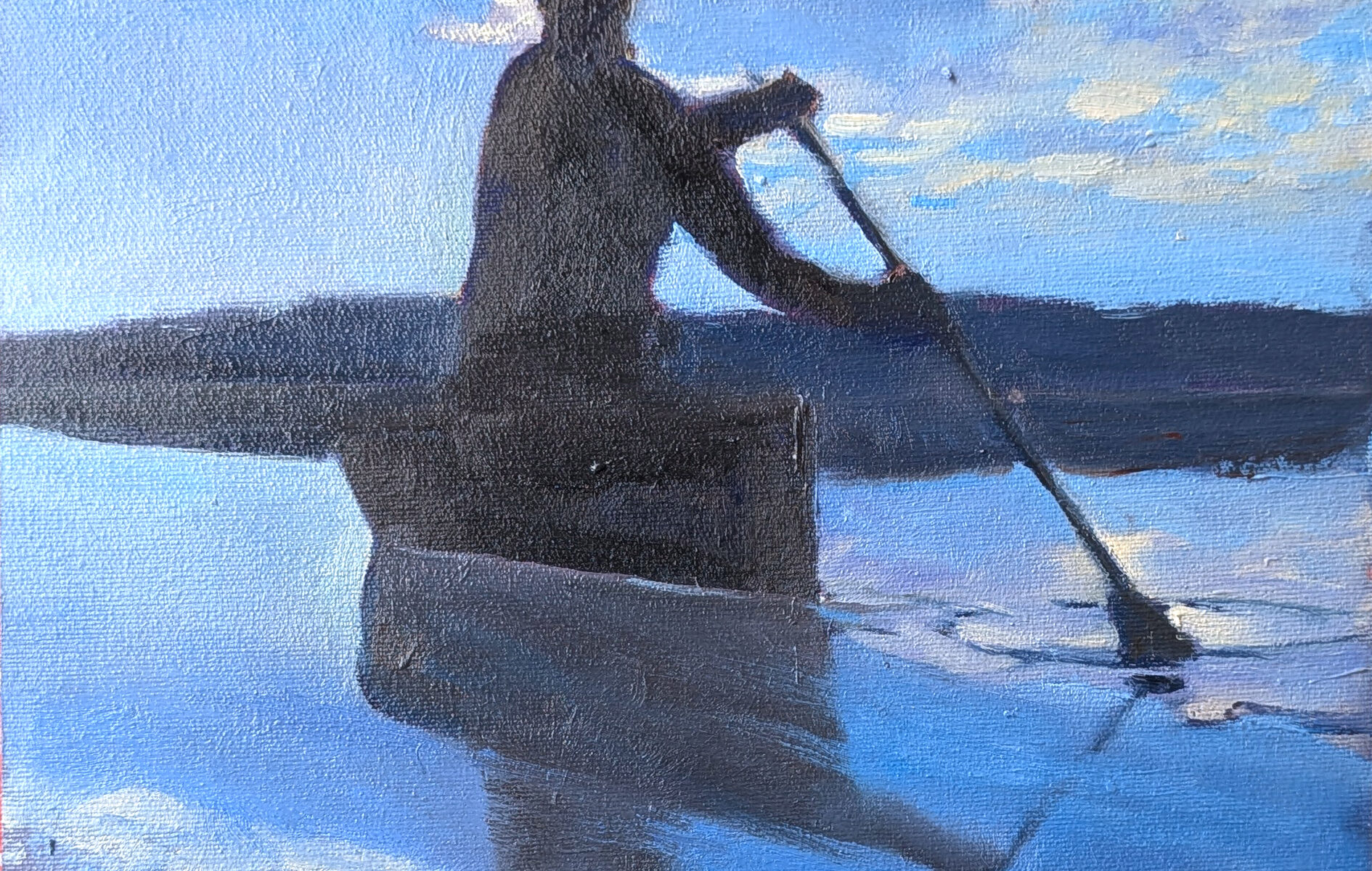
Forest Service Road 761, oil on archival canvasboard, 14X18, $1753, available through Sedona Arts Center.

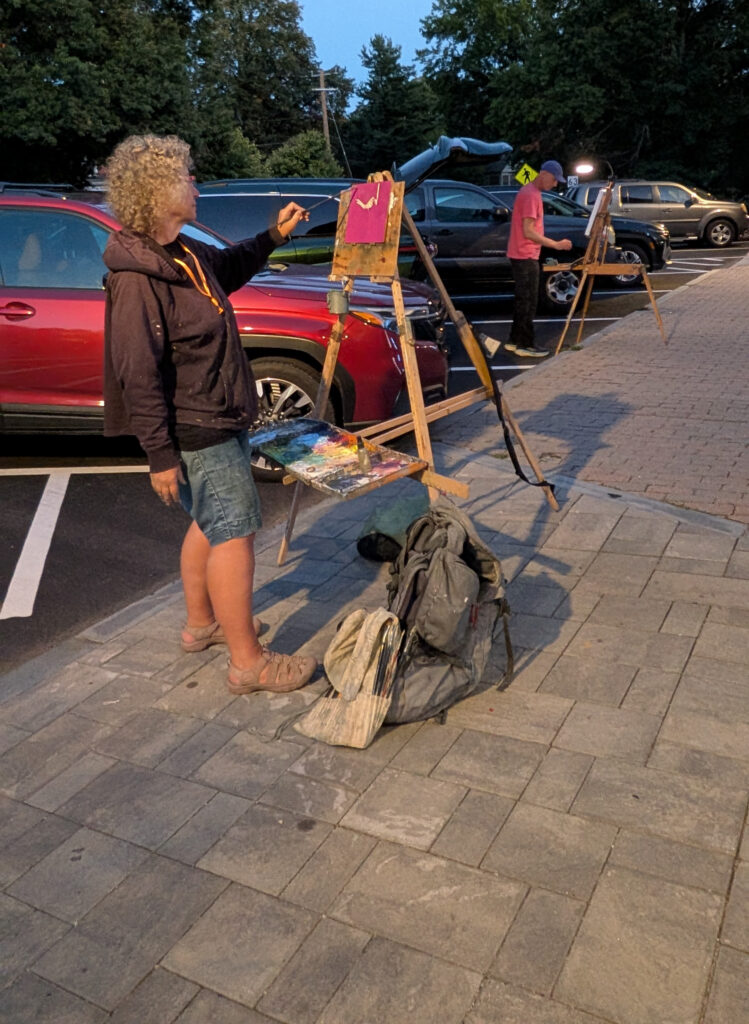
As I was cleaning up after a day painting at Plein Air Litchfield, I received a text from Stephen Florimbi. Thinking my retort would be much funnier in person, I drove over to where he’d set up to paint a nocturne.

I was slightly surprised to find myself unpacking my kit and setting up to paint with him.

There’s a rooftop bar on the building behind Cobble Court. Our pals from the event were there to party. Meanwhile, Stephen and I were having a hoot down on the street, watching them in the fading light.

I’m a morning person. When events require nocturnes, I usually get up before dawn to paint them. But I’ve been on a nocturne painting jag for a while now, and I’m finding that staying up late to paint isn’t killing me.
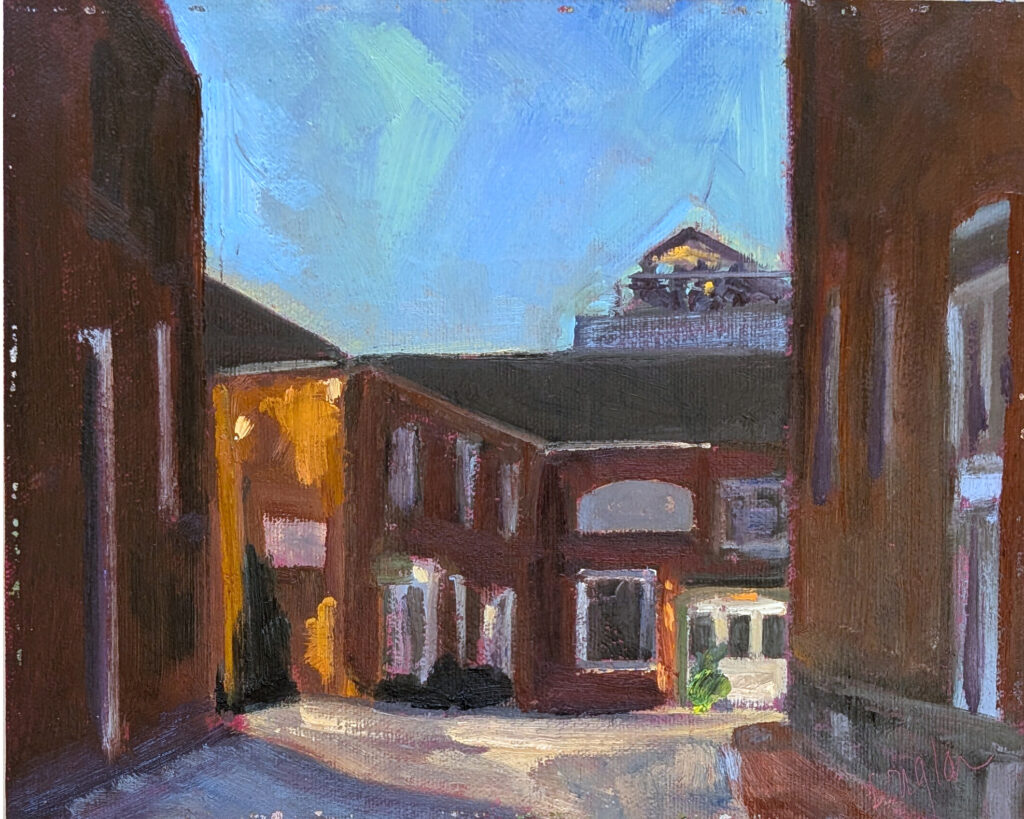
Cobble Court at dusk, 8X10, oil on archival canvasboard. Most of our buddies were up in that high rooftop bar.

Painting nocturnes for Sedona

I leave for the 22nd annual Sedona Plein Air Festival a week from today, driving cross-country and camping along the way with my friend Laura Martinez-Bianco. We’re doing this as a convoy because we each have too much equipment to share a vehicle.

Sedona Arts Center asks us to hang two paintings before the event begins. I have lots of beautiful paintings of Sedona since I paint and teach there every year.

But this time I decided to create work especially for the festival.

My criteria were simple:

  • Each painting should include a figure.
  • They should be narrative.
  • They should be nocturnes.
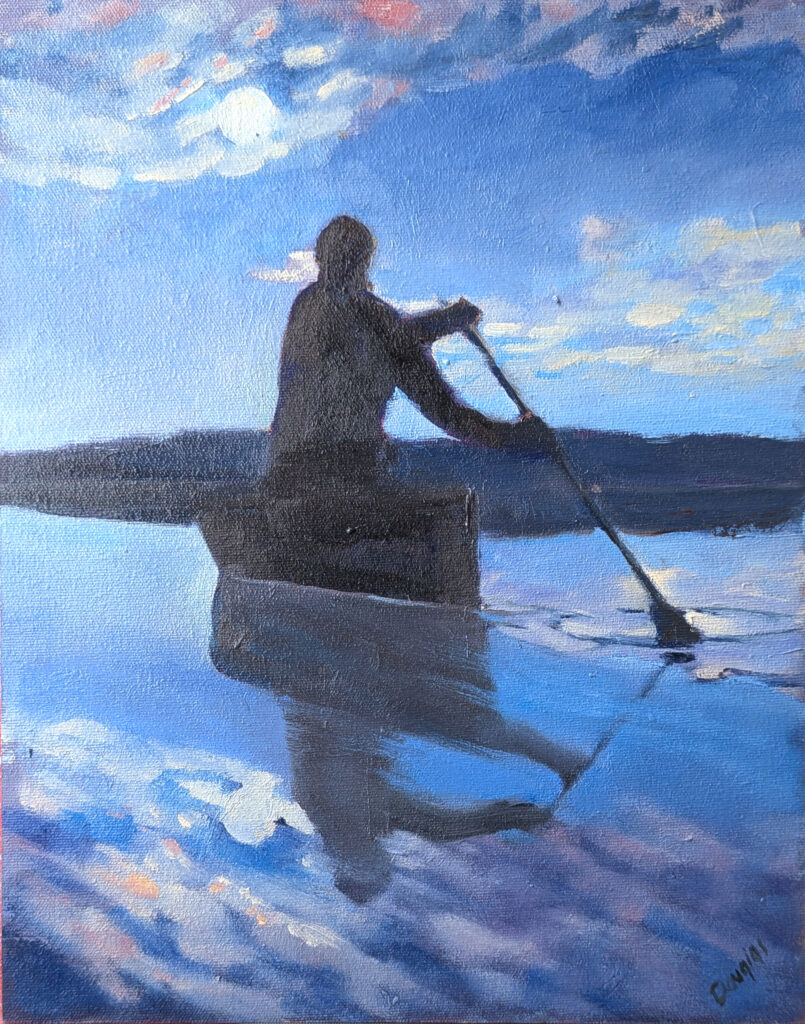
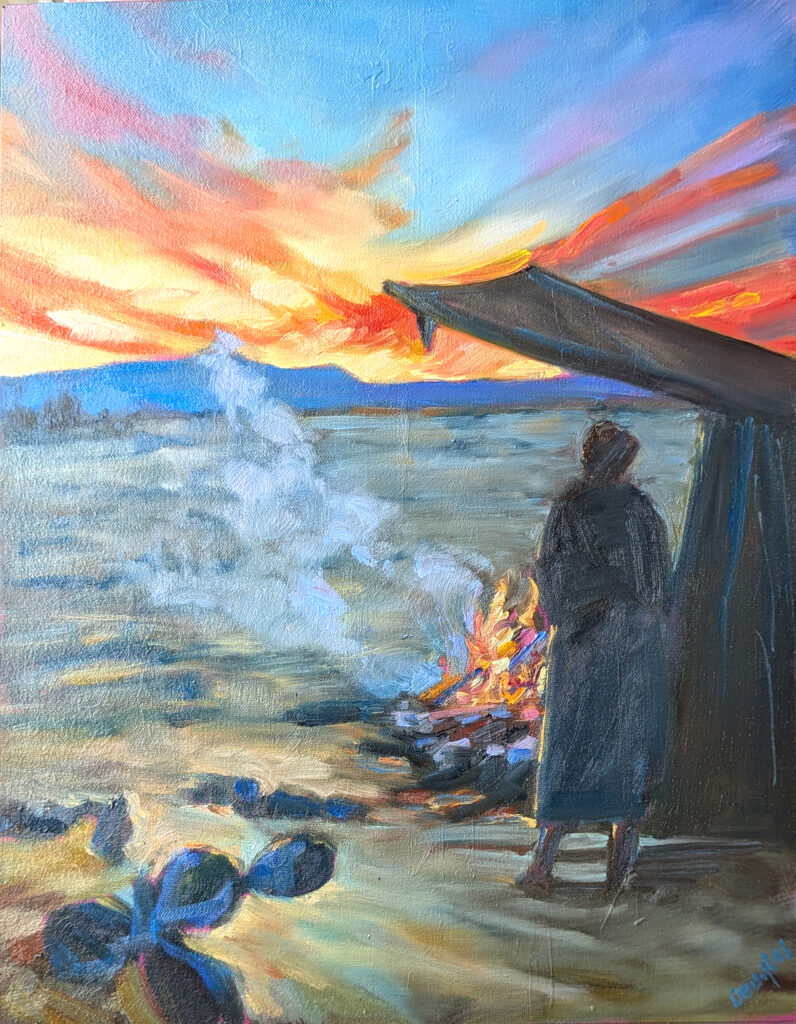
Night Travel, 11X14, oil on archival canvasboard, $1195, available through Sedona Arts Center. This painting was inspired by a night long ago when Chrissy Pahucki and I rented a campsite just to paint the moonlit night. Her painting of her daughter making S’mores that night is among my treasured possessions.

Frederic Remington’s nocturnes

My approach arose from a deep dive into Frederic Remington’s experiments in nocturnes.

Remington is best known for his paintings and sculptures of the American West: cowboys, cavalrymen, Native American scouts, horses and Western landscapes. But late in his career, he became fascinated with painting at night.

For Remington, the night wasn’t merely a setting. It was part of the subject.

His earlier Western paintings were relatively straightforward narrative paintings. In his nocturnes, he increasingly withheld information.

You see a rider, but not necessarily where he’s going. You see figures looking toward something you can’t see. You see a wolf reacting, but to what?

That uncertainty is what makes Remington’s nocturnes so compelling. The darkness creates the possibility of unseen danger. The viewer knows that something is happening, but doesn’t necessarily know what.
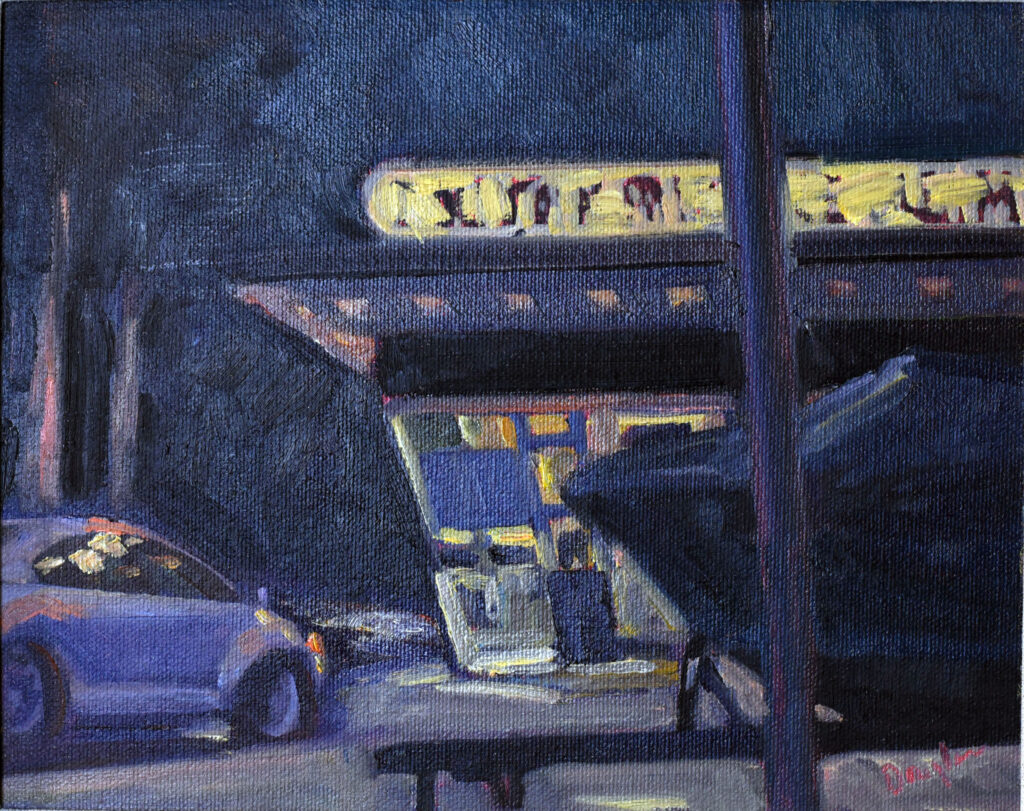
Ice Cream Stand, oil on archival canvasboard. For more information, click on image.

What makes a nocturne different?

The subject of a nocturne doesn’t have to be the person, animal or event depicted in the painting.

It can be the state they’re in: waiting, listening, watching, approaching, searching, hiding, isolation, danger or anticipation.

This is one of the things I find most interesting about nocturne painting. The darkness gives the painter permission to leave things unresolved. A rider can disappear into the night. A distant light can raise a question. A figure can be watching something beyond the edge of the painting. A landscape can become less about describing a place and more about creating an experience.

That’s why Remington’s nocturnes feel surprisingly cinematic. He uses what the viewer cannot see as part of the composition.

Painting the dark sky

Remington was also painting at a fascinating moment in history. Just as cowboy culture was fading into history, electric lighting was coming into its own. It changed people’s experience of darkness, making it more a thing to be feared and avoided. Remington’s nocturnes engage not only with the beauty of nighttime but with the changing meaning of darkness itself.

I like wilderness camping. My husband thinks I’m nuts, but is along for the ride.

I’m coming full circle from where Remington was. For Remington, electric light was changing the experience of night. For me, the dark sky is an escape from the electrified world.

I don’t know where this nocturne painting experiment is going. Maybe that’s part of the attraction.

I’m enjoying staying up late, looking into the darkness, and figuring it out one painting at a time.

There’s still room in this class:

I have one workshop already scheduled for 2027! Reserve your spot:

Can’t commit to a full workshop? Work online at your own pace:
Seven Protocols for Successful Oil Painters

The fickle business of jurors and buyers

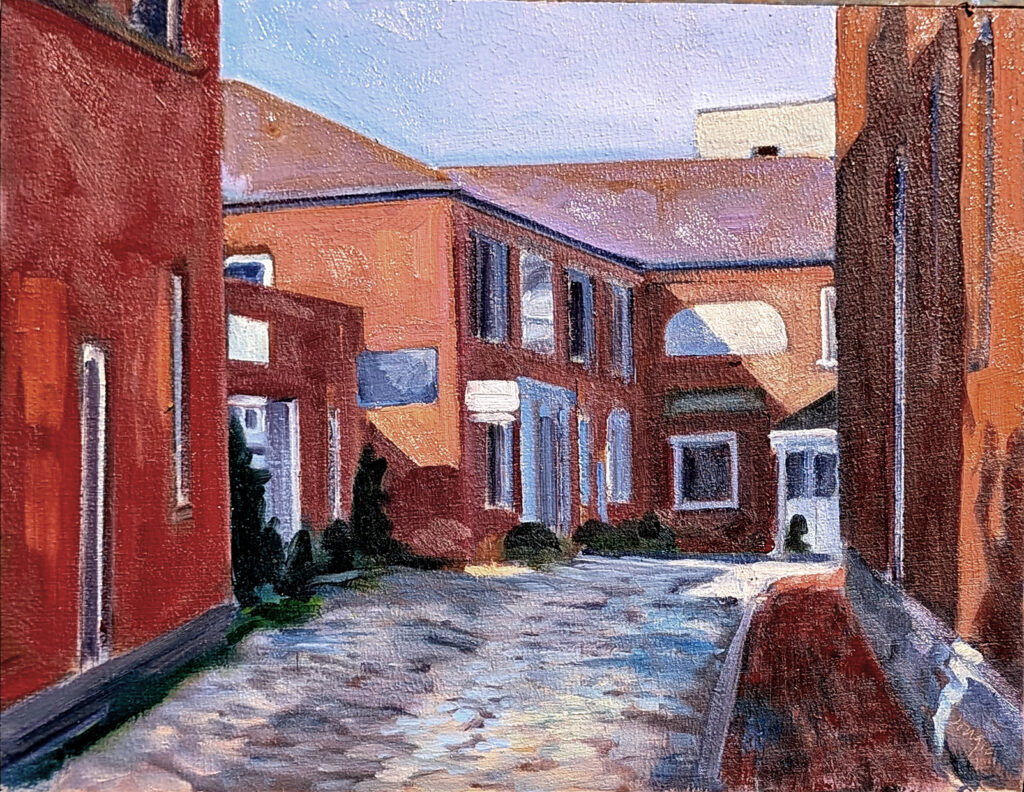
Cobblestone court, 11X14, oil on board, available through Plein Air Litchfield. The color is impossibly off in this photo, I’m afraid.

By the time you read this, Plein Air Litchfield will have moved from the painting phase to the jurying and selling phase. The level of competition is very high.

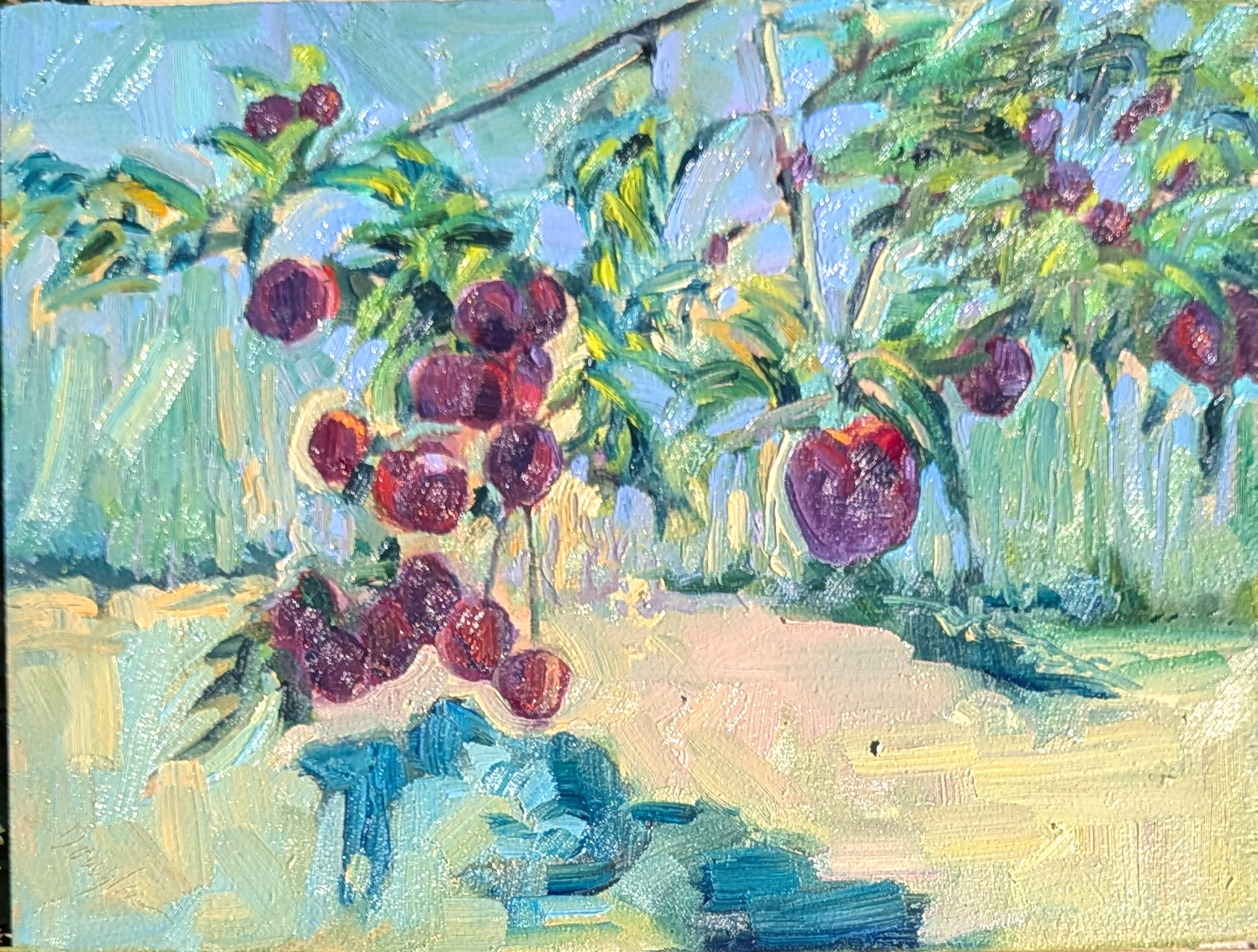
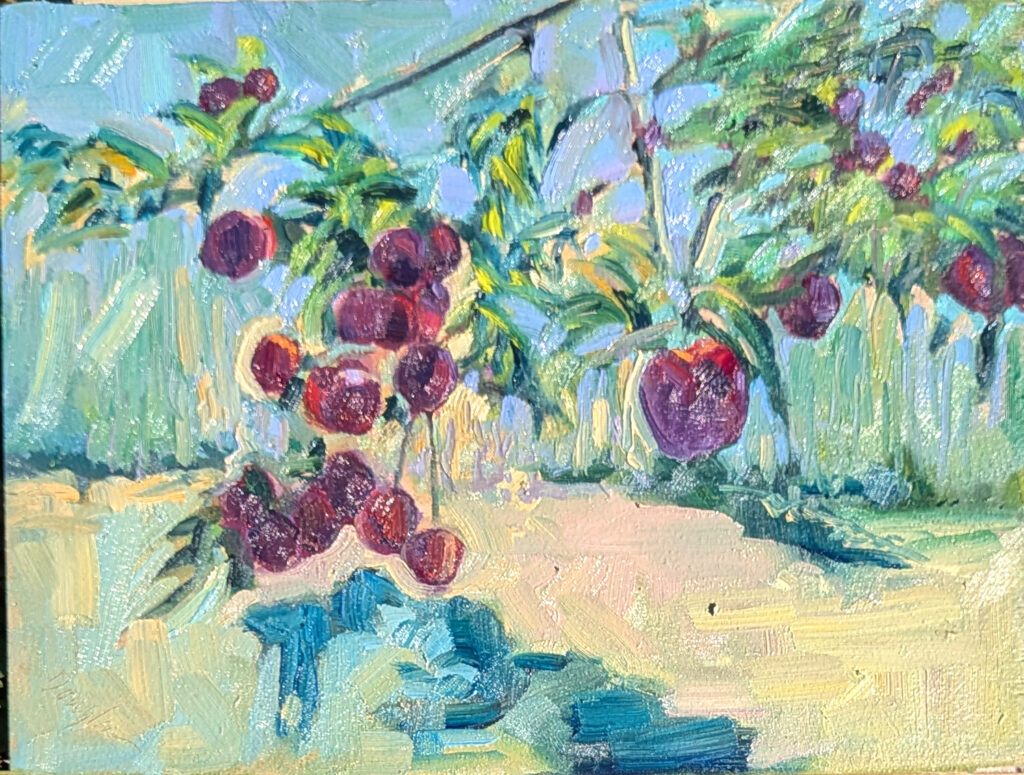
On Tuesday, I was grumbling at John Forgione about an orchard painting I didn’t like. (I’m a terrible curmudgeon while painting.) He liked a lot about it—the impasto, the immediacy. Meanwhile, he was worrying at a painting I thought was absolutely brilliant. Which of us were right? Well, both and neither, of course.

Is it all just a crap shoot?

Juried art shows aren’t entirely random, but there’s a lot of subjectivity in it. People buy paintings based on emotional response. While one hopes that jurors are versed in the elements of design, they are still, ultimately, human beings, and pressed to make decisions quickly.

Apples, 9X12, oil on board, available through Plein Air Litchfield.

The myth of objectivity

I don’t believe that objectivity has much role in any human endeavor. We are each a mess of linear and intuitive thought, bundled together so tightly that we can’t tell where one stops and the other starts.

In a perfect world, juried art shows would be objective. You’d submit your painting, an expert would look at it and the very best paintings get accepted. (I always tell myself that’s what happened whenever my work gets a positive review, by the way.) Buyers would work the same way. They’d walk into a gallery, look carefully at the paintings, and choose the ones that are most accomplished.

If only

Jurors and buyers have moods, experiences, prejudices, memories and ideas about what they like. Sometimes they respond to the painting you thought was the weakest one in your submission. Sometimes the painting you love best sits on the wall, unsung and unloved.

This is why we can’t confuse rejection with failure as an artist.

I’ve had paintings accepted into juried art shows that I thought were merely adequate. I’ve had paintings rejected that I still think are among my strongest work. I have sold paintings that surprised me and watched paintings I thought were obvious crowd-pleasers stay stuck in my closet.

What do jurors and buyers want?

Perhaps the juror has strong feelings about abstraction, landscape or color. Or maybe he’s already seen fifty paintings of barns, and can’t stomach one more.

Buyers, in my experience, respond emotionally. This is why it’s never a great idea to be overly specific about the location of a painting. It may remind a buyer of the place they grew up, or where they buy coffee, or their walk to the post office. A painting that means nothing to one person can hit another person squarely in the solar plexus.

That’s what makes selling original art so challenging.

Painting a nocturne with Stephen Florimbi at Plein Air Litchfield.

The danger of fickle responses

In every new event, I start the week wondering what the community wants. Mercifully, that goes away after a few days. Painting to accommodate an imaginary juror or buyer is always a fatal error. Pretty soon, we’re painting for the response rather than painting the thing we actually want to paint.

There is useful information in sales and rejections. If nobody ever understands what you’re trying to say, perhaps your communication needs work. If your compositions repeatedly fall apart, that’s worth addressing. If buyers consistently respond to certain subjects, you may want to explore why.

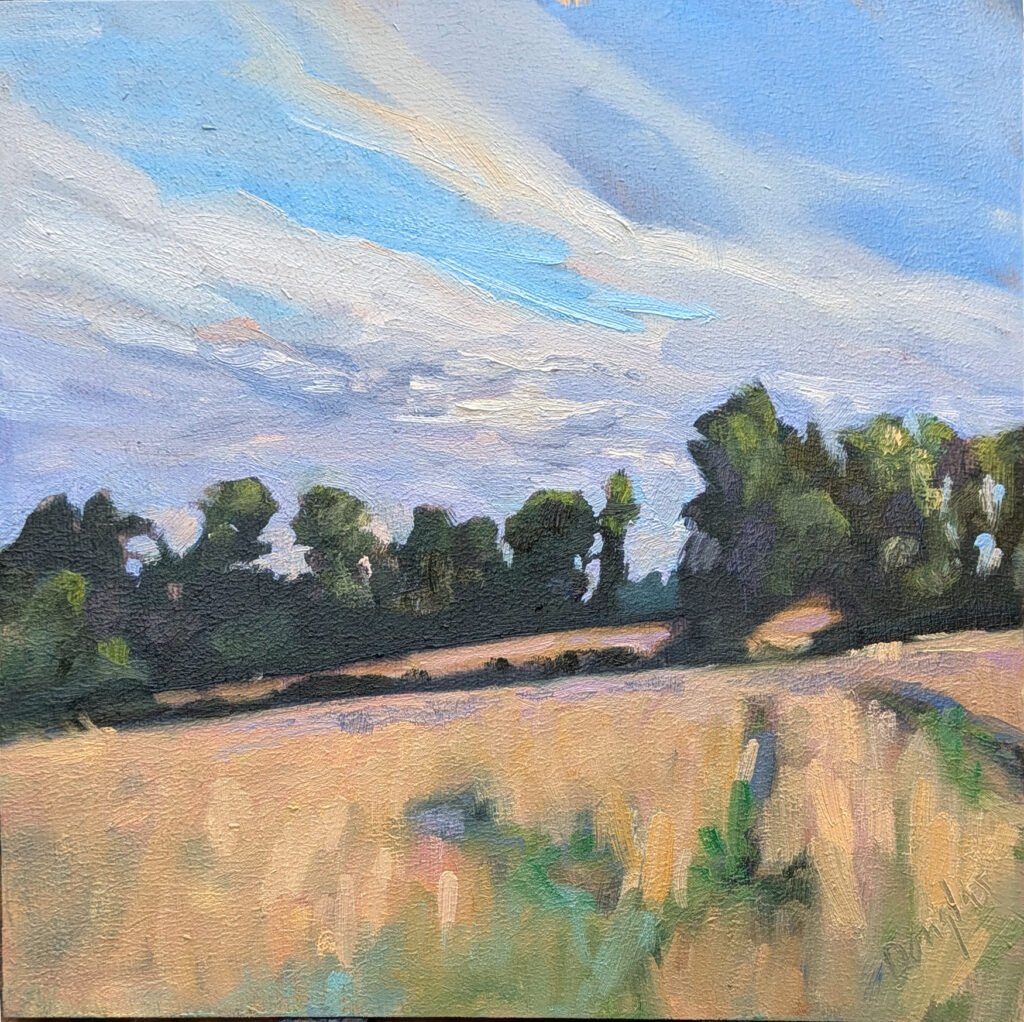
Hillside farm, 12X12, available through Plein Air Litchfield.

But one juror saying no is not a pattern. Neither is one painting sitting unsold. Your job is to become a better painter, not to become better at guessing what somebody else will like on Saturday morning.

Paint well. Paint honestly. Study your craft. Enter shows that make sense for your work. Listen to thoughtful criticism. Notice what sells.

Then get back to the easel. Which, if it stops spattering on my windshield, I’ll do shortly.

There’s still room in this class:

I have one workshop already scheduled for 2027! Reserve your spot:

Can’t commit to a full workshop? Work online at your own pace:
Seven Protocols for Successful Oil Painters

Taking breaks while painting

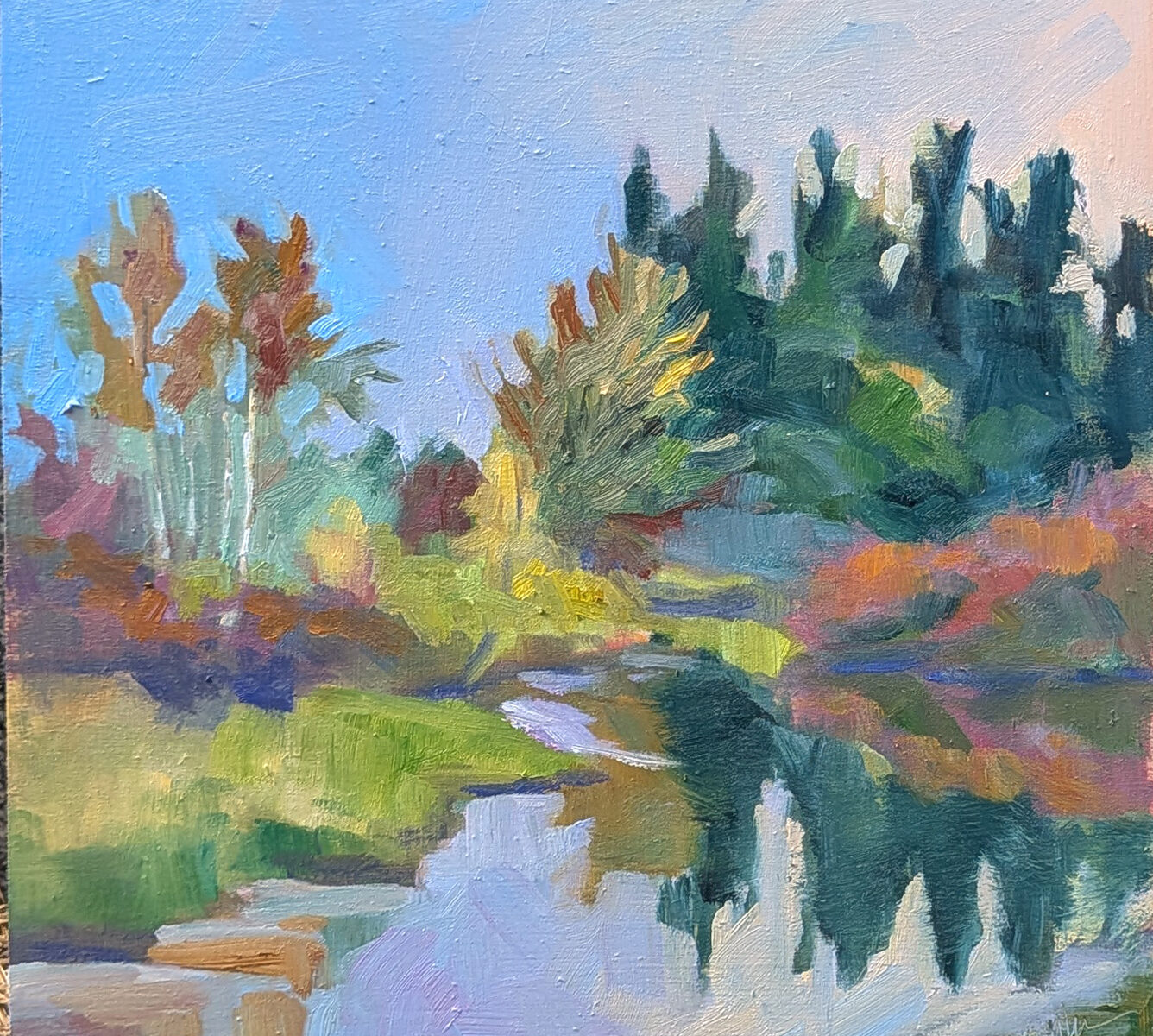
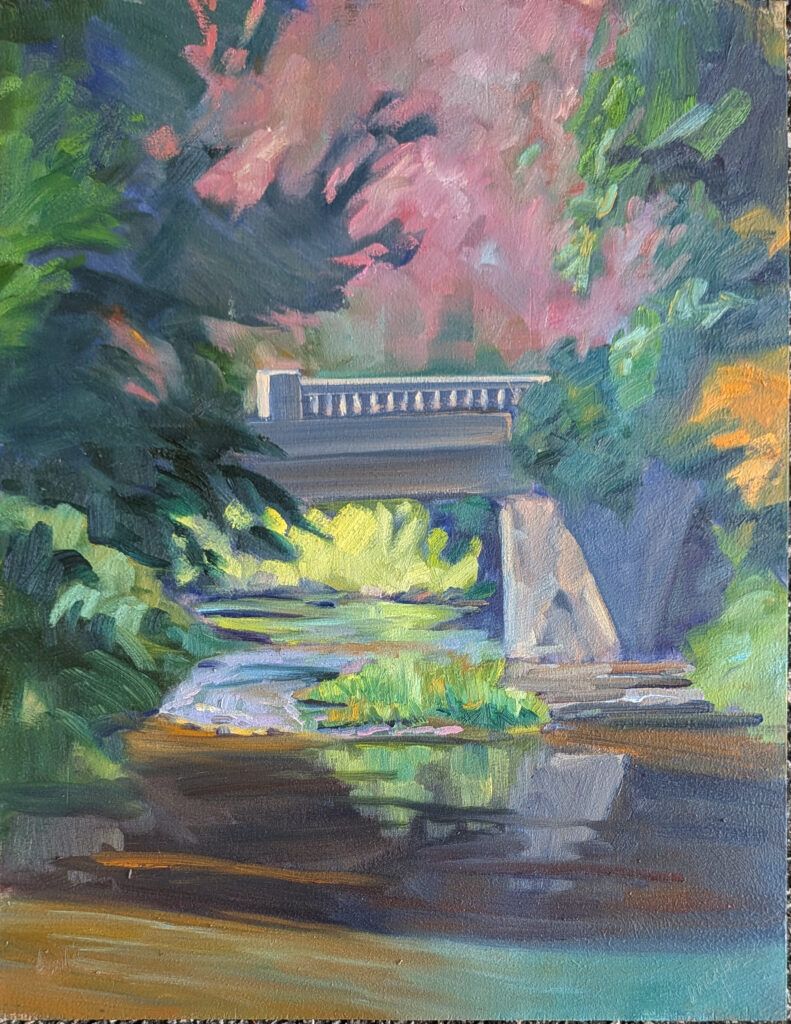
Bantam River shadows, 14X18, available through Plein Air Litchfield this week.

A friend recently wrote to me about the importance of taking breaks while painting. One of her professors at Yale had recommended A Writer’s Time, by Kenneth Atchity. It argues that stepping away from a project gives you more than physical rest. It can also give you a perspective on your work that you simply couldn’t have while you were in the middle of it.

It was relevant to me because this is my busiest time of the year. I’ve been working obsessively, and my reward has been another case of shingles (yes, I’ve had the vaccine).

I took an hour’s break on Friday morning to shoot clay pigeons with my girls. Surprisingly, I didn’t do too badly at all, and I was in a great mood for the rest of the day.

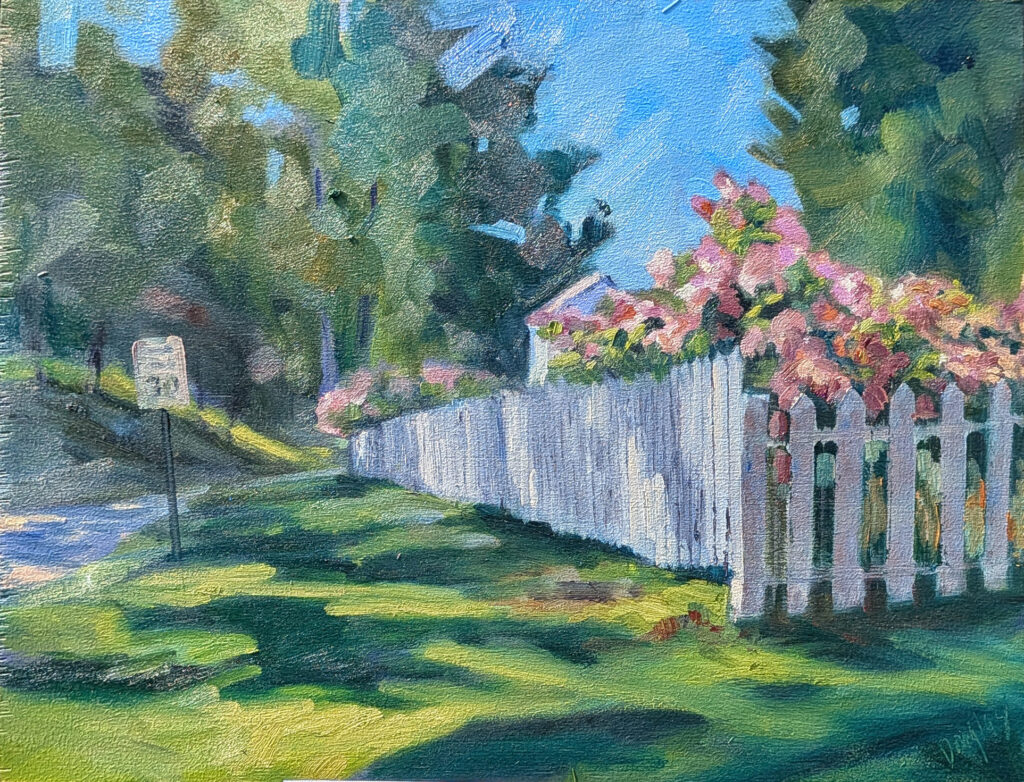
Picket fence, 14X18, available through Plein Air Litchfield this week.

Work harder, not smarter

We are trained from childhood to believe that the answer to knotty questions is to work harder. We extend that idea to painting. The sky isn’t right? Keep painting. The composition feels awkward? Poke at it some more. The whole thing is going south? Surely another hour at the easel will fix it.

Sometimes it does. More often, we just get more deeply involved in the problem.

When you’re standing three feet from a canvas, you’re making hundreds of tiny decisions. Is that edge too hard? Should that green be warmer? Does the shadow need more blue? You’re so busy solving individual problems that you can lose sight of the painting as a whole. You don’t notice that the darks are gone, or that you’ve introduced awkward parallel shapes.

A change is as good as a rest

Find a cup of coffee and a bathroom. Eat lunch. Talk to a fellow painter. Read something. The point isn’t to abandon your work. It’s to give your brain a chance to stop wrestling with it.

When you return, you’ll see things that were invisible before. You’ll realize that the things you spent time dithering about were overdone or unnecessary, or—the best outcome—that your painting is working better than you thought.

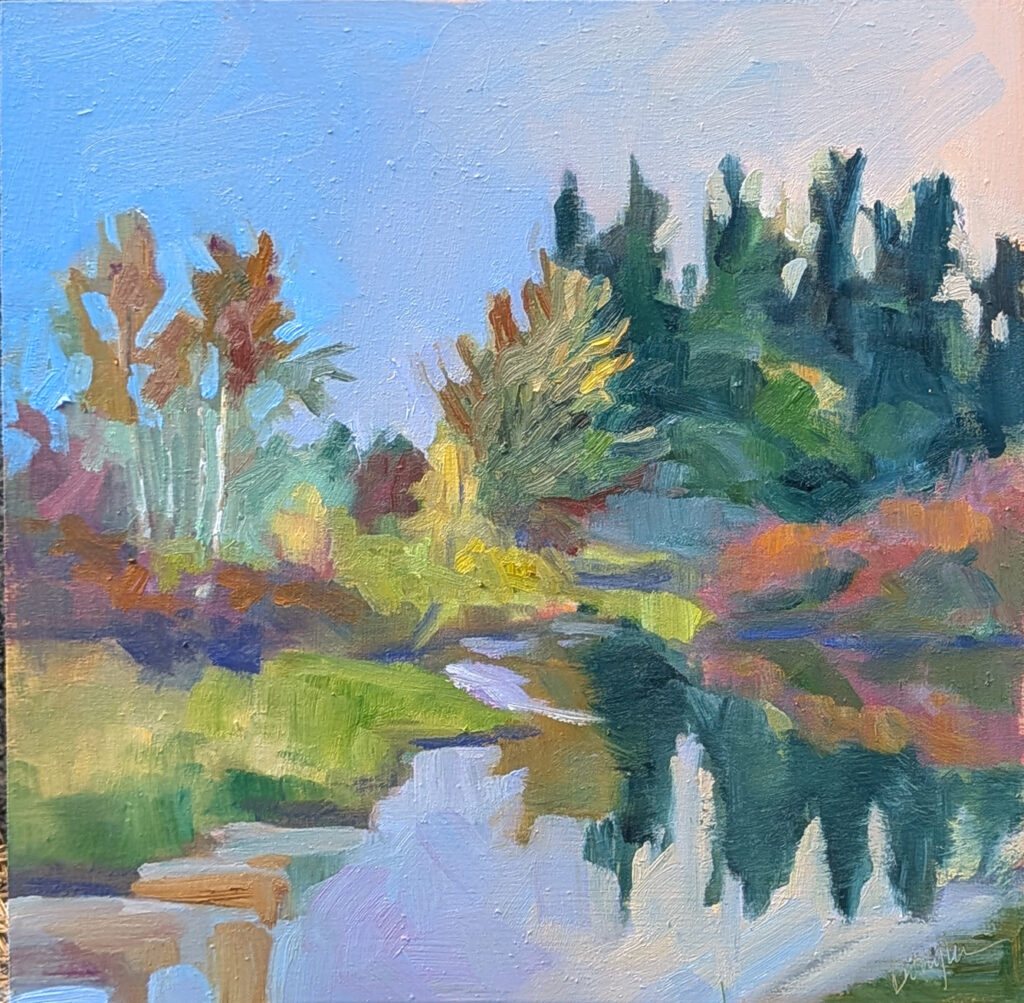
Bantam River dusk, 12X12, available through Plein Air Litchfield this week.

Distance changes the way we see.

Let your paintings rest. Don’t carry them around, scrutinizing every brushstroke. Tomorrow morning, you may see a problem immediately, or realize that the problem you were perseverating over wasn’t a problem at all.

Take a photo on your cell phone, turn your canvas over or look at it in a mirror. This can provide emotional distance. But the most useful tool is simply time and rest.

I’m painting in an event right now

I’m painting at Plein Air Litchfield this week. Yes, we have limited hours, limited daylight, and perhaps only a few precious days to work on a particular subject. Surely, we should make every minute count.

But creativity isn’t an assembly line. More hours do not automatically produce better paintings. I keep reminding myself that sometimes the most productive thing I can do is stop.

I regularly reach a point where I’m no longer seeing the subject clearly. I’m just reacting to the canvas. That’s a good time to take a break while painting. I’m disciplining myself to put down the brush, step away, and then look at the landscape again with fresh eyes.

There’s still room in this class:

I have one workshop already scheduled for 2027! Reserve your spot:

Can’t commit to a full workshop? Work online at your own pace:
Seven Protocols for Successful Oil Painters