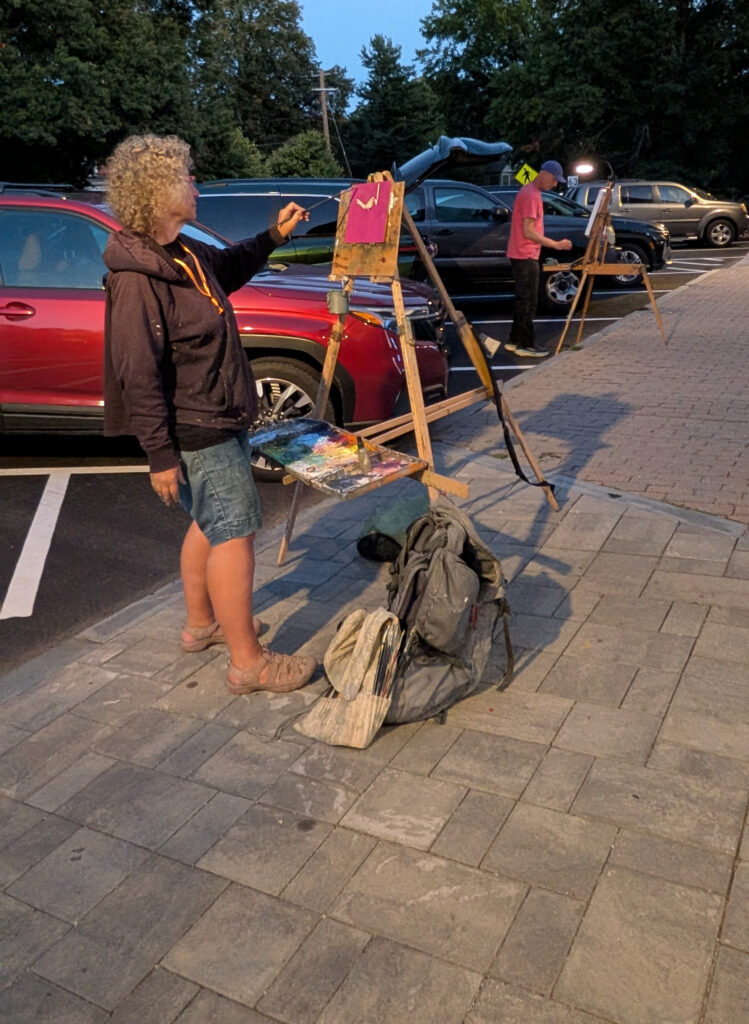
By the time you read this, Plein Air Litchfield will have moved from the painting phase to the jurying and selling phase. The level of competition is very high.
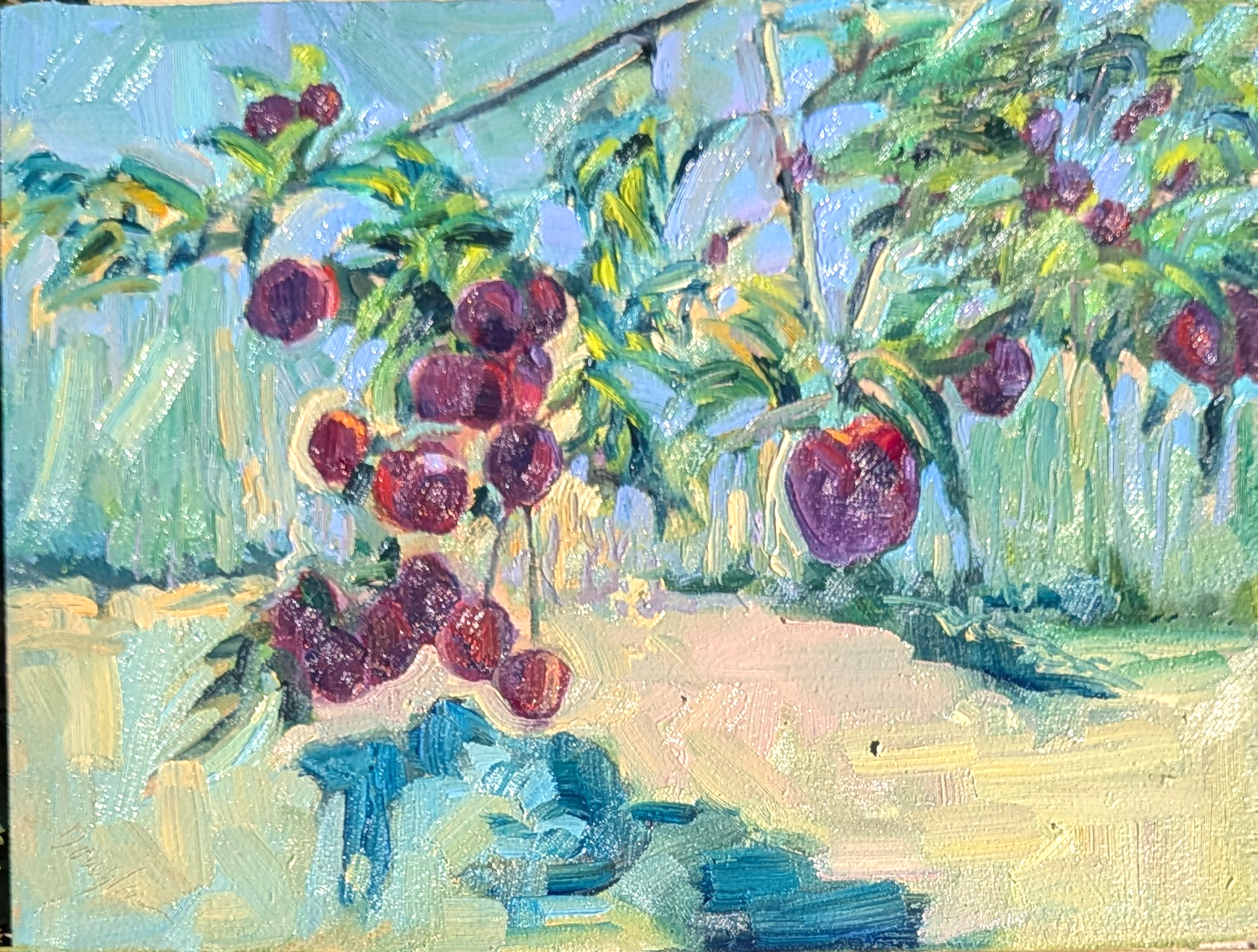
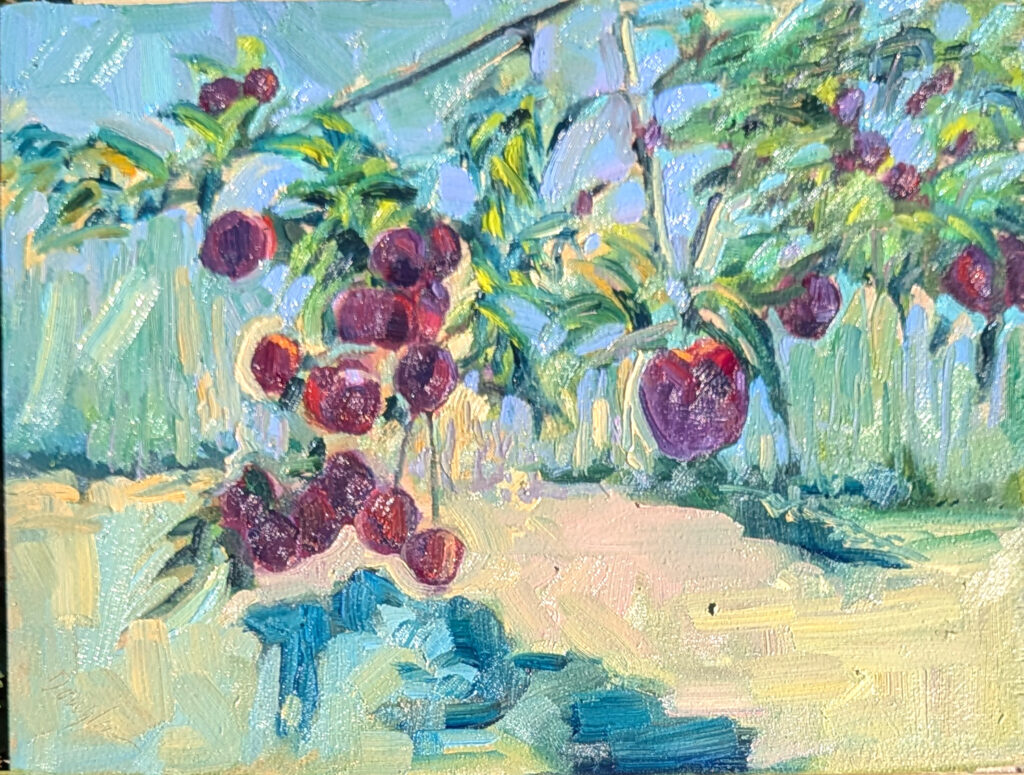
On Tuesday, I was grumbling at John Forgione about an orchard painting I didn’t like. (I’m a terrible curmudgeon while painting.) He liked a lot about it—the impasto, the immediacy. Meanwhile, he was worrying at a painting I thought was absolutely brilliant. Which of us were right? Well, both and neither, of course.
Is it all just a crap shoot?
Juried art shows aren’t entirely random, but there’s a lot of subjectivity in it. People buy paintings based on emotional response. While one hopes that jurors are versed in the elements of design, they are still, ultimately, human beings, and pressed to make decisions quickly.
The myth of objectivity
I don’t believe that objectivity has much role in any human endeavor. We are each a mess of linear and intuitive thought, bundled together so tightly that we can’t tell where one stops and the other starts.
In a perfect world, juried art shows would be objective. You’d submit your painting, an expert would look at it and the very best paintings get accepted. (I always tell myself that’s what happened whenever my work gets a positive review, by the way.) Buyers would work the same way. They’d walk into a gallery, look carefully at the paintings, and choose the ones that are most accomplished.
If only
Jurors and buyers have moods, experiences, prejudices, memories and ideas about what they like. Sometimes they respond to the painting you thought was the weakest one in your submission. Sometimes the painting you love best sits on the wall, unsung and unloved.
This is why we can’t confuse rejection with failure as an artist.
I’ve had paintings accepted into juried art shows that I thought were merely adequate. I’ve had paintings rejected that I still think are among my strongest work. I have sold paintings that surprised me and watched paintings I thought were obvious crowd-pleasers stay stuck in my closet.
What do jurors and buyers want?
Perhaps the juror has strong feelings about abstraction, landscape or color. Or maybe he’s already seen fifty paintings of barns, and can’t stomach one more.
Buyers, in my experience, respond emotionally. This is why it’s never a great idea to be overly specific about the location of a painting. It may remind a buyer of the place they grew up, or where they buy coffee, or their walk to the post office. A painting that means nothing to one person can hit another person squarely in the solar plexus.
That’s what makes selling original art so challenging.
The danger of fickle responses
In every new event, I start the week wondering what the community wants. Mercifully, that goes away after a few days. Painting to accommodate an imaginary juror or buyer is always a fatal error. Pretty soon, we’re painting for the response rather than painting the thing we actually want to paint.
There is useful information in sales and rejections. If nobody ever understands what you’re trying to say, perhaps your communication needs work. If your compositions repeatedly fall apart, that’s worth addressing. If buyers consistently respond to certain subjects, you may want to explore why.
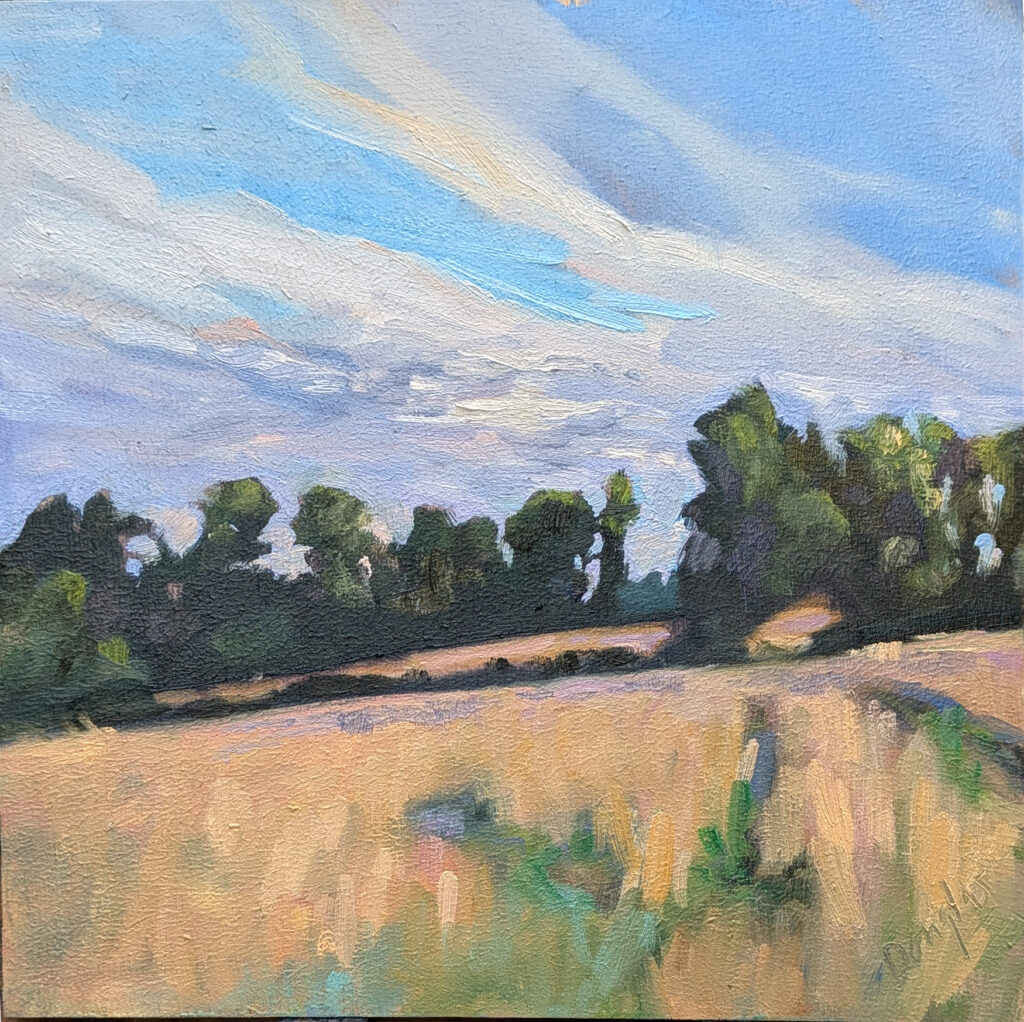
But one juror saying no is not a pattern. Neither is one painting sitting unsold. Your job is to become a better painter, not to become better at guessing what somebody else will like on Saturday morning.
Paint well. Paint honestly. Study your craft. Enter shows that make sense for your work. Listen to thoughtful criticism. Notice what sells.
Then get back to the easel. Which, if it stops spattering on my windshield, I’ll do shortly.
I have just two workshops left in 2026! Reserve your spot:
- New! Color Clinic 2026 | Rockport, ME, October 3-4, 2026
- New! Composition Week 2026 | Rockport, ME, October 5-9, 2026
- High-Desert Light & Monumental Form | Sedona, AZ, Apr 26, 2027 – Apr 30, 2027
Can’t commit to a full workshop? Work online at your own pace:
At the end of the day we have to paint what we have to paint.