Seeing, brushwork and color are the painter’s trifecta

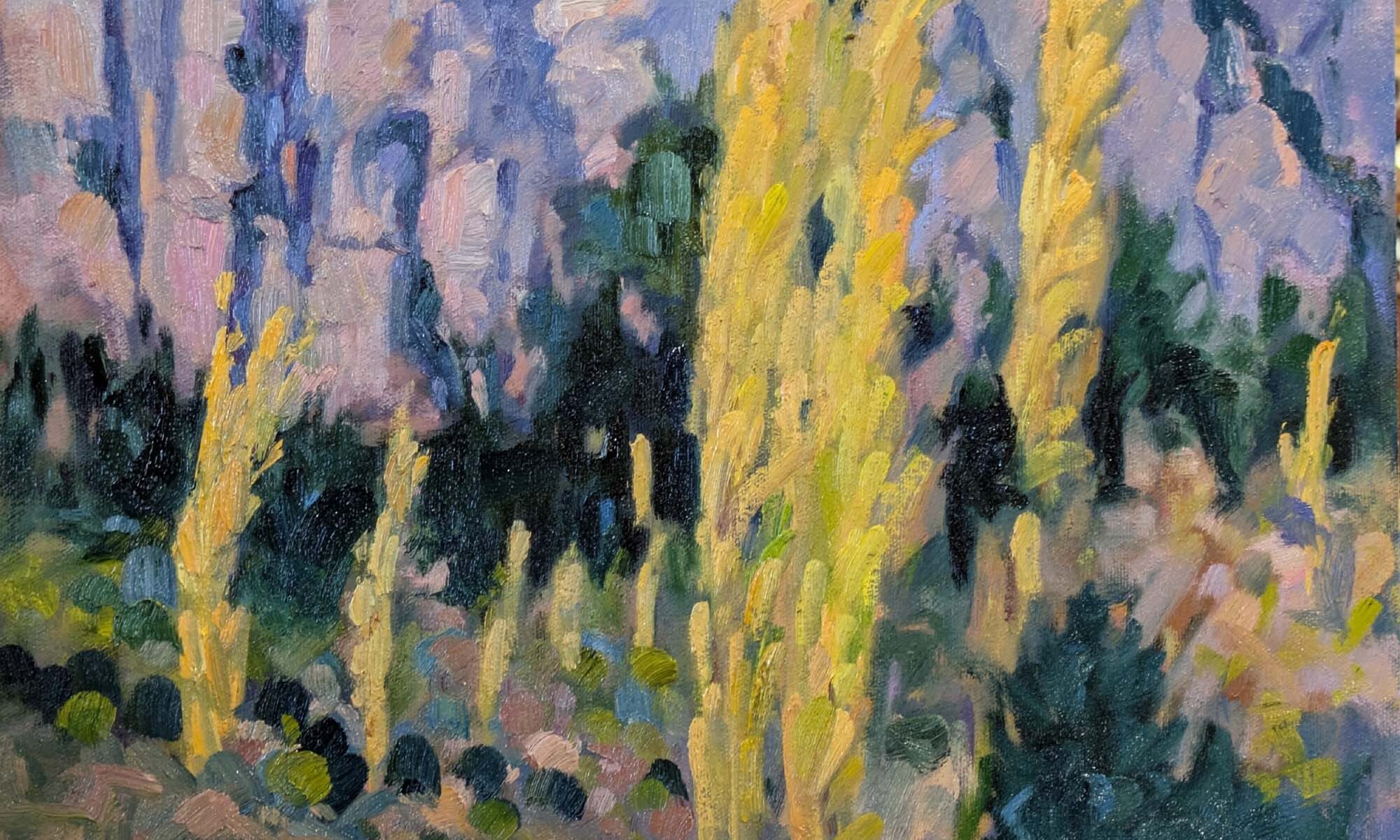
The Fleeting Hand of Time, 9X12, oil on archival canvasboard, $696 includes shipping and handling in continental US.

Most painters stall because they’re trying to solve too many problems at once. Students make real leaps forward when they start building skills in a sensible order. That’s what this trio of learning opportunities is designed to do.

Color, brushwork and composition are a three-legged stool. You must learn to see, orchestrate color and express your ideas with confidence.

Mather Point at dawn (Grand Canyon), oil on canvasboard, 9X12, , $696 includes shipping and handling in continental United States.

How to See Like a Painter (Zoom class)

Everything starts with perception. If you can’t see clearly, no amount of technique will save you. How to See Like a Painter is an interactive online painting class focused on visual analysis. That’s a skill most artists ignore, yet need the most.

We will dig into value relationships, shape and focal hierarchy, edges and—most importantly—the difference between what you think you know and what you’re actually seeing. Once you understand how to simplify complexity, your decisions will get stronger and faster.

The class meets Monday evenings, 6-9 PM EST on Feb 23-March 2 and March 16-April 6.

Here is more information and online registration.
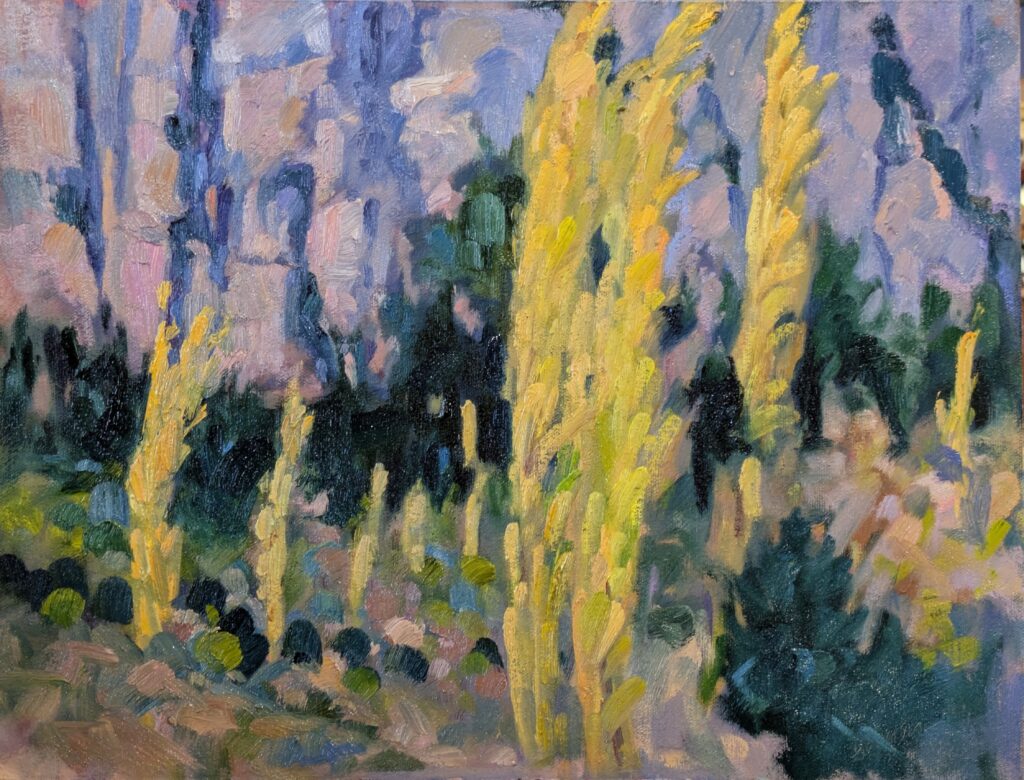
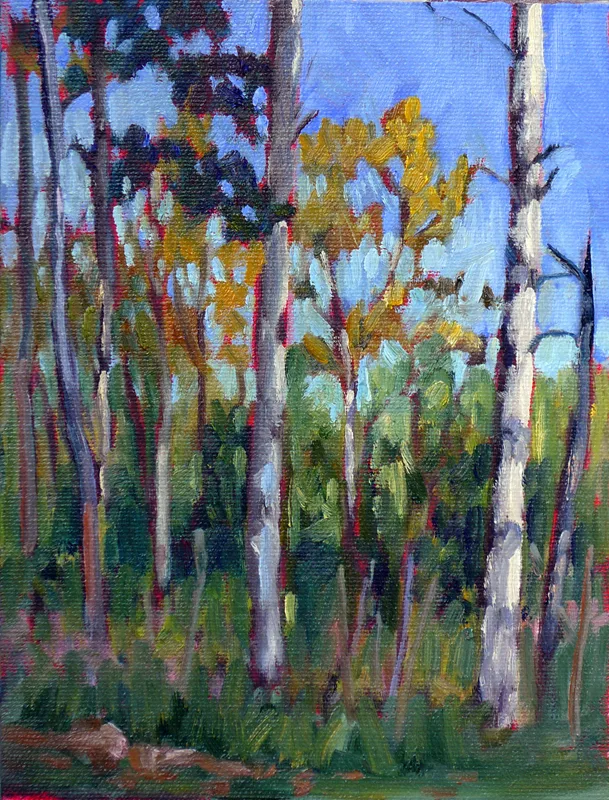
Poplars, 12X16, oils on archival canvasboard, $1159 includes shipping and handling in continental US.

Painterliness, looseness and bravura brushwork (Zoom class)

Painterliness, looseness and bravura brushwork is an interactive online class devoted to expressive paint handling. We talk about economy, confidence, and when to set it and forget it. Looseness isn’t sloppiness; it’s clarity delivered with energy.

This class helps you escape overworking and replace it with confident, readable brushwork. You’ll learn how to load the brush, commit to a stroke and let your surface do some heavy lifting. If your paintings feel tight, stiff or hesitant, this class is for you.

The class meets Tuesday evenings, 6-9 EST on Feb 24-March 3 and March 17-April 7.

Here is more information and online registration.

For either Zoom class, we have had students from across the US and Canada and Great Britain. If you can tune in at those times and are fluent enough in English to talk about art, we’d love to have you join us.

Canyon Color for the Painter: A Sedona Plein Air Workshop

Why is there a one-week break in middle of these Zoom classes? I’m heading to Sedona, AZ to teach Canyon Color for the Painter: A Sedona Plein Air Workshop, March 9-13.

Sedona is one of the most demanding and rewarding outdoor classrooms on earth, which is why I love it. The desert doesn’t forgive lazy color thinking. Light is strong, shadows are crisp, and color temperature shifts happen fast.

In this workshop, we focus on color strategy: how to simplify without dulling, how to exaggerate without lying, and how to organize color so your painting reads brilliantly from across the room. You’ll apply new skills directly to the landscape, with real-time feedback and lessons. I keep my workshop numbers low enough to give every person individual attention. Sign up quickly, as this workshop is filling fast.
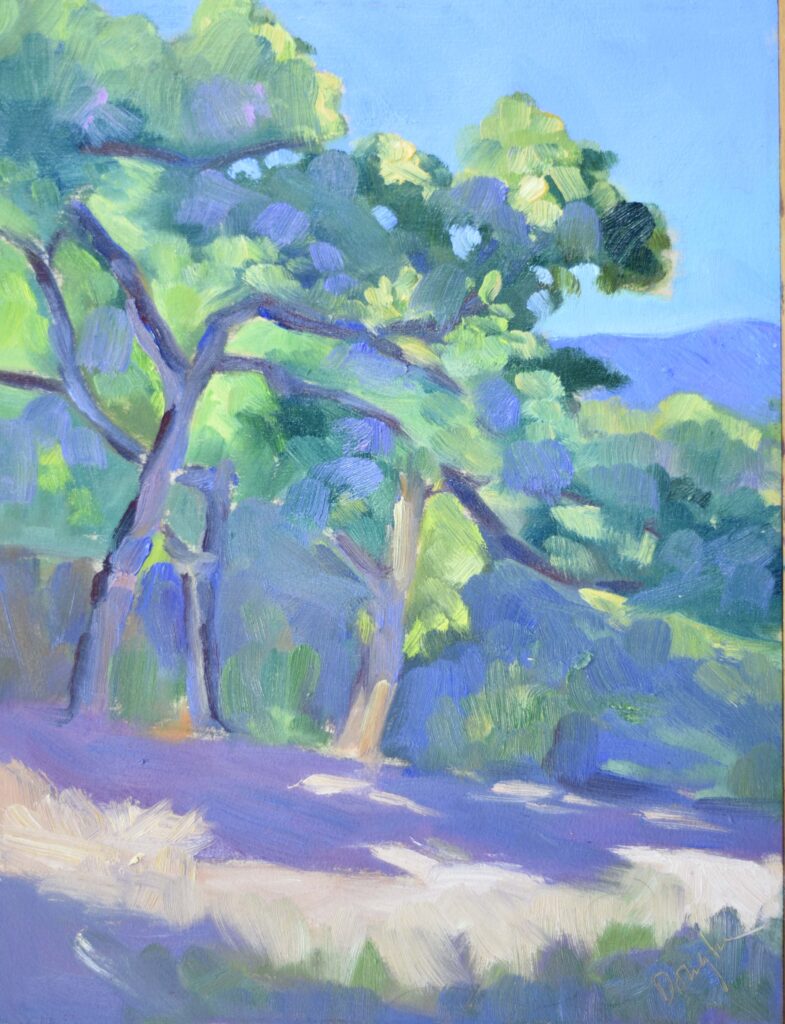
Cottonwoods along the Rio Verde River, $696 unframed, oil on Baltic birch.

Which one should I take?

In a perfect world, you’d have the time and energy to take all three. Together, they address the core problems all painters face: unclear seeing, timid execution and confused color. But I know that’s not practical.

Ask yourself which of these core problems you need the most work on: brushwork, composition or color. And then register for the class which will help you the most. If I can help you with your choice, email me.

(Frankly, looking at this weekend’s brutal temperatures in the northern US, I’d also factor in the desert warmth. Southwest has a fare sale until Friday. 😉)

Registration is now open for workshops in 2026! Reserve your spot:

Can’t commit to a full workshop? Work online at your own pace:
Seven Protocols for Successful Oil Painters

Monday Morning Art School: do you see what I see?

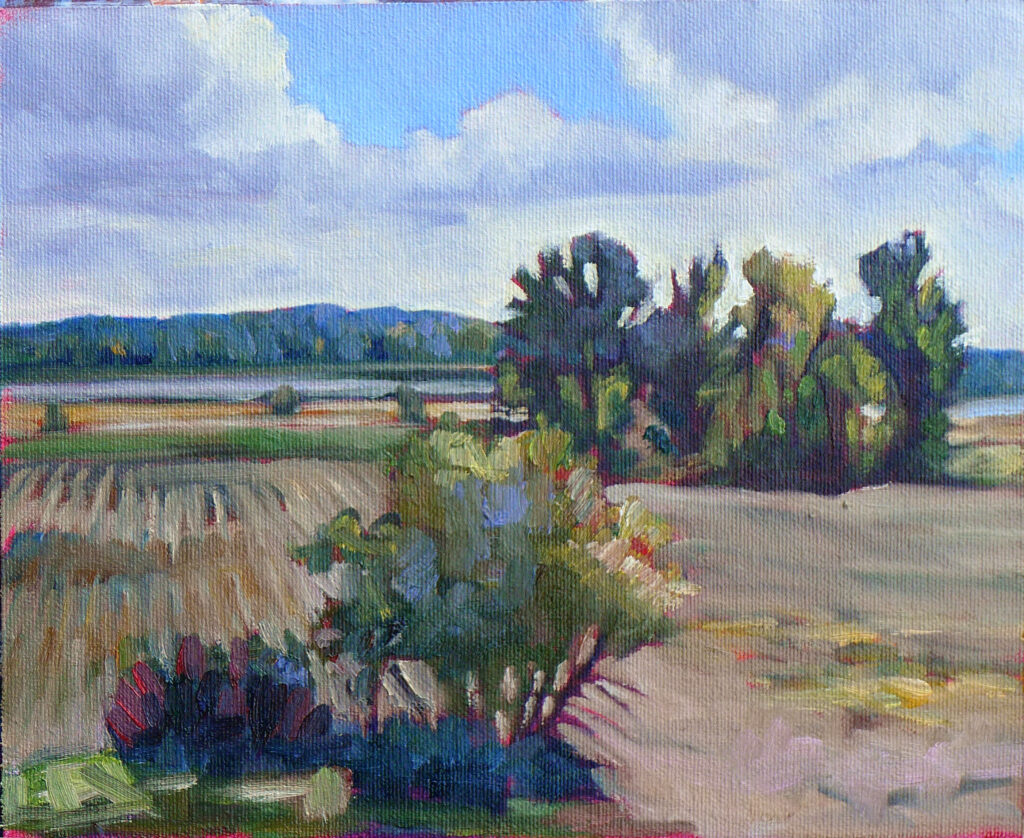
Marshes along the Ottawa River, Plaisance, 8X10, oil on archival canvasboard, $522 includes shipping and handling in continental US.

There is a young maple tree that I watch from my living room. This morning, it’s green overlaid with bronze. The maple behind it has a golden hue where it’s hit by the sun, but the part in shadow is a very dull blue. Closer to my house, the neighbor’s tree is developing dull violet overtones.

We old-timers say that maple trees start turning color before the kids go back to school. That’s not strictly true, because maple trees change their color throughout the season, starting with the brilliant red buds that we recognize as one of the first signs of springs. New leaves are chartreuse and mature into the full-throated, deep, dull “wall of green” that’s the undoing of many painters. There summer sits for a few hot weeks before it begins to slide inexorably into the cooler air and warmer tones of fall. By autumn’s end, all the deciduous leaves will be gone except those of the young beeches and oaks, which will dry yellow and bronze on their stems and create a quiet susurration in the winter woods.

The Pine Tree State, 6X8, oil on archival canvasboard, $435.

But ask us what color a tree’s leaves are, and we’ll invariably say, “green.” We won’t specify the glossy dark green of summer oak leaves, or the delicate light green of the katsura tree. (I have one in my back yard, and as the leaves dry and fall, they smell like apple pie.)

The green that many painters use for foliage bears about the same relationship to the natural world’s green as Gatorade does to juice.

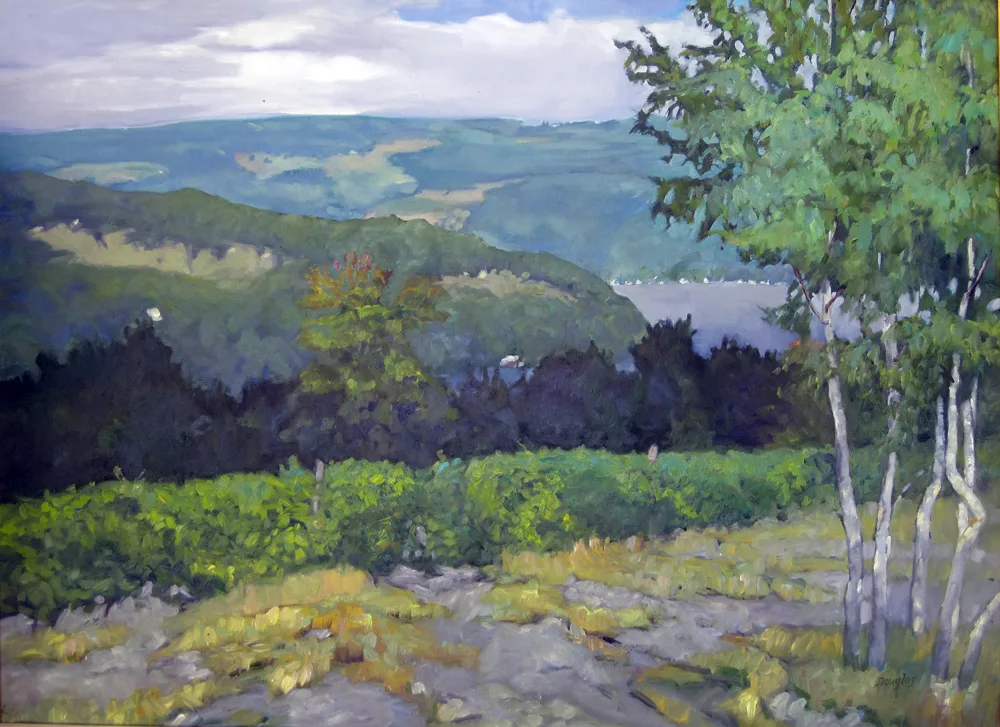
The Vineyard, oil on linen, 30X40, $5072 framed, includes shipping and handling in continental US.

Do you see what I see?

Sometimes I paint with sunglasses on, because I like painting contre jour and the light hurts my eyes. As much as people tell you not to do that, I never notice much problem matching values; my glasses are limiting the light reflecting from my paint and canvas as much as they are the light bouncing off the ocean. (Where they make a difference is in specular highlights, but forewarned is forearmed.)

Visual perception varies from person to person, but within our own brain, we make consistent adjustments. If you always see things as pinker than I do, you’ll see your paints that way, too, and unconsciously make the correction. Not that we really know what anyone else sees; how could we measure that?

Are you looking or thinking?

We humans are too smart for painting. We paint with our reason rather than our eyes. For example, we ‘know’ that the irises of the eye are round. We paint that without noticing that for most of us, our top lids cut off a wedge of this pie shape. We know that barns are red, so we don’t notice that the bright red barn on a far hill is in fact objectively brown; our minds interpolate the color for us.

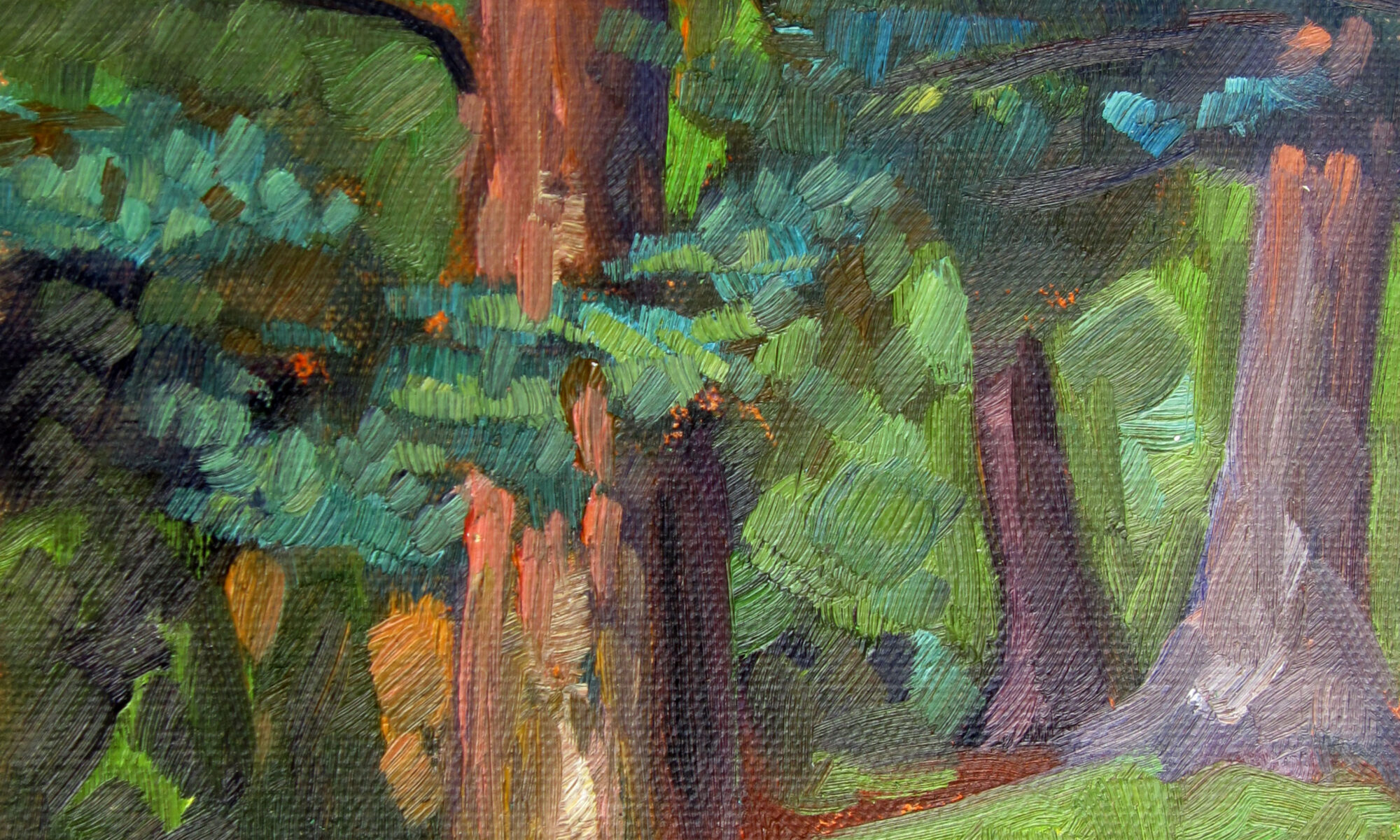
“Eastern Manitoba Forest,” Sandilands National Forest, Manitoba

What do you really look like to others?

“Who is this old woman looking at me in the mirror?” my mother once asked me. Most of us carry around a mental snapshot of ourselves that’s a combination of all our prior selves, real or imagined. That can make a candid photo or unexpected compliment tough to take.

That’s, I think, the same phenomenon as described above. Our inner selves know us rather than see us objectively.

What’s the solution?

Time and practice are the great healers for this problem. Meanwhile:

• Consciously look at things as if you were seeing them for the first time. 
• Take the time to measure; that forces you to be objective.
• Draw or paint the same subject from different angles.
• Look for subtle color shifts and patterns.
• Observe light and shadow without thinking about what object you’re drawing.

Mark next Friday on your calendar

Grand opening
Carol L. Douglas Gallery at Richards Hill
Friday, September 13, 5-7 PM
394 Commercial Street, Rockport, ME 04856

For more details, see here.

Registration is now open for workshops in 2026! Reserve your spot:

Can’t commit to a full workshop? Work online at your own pace:
Seven Protocols for Successful Oil Painters