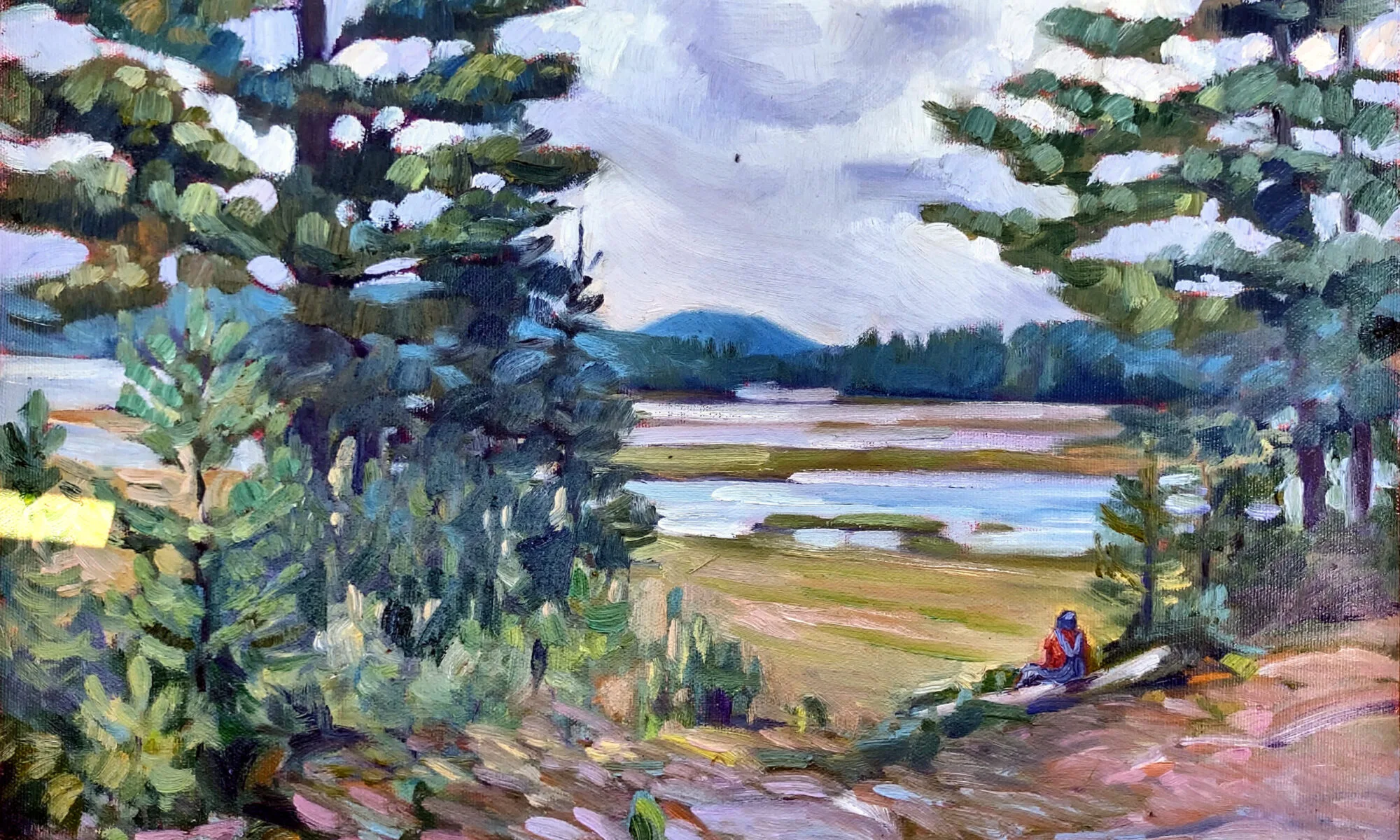
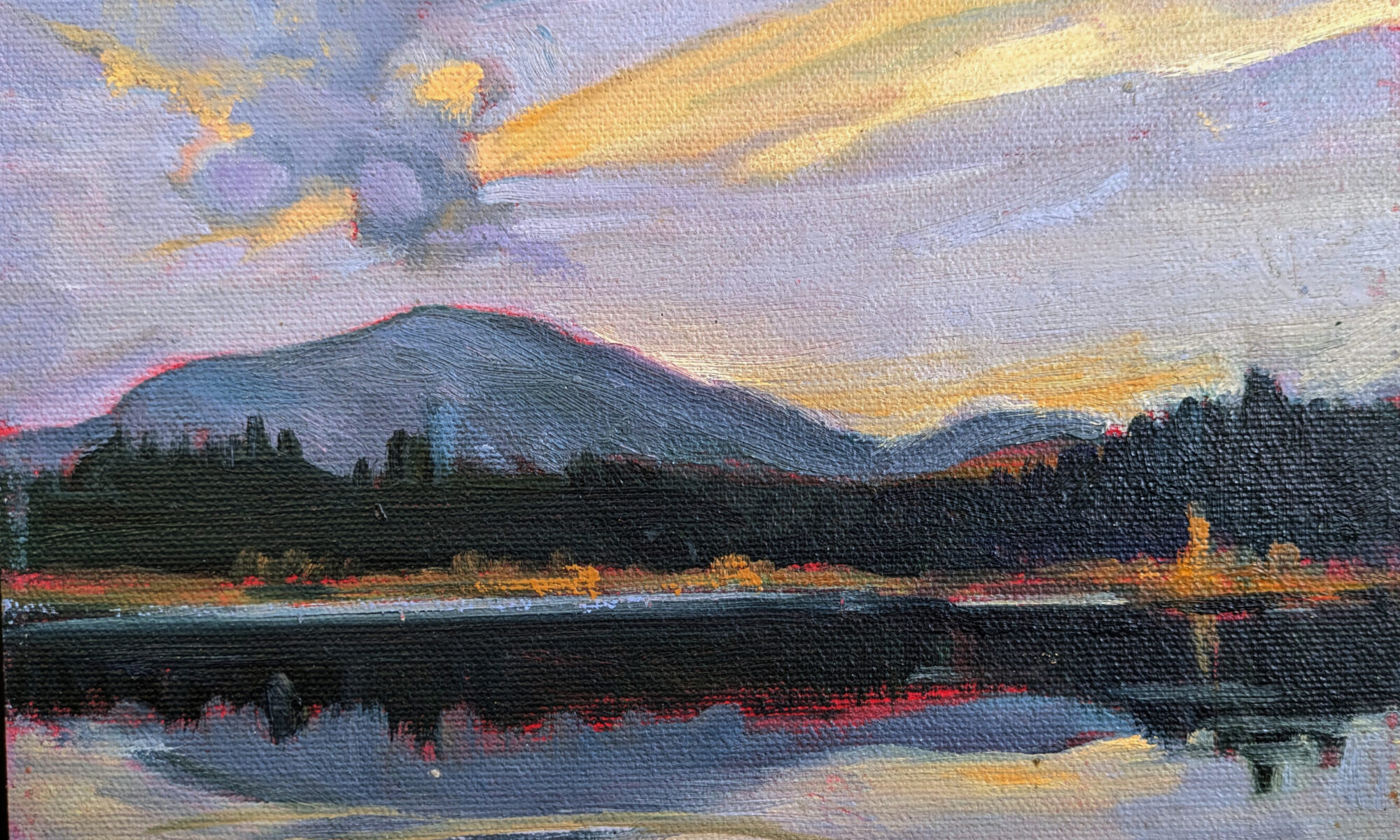
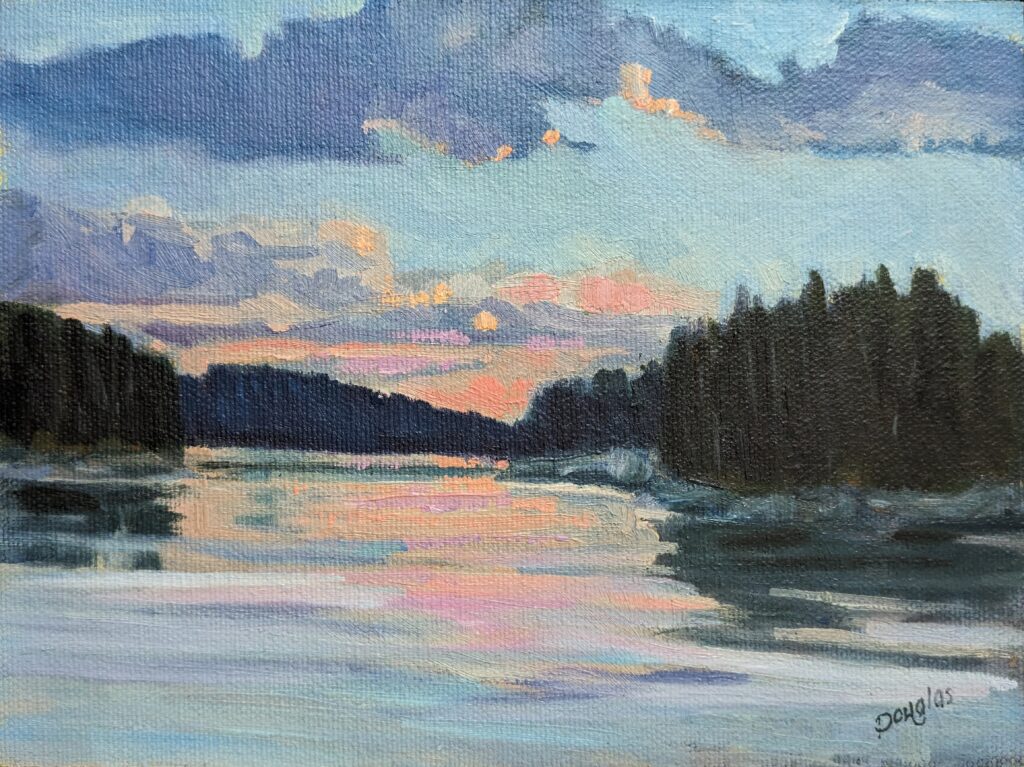
Set up an easel in public and you’ll make new friends (whether you want them or not). People are endlessly curious, and generally very kind. They stop to look, they smile and they usually ask me something along the lines of:
How long did it take you to paint that?
It sounds simple, and we hear it a lot. The temptation is to be annoyed. But these people are really asking something deeper. They may be trying to gauge effort: how hard is plein air painting? Sometimes they’re wondering why such a little canvas costs so much. Sometimes, they’re really asking whether they, too, could ever do this. (The short answer is, of course, yes—with time and instruction.)
A closely aligned question is, “how long have you been painting?” I’ve been drawing and painting for as long as I can remember, and I was painting in oils by the time I was ten. I don’t want to frighten people away by telling them that; the changes as I’ve matured are largely about content, not technique.
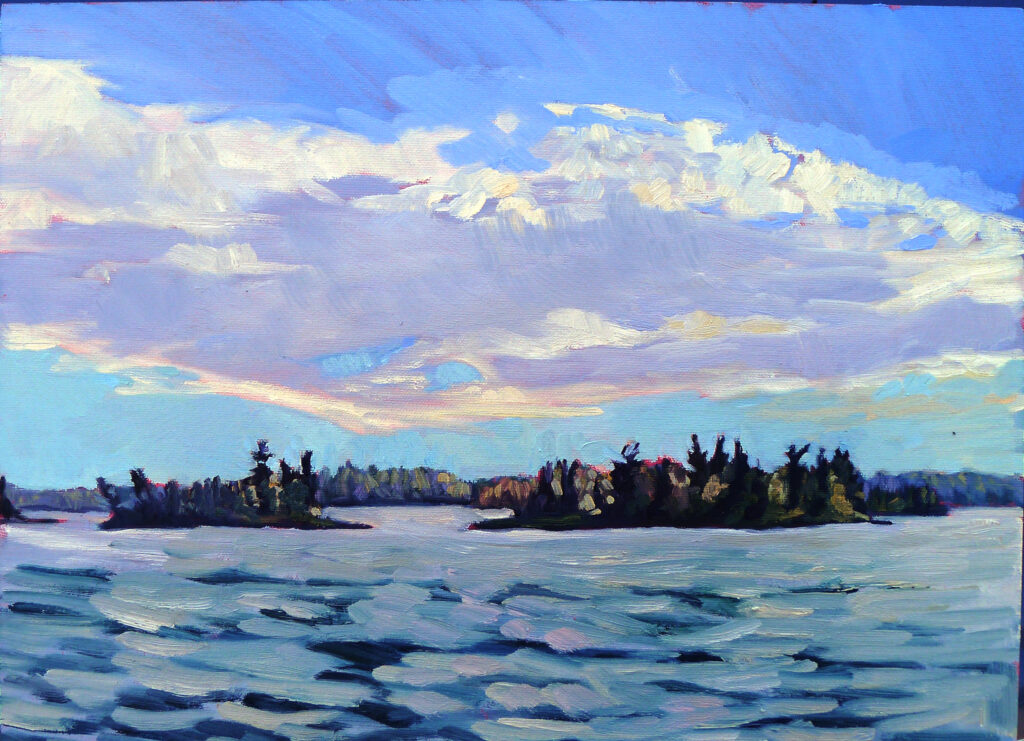
Most plein air sessions clock in at around three hours, and they seldom go more than eight or ten, even for the largest, most complex canvases. But as every painter knows, the time in any single painting is cumulative. It’s both those hours and the fifty-seven years I’ve been painting, rolled together.
Every brushstroke any of us take is backed by years of practice and thought. That includes drawing skills honed in sketchbooks, color theory tested in the few hundred mediocre canvases on my shelves. It includes much study of art history. Even the hours I spend every morning on the trail contribute to my seeing. So, while any single painting may have been done in an afternoon, the groundwork was laid over decades. And only some of that groundwork is brush-in-hand. I used to rue the years I spent slogging in a day job as ‘wasted time,’ but it all contributes to where I am right now.
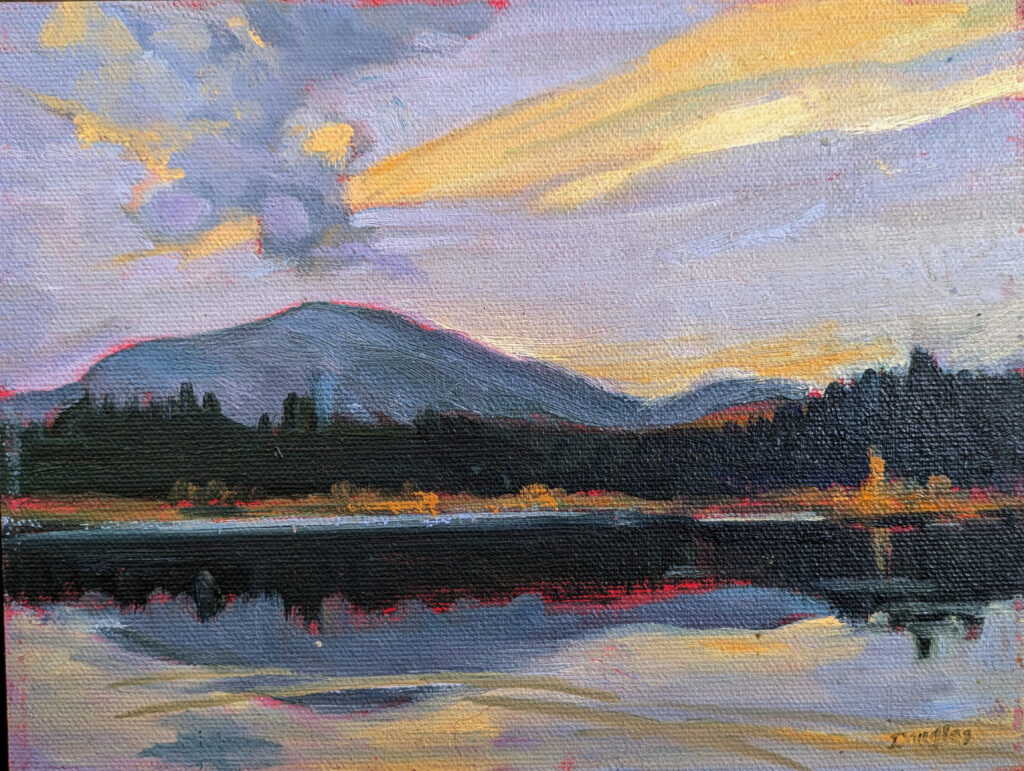
A landscape painting rests on four pillars
- Observation. You must learn to really see, not just look.
- Drawing. Every strong painting rests on structure. If the angles, proportions, and shapes are wrong, the whole thing wobbles.
- Color theory. The harmony of a painting comes from understanding how colors interact.
- Brushwork. This is the visible handwriting of the artist. Loose or tight, bold or delicate, brushstrokes reveal both skill and personality.
Plein air painters work fast
That doesn’t make their work any less compelling. Plein air painting is to studio work as sketching is to drawing. Neither is superior or more artistic; each has its place. Plein air is a craft that anyone can learn with time, patience, and practice. And maybe the next person who stops to chat with me will take the conversation as an invitation to pick up a brush himself.
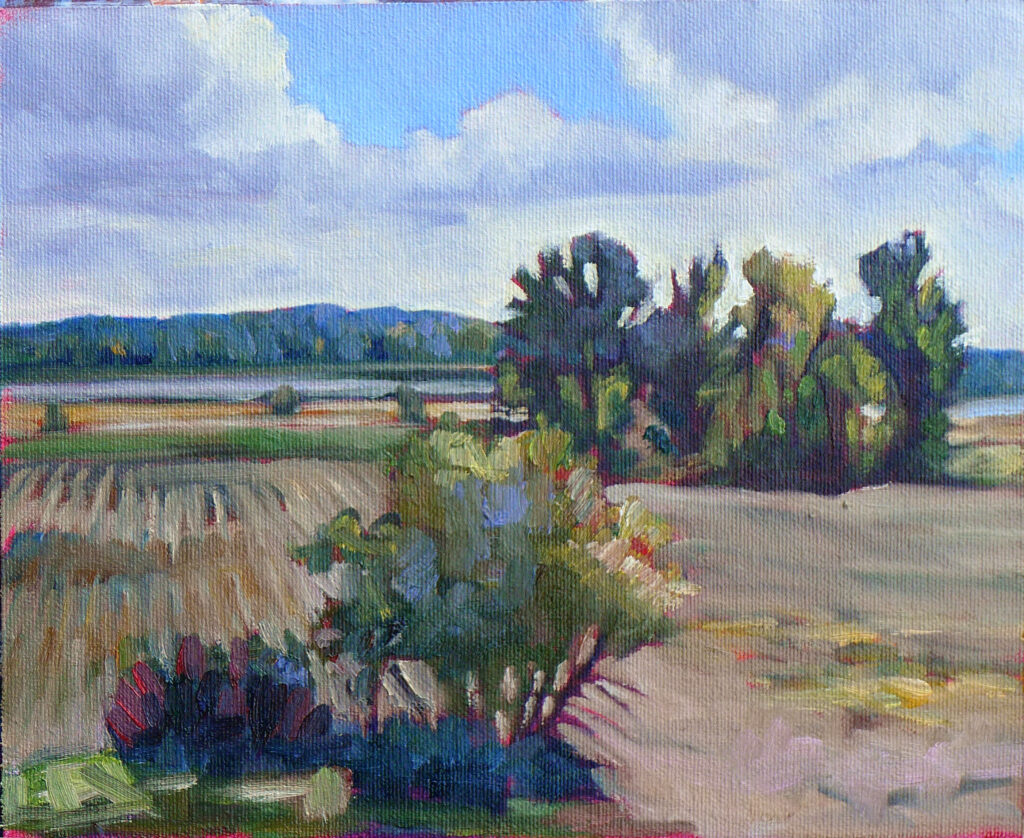
How about you?
If you’ve ever asked that same question—if you’ve ever wondered whether you could paint a landscape yourself—come find out. Join me for the October Immersive Workshop in Rockport, Maine. This weeklong plein air painting workshop is designed to help you learn observation, drawing, color, technique and brushwork. You’ll leave with the confidence and tools to pursue serious painting.
It’s funny. I am generally very anti social – able to spend inordinate amounts of time without speaking to (or wanting to be around) people. But I find when people have approached me (so far!) while plein air painting it’s usually a very kind interaction that I really don’t mind. As long as it doesn’t go on too long 🙂 Go figure.
I feel that way until it’s like the experience Mike related during Tuesday’s Zoom class… when I am separated from my easel by too much conversation and can’t seem to paint, then I get a little antsy.
Anybody reading this blog and taking your classes, Carol, is very likely doing better work than virtually anyone who approaches them. They all can feel confident out there painting. I find passersby to be fun and very complimentary. On the days I am feeling quiet, fewer seem to engage.
I was recently painting plein air with my class pal, Beth. We were checking out spots, carrying all of our gear and passed another painter who absolutely ignored attempts to engage. We were left thinking what all the non-painters likely thought, “What a jerk.”
Wow. In that I firmly believe I know every artist in the world ( 🙂 ) now I’m really wondering whether I know that person!
And thank you for your kind comment.