The science behind ‘don’t be boring’

Possum, 6X8, oil on archival canvasboard, $435 includes shipping in continental US.

The limited bandwidth in our optic nerve is reserved for those things we don’t expect. We effectively only notice things that are surprising – that’s how we can compress information efficiently. It’s similar to what happens in a television. There’s an expectation value for each pixel and the data is only used to the extent that the pixel deviates from the expected level of the one that precedes it, or the one that adjoins it. So that very thing of being interestingly less wrong: there’s a complete difference between things we notice and things we perceive.

That’s Rory Sutherland in The Spectator, and he was quoting a theory from The Experience Machine: How Our Minds Predict and Shape Reality, by Andy Clark. Clark is a philosopher, not a neuroscientist, and one of his key theories—that our brains are essentially prediction machines—seems awfully simplistic to me. Nevertheless, his point about the optic nerve is backed up by science.
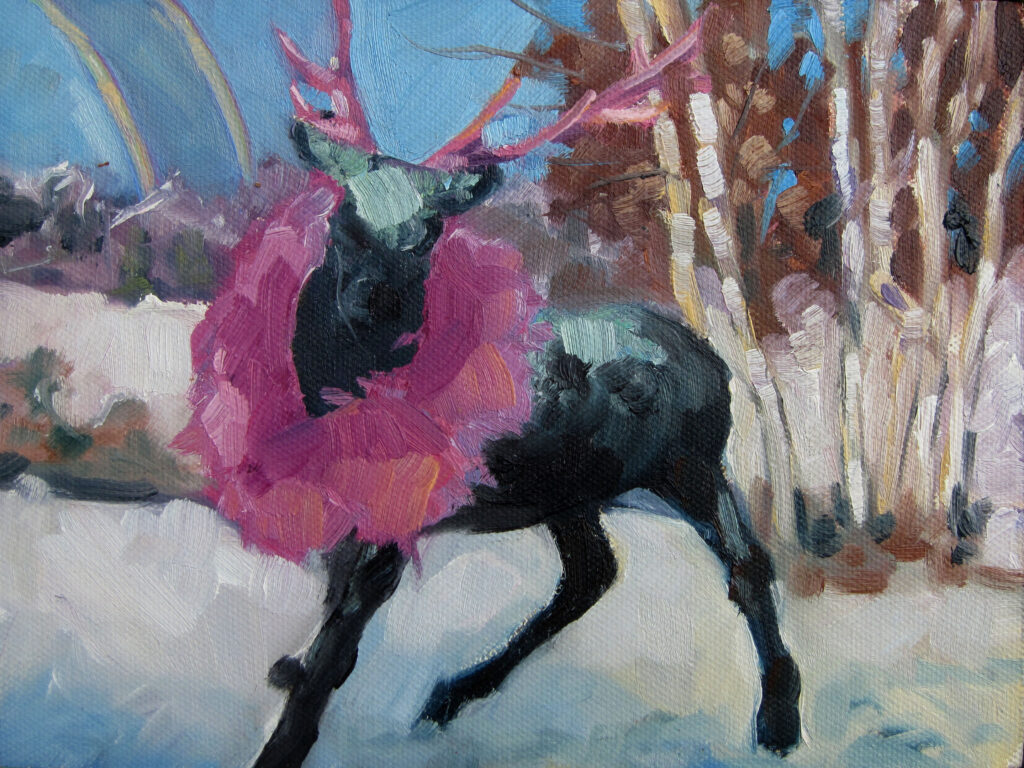
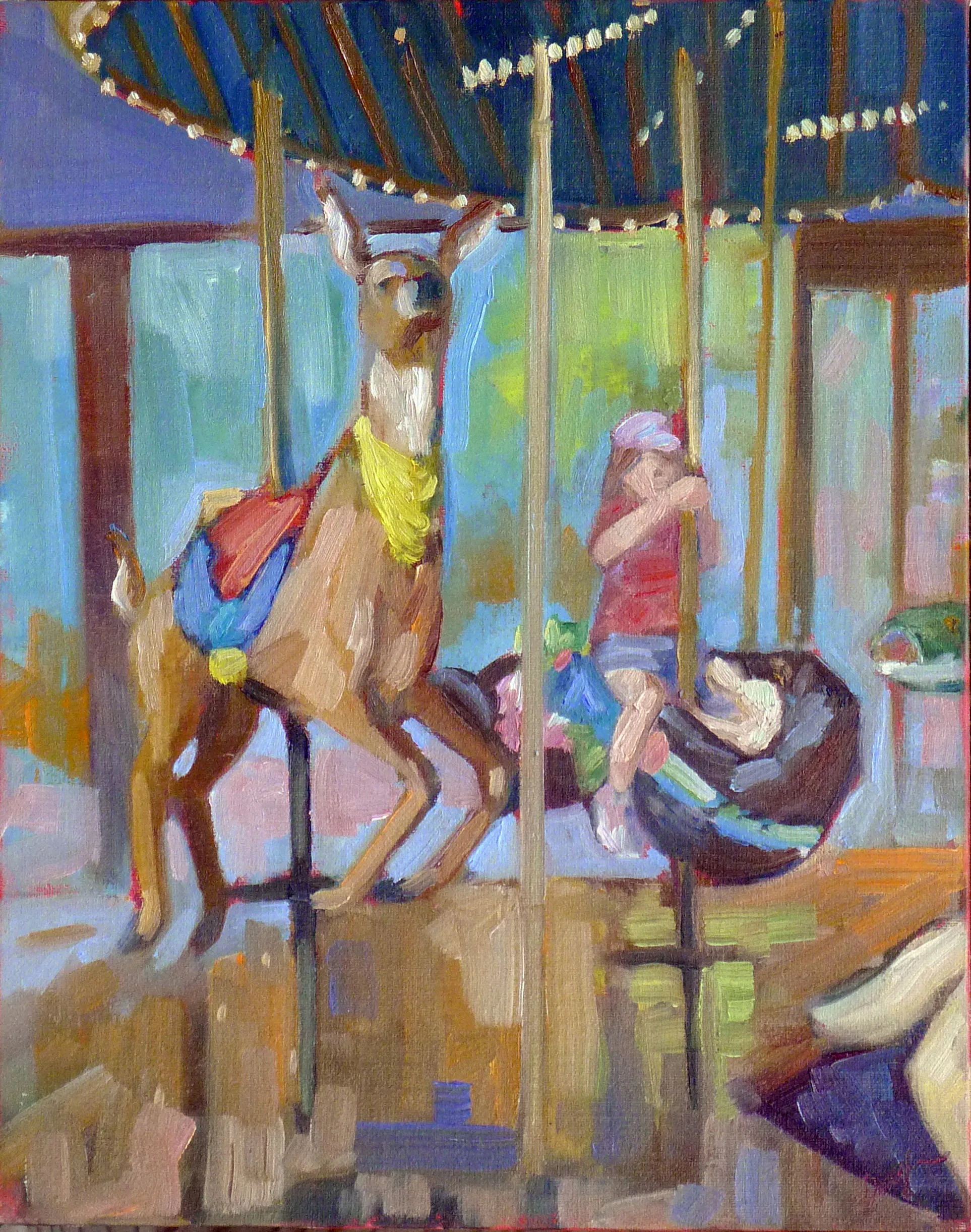
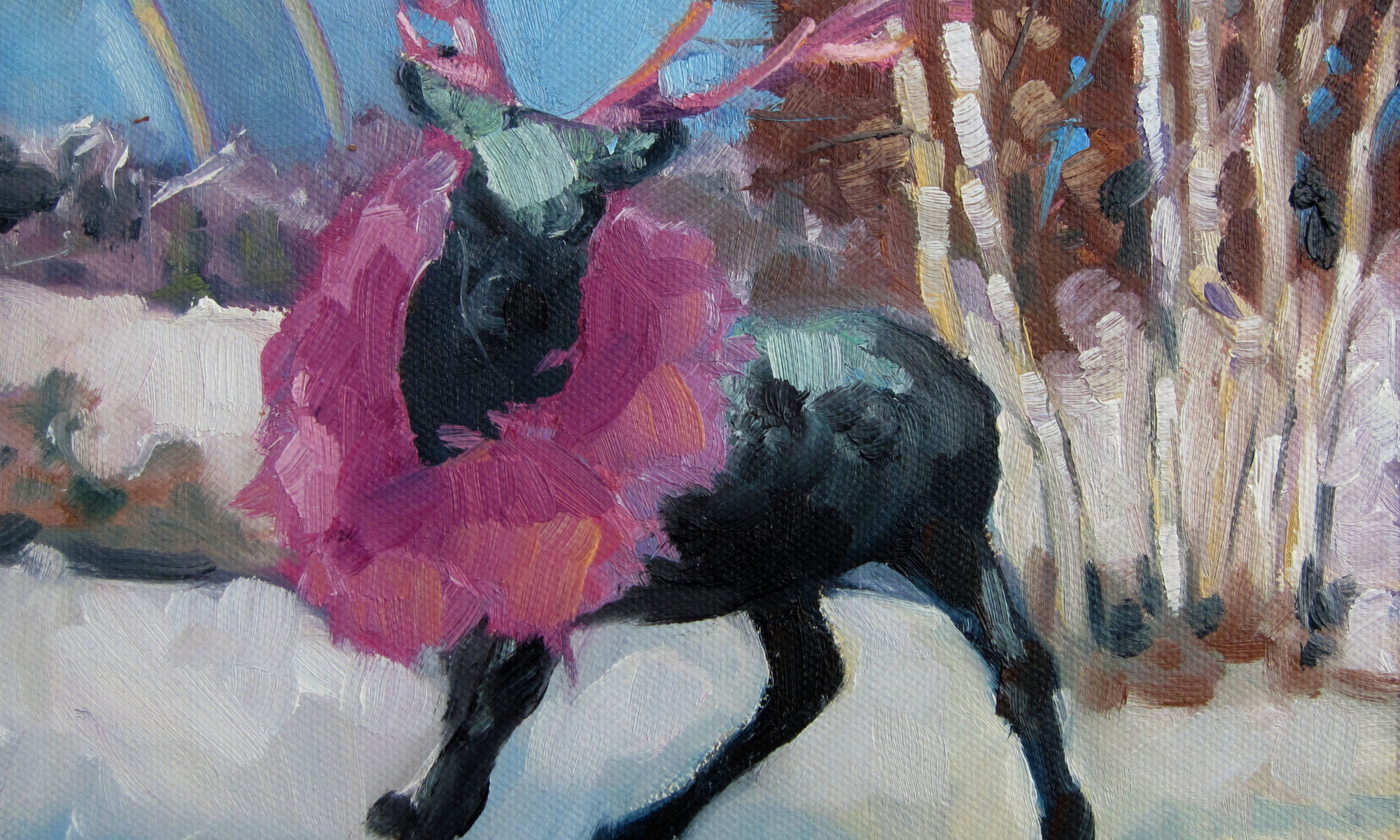
Toy Reindeer with double rainbow, oil on archival canvasboard, 6X8, $435 framed, includes shipping in continental US.

How your eyes work

The optic nerve has a limited number of axons, which are the things that conduct electrical impulses. That bandwidth constraint means our visual system must prioritize and condense information. 

Much of that data compression happens in the retina itself, where photoreceptor cells and ganglion cells focus on edges, contrasts, and motion. Then these signals are sent to the optic nerve. 

Our retinas filter spatially by detecting changes in luminance across different areas of the visual field. They filter temporally by detecting changes in brightness over time. If there are no changes, there’s no need to forward more data.
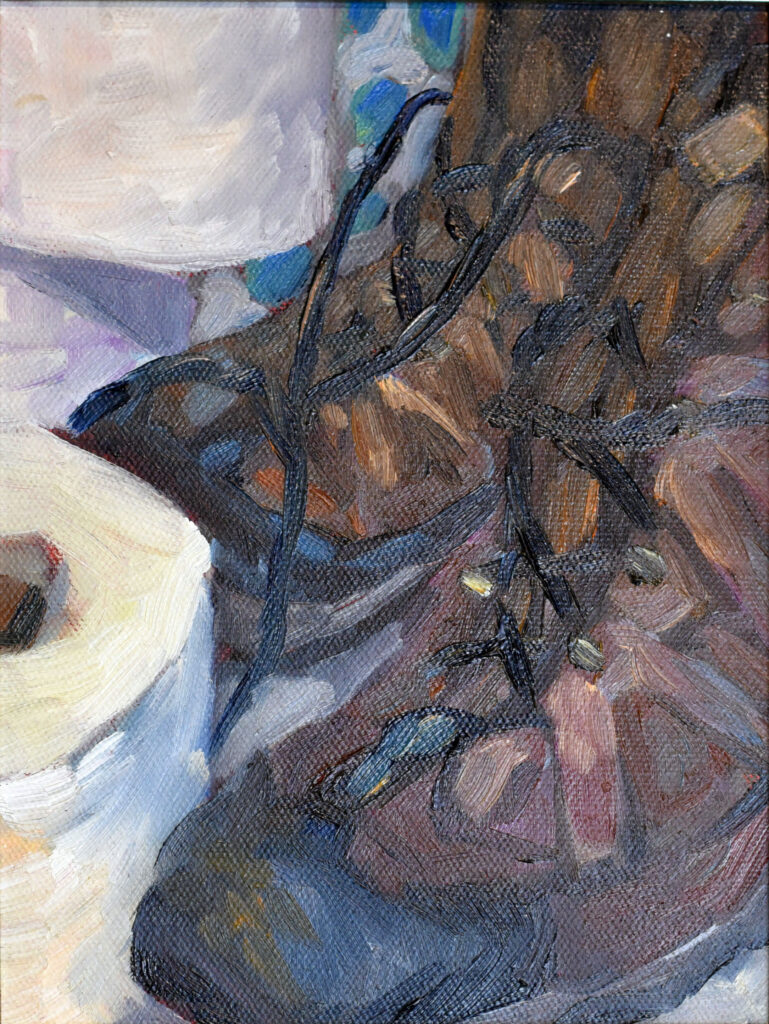
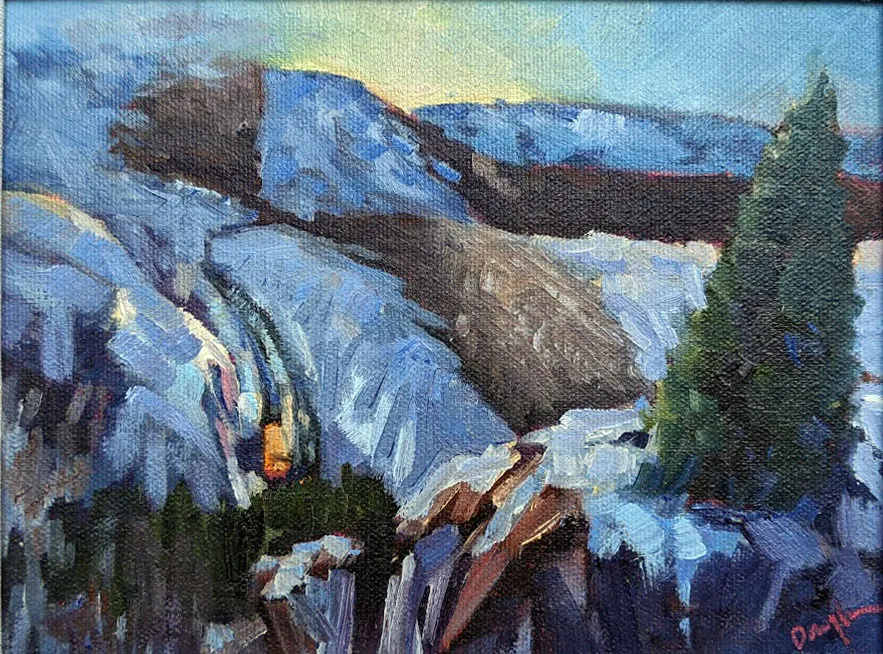
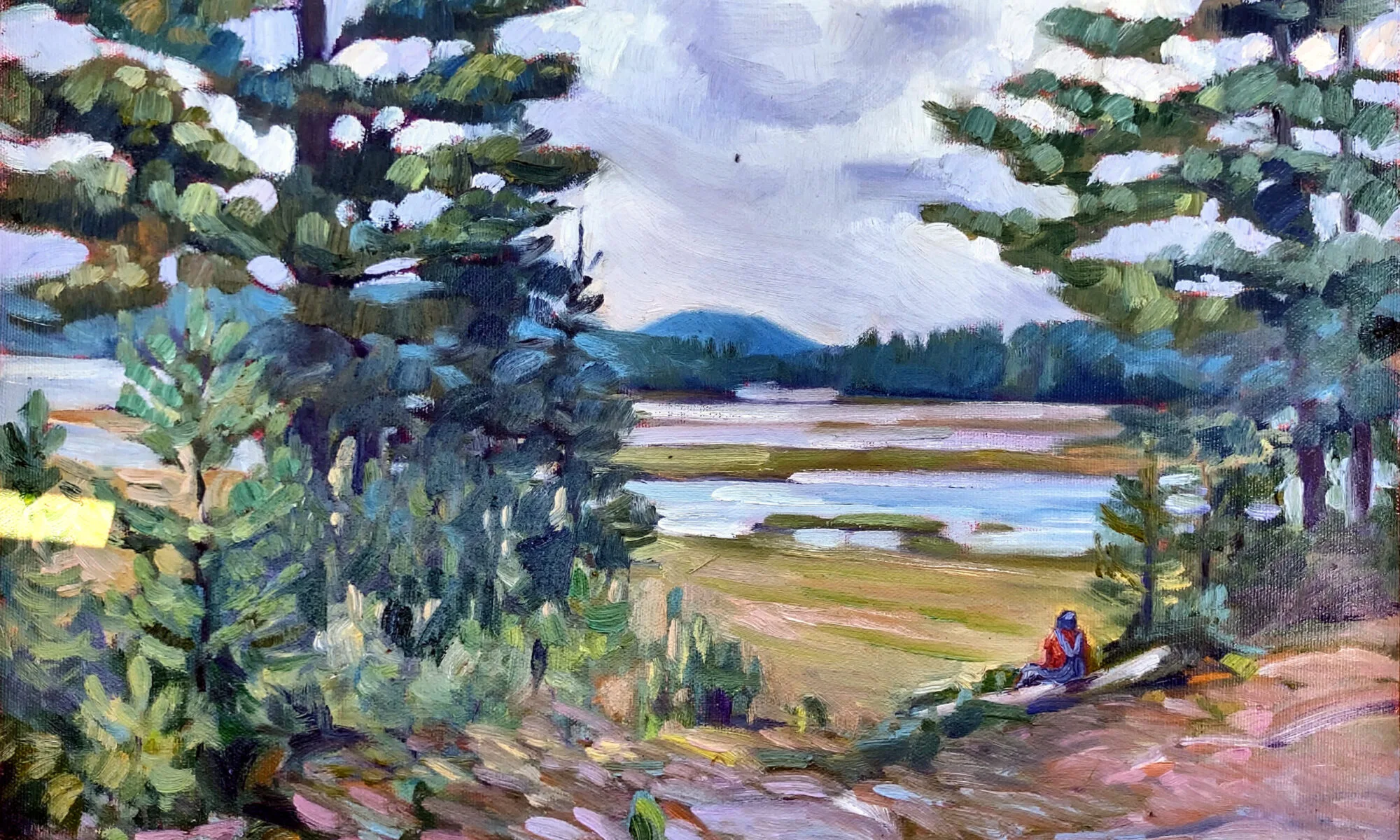
Hiking, 6X8, oil on archival canvasboard, $435 includes shipping in continental US.

Once that happens the brain uses context and prior knowledge to interpret what the optic nerve has sent. Much of what we ‘see’ is really a reconstruction built on what we’ve seen before. So the value of ‘don’t be boring’ is that it makes the eye and brain really look.

How Colin Page does ‘don’t be boring’

One of my favorite galleries is the Page Gallery in Camden. I’m constantly surprised by something there. This week, Lisa Renton gave Poppy Balser and me a detailed audiotour of (of all things) their Christmas tree. It combines natural plants with unnatural finishes and iridescent tinsel (which is a lot better executed on their tree than in the product photos).

Right now Colin seems to be in a rainbow sherbet phase; it’s cool, arresting, luminous, and you can’t really understand the subtle high-key balance from the online photos. Nathaniel Meyer is painting somewhere between the Canadian great Lawren Harris and fairy tales. Marc Hanson has some lovely small monotypes that say nothing and everything. Next time I go in, there will be something else that stops me cold or makes me laugh.
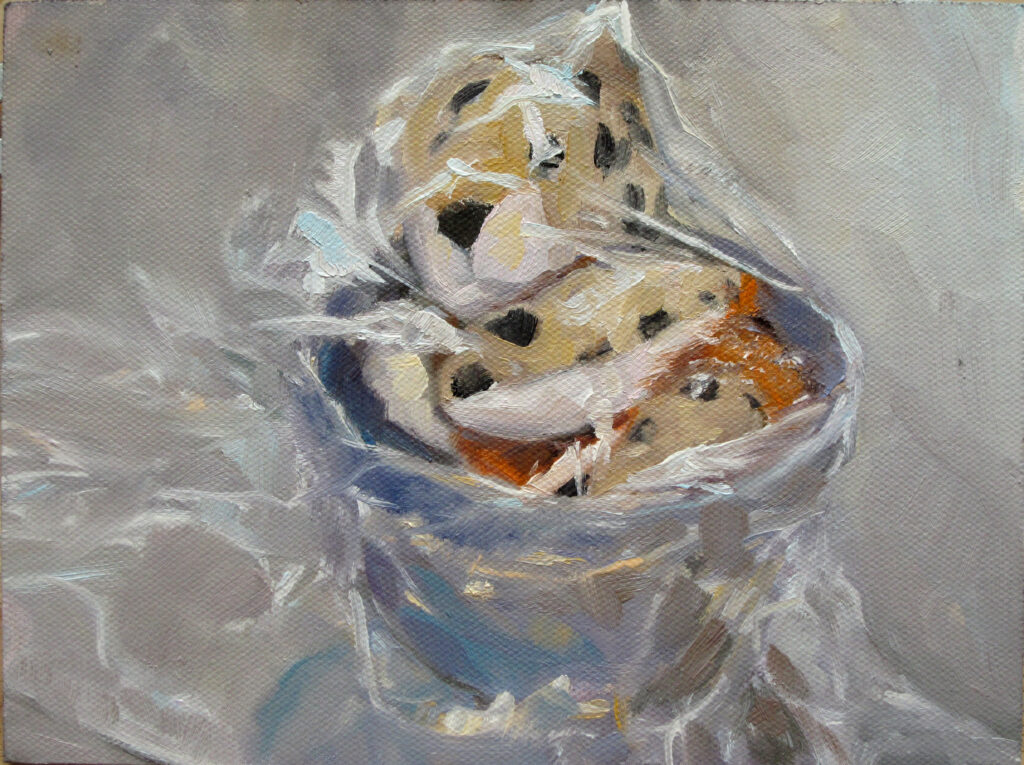
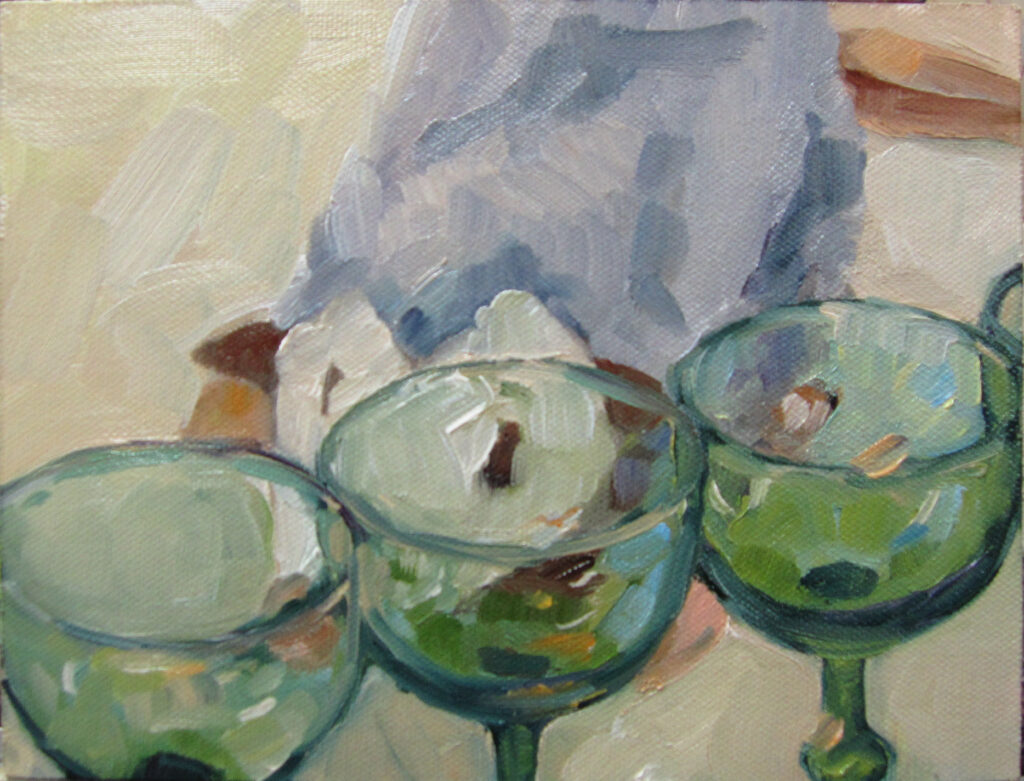
Stuffed animal in a bowl, with Saran Wrap. 6X8, oil on archival canvasboard, $435.

How you can do ‘don’t be boring’

I’ve written before about the importance of not being boring, but maybe it’s more accurate to say that we should strive to be innovative and surprising. That doesn’t mean awkward or badly-composed, and it certainly doesn’t excuse terrible drafting or paint handling. But with technical competence comes the freedom to think about whatever you want, rather than what others have thought about before. That means spending less time painting and more time drawing and thinking. What are you thinking about that might translate into something new and different in paint?

Speaking of drawing

I still have room in my drawing class starting right after the new year. It’s the best thing I can recommend to improve your painting in 2025. (Yeah, I’m talking to you.)

I have just two workshops left in 2026! Reserve your spot:

Can’t commit to a full workshop? Work online at your own pace:
Seven Protocols for Successful Oil Painters

Ten free Christmas gifts

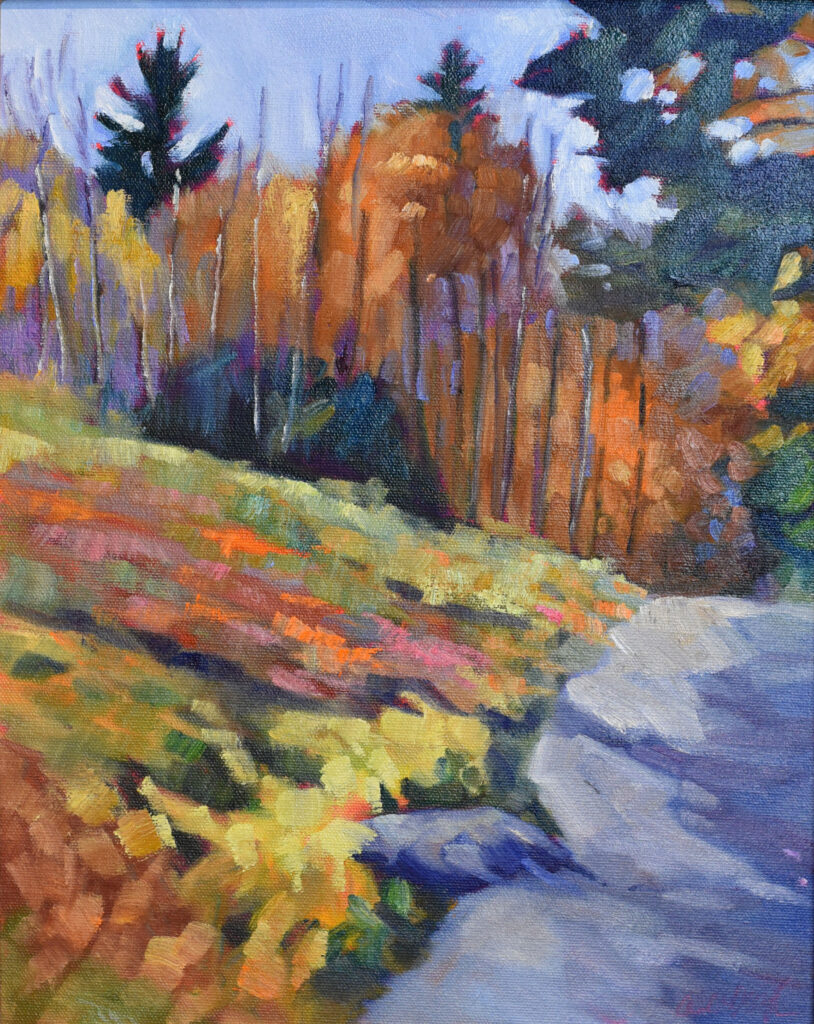
Beauchamp Point, Autumn Leaves, 12X16, oil on archival canvasboard, $1449 framed includes shipping and handling in continental US.

Yesterday I woke to rain sluicing against my bedroom window. I hate cold winter rain. I am not alone in that; the parking lot at Erickson Fields was empty.

Of course, it wasn’t as bad as I expected. Inclement weather is almost never as bad as it looks from indoors. When it is, the excitement usually outweighs the discomfort.

Cape Spear, Newfoundland, 8X10, oil on archival canvasboard, $522 includes shipping and handling within continental US.

I ran into my friend J. She’s not only an avid dogwalker, she’s also a doctor. I told her how little exercise I’ve gotten in the past month; it’s mostly been walking from the hospital parking ramp to my daughter’s room and back. The more sedentary I was, the more anxious I was and the more inclined I was to have a few glasses of wine at night.

She agreed that being out every day in nature is a terrific balm for one’s worries. Walking—which is free and available to almost anyone—is a two-part gift.

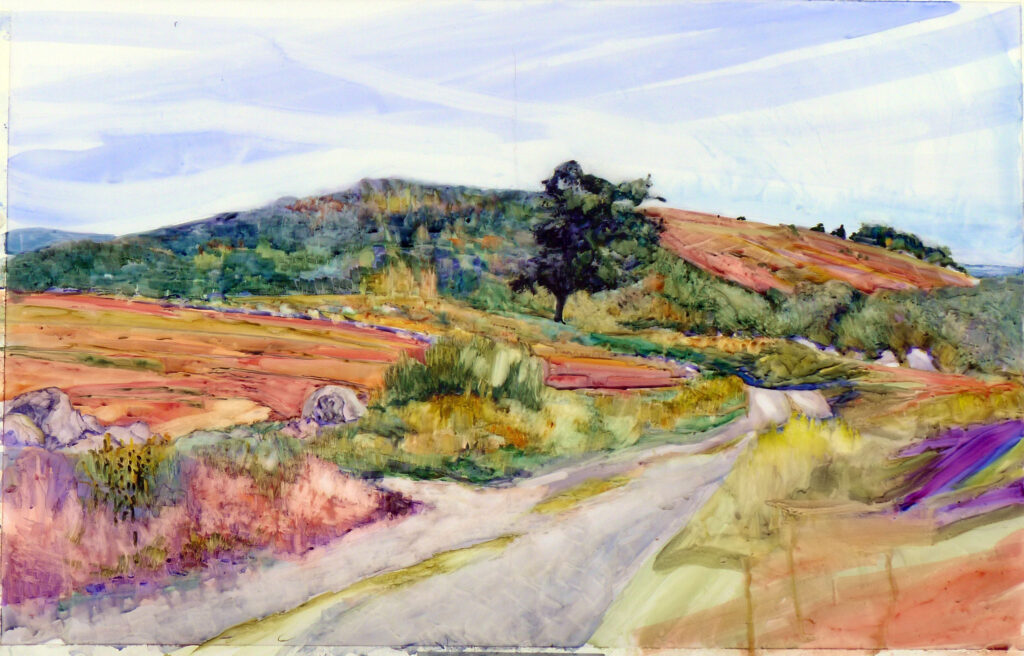
Clary Hill Blueberry Barrens, watercolor on Yupo, ~24X36, $3985 framed includes shipping and handling in continental US.

Ten free Christmas gifts for the artist on your list, i.e., you

Given a choice of flying, driving, or walking, I’ll always go with the slowest practical option. I see so much more on foot. The things I notice engage my mind and spark painting ideas, but nature is in itself soothing.

Then there are the physiological benefits of exercise. They’re the best free Christmas gifts you could want:

  1. Exercise makes you happy. Just 10-30 minutes of sustained exercise is enough to improve your mood. It increases our response to serotonin and norepinephrine, which reduce feelings of depression.
  2. Exercise helps control your weight. I didn’t believe this until I saw how quickly my weight rose during my forced inactivity.
  3. Exercise develops strong muscles and bones and delays the loss of muscle mass that comes with aging.
  4. Exercise helps with pain. My mother, a geriatric nurse-practitioner, used to say that people with arthritis had to keep moving. Since I never planned to get old, I didn’t pay too much attention. But science says she was right.
  5. Exercise helps build bone density in the lumbar region, neck, and hips. I’m vain enough that the number one reason I don’t want osteoporosis is to avoid a dowager’s hump. You might be more practical.
  6. Exercise can increase your energy levels. Of course, if you’re daft and you start off by overdoing it, you’ll have exactly the opposite result. But if you build slowly into an exercise regimen, you’ll find you feel much perkier.
  7. Exercise will make you healthier. I’ve now had cancer three times, but it hasn’t killed me. I take that as a win. I don’t have the chronic diseases of aging like diabetes, heart disease, hypertension or high cholesterol. The rates of all of the above are reduced with exercise.
  8. Exercise will make you more beautiful. It helps delay skin aging, and reduces the free radicals that wreck our skin. Clearly, I am the poster child for this.
  9. Exercise can help your brain health and memory, which is probably why I’ve been feeling so scrambled recently. It also slows down brain aging.
  10. Exercise helps you sleep.
Mountain Path, oil on archival canvasboard, 11X14, $1087.00 framed includes shipping and handling in continental US.

The most important tool for an artist

Everyone else is going to nag you about an exercise program on January 1; I’m starting now. Your chances of acclimating yourself to being out in winter are better in mid-December than they’ll be next month.

The cool thing about walking and hiking is that they cost nothing more than the price of shoes, which you were going to buy anyway. No membership fees, no fancy equipment, no special foods are required. If we want to paint into our extreme dotage, a healthy body is perhaps the most important tool of all. There you go, ten free Christmas gifts. Treat yourself.

Of course, if you also want to spend money, you can use the promo code XMAS100 to take $100 off your choice of any paintings on my website.

I have just two workshops left in 2026! Reserve your spot:

Can’t commit to a full workshop? Work online at your own pace:
Seven Protocols for Successful Oil Painters

Monday Morning Art School: treading-water syndrome

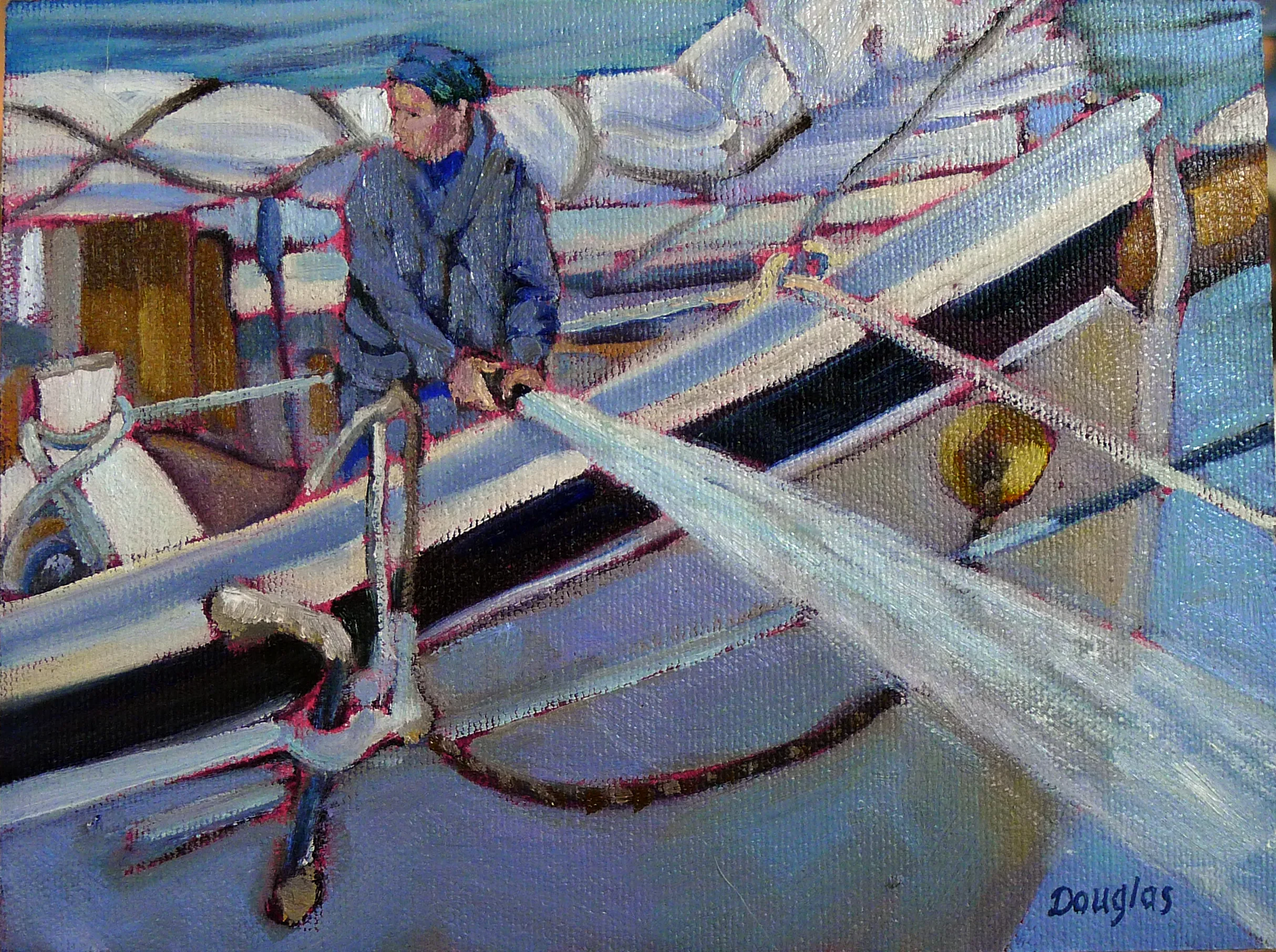
Coast Guard Inspection, oil on archival canvasboard, $435 framed includes shipping and handling in continental US.

Canadian-American mystery writer Charlotte MacLeod coined something she called, ‘treading-water syndrome’. This was, “panic at being out of one’s depth. Fear that, if a case did not quickly yield up its secrets, it would remain forever impenetrable.” The character who said that was a middle-age college professor. By putting those words in his experienced mouth, MacLeod was saying that it happens to us all.

That’s just what happened to me at my first professional plein air event. I was slopping solvent around my underpainting, which made everything dark and muddy. Then I tried to use white to lighten that layer. In fact, I was pretty much breaking every painting rule I’d ever learned. Eventually, a friend came over and brought me up sharp: “Carol, stop this. You know how to paint.” I took a deep breath, wiped out the canvas, and painted the painting properly.

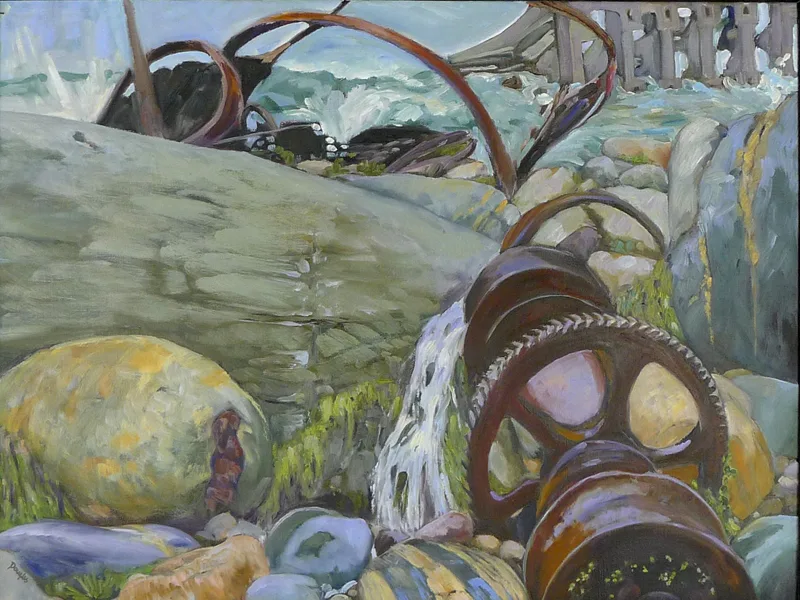
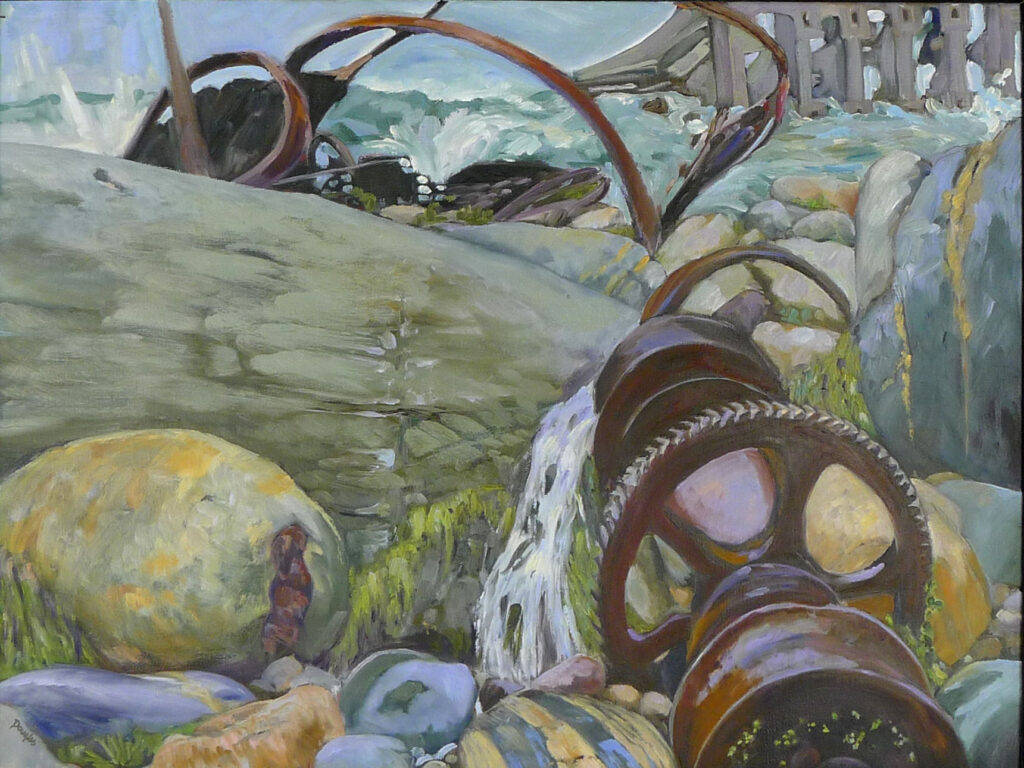
The Wreck of the SS Ethie, oil on canvas, 18X24, $2318 framed, includes shipping and handling in continental US.

My friend Brad Marshall called what I was doing ‘flailing around.’ It’s a good description of one way in which we temporarily take leave of our senses. But it’s not the only way. There’s also:

  • Creative block: you suddenly have no ideas at all, or if something occurs to you, it doesn’t seem worth pursuing;
  • Obsessing over details: I’ve wrecked some perfectly wonderful paintings doing this;
  • Avoidance or procrastination;
  • Negative self-talk;
  • Imposter syndrome: “Why did they let me in when there’s so many great painters here?” Bobbi Heath can attest to how many times she’s had to talk me off this cliff;
  • Emotional and physical distress: in moments of stress, I’ve learned to look and sound calm, but my gut always betrays me;
  • Seeking external validation: That’s not necessarily a bad thing, but it requires that there’s someone around who’s kind-hearted and intelligent enough to give you the right nudge.
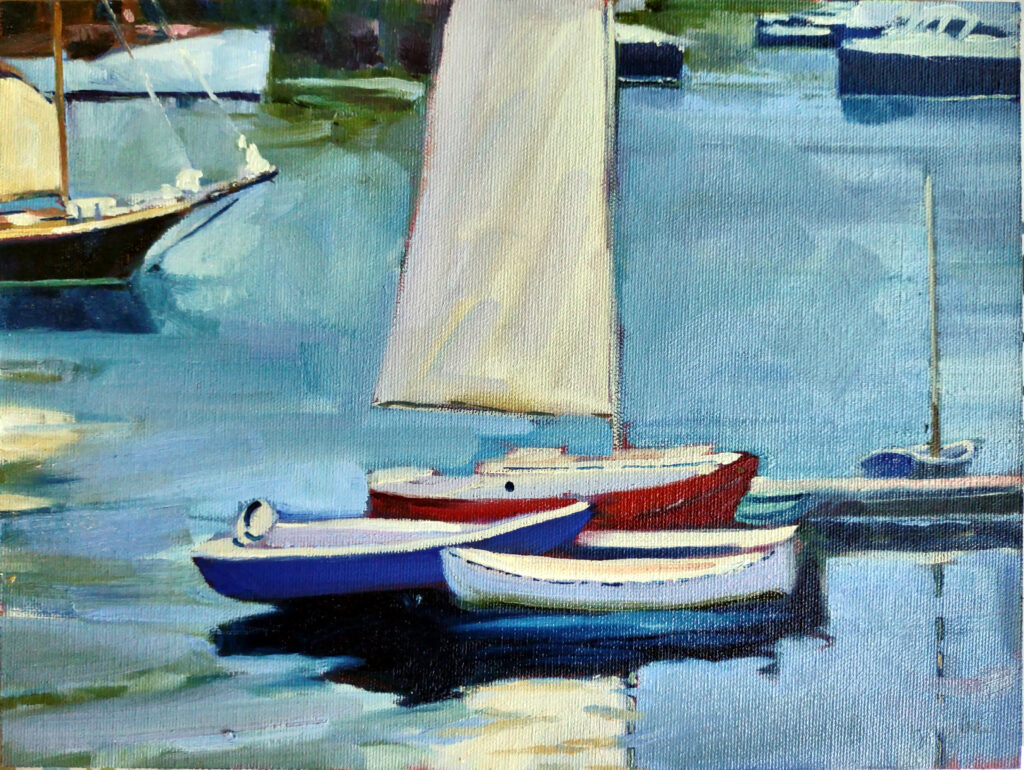
Drying Sails, 9X12, oil on canvasboard, $869 framed.

First principles

I just heard a story about a very competent musician who couldn’t make it in music. His highs were too high; his lows too low. He essentially never found a way to manage his panic.

One way to get over treading-water syndrome is to get older; you’re less inclined to panic in general. That’s not much comfort to younger people. And there are still times when everyone feels like they’ve lost control. How, then, do you get your ship righted with the least amount of psychic pain?

It helps me to have a plan. I approach painting the same way each time, and if I’m feeling jittery, I slow down on the value drawing until my mind submits. I teach every workshop from a syllabus. That’s primarily so I know I’ll cover the important stuff. However, when something unexpected happens, I can take a deep breath, return to my notes and keep going.

A plan is just an external support to our cognitive flexibility and self-monitoring. You can’t beat it.

Skylarking, 24X36, oil on canvas, $3985 framed includes shipping and handling in continental US.

Eensy weensy bites

As you can imagine, there’s rather a backlog here after I’ve been gone so long. I’m pretty disciplined about studio work before housework, but some of these domestic tasks haven’t been done since October. If I try to tackle everything at once, I’m just going back to bed until after the holidays. Instead, I’m going to ignore the big picture and tackle one small thing at a time. It’s my best strategy to avoid total paralysis.

I have just two workshops left in 2026! Reserve your spot:

Can’t commit to a full workshop? Work online at your own pace:
Seven Protocols for Successful Oil Painters

How does your sense of place influence your artwork?

Grain elevators, Buffalo, NY, 18X24 in a handmade cherry frame. $2318 includes shipping in continental US.

My hometown of Buffalo, NY, is a great place to be from. I often mention it, especially when it’s snowing.

Buffalo is paradoxical: blue-collar and yet elegant, blighted but historic, crime-ridden and yet pastoral. There’s nature everywhere, from the Olmsted-designed parks to the urban prairie that has replaced the immigrant neighborhoods of the 19th and 20th century. (Since my own people came through those streets, I have mixed feelings about this.)

The grain elevator was born in Buffalo. Grain elevators made Buffalo the largest grain-shipping port in the world in just 15 short years. Those elevators also died there, when the opening of the Welland Canal rendered grain cross-docking obsolete. Finding an adaptive reuse for these buildings has been a chronic challenge. It’s like keeping Grandma’s giant harmonium in your living room—historically important, but taking up a lot of space that could have had more practical use.

My home city spent the second half of the twentieth century on its uppers. That’s when I lived there, so that’s the Buffalo that’s shaped me.

Main Street, Owl’s Head, oil on archival canvasboard, $1623 includes shipping and handling in continental US.

Direct and indirect

In some ways, that influence was direct, as in the art I saw at the former Albright-Knox Art Museum and the Canadian Group of Seven painters from just over the river. With two Great Lakes in my backyard, I couldn’t help but love all things nautical. In other ways the influences were indirect. My hometown is multicultural, street-smart, feisty and frugal. I am too.

Inevitably, there were also negative influences. After fifty years of economic contraction, there was an expectation of failure; that’s one big reason the Bills have always been so beloved. There were strong cultural, religious, and familial expectations that kept people in place. We left because there were no jobs, but I would probably never have become a professional painter had I stayed.

Coal Seam, 6X8, oil on archival canvasboard, $348 includes shipping and handling in continental US.

I live on the Maine coast now, where there are many professional artists. As we all know, iron sharpens iron. The color is clearer and brighter, the light is sublime, but, alas, there’s little cultural diversity. Maine is the whitest state in the nation.

What are the cultural expectations of the place you currently live? The place you’re from? How are they expressed in your work?

Interpretation

Of course, everything I wrote above is my interpretation. I have friends and family who would loudly disagree with my characterization, if they read this blog.

A Woodlot of her own, 9X12, oil on archival canvasboard, $869 framed includes shipping and handling in continental US.

Personal connection

I’ve never found it difficult to paint grain elevators or urban clutter. They’re part of my cultural heritage. I can paint my own kids and grandkids; they’re unalloyed joy. But I started a painting last year, as yet unfinished, that I thought would be a sentimental look at my childhood. Instead, it dredged up some difficult, long-suppressed memories. That’s probably why it isn’t finished.

Have you ever been ambushed by a painting? Have you been able to work your visceral response into the canvas, or as with me, has it foxed you? To a lesser degree, how do your emotions color the less-fraught things you paint? That’s a question I can’t really answer, so I’m looking for inspiration here.

I have just two workshops left in 2026! Reserve your spot:

Can’t commit to a full workshop? Work online at your own pace:
Seven Protocols for Successful Oil Painters

How to choose wall art

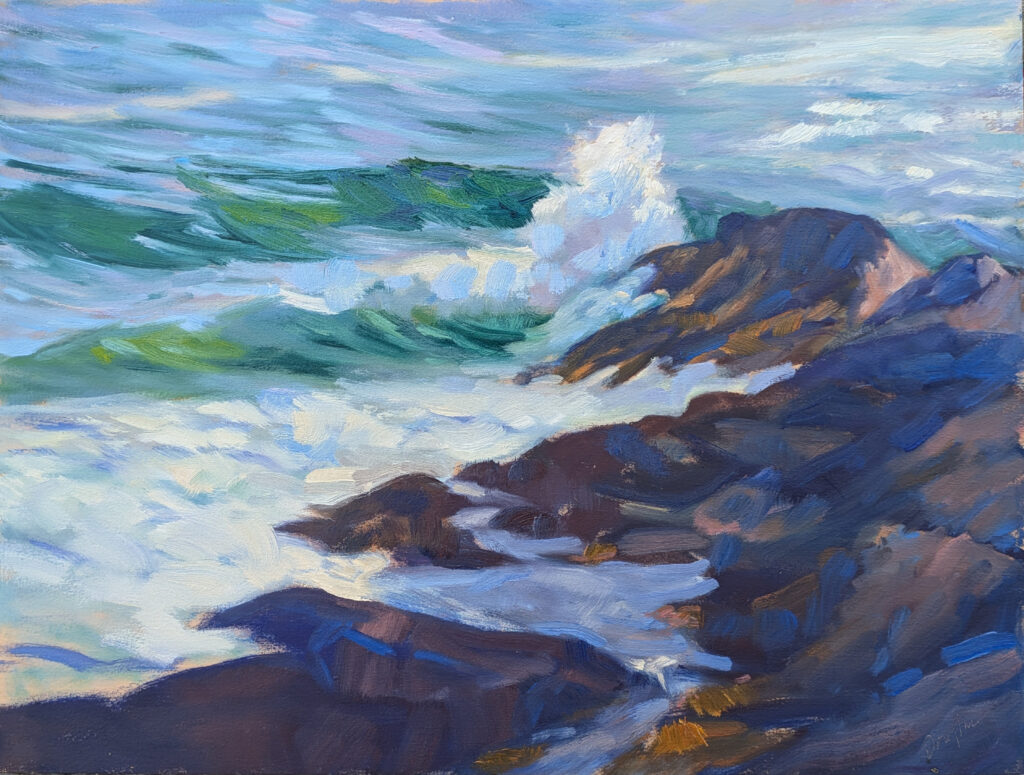
High Surf, 12X16, oil on prepared birch painting surface, $1159 includes shipping and handling in continental US.

As I told you last week, I’m in Albany wrasslin’ my grandson while my daughter is in hospital. My granddaughter has arrived. She’s in the NICU now, and covered with the usual tubes, wires and tapes. I can’t say who she looks like, but she cries like a baa-lamb and grasps her daddy’s finger. Her mom is being tapered off her hospital drugs, so I think we’ve turned a corner. Thank you all for your kind thoughts and prayers.

Buy a painting to match your sofa

“Art should make you think and feel. It doesn’t have to match your couch,” has been a catchphrase for as long as I can remember. But why shouldn’t art match your furnishings? You probably chose them because you liked them, and you’re likely to like a painting that coordinates with them for the same reason.

Surf’s Up is 12X16, on a prepared birch surface. $1159 includes shipping and handling in the Continental US.

That doesn’t mean a painting should literally match your couch, but it’s okay if they share touchpoints. Still, I’ve noticed that even the most talented designers among my collectors buy art based on how it resonates with them, rather than what it matches. Dare to be inventive; traditional painting can match contemporary spaces and vice-versa.

The famed collector Dr. Albert Barnes believed grouping paintings in terms of light, space, color and line could create a whole that was greater than the sum of its parts. (This is why the Barnes Foundation‘s indenture of trust stipulated that the paintings in the collection be kept “in exactly the places they are,” leading to years of legal wrangling.) Some paintings just look better with others, and the only way to know is to pair them and see what happens.

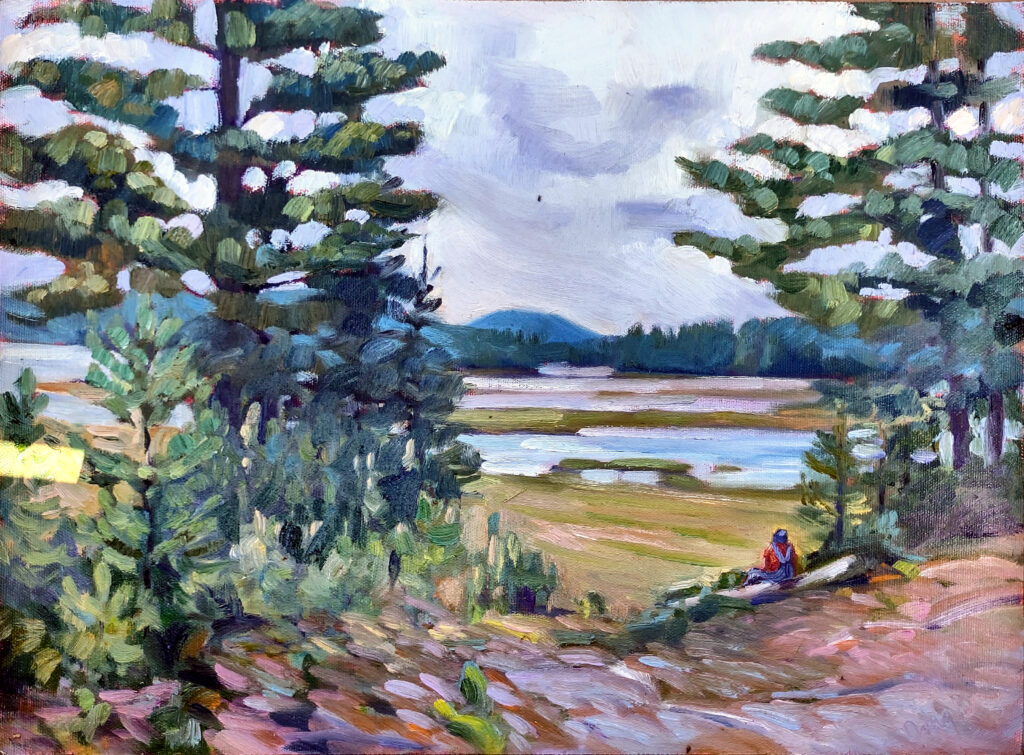
The pine nursery (Madawaska Pond), 12X16, oil on canvasboard, available.

Buy a painting because you love it, but when you go to hang it, consider:

Color: I once had a room with a red ceiling. It cast such a warm reflection on the room that cool colors were washed out. It made more sense to hang landscapes in another room.

Size: It would be absurd to place a 6”x8” painting in solitary splendor on a 12’ wall, and an oversized painting can dwarf a small living space. A good rule of thumb is that a painting should take up 60-75% of the allotted space, such as above your couch or bed. However, there are times when breaking that rule can work spectacularly.

Purpose: I’ve learned from personal experience that a nude in the dining room might embarrass your family. “Could we please take it down for Thanksgiving?” one of my kids asked.

Scale: While there’s some truth to the adage that a painting should read as well at 30 feet as 3 feet, there are some works (like etchings or botanical prints) for which that makes no sense. They need to be hung where they can be appreciated up close, like in an office or, yes, a powder room.

Mood: I have a vibrant multimedia piece by Barbra Whitten that’s destined to my kitchen. It’s based on a layered salad and will sing in that light, airy space. It joins a nocturne by Chrissy Pahucki of her daughter making s’mores over a fire. My living spaces have high-chroma paintings by Chrissy Nickerson, Poppy Balser, Tom Conner, Bruce McMillan and Bruce Bundock, among others. The only paintings in my bedroom are of family members.

Of course, I’m constantly shuffling paintings as I acquire new art. I have another Tom Conner and a watercolor by Barbara Tapp that need homes. I don’t consciously choose paintings that meet the purpose of the room, but it seems to end up that way.

Frames: I don’t think there’s a specific frame that matches a particular painting style; it’s more about aligning with your room’s design. If you love the painting but hate the frame, ask the artist for the price unframed. He or she will almost always accommodate that.

Pensive 8X10, oil on archival canvasboard, $522 includes shipping and handling in continental US.

Don’t forget, there’s $100 off any painting on my website, from now until the end of the year. Just use the code XMAS100.

I have just two workshops left in 2026! Reserve your spot:

Can’t commit to a full workshop? Work online at your own pace:
Seven Protocols for Successful Oil Painters

Monday Morning Art School: digital reproduction

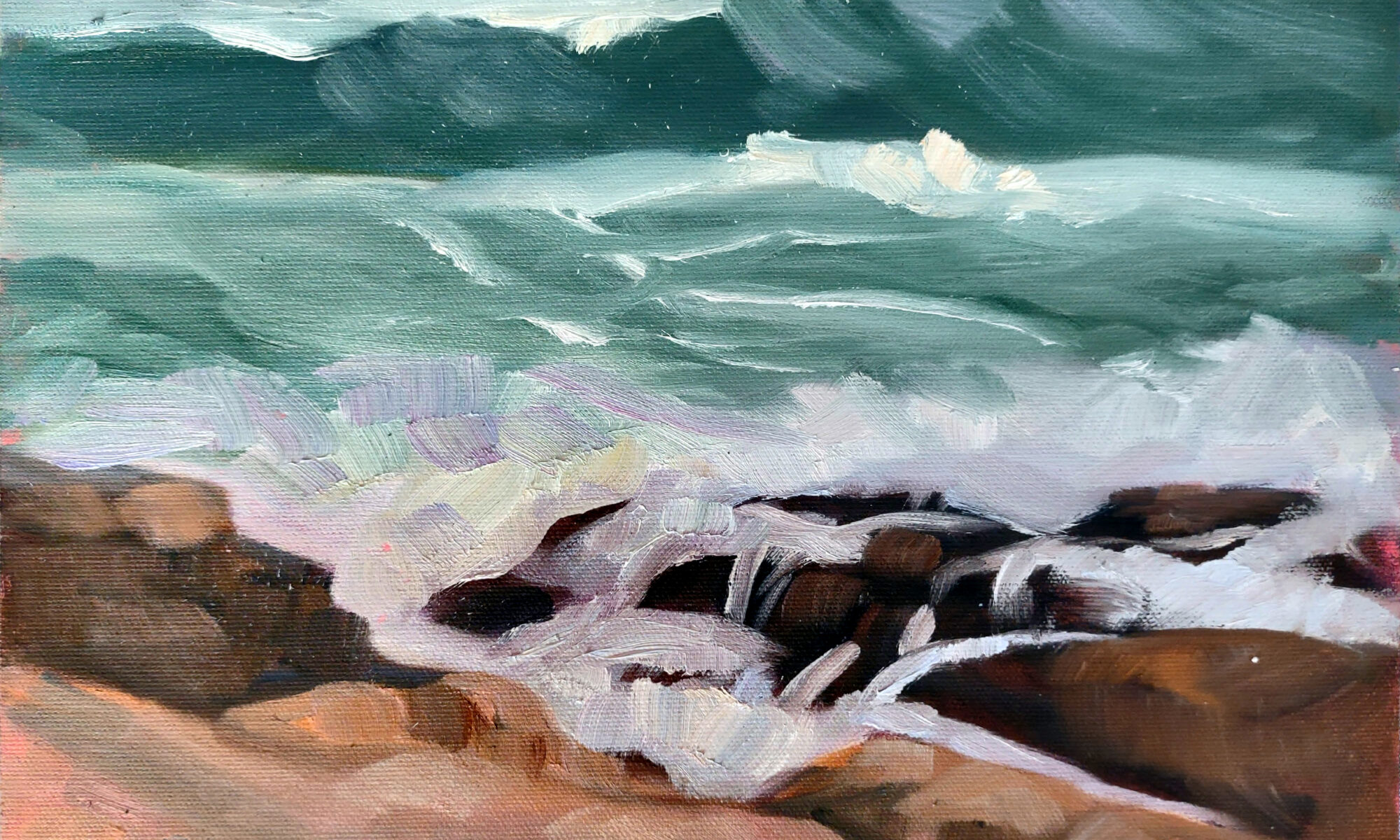
Seafoam, 9X12, oil on archival canvasboard, $869 framed.

I get several messages a week asking me if I’m interested in selling my paintings as NFTs. My answer is that paintings are one-off tactile objects, not digital assets. Not that the shills for NFTs like taking no for an answer, but NFTs and fine art don’t really mix.

That doesn’t mean that you can’t learn a lot by looking at paintings online. The world has been immeasurably enriched by museums opening their collections on the internet. For example, the 99% of people who will never see Rembrandt van Rijn’s The Night Watch in person can still look at it brushstroke-by-brushstroke on the Rijksmuseum website. And the digital world has had a remarkable democratizing influence on the sale and distribution of contemporary art and music.

Dawn Wind, Twin Lights, 9X12, oil on archival canvasboard, $869 includes shipping and handling in the continental US.

But a digital image of a painting is never the same as the real thing. Recent research using Johannes Vermeer’s Girl with a Pearl Earring may validate this argument. Using electroencephalograms (EEG), researchers at the Mauritshuis in the Netherlands demonstrated that looking at actual paintings stimulates the brain differently than looking at reproductions. “The viewer’s emotional response is ten times stronger when they are face to face with the painting in the museum,” they reported.

Vermeer is what’s known as a linear painter, which means he focused on clarity, modeling, structure, and detail. That’s in contrast to painterliness, which means work that is less controlled, relying more on brushwork and expression. The researchers got similar results from the works of two other Dutch Golden Age painters, Rembrandt van Rijn, who is considered painterly, and Willem Van Honthorst, another linear painter. Apparently, it was the paint itself that mattered, not how it was applied.

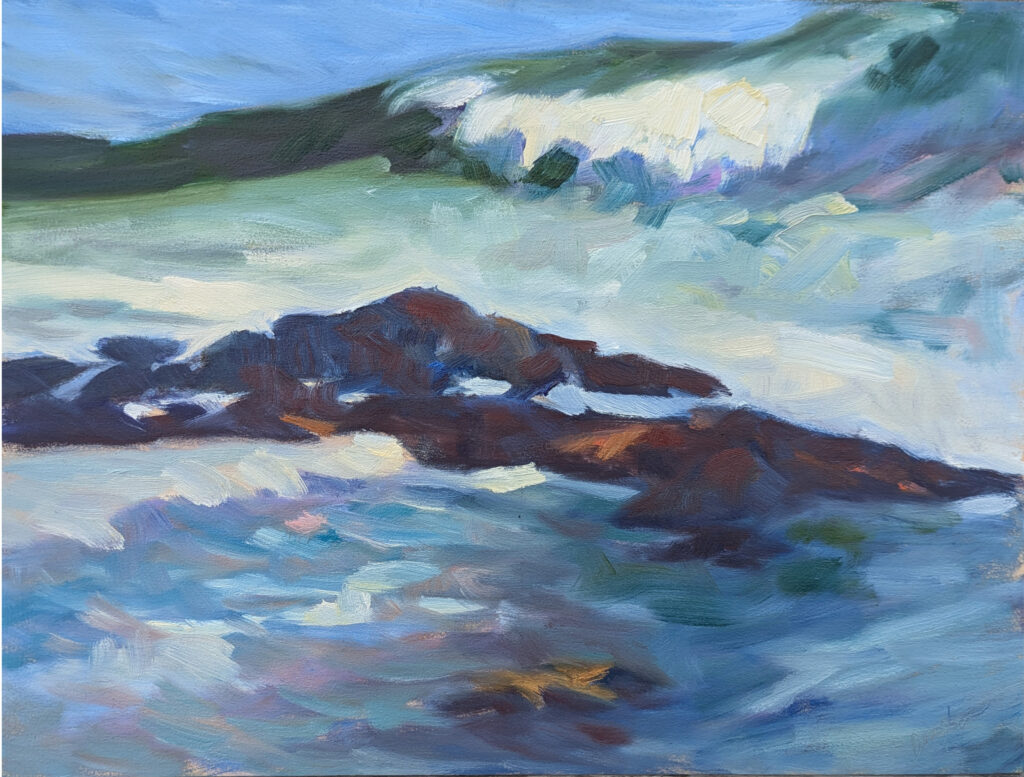
The Wave, 9X12, oil on archival canvasboard, $869, includes shipping in continental US.

You may recognize this composition

Researchers also reported a ‘sustained attentional loop’ unique to The Girl with the Pearl Earring. People who’ve studied composition will recognize this as a classic triangle composition, a series of focal points designed to engage the viewer. While this composition has been used throughout art history, The Girl with the Pearl Earring delivers it as a quick one-two-three punch-up—lips, eye, earring.

More questions

This was a very small study of a very narrow period in art history, but it raises interesting questions. Would similar experiments on a broader range of art and artists show us, for example, whether other periods of art fare better or worse in reproductions? Would that information help us determine whether one kind of painting is objectively better than another?

The Girl with the Pearl Earring and Mona Lisa are both superstar paintings, known by almost everyone. However, Mona Lisa is almost unviewable in real life, due to the immense crowds thronging its gallery. If similar responses were recorded at the Louvre, would that mean that part of the response to The Girl with the Pearl Earring was due to celebrity?

Nighttime at Clam Cove, 9X12, oil on canvasboard, $696 unframed.

An aside about scams

Because my phone number and email address are on my website, I get more than my share of scammy messages. I thought I was expert at weeding through them. This week, one of my students apparently texted me, asking me to follow her new Instagram store. When the texter asked me to send back information, I checked the phone number against my records and realized it was a clone.

What shocked me was that the bot seemed to have some idea of my relationship with my student. Was that AI or a lucky guess? I don’t know, but you can never be too careful.

I have just two workshops left in 2026! Reserve your spot:

Can’t commit to a full workshop? Work online at your own pace:
Seven Protocols for Successful Oil Painters

Are you stale? Stuck?

The Late Bus, oil on archival canvasboard, 6X8, $435.00 framed, includes shipping and handling in continental US.

“I was looking at a friend’s IG post,” a reader told me. “I thought, ’She’s been painting for at least 35 years and nothing has changed or improved.’”

Another reader expressed his own frustration at being stuck. “Maybe to get better, we have to get tougher on each other at our paint-outs.”

As I’ve written repeatedly, severity is a terrible idea; positive feedback teaches more effectively than harsh criticism. Still, there are proven ways to stop paddling frantically in one place.

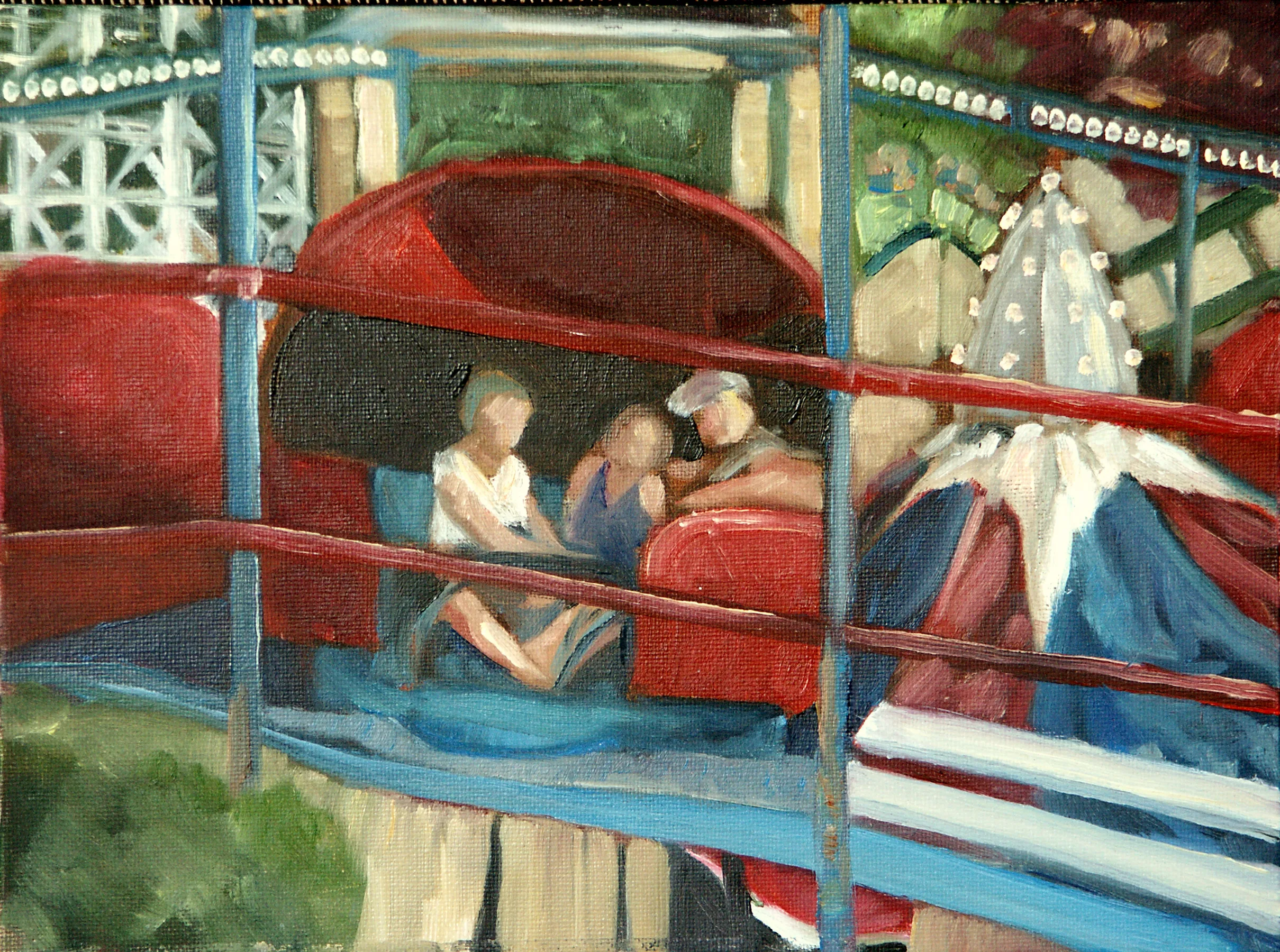
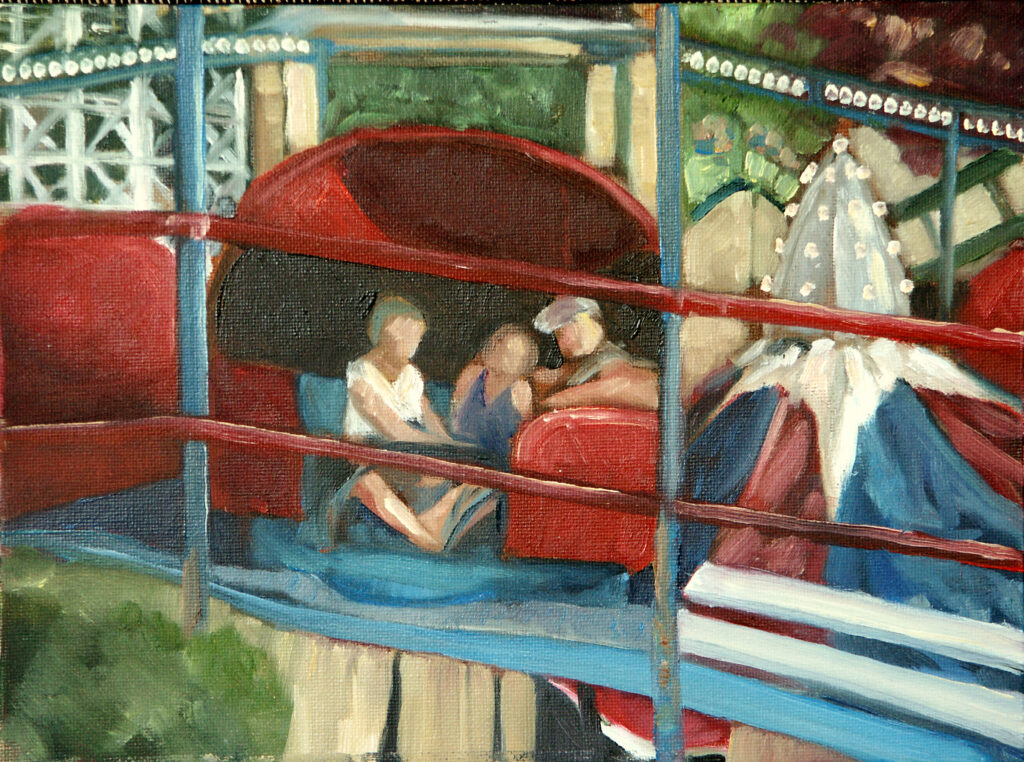
Tilt-A-Whirl, oil on archival canvasboard, $869 framed includes shipping and handling in continental US.

Why paintings fail

Most paintings fail because they aren’t thought out properly from the beginning. We don’t take time to ask ourselves important questions, like:

  • What is the underlying idea? 
  • What am I bringing to the scene to raise it out of the ordinary?
  • Where is the charm of this image and how will I express it?
  • What is the overriding emotional state I want to represent (serenity, humor, angst, larkiness, etc.)
  • What is the light structure and how can I use it as compositional adhesive?
  • Where am I willing to riff on reality, and where does faithful rendering make sense?
  • Most importantly, why am I bothering to paint this?

If you can articulate your motivation in one or two sentences, you’re already ahead of the pack.

“Lonely cabin”, 8X10, oil on canvasboard, $652 framed.

Ability vs. humility

When I was fourteen, I believed that I was uniquely talented. I’m disabused of that notion today; there are many people out there with as much native ability as me. Many of us never allow ourselves to fail because we can’t risk exposing that little kernel of ego and insecurity in the public square.

Humility is the starting point of learning. That means trying and failing and then trying again, and listening to expert advice, especially when you’re paying for it.

I occasionally have students who preface all reactions with, “I know, but…” It’s a highly defensive response and hinders growth.

I have a regular correspondent who frustrates me because I know he would benefit from another workshop. However, he thinks that because he’s taken one, he ‘knows what I teach.’ (If that’s true, he’s not putting it into practice.) He would improve, not just from hearing it again from me, but from rubbing shoulders with others bent on improvement.

Best Buds, 11X14, oil on canvasboard, $1087 framed includes shipping and handling in continental US.

Iron sharpens iron

I am not able to paint right now (see Wednesday’s post) and I won’t be teaching until the beginning of the year. I miss teaching as much as I miss painting. I learn a great deal from my students, and they prevent me from getting rusty during periods when other things get in the way of my brush time.

Improvement rests on the following principles

  • Regular practice. Set aside time to work, even if it’s just a few hours a week. The more you practice, the better you’ll get.
  • Study the basics, which include color theory, optics, drawing, brushwork, and the elements of design.
  • Study the masters and other contemporary painters.
  • Continue to take classes and workshops.
  • Be willing to innovate; don’t be afraid to make mistakes.
  • Have fun. If you’re not enjoying painting, what’s the point?

I have just two workshops left in 2026! Reserve your spot:

Can’t commit to a full workshop? Work online at your own pace:
Seven Protocols for Successful Oil Painters

In the bleak midwinter

All Flesh is as Grass, oil on linen, 30X40, $5072 framed, includes shipping and handling in continental US.

Tom and Jerry is a traditional American Christmas cocktail, invented about 200 years ago by British writer Pierce Egan. It’s akin to hot eggnog, the perfect adult beverage in the bleak midwinter.

It’s tricky; I’ve made the batter at home, but it’s never as good as that from Schwabls in my home town of Buffalo, NY. Either way, it isn’t for the faint of heart; one will loosen up your singing voice; two will undermine your ability to walk home.

My own woodstove, Tom and Jerrys, mince pie, and my bathtub and bidet are among the things from home that I miss right now. I miss my daily hike up Beech Hill, my dog and my husband. I’m in Albany, NY for the foreseeable future, and it’s dark and snowy. In the bleak midwinter, indeed.

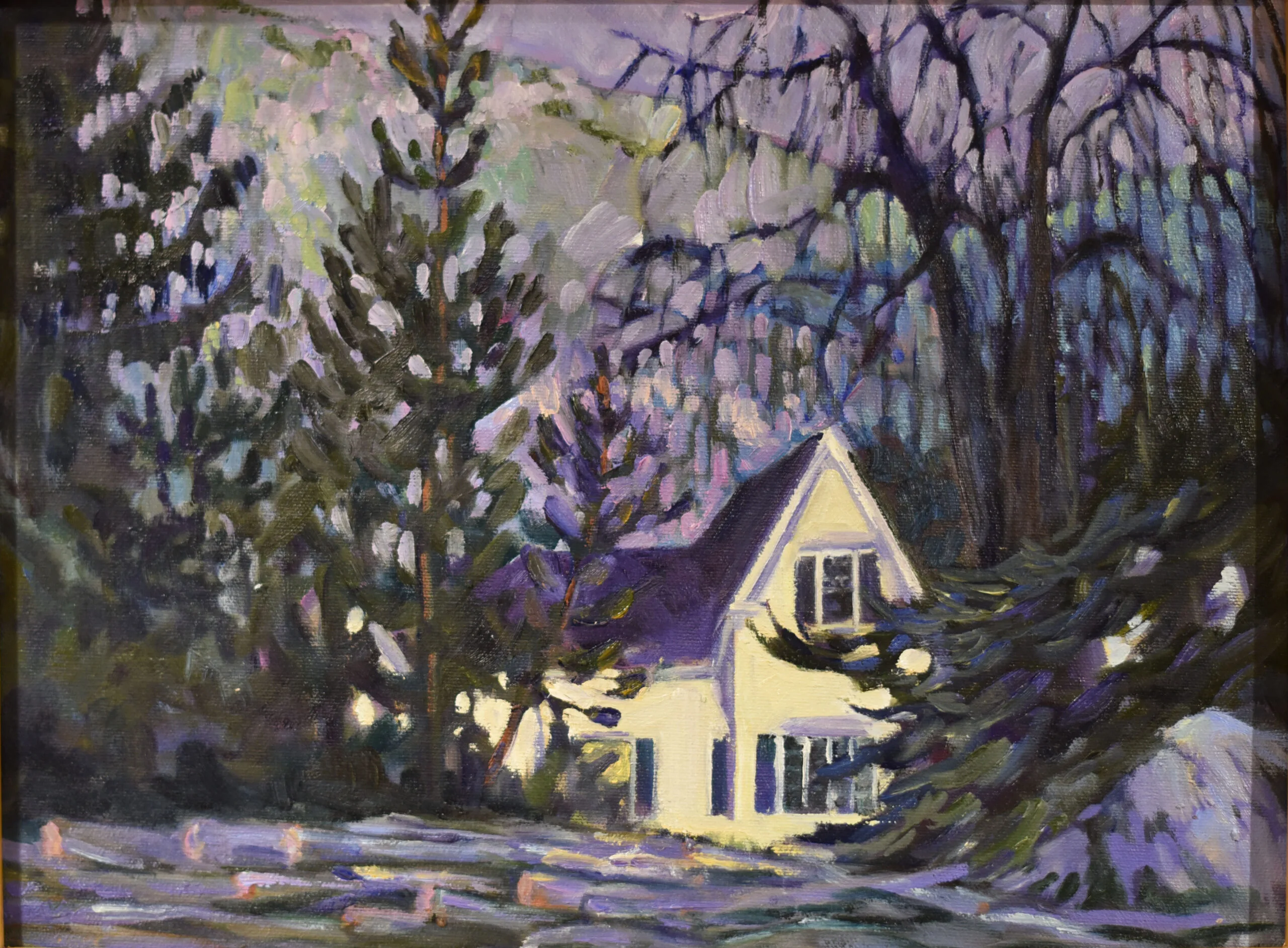
Midnight at the Wood Lot, oil on archival canvasboard, $1449.00 framed includes shipping and handling within continental US.

You never outgrow worrying about your kids

My trip out west was organized to get me to Rochester, NY for my goddaughter’s wedding. Before that I swung east to alter my grandsons’ suits and my granddaughter’s dress. I assumed I could use 9-year-old Grace’s sewing tools. Unfortunately, kids her age are not organized. I spent as much time sorting as I did stitching.

My daughter Mary, who makes Rowan Branch brush soap for me, bounced between being an attentive bridesmaid and gulping acetaminophen. On her way home, she pulled off the Thruway and called an ambulance. That week, she had a stent placed and emergency gallbladder surgery. Oh, and she had pneumonia, too.

“I really couldn’t tell if I was sick or just imagining it,” she said.

Even hypochondriacs get sick, I retorted. It’s good to laugh with multiple incisions in your belly.

Ravenous Wolves, oil on canvas, 24X30, $3,478.00 framed includes shipping and handling in continental US.

And Laura

Many of you know my daughter Laura, who is my IT and marketing person. As Mary was discharged from St. Peter’s Hospital, Laura was admitted. She’s suffering from preeclampsia and is there for the duration of her pregnancy.

“Your mother was making Laura work in the hospital yesterday!” I overheard. That’s right, and I intend to keep doing it. Once you’re stabilized, a hospital is a very boring place.

I never thought I’d be doing the daily preschool run again. Little boys are such obsessives. Just as my son and I talked bridges, Josh and I talk cars. He’s still a little shaky on his directions, so I’m also teaching him port and starboard as we drive.

And my husband

Even I know that, unlike kids, adults don’t get feverish on a whim. It turns out my husband also has pneumonia, which is spiking here, in Canada, and in Great Britain. That’s a great reminder to wash hands your regularly as we enter flu season.

In Control (Grace and her Unicorn), 24X30, $3,478 framed, oil on canvas, includes shipping in continental United States.

 And all manner of things shall be well

Mary gets her stent out on December 17. Toodles is scheduled to arrive on December 9, which they figure is sufficiently baked to avoid a long NICU stay. Doug is feeling better. The newlyweds seem appropriately blissful, and my granddaughter and I are slowly excavating her bedroom.

I’m not telling you this to worry you; it’s just to explain my distraction over the past few weeks. In my never-to-be-published book, 100 Best Things About Having Cancer, I mention that I no longer sweat the small things—and almost everything is a small thing. My family is getting great care, both in this large (and excellent) city hospital and back home in rural Maine. In the Bleak Midwinter is a song about the hopefulness of this season, and that’s how I’m feeling.

I have just two workshops left in 2026! Reserve your spot:

Can’t commit to a full workshop? Work online at your own pace:
Seven Protocols for Successful Oil Painters

Monday Morning Art School: traditional drawing pencils

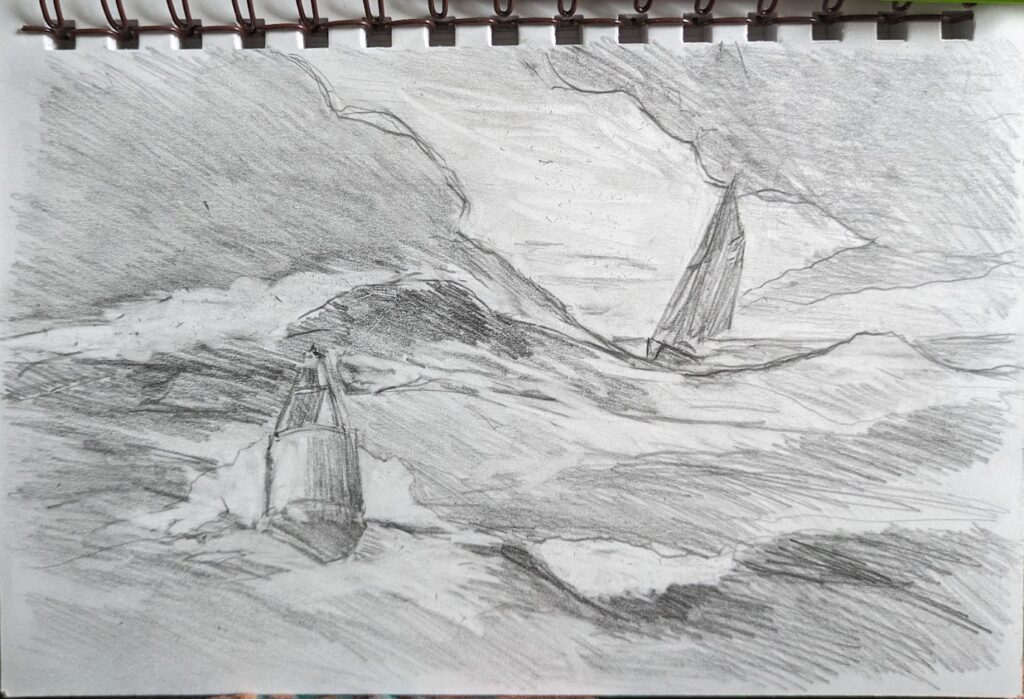
My sketch for Heavy Weather. 5X8, graphite on Bristol-finish paper. I moved stuff around repeatedly without damaging the finish.

My nine-year-old granddaughter tells me she’s not supposed to use mechanical pencils because her teacher thinks their points break too easily. That got us into a detailed discussion of traditional drawing pencils and other tools.

Wooden Pencils

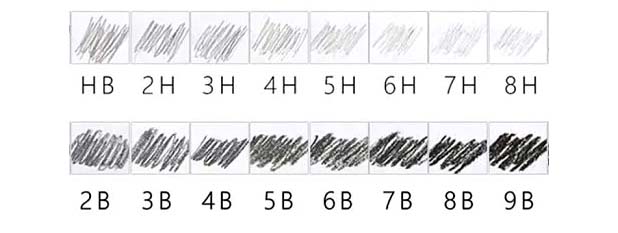
Pencil leads are generally given hardness grades, and each hardness is suited to a different purpose. ‘H’ stands for hard leads, ideal for technical drawing due to their fine lines and lighter marks. ‘B’ represents black or soft leads, which give darker, bolder strokes, perfect for shading. The middle ground is ‘HB,’ balancing hardness and blackness for everyday writing and basic sketching. The higher the number, the farther the lead is from that central HB position.

I do not recommend Blackwing pencils because they’re primarily for writing, not drawing, but if you are interested by the hype, start with a mixed set, here at $23.50 plus shipping. Blackwing doesn’t use the traditional scale, but that set includes a Matte, Pearl, 602, and Original, in descending order of hardness. Of course, to get their full value, you’ll need a Blackwing long-point pencil sharpener, here at $21.00.

Personally, I’m too parsimonious for that. I have General’s ten-pencil set, for the much more reasonable price of $9.99. Add a Maped 2-hole sharpener and a General Mechanical Eraser and you’ll be set.

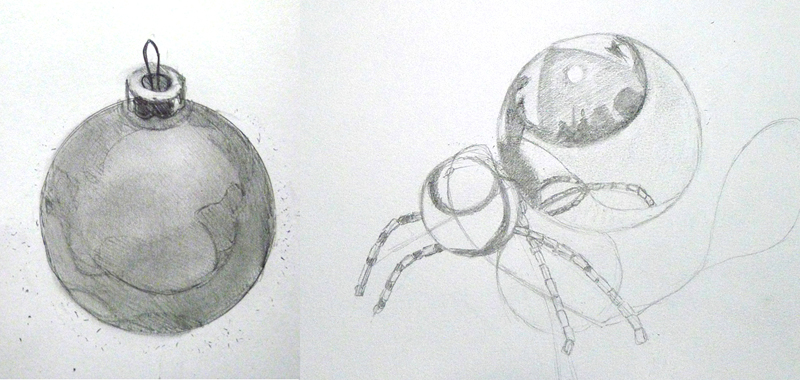
Even a line drawing conveys volume, but shading is that much more expressive. These were done with the cheapest of mechanical pencils in a sketchbook.

Mechanical Pencils

If you bear down too hard and breaking points is a problem for you, there are two options. You can replace the lead in your inexpensive mechanical pencils with high-polymer lead, which is stronger and denser. Or, move to a .9 mm lead pencil. You can buy hi-polymer 2B leads for this and other pencil sizes from Pentel, and even 4B lead for a .5 mm pencil.

Woodless graphite pencils

Once I get past my sketchbook, I move over to woodless graphite drawing pencils. They don’t need sharpening. Because you can work them on their sides, they make smoother graduated passages than conventional drawing pencils. I have this set, which costs $15.99 and has lasted me forever.

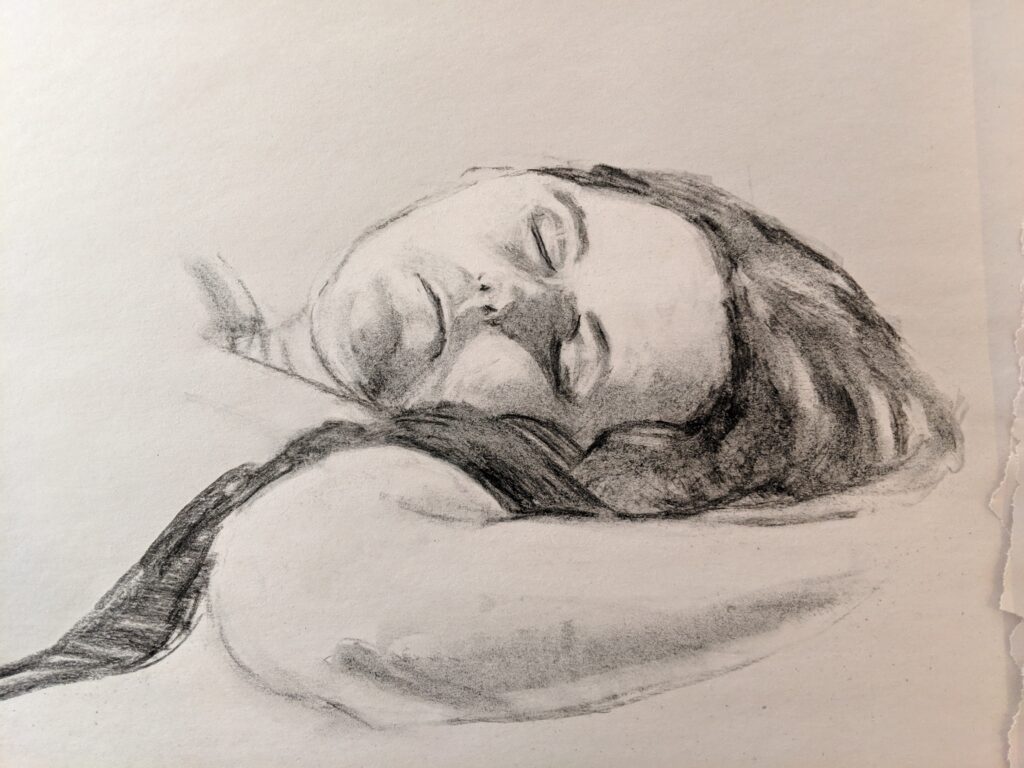
Done with willow charcoal on newsprint.

Charcoal

I avoid pressed charcoal; it is difficult to erase due to the binding agent. That also makes it less versatile for blending and making soft transitions. Unlike willow charcoal, it can bleed into paint if you use it for drawing on your canvas. However, it can be useful for fine detail and sharp lines since it can be sharpened.

Willow charcoal is more like painting in that it can be smudged and moved and lifted with ease. My personal preference is Coate’s willow charcoal.

Paper

For sketching, I use a Strathmore Visual Journal, as it’s completely erasable and multimedia when I need to add color.

For woodless graphite and fine work in charcoal, I like Canson Mi-Tiente Pastel Paper. It gives me the greatest control and value range. But for painting design, I use willow charcoal on newsprint, or any other cheap paper I have lying around.

A recap

I didn’t mean for this to be a shopping guide, but it seems to have ended up that way. Here are my ‘real’ holiday gift guides for 2024:

Holiday Gift Guide for Budding Artists

Holiday Gift Guide for Experienced Artists

Holiday Gift Guide: Painting Workshops

Holiday Gift Guide: $100 off any painting on this site.

There are still openings in my January drawing class. For more information see here.

I have just two workshops left in 2026! Reserve your spot:

Can’t commit to a full workshop? Work online at your own pace:
Seven Protocols for Successful Oil Painters

What makes a great gift? (Also: your choice, $100 off)

Toy Reindeer with double rainbow, oil on archival canvasboard, 6X8, $435 framed, includes shipping in continental US.

Use the code XMAS100 to take $100 off the price of any painting. This code is valid for any painting, from the smallest to the biggest, for a limited time.

This week, my four-year-old grandson and I have been playing with Matchbox cars and Legos. In my spare time, I’m doing a little online Christmas shopping, and listening to heavy-handed hints from the eight- and nine-year-old. That’s gotten me thinking about what would make a good gift for each person on my list.

The best gifts thoughtfully match the recipient’s personality, interests, and needs. They reflect our understanding of our loved ones and show that we put in the effort to select something meaningful.

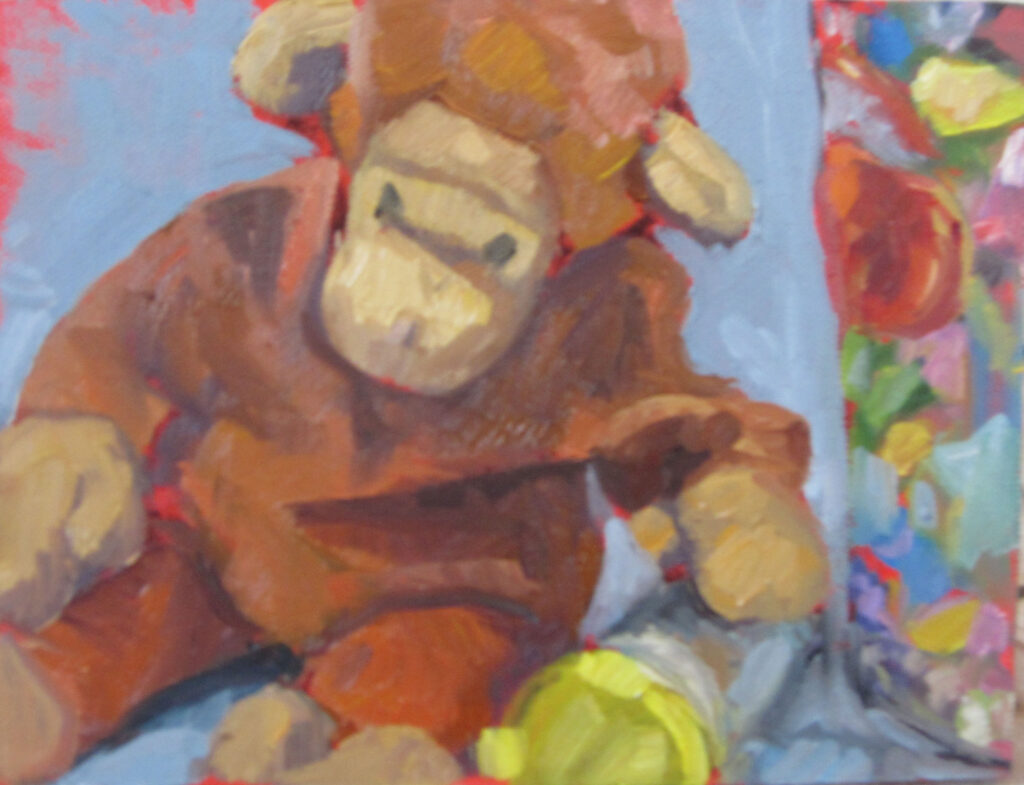
https://www.watch-me-paint.com/product/monkey-toy-and-candy/Toy Monkey and Candy, oil on archival canvasboard, $435 framed.

A great gift is personalized. It speaks to the recipient’s tastes, hobbies, and life experiences. You wouldn’t buy a painting for someone who has no interest in fine art, but anyone with walls can aspire to more than the ‘art’ available at TJ Maxx. You might tailor a painting to the recipient’s love of cooking, boats, nature, or shoes, or in the understanding that they might laugh at the absurdity of a tin-foil hat. You know the places he or she finds special: the shore, the desert, or the Great White North. That’s a sign that you’ve both listened and remembered.

A great gift has an emotional connection. That’s why concert tickets are such a wonderful present: they share feelings. Whether that’s joy, nostalgia, or excitement, gifts that remind us of shared experiences are often the most valued gifts.

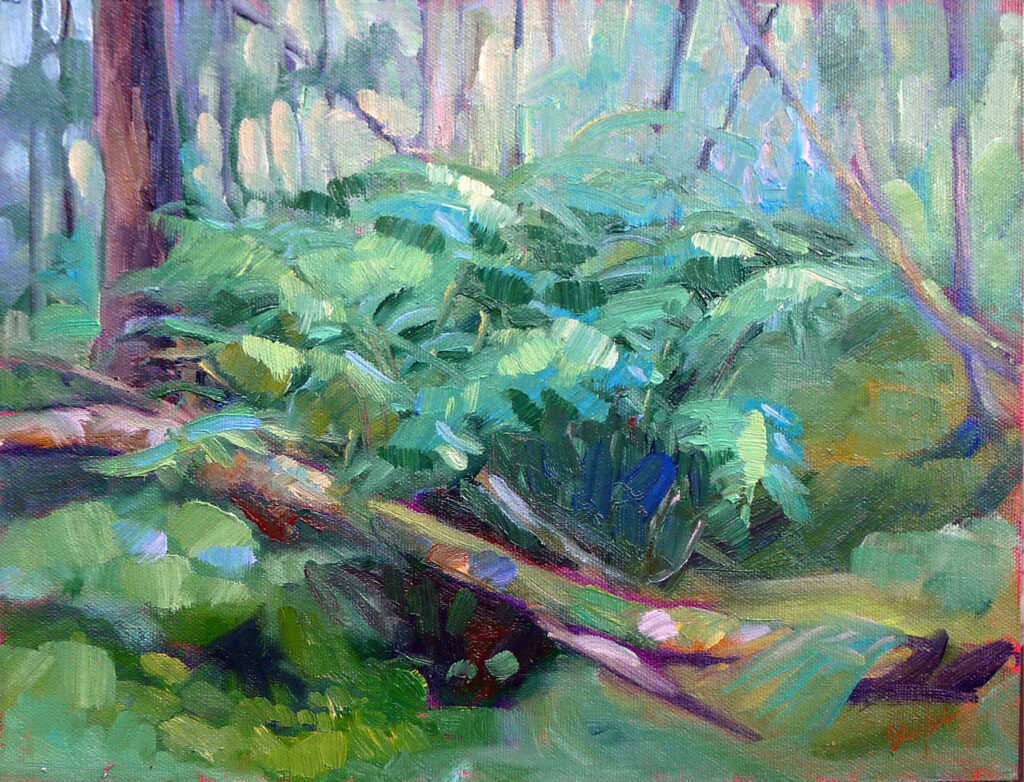
Cinnamon Fern, 9X12, oil on archival canvasboard, $869 framed includes shipping and handling in continental US.

A great gift emphasizes quality over quantity. Years ago, I saved my pennies and bought my mother her first and only strand of real pearls. She kept them until her death, and I have them now. I bought her many other gifts over the years, and I can’t remember many of them, but that strand of pearls was a winner.

A great gift is unique

One of the gifts I’ve received that gives me the most joy is a high-tech hip flask, which was my 65th birthday gift. Another is the tactical backpack which travels around the world with me. They’re not exactly the gifts most grandmothers covet, but they were both unique and very targeted.

And of course I own paintings by many of my peers, including Tom Conner, Bobbi Heath, Barbara Tapp, Bruce McMillan, Bruce Bundock, Chrissy Pahucki and others.

Paintings are one-of-a-kind, and many people get a thrill knowing they have given or received something nobody else owns.

By the way, this is why I don’t sell NFTs and no longer sell prints of my work. Paintings are one-off, tactile objects of craftsmanship, and images of them are pale imitations.

Drying Sails, 9X12, oil on canvasboard, $869 framed.

A great gift has long-term significance

My grandkids have lots of grandparents, aunts and uncles. On Christmas, I sometimes wonder if they remember what they opened five minutes earlier. The thrill at their age is in the unwrapping, not in the plastic toy.

Nothing lasts forever, but a carefully-chosen painting has value for years to come, and can be enjoyed by generations.

You can take $100 off any of my paintings

If you’d like to give a painting to a loved one (or even to yourself), you can use the discount code XMAS100 for $100 off any painting on my site. As you look through the collection, consider what resonates with you and what might resonate with the people on your list. Read the stories behind the paintings. Ask me questions, and use this opportunity to make this year especially memorable.

I have just two workshops left in 2026! Reserve your spot:

Can’t commit to a full workshop? Work online at your own pace:

Seven Protocols for Successful Oil Painters