Adult art education: you’re never too old to be bad at something

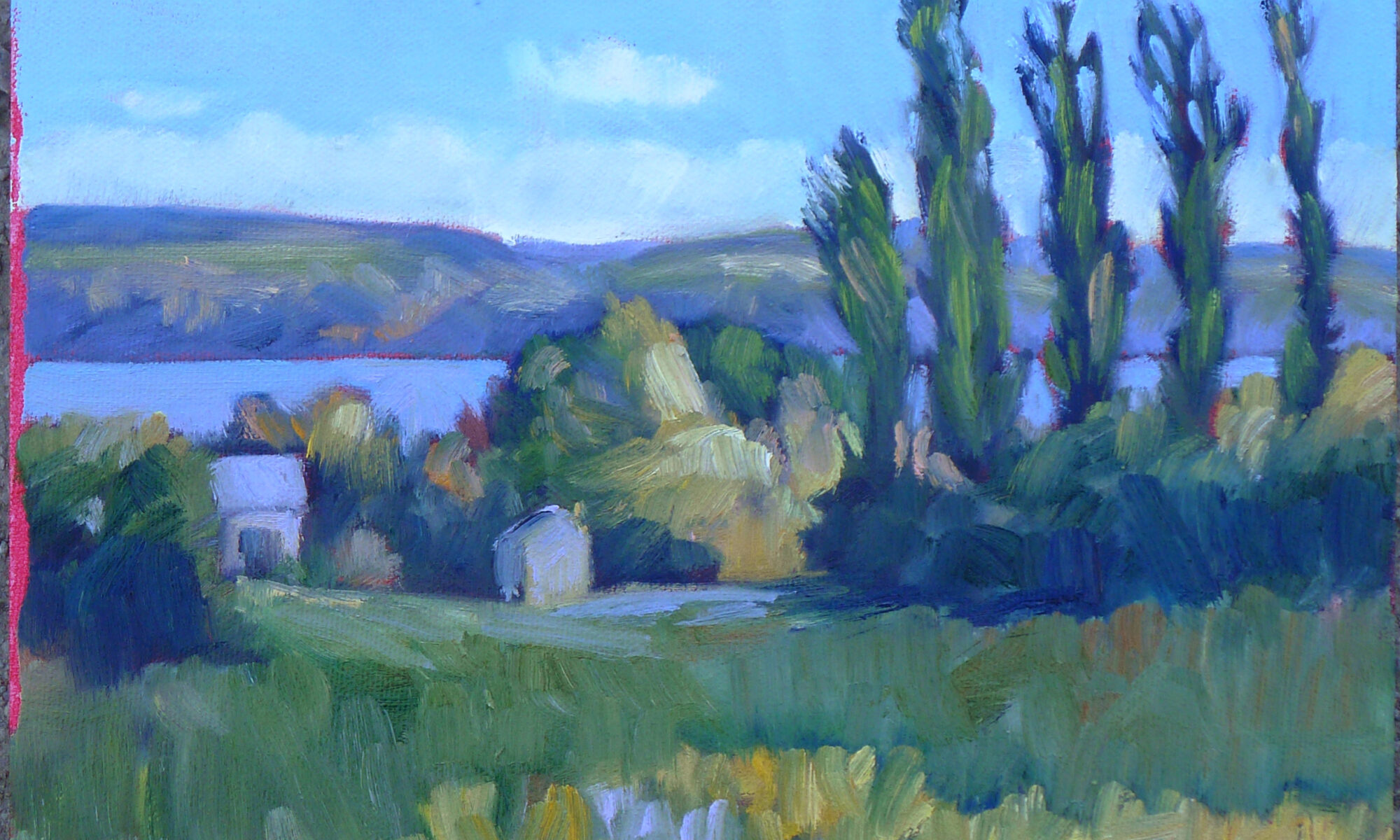
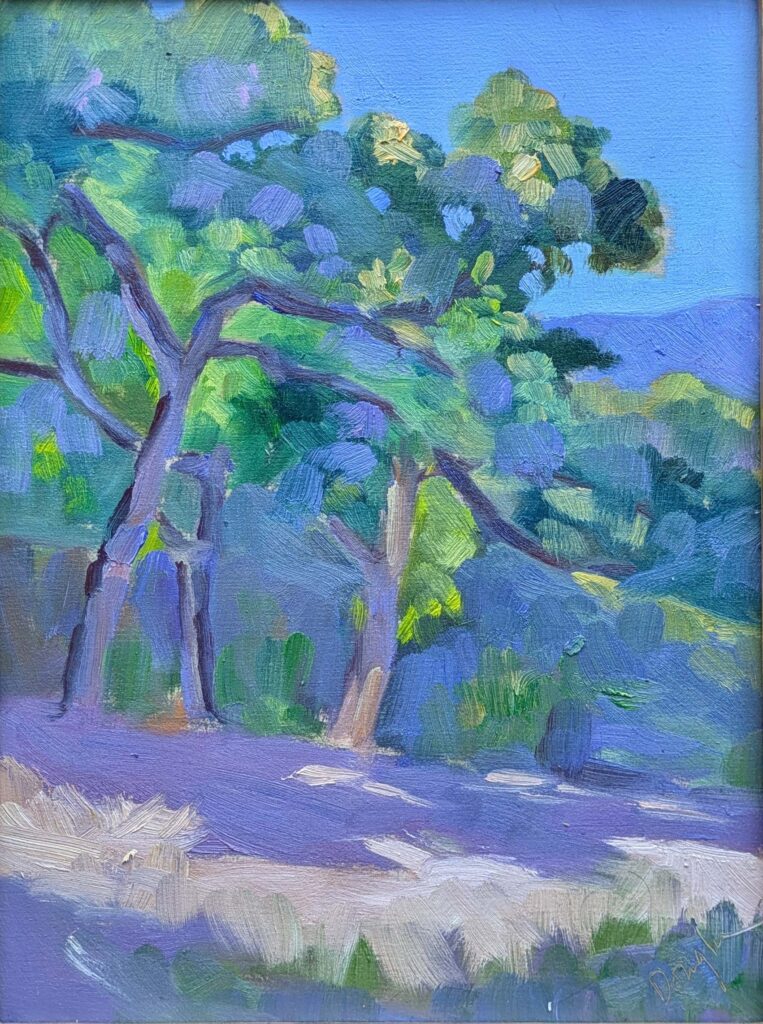
Cottonwoods along the Rio Verde, 9X12, oil on archivally-prepared Baltic birch, click on image for more details.

It’s been a more than a decade since my youngest graduated from high school, and I still approach this last week of summer with mixed feelings. I love teaching, but could never have survived in an American school.

“Good teaching,” wrote Mary Townsend, “is somewhat ineffable. There is no rule or measure that will be fully predictive of who will be good at it, or what methods they will follow to do their best work; you have to know it when you see it, within a long human chain of teachers as unbroken as possible; and the fact of the matter is, there will never be enough good teachers to go around. In this way, some of humanity’s perpetual frustration with school becomes more understandable; for even at school’s best, you still might not get to go, and so be forced to take your ambition elsewhere after all.”
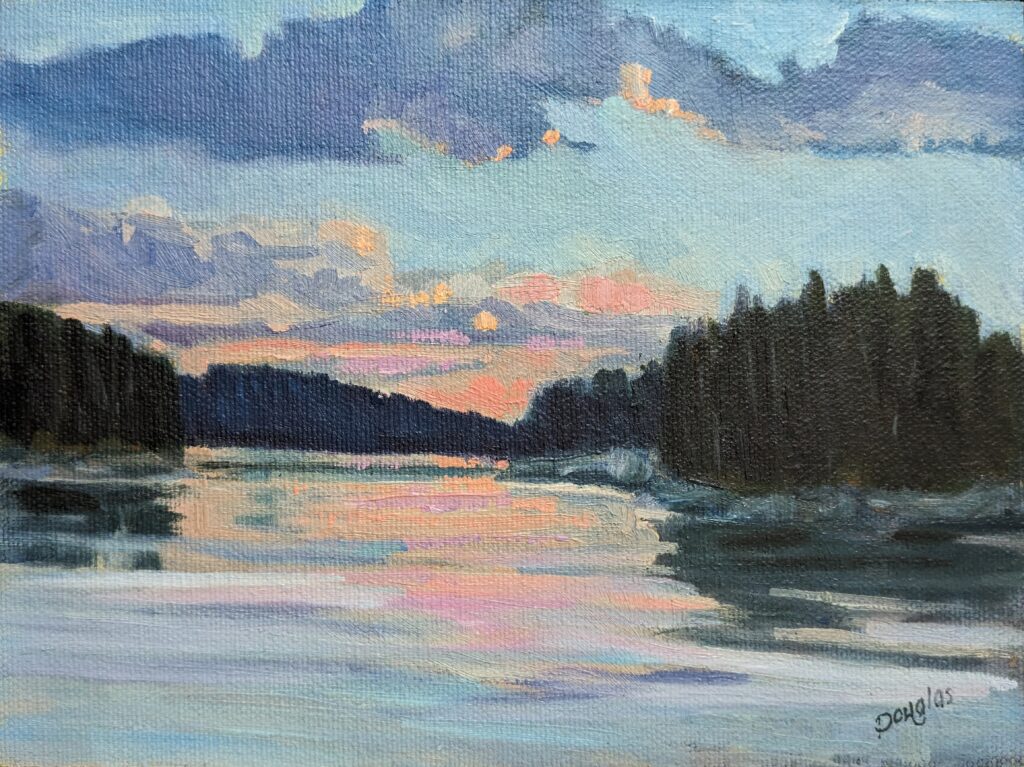
No Northern Lights Tonight, 6X8, oil on archival canvasboard. Click on image for more information.

Adult art education requires us to be beginners again

Adults come to art classes with something children don’t have: a lifetime of experience.

That’s a tremendous advantage. You’ve traveled, raised families, learned complex skills in other areas, solved problems, experienced death and loss and accumulated a vast mental library of images. Of course, there’s also a downside; you’ve also accumulated a lifetime of opinions about what is and isn’t possible. I hear these all the time:

“I can’t draw a straight line.”

“I’m no good at color-matching.”

“My hands aren’t steady enough.”

“I don’t have innovative ideas.”

No child ever says those things, but they’re the enemy of adult art education. Learning to paint requires the willingness to continuously recast ourselves as beginners, free of any expectations about what the process of learning should look like.

Kids expect to not know things. Adult learners are always embarrassed by what they don’t know. It’s very hard for us to start a new project with a complete willingness to screw up. That, my friends, requires courage.
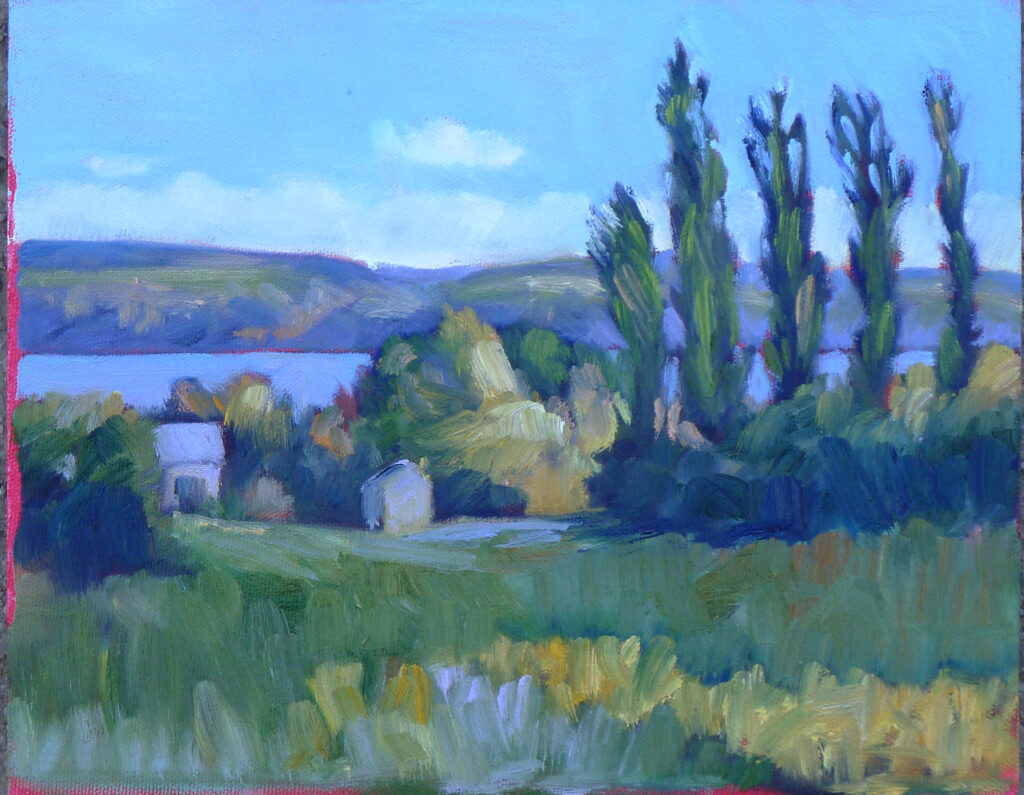
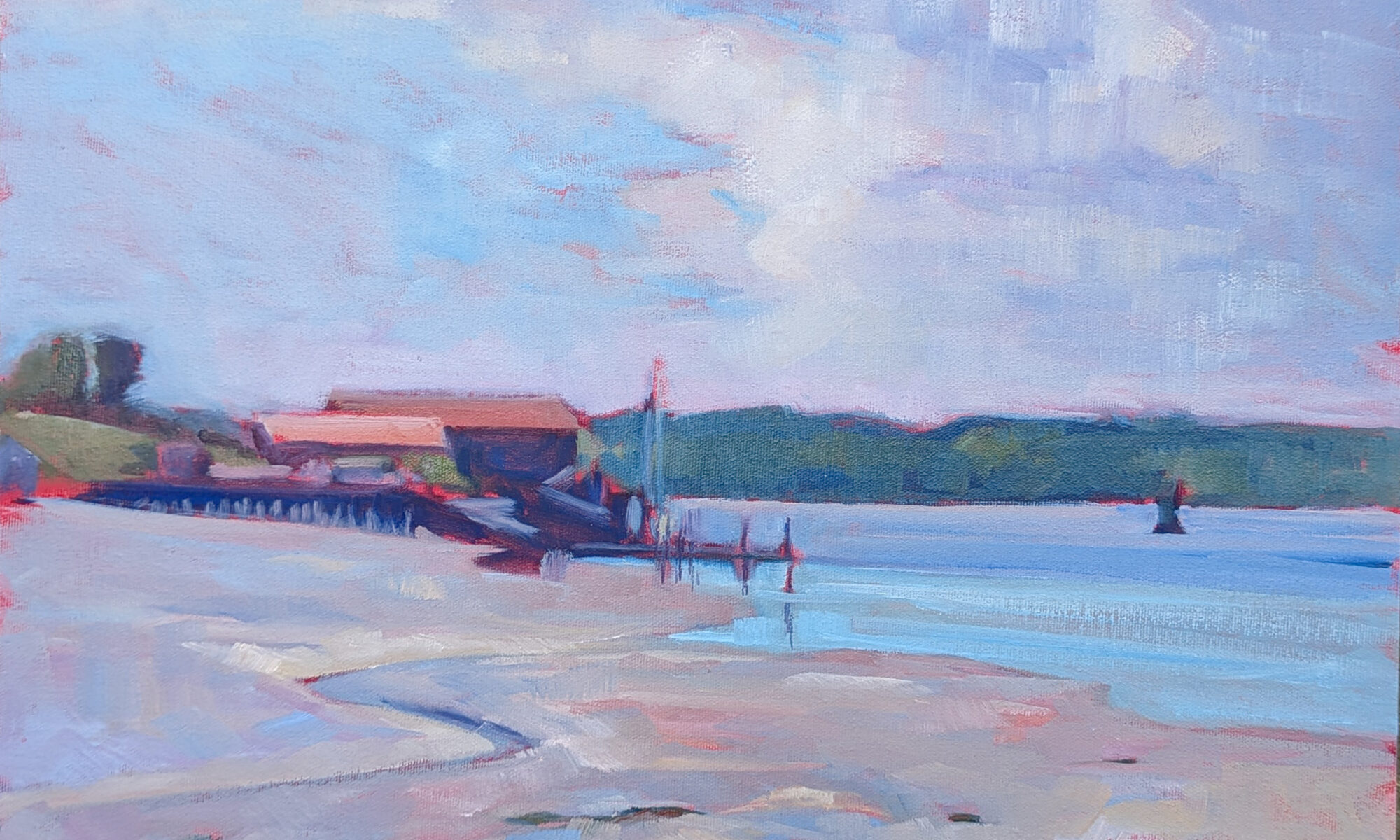
Île d’Orléans waterfront farm, 8X10, oil on archival canvasboard, click on image for more details.

The power of positive criticism

My art teachers were excellent at separating the wheat from the chaff in my work. I never felt as if I were being personally criticized, but they still managed to impart technique. The best of them saw something nascent in my work and helped me develop it.

Those teachers also never flattered my incompetence by calling it ‘self-expression’. Instead, they gave me grown-up tools and then showed me what to do with them.

Those of us who have been extremely competent in other fields can find being in the middle of the pack a brutal experience. The first time I realized that I wasn’t the best painter in my class was the most eye-opening and sobering of my experiences at art school.

Of course, that’s where my real learning started.
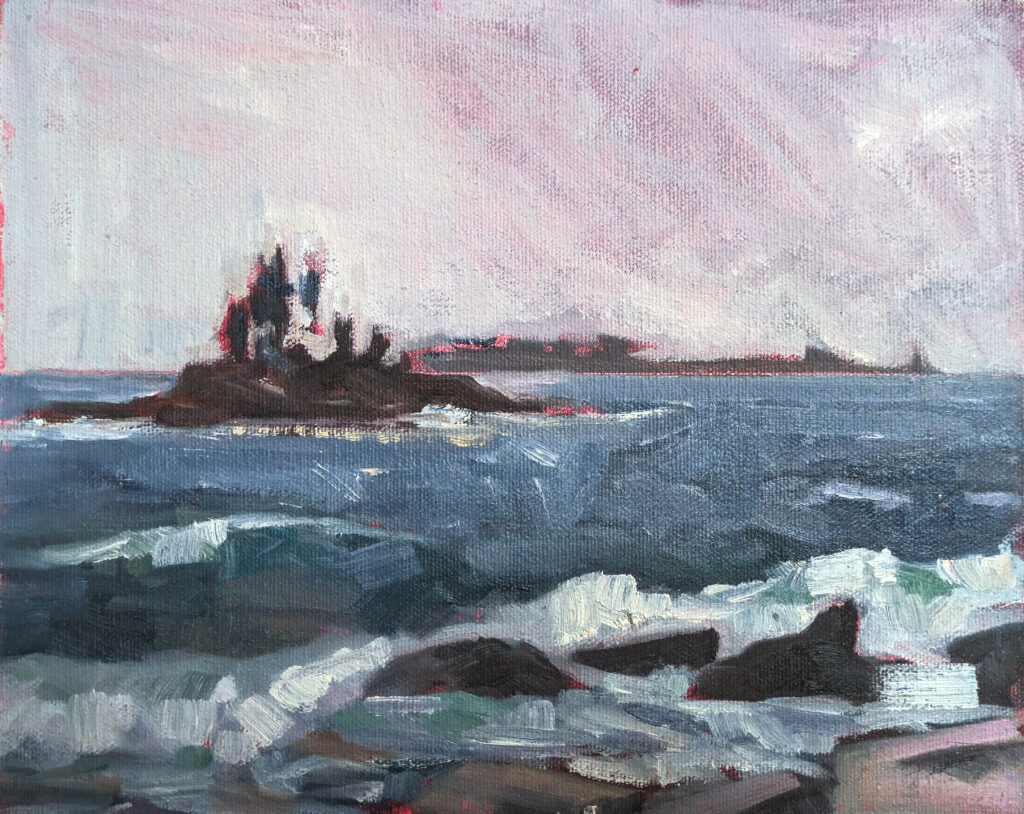
Brooding Skies, 8X10, oil on archival canvasboard. Click on image for more information.

Individual instruction isn’t that helpful

The Wyeths, père et fils, managed to teach their family members to paint one-on-one, but it doesn’t work for most of us. Individual instruction is too often a feedback loop. Other painters’ struggles inform our own. So do their solutions. The group is a critical part of adult art education, but that requires a good class and a good teacher.

Restoring curiosity

When we were children, we looked, wondered, experimented and puttered. Time had little meaning and deadlines really didn’t exist. We didn’t necessarily know what something was supposed to become before we began and we were generally satisfied with what we made, if for no other reason than that we’d made it.

Then adulthood happened, and we became results-driven rather than process-driven.

Painting, done right, has the power to reverse that. Painting is really just a series of mistakes that occasionally work out, after all. You try something, see what happens and then try something else.

This is not an escape from adult life. It is a richer way of inhabiting it, and it’s better for our blood pressure.

Online classes start again soon!

I have just two workshops left in 2026! Reserve your spot:

Can’t commit to a full workshop? Work online at your own pace:
Seven Protocols for Successful Oil Painters

What artists can learn from beginners

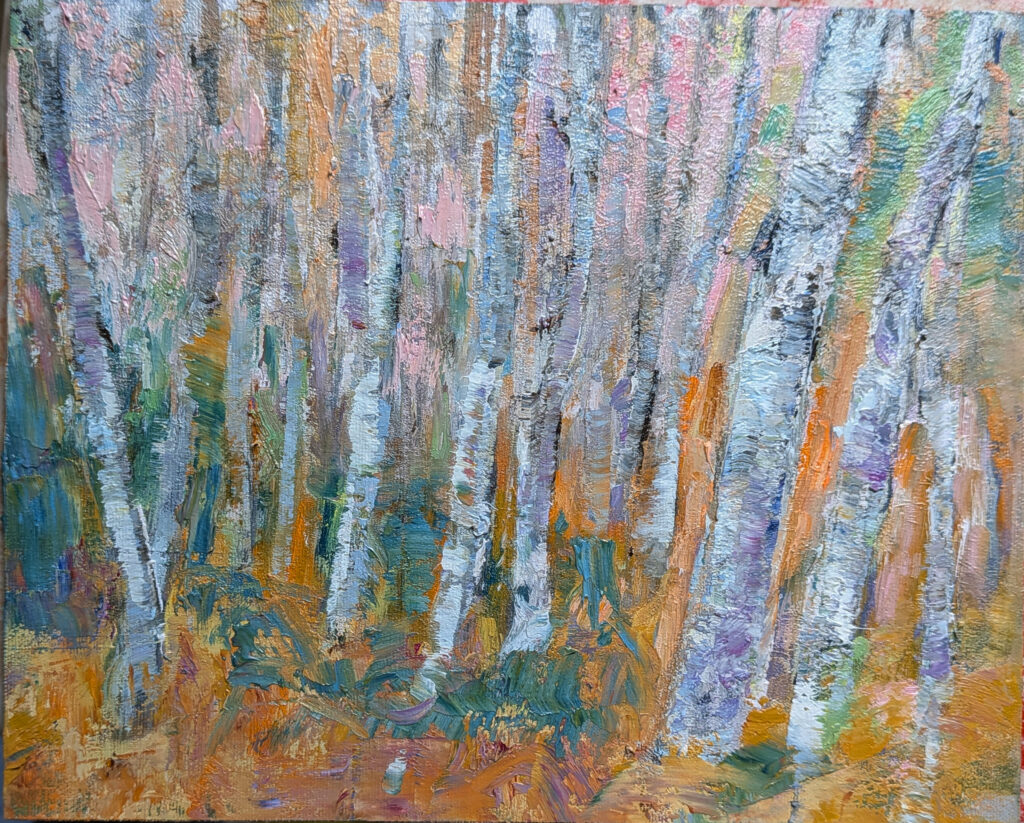
Grey Birches, 8X10, oil on archival canvasboard, for more information, click on image.

I have two painting students, PhDs in chemistry and electrical engineering. One is a novice acrylic painter; the other a more-advanced watercolorist. In recent months, they’ve been emailing about blue, not in the artist’s way, but the scientist’s. (I’m just following along.)

Among other things, they’ve demonstrated that some blues’ chroma increases when you add a little white. That flies in the face of conventional wisdom, which says paint will never be more intense than it is straight out of the tube.

I suppose thirty more years of looking at blue paint and I’d have drawn the same conclusion, but they’ve bypassed that painful learning process. This has immediately changed how I paint.

Meanwhile, a student from last week’s Schoodic workshop sent me a note about the watercolor skills he’s developing. What interested me was what he has learned from teaching beginners in a volunteer parks program. “Some of my best basic skills teachers,” he wrote, “are the novices I help.”

Maine Coast, 8X10, oil on archival canvasboard, for more information, click on image.

Short weekly class session starts next Monday

Claim your spot in Painting Water, Monday evenings or Painting Nocturnes, Tuesday evenings. Both are 6-9 PM, starting the week of August 17, 2026, which is next week.

This is my last Zoom session until I get back from Sedona Plein Air at the end of October. That’s because I’m teaching and eventing non-stop until then.

I upload videos of these online classes and you have access to them for as long as there’s YouTube. That means you can review them if you need a refresher or have to cut out early.

Beginners aren’t burdened by what they think they know

My student noticed that the novices he worked with were unconcerned with detail. They weren’t adding every rock, tree or branch because it was in front of them. They weren’t trying to reproduce the entire landscape.

That reminded him to reconsider the fundamentals of his own work. Were the values correct? Was the drawing accurate? Was he making decisions about composition, or simply recording what was there?

Off Pearl Street, 8X10, oil on archival canvasboard, for more information, click on image.

What artists can learn from beginners

I have formal instruction from the Art Students League and elsewhere. But the hours I’ve spent teaching have taught me as much or more. By having to explain technique, I’ve internalized it. By having to answer questions, I’ve researched things I knew nothing about. By listening, I’ve learned. Adults will challenge you when you’re vague or wrong. That’s a very good thing.

Am I too old to learn to paint?

On Monday, a woman watching me teach in the Berkshires told me, “I always wanted to paint but I’m too old.” She was my age, but she didn’t believe me when I said it wasn’t true.

I felt the same way when, at 38, I pivoted into a full-time painting career. Thirty years later, I’m very glad for all the other experiences I brought into my art career.

Every adult learner wonders about whether they left it too late. However, they come to art with knowledge and experience that an 18-year-old can’t understand. All of it translates into their art, whether it’s an understanding of process, years spent working with their hands or 10,000 miles trekking through nature. Adult learners take the long view; they don’t expect immediate excellence. That gives them the patience to not quit when painting seems daunting.

Thomaston, ME, 14X18, oil on archival canvasboard. Click on image for more information.

Quirky self-expression

One of the last week’s students made some very unusual paintings. Her work was very detailed for conventional plein air painting, which tends towards speed and freshness. However, it had a magical folkloric quality. That raised a discussion of why we value looseness in the first place, and why it’s important for teachers to not force students into the teacher’s style.

We don’t have to imitate another painter’s choices to learn from them. Sometimes the most useful thing another artist can do is challenge our assumptions about how painting is supposed to work.

Online classes start again soon!

I have just two workshops left in 2026! Reserve your spot:

Can’t commit to a full workshop? Work online at your own pace:
Seven Protocols for Successful Oil Painters