Seeing, brushwork and color are the painter’s trifecta

The Fleeting Hand of Time, 9X12, oil on archival canvasboard, $696 includes shipping and handling in continental US.

Most painters stall because they’re trying to solve too many problems at once. Students make real leaps forward when they start building skills in a sensible order. That’s what this trio of learning opportunities is designed to do.

Color, brushwork and composition are a three-legged stool. You must learn to see, orchestrate color and express your ideas with confidence.

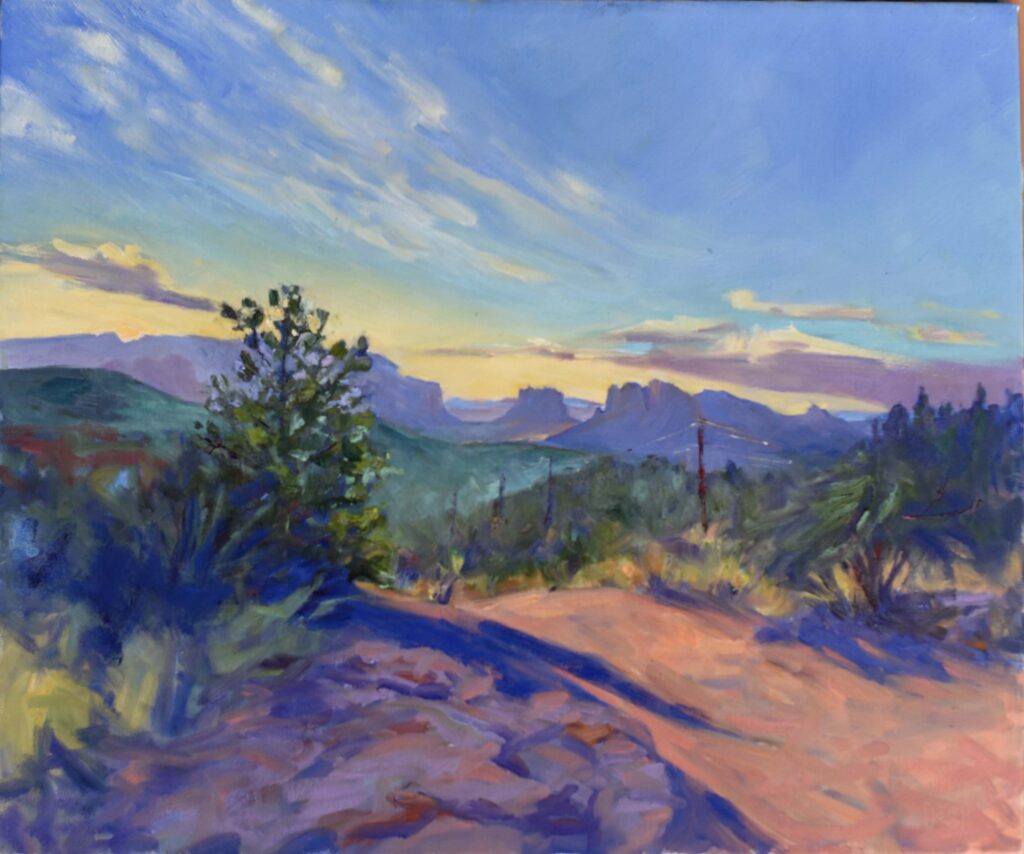
Mather Point at dawn (Grand Canyon), oil on canvasboard, 9X12, , $696 includes shipping and handling in continental United States.

How to See Like a Painter (Zoom class)

Everything starts with perception. If you can’t see clearly, no amount of technique will save you. How to See Like a Painter is an interactive online painting class focused on visual analysis. That’s a skill most artists ignore, yet need the most.

We will dig into value relationships, shape and focal hierarchy, edges and—most importantly—the difference between what you think you know and what you’re actually seeing. Once you understand how to simplify complexity, your decisions will get stronger and faster.

The class meets Monday evenings, 6-9 PM EST on Feb 23-March 2 and March 16-April 6.

Here is more information and online registration.
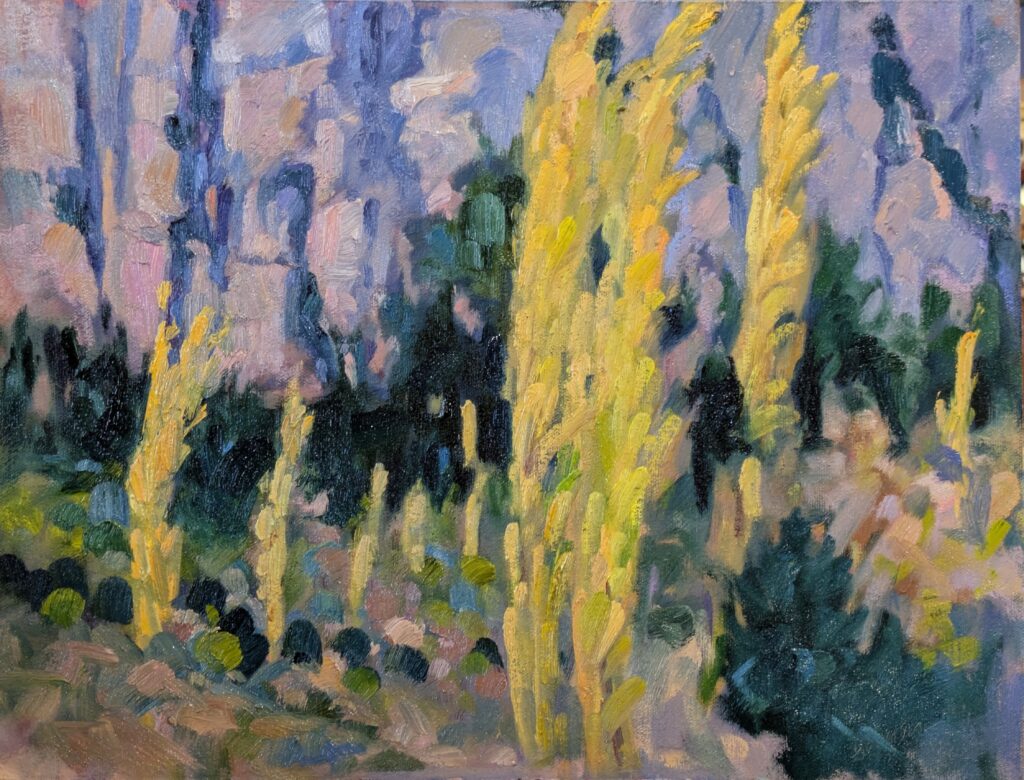
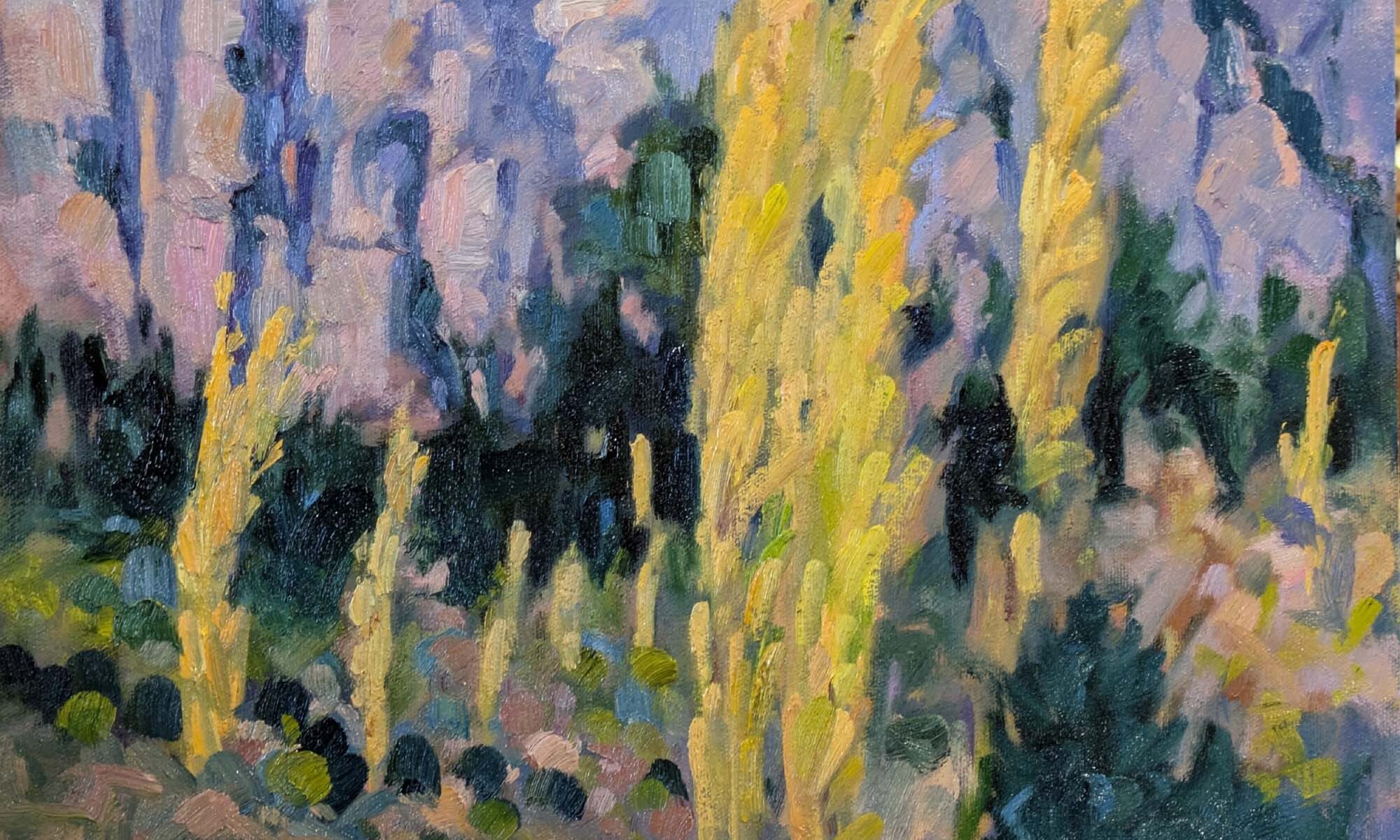
Poplars, 12X16, oils on archival canvasboard, $1159 includes shipping and handling in continental US.

Painterliness, looseness and bravura brushwork (Zoom class)

Painterliness, looseness and bravura brushwork is an interactive online class devoted to expressive paint handling. We talk about economy, confidence, and when to set it and forget it. Looseness isn’t sloppiness; it’s clarity delivered with energy.

This class helps you escape overworking and replace it with confident, readable brushwork. You’ll learn how to load the brush, commit to a stroke and let your surface do some heavy lifting. If your paintings feel tight, stiff or hesitant, this class is for you.

The class meets Tuesday evenings, 6-9 EST on Feb 24-March 3 and March 17-April 7.

Here is more information and online registration.

For either Zoom class, we have had students from across the US and Canada and Great Britain. If you can tune in at those times and are fluent enough in English to talk about art, we’d love to have you join us.

Canyon Color for the Painter: A Sedona Plein Air Workshop

Why is there a one-week break in middle of these Zoom classes? I’m heading to Sedona, AZ to teach Canyon Color for the Painter: A Sedona Plein Air Workshop, March 9-13.

Sedona is one of the most demanding and rewarding outdoor classrooms on earth, which is why I love it. The desert doesn’t forgive lazy color thinking. Light is strong, shadows are crisp, and color temperature shifts happen fast.

In this workshop, we focus on color strategy: how to simplify without dulling, how to exaggerate without lying, and how to organize color so your painting reads brilliantly from across the room. You’ll apply new skills directly to the landscape, with real-time feedback and lessons. I keep my workshop numbers low enough to give every person individual attention. Sign up quickly, as this workshop is filling fast.
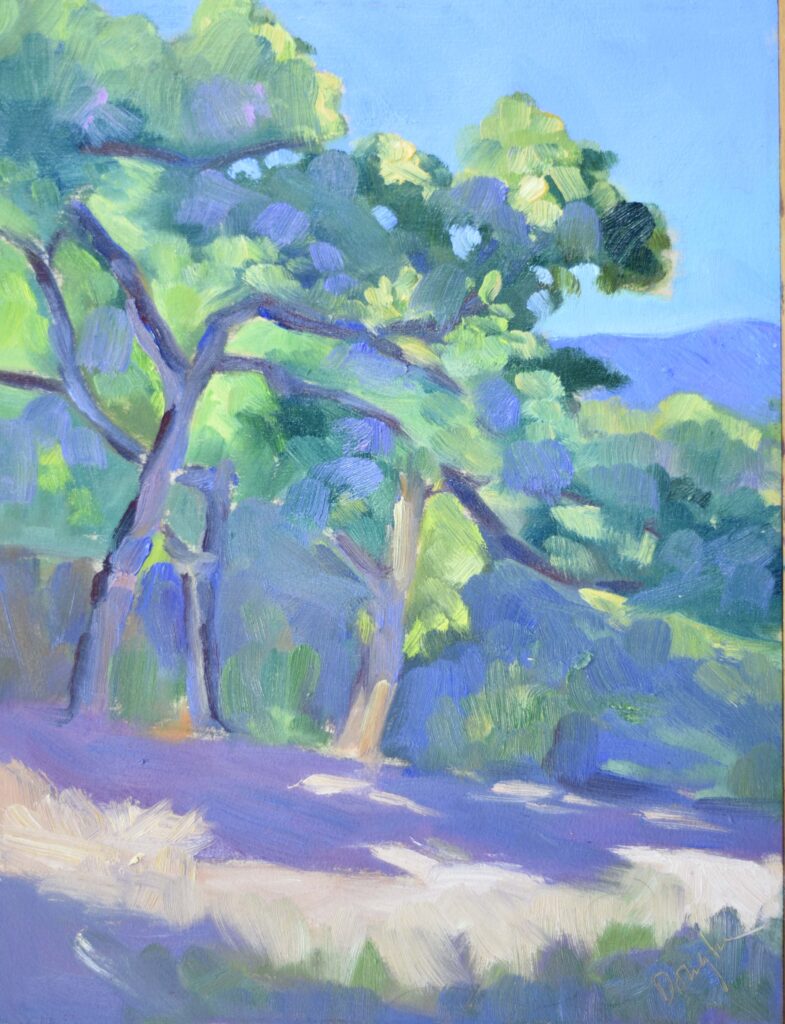
Cottonwoods along the Rio Verde River, $696 unframed, oil on Baltic birch.

Which one should I take?

In a perfect world, you’d have the time and energy to take all three. Together, they address the core problems all painters face: unclear seeing, timid execution and confused color. But I know that’s not practical.

Ask yourself which of these core problems you need the most work on: brushwork, composition or color. And then register for the class which will help you the most. If I can help you with your choice, email me.

(Frankly, looking at this weekend’s brutal temperatures in the northern US, I’d also factor in the desert warmth. Southwest has a fare sale until Friday. 😉)

Registration is now open for workshops in 2026! Reserve your spot:

Can’t commit to a full workshop? Work online at your own pace:

Seven Protocols for Successful Oil Painters

Monday Morning Art School: desert lessons

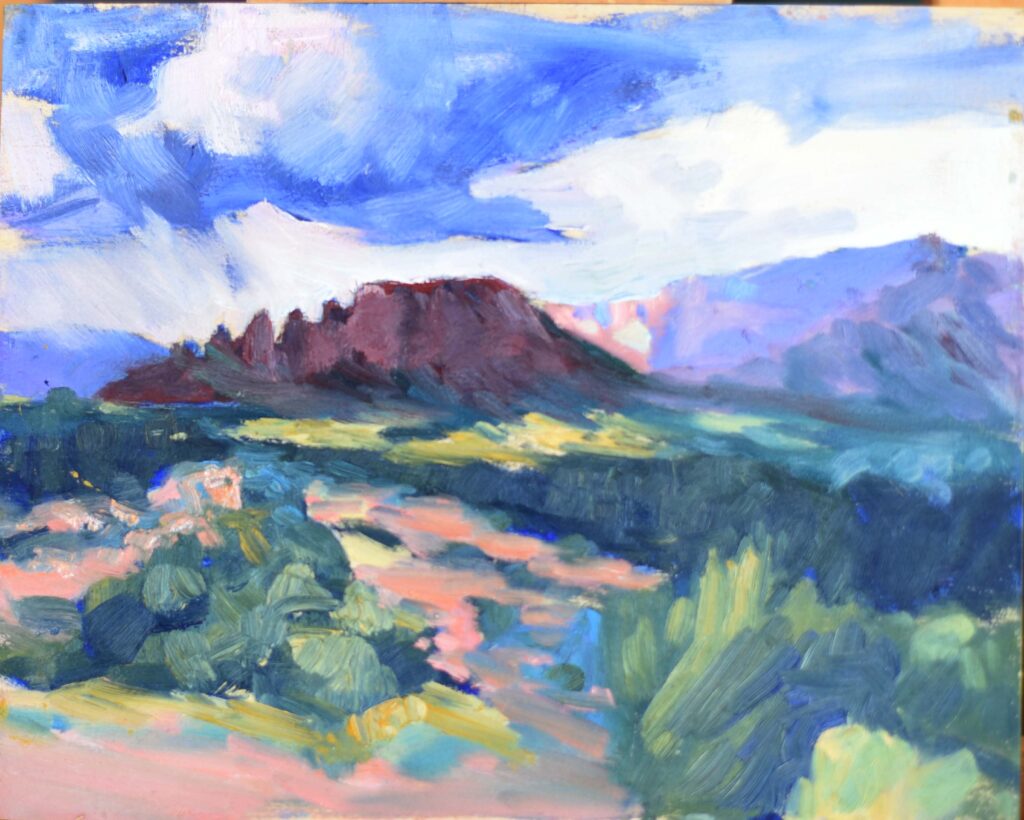
Cliffs, 12X12, oil on birch, private collection.

Arizona (especially Sedona’s red-rock country) looks simple from a distance. Big shapes. Big color. Big sky. That apparent simplicity is exactly what makes it hard to paint well.

Every landscape has its own rules, and the desert is particularly unforgiving to painters who arrive armed with assumptions instead of observation. I know this because a long time ago I did exactly that. What did the Arizona desert teach me about painting light and color? More things than I can list, but below are the main points.

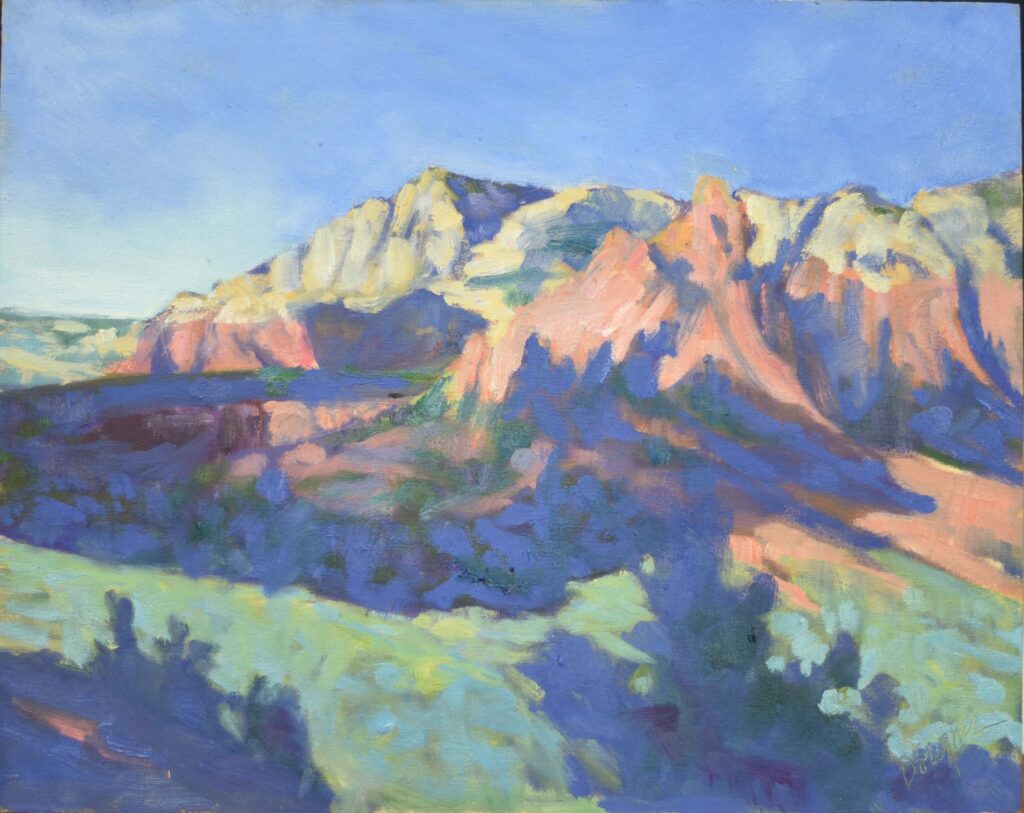
View across the Verde Valley, 11X14, oil on birch panel. Available through Sedona Arts Center.

Capturing desert light 

Capturing desert light starts with understanding that Arizona’s atmosphere is clean, dry, and thin. There’s very little haze to soften transitions. As a result, value contrasts are stronger than you may be used to, and color temperature shifts are abrupt. Sunlit planes are warmer than expected, except at midday. The shadows snap cool, sometimes dramatically so. That’s from a distance. Up close, there’s a tremendous amount of color bouncing around the shadows. They are often higher in chroma than the sun-bleached parts of the picture.

If your painting feels flat, it’s often because you aren’t respecting color temperature enough.

Carol L. Douglas painting at Acadia National Park
Sunlight and shadows, oil on birch, 14X18, private collection.

Painting rock formations 

Painting rocks is less about detail and more about structure. From individual rocks to gigantic massifs, rock formations are built from planes. Start by identifying the major directional faces of the rock and assign them clear value families. Vertical planes can read darker than sloped ones, and ledges catch light differently still. At the vast scale of the desert, texture and detail are almost an afterthought. If you paint every crack and striation, you’ll destroy your painting—and your mind.

Lone pines, 14X18, oil on birch, available through Sedona Arts Center.

Working fast in changing light 

Working fast is not optional in the desert. The light moves quickly, and shadows can crawl across a canyon wall in minutes. This is where the preparatory sketch earns its keep. Adapt it for desert conditions by simplifying even more than usual. Four different value steps are sufficient. If you can’t organize the scene in ten minutes, you won’t fix it in two hours. And you’ll be mighty glad to have that sketch when the light shifts.

Color mixing for arid landscapes 

Color mixing for arid landscapes is where many painters go off the rails. Yes, rocks are orange and bluffs are ochre. But Sedona and the wider Southwest are full of violets, cool reds, muted greens and dusty neutrals. Shadows are often infused with unexpected color. Adjust temperature rather than dialing up saturation. If everything is intense, nothing is.

The desert doesn’t reward fussing. It rewards decisiveness, clear value structure, and honest color. Arizona’s landscape will teach you quickly where your habits help you—and where they don’t. That’s why painters keep coming back. The desert is a tough teacher, but it never wastes your time.

Want to learn more?

This March, I’m leading a 5-day plein air workshop in Arizona, and I’d love for you to join me.

Canyon Color for the Painter: A Plein Air Workshop will be held through the Sedona Arts Center, March 9–13, 2026. This immersive week-long workshop is designed for painters in oil, acrylic, pastel, watercolor, gouache, and all experience levels.

You can register directly on Sedona Arts Center’s website, here. Or, contact me if you have questions. I’m happy to answer anything about the workshop, skill requirements, materials or what to expect painting in the desert.

Registration is now open for workshops in 2026! Reserve your spot:

Can’t commit to a full workshop? Work online at your own pace:

Seven Protocols for Successful Oil Painters

Arizona’s light changes everything

Crepuscular rays from Forest Road 525, 8X16, oil on linenboard. Available through Sedona Arts Center.

Painters think about light the way sailors talk about wind. We don’t perceive either of them directly, but they influence everything we do.

I’ve been painting and teaching in Sedona, AZ for several years now (and am very blessed to do so). There’s something about high desert painting that transforms the way we see color. The warm light and the color of the shadows falling across canyon walls are different from anywhere else. I don’t think that’s just because the light is brighter, although it is. It behaves differently from the filtered light of the northeast.

Sedona’s colors are over the top. There are red rock buttes, sheer ochre cliffs and cool green pines and junipers, all under a brilliant blue sky. That can fool painters into always using the most saturated colors possible. That’s a trap. The real story isn’t the color of the rocks, it’s what the light does to them.

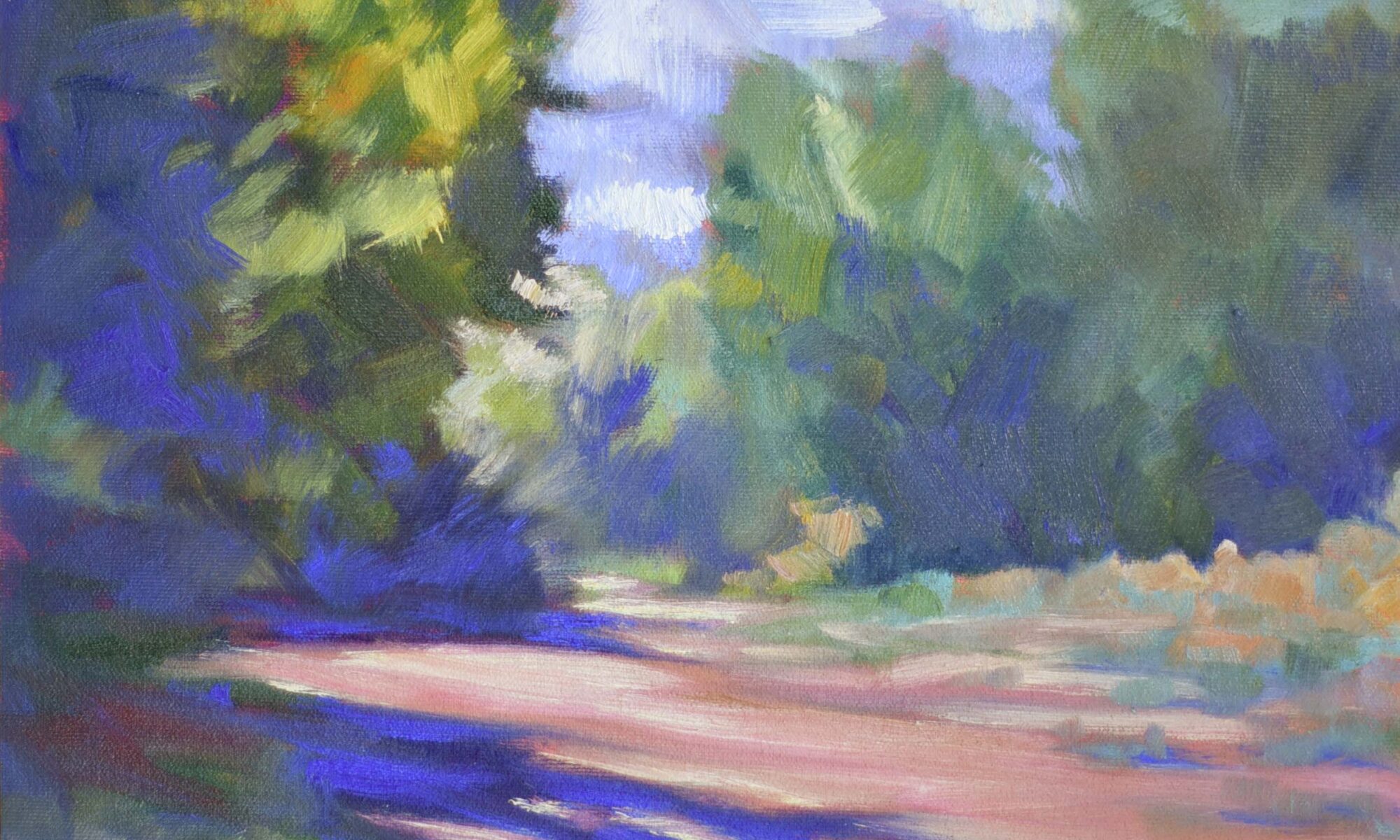
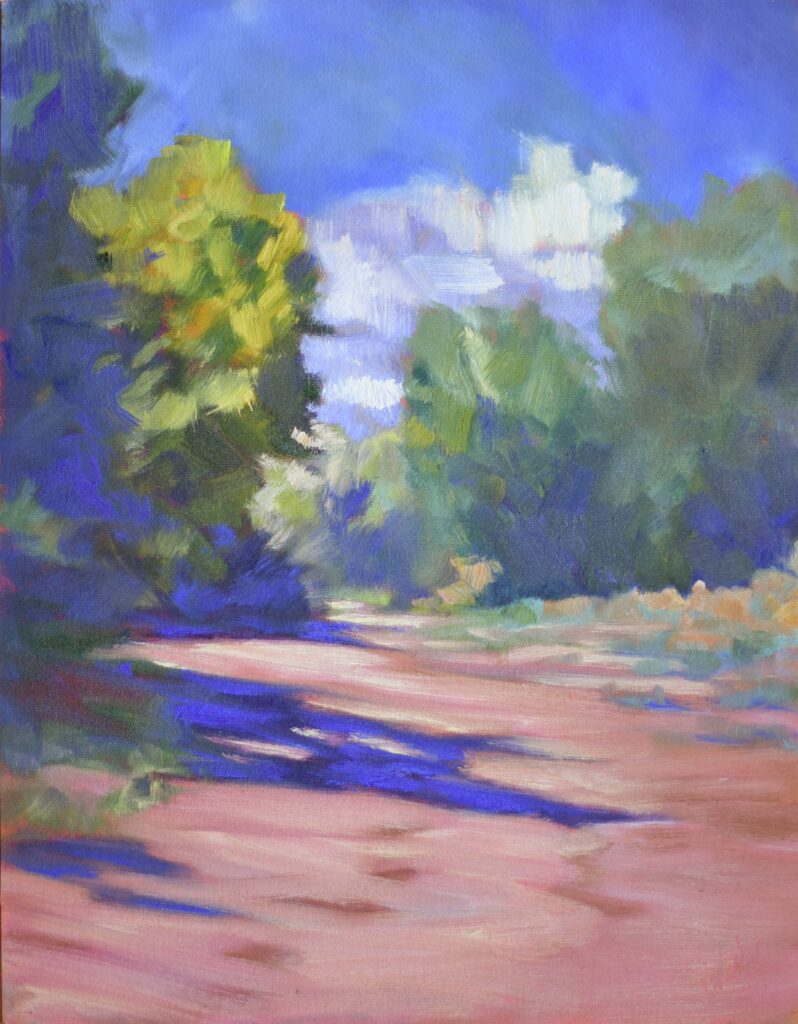
Country path, 14X18, oil on archival canvasboard, $1,275 includes shipping and handling in continental US.

Sedona sits high, dry, and clear. There’s seldom atmospheric haze to soften edges or dissolve forms. As a result, values snap into focus. Shadows aren’t murky or vague; they’re cool, transparent and very colorful. You can’t get away with ho-hum darks.

The intense warmth of the red rocks complicates what we understand about color temperature. They bounce warm light into shadow areas, creating a running dialogue between warm and cool. Shadows contain more color than sun-bleached planes. That’s counter to what we think should happen.

Hammerhead cumulonimbus cloud over Posse Grounds Park, 9X12, oil on canvasboard, available through Sedona Arts Center.

Wanna try it?

This March, I’m leading a 5-day plein air workshop in Arizona, and I’d love for you to join me.

Canyon Color for the Painter: A Plein Air Workshop will be held through the Sedona Arts Center, March 9–13, 2026. This immersive week-long workshop is designed for painters in oil, acrylic, pastel, watercolor, gouache, and at all experience levels.

You’ll master advanced color strategies that elevate your plein air and studio work. Through practical lessons, focused exercises, and daily on-site painting sessions, you’ll gain time-saving techniques, build stronger compositions, and harness color and line to direct the viewer’s eye with authority.

You’ll refine your unique artistic voice while strengthening foundational skills in drawing, observation, and brushwork. Whether you paint boldly or seek more control and clarity, this workshop offers deep insights, supportive instruction and meaningful feedback. And did I mention it’s lots of fun?

Sycamore Shadows, 14X18, oil on archival canvasboard, available through Sedona Arts Center.

Reserve your spot now for an unforgettable artistic journey.

This workshop includes:

  • Demonstration and instruction
  • Supervised plein air painting sessions
  • Targeted exercises
  • Critique and discussion
  • Individual feedback

This is a great opportunity to break out of comfortable patterns and push your skills, all while enjoying the great cultural and natural resources of Sedona.

Questions

You can register directly on Sedona Arts Center’s website, here. Or, contact me if you have questions. I’m happy to answer anything about the workshop, skill requirements, materials or what to expect painting in the desert.

Registration is now open for workshops in 2026! Reserve your spot:

Can’t commit to a full workshop? Work online at your own pace:

Seven Protocols for Successful Oil Painters

Business for artists and painting in Sedona

Shadow Fingers, 11X14, oil on Baltic birch, $869 includes shipping and handling in continental United States.

First, the business

My friend Dennis used to tell me, “I’m an accountant with the soul of an artist.” That’s all very well, I’d counter, but every successful artist also needs the mind of an accountant. (Luckily, I never believed in that now-discredited left-brain, right-brain malarkey.)

On March 8-9, I’ll be presenting at the first Sedona Entrepreneurial Artist Development Program. This is open to Arizona residents aged 18 and over. The two-day intensive covers a range of topics from financial management and marketing to crafting an artist statement, developing work samples and selling artwork online. My part will be accounting for artists, and I plan to make it exciting.

Even if you hire someone to do your taxes, you still need to understand what expenses to record and what don’t matter. You need to be able to track your inventory, and, if you teach or run a gallery, how to protect yourself against liability.

Country path, 14X18, oil on archival canvasboard, $1,275 includes shipping and handling in continental US.

Painting in Sedona

Immediately following the Entrepreneurial program, I’m offering Canyon Color for the Painter from March 10-14. There are still a few seats left.

I’ve taught and painted in Sedona for several years and know great places for morning light, evening light, and all the light in between. We’ll meet on location at 9 AM, work steadily until 4, and then you’ll have the evening to hike, take one of the famous Pink Jeep tours, or try one of Sedona’s many fine restaurants. If the weather is poor—and it almost never is—we can meet in a classroom at the Sedona Arts Center (SAC).

Dawn on the Upper Red Rock Loop Road, 20X24, oil on canvas, $2,318 includes shipping and handling in continental United States.

The top five things I love about painting in Sedona

  1. The weather—there is a scene in PG Wodehouse’s Quick Service where the old prizefighter Steptoe is trying to convince his wife to give up on Merry Olde England. “What you want wasting your time in this darned place beats me. Nobody but stiffs for miles around. And look what happens today. You give this lawn party, and what do you get? Cloudbursts and thunderstorms. Where’s the sense in sticking around in a climate like this?”

    He was urging her back to California, but in Sedona it’s also almost always fine. After this winter, we deserve fine.

  2. The scenery—Sedona combines some very brilliant colors: the reds of Bell and Cathedral Rock, the lush greens of Oak Creek Canyon, the sere yellows of the chaparral, and the deep blue of the sky. Because it’s seldom overcast, shadows jump and the light shimmers. It’s just magical.

  3. The people—I’ve known Julie Richard, the executive director of SAC, for a decade. It’s the same with Ed Buonvecchio, my workshop monitor. The rest of the support staff, including Bernadette Carroll and JD Jensen (with whom you’ll have the most contact), are kind and terrifically helpful.

  4. The hiking—There are 400 miles of hiking trails in the Red Rock Ranger District on the Coconino National Forest. Then there are state and city parks. Sedona is a hiker’s paradise, and I swear Julie Richard can tell you about every single trail.

  5. The funny things that always seem to happen to me there—Painting in Sedona has led to extremely funny interactions between the punters and me. I don’t think that’s from ley lines and vortexes, but because in the grand scheme of things, plein air painters are just one more dot on the overwhelming landscape. Come prepared to smile.
Hail on the Cockscomb Formation, oil on Baltic Birch, $522 includes shipping and handling in continental United States.

Registration is now open for workshops in 2026! Reserve your spot:

Can’t commit to a full workshop? Work online at your own pace:

Seven Protocols for Successful Oil Painters