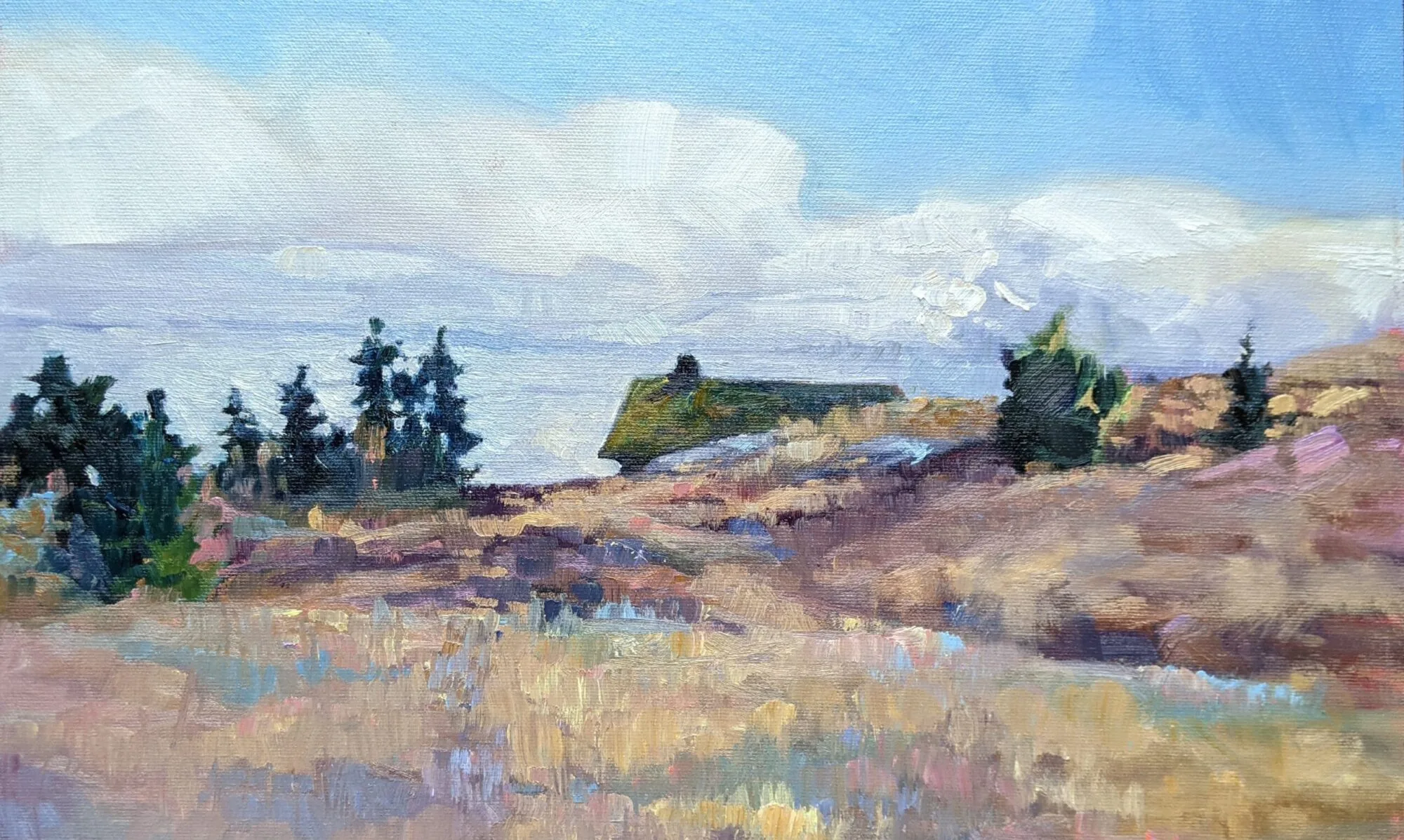
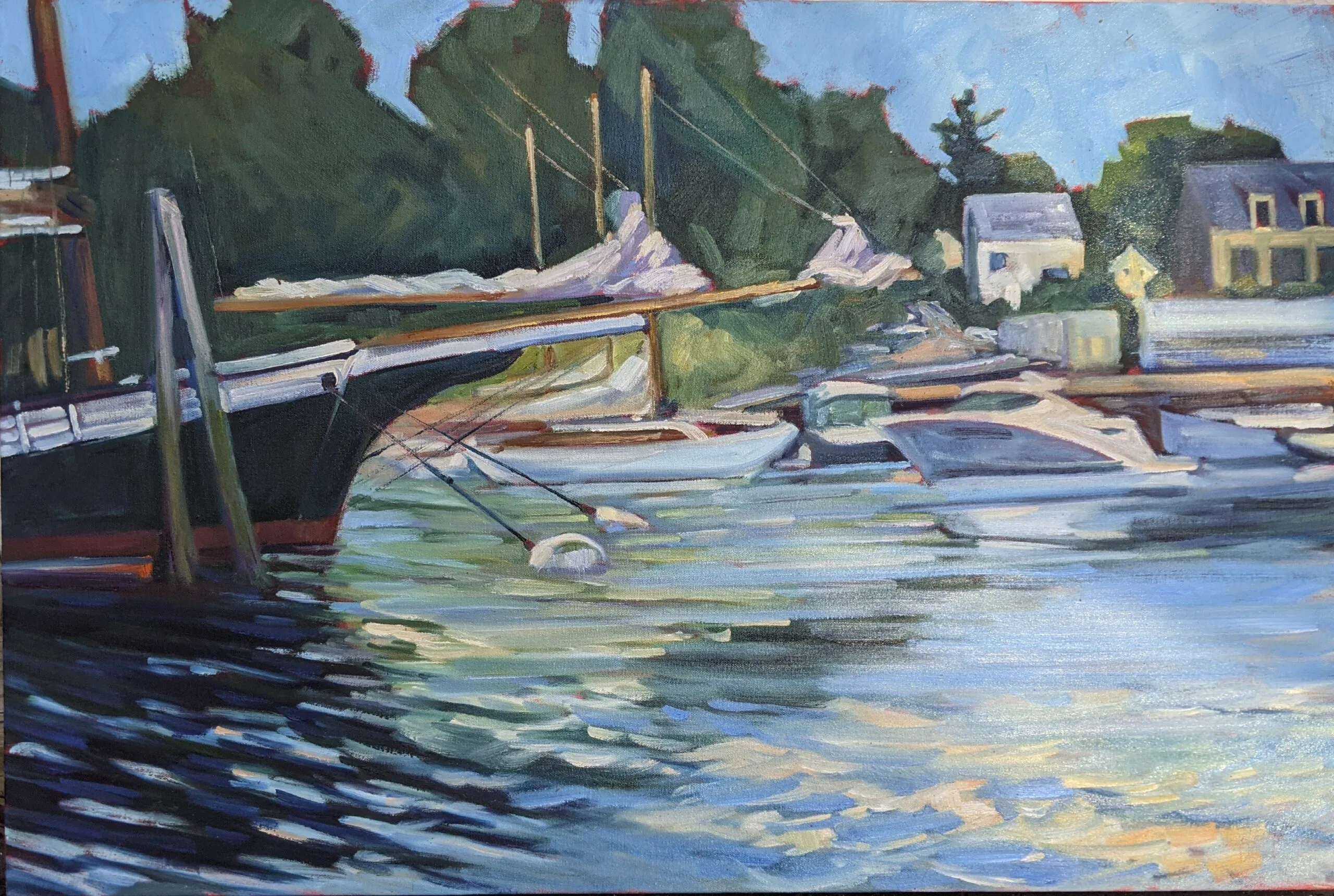
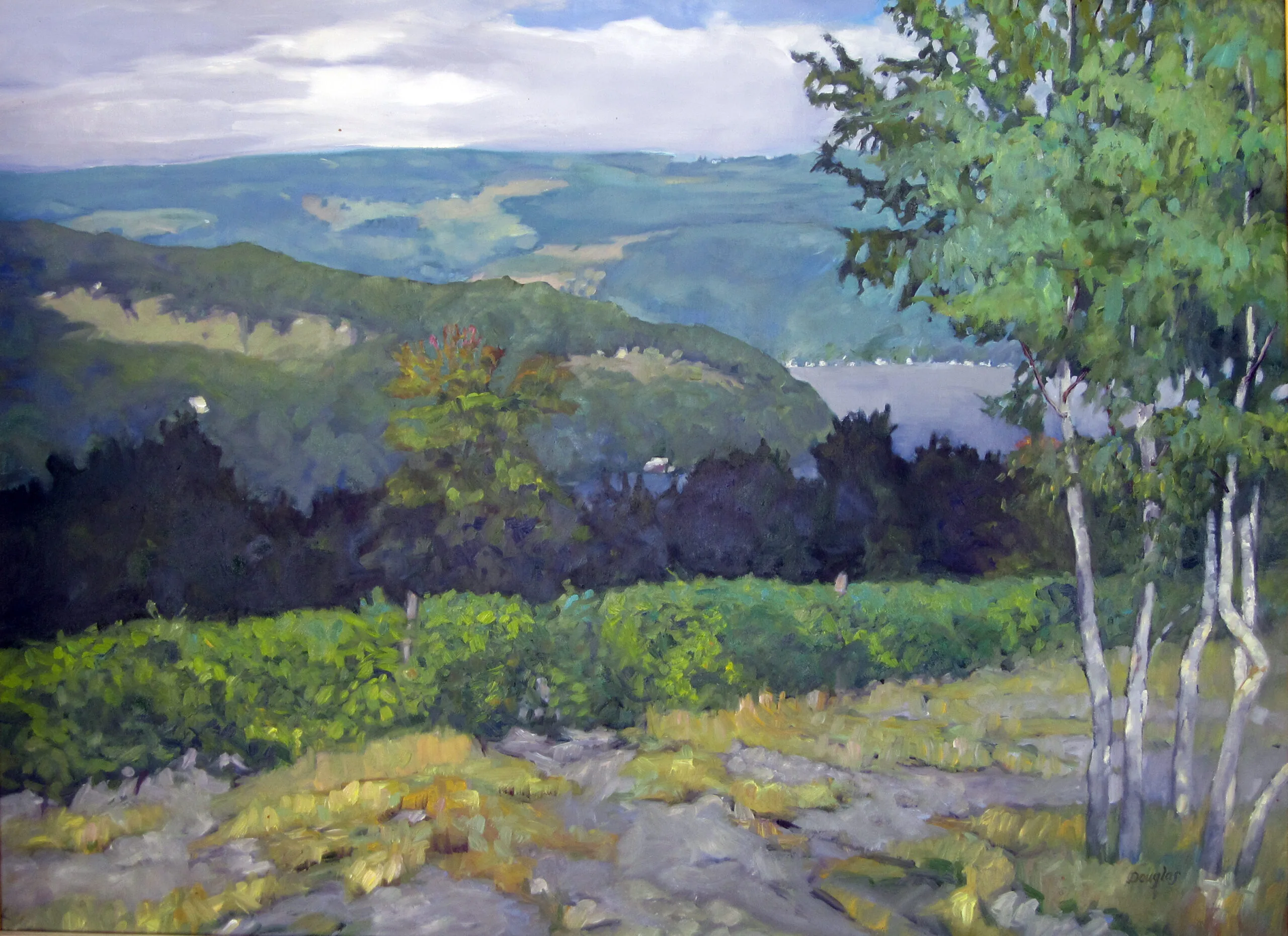
I can beat a plein air painting to death as well as the next artist, so it helps to occasionally remind myself of the difference between plein air and studio paintings.
A quick note before we get into it
It’s time to claim your spot in Advanced Plein Air Painting, July 13-17 in Rockport, ME. If you have any questions about whether you fit into an advanced class, just ask!
In the field
Outdoors, I’m working against time. The light shifts, the shadows slide, the clouds roll by. I’m trying to capture something fleeting, and that forces me into clarity and economy of effort. I simplify, make snap decisions, commit. If I’m indecisive, it’s all over.
A good field sketch isn’t about detail; it’s all structure. It locks down the value pattern, major shapes and intent. It answers the essential question: what is this painting about? If you solve that outdoors, you’ve already done the hardest part.

In the studio
I almost never revise my plein air paintings back in the studio, because I can improve them right into dust.
In the studio, everything changes. Time expands. I fuss and second-guess. It’s easy to lose the freshness of the original idea because the germ of the painting is no longer in front of me. It’s very difficult to avoid reinventing my idea.
I’d rather use plein air sketches to inform and define separate studio paintings. That allows plein air to be fresh and studio work to be refined.
Photos lie
There was a reason for the decisions you made in the field. Your value structure, focal points and big shapes all happened because something in the real world caught your imagination. You can’t duplicate that from a photo; your snapshots are an aide to memory, nothing more.
Photos encourage us to bore (in both senses of the word) into too much detail. That’s especially true when you have the leisure to overwork, to describe every branch and leaf.

Vitality or polish?
If your field sketch was strong enough, edges can ultimately be clarified, color deepened, drawing corrected. You can push temperature relationships, unify passages and make sure the eye moves cleanly through the composition. But the raw, living thing you caught outdoors should never be overwritten. That sacrifices vitality for polish.
Frederic E. Church traveled throughout New England, New York, Virginia and Kentucky painting. He made two trips to South America and went to Mexico, Newfoundland, Labrador, the Middle East and elsewhere. He took his field sketches back to his studio and created monumental paintings that made him one of the most successful artists in American history.
Many painters get lost trying to compromise between plein air and studio painting techniques. The field demands boldness; the studio demands sophistication. To carry vitality into the studio, you cannot destroy the thing you loved. It’s the map that will give your studio paintings direction and life.
That’s exactly what I focus on in my From Field Sketch to Final Studio Work Zoom class (Tuesday evenings, June 2, 9, 16, 23, 30, July 7). We break down the process step by step so you stop fighting your own paintings and start building on them.
Painting clouds
Of course, structure is only part of the story. If you can’t handle moving elements like water or shifting forms like clouds, your field work will always feel incomplete. That’s why I’m teaching a focused session on Painting Clouds (Monday evenings, June 22, 29 and July 6). The subject forces you to simplify, prioritize, and paint with authority. Both classes are really about the same thing: learning to make decisions that hold up from first sketch to final brushstroke.
I have just two workshops left in 2026! Reserve your spot:
- New! Color Clinic 2026 | Rockport, ME, October 3-4, 2026
- New! Composition Week 2026 | Rockport, ME, October 5-9, 2026
- High-Desert Light & Monumental Form | Sedona, AZ, Apr 26, 2027 – Apr 30, 2027
Can’t commit to a full workshop? Work online at your own pace: