Monday Morning Art School: where do I start?

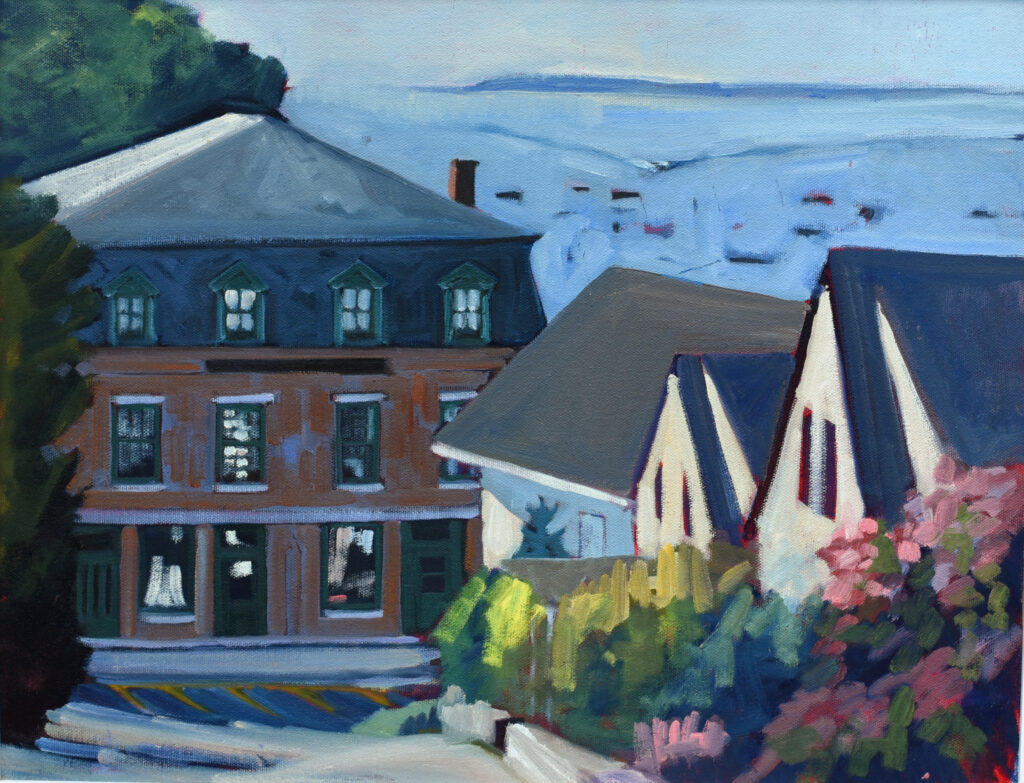
Downtown Rockport, 14X18, oil on archival canvasboard, framed, $1594 includes shipping and handling in continental US.

“I want to learn to paint but have no idea where to start,” a reader wrote. That’s a common problem, one that can express itself with questions about cost or not knowing what medium to pick.

First, the pernicious lie of talent

I’ve written extensively about talent, but I’ll just note that in art, as in everything, success is 99% perspiration and 1% inspiration.

How to choose a medium

There is no one ‘best’ medium. I’ve had students work in oils, acrylics, watercolor, gouache, pastel and even egg-tempera. Every painting medium has the potential to be highly-detailed or highly-expressive.
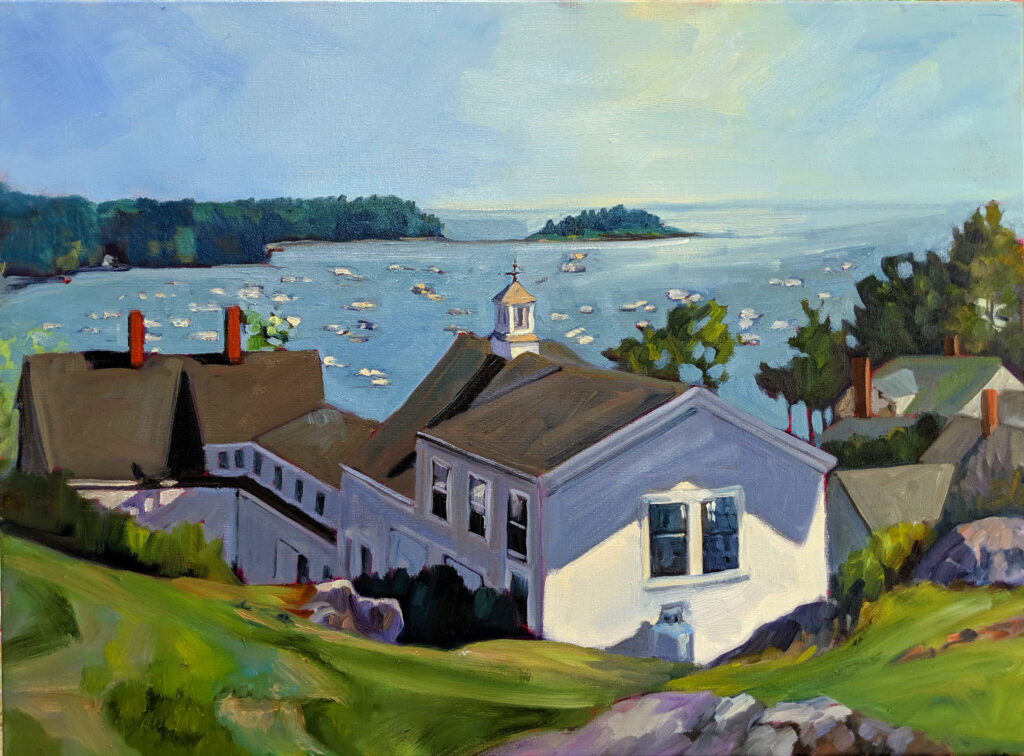
Home Port, 18X24,, $2318 includes shipping and handling in continental US.

I usually ask students what painters and paintings they like, and work back from there. A person who is gaga over Edgar Degas’ pastels should probably consider pastels; a person who loves the luminosity of Wolf Kahn’s oil paintings need look no farther than oil paint.

There is no one ‘safer’ medium, because the hazards of artists’ paints lie in the pigments. The same pigments are used across all mediums, and the risk has declined considerably. Industry has brought us many safe analogues for older, more toxic pigments.

Oil painters once used turpentine as solvent, but that has been replaced by odorless mineral spirits. Acrylic polymers have low toxicity, but we dump the residue into our sewers and their environmental impact is an area of ongoing research. Watercolors and gouache use tap water as well, but they aren’t plastics; their health and environmental impact is nil. Pastels are often sold in sets without the individual pigments identified. For that reason, they shouldn’t be used without gloves or a skin barrier. Where there’s pastel dust, a good HEPA filter is imperative. All of these risks are manageable, but they do require consideration.

There’s no one medium that’s cheaper over the long haul. Whereas oil painters go through more paint, watercolor brushes are more expensive. In my experience (and I’ve used them all) the costs average out over time.
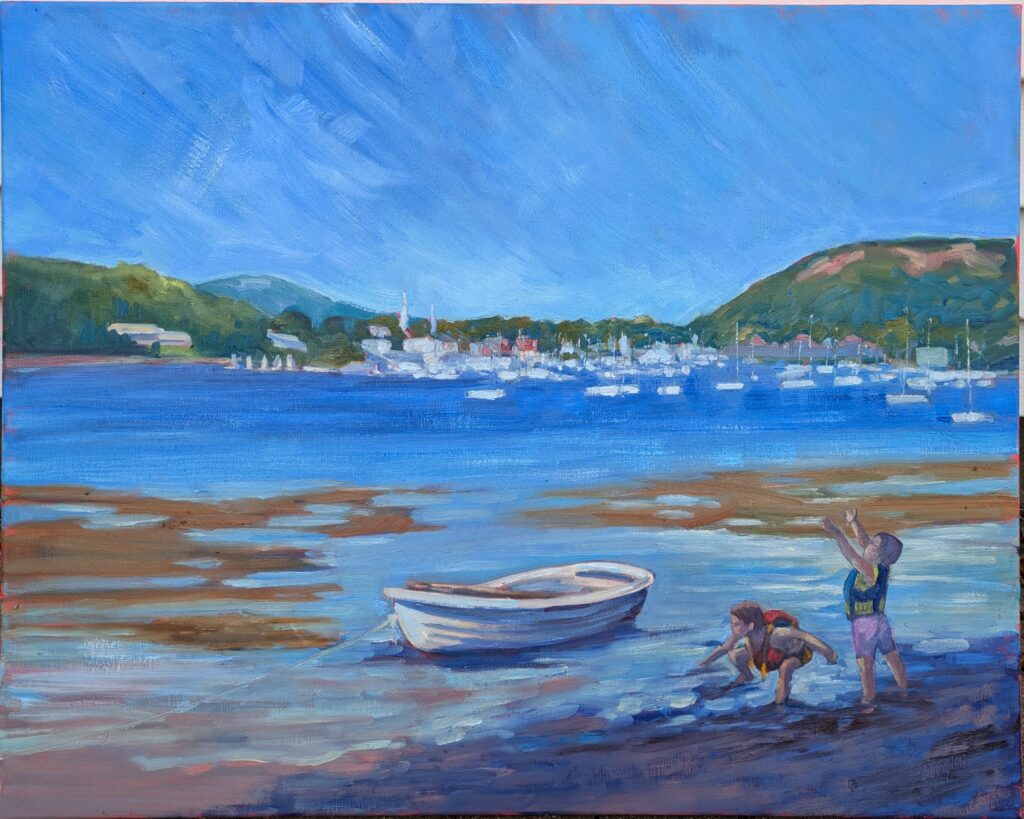
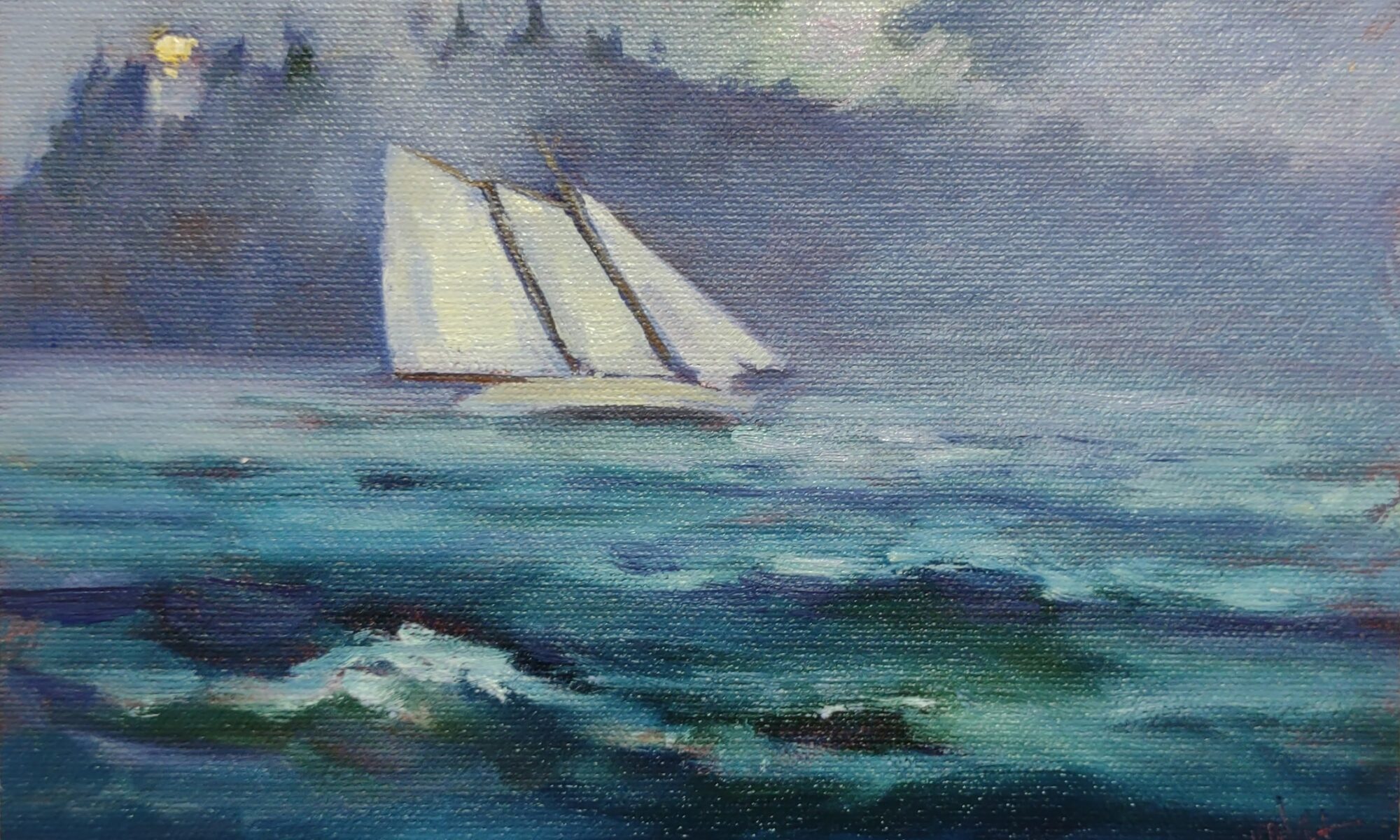
Camden Harbor from Curtis Island, oil on canvas, $2782 unframed includes shipping and handling in continental United States.

Where do I start?

I’m happy to share my supply lists, which you can find in this blog post. However, what you need depends on what you’re trying to do. For example, studio painting uses the same pigments and brushes as plein air, but the easel requirements are very different.

Starting to learn to paint can feel overwhelming. There’s fear of doing it wrong, of wasting time or materials or of making something that doesn’t match the vision in our heads. Don’t let that last one scare you; I’ve been painting for almost sixty years and have never quite matched the vision in my head.

One of the rookie errors of learning to paint is to try to buy your way to success. Art supply companies make their millions on impulse buyers. That can take the form of paints and brushes you don’t need, or it can take the form of cheap materials that will never do what you want them to do.
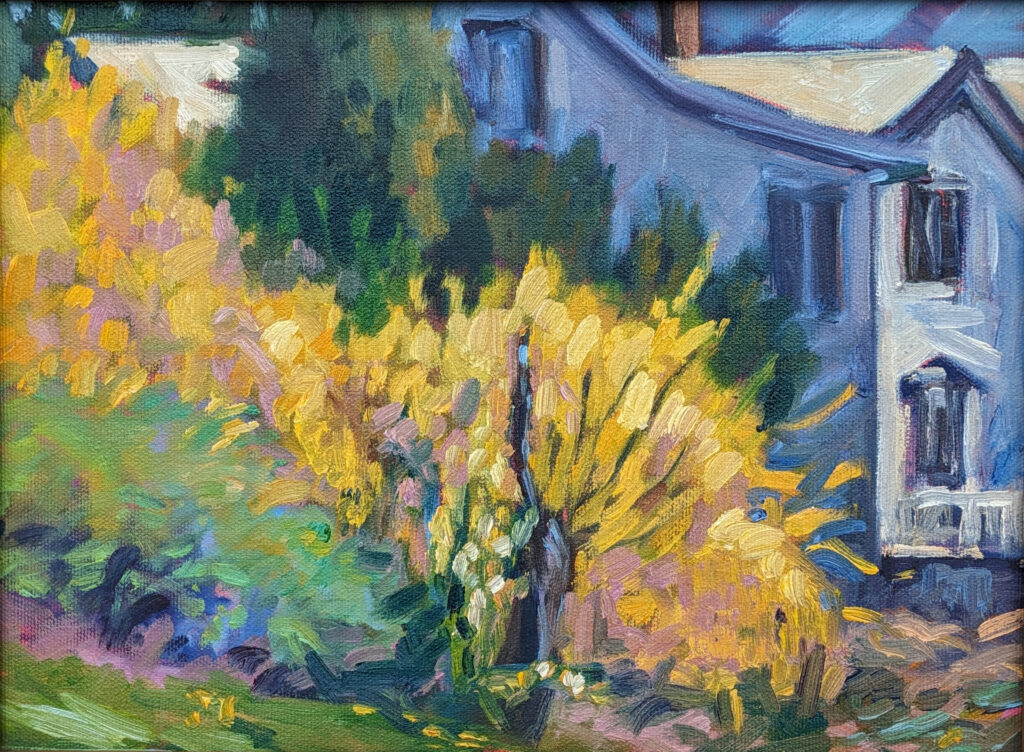
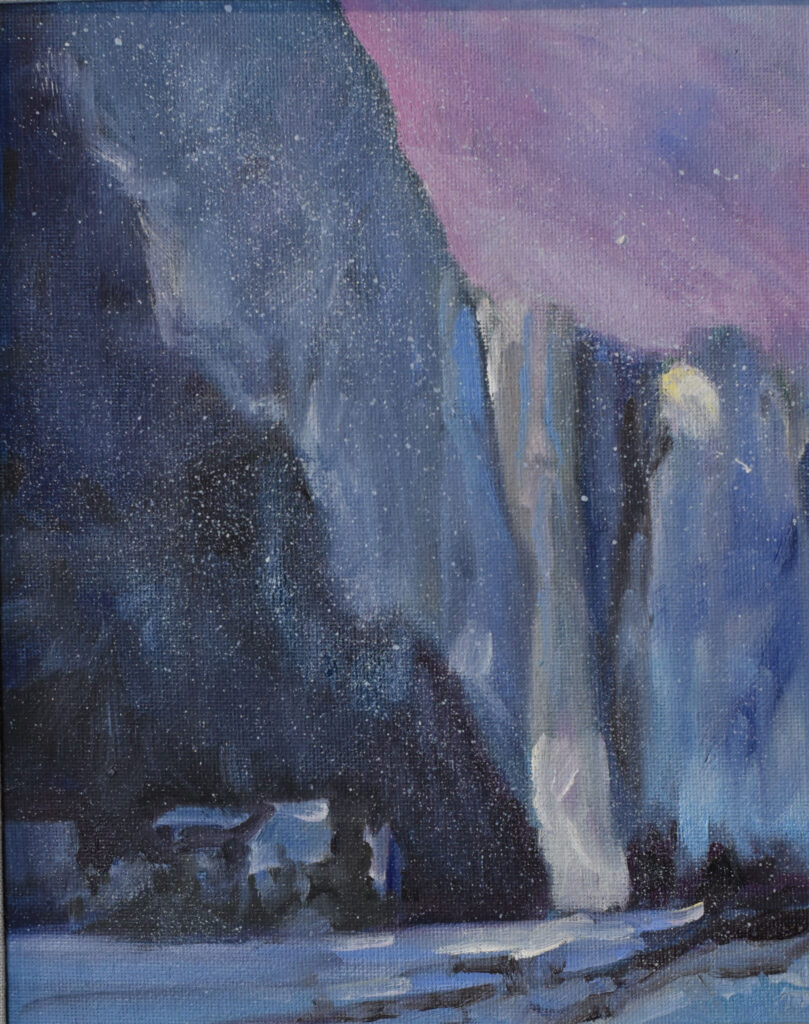
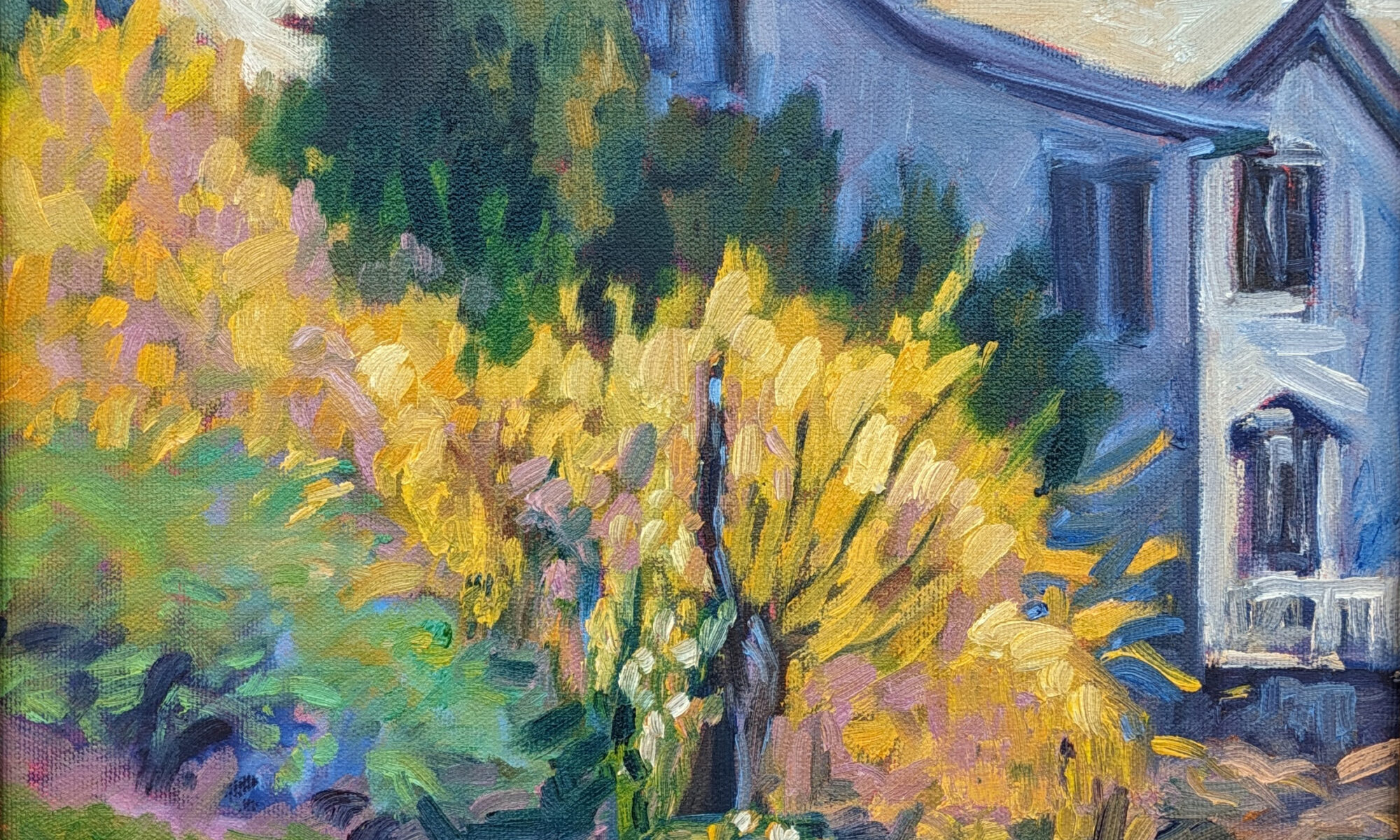
Forsythia at Three Chimneys, oil on archival canvasboard, $869 framed includes shipping and handling in continental United States.

I believe you will save money and time by taking classes first. Above all, don’t agonize. I’ve made a million dumb mistakes, but they’re part of the learning process.

I used to have a student who started every painting by telling me, “I’m going to give this to ___ for ___.” It wiped her out, every single time. We should always start with the process, not the result. Every painting we do is practice for the next one that comes along.

Registration is now open for workshops in 2026! Reserve your spot:

Can’t commit to a full workshop? Work online at your own pace:
Seven Protocols for Successful Oil Painters

Monday Morning Art School: how to choose the right art supplies

The Late Bus, oil on archival canvasboard, 6X8, $435.00 framed, includes shipping and handling in continental US.

L is the leader of a small rebellion among my students. They don’t like the constraints of single-pigment paints. Their motto is, “In the absence of a good idea, let’s buy art supplies.” Our last paint conversation went like this:

“That green cannot be mixed with the colors on your supply list.” L then pulled out a tube of permanent green recently purchased at the art supply store.

“Okay, what are the pigments in that tube?” (On reputable paints, there are tiny alphanumeric codes that starts with the letter P. These are more important than the poetical names on the tubes.)

“PG7+PY3…”

“And what are they when they’re at home?” I asked.

“Chlorinated copper phthalocyanine and arylide yellow.”

“Which are…” I lead.

“Phthalo green and Hansa yellow.”

“So why would you buy a mix of two pigments when you already have Hansa yellow on your palette?” I ask. And then demonstrated that the painting in question was mixed with phthalo blue and Hansa yellow in the first place.

The Logging Truck, oil on archival canvasboard, 16X20, $2029.00 framed includes shipping and handling in continental US.

The more experienced you are, you less stuff you buy

Buying excess art supplies can be fun, or it can be a form of flailing around. It can be a search for something that will elevate your art. It can also be displacement behavior; it’s simply easier than buckling down, especially when what’s on your easel isn’t going well. I speak from experience here. I have a large studio, and way too much of it is filled with stuff I never use.

How to choose the right art supplies

Start by knowing what it is you want to do. While this seems obvious, I have lots of art supplies in various media I’ll never pick up again. To a point, experimentation is good, but it can also be expensive.

Lonely Cabin, 8X10, oil on archival canvasboard, $652 includes shipping and handling in continental US.

How much are you willing to spend?

Art supplies range widely in price. While quality materials are expensive, it’s not true that the best materials cost the most. For example, while I paint with Gamblin’s artists oil range, I’m happy recommending their 1980 range as well. Likewise, I think Princeton Snap and Neptune line brushes are excellent and do not cost a fortune. And nobody who’s just learning needs a top-end archival oil-painting board.

Less is more

Three good brushes are worth more than a dozen very cheap ones. Likewise, you can get away with six colors in watercolor and seven in oil paint (those paired primaries plus white), if they’re decent quality paints. A set of 18 cheap paints is a very bad bargain.

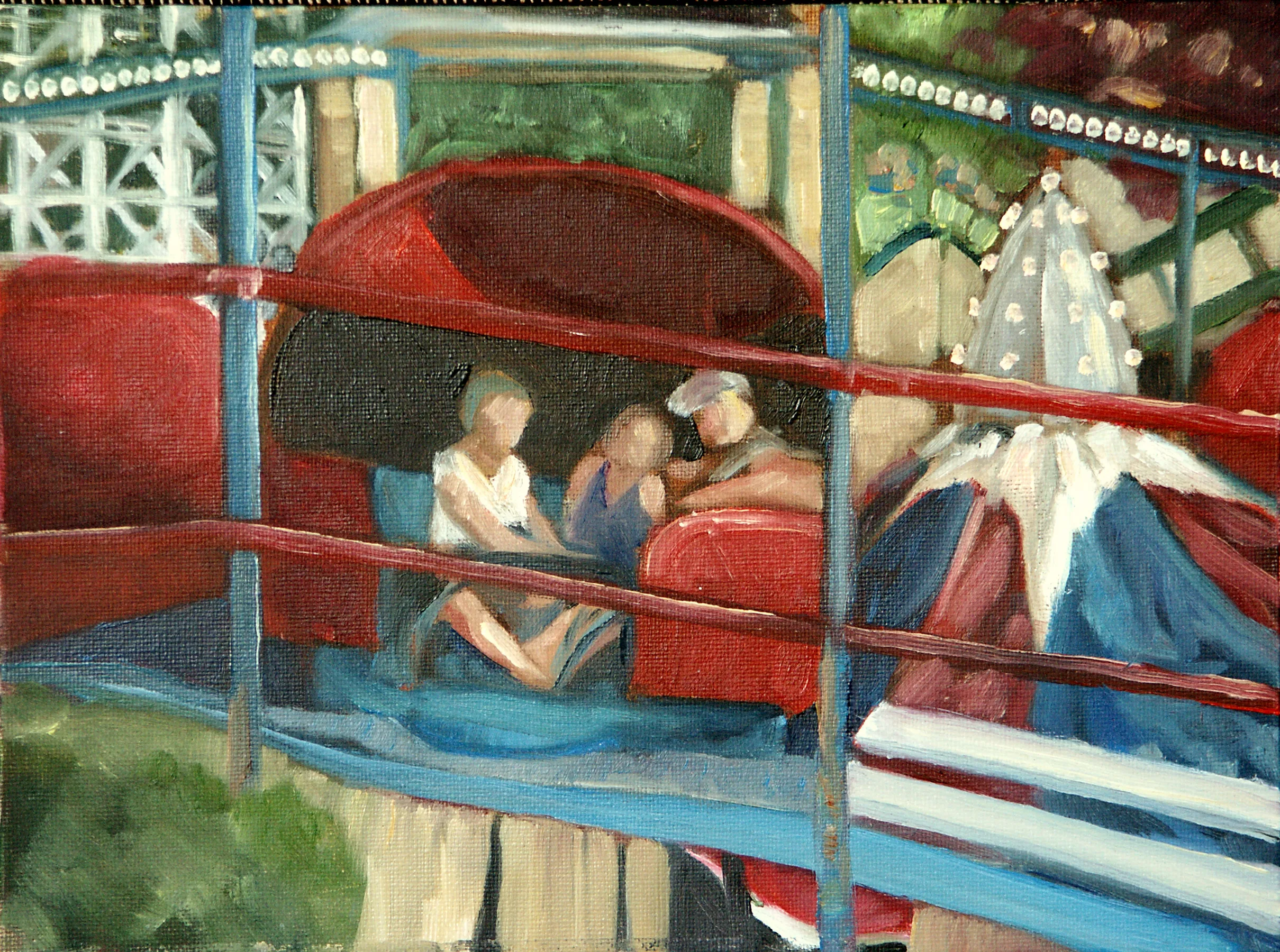
Tilt-A-Whirl, oil on archival canvasboard, $869 framed includes shipping and handling in continental US.

Research and Compare

I’m happy to share my supply lists with interested painters. (Here they are for oils, watercolors, pastels, and acrylics.) These are a moving target; my students give me feedback and I adjust them over time. Likewise, you should read reviews and ask for recommendations from other artists.  Look for online resources and tutorials that can help you learn about different materials. And never feel pressured to buy everything at once.

This spring’s painting classes

Zoom Class: Advance your painting skills (whoops, the link was wrong in last week’s posts)

Mondays, 6 PM – 9 PM EST
April 28 to June 9

Advance your skills in oils, watercolor, gouache, acrylics and pastels with guided exercises in design, composition and execution.

This Zoom class not only has tailored instruction, it provides a supportive community where students share work and get positive feedback in an encouraging and collaborative space. 

Zoom class: Signature series

Tuesdays, 6 PM – 9 PM EST
April 29-June 10

This is a combination painting/critique class where students will take deep dives into finding their unique voices as artists, in an encouraging and collaborative space. The goal is to develop a nucleus of work as a springboard for further development.

Registration is now open for workshops in 2026! Reserve your spot:

Can’t commit to a full workshop? Work online at your own pace:
Seven Protocols for Successful Oil Painters

Traveling with more than one medium

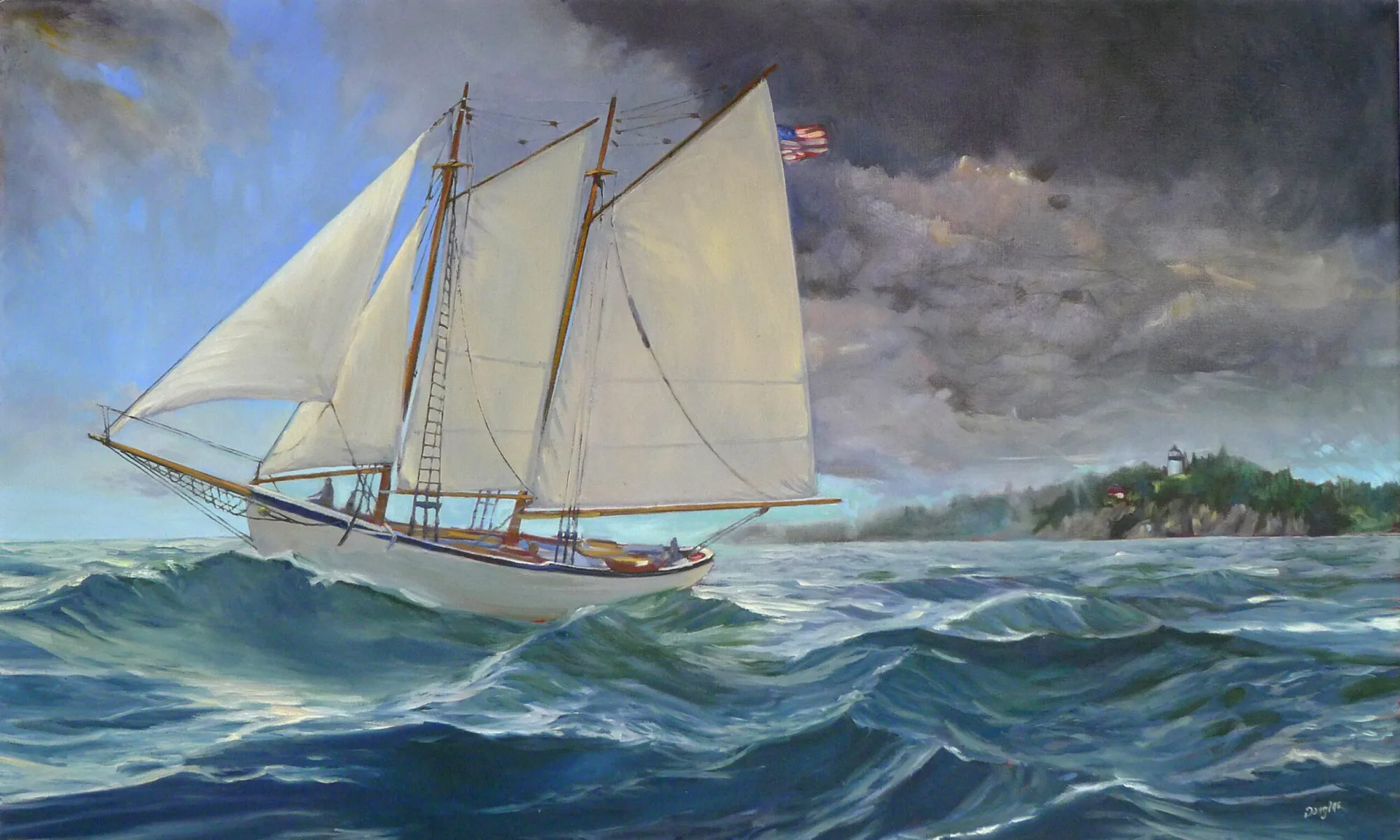
American Eagle rounding Owls Head, 6×8, oil on archival canvasboard, $348 unframed.

One of my tasks this week was booking my air travel to my workshops in Sedona, AZ and Austin, TX in March. The price of rental cars and airfare have both dropped substantially from last year. That makes travel easier on everyone.

Often, workshop students will ask me about bringing a second medium with them. I encourage that. Watercolor and gouache kits are small and you can easily slip them in a bag with your other tools.

Mark Gale, who will be my monitor in Austin, recently bought a travel watercolor kit. At first, he was hopelessly confused by it; now he is thinking of bringing it on his next RV trip. It’s portable and dries fast. Some mediums are more appropriate for specific purposes than others.

Painting in multiple media has a loosening effect in your work. Once you get past the shock of thinking about values ‘backwards’, moving between oil and watercolor will lighten up your brushwork. Pastels can teach you to lay up colors in sparkling fields like an Impressionist, providing you don’t get sidetracked into blending. Acrylics will help you learn to not get bogged down in the weeds of modeling.

The Wave, 9X12, oil on archival canvasboard, $869

However, you have to carry this stuff

Each of these, however, requires its own set of tools and substrates, so you can’t bring them all. When I travel to workshops, I bring two suitcases. My carry-on has my personal belongings. My checked bag has my tools, canvases and paints.

Travel is always a compromise between canvas size and practicality. The less variation in size, the easier it is to pack. I like to paint big, but space is at a premium. Knowing I might bring home wet paintings, I’ll limit myself to 11/14 and 9/12. I’ll also bring a 9/12 Arches Watercolor Block and my watercolor kit.

Unless I have multiple pastel students, I don’t carry my full pastel kit. It’s too cumbersome. Instead, I can bring a small kit of NuPastels and some sanded paper. That’s enough to get my point across.

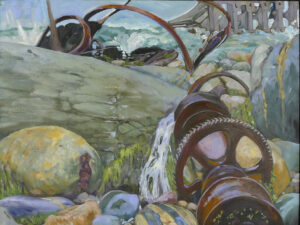
Wreck of the SS Ethie, oil on canvas, 18X24, $2318 framed.

Oil painters who travel should be familiar with Safety Data Sheets (SDS). The flash point is in section nine, Physical and Chemical Properties. This tells you what you can and cannot fly with. A flash point at or below 140° F (60° C) indicates it is a flammable liquid and may not be carried in airline baggage. You’ll have to hunt, but all vendors are required to provide SDS for every product.

Turpenoid has a flash point of 129° F (54° C), so it can’t fly. Gamsol’s flash point is 144°F (62°C) so it’s legal. I buy a fresh small bottle and wrap it in its SDS with the flash point highlighted. Remember to completely empty and clean your brush washing tank before flying.

Most painting mediums have drying agents added. This gives them a flash point of under 140° F, so they can’t fly. I’ve switched to using linseed oil instead. Again, I wrap the bottle in its SDS with the flash point (500° F) highlighted.

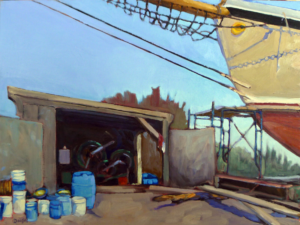
American Eagle in Drydock, 12X16, $1159 unframed.

A small tube of oil paint is 37 ml. or 1.25 oz, so is safe for your carry-on. A large tube is 150 ml., or 5 oz. It must be in your checked luggage or it will be confiscated. I pack this handy label with my oil paints.

Watercolor tubes are tiny and harmless, but the only trouble I’ve ever had flying with paints was with watercolors. Now I squeeze out what I need for the week into a palette and leave the tubes at home.

It’s very easy to forget to wash your oil painting brushes on the road, and dried brushes are unredeemable. If you can do nothing else, rinse them thoroughly in solvent and wipe them down until you can treat them properly. I sell a brush soap that I can recommend without hesitation; my daughter makes it for me.

There are several portable painting racks available, but when painting on the road, I simply lay my paintings out on a flat surface, with newspaper underneath. Unframed work gets separated with waxed paper, taped together, and packed in my checked luggage. If the paint isn’t too thick, it won’t be harmed.

Registration is now open for workshops in 2026! Reserve your spot:

Can’t commit to a full workshop? Work online at your own pace:
Seven Protocols for Successful Oil Painters