Why care about composition?

Forgotten Man, 1937, Maynard Dixon, courtesy Brigham Young University Museum of Art

Composition is the quiet engine of a successful painting. It’s the part viewers feel before they start thinking rationally. It’s also the part painters often skip past too quickly. I’m busy writing my upcoming Zoom class, Trust the Process (making technique tell the story you want to tell), and of course composition is a big part of that.

Rouen Cathedral, Full Sunlight, 1894, Claude Monet, courtesy MusΓ©e d’Orsay

The first pillar of composition is harmony

Harmony in notan is about space cuttingβ€”the abstract division of the picture into dark and light shapes. This is not strict value modeling or chiaroscuro. It’s closer to pattern and rhythm. When Whistler painted Symphony in White, No. 2, he wasn’t describing light so much as arranging shapes.

Harmony in line is about the boundaries between shapes and the relationships between those boundaries and the surrounding space. The Charioteer of Delphi is a masterclass in this. Even in stillness, the interlocking lines guide the eye with clarity and restraint. Strong line harmony keeps a painting readable from across the room.

Harmony in color depends on hue, saturation, and value working together. Monet’s Rouen Cathedral series shows how disciplined color harmony can create vastly different moods using the same motif. Color isn’t decoration; it’s structure.

Vitruvian Man, c. 1490, Leonardo da Vinci, courtesy Gallerie dell’Accademia

What’s my number one rule?

If you’ve taken any of my classes, you’ve probably already answered, β€œDon’t be boring!” All rules can be broken, but only once you know what they are. Jacques Henri Lartigue’s Cousin Bichonnade works precisely because it bends expectations with confidence. Predictability is the real enemy, and that means being unpredictable even to yourself.

Dividing the frame in interesting ways helps avoid that trap. The rule of thirds is just the very beginning. There’s no law that says you can’t put the subject smack dab in the center of your composition. Look no farther than Leonardo da Vinci’s Vitruvian Man to see the power of symmetry and geometry in design.

Maynard Dixon’s Forgotten Man and Abandoned Ranch demonstrate how restraint, scale, and placement create emotional gravity. Both tell the story of the Great Depression indirectly, yet powerfully. Which brings us to focal points, which are different from the subject of a painting. Know what and where they are before you paint. Use contrast and line to support themβ€”and never park them on the edge of the canvas.

Before the Race, 1882–1884, Edgar Degas, courtesy The Walters Art Museum

Finally, consider the motive line, or kinetic line. It’s tied to the major area of focus, divides contrasting values, and must be complex and intentional. Edgar Degas and Winslow Homer both used motive line to energize still scenes, guiding the viewer through the painting with quiet authority.

Want to learn more about this? I’d love to have you join me for Trust the Process (making technique tell the story you want to tell), my live Zoom class designed to help you build a dependable, joyful, repeatable painting practice. We’ll dig into technique, creative decision-making and the mindset that frees you to paint with confidence. We meet Monday nights, 6-9 PM EST, starting on January 5, 2026. It’s suitable for all levels and all media. You can learn more here.

Registration is now open for workshops in 2026! Reserve your spot:

Can’t commit to a full workshop? Work online at your own pace:
Seven Protocols for Successful Oil Painters

Monday Morning Art Schoolβ€”trust the process

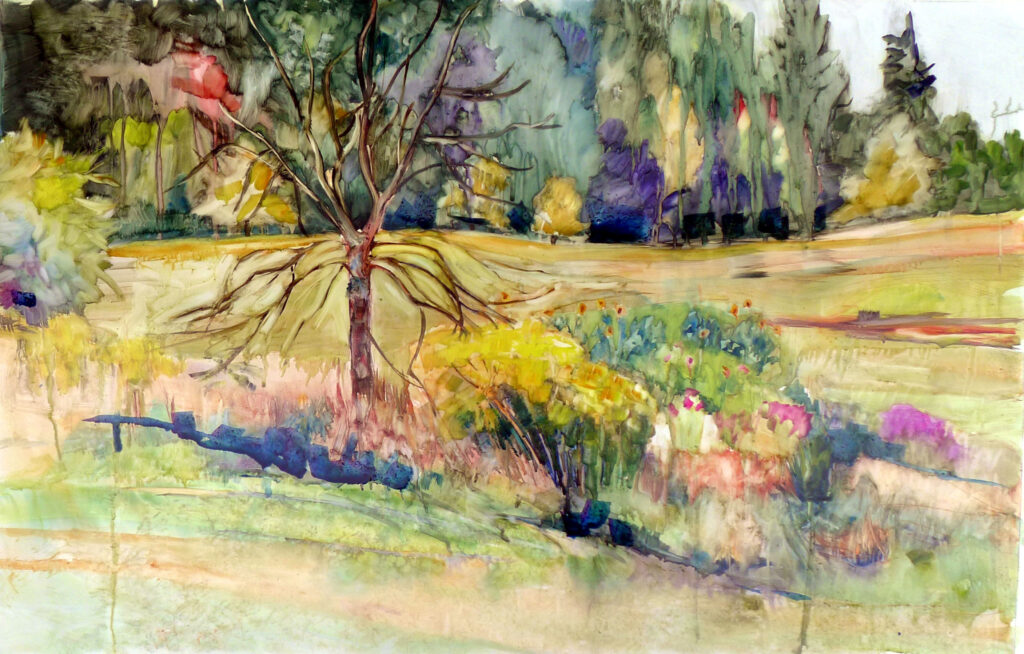
Rachel’s Garden, ~24×35, watercolor on Yupo, museum-grade plexiglass, $3985 includes shipping and handling in continental US.

I’m busy writing my upcoming Zoom class, Trust the Process (making technique tell the story you want to tell). That could easily be one of those glib phrases that’s so repeatable that it starts to lose its meaning. However, I think creative success depends on it.

Many painters define their artistic identity based on their successes or failures. But when our sense of worth gets tied to outcome, our confidence flickers: one day we’re geniuses, the next we’re frauds. That’s no way to sustain a joyful or productive painting practice.

Midsummer, 24X36, oil on canvas, $3,188 includes shipping and handling in continental US.

That’s the trap of outcome-based thinking. It’s familiar to almost everyone who’s ever picked up a brush. When we chase external validationβ€”awards, sales, praise and, especially, social-media likesβ€”we create a cycle of euphoria followed by despair. The highs are fleeting; the lows are dismal and feel interminable.

That whole rollercoaster puts our sense of artistic self-worth in the hands of someone or something else. No wonder so many artists live in states of constant insecurity. When others control the verdict, we never feel settled in our own skin.

How process helps

But process-based painting restores our sanity. Art isn’t the sum of our accolades; it’s our creative thinking made visible. What happens on the canvas is a reflection of curiosity, observation, and problem-solving, not a performance. When we remember that the painting process matters as much as the final outcome, the ground under our feet steadies. The joy of painting comes from the physical act of making marks, mixing color, exploring edges and taking risks, not from waiting breathlessly to see whether someone else approves.

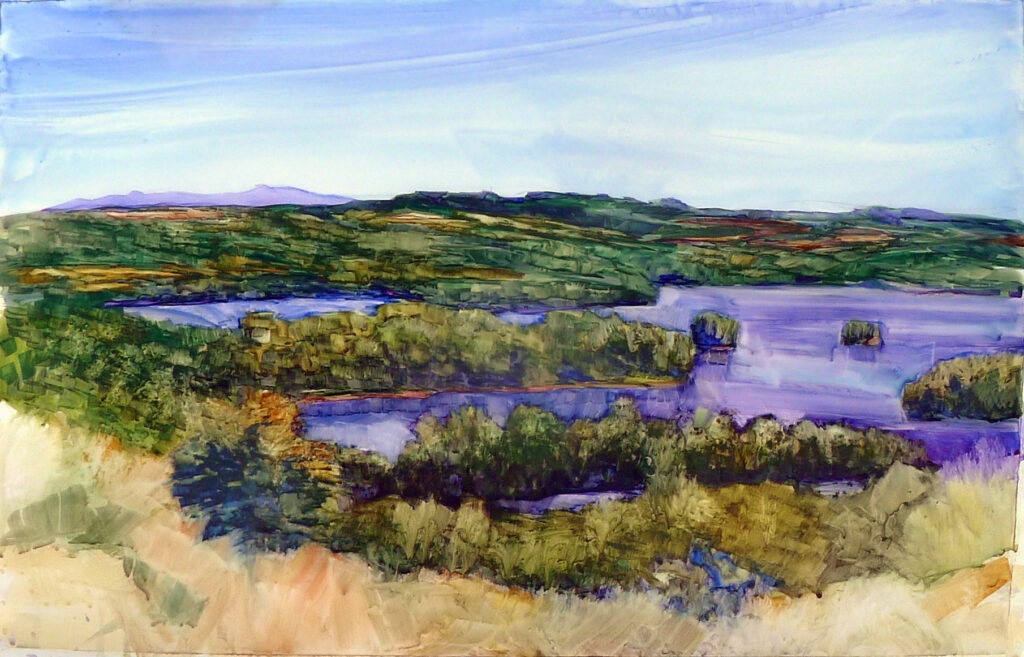
Bunker Hill overlook, watercolor on Yupo, approx. 24X36, $3985 framed includes shipping and handling in continental US.

Creativity requires relaxation. Exploration and play happen only when ego steps aside and you drop into the moment. If you’re tense, self-critical or worrying whether your painting will be good enough, you’ve already shut down the important part of your mind. The more you separate your ego from the results, the more freely you’ll work, and the better your painting will be. The joy, and the results, are all in the making.

A few decades ago, I had a student who started every class by announcing: β€œThis painting is for my mother’s birthday,” or β€œThis is going to be a housewarming gift.” I couldn’t talk her out of that, but it was consistently paralyzing. She worried about what the recipient would think and whether it would be good enough for the recipient. Sadly, her work never measured up to the expectations she set before she even picked up a brush. In trying so hard to make great paintings, she froze. She squeezed the growth out of them. Along with that went all her enjoyment, experimentation and play. There was no vitality and no joy. Not surprisingly, she eventually quit painting.

Blueberry barrens, Clary Hill, oil on canvas, 24X36, $3985 framed includes shipping and handling in continental US.

What does Trust the Process really mean?

Trust the Process means having a reliable, repeatable way of working that will carry you through the rough patches. When technique becomes second nature, you can stop thinking about it and start thinking creatively. That requires painting enough for mastery, but it also helps to understand how painting technique has developed over the last six hundred years. There really are right and wrong ways to do it.

When the mechanics fade into the background, you paint in the moment. And from that place, both skill and satisfaction grow naturally. The process is where art actually lives.

If this idea resonates, then I’d love to have you join me for Trust the Process (making technique tell the story you want to tell), my live Zoom class designed to help you build a dependable, joyful, repeatable painting practice. We’ll dig into technique, creative decision-making and the mindset that frees you to paint with confidence. We meet Monday nights, 6-9 PM EST, starting on January 5, 2026. It’s suitable for all levels and all media. You can learn more here.

Registration is now open for workshops in 2026! Reserve your spot:

Can’t commit to a full workshop? Work online at your own pace:
Seven Protocols for Successful Oil Painters

A live Zoom painting class that builds your skills… and your voice

Saskatchewan Grain Elevators, oil on archival canvasboard, 8X10, $522 includes shipping and handling in continental US.

This week, I’m writing my Zoom classes that start in January. That’s a task I always enjoy. If you want the Tuesday class, Where do I fit in? you’d better hit the plunger fast; there’s only one seat left. However, there are multiple openings in my Monday evening class, Trust the Process, which runs from January 5 to February 9, from 6-9 PM, EST. That surprises me, since I think it’s such a cool class.

It’s for anyone who has ever felt stuck, second-guessed every brushstroke or, worse, overpainted the same passage over and over without fixing anything. We’re going to discuss how process helps you avoid that. Here’s the content as I visualize it right now:

  • Foundations and what trust the process means;
  • Composition and value as structure for meaning;
  • Finding your voice through color and palette;
  • Brushwork, layers and risk-taking;
  • Narrative and storytelling in painting;
  • Developing a body of work with a cohesive voice.
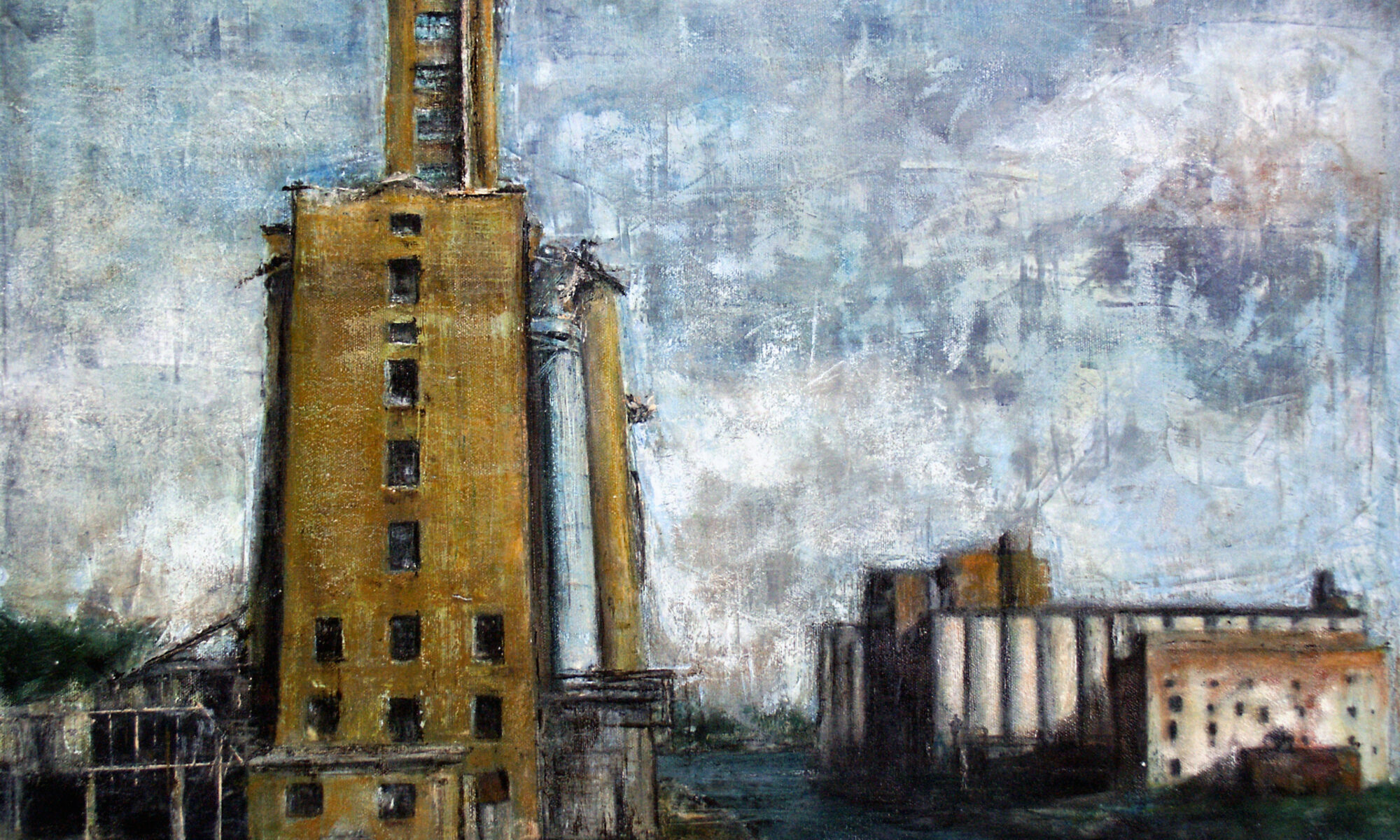
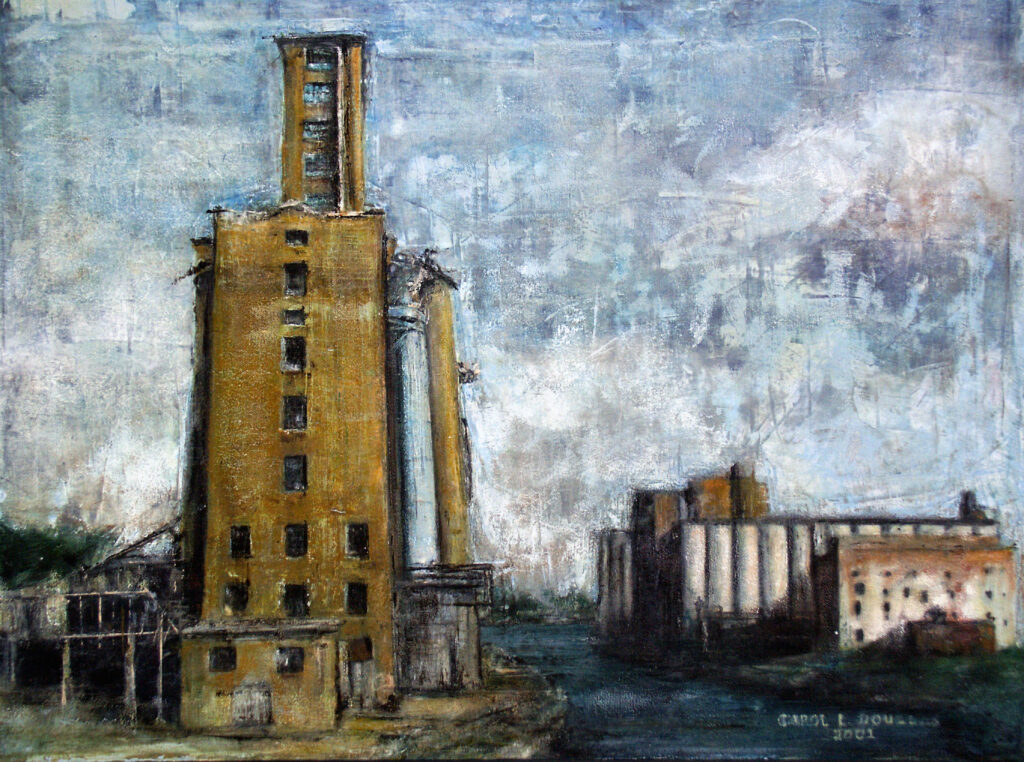
Grain elevators, Buffalo, NY, 18X24 in a handmade cherry frame. $2318 includes shipping in continental US.

In other words, this is a little different from my usual how-to classes; it’s a guide to developing a painting practice that supports your ideas instead of getting in their way.  My goal is to help you shift from wrestling with technique to making technique the handmaiden to personal expression. Over the weeks, we’ll walk through a flexible but structured methodology addressing how to begin a painting, how to build layers, andβ€”cruciallyβ€”how to know when to stop.

Whether you work in oil, acrylic, watercolor, gouache or pastel, you’re very welcome in this class. That goes for whatever level you’re currently painting at, too.

Why process matters

Painting is more than mere decorative art. Done thoughtfully, it is a deeply personal form of narrative. That doesn’t just mean obvious storytelling, either. Color, composition, brushwork, and layering are abstract concepts, but they work together to evoke and support emotional truth.

Although there’s an order-of-operations to painting, technique is more than just a rigid checklist. It’s a language through which you communicate meaning and emotion. Process is liberating, because it allows you to stop futzing around and concentrate on what you’re really trying to say.

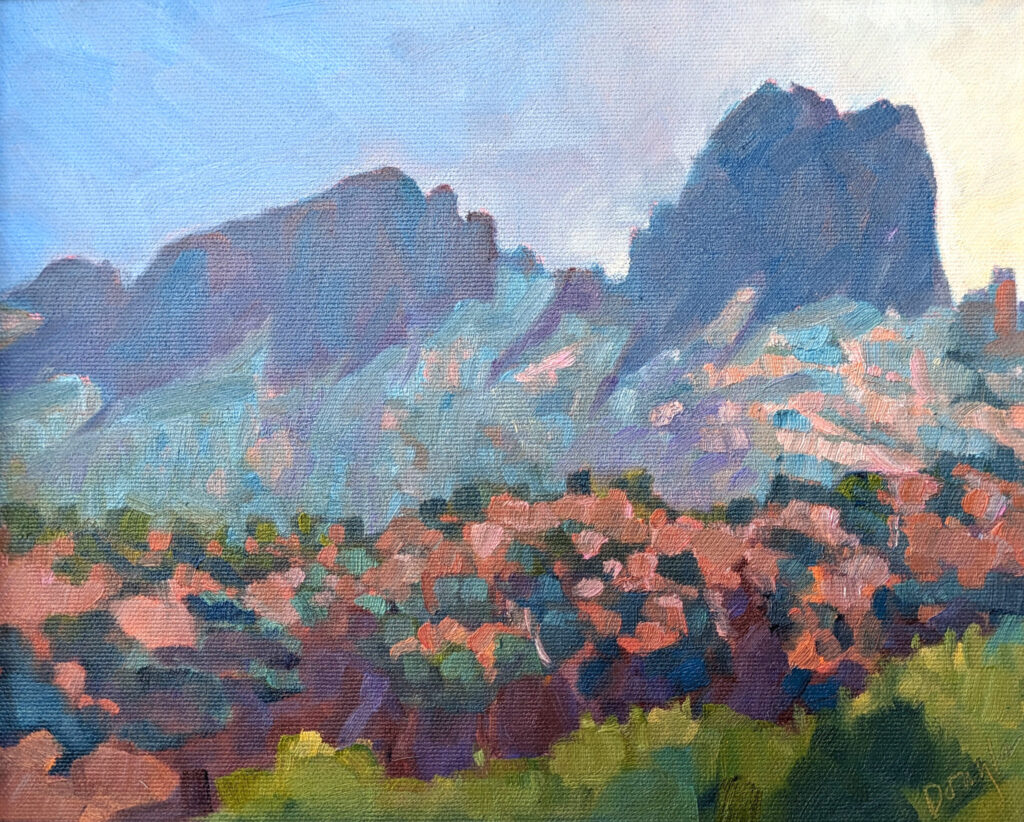
Mather Point at dawn (Grand Canyon), oil on canvasboard, 9X12, , $696 includes shipping and handling in continental United States.

Who is this class aimed at?

  • Beginners who are eager to learn foundational painting skills;
  • Intermediate painters who have good technique but tend to overthink every move;
  • Advanced painters who find themselves getting stuck at the same point without understanding what’s going wrong.

By the end of the course, you’ll walk away with:

  • A reliable painting workflow;
  • A more confident brush hand and color-mixing ability;
  • A deeper understanding of how process helps shape narrative and emotional impact;
  • A small body of work that reflect your personal creative voice β€” not someone else’s.
Pensive 8X10, oil on archival canvasboard, $522 includes shipping and handling in continental US.

Trust the Process offers real-time guidance and community, a space where you can experiment, ask questions and engage with me and your classmates while you paint. Whether you’re just starting out or you’ve painted for years consider stepping into Trust the Process. It isn’t about teaching you how to paint, but rather helping you build a painting practice that lets you tell the story you want to tell.

Registration is now open for workshops in 2026! Reserve your spot:

Can’t commit to a full workshop? Work online at your own pace:
Seven Protocols for Successful Oil Painters

Two new Zoom classes for January

Possum, 6X8, oil on archival canvasboard, $435 includes shipping in continental US.

Careful readers of this blog know that I completely mangled Wednesday’s post about upcoming workshops. I was in Boston with my husband for a medical procedure, feeling oh, so smug about my efficiency in the face of stress, and then, bam, I created a mess that took Laura half a day to fix.

I rather like these reminders that none of us are endlessly elastic; we’re all subject to human limitation.

Here are my new classes for January. I am very excited about them both, since they’re a deeper dive into painting than simple β€œlearn to paint.” The Monday class is about making room for the narrative, symbolic part of painting, by letting process guide the mechanical part. The Tuesday class is an exploration of the movements in art that have come before us, so that you, as a painter, can make informed choices about where you fit in the bigger world of painting.

If you have questions, feel free to email me.

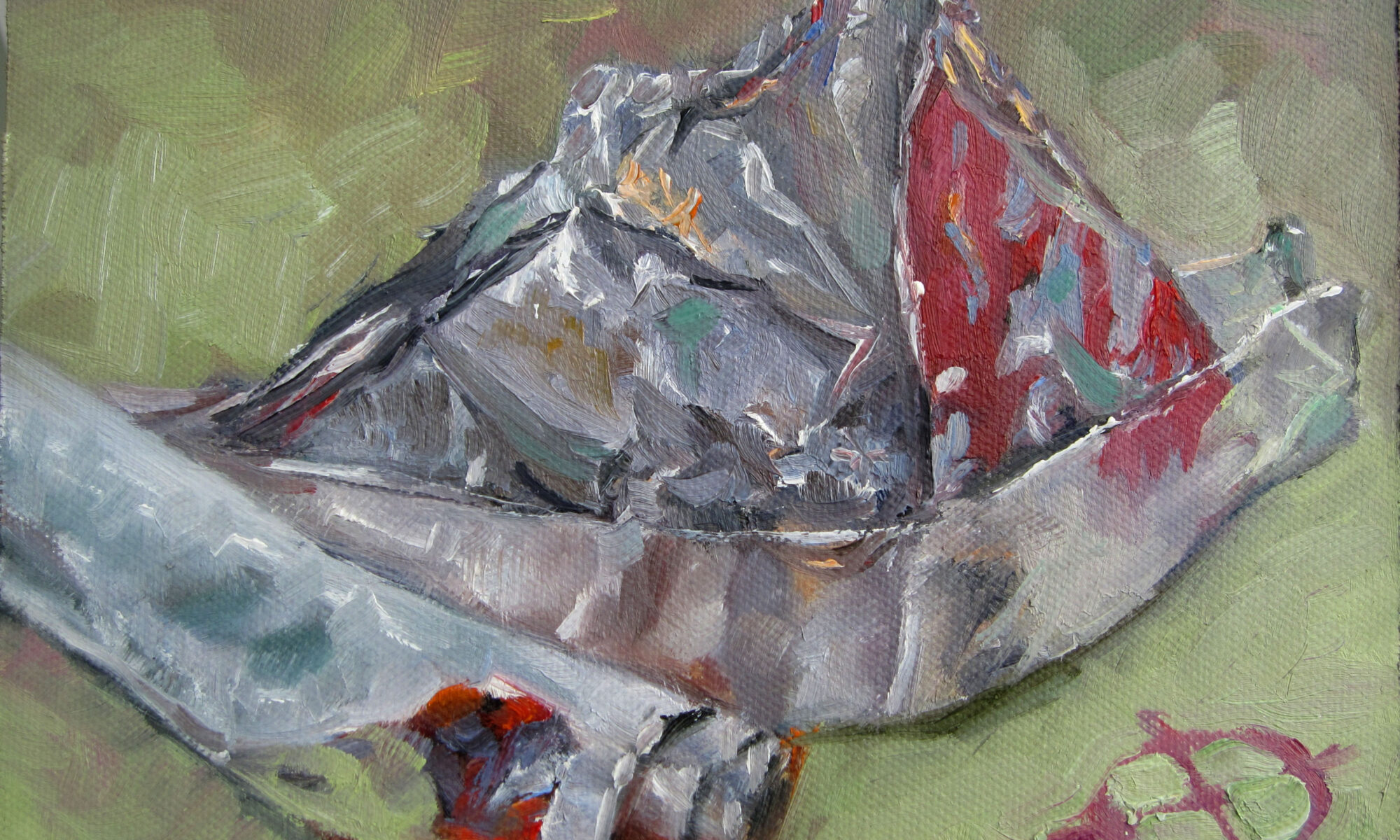
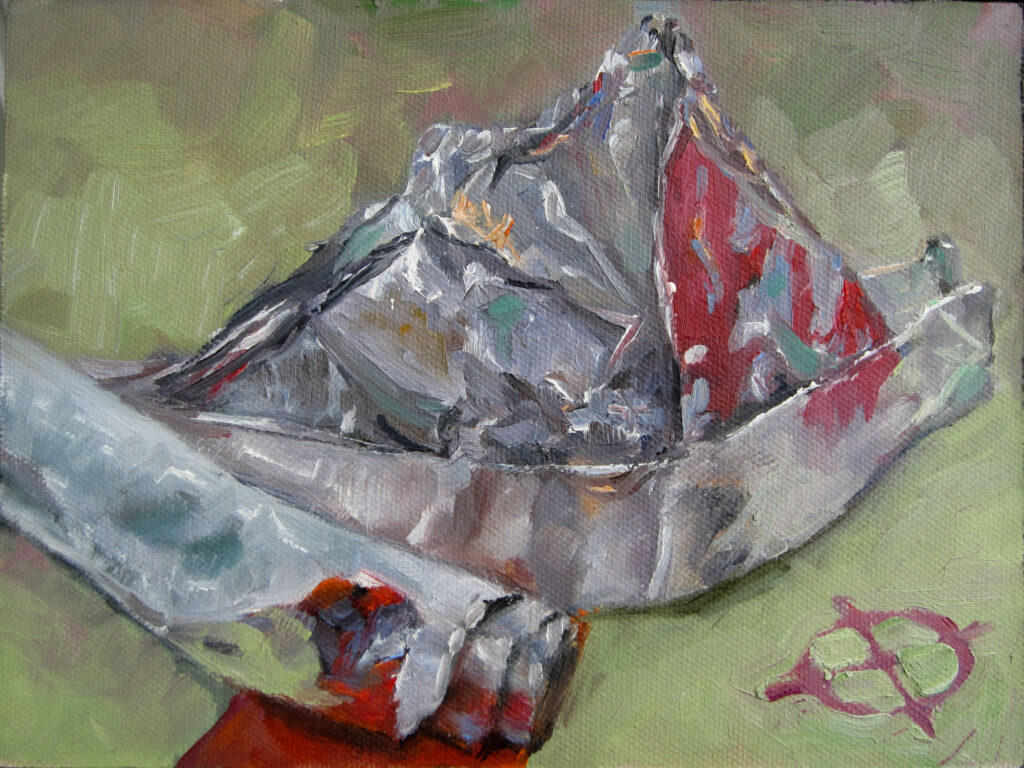
Tin Foil Hat, 6X8, oil on archival canvasboard, $435 includes shipping in continental US.

Trust the Process: making technique tell the story you want to tell

Monday evenings, 6-9 PM
January 5, 12, 19, 26
February 2, 9

In Trust the Process, we focus on building a painting practice that supports your ideas instead of getting in their way. This class is about finding repeatable methods that make painting feel fluid, approachable, and reliable. You can stop wrestling with technique and start communicating clearly through your work.

Each session guides you through a structured but flexible approach: a way of working that you can return to again and again. You’ll learn to set up a process that’s both efficient and freeing. That starts with how you begin a painting, to how you develop layers, to when you know it’s time to stop. The goal isn’t to make every painting the same, but to create a foundation that lets your ideas move easily from imagination to finished painting.

We’ll experiment with systems that encourage consistency, including color palettes that simplify decisions, brush techniques that build confidence and layering methods that create depth without overworking. By repeating certain moves and sequences, you’ll find that the how of painting becomes second nature, freeing your attention for the why.

You’ll leave with a repeatable workflow you can adapt to any subject or idea, and the assurance that your practice can sustain momentum over time.

Trust the Process is designed for painters who want to stop flailing around and work smarter, not harder. By refining your process, you’ll discover that creativity doesn’t require chaos. It just needs a dependable path β€” one you can walk every day, confident that your technique will always rise to meet your ideas. To register, click here.

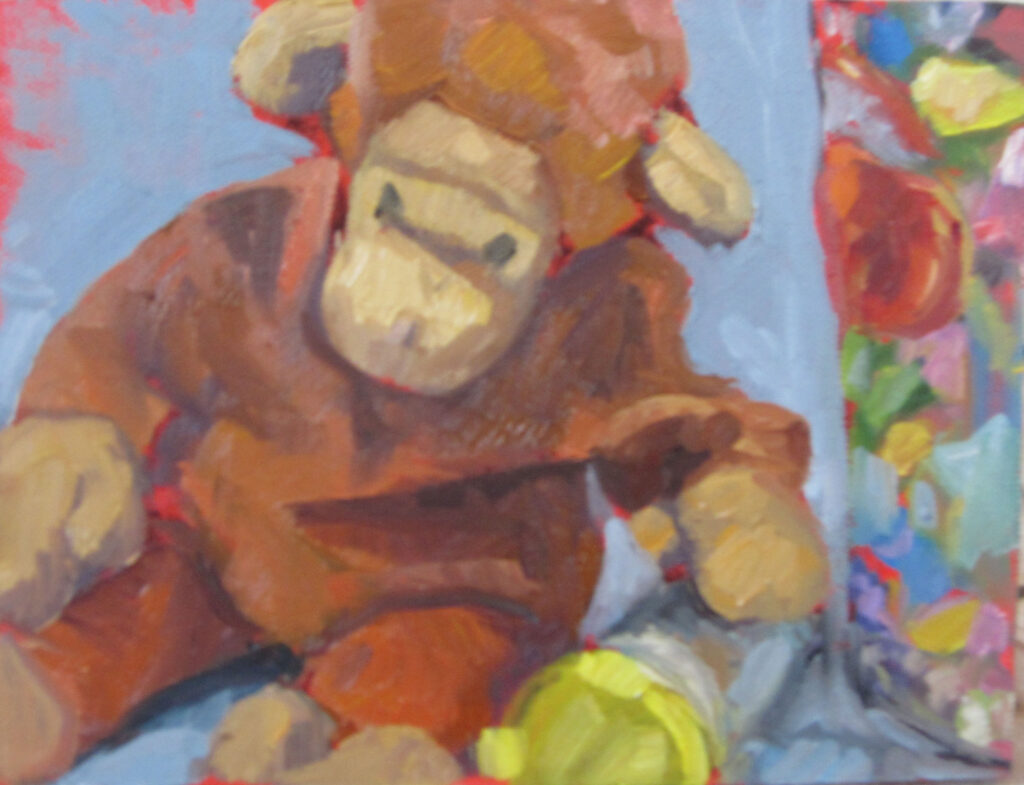
Toy Monkey and Candy, oil on archival canvasboard, $435 framed.

Where Do I Fit In?

Tuesday evenings, 6-9 PM
Jan 6, 13, 20, 27
February 3, 10

Ever wonder where your art belongs in the grand conversation of art history? This class invites you to explore your creative identity through the lens of the great movements that shaped the visual world.

Together, we’ll look at how artists have defined, challenged, and redefined what it means to make art. After a 30–45-minute guided discussion, we’ll move on to your paintings for the week, as you experiment with materials, methods and ideas inspired by each movement, discovering which resonate most deeply with your own artistic voice. You’ll begin to see how your work connects or pushes against historical traditions.

This isn’t about imitation; it’s about insight. By the end of the class, you’ll have a stronger understanding of your own style, an appreciation of the lineage you’re part of, and a body of work that reflects your evolving sense of place in the art world. Come ready to explore, question, and create β€” and find out where you fit in. To register, click here.

(Class requirement: some painting experience and a lot of intellectual curiosity.)

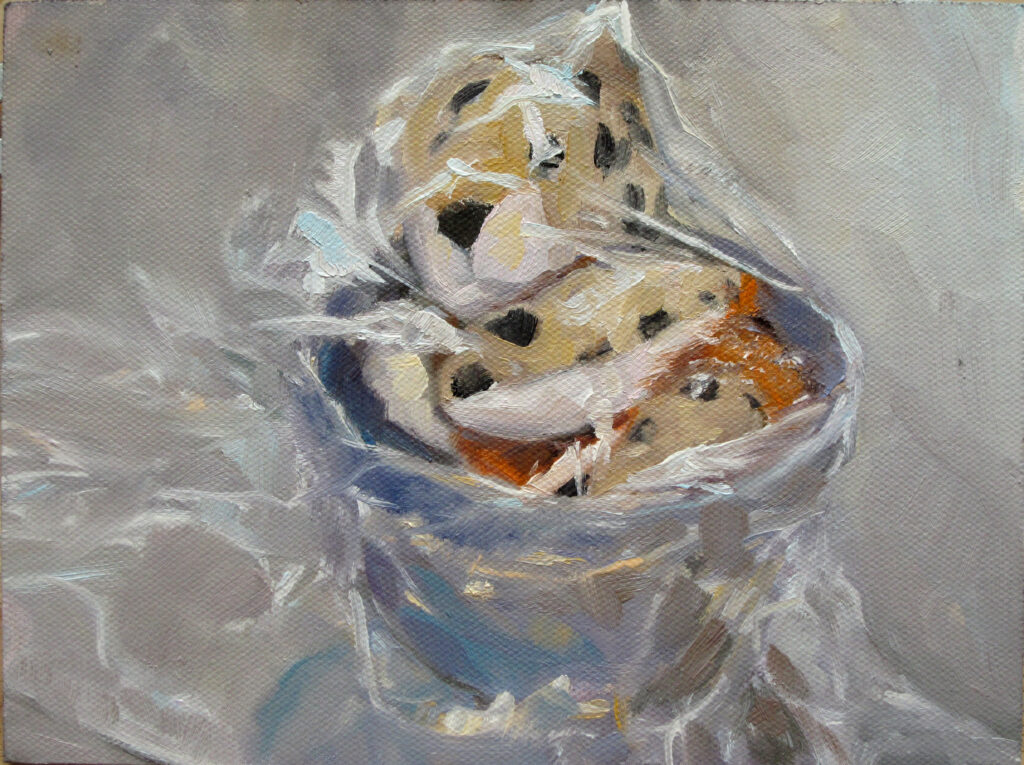
Stuffed animal in a bowl, with Saran Wrap. 6X8, oil on archival canvasboard, $435.

Registration is now open for workshops in 2026! Reserve your spot:

Can’t commit to a full workshop? Work online at your own pace:
Seven Protocols for Successful Oil Painters