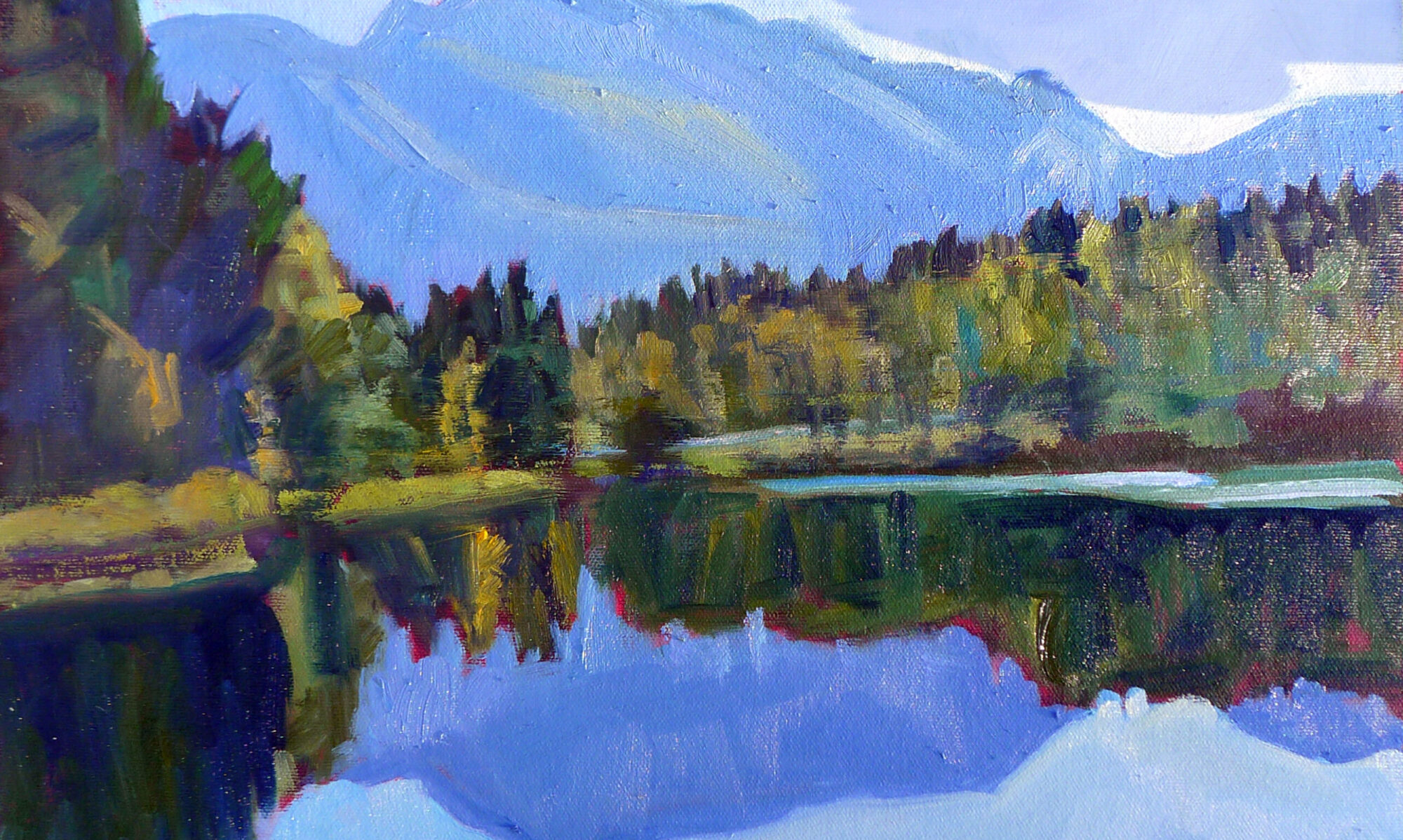
What’s the difference between plein air and studio painting?

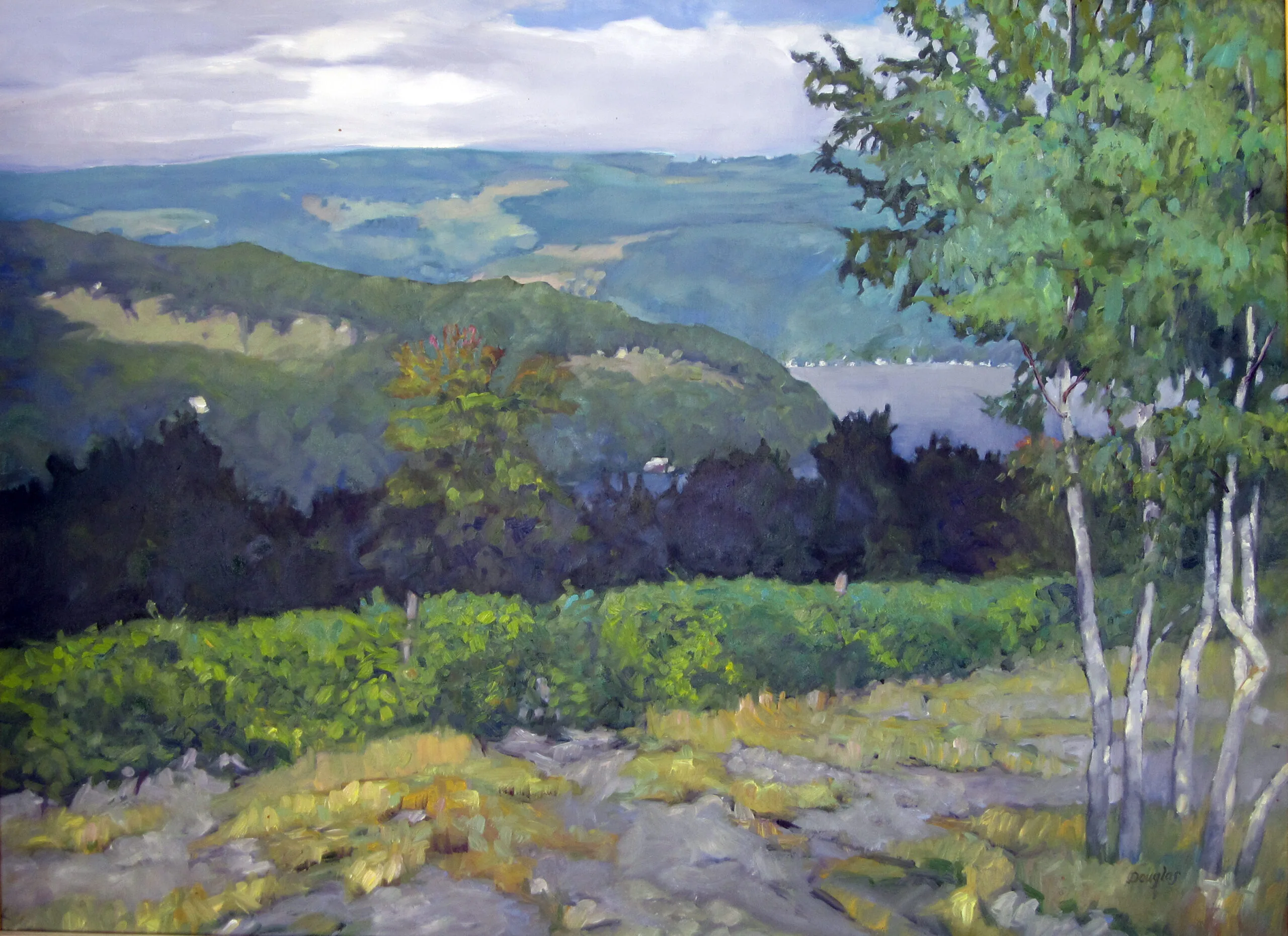
The Vineyard, oil on linen, 30X40, for more details, click on image.

I can beat a plein air painting to death as well as the next artist, so it helps to occasionally remind myself of the difference between plein air and studio paintings.

A quick note before we get into it

It’s time to claim your spot in Advanced Plein Air Painting, July 13-17 in Rockport, ME. If you have any questions about whether you fit into an advanced class, just ask!

In the field

Outdoors, I’m working against time. The light shifts, the shadows slide, the clouds roll by. I’m trying to capture something fleeting, and that forces me into clarity and economy of effort. I simplify, make snap decisions, commit. If I’m indecisive, it’s all over.

A good field sketch isn’t about detail; it’s all structure. It locks down the value pattern, major shapes and intent. It answers the essential question: what is this painting about? If you solve that outdoors, you’ve already done the hardest part.

Keuka Lake vineyard, oil on archival canvasboard, private collection. This was the nucleus of my idea for the studio painting above.

In the studio

I almost never revise my plein air paintings back in the studio, because I can improve them right into dust.

In the studio, everything changes. Time expands. I fuss and second-guess. It’s easy to lose the freshness of the original idea because the germ of the painting is no longer in front of me. It’s very difficult to avoid reinventing my idea.

I’d rather use plein air sketches to inform and define separate studio paintings. That allows plein air to be fresh and studio work to be refined.

Photos lie

There was a reason for the decisions you made in the field. Your value structure, focal points and big shapes all happened because something in the real world caught your imagination. You can’t duplicate that from a photo; your snapshots are an aide to memory, nothing more.

Photos encourage us to bore (in both senses of the word) into too much detail. That’s especially true when you have the leisure to overwork, to describe every branch and leaf.

This is another painting I did while working out the same idea. Private collection.

Vitality or polish?

If your field sketch was strong enough, edges can ultimately be clarified, color deepened, drawing corrected. You can push temperature relationships, unify passages and make sure the eye moves cleanly through the composition. But the raw, living thing you caught outdoors should never be overwritten. That sacrifices vitality for polish.

Frederic E. Church traveled throughout New England, New York, Virginia and Kentucky painting. He made two trips to South America and went to Mexico, Newfoundland, Labrador, the Middle East and elsewhere. He took his field sketches back to his studio and created monumental paintings that made him one of the most successful artists in American history.

Many painters get lost trying to compromise between plein air and studio painting techniques. The field demands boldness; the studio demands sophistication. To carry vitality into the studio, you cannot destroy the thing you loved. It’s the map that will give your studio paintings direction and life.

That’s exactly what I focus on in my From Field Sketch to Final Studio Work Zoom class (Tuesday evenings, June 2, 9, 16, 23, 30, July 7). We break down the process step by step so you stop fighting your own paintings and start building on them.
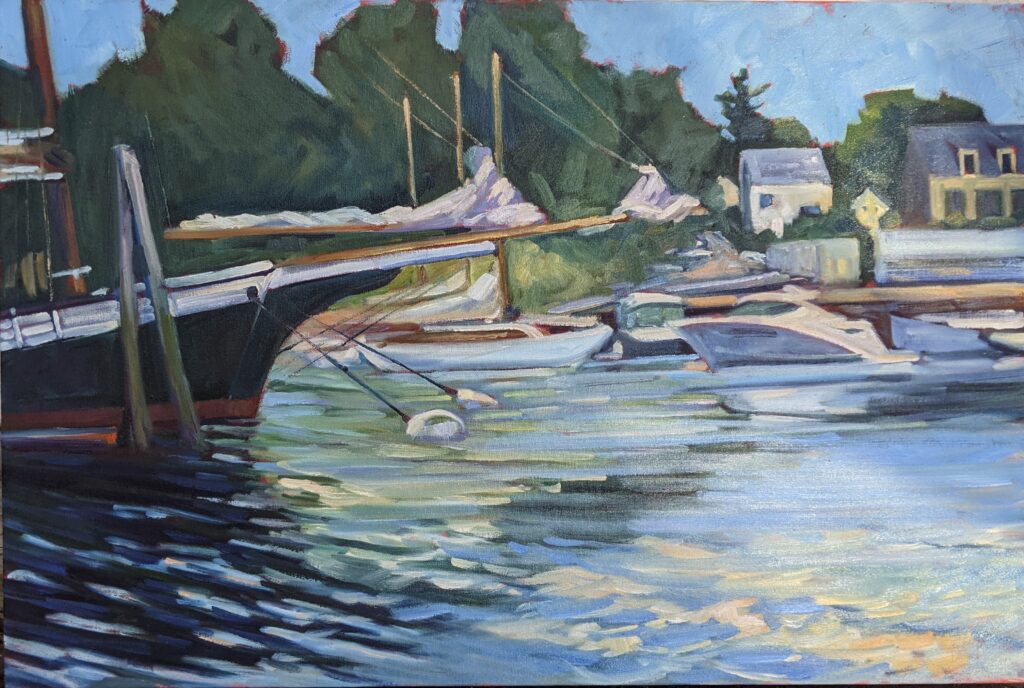
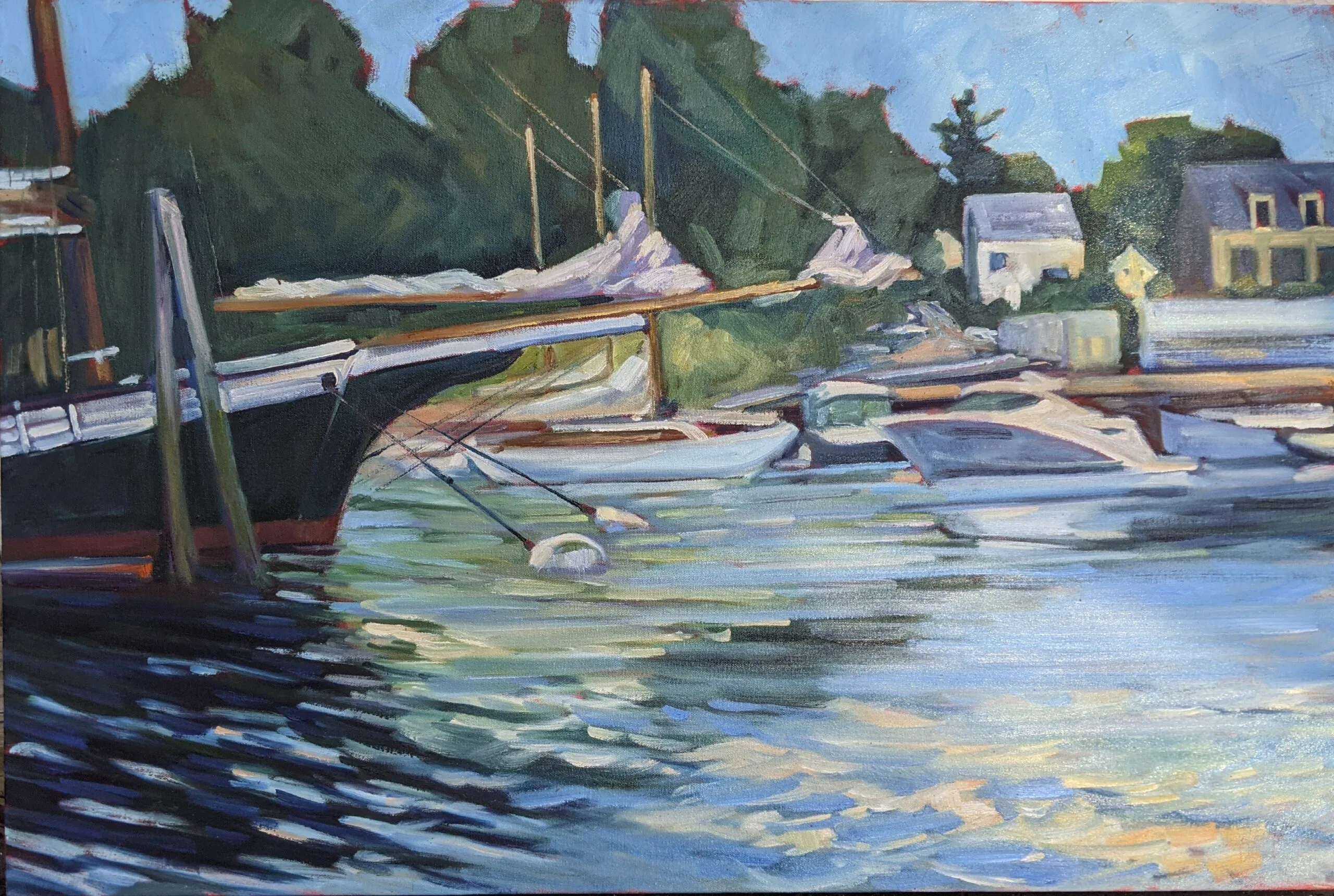
Camden Harbor, Midsummer, oil on canvas, 24X36. Although large, it was done entirely en plein air. For more information, click on the image.

Painting clouds

Of course, structure is only part of the story. If you can’t handle moving elements like water or shifting forms like clouds, your field work will always feel incomplete. That’s why I’m teaching a focused session on Painting Clouds (Monday evenings, June 22, 29 and July 6). The subject forces you to simplify, prioritize, and paint with authority. Both classes are really about the same thing: learning to make decisions that hold up from first sketch to final brushstroke.

Registration is now open for workshops in 2026! Reserve your spot:

Can’t commit to a full workshop? Work online at your own pace:
Seven Protocols for Successful Oil Painters

Is the ocean a reflection of the sky?

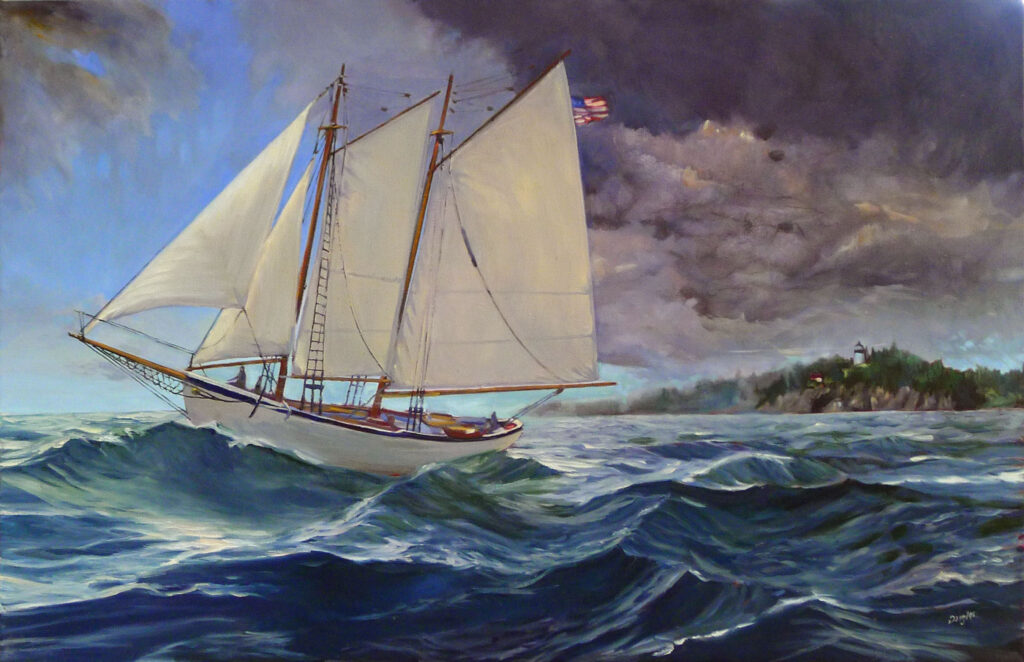
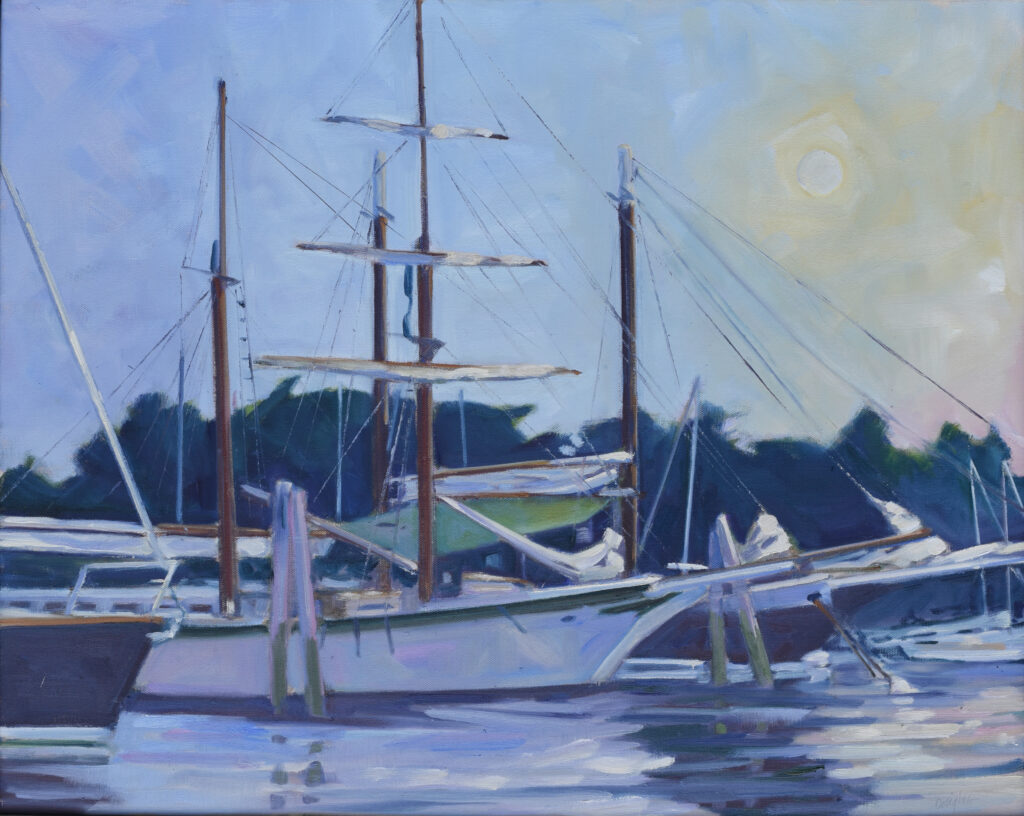
Brigantine Swift in Camden Harbor, 24X30, oil on canvas, framed, $3478 includes shipping and handling in continental US.

If you’re looking for me this weekend, I’ll be out on Penobsot Bay, teaching my Art and Adventure at Sea workshop aboard American Eagle. That means no connectivity and therefore no blog post on Wednesday. One of the most common questions I’m asked is, how do you paint water. Water is so immense, slippery, and mercurial, that it is impossible to nail it down into a schtick. Instead, the painter must rely on observation.

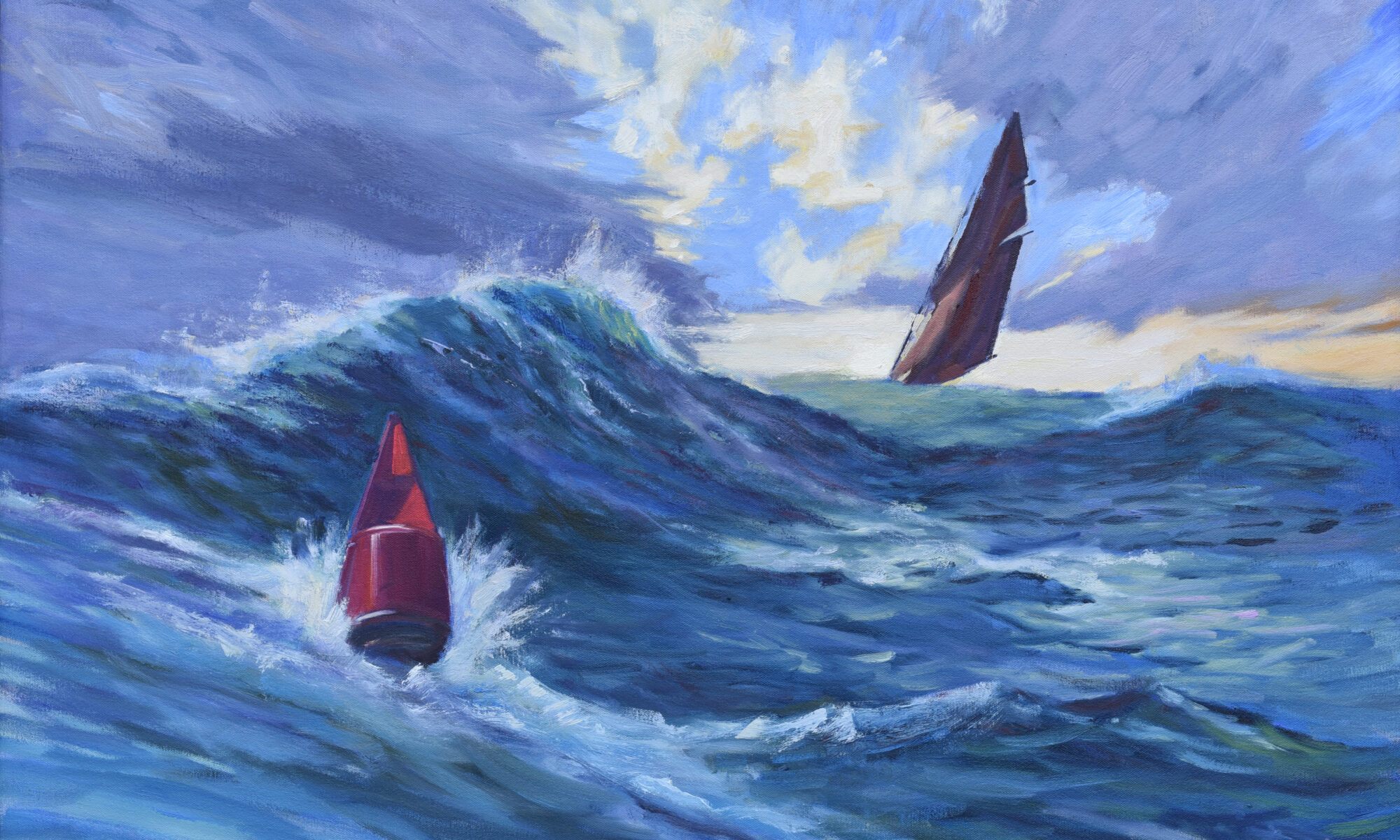
Heavy Weather (Ketch Angelique), 24X36, oil on canvas, framed, $3985 includes shipping and handling in continental US.

Is the ocean a reflection of the sky?

Reflections are a distortion of the surrounding environment. That’s true whether you’re painting them on the ocean or in a glass of water. These reflections are never going to be consistent but they will follow the laws of physics.

Imagine an ocean that is perfectly flat, and that you can walk on water. Looking at your feet, you can see straight down into the water. It’s not reflecting anything. Looking at a rubber ducky floating ten feet away, you’re looking at the surface at about a 26° angle. You’ll see a reflection of the ducky, the sky, and a glimpse of what’s under the surface. As you look farther away, the angle gets smaller and smaller, and all you see is the reflected sky.

Reflection involves two rays – an incoming (incident) ray and an outgoing (reflected) ray. Physics tells us that the angles are identical but on opposite sides of a tangent. This is why the reflection of a boat needs to be directly below the real object in your painting. You can add other colors into that area, but the reflection can’t be wider than the object it’s reflecting.

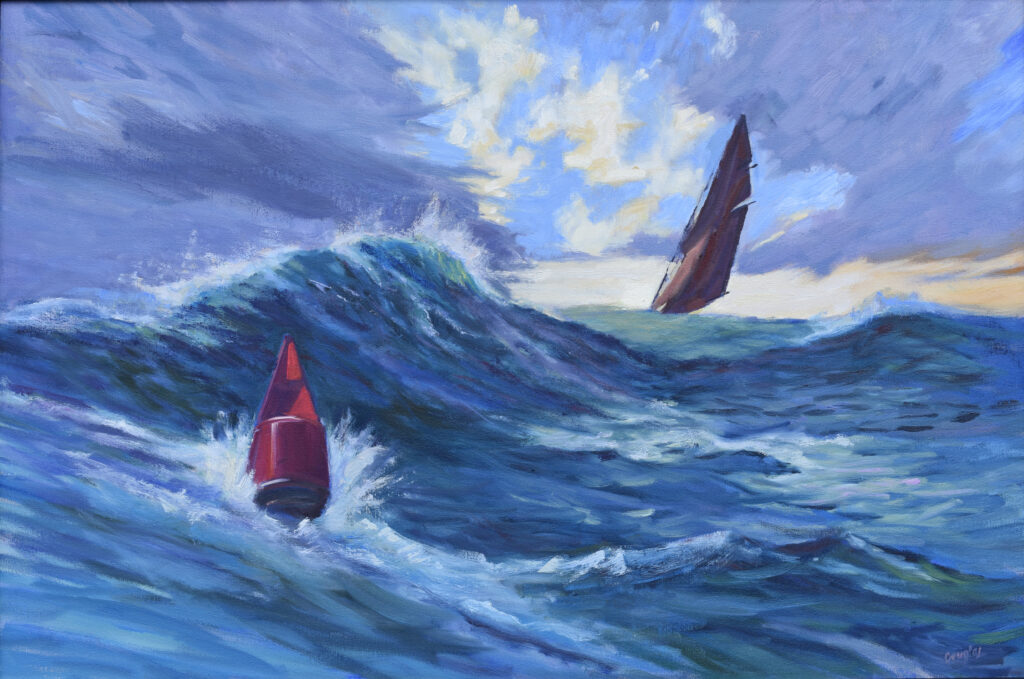
Breaking Storm, oil on linen, 30X48, $5579 framed includes shipping and handling in continental US.

Water is transparent, but it has a shiny surface. Some rays of light make it through and bounce back at us from the sea floor. Reflections in glass work the same way. You can see through the glass in the surface that’s facing you, but the curving sides reflect light from around the room. Because glass is imperfect, these reflections will be distorted.

The ocean complicates matters by being bouncy. Even on the calmest day, the surface of water is never perfectly flat; it’s wavy or worse, just like a fun-house mirror. Waves are a series of irregular curves. How they reflect light depends on what plane you’re seeing at that nano-second. It seems like the easiest thing to do is to capture it in a photo and paint from that, but what we see in photos is sometimes very different from what we perceive in life.

Instead, sit a moment with and watch how patterns seem to repeat. They’re never exactly the same, since waves are a stochastic process (think random but repeating). But they’re close enough to discern general patterns.

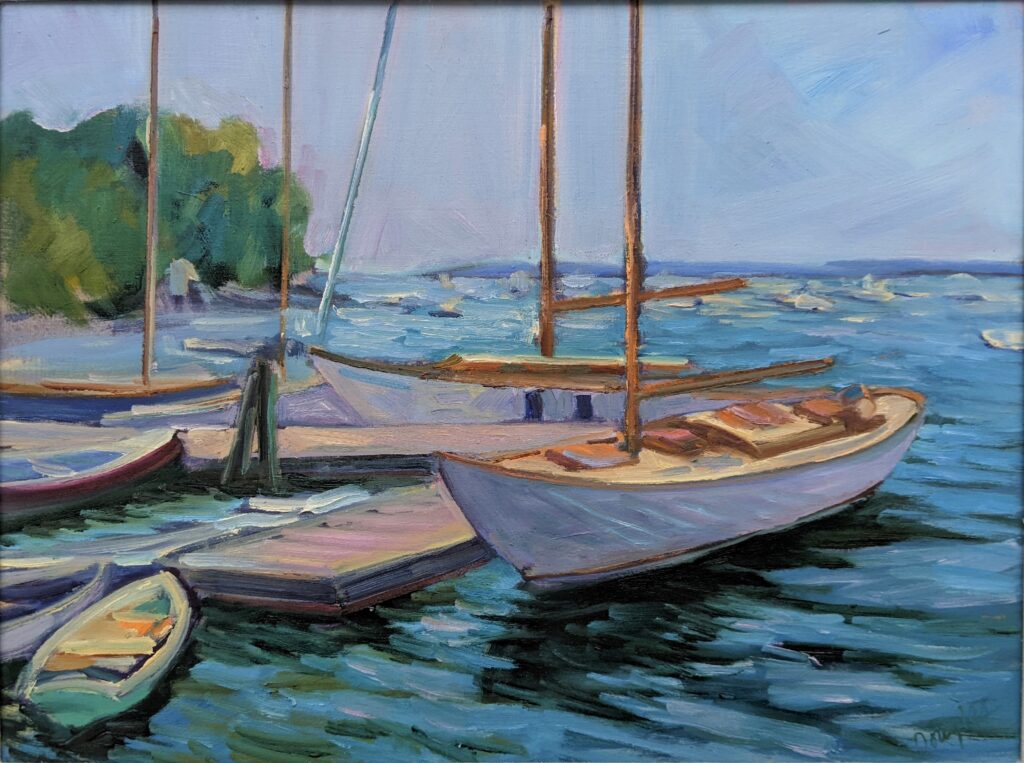
Beautiful Dream, oil on archival canvasboard, $1449 framed includes shipping and handling in continental US.

Solid objects can also trip you up in their reflections. Consider the humble spoon. It’s concave. That distorts its reflections. There’s no point in trying to predict what you might see; it’s best to just look. Likewise, a mirror only reflects straight back at you if you’re in front of it.

There are times when the ocean makes no reflection at all. Only smooth surfaces reflect light coherently enough to make reflections. That’s why burlap has no reflections. Sometimes, when water is being wind-whipped, it doesn’t have reflections either. To paint such a sea, keep the contrast low. A grey, windy day, or a turbulent sea will have a surface too broken up to reflect anything but the most general light.

Some people say that reflections should be lower in chroma than their objects, but I don’t think that’s true. Often, the ocean seems to concentrate color. Sometimes, the water will be lightest at the horizon; other days there will be a deep band there. However, the farther away, the more its colors shift toward blue-violet.

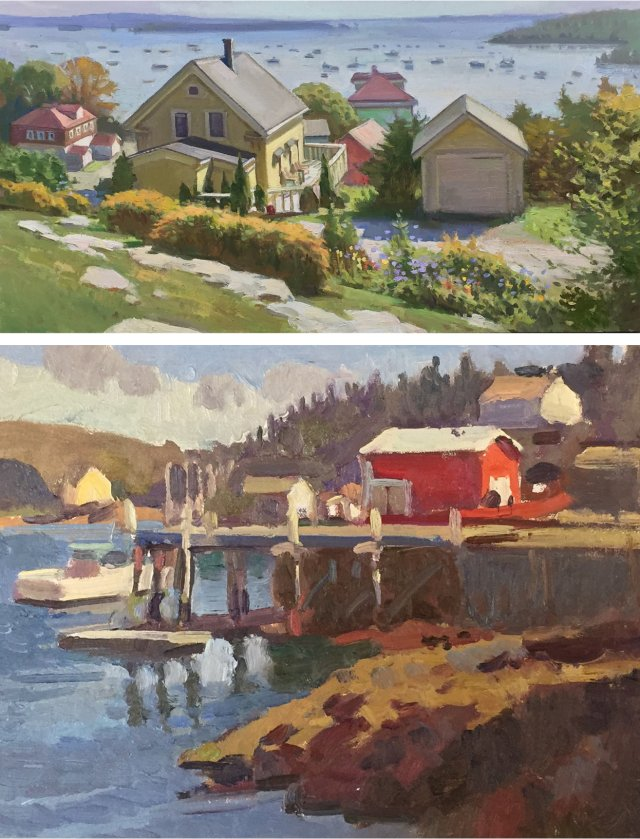
Paintings by Ray Roberts, courtesy the Page Gallery.

If you’re in town this weekend

Colin Page tells me there’s still room in Oil Painting On Location in Camden, Maine with well-known western artist Ray Roberts. That’s next Saturday and Sunday, September 21-22 from 9-4, and the fee is $300

This workshop will be in oils, but all media are welcome.

Registration is now open for workshops in 2026! Reserve your spot:

Can’t commit to a full workshop? Work online at your own pace:
Seven Protocols for Successful Oil Painters