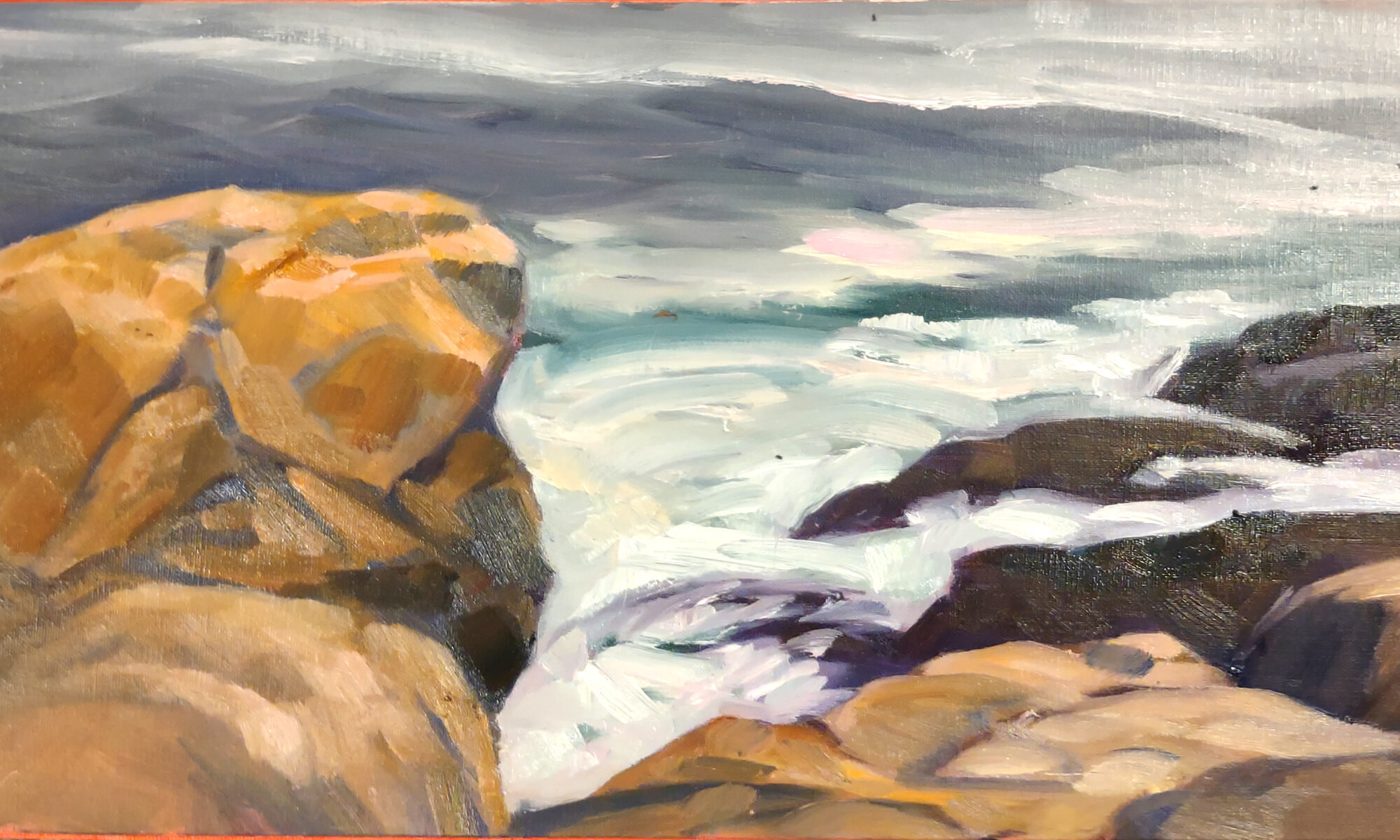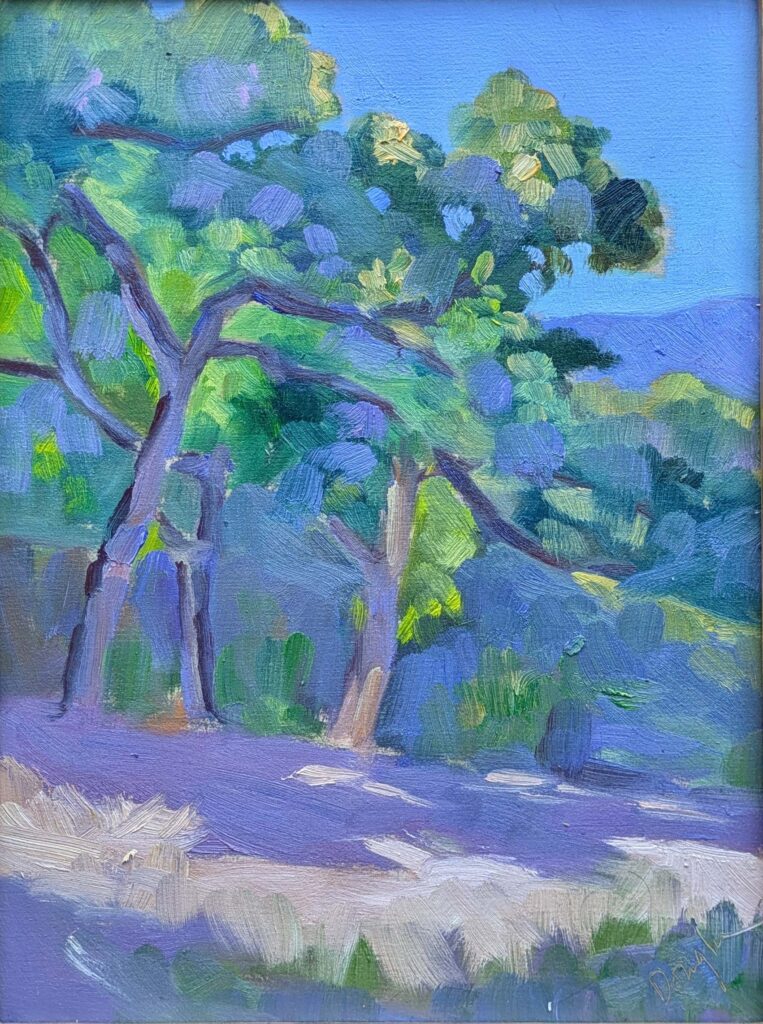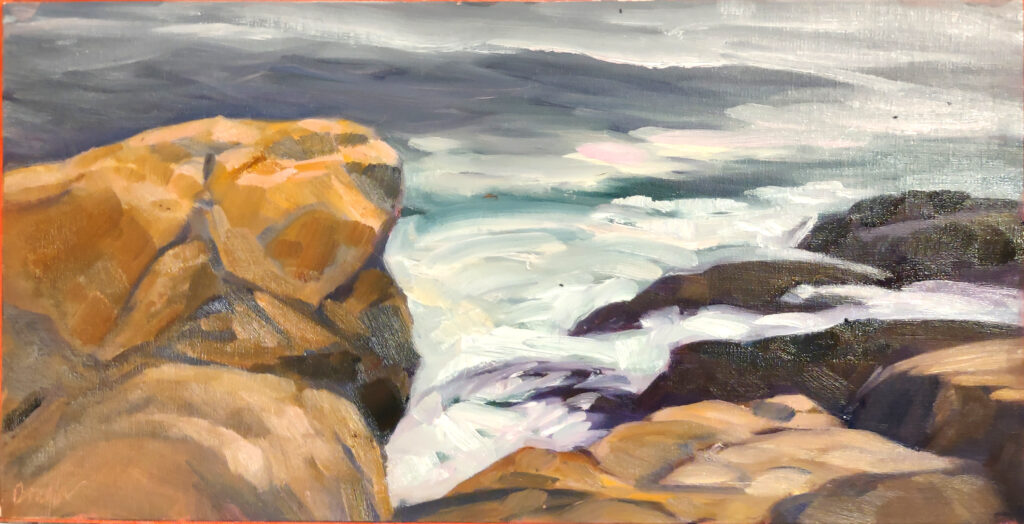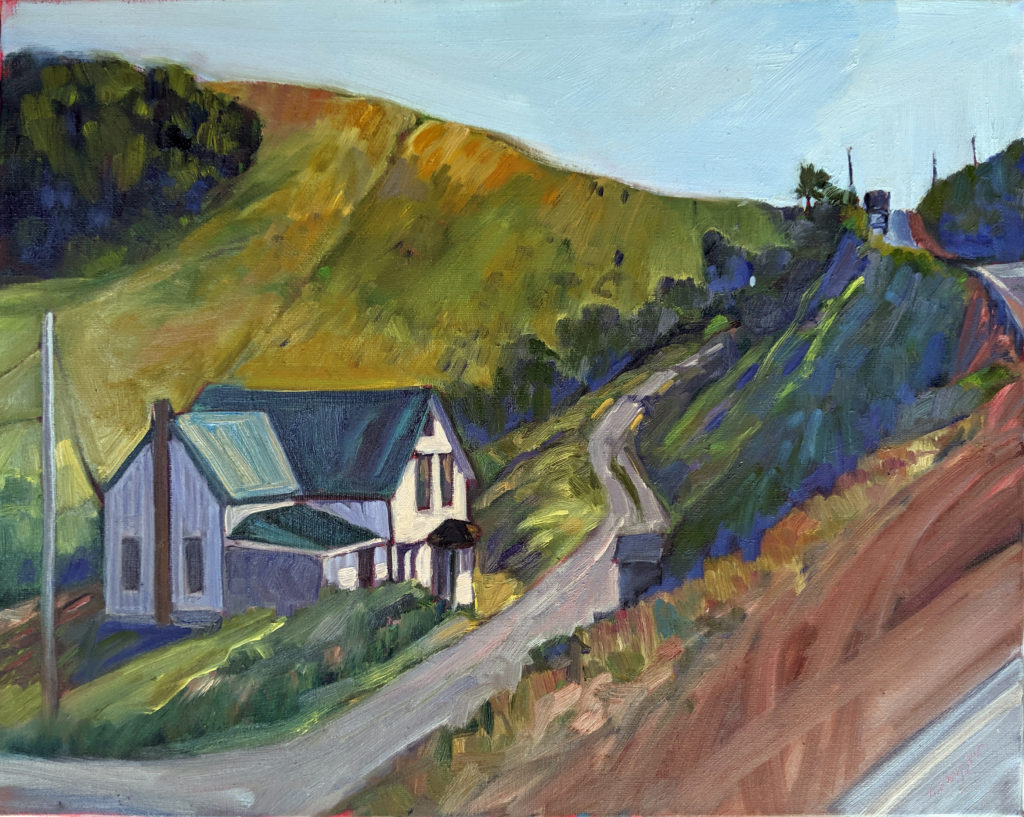
Staying motivated in the lonely studio

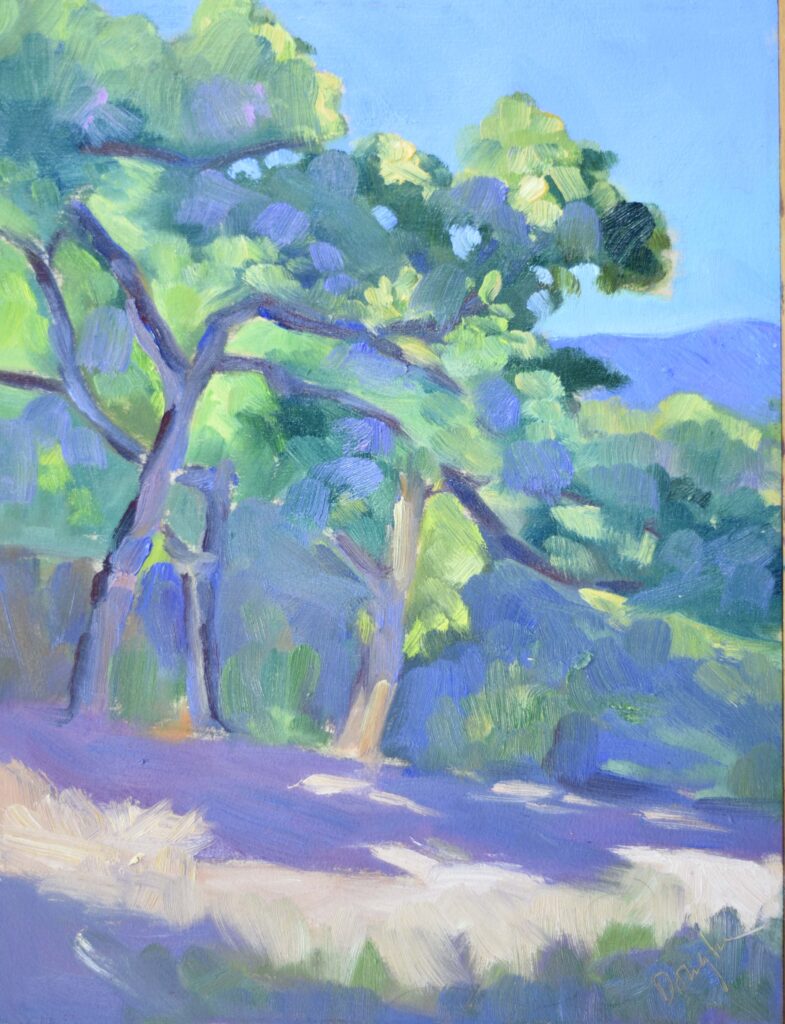
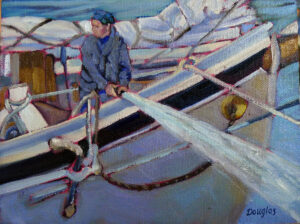
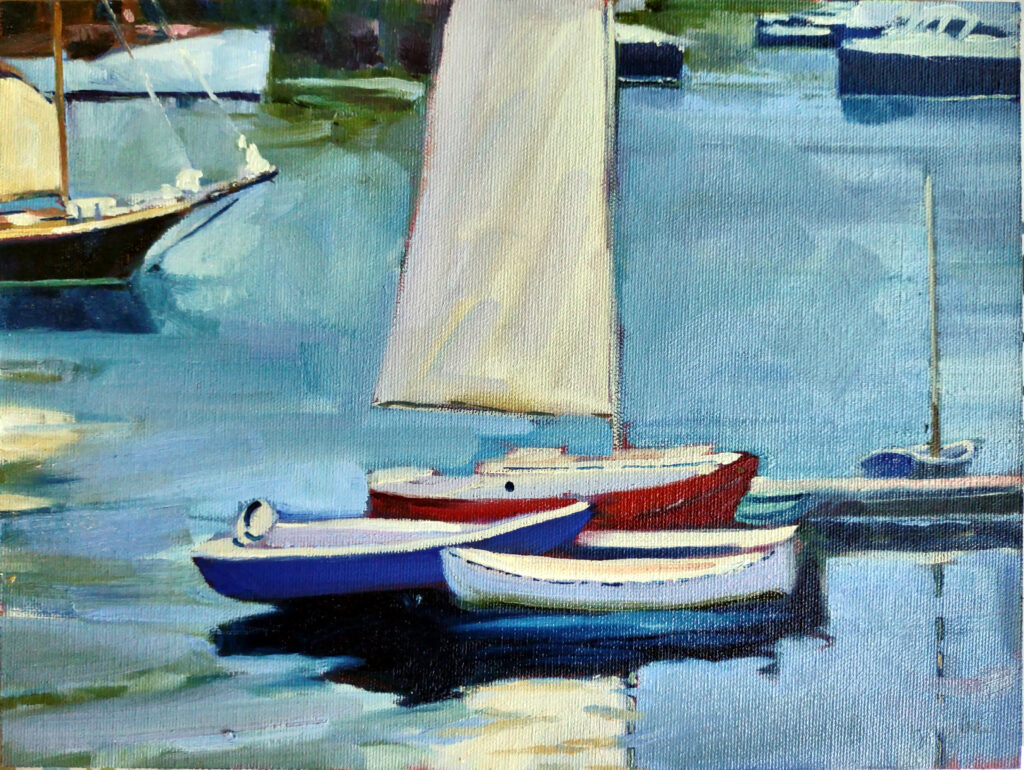
Three Graces, oil on archival canvasboard, $1159 framed includes shipping and handling in continental US.

I meant to go outside to paint yesterday, but Ken DeWaard and Eric Jacobsen were both busy. I spent three hours in meetings. Then I needed to write this post. While I finally got some painting done, it wasn’t nearly enough.

The battle for me isn’t in front of my easel, it’s getting to my easel.

Painting is not performance art; the real work happens when we’re alone. Still, it’s a form of communication—of ideas, emotions and principles. That contradiction is a challenge.

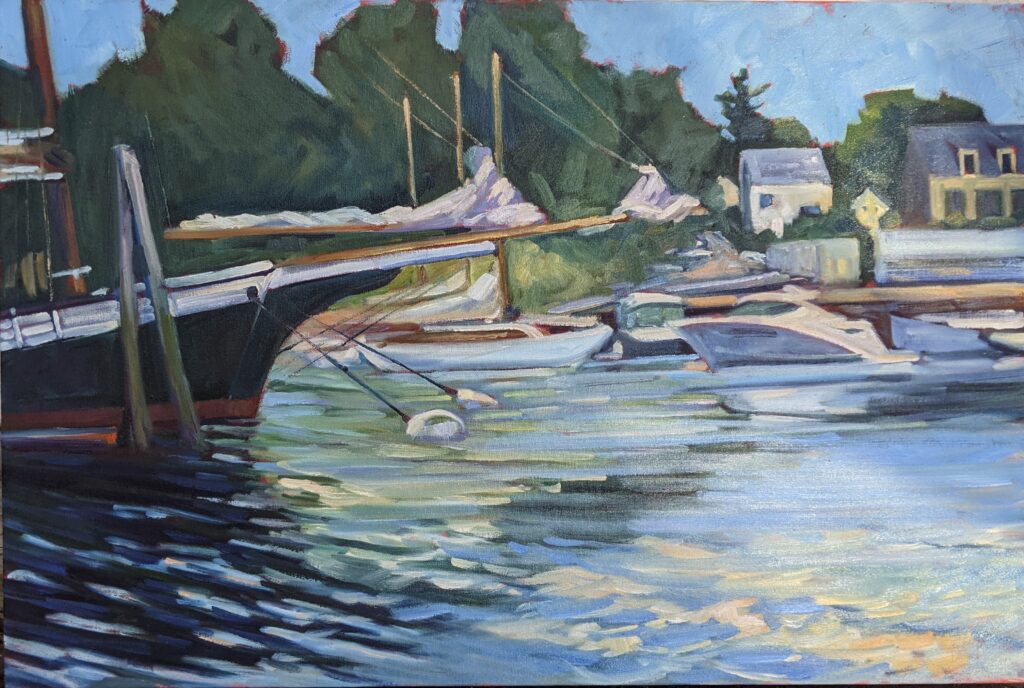
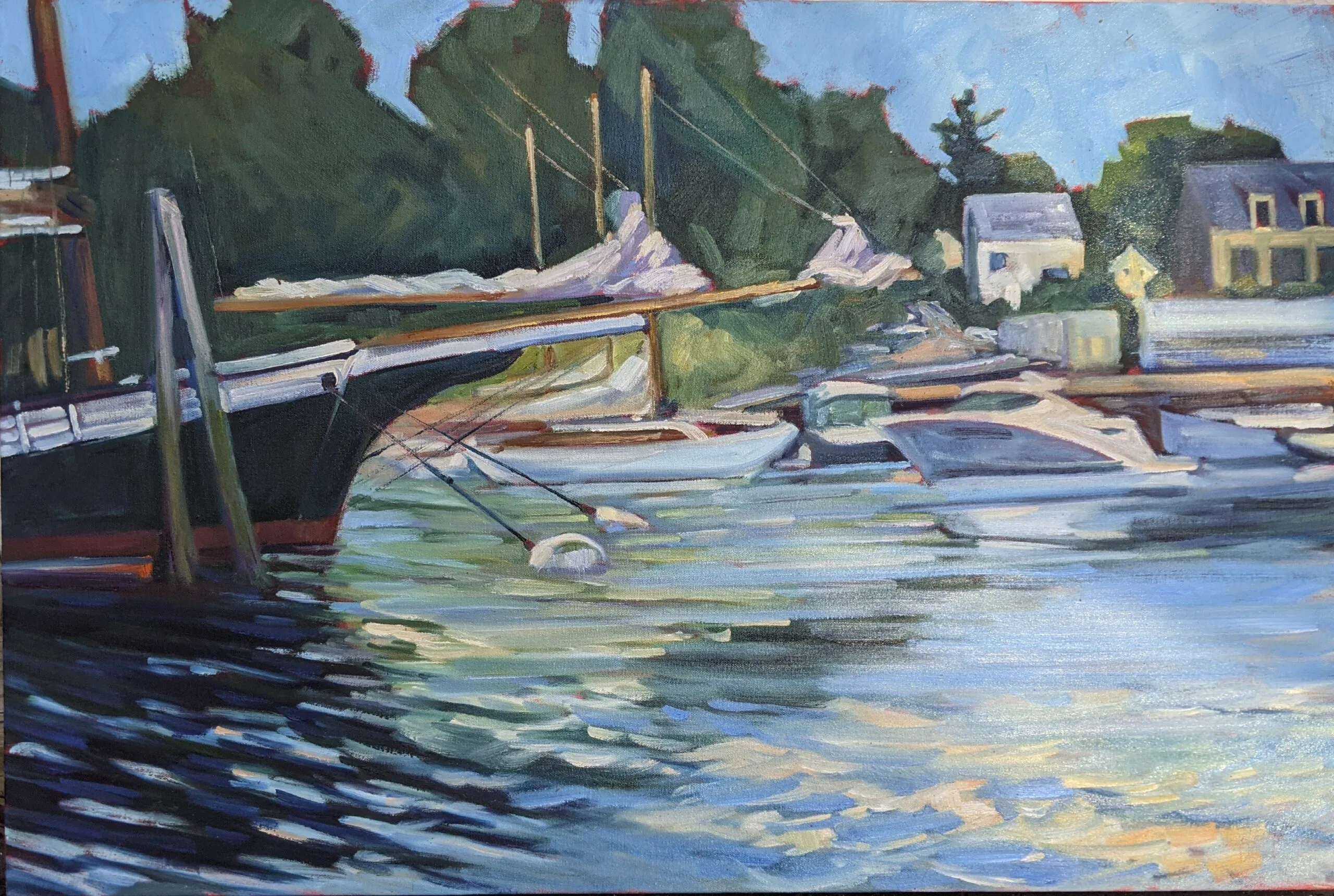
Camden Harbor, Midsummer, oil on canvas, 24X36 $3188 includes shipping in continental US.

What motivates us?

Motivation shouldn’t be based on inspiration, but on the process itself. For me, that means setting strict working hours and insisting I spend some time in my studio every day. I’m constantly reminding myself that painting should be my default activity, not the reward for getting everything else done.

The solitary artist thrives on rhythm. Working at the same time of day in the same place removes the friction of negotiating with yourself about when and whether to paint. It also tells your brain it’s time to drop into painting mode.

One of the most reliable ways to stay motivated is to narrow your vision. Focusing on results is paralyzing. Set out to explore one specific problem or paint one passage. My friend Sari Gaby used to call the work she did at the end of the day “border work.” She meant attacking the small, concrete problems that are easy to act on. That’s where I start, because it helps me organize my thoughts for the bigger questions.

Carol L. Douglas painting workshops 2026
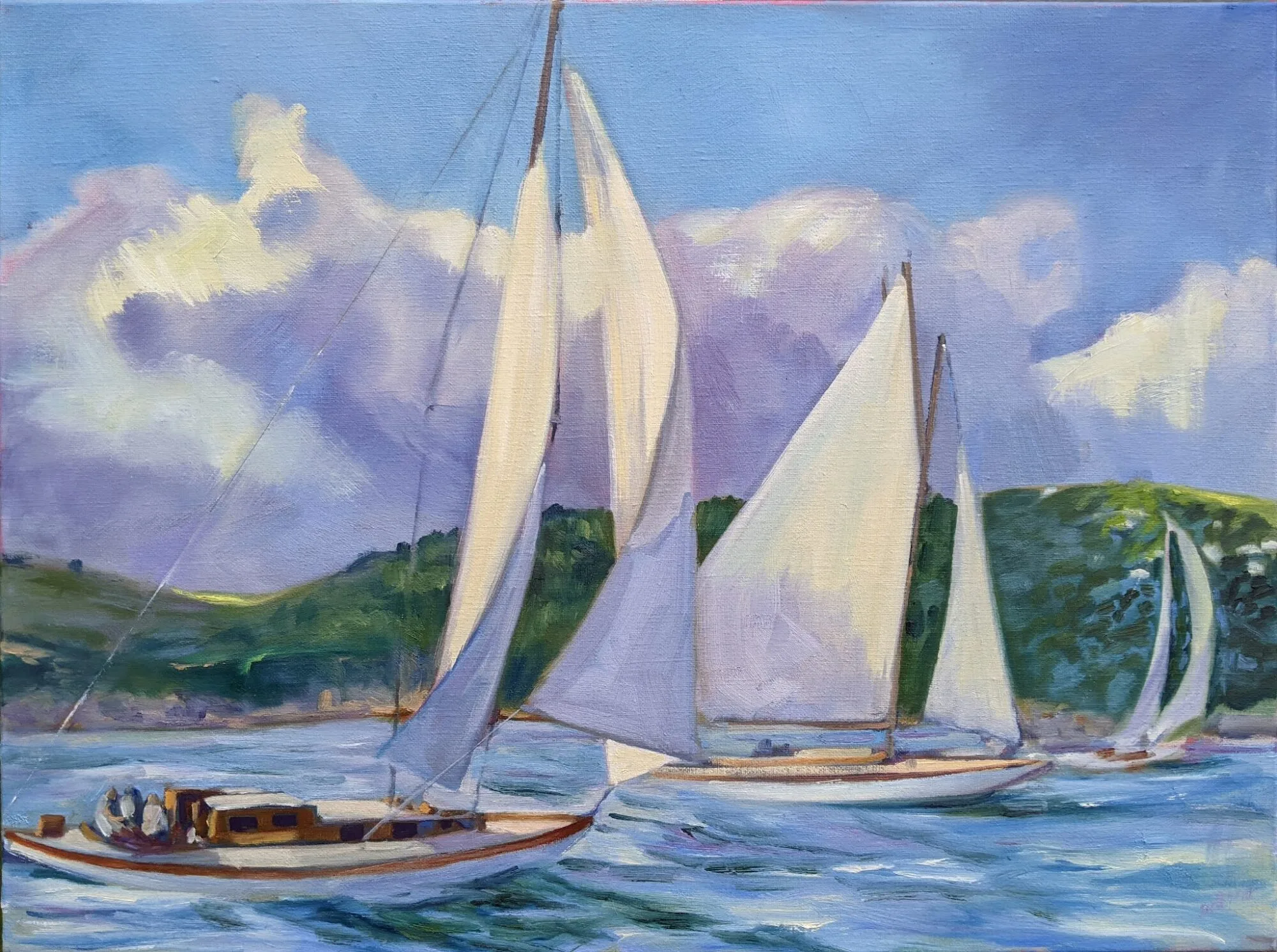
Larky Morning at Rockport Harbor, 11X14, on linen, $869 unframed includes shipping in continental US.

If success means painting a masterpiece, we’re all doomed. If success means putting in an honest session of looking, thinking and problem-solving, we’ll stay motivated. Sometimes, the win is in sticking with it when painting goes sideways. We succeed incrementally, day by day.

Give yourself permission to do bad work

With no one else around, my inner editor gets very loud. I counter that by treating my studio as a workshop, not a gallery. That means I paint studies, make messes, chase amorphous ideas, draw. The more experimental my mindset, the less precious the outcome and the more likely that I’ll head in new directions.

It helps to remember that painting is a long game. When I’m working alone, it’s too easy to judge today’s results as a final verdict on my ability. They aren’t. They’re one point in a decades-long dialogue with paint. Some paintings are clumsy. Some are surprisingly good. Most are just the next step in the process.

Drying Sails, 9X12, oil on canvasboard, $869 framed. Includes shipping and handling in continental US.

We all need connection

Solitude is necessary, but as Proverbs says, “as iron sharpens iron, so one person sharpens another.” Close relationships improve, refine and strengthen individuals. Accountability, encouragement and honest (sometimes difficult) conversation make us all more effective. 

Artists need to feel part of a larger conversation. Read about painters you admire. Study their work. Join classes, workshops and critique groups. I regularly hear from students that my weekly classes keep them painting.

If getting to the easel is hard, you don’t have to solve that alone. My Zoom classes give you a standing appointment with important concepts and other painters who are wrestling with the same problems you are. Think of these classes as a form of productive companionship. You still do the work, but you’re plugged into a larger conversation that keeps you moving forward.

If you’re ready to start showing up more consistently, I’d love to have you join us:

How to See Like a Painter, Monday evenings, 6-9 PM, Feb 23-March 2, March 16-April 6

Painterliness: Looseness and Bravura Brushwork, Tuesday evenings, 6-9 PM, Feb 24-March 3, March 17-April 7

Registration is now open for workshops in 2026! Reserve your spot:

Can’t commit to a full workshop? Work online at your own pace:
Seven Protocols for Successful Oil Painters

Seeing, brushwork and color are the painter’s trifecta

The Fleeting Hand of Time, 9X12, oil on archival canvasboard, $696 includes shipping and handling in continental US.

Most painters stall because they’re trying to solve too many problems at once. Students make real leaps forward when they start building skills in a sensible order. That’s what this trio of learning opportunities is designed to do.

Color, brushwork and composition are a three-legged stool. You must learn to see, orchestrate color and express your ideas with confidence.

Mather Point at dawn (Grand Canyon), oil on canvasboard, 9X12, , $696 includes shipping and handling in continental United States.

How to See Like a Painter (Zoom class)

Everything starts with perception. If you can’t see clearly, no amount of technique will save you. How to See Like a Painter is an interactive online painting class focused on visual analysis. That’s a skill most artists ignore, yet need the most.

We will dig into value relationships, shape and focal hierarchy, edges and—most importantly—the difference between what you think you know and what you’re actually seeing. Once you understand how to simplify complexity, your decisions will get stronger and faster.

The class meets Monday evenings, 6-9 PM EST on Feb 23-March 2 and March 16-April 6.

Here is more information and online registration.

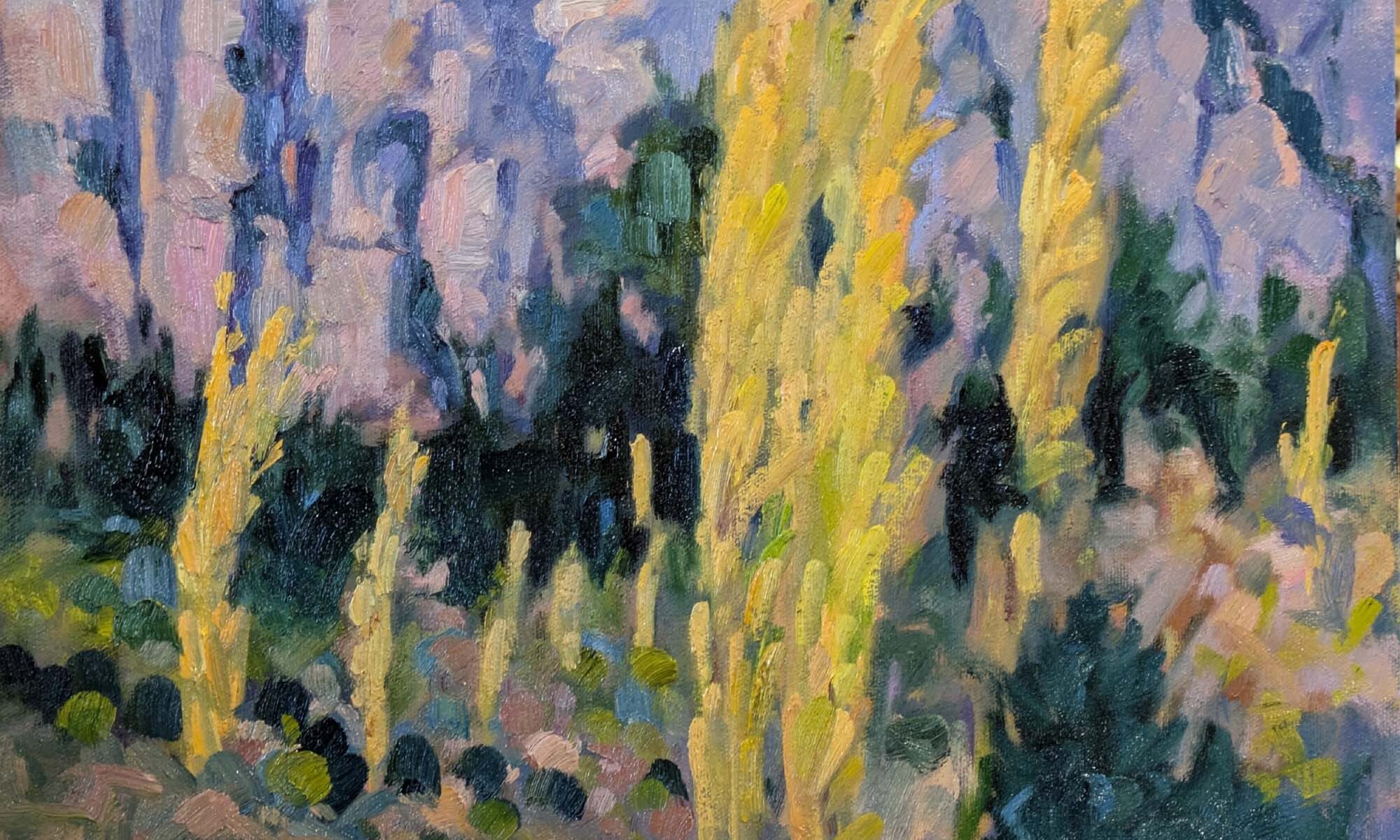
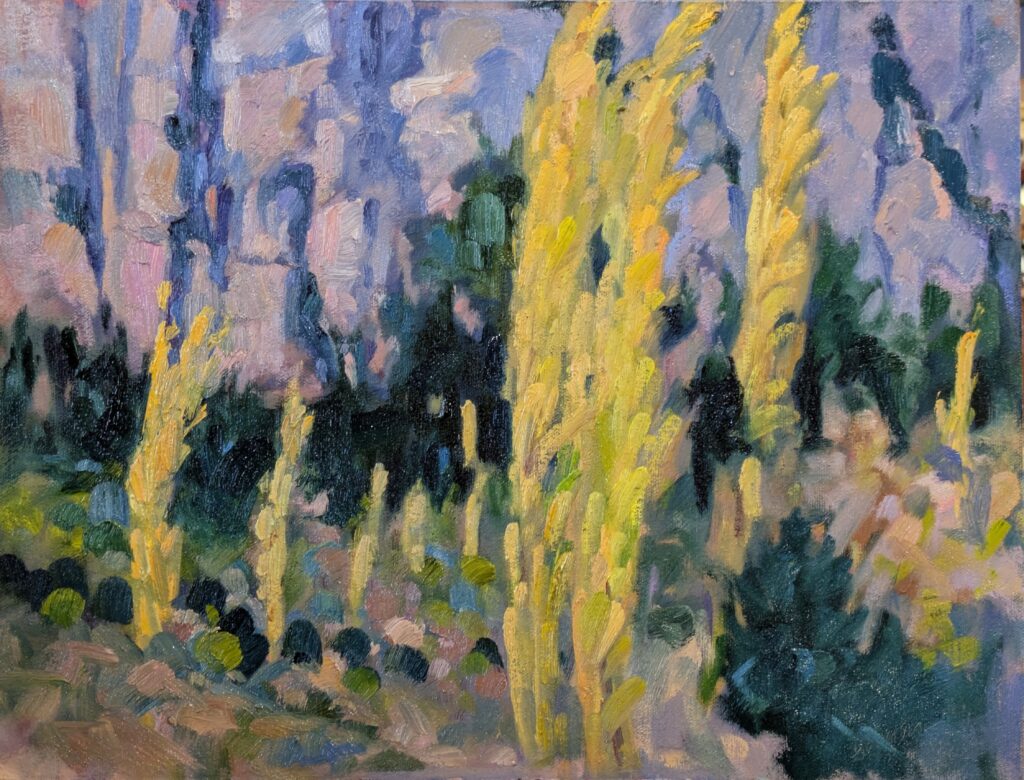
Poplars, 12X16, oils on archival canvasboard, $1159 includes shipping and handling in continental US.

Painterliness, looseness and bravura brushwork (Zoom class)

Painterliness, looseness and bravura brushwork is an interactive online class devoted to expressive paint handling. We talk about economy, confidence, and when to set it and forget it. Looseness isn’t sloppiness; it’s clarity delivered with energy.

This class helps you escape overworking and replace it with confident, readable brushwork. You’ll learn how to load the brush, commit to a stroke and let your surface do some heavy lifting. If your paintings feel tight, stiff or hesitant, this class is for you.

The class meets Tuesday evenings, 6-9 EST on Feb 24-March 3 and March 17-April 7.

Here is more information and online registration.

For either Zoom class, we have had students from across the US and Canada and Great Britain. If you can tune in at those times and are fluent enough in English to talk about art, we’d love to have you join us.

Canyon Color for the Painter: A Sedona Plein Air Workshop

Why is there a one-week break in middle of these Zoom classes? I’m heading to Sedona, AZ to teach Canyon Color for the Painter: A Sedona Plein Air Workshop, March 9-13.

Sedona is one of the most demanding and rewarding outdoor classrooms on earth, which is why I love it. The desert doesn’t forgive lazy color thinking. Light is strong, shadows are crisp, and color temperature shifts happen fast.

In this workshop, we focus on color strategy: how to simplify without dulling, how to exaggerate without lying, and how to organize color so your painting reads brilliantly from across the room. You’ll apply new skills directly to the landscape, with real-time feedback and lessons. I keep my workshop numbers low enough to give every person individual attention. Sign up quickly, as this workshop is filling fast.

Cottonwoods along the Rio Verde River, $696 unframed, oil on Baltic birch.

Which one should I take?

In a perfect world, you’d have the time and energy to take all three. Together, they address the core problems all painters face: unclear seeing, timid execution and confused color. But I know that’s not practical.

Ask yourself which of these core problems you need the most work on: brushwork, composition or color. And then register for the class which will help you the most. If I can help you with your choice, email me.

(Frankly, looking at this weekend’s brutal temperatures in the northern US, I’d also factor in the desert warmth. Southwest has a fare sale until Friday. 😉)

Registration is now open for workshops in 2026! Reserve your spot:

Can’t commit to a full workshop? Work online at your own pace:
Seven Protocols for Successful Oil Painters

Monday Morning Art School: why is instruction important when learning to paint?

Beach erosion, 9X12, Carol L. Douglas, oil on canvas, private collection.

I’ve been both a student and a self-learner, so I speak from experience. Painting instruction provides structure, feedback, and foundational knowledge that self-teaching lacks.

Painting is made up of design elements like value, color, composition, edges, and brushwork. Instruction helps you learn how these elements work together.

Without guidance, we can spend years reinventing the wheel. A good teacher—and the emphasis has to be on ‘good’—helps you skip those detours and make real progress faster. You’re no longer guessing, you’re working with a purpose.

A good teacher can point out technical problems or compositional issues you wouldn’t notice on your own. Learning technique from an expert gives you tools to express your ideas more clearly and with confidence.

More than anything, painting is about learning to see—not just to recognize objects, but to observe light, shadow, shape, proportion, and color relationships. A good teacher trains your eye to notice what really matters.

I have three different paths to learning painting available now. Isn’t it time to choose one and get started?

Beach toys, 9X12, oil on canvasboard, Carol L. Douglas, private collection

Option 1: Workshops

Sea and Sky at Acadia National Park

This is my longest running workshop, in America’s first national park. This is a student favorite and personal favorite. Enjoy all-inclusive accommodation or join us as a commuter. August 3-8, 2025.

Find Your Authentic Voice in Plein Air, Berkshires, MA

The Berkshires are easily accessible from NYC and Boston, and a perfect blend of natural, historic, and agricultural beauty. August 11-15, 2025.

Immersive In-Person Fall Workshop, Rockport, ME

Spend a week of deep art engagement in Rockport, Maine, with fellow artists. This five-day session will open a new chapter in your journey as an artist. October 6-10, 2025

Beach Saplings, Carol L. Douglas, 9X12, oil on canvas, $869 framed.

Option 2: Zoom classes starting in mid-August

Don’t be confused because the names of these classes are similar; they’re two different approaches to the same question. The Monday night class is for those who need more guidance on the nuts-and-bolts business of painting. The Tuesday night class is for those who need critique and overall direction. If you have questions about which class to take, email me and we’ll chat.

What I Did on My Summer Vacation: For Intermediate Painters Mondays, 8/18 – 9/29 6-9 PM, EST

This class is perfect for anyone in an early or intermediate phase, or returning after time away. No pressure, no jargon—just encouragement and direction.

This relaxed, supportive class is designed for artists who want to build confidence and paint in a community setting. Bring any work you’ve done (even if it’s just sketches or photos!) and I’ll help you take the next steps. 

You’ll learn:

  • How to strengthen your summer paintings
  • Foundations of good composition and color
  • Tips for setting up and painting from life or photos
  • How to give and receive useful critique

What I Did on My Summer Vacation: For Advanced Painters Tuesdays, 8/19 – 9/30 6-9 PM, EST

This critique-driven class is for artists who are ready to refine their work and push it further. Bring in pieces for serious, constructive feedback—finished or in-progress—and use weekly exercises to rework, reframe, or respond to your summer output.

Each week offers:

  • In-depth group critique
  • Guided prompts to explore composition, editing, and intention
  • Focused painting time with optional instructor feedback
Fish Beach, Carol L. Douglas, 9X12, oil on archival canvasboard, private collection

Option 3: Work at your own pace, from your own studio

Seven Protocols for Successful Oil Painters

If you’re looking for more consistent, beautiful results in your painting, you need a repeatable protocol. In this online course, discover a system that will reliably improve your oil paintings. New for 2023, I’m offering a 7-part online course. Each class includes video content, quizzes, and exercises to do in your own studio at your own pace.

Use it or lose it

Best Buds, 11X14, oil on canvasboard, $1087 framed includes shipping and handling in continental US.

“Use it up, wear it out, make it do or do without,” is a famous Yankee proverb. I love to sew but don’t much like mending. It hardly seems worth the effort, especially to replace the zipper in an already worn pair of trousers. If I was in any doubt about the infrequency of my sewing, my needle had spots of corrosion.

I was once a fairly adept seamstress. Imagine my annoyance, then, when I sewed the blasted zipper in wrong and had to rip it out. (It still looks awful, but that’s my husband’s problem. At these prices, he’s got nothing to complain about.)

There are some skills, like breathing, that you don’t forget. There are many others that get rusty if they’re not used. Use them or lose them.

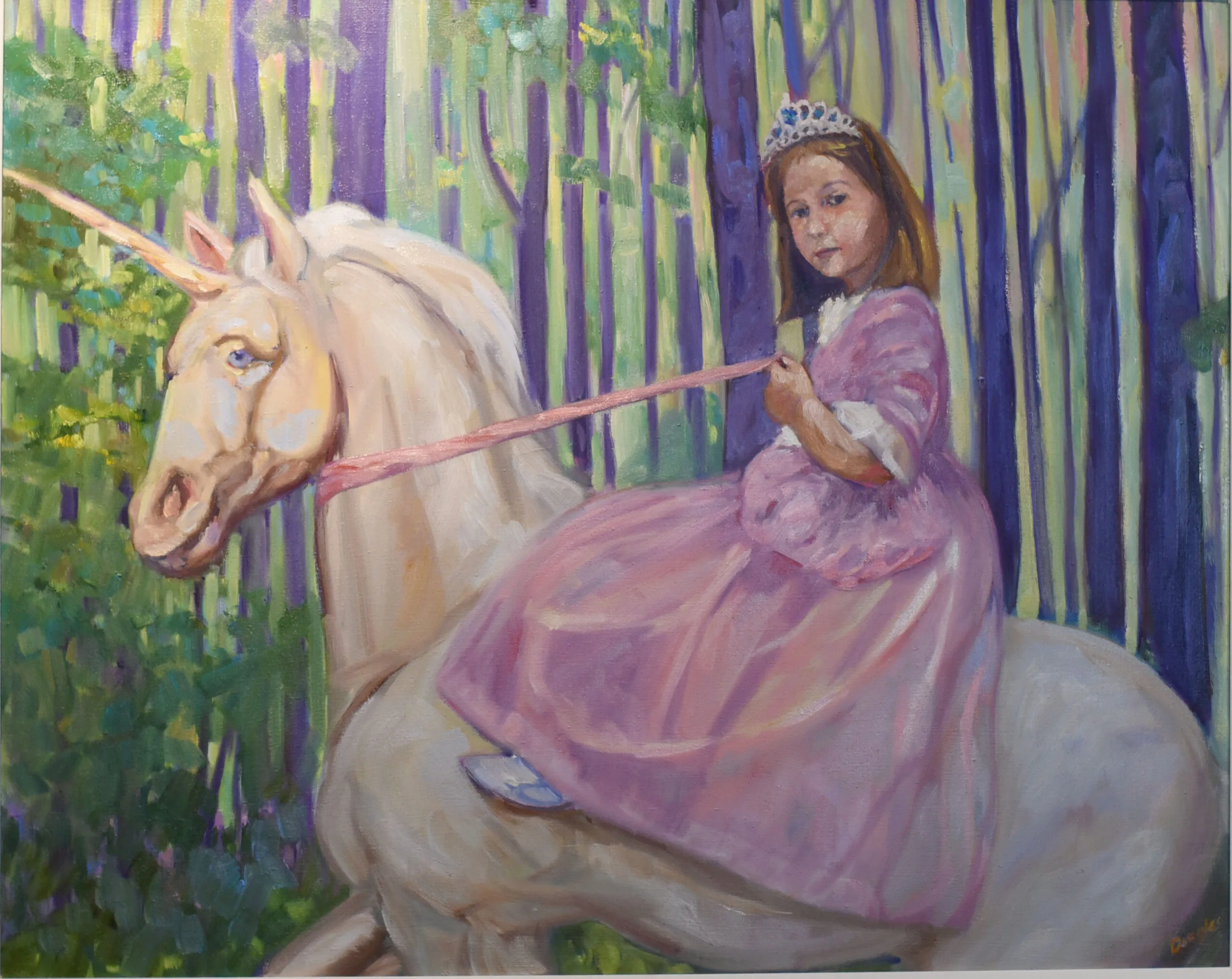
In Control (Grace and her Unicorn), 24X30, $3,478 framed, oil on canvas, includes shipping in continental United States.

What’s stopping you?

There are many reasons people don’t do creative work. The biggest of these is fear of failure. Starting something unknown means seeing all our flaws and shortcomings magnified. We worry that our work won’t be good enough. It’s easier to imagine what you might do than to take the risk of doing it.

Perfectionism is artistic expression’s greatest enemy. There are people who feel that if they can’t create something perfect, it’s not worth trying at all. But nobody has ever created perfect art; nor will they.

Perhaps you were told that you were a linear thinker rather than a creative one. That’s an absurdity; creativity, like any other form of thinking, takes practice. Or you were told that art is an innate talent. It isn’t, any more than understanding science or engineering is innate. They all take work.

“When I was young, I shied away from art because I mistakenly thought that either you had talent/ability or you didn’t. Period. It didn’t occur to me that like music or writing, you can take a bit of raw talent and get better at it with lessons and practice,” my student Sandy Sibley said.

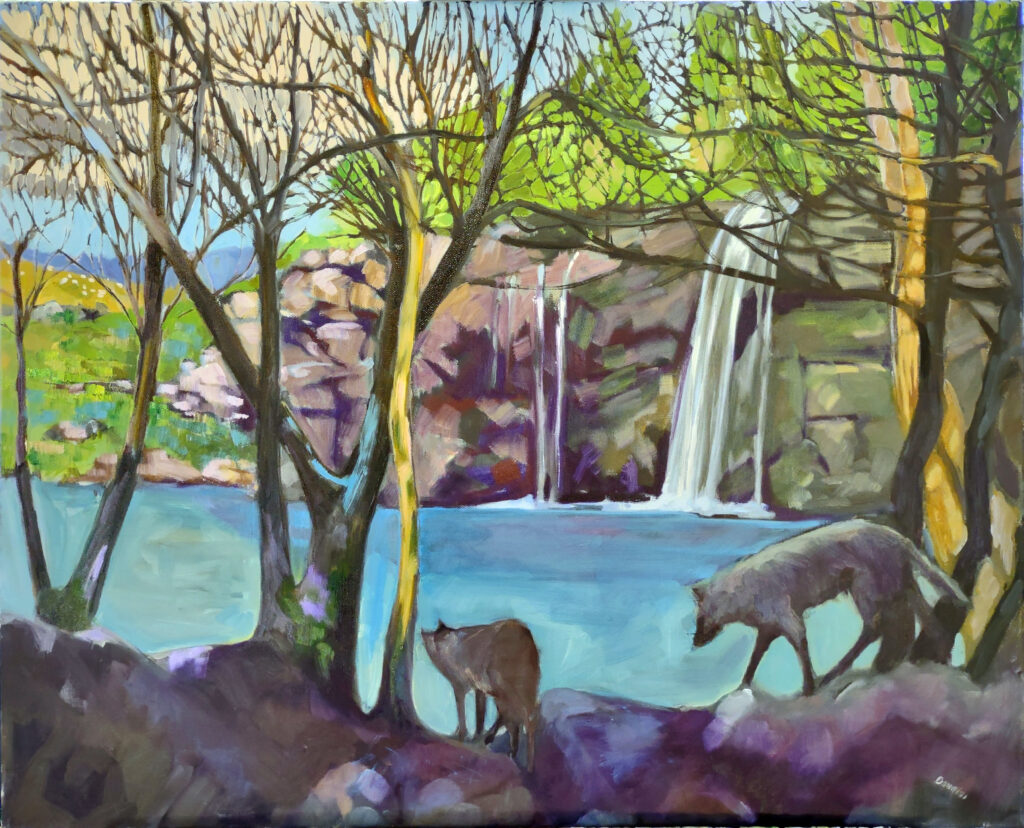
Ravenous Wolves, oil on canvas, 24X30, $3,478.00 framed includes shipping and handling in continental US.

If you’re someone who’s been discouraged from the creative arts, you may lack self-confidence. Social media doesn’t help. Just as we’re all set up to compare our looks to those of influencers, we’re all ambushed by the highly-polished works we see on the internet. (They may, in fact, be totally lacking in charm in the real world, but that’s a different issue.)

Lastly, your routine might not allow for creativity. I don’t sew now because I haven’t got the mental or physical space, so I understand if you can’t find a place to paint. But there’s always room to draw. It requires a sketchbook and a pencil.

Do you feel like you challenge your own creativity?

Yesterday I saw pussy willows along the trail. A new season means new opportunities, and I encourage you to find a way to express yourself this spring, through gardening, cooking, woodworking, sewing, painting, sculpting—in short, anything that brings you the joy of creating.

I’m offering two new classes this spring

Zoom Class: Advance your painting skills

Mondays, 6 PM – 9 PM EST
April 28 to June 9

Advance your skills in oils, watercolor, gouache, acrylics and pastels with guided exercises in design, composition and execution.

This Zoom class not only has tailored instruction, it provides a supportive community where students share work and get positive feedback in an encouraging and collaborative space. Learn More

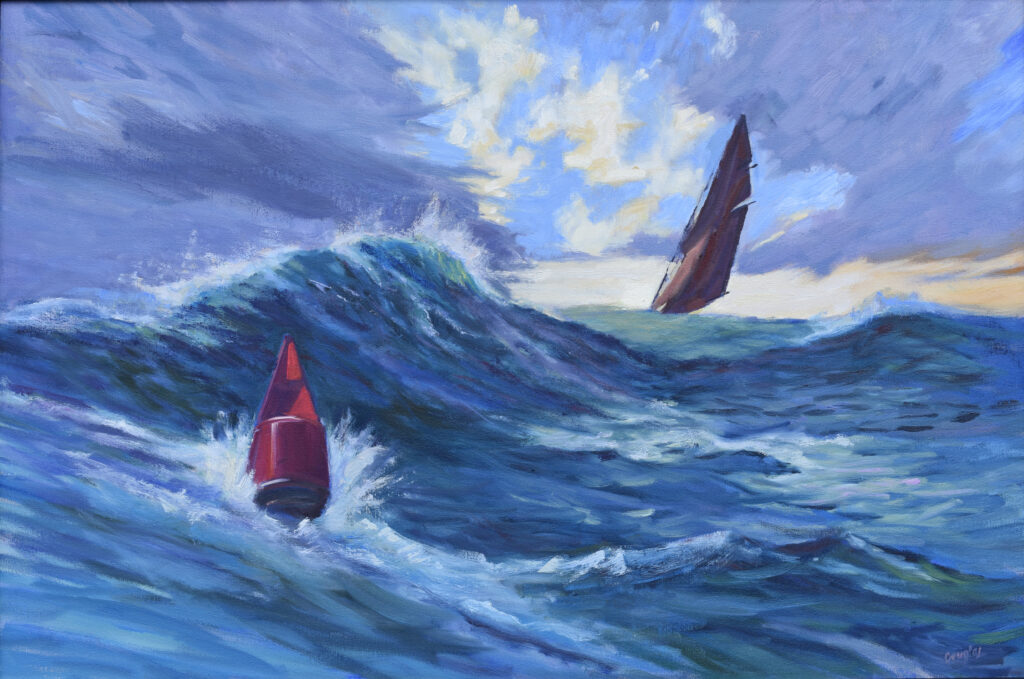
Heavy Weather (Ketch Angelique), 24X36, oil on canvas, framed, $3985 includes shipping and handling in continental US.

Zoom class: Signature series

Tuesdays, 6 PM – 9 PM EST
April 29-June 10

This is a combination painting/critique class where students will take deep dives into finding their unique voices as artists, in an encouraging and collaborative space. The goal is to develop a nucleus of work as a springboard for further development.

We will examine work against both the formal standards of design and the artists’ stated goals. Learn More

From aerobics to art class

In Control (Grace and her Unicorn), 24X30, $3,478 framed, oil on canvas, includes shipping in continental United States.

Did I ever tell you about my brief career as an aerobics instructor? It was back in the early 1980s, when the unemployment rate in my hometown was double-digit and I was desperate for work. I borrowed a cute pink leotard and leg warmers from my cousin, but nothing was going to give me Farrah Fawcett’s hair or Richard Simmons’ exuberance.

The music was awful, but as a student I was used to hearing it only for 45 minutes at a time. Instructors hear it class after class. I lasted exactly one evening.

My friend Catherine asked me to teach an art class around the time my youngest (now 28) was a tiny tot. It was a much better fit. We started in my finished third floor, a table running down the middle and me smacking my head against the rafters each time I stood up straight. A year or two later I moved my studio to the landing. I taught figure and drawing and painting there to students of all ages. Ten years ago this month, I bought this house and moved my operation to midcoast Maine.

I taught weekly classes here until COVID shut me (and everyone else) down. Today I suppose you can learn anything on Zoom but in 2020 it wasn’t such a widespread idea. I’m grateful Mary Byrom wore down my resistance, because I think Zoom art class is as valuable as in-studio art class, and it reaches everywhere.

Cottonwoods along the Rio Verde, 9X12, oil on archivally-prepared Baltic birch, $696 includes shipping and handling in continental US.

A workshop where it’s warm

I’ll be teaching Canyon Color for the Painter at the Sedona Arts Center in Sedona, AZ, March 10-14. I can think of lots of good reasons to take this workshop, including the incredible landscape, the fine organization and my own chops as a plein air teacher, but here’s the most important one:

It’s warmer in Sedona than it is up here in the north. Zoom student Julie Hunt told me it was -13° F in Alberta, CA yesterday. It’s 7° F here in Maine. Meanwhile, in Sedona, it’s 70° F.

This workshop is all about color theory. That isn’t just a collection of truisms like warm-vs-cool. Color is the cornerstone of painting. We’re going to drill down and really master color and mixing in our week in the high desert. Plus, by now I know all the best places to paint.

I hear from the organizers that this class is filling up, so if you’re interested, contact them soon.

The Surf is Cranking Up, 8X16, oil on linenboard, $903 includes shipping and handling in continental US.

A Zoom class on design

“How can I take my students beyond basic drawing to a more complete sense of design?” I asked Laura. Just because she’s on maternity leave is no reason to not pepper her with questions.

Design and drawing was our answer, designed to take you past the basics of measurement and perspective to concepts like focal point, composition, abstraction and more.

All design rests on line and contrast in value, chroma and hue, but value is the most important. For this reason, I’m designing this class to be done in graphite or charcoal. However, there’s no reason a person couldn’t do the exercises in paint. Or both.

The Logging Truck, oil on archival canvasboard, 16X20, $2029.00 framed includes shipping and handling in continental US.

Beyond realism

I really have some hot painters in my classes right now, and my current goal is to push them beyond faithful rendering to a new language of expression. To this end, we’ve done composition experiments, color experiments and more. In the next session, Beyond realism to expressive painting, we’ll continue to build on that idea. You don’t need to have taken the prior class as long as you’re an experienced painter.

A word to the wise

I can never tell how many people will enroll in my classes. I won’t take more than 15 or fewer than six. However, both classes were sold out last session, so if you want one of them, you should register soon.

If you have any questions, email me.

Registration is now open for workshops in 2026! Reserve your spot:

Can’t commit to a full workshop? Work online at your own pace:
Seven Protocols for Successful Oil Painters

Escape from Pleasantville

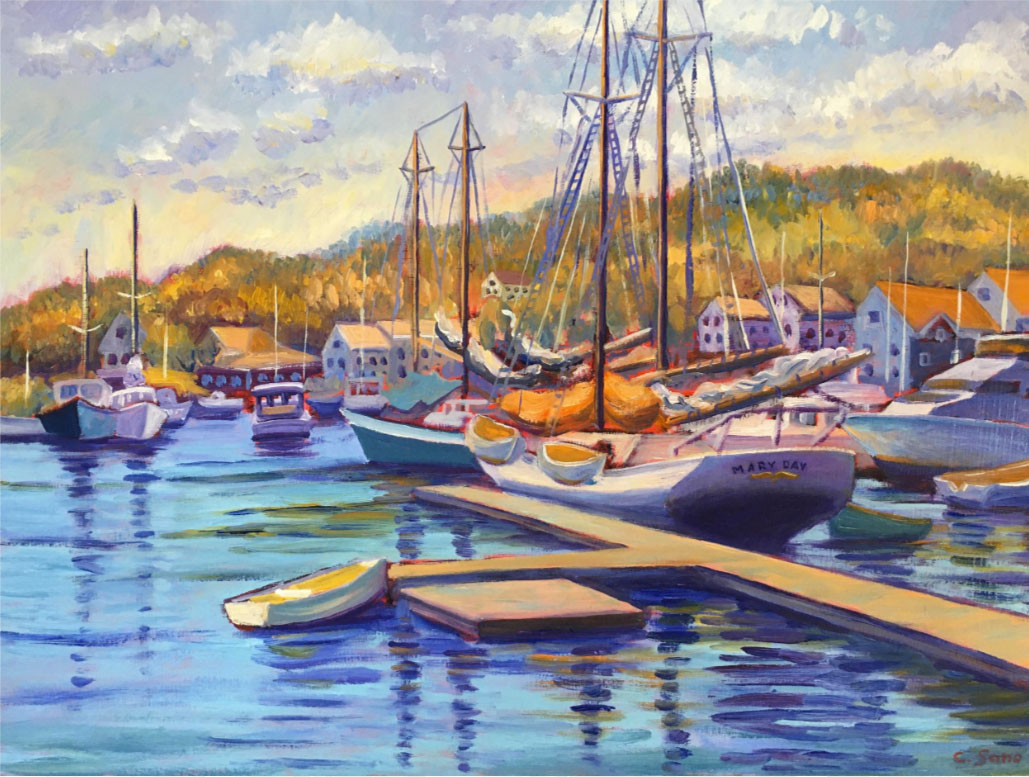
Mary Day on Camden Harbor, Cassie Sano, courtesy of the artist.

“I’ve escaped from Pleasantville,” Cassie Sano excitedly told our zoom class. “I’ve always been afraid to step out of Pleasantville, but now I’m exploring outside of it.

Later, I asked her about this transformation. “It’s not that my paintings were awful. I was just painting too tightly and too carefully with no detail left undefined,” she said. “They were pleasant, but somewhat boring. Afraid to step ‘out of bounds,’ my paintings reminded me of the movie Pleasantville, and I began to jokingly refer to them with that name.”

That’s a 1998 comedy about two siblings trapped in a 1950s sitcom, set in a small town populated by ‘perfect’ people.

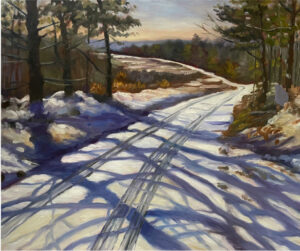
Shadows and Tracks, Mount Vernon, Cassie Sano, courtesy of the artist.

“I left nothing to the imagination of the viewer. I wanted to get the heck out of Pleasantville, but I didn’t know how.”

Cassie is somewhat handicapped in that goal by being one of the most pleasant people I know. Behind her gentle demeanor, however, is a fiercely-fit single-mother and grandmother; she once bounded up Bald Mountain to keep me company while I was painting. And then bounded around the summit to keep herself amused.

She studied graphic design at Salem State University, Elementary Education at Boston College, and cartography and journalism in the military. “In 2018, I retired as a mail carrier for the US Postal Service, and then began focusing on my art. I spent a few years doing pottery, but then shifted to watercolor and oil painting, writing and illustrating picture books, and teaching watercolor painting to beginners.”

“When I first started painting with oils, I was focused on the technical aspects of painting– how to set up my palette, when to use Turpenoid or medium, how to apply the paint on the canvas, and effective use of values and composition. As I became more comfortable with these technical matters, I began to think beyond them.”

Corea Harbor, Cassie Sano, courtesy of the artist.

Transformation from journeyman to master

That makes sense; we must figure out technique before we can dig into meaning and expression. But at some point, technique becomes automatic and we start thinking about deeper issues.

Cassie’s most recent class with me was on bravura brushwork, and that seemed to be what she needed to get past literalism-especially the class where I asked her to paint like Vincent van Gogh. “I could feel myself loosening up and finally seeing how to sneak past Border Patrol… I felt a lot of joy after that class and shouted (to myself), ‘I finally get it!'”

“My goal is to continue practicing these techniques with an emphasis on making my paintings more exciting and joyful for the viewers, and leaving a lot to their imagination,” she told me.

Vienna Mountain Road, Cassie Sano, courtesy of the artist.

Cassie is represented by Eye Feast Art. She is a member of the Kennebec Valley Art Association, River Arts Gallery, and Maine Arts Gallery, and the organizer for the Kennebec Valley Plein Air Painters. In June, she will have a solo show at McLaughlin Garden and Homestead, 97 Main Street, South Paris, ME. The opening will be June 3 from 2-4 PM.

Registration is now open for workshops in 2026! Reserve your spot:

Can’t commit to a full workshop? Work online at your own pace:
Seven Protocols for Successful Oil Painters

My fall teaching schedule

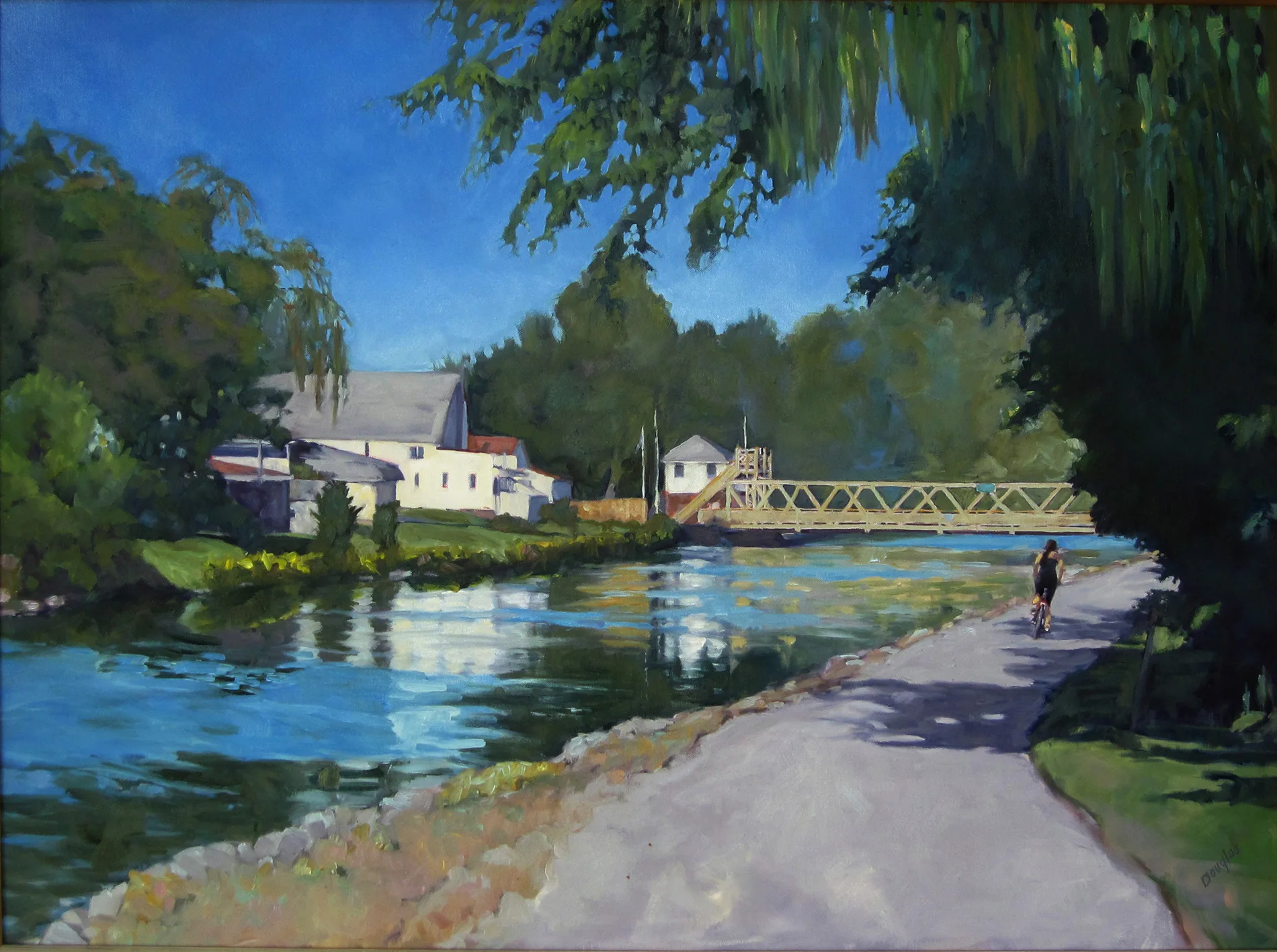
Towpath on the Erie Canal
Towpath on the Erie Canal, 30X40, oil on canvas, private collection.

My painting student from Austin is in Maine briefly. We hiked up Beech Hill together. This is a great way to socialize-the dog gets his workout, you’re outdoors, and you’ve earned a big breakfast at the end.

“Everybody,” he told me, “is jumping on the Zoom teaching bandwagon.” That’s true, but I don’t much like the dominant formula that’s being touted. It’s too much like those social sip-and-paint places, where everyone is assigned the same painting and the instructor leads you through preformatted steps.

I’m not sure what you learn from that, except that potables and paint have a long, sometimes unhappy, relationship with each other. A painting is far more than the pigments that are swished around the canvas. It is choice, composition, focus, line, and color relationships. You don’t learn any of that by having the subject of your work preselected.

I try to tailor my classes to what my students need, instead. This fall I’m teaching three sessions.

Lobster fleet at Eastport, ME, 24X36, oil on canvas, $3985 in a gold-leaf frame.

The Figure in the Landscape

Monday evenings starting September 26

The Figure in the Landscape is meant to address a problem I’ve noticed recently: many excellent painters are unsure of how to add human figures to their paintings. They either avoid them altogether or wash them in as wisps in the distance.

Adding the figure starts with some knowledge of drawing and painting the figure. Then, there’s the question of using people as part of an arresting composition, not as an afterthought.

The American Impressionist Childe Hassam used people, carriages and horses in his landscapes, and today we see a glimpse of turn-of-the-century life from his paintings. They are everyday scenes made real because there is activity in them.

This class is for intermediate and advanced alla prima painters only. To qualify, you must either have taken a class with me and gotten my OK, or you need to submit a portfolio for review. If you have questions, contact me.

Coast Guard Inspection, plein air, oil on canvasboard. 6×8, $435 framed.

Mixing interesting color

Tuesday evenings starting September 27

For those who need instruction on the fundamentals of color and paint application, I’ll be offering Mixing interesting color. It’s not enough to simply reproduce what you see; your painting’s color structure must invite the viewer into your world. Alla prima painting rests on the idea of getting it right on the first strike, so we’ll delve into color theory as well as the practical business of making and applying color with confidence.

This class is for early-intermediate painters who have been introduced to the process of painting but haven’t completely mastered the design/application protocol. If you have questions, contact me.

The world’s best classroom.

Live in midcoast Maine: Plein air short session

Tuesday mornings starting September 27

If you can drive to Rockport, you can take this class. It meets in various beauty spots in the region on Tuesdays from 10 AM to 1 PM. This is the only class where I can handle beginning painters, so if you’re wanting to try painting, it’s a good place to start. (The schooner American Eagle is another, and I understand there’s still a berth open for my September workshop. That comes complete with a good-quality watercolor kit.)

There is simply no better way to learn painting than en plein air (with still life a close second, and figure after that). Maine in Autumn is beautiful, so if you’re still here, plan to join us.

For the details on these classes, see here.