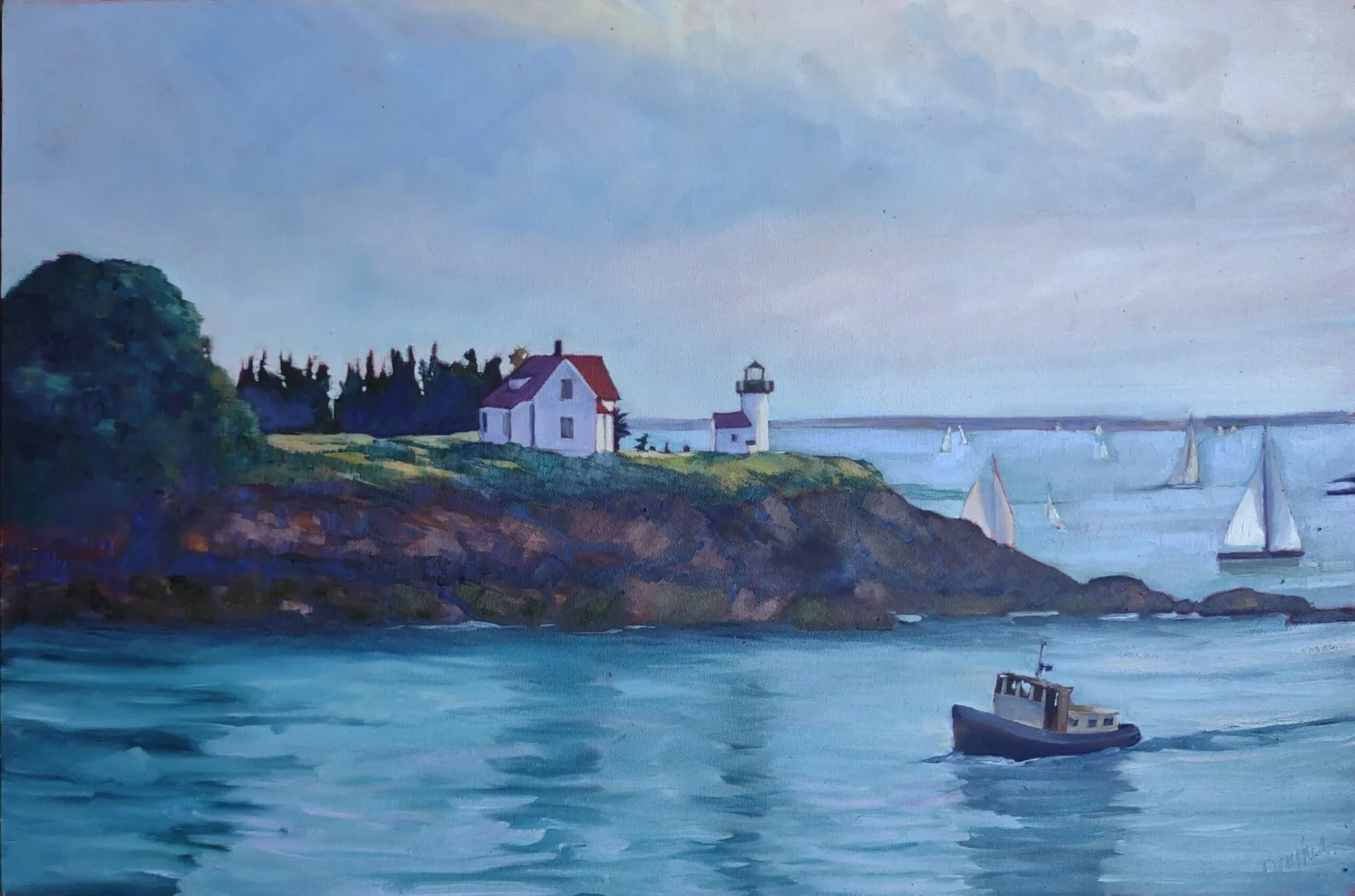
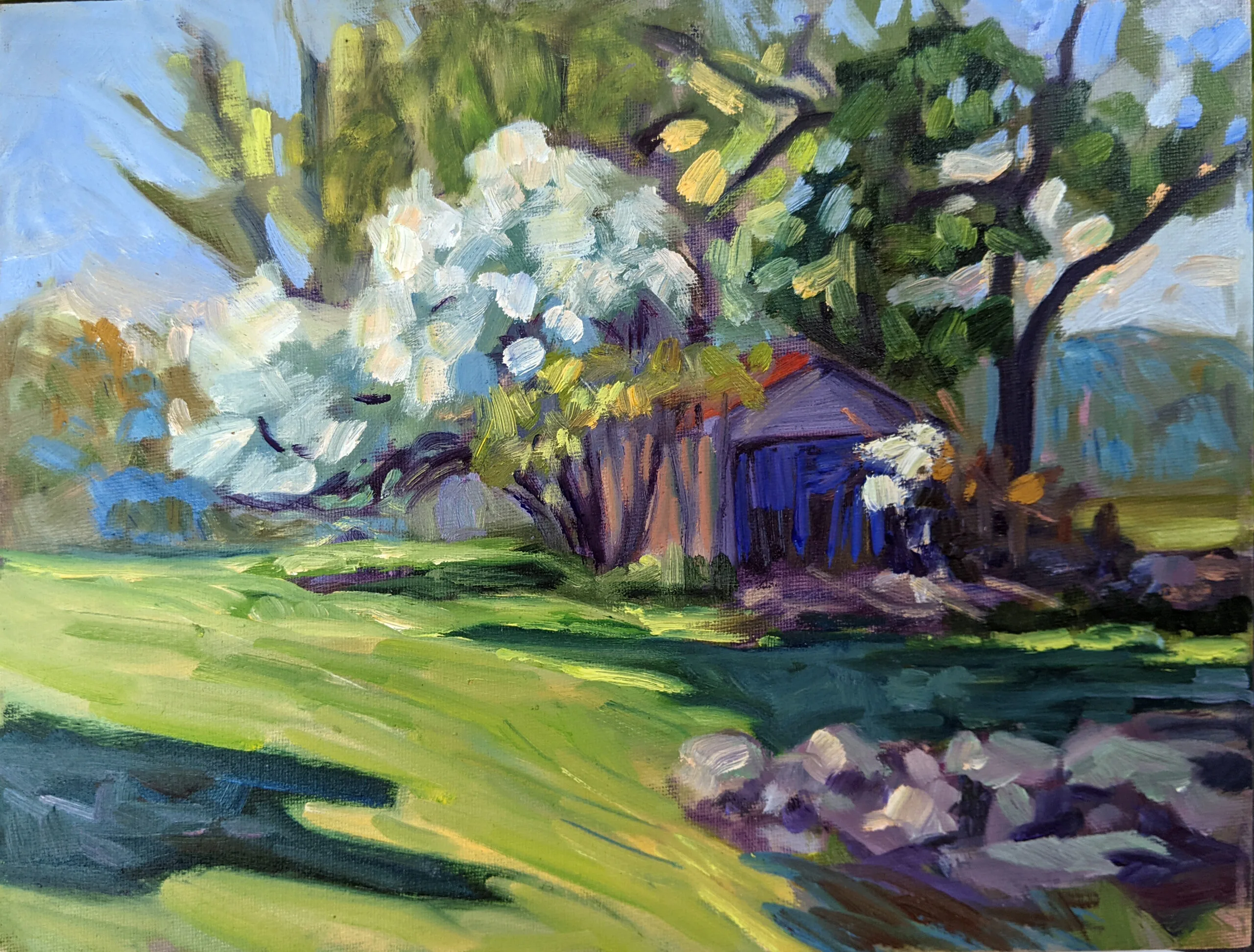
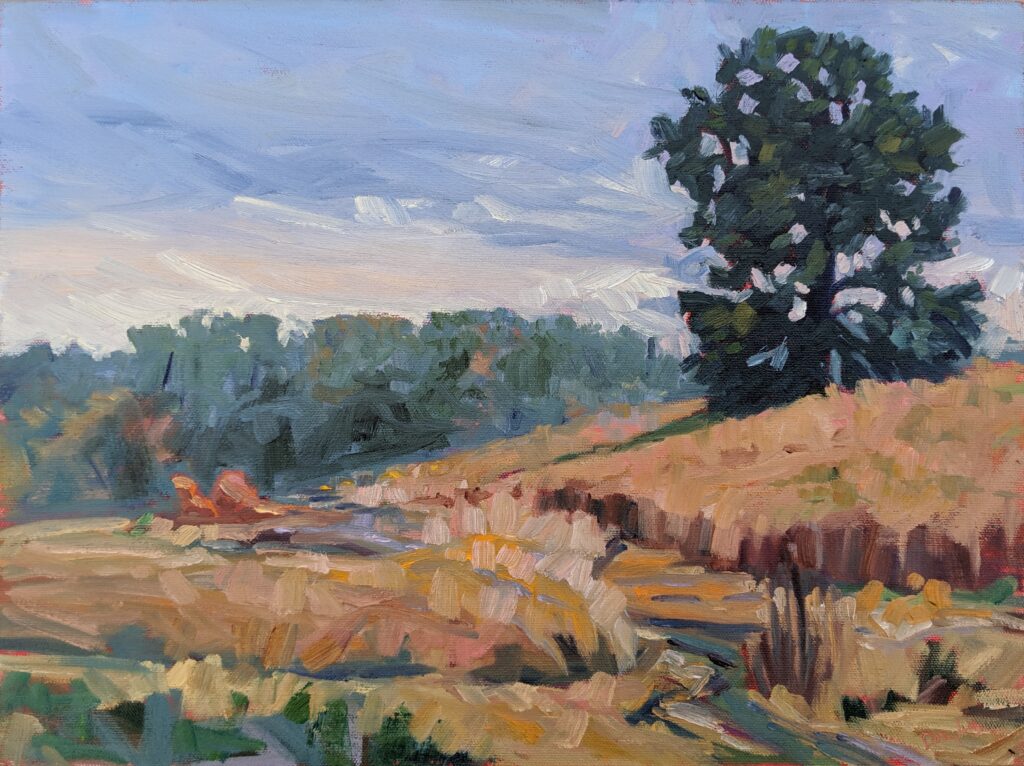
After decades of painting and teaching, I’ve realized there are rules that consistently make painters better. Ignore them, and you can spend years going in circles.
1. See accurately before you paint.
This sounds obvious, but it’s probably the hardest thing on the list. We are thinking creatures, so we easily slip into seeing not what’s in front of us, but in terms of what we think is there. A tree becomes an archetype of a tree. The sky is blue because we’re conditioned to think that way.
Stop naming things and start observing them. What is the actual shape? Where does the light fall? What is the proportion? What is the relationship between colors?
2. Design the painting before you render the subject.
A painting isn’t a collection of accurately drawn objects. It’s a designed two-dimensional shape. Before worrying about the windows in the barn or the leaves on the tree, decide where your big shapes belong. If the composition doesn’t work as simple masses, more detail won’t rescue it.
3. Value is the backbone of painting.
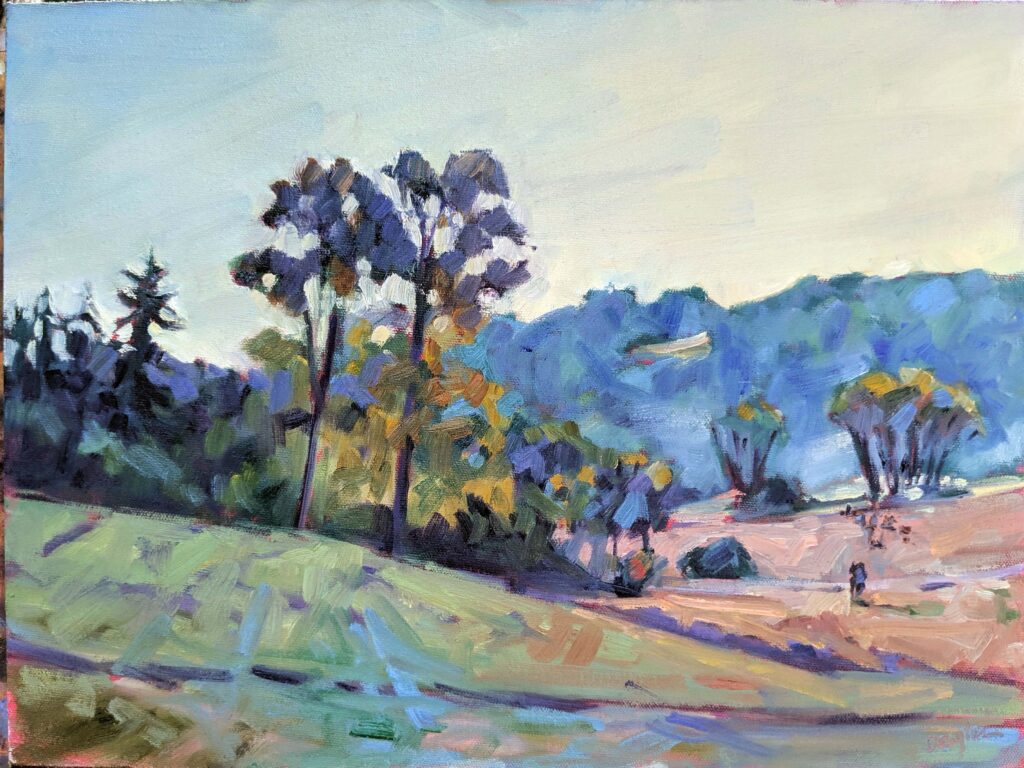
Value is what makes a painting hold together. Squint at your subject and simplify it into light and dark. If those relationships work, you have a foundation. If they don’t, beautiful color won’t save you.
4. Think in masses and relationships, not objects.
Don’t paint a boat. Paint a dark shape against a lighter shape. Don’t paint a cloud. Paint the relationship between the cloud, sky, and land beneath it. Stop illustrating objects and start building a painting.
5. Big shapes before small shapes.
The temptation to fiddle is almost irresistible. We want to paint the little window, the branch, the flower, the ripple. Resist. Establish the largest shapes first, then progressively smaller ones. Fiddling with detail is a form of procrastination, resisting the bigger problem of structure.
6. Learn to draw.
Drawing is thinking. It teaches you proportion, shape, perspective, edges and spatial relationships. You don’t need to become a draftsman, but you do need to understand what you’re looking at.
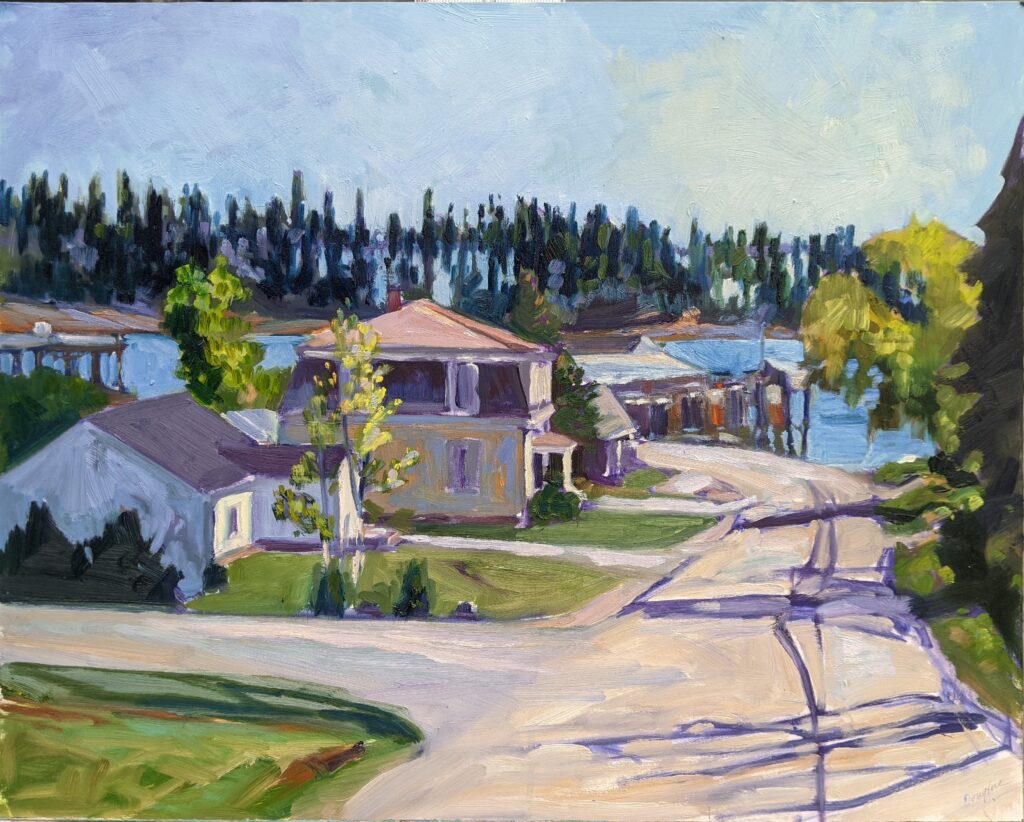
7. Paint from life whenever possible.
Nature is inconvenient, fickle and highly changeable. Good. These encourage you to make decisions. Painting from life forces you to translate the 3D world into 2D space. You learn to see relationships instead of copying information. You learn what matters.
8. Use photographs as references, never as masters.
A photograph is a useful tool, but cameras flatten, distort, crop, freeze and interpret the world differently than our eyes do. Use photographs to remember information you’ve already gathered through sketching and observation. Then make a painting, not a copy of a photograph.
9. Develop a repeatable process.
Inspiration is wonderful but it’s no substitute for hard work.
A repeatable process supports inspiration. Painters have spent two thousand years developing technique for beginning, developing and finishing a painting. There are small differences in what good modern painters teach, but they’re based on the same fundamentals. Start there.
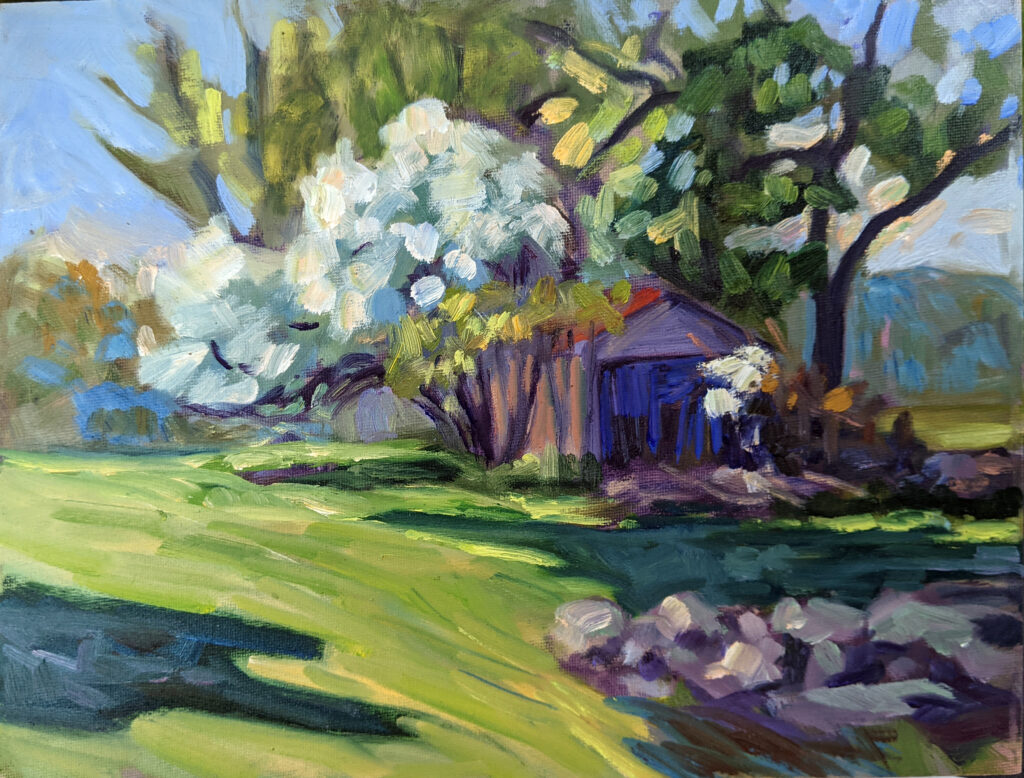
10. Practice deliberately until the process becomes your own.
Painting more isn’t necessarily the same as getting better. Pay attention to what went wrong in your last painting. Identify the problem. Try something different. Try again.
Eventually, the things you once had to think about become instinctive. But don’t think you’re done finding problems to solve; that’s the enchantment and curse of painting.
11. Don’t be boring.
Follow the rules of technique, but make interesting decisions about the content.
Your goal isn’t to become a machine that makes proper paintings. Your goal is to learn enough about painting that you can make your painting—deliberately, intelligently, and with enough nerve to surprise yourself.
I have just two workshops left in 2026! Reserve your spot:
- New! Color Clinic 2026 | Rockport, ME, October 3-4, 2026
- New! Composition Week 2026 | Rockport, ME, October 5-9, 2026
- High-Desert Light & Monumental Form | Sedona, AZ, Apr 26, 2027 – Apr 30, 2027
Can’t commit to a full workshop? Work online at your own pace:
That pretty much covers it! I would also say master your technique and learn your palette, your colors, but I guess that would come under repeatable process and making it your own. In tests and measurements there is a concept called “reliability”, that is essential to any test being considered a valid test of what it is you’re measuring. It simply means that you have to be able to replicate your results. If you cannot replicate your results, the measurement cannot be valid. I think that holds true for Painting as well.
Absolutely, Casey. All excellent points.