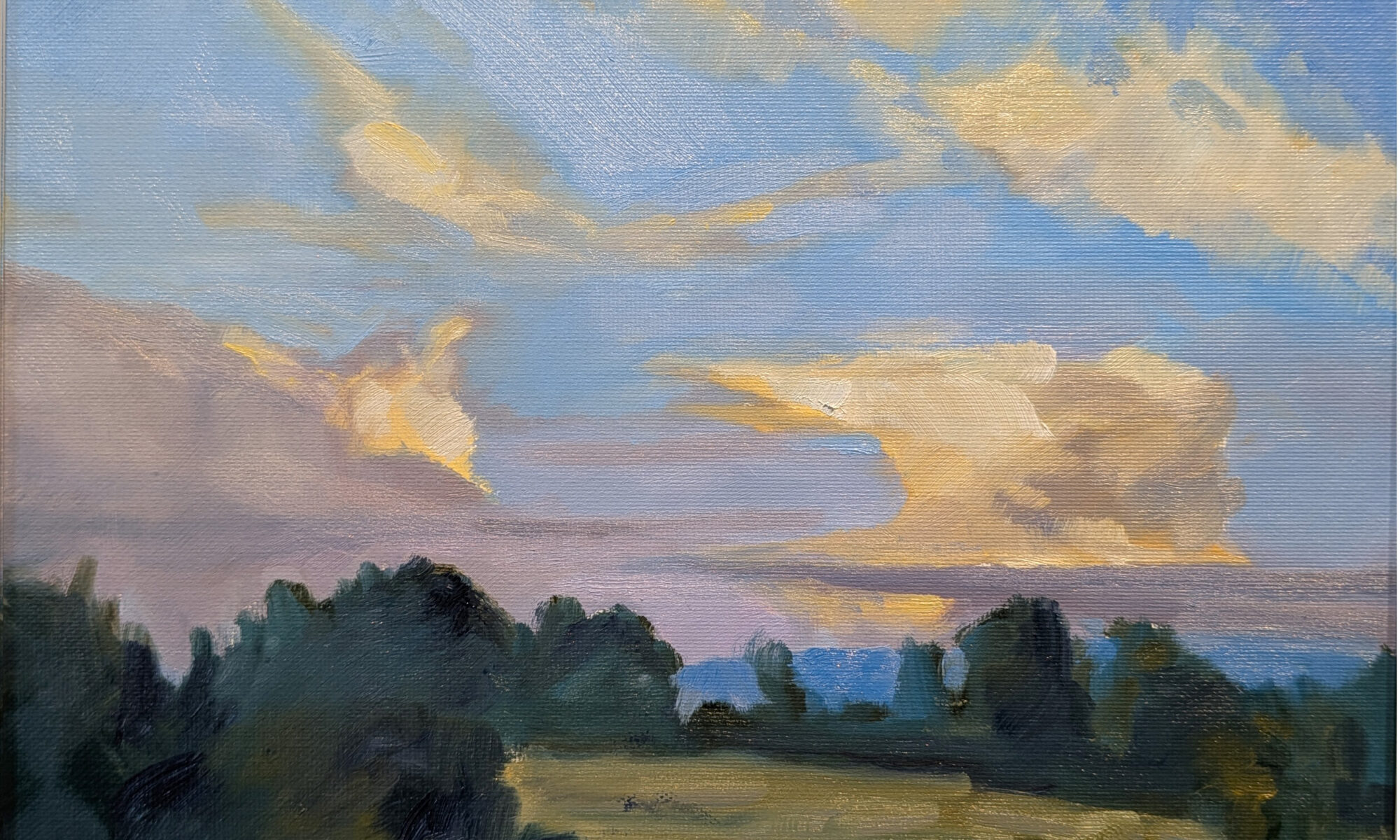
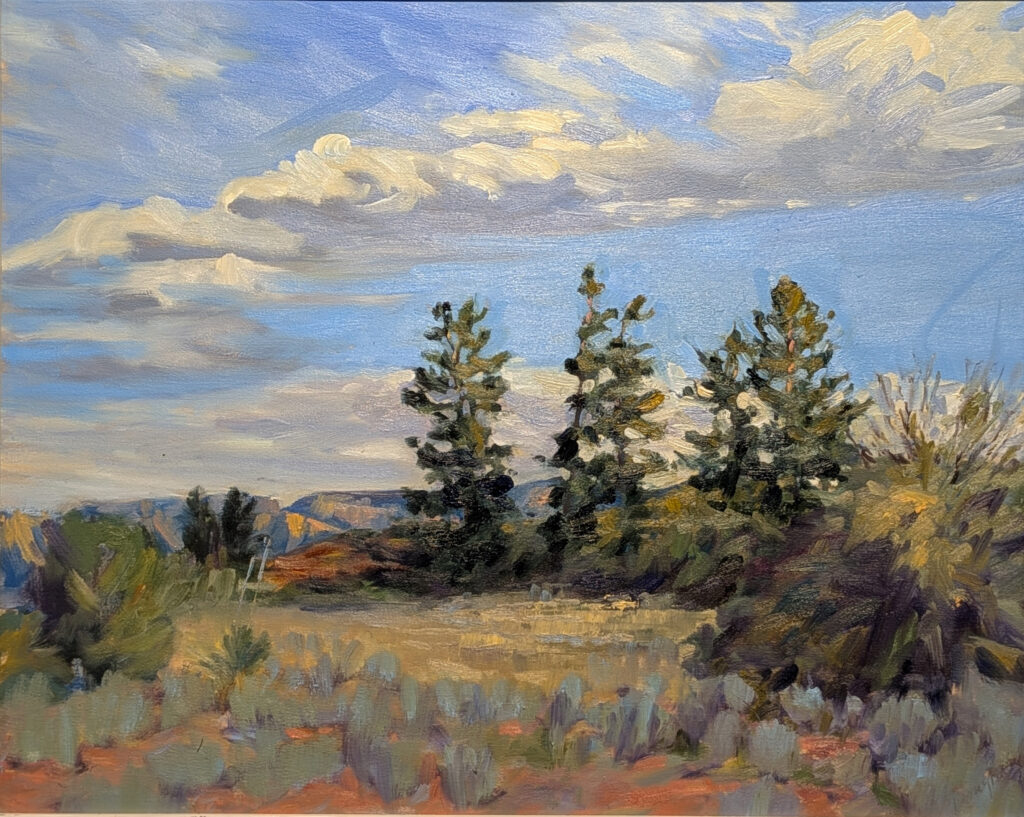
Paintings hold memories of places in a way photos can’t

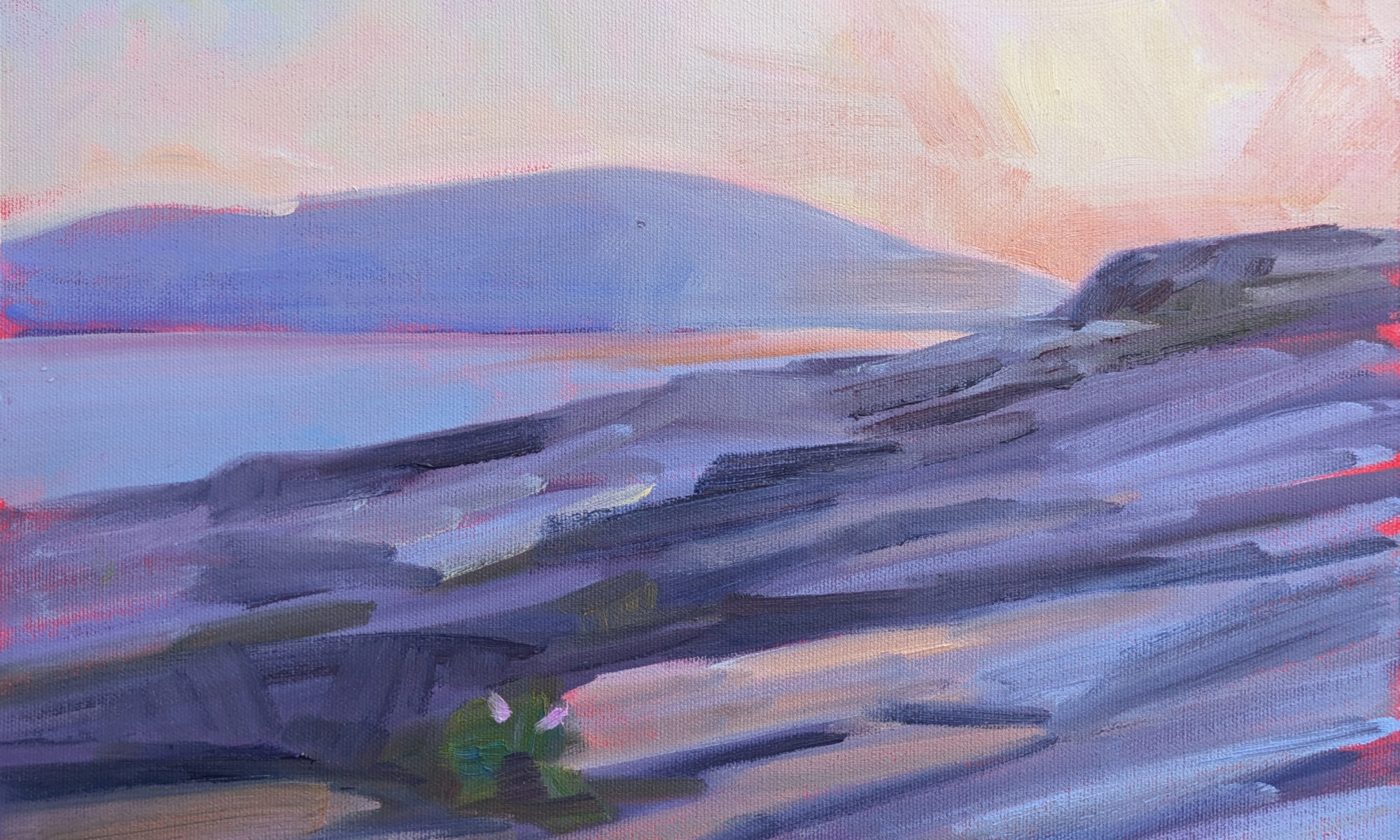
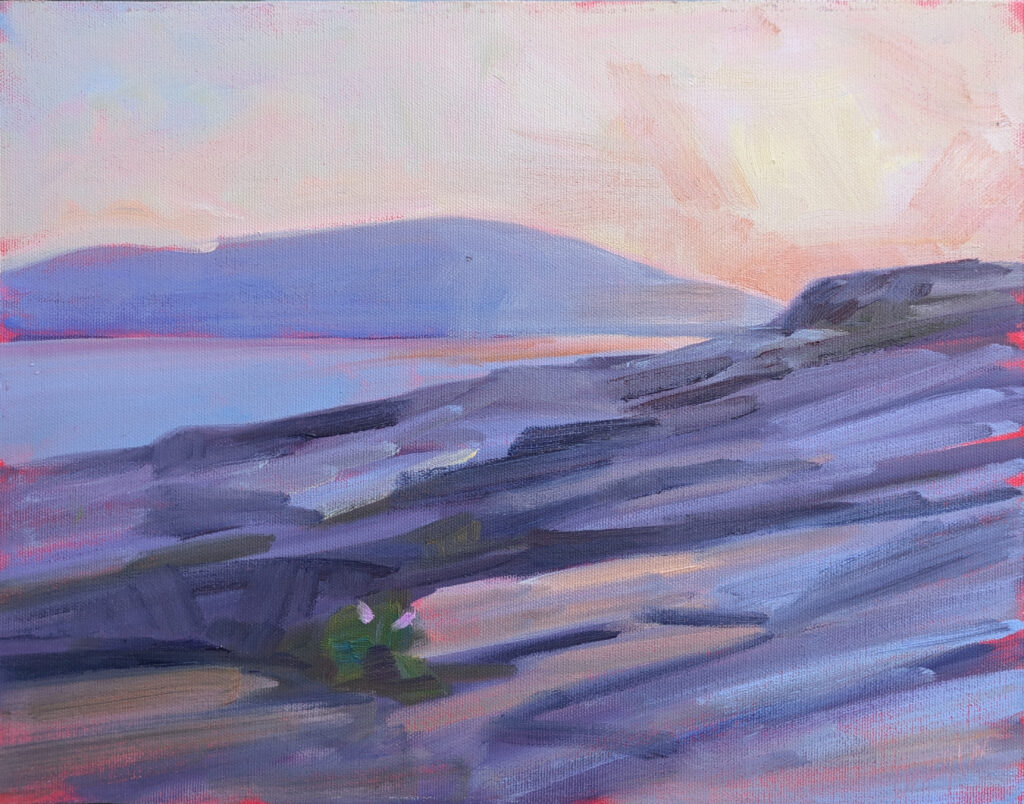
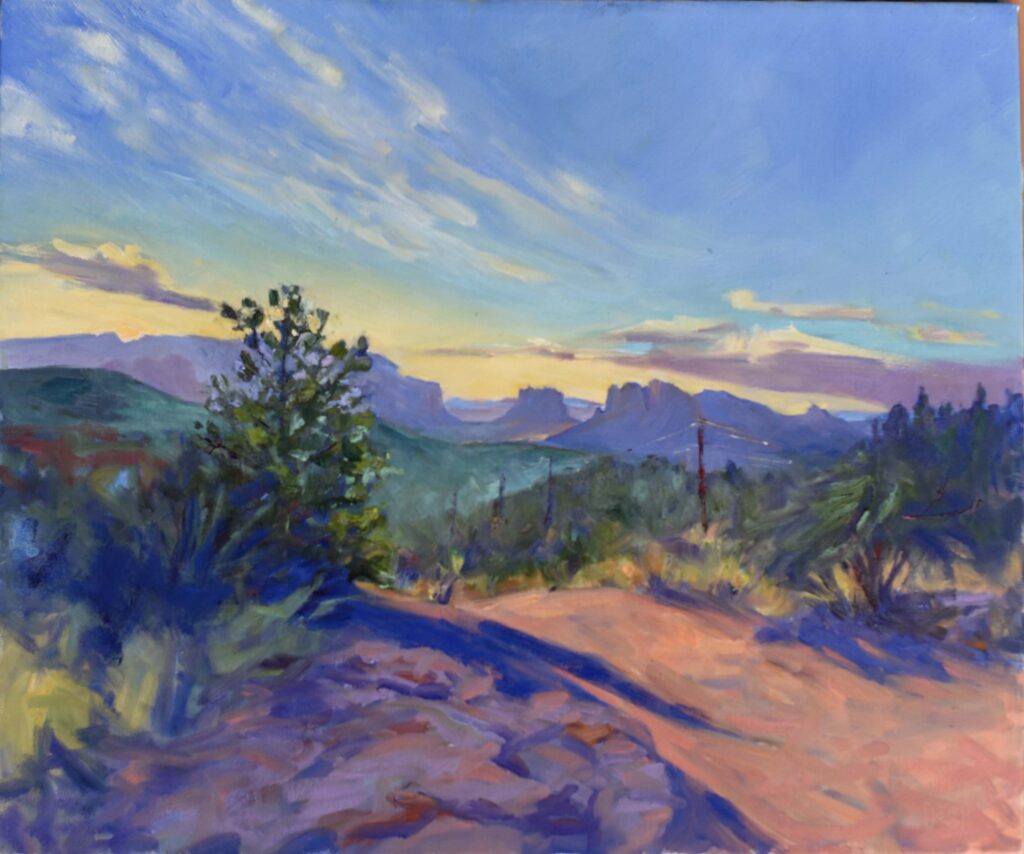
“The End of a Perfect Day,” 16X20, oil on canvas, and I’m sorry about the terrible photo quality.

Yesterday I was painting alongside Dry Creek Road in Sedona with  Krystal Brown and Laura Martinez-Bianco. We’re here for the 21st Annual Sedona Plein Air Festival. Unfortunately, I forgot to photograph my painting during daylight, and I’m afraid of the javelinas who hang out outside at night, so you’ll have to wait for that.

A woman stopped by to see what we were doing. “Paintings tell a story that photos can’t,” she said. “A painting is a memory of a place, but you first have to experience the place.” That’s not always true; if it were, Frederic Church’s The Heart of the Andes would never have been a blockbuster hit. But there is a tangible difference between a snapshot and a painting in terms of capturing the essence of place.

I think of that a lot while painting here, at home in Maine, or indeed anywhere tourists visit. I’ve spent several mornings this week at a scenic overlook at Posse Grounds Park. Cars sometimes stop only long enough for the passenger to jump out and snap a picture. But whether the visitors are on foot or in a vehicle, they all seem to lead with their phones.
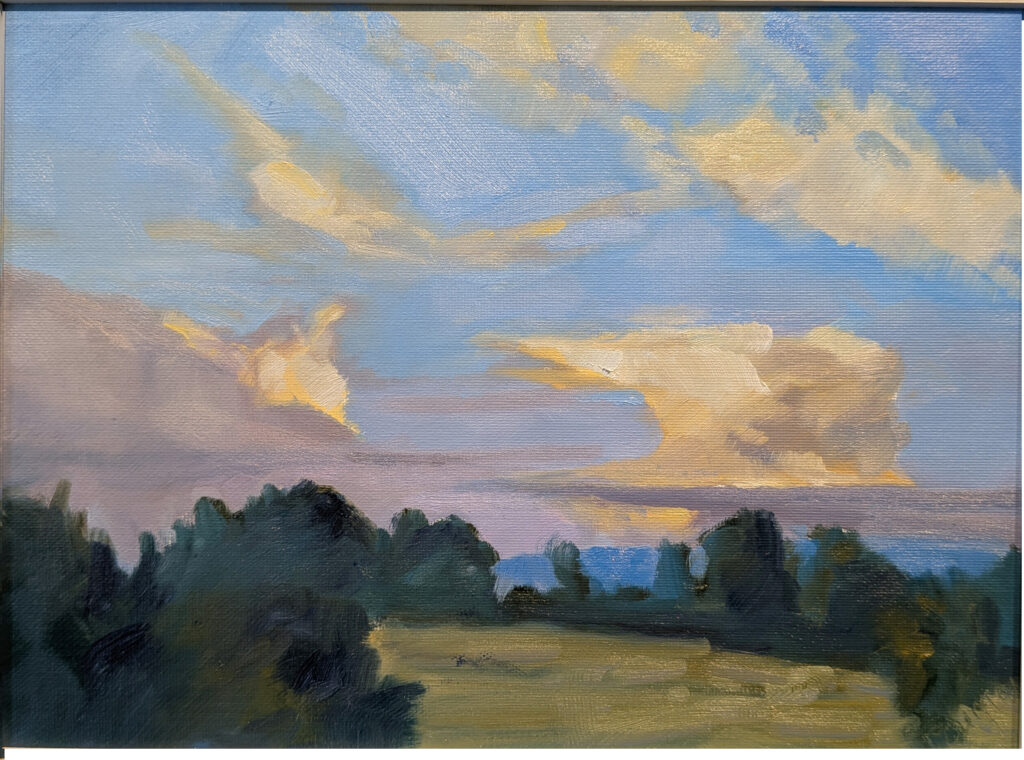
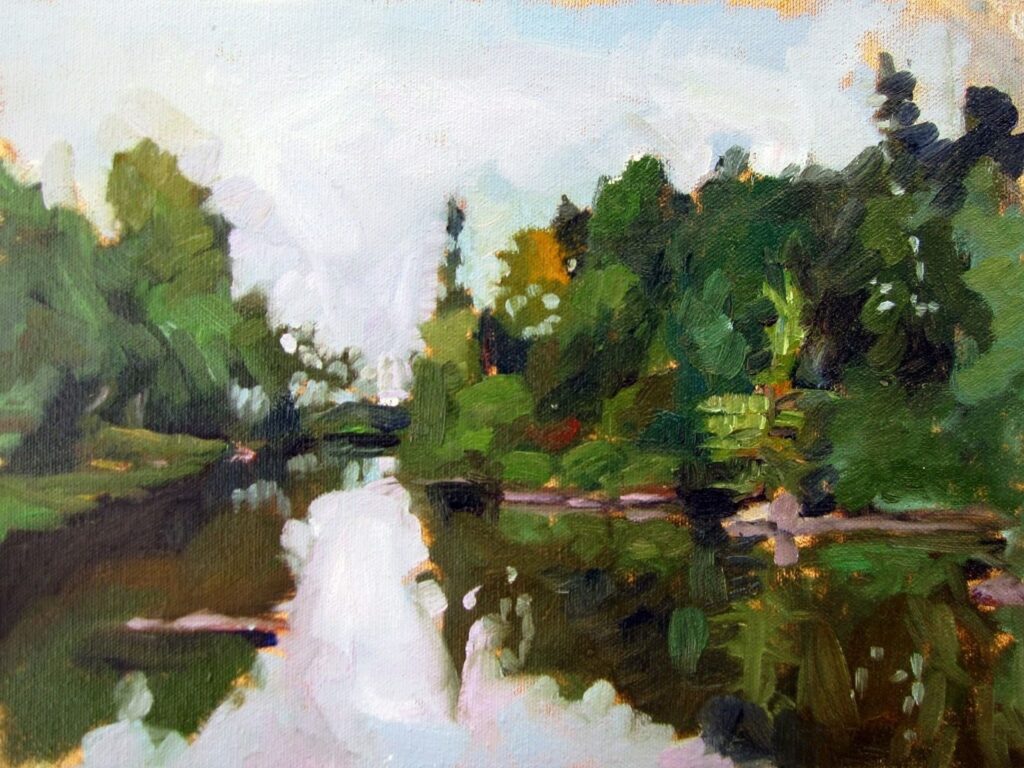
Hammerhead (anvil) cumulonimbus cloud, 9X12, oil on archival canvasboard. Again, it’s a terrible picture. I was so entranced watching this cloud I almost forgot to paint it!

That was an impossibility a generation ago, when we were constrained by 24- or 36-shot rolls of film. Then, we spent a lot more time looking before clicking. Now, we seem to fire off hundreds of shots, constrained by nothing. To me, the irony is that I never even look at the thousands of pictures I’ve taken along the road. Even when I’m lucky and get an excellent picture, it’s still stuck inside my little digital box. It has about the same half-life as an Instagram short (which is measured in hours, not weeks).

Conversely, good paintings engage intensively for a long time. That’s because they capture not only light and color, but a pared-down, essential distillation of experience.

Similarly, they’re a distillation of time. Paintings take hours, versus the fraction of a second that snapping a photo takes. The artist works through changes in weather and light. While we don’t ‘chase the light,’ the passage of time is part of the painting. Our paintings record not just a scene but the state of being that came with it.
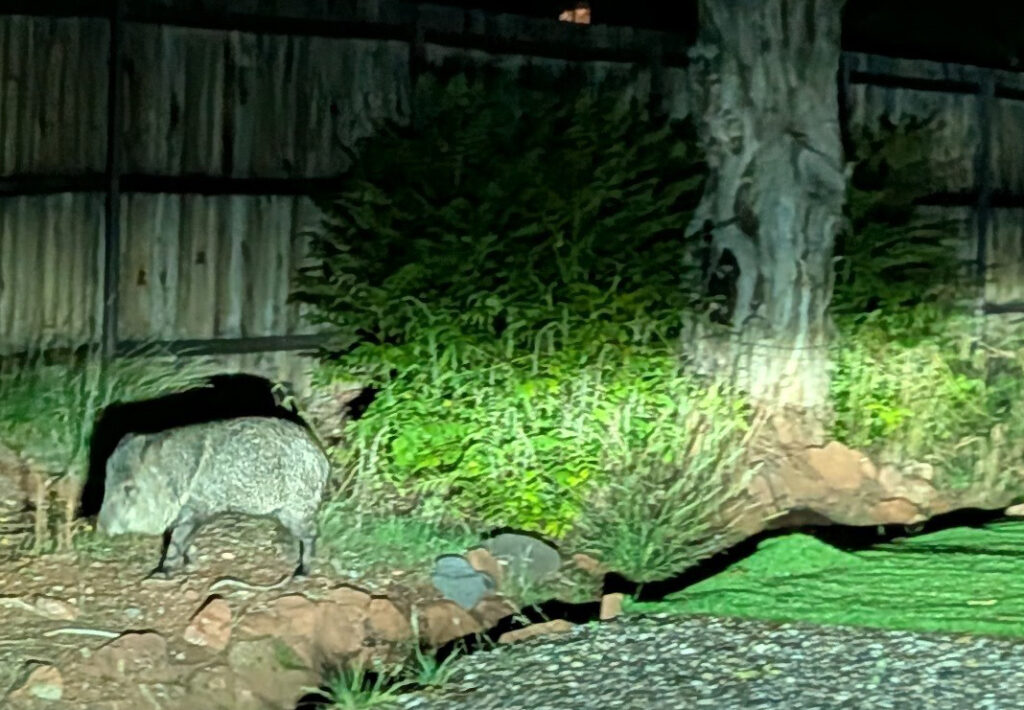
This stinker was lying next to my steps when I got home on Wednesday night, with about a dozen or more of his buddies in close attendance. “They won’t hurt you if they don’t feel threatened,” my friend Debbie counseled. Then she added, “but don’t get out of your car.”

Painters are translators, not copyists. I see that in every person I teach. While I can help them develop technique, I can’t alter their essential worldview (nor do I want to). I look at paintings by others differently than my own work. In the front hall of my house, I have (among others) paintings by Poppy Balser of Advocate Harbor, NS; by Jane Chapin of Lower Colonias, NM; by Tom Conner of Cornville, AZ. These are all places I love, by painters I admire.

Even if you have a great printable photo on your cell phone, it will never command the same attention as a painting, which is a tactile, hand-wrought object from one human being to another. In today’s world, that’s a rare commodity.

I’ll be demoing at the Sedona Arts Center this afternoon at 1 PM, along with Laura Martinez-Bianco and Casey Cheuvront. That’s at 15 Art Barn Rd, Sedona. On Saturday, we’ll hang out final pieces for sale and judging, and they’ll be available through 2 PM on Sunday. There’s more information here.

Miss Congeniality (hah!) is painting with old friends

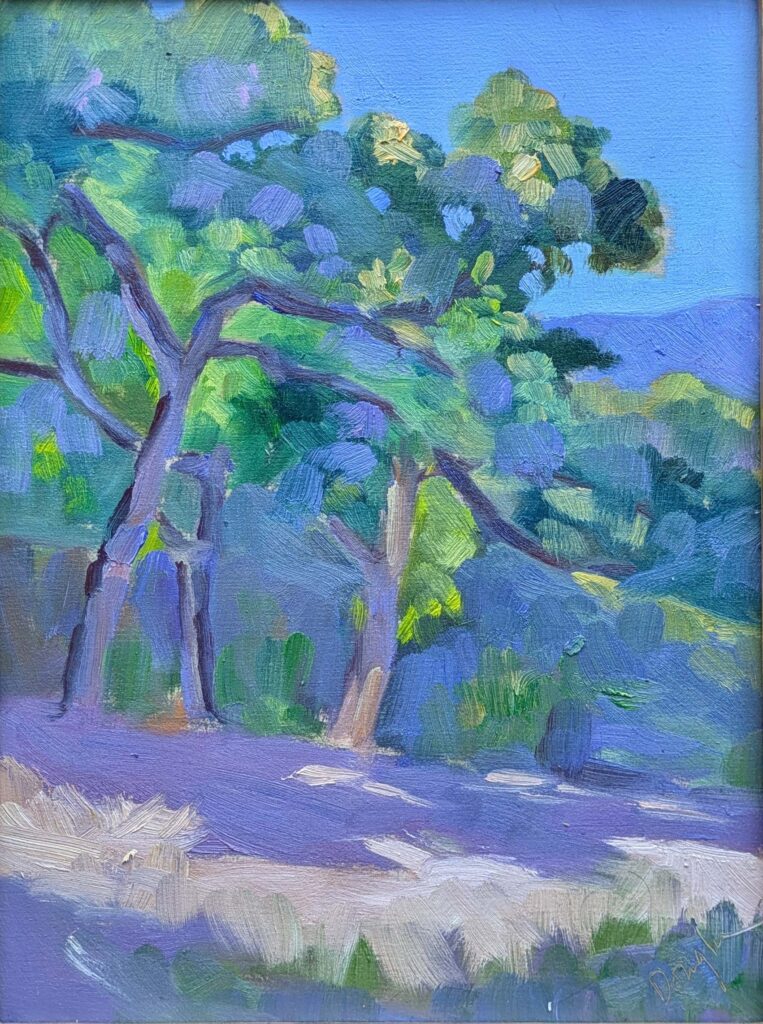
Sycamore Shadows, 14X18, oil on archival canvasboard, won an honorable mention at our first ticketed paint out.

There’s something energizing about plein air events. It’s not just the fresh air or the radical change of scenery. It’s the camaraderie. I don’t do nearly as many of these as I used to, and whenever I’m at one, I wonder why I’ve cut back.

I like to compare plein air festivals to other closed circuits like rodeo or horse or dog shows. There are surprisingly few regulars, and they keep showing up, over and over. Over the years we get to know each other pretty well. Ironically, I’m painting here at the 21st Annual Sedona Plein Air Festival with Olena Babak. We’re both Mainers but we haven’t seen each other in a few years. That’s ridiculous.

View across the Verde Valley, 11X14, oil on birch panel.

That inverted bowl they call the sky’ is itself the introduction, so relationships are easy. We’re all here thinking about the same things. While these events are competitions, they’re overwhelmingly friendly.

I last saw one of this year’s painters a decade ago. It might have been last week, so easily did we fall back into our old joshing. Some of the artists here are my buddies; others I see only once a year. But that is irrelevant when we’re painting.

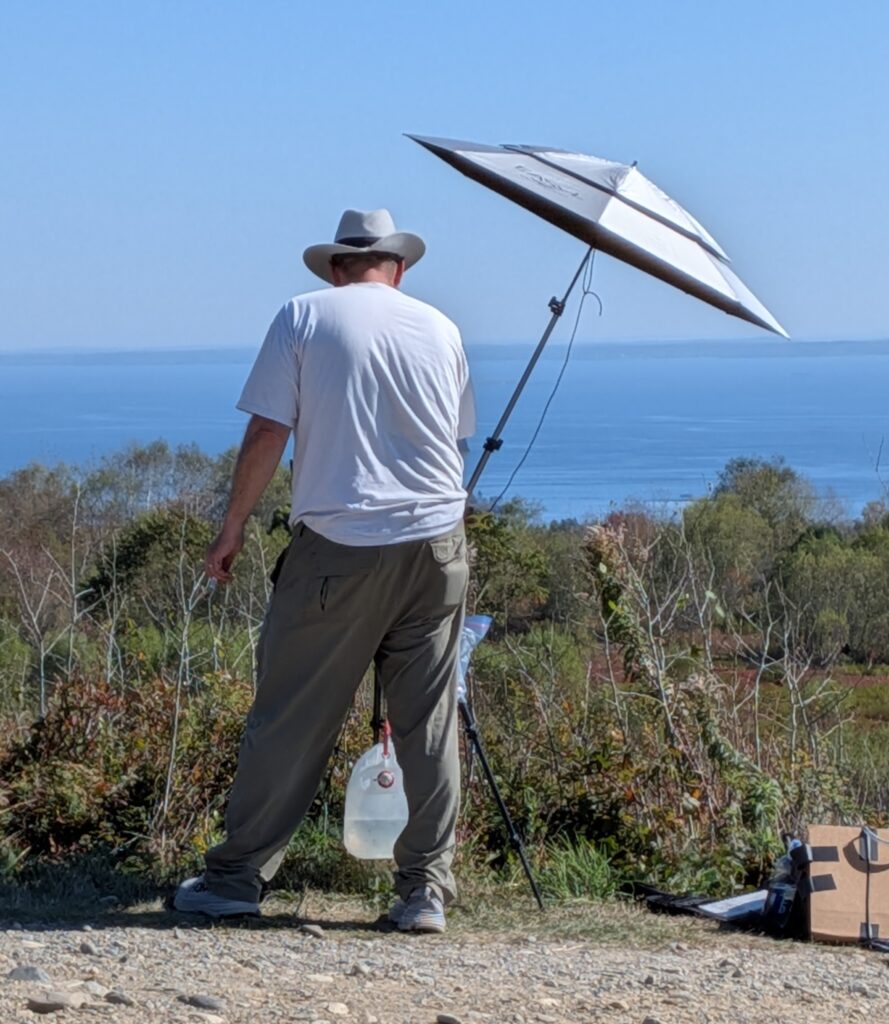
Art is a funny paradox. It’s essentially a solitary task, but it’s also a shared experience. The casual critiques, the borrowed umbrella (thank you, Krystal Brown) and the jocularity are the moments that both nourish the soul and sharpen the eye.

Crepuscular rays from Forest Road 525, 8X16, oil on linenboard.

As of this morning, I’ve finished three paintings, started a fourth, and painted one absolute dog. The pictures are poor because I keep finishing after dark, but you get the gist of it.

Why Sedona?

If you’ve never painted in Sedona, you’re missing out on a unique experience. I have the great fortune to teach here in March as well as participate in the festival. Four years of painting here intensively, twice a year, and I finally understand the light, the color and the topography. It’s not like any other place I ever paint.

Laura Martinez-Bianco painting into the sunset. As long as there’s light, we paint.

If you’re in Sedona today

Organizers have added 25 additional tickets to tonight’s paint-out at an exclusive private residence near Doe Mountain. You’re invited to watch us work. But hurry—the first tranche of tickets sold out fast. Your ticket will include wine, beer, and gourmet bites from Lighthouse Kitchen as you mingle with artists, collectors, and fellow art lovers. Festivities kick off at 4 PM.

For more information, click here.
Monday Morning Art School: why some colors fade

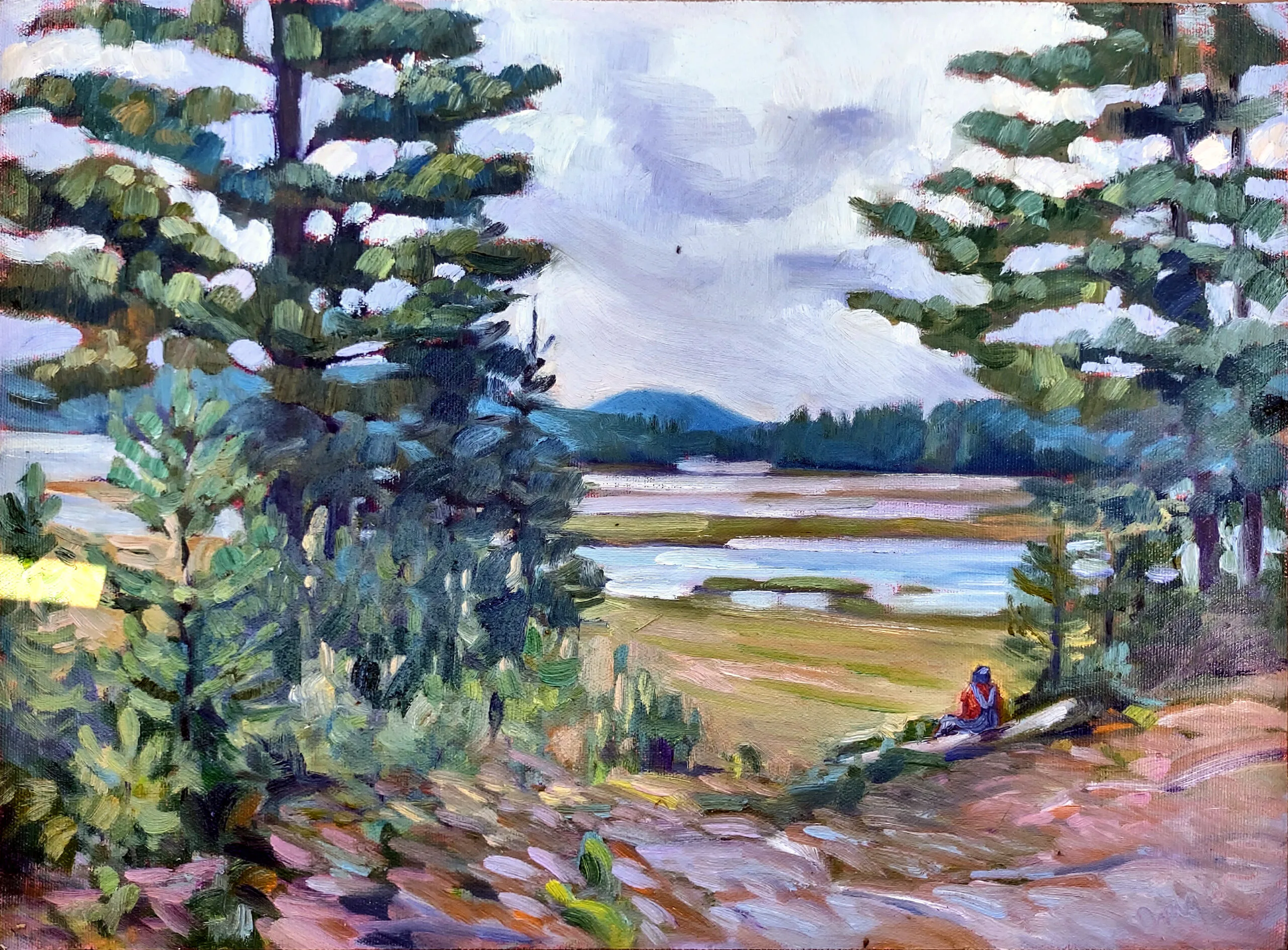
The pine nursery (Madawaska Pond), 12X16, oil on canvasboard, available.

Regular readers know I’m serious about replacing heavy-metal pigments with their non-toxic equivalents. The hardest is the cadmiums, since they mix differently from their non-toxic analogs. However, I’ve done well with everything but cadmium orange.

Research suggests there’s a fugitive pigment problem with two common cadmium substitutions: naphthol red and Hansa yellow. However, the science is mixed. Are these colors going to fade over time? Yes, no, and maybe.

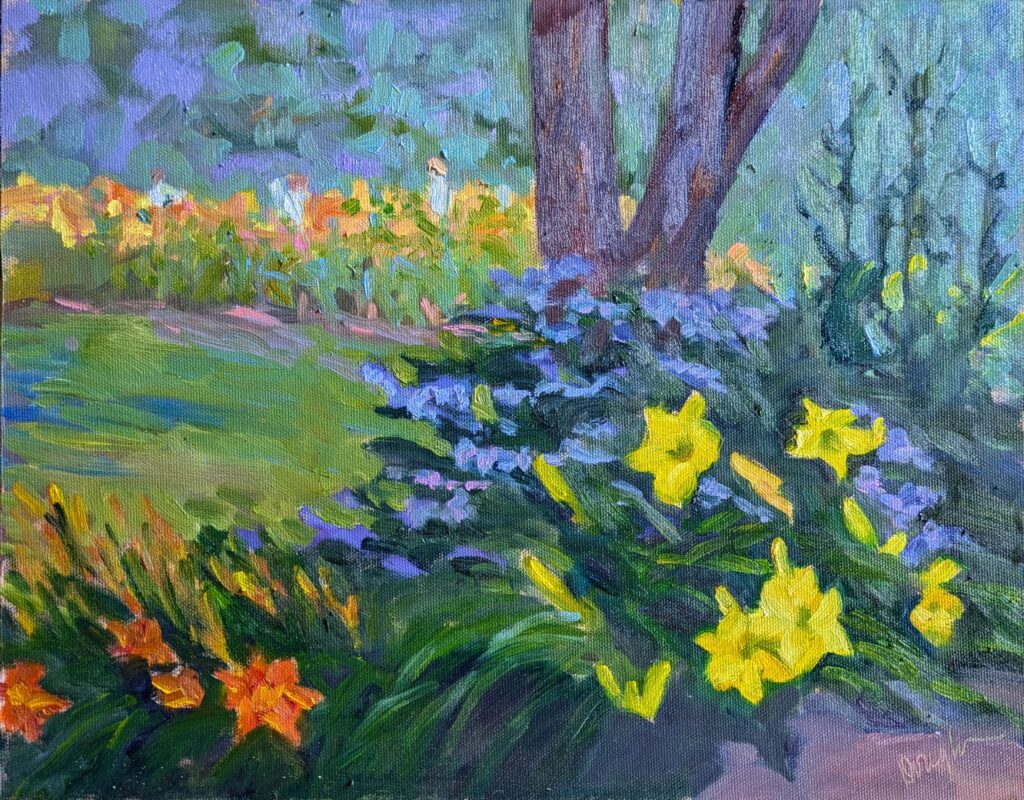
Daylilies and lace-cap hydrangea, 11X14, $869 includes shipping and handling in continental US.

The binder matters

Compared to oil paints, watercolor pigments fade faster (which is why I use this watercolor site as my first stop in researching pigments). Oil paint is made with linseed (or walnut, or safflower) oil, which forms a durable film as it cures. That film offers some natural UV protection and binds the pigment tightly to the surface. Watercolors, on the other hand, rely on gum arabic and leave almost no film. The pigment is just sitting there exposed. So, all pigments last longer in oils than in watercolor, especially when the work is varnished.

The paint manufacturer matters a great deal. Cheap student grade paints are made with cheap pigments, and the result is often fading. If you’re serious about painting, choose serious paint.

I’m about to get into the weeds of pigment numbers. If you’re not familiar with how they work, read this on how to read a paint tube, or check the manufacturers’ websites. If they’re good paint-makers, they’re upfront about the pigments.

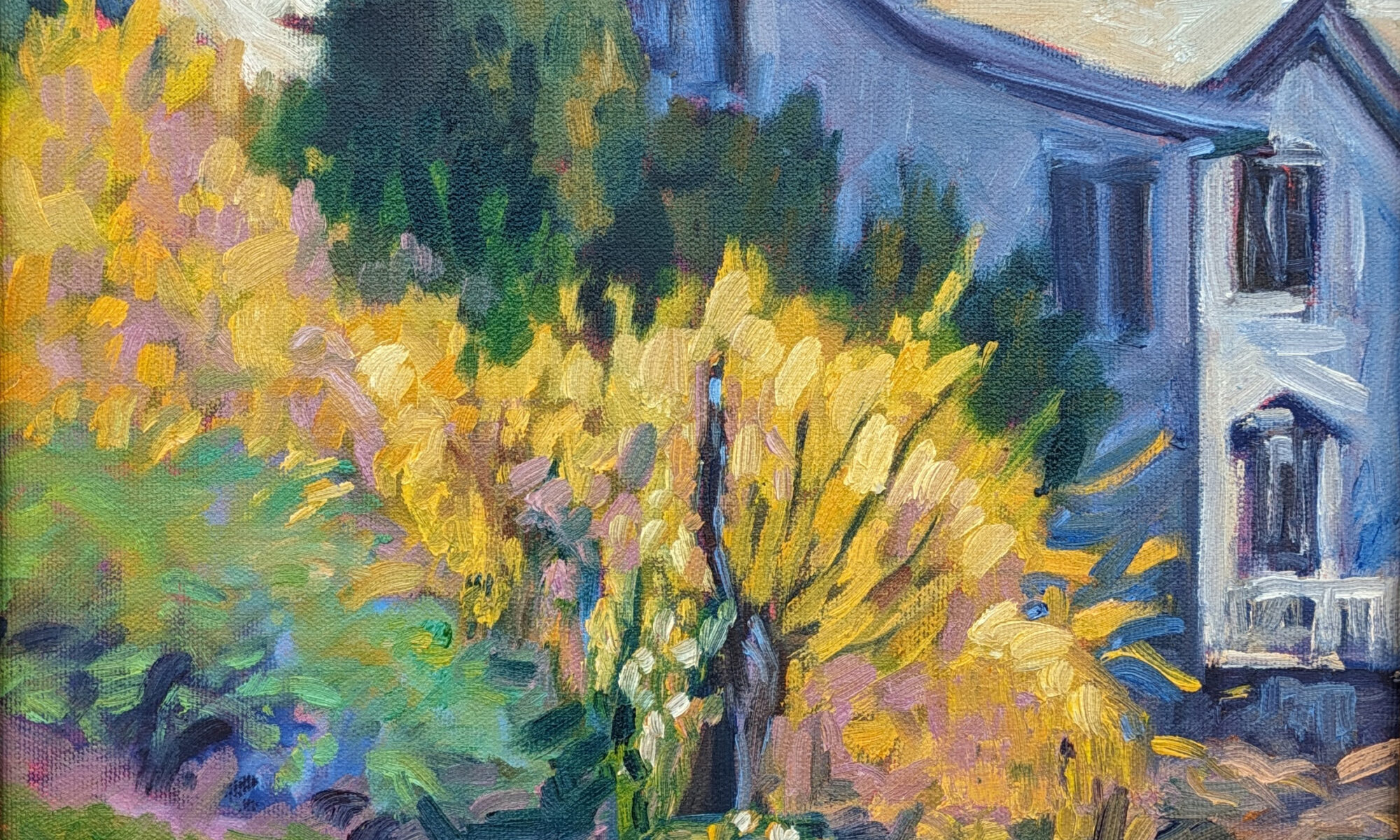
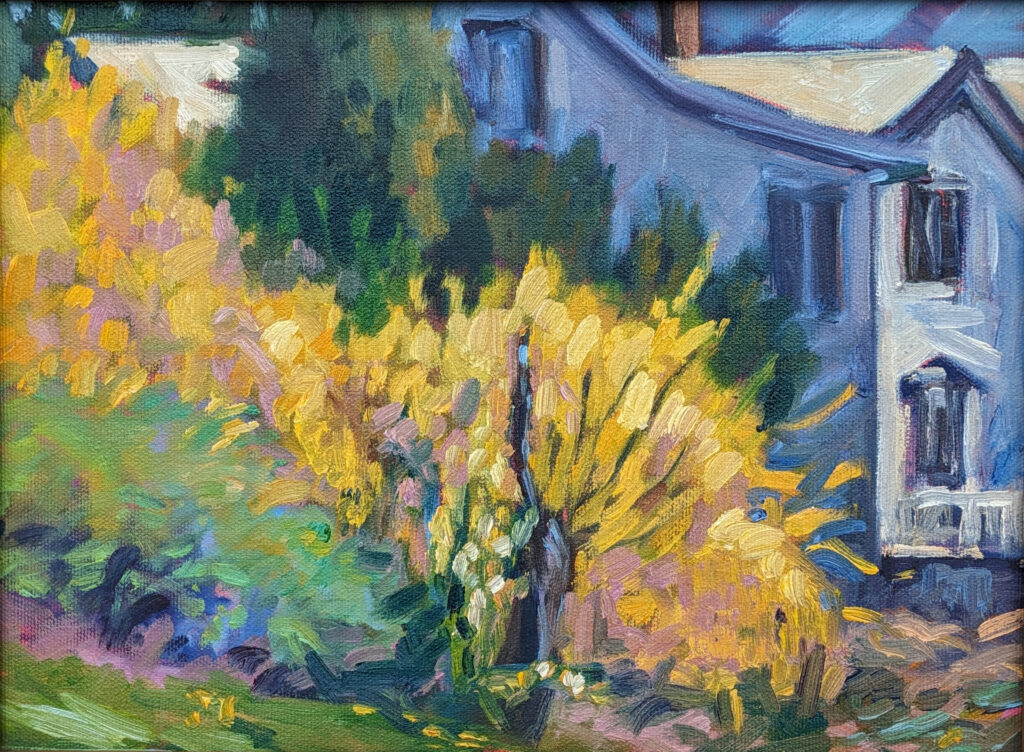
Forsythia at Three Chimneys, oil on archival canvasboard, $869 framed includes shipping and handling in continental United States.

Is Hansa yellow fugitive?

Hansa yellow isn’t a single pigment—it’s a family of modern, synthetic yellows based on arylide chemistry. You’ll see them on paint tubes labeled as PY3, PY73, and a few other close cousins. Some versions are more lightfast than others, but all of them fall somewhere in the middle—not entirely fugitive like Alizarin Crimson, but not bulletproof. Add to that the fact that different brands formulate their paint with different binders and pigment loads, and the result is a maddening lack of consistency.

The ‘lemon yellow’ Hansas are the worst offenders. PY1 and PY2 are fugitive or marginally lightfast pigments. PY3 varies by manufacturer and batch. The medium and deep Hansas are more lightfast, including PY97, PY65 and PY74 (which is commonly found in acrylics). 

Naphthol red

The fugitive Naphthol reds are PR3 and PR9 (developed primarily as a printing ink). Look for PR112, PR170 and PR188. Better yet, substitute a Pyrrole Red; they’re all lightfast. PR254 is one of the most light-stable reds available on the market today.

Cypresses and Sunlight, 11X14, Carol L. Douglas, $1087

The sad story of the disappearing quinacridones.

I love all the quinacridone pigments—they’re lightfast, brilliant and inexpensive. But certain of them, especially on the yellow and red end, have disappeared or become very difficult to find.

The problem is industrial. Pigment manufacturers don’t exist for the art world. We’re a tiny sliver of their business. These pigments were originally developed for things like car paint and plastics. If a particular quinacridone pigment stops being profitable for auto manufacturers, it often gets discontinued. That’s exactly what happened with the original PO49 Quinacridone Gold—it was taken off the market because the volume sold to artists just couldn’t justify the cost of keeping it in production.

How to choose stable, long-lasting pigments

Always start by reading the pigment numbers, not just the names on the tubes. Don’t panic if your favorite paint changes—just test, adjust, and keep painting. Buy products from good manufacturers. And make peace with the idea that nothing lasts forever.

Got a favorite discontinued pigment or a lightfastness disaster story? Drop it in the comments—let’s commiserate together.

The working-mother artist

Inlet, 9X12, oil on archival canvasboard, $869 includes shipping and handling in continental US

Taylor Swift recently addressed rumors that when she and Travis Kelce marry, she’s going to quit making music and stay home and make babies. She called the idea “shockingly offensive.” She refuses to equate marriage and family with disappearance. “That is not why people get married, so they can quit their job,” she added.

I’m a wife, artist and mother of four. I worked through their childhoods. I believe they’re the best work I’ve ever done, but I also don’t regret working.

Cottonwoods along the Rio Verde, 9X12, oil on archivally-prepared Baltic birch, $696 includes shipping and handling in continental US.

That doesn’t mean it was easy. When my twins were infants, a newspaper reporter wanted to interview me for a story on “having it all.” My husband was in grad school and we were both surviving on almost no sleep. Our house was a tip. “There’s no ‘having it all,’” I snapped.

Writer Nora Roberts said “the key to juggling is to know that some of the balls you have in the air are made of plastic and some are made of glass. And if you drop a plastic ball, it bounces, no harm done. If you drop a glass ball, it shatters, so you have to know which balls are glass and which are plastic and prioritize catching the glass ones.”

That’s true, but as Debby Lee responded, “there is one other type of ball which cannot be ignored… This third ball type is made of lead: when you drop these types of balls, they do not bounce back.” Nor should they. In the book I’m never going to write—100 Best Things About Having Cancer—the first thing will be ‘getting out of things you no longer want to be doing.” It took being seriously ill for me to learn to say no.

Sunset over Cadillac Mountain, oil on archival canvasboard, $869 includes shipping and handling.

The romanticized woman artist

When Käthe Kollwitz married in Berlin in 1891, she was an outlier: a woman who did not quit working to keep house and raise her family. “There are three things that have been of importance in my life – having had children, a faithful life-long companion and my work,” she wrote. Her husband never expected her to be a homemaker, and according to Taylor Swift, neither does Travis Kelce.

Dawn along Upper Red Rock Loop Road, Sedona, 20X24 oil on canvas, $2318 unframed includes shipping and handling in continental US.

Our culture loves to romanticize the struggling artist and the dedicated amateur who isn’t in it for the money. It’s far less comfortable with the man or woman who makes a living in the arts and approaches it as serious work. That problem is magnified for women artists since they average less money than their male counterparts. In response, many of us try to cover more household tasks to try to balance the financial scale. That puts us in the position of treating creativity as optional, something we can reclaim “when things calm down.” But I’m old and things haven’t calmed down yet. If you don’t do it now, when will you?

I’d still like to know how to balance everything. But I do know that personal balance is not about symmetry; it’s about priority. And our priorities shift over time.

Taylor Swift said that Travis Kelce loves her because she’s fulfilled by her art. Isn’t that the kind of love we owe ourselves too?

Curve balls!

Amazing Grace, 16X20, oil on archival canvasboard, available through Sedona Arts Center. Purely imaginary and so much fun to paint!

“Resilience” is a trendy term that means the ability to recover, adapt and keep going when things don’t go as planned. Personally, I hate the whole idea. I’d expected to need it less in my dotage, but life… doesn’t go as planned.

I’m packing to go to the 21st Annual Sedona Plein Air Festival, which is one of the maddest, gladdest events in my calendar. My plan was to drive, but my husband was grounded by his doctor just two weeks ago. Now I plan to drive to Albany, leave him with our kids and fly from there. That meant either shipping out my frames and finished paintings or carefully curating them so they fit in a third piece of luggage. I decided on the latter. That in turn meant painting a smaller, replacement work. Luckily, I had a good idea and just enough time to execute it.
I’ve flipped my frames and paintings around six ways to Sunday and come up with a system by which I can carry seven frame/canvas combinations in addition to my two finished paintings. (Fair warning: I’m bringing almost no clothes; something had to give.) That is scant for a long event, but Carl Judson from Guerrilla Painters always shows up with frames and art supplies. I figured I’d carry a few spare boards and if I needed another frame, I’d buy one from him. Except that Carl had to cancel at the last minute.

One last potential wrinkle: air traffic controllers got their last (partial) paycheck yesterday. While they’re not calling out sick yet, I remember that it took a shortage of air traffic controllers snarling air travel in the New York area to resolve the 2018 government shutdown. I’ll try to remember to keep my sketchbook in my carryon. Just in case.

Country Path, 14X18, oil on archival canvasboard, $1,275 includes shipping and handling in continental US, available through Sedona Arts Center.

Curve balls also bounce

Life has a way of changing plans just when we think we’ve got everything sorted. One minute, we’re ready to paint, teach, or show; the next, our old beater of a car won’t start, the weather turns, or a kid calls with a crisis.

Plein air painters have lots of practice at this—we face curve balls every time we go outdoors. The light shifts, clouds whip up or vanish, the boat at the center of our composition goes out to sea. We can fold, or we can adapt. The best painters learn to pivot, to find something new in what’s been handed to them.

That’s really what resilience looks like. It’s not about pushing through as if nothing happened; it’s about letting the unexpected become part of the process. Rain, a broken easel or a changed plan might just lead to something more expressive, more alive.

I have winnowed and repacked, until I think I’ve got it right.

The same applies outside the studio. Plans fall apart, opportunities shift, and we can either resist or reframe. The artist’s mindset—looking closely, staying flexible, and responding to what’s actually in front of us instead of what we’d conceptualized—is a surprisingly good way to handle life.

Curve balls remind us that creativity isn’t just what we do with paint, it’s how we navigate everything else, too. After all, the world doesn’t owe us stasis. Instead, it gives us movement, color, surprise and change. Learning to respond to that with a cheerful attitude is what keeps us moving.

Monday Morning Art School: 5 simple things you can do to instantly improve your paintings

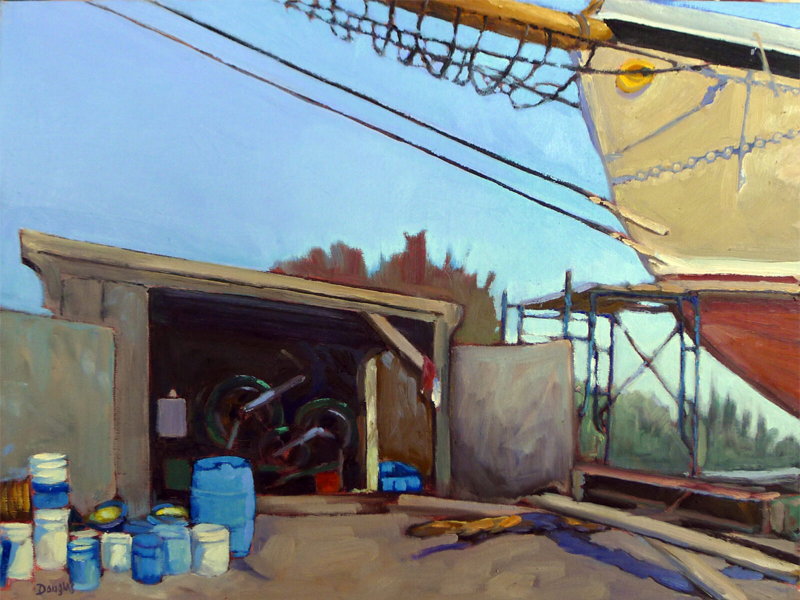
American Eagle in Drydock, 12X16, $1159 unframed includes shipping and handling in continental US.

Improvement doesn’t necessarily come from grand gestures like buying new brushes. The biggest leaps come from simple, repeatable, immediate actions. These are things you can do today to make tomorrow’s paintings stronger. Here are five that never fail.

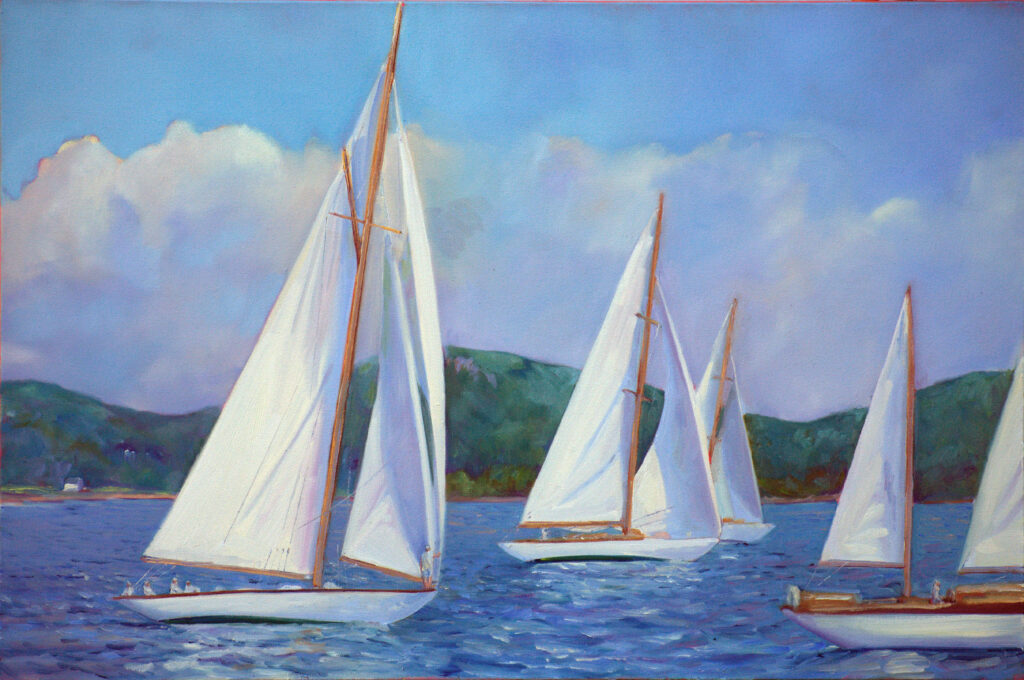
Skylarking, 24X36, oil on canvas, $3985 framed includes shipping and handling in continental US.

Take off your glasses or squint

I’m nearsighted; I paint with my glasses on a string around my neck and they’re there only because I need them to drive home. Some of you were unfortunately born with perfect eyesight. For you there’s only one remedy: squint.

Blurriness simplifies the world. It mutes unnecessary detail and helps you see big shapes, value relationships and underlying design. Paintings fall apart when we chase every detail without considering how they fit into the whole. Before you touch your brush, remove your glasses or squint until you see only three or four major value shapes. Then paint those. Detail is for the end of a painting, and it’s not always necessary.

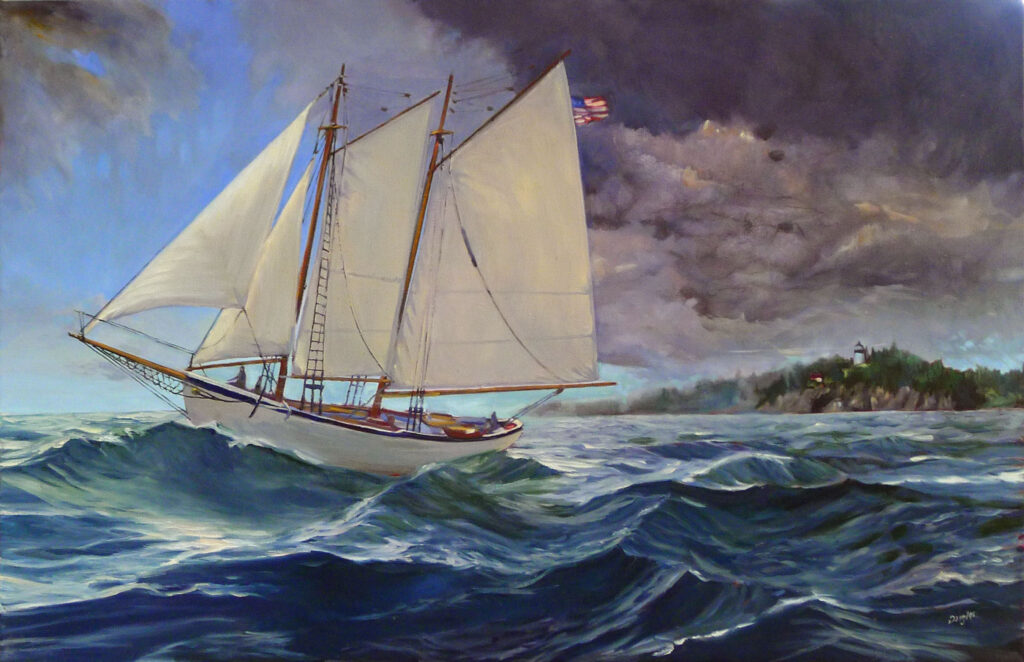
Breaking Storm, oil on linen, 30X48, $5579 framed includes shipping and handling in continental US.

Stop buying more paint

You don’t need three trays of watercolors or 40 tubes of oil paint to make great color. In fact, that just stops you from learning color theory. That’s why I suggest paired primaries, which are just a warm and cool version of each primary. I augment them with a few earth pigments because they’re cheap and versatile, and (in solid media) white. Mixing within them teaches you, whereas buying lots of paint just impoverishes you.

Buying more paint can be a form of flailing around. It can be displacement behavior; it’s simply easier than buckling down, especially when what’s on your easel isn’t going well.

Step back and look

There’s a maxim that a painting should compel from thirty feet, three feet, and three inches. That just means it needs to draw you in from across the room and hold your interest once you’re close. It’s amazing how different a painting looks from a few feet away. Up close, a passage can look and feel like a struggle to the death. From a distance, it’s just a patch of color in either the right or wrong place.

Make stepping back part of your rhythm. If, say, you’re standing on a cliff and you can’t back up, take a photo on your phone. That creates an emotional distance that’s almost as useful.

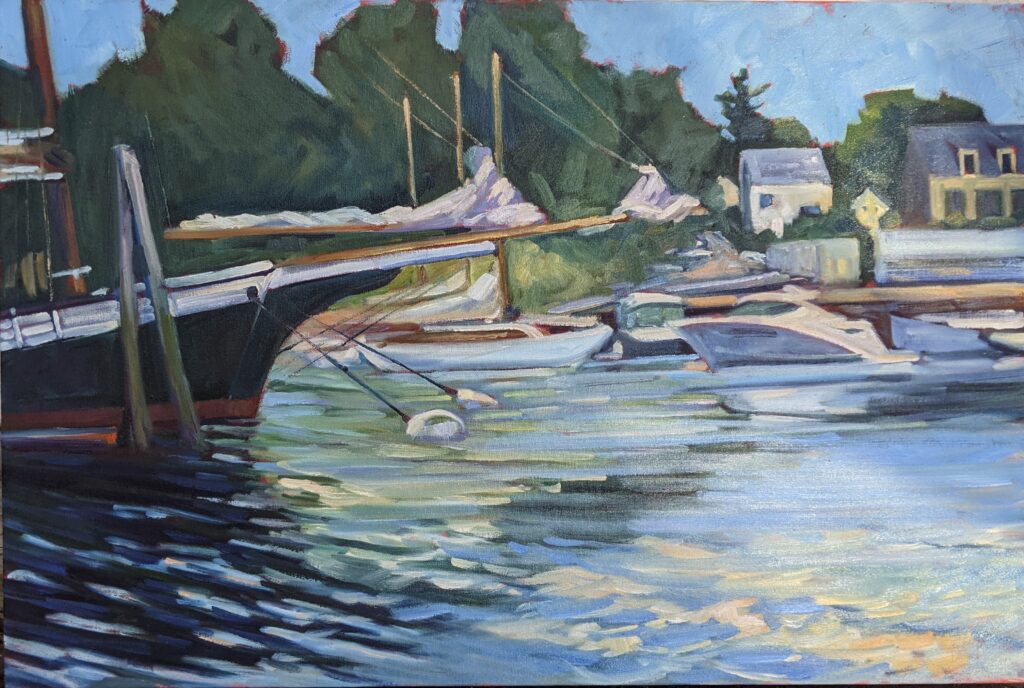
Camden Harbor, Midsummer, oil on canvas, 24X36 $3188 includes shipping in continental US.

Simplify, simplify

Every painting ought to be a distillation of a truth, not a transcript of an event. Ask yourself, what is the story? Then edit out the extraneous detail that doesn’t support it. If your painting is about an old house, don’t get lost in the weeds. If your painting is about those blackberry brambles, don’t get lost in the house’s trim.

Those are decisions that should be made in the composition phase. Everything irrelevant should be subservient to the point you’re trying to convey.

Paint more

Skill doesn’t arrive like a thunderclap. It grows, one session at a time. You can read, talk, and think about art all day long, but there’s no substitute for time in front of a canvas. Twenty minutes of focused drawing or painting will move you forward faster than hours of browsing. Set your alarm early tomorrow and paint something small. You’ll surprise yourself. That’s why daily paint challenges are so helpful; they get us moving even when we don’t feel like it.

Improving as a painter isn’t about waiting for inspiration or reinventing your technique. It’s about building better habits, right now, with what you already have.

So go ahead—squint, simplify, mix from a smaller palette, step back, and paint more often. Those five small choices will do more for your art than any magic brush ever could.

A week of painting, a night of celebration

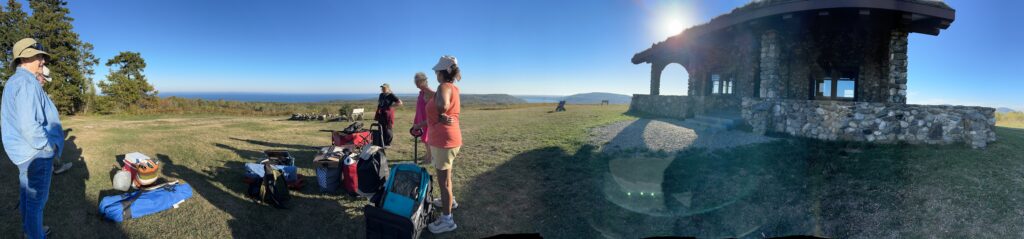
Cheryl Ryan painting at Beauchamp Point.
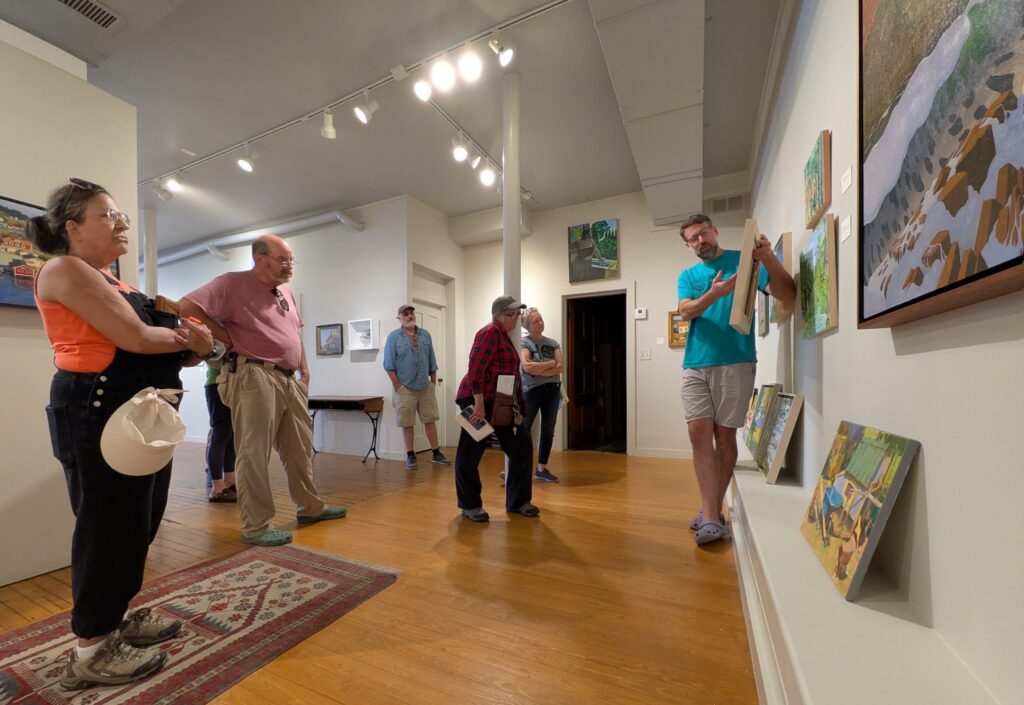
My intrepid class at Colin Page’s gallery.

After a week painting outdoors in this limpid October light, my workshop students are showing their work! Join us tonight, Friday, October 10, 5–7 PM at the Carol L. Douglas Gallery, 394 Commercial Street, Rockport for my final gallery opening of the season — with new student pieces and some of mine on the walls too.

Their work is still wet and oh, so fresh. These students range from absolute beginners to experienced painters, and their progress this week has been wonderful to watch.

Cheryl Ryan painting at Beauchamp Point.

This is the last event of the year before I close for the season, as I’ll be heading for Arizona next week for the 21st Annual Sedona Plein Air Festival. It’s a wonderful chance to see both my students’ work and mine.

I’d like to regale you with stories about their courage in the face of rain, fog, sleet, wind and snow, but the weather this week has been absolutely wonderful. (I keep telling you that autumn is the best season in coastal Maine.) Other than a rogue wave nearly washing Dave and his easel off the rocks, it’s been a blessedly drama-free week. I’ve driven them hard, however. I know they’re tired, and ready to join you for a glass of wine and conversation.

Plein air painting is never boring. First, there were skinny-dippers, then these four scuba divers…

We’ve painted at Beech Hill, Camden harbor, Beauchamp Point and Owls Head, giving us granite rockscapes, the long view of Penobscot Bay, lobster boats and fall color. Come meet the artists, enjoy light refreshments, and take home a piece of Maine, painted with heart and immediacy.

Somehow my workshops always seem to involve dogs. That’s Ellie curling up with Mike and Sharron.

My 2026 workshop and Zoom class schedule will be published soon. Watch this space for more information.

No text, just photos…

Here are some sweet scenes from this week’s plein air painting workshop, but there will be no sweet prose today. I taught a full day and then an evening class on Monday. On Tuesday, my workshop students painted a nocturne after putting in a full day painting at Camden harbor. I’m outta steam. But I hope you enjoy seeing some of the things we’ve done so far this week.

Painting a nocturne on Tuesday night.
Colin Page talking to my students in his gallery on Tuesday afternoon.
Painting on a beautiful warm October day on Beech Hill.
Painting on a beautiful warm October day on Beech Hill. Courtesy Cheryl Ryan.

Monday Morning Art School: how to draw trees

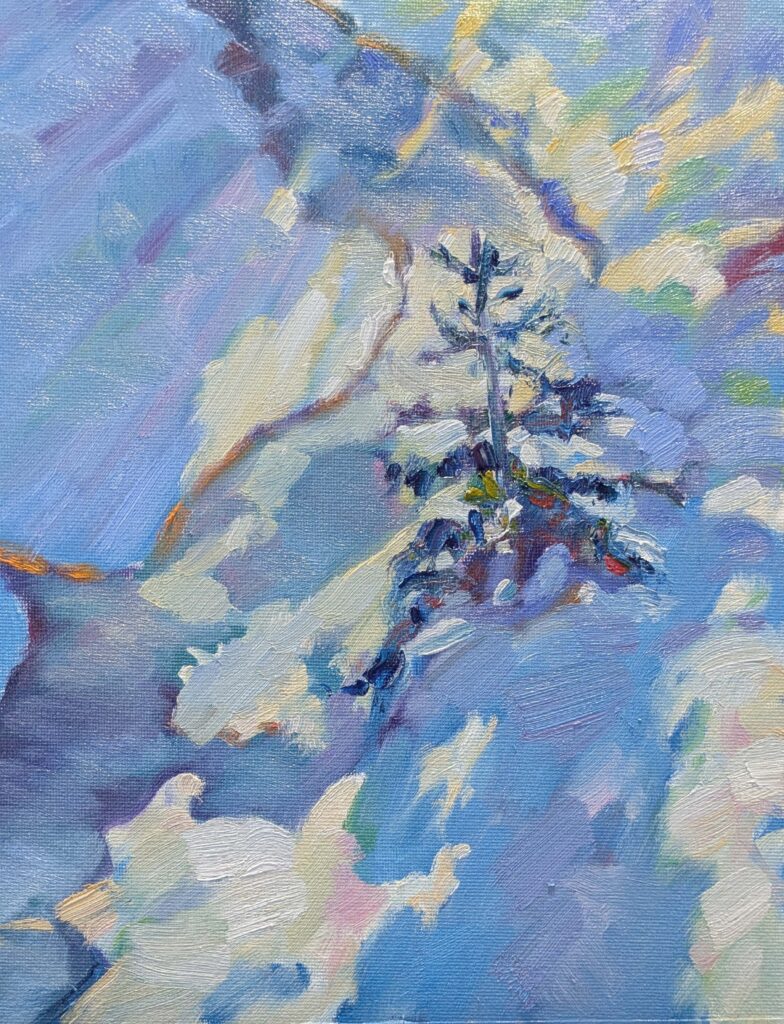
Baby pine tree in snow, 6X8, oil on archival canvasboard, Carol L. Douglas

Last week, I challenged you to paint five trees in five days. Trees require careful observation and a clear sense of structure. If you understand how to draw trees, painting them is easy.

Start with the canopy

Before you pick up your pencil, ask yourself: what is the canopy shape? Is it rounded, conical, flat-topped, or irregular? Every species has a characteristic outline, and nailing that shape is the first step to drawing them right.

Then look at the branching structure. Are the limbs weeping, upright, straight, or crabbed? Do they branch alternately or oppositely?

Take a quick measurement to figure out the height-width ratio of your tree. How much of that is exposed trunk? A common error is to make the canopy much too small for the trunk, like a broccoli floret. Another is to have branches that only extend out to the sides, instead of all around the tree.

Windy Bay, Little Turtle Lake, 1922, J.E.H. MacDonald, courtesy National Gallery of Canada

Next, the bark

Immature and mature trees often look very different. The bark tells the tree’s age and species—compare a baby birch’s smooth red trunk to the deep fissures of an old oak. Observing this keeps you from painting generic tree trunks that could belong anywhere.
Trees in the macro: careful observation

Andrew Wyeth was probably art’s greatest observer of trees. Consider his Long Limb (1998). The painting is less about botanical accuracy and more about design, but the narrow twigs and leaf shapes still reveal the species if you look closely.

In Far from Needham (1966), Wyeth didn’t improvise the structure—he carefully drew out what he was painting. That gives the abstract design much more power.

Tree in the midrange: integration and atmosphere

In J.E.H. MacDonald’s Windy Bay, Little Turtle Lake, above, trees are integrated into the background through a closely allied color structure. He’s not fussing over details; he’s ensuring they sit naturally in the landscape.
Compare that to Ivan Shishkin’s Oak Grove (1887). This is poetic realism: the lighting and atmospherics are exaggerated, but the branching structure and leaves are precisely observed. That balance gives the painting its impact.

Autumn’s Garland, 1915-16, Tom Thomson, courtesy National Gallery of Canada

Trees in the distance: simplify

As trees recede, shape and value dominate. In Tom Thomson’s Autumn’s Garland (1915–16), the silhouette is key, and value contrast is reduced to push them into the distance. Lawren Harris’s Montreal River (c. 1920) shows how distant trees can be reduced to brushmarks or even a single undifferentiated shape.

Montreal River, c. 1920 oil on paperboard, Lawren S. Harris, courtesy McMichael Canadian Art Collection

How to draw trees, step by step

I draw trees as a series of columns or tubes. I start with trunk and major limbs. This helps me see perspective if a branch is coming toward me or away from me in space.

When I’m done with that step, I always check my negative space. That’s how I catch errors in drafting.

Then I rough out the outline, but without erasing the initial circles; they’re the tree’s joints.

After that I set shadows and establish the value pattern.

Then I rough in foliage, thinking about masses and values, not leaves.

Presto, it’s a tree.

Observe first

Understanding trees isn’t about memorizing species; it’s about learning to see canopy, branching, bark, and structure at every scale. Once those fundamentals are in place, you can easily paint trees, each different, but all rooted in strong drawing.

What do you want in a painting class?

As I plan next year’s offerings, I’d love to hear from you. What inspires you? What would you love to learn, explore, or revisit? Your insights will help shape my classes and workshops going forward.

As a heartfelt thank you, you’ll receive a $25 discount code for anything on my website once you complete the survey. It’s my way of saying thanks for helping build something meaningful together.

It’s a short survey—just a few minutes—and your voice will make a real difference.  Click here!

Countering hatred

Human Laundry, Belsen: April 1945, Doris Zinkeisen, courtesy Imperial War Museum

The last race lynching in the US was in 1981. That was around the time that the N-word became unacceptable in Middle America. I don’t think that’s coincidence; dehumanizing language contributes to dehumanizing behavior.

Yesterday was Yom Kippur, the holiest day of the Jewish calendar. This is a day of repentance and atonement. Even my secular Jewish friends fast and go to temple.

Yesterday I was knocked into wakefulness by an early-morning text from a British friend. There’d been an attack on a synagogue in Manchester, and she was worried for someone. This wasn’t the first time I’ve had this call; my late friend Helen was a caregiver for two of the victims of the Pittsburgh synagogue shooting in 2018.

One of the Death Pits, Belsen. SS guards collecting bodies, 1945, Leslie Cole, courtesy Imperial War Museum

It’s possible to disagree with Israeli policies without being anti-Jewish, but that is not the same thing as uninformed, casual, antisemitic language that now frequently goes unchallenged. Although hate crimes against Jews are rising at a faster rate, hate crimes against Christians are up as well. So is anti-Christian rhetoric.

I’m not Mormon or Catholic or Jewish, but I coexist with them in peace and affection. Why does that seem so hard for some people?

I’m pretty sure that none of you are inclined to assault people you disagree with. But to the degree that we’re silent about dehumanizing language—or even worse, use it—we’re complicit in violence.

Death March (Czechowice-Bielsko, January 1945), 1945, Jan Hartman, courtesy Imperial War Museum

Our attitude toward killing is relaxing

An Emerson College poll in December 2024 found that 41% of U.S. adults aged 18 to 29 considered the killing of a CEO at least ‘somewhat acceptable’. Following the assassination of Charlie Kirk in September 2025, a YouGov poll found that 20% of Gen Z believed political violence could sometimes be justified. And an August 2024 survey from Citizen Data reported that only 44% of Gen Z found it ‘never acceptable’ to kill or physically harm elected officials. Thanks, video games and dark web.

I share concern and frustration with our current climate. But once you accept killing as a solution to anything, you open the door to accepting it as the solution to everything you disagree with. That’s why our ancestors were unshakeable in their belief that murder was a mortal sin.

Stochastic terrorism is a term that was invented in the early 2000s. It’s a theory that inflamed public rhetoric raises the risk of ideologically-motivated violence. It’s unproven, but, boy, do we seem to be mired in a soup of public hostility.

Lama Sabachthani [Why have you forsaken me?], 1943, Morris Kestelman, courtesy Imperial War Museum

What can we do about it?

Anecdotally, it seems that many recent assassins seem to be socially-isolated and/or mentally-ill men. If you know someone who fits this pattern, keep reaching out to them and pray for them—even when they’re driving you nuts.

In my experience, mentally-ill people respond to what’s around them. You may be speaking rhetorically when you say you want to kill someone, but the crazy person can internalize that. Sadly, mental illness is increasing in the US.

We artists have a voice; let’s use it for peace. I’m having a hard time dragging myself out of my comfort zone (landscape) into more meaningful painting, but I’m trying. How can you do that?

“The answer to hate is not hate. The answer we know from the gospel is love and always love. Love for our enemies and love for those who persecute us,” Erika Kirk said after her husband was killed. That’s a very tough standard to live up to, but the cycle of anger has to stop somewhere. For me, it stops here.

I have just two workshops left in 2026! Reserve your spot:

Can’t commit to a full workshop? Work online at your own pace:

Seven Protocols for Successful Oil Painters