I remember the first professional art show I ever did—vividly and painfully. It was a holiday show at the Rochester Museum and Science Center. I had no trouble getting in, but I had a horrible time figuring out how to choose, present and sell paintings.
Even to my inexperienced eyes, my display looked awful. I was so optimistic before the show, but I sold just a few prints and no originals. It had all looked so easy when I was just a casual observer.
A quick note before we get into it
It’s time to claim your spot in Advanced Plein Air Painting, July 13-17 in Rockport, ME. If you have any questions about whether you fit into an advanced class, just ask!
What’s a professional artist?
A few weeks ago, a student said to her classmates on Zoom, “I’m not a professional artist, but…” She’s sold a lot of work, so I think she’s qualified to call herself a pro. However, getting from the mindset of amateur to professional is sometimes hard.
It doesn’t happen when you sell your first painting or when someone praises your work. It’s certainly not when you feel ready, because that day never comes.
When I’m teaching in my home town of Rockport, Maine, I finish my workshops with a student show in my gallery. After days of painting, critique and revision, the work goes up on the wall to be seen by people with no skin in the game. It’s not in a classroom or on an easel with apologies and explanations. It has to speak for itself.
I’ll be doing that in my Advanced Plein Air Painting workshop in July. That’s the only workshop I teach where you have to submit a portfolio to participate. (Email me if you have any questions.)
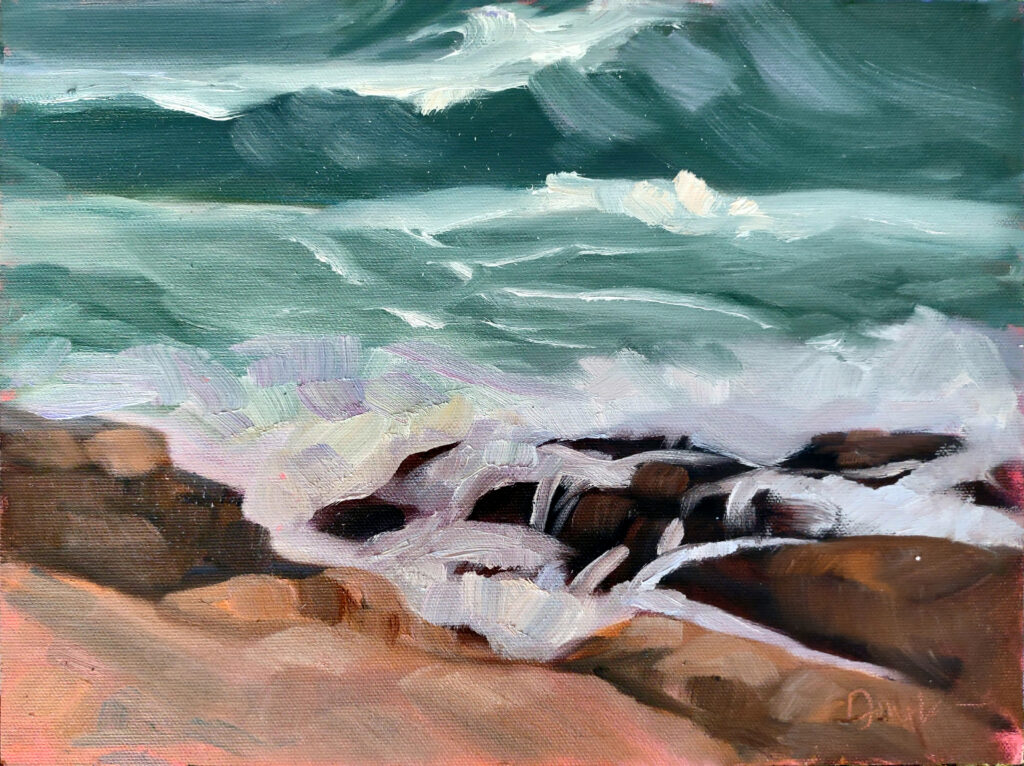
Showing your work is important
I never encourage students to work towards producing polished paintings. I want them to focus on process, not just in my workshops and classes but throughout their artistic life. I want them to finish our week together having learned new skills. That spirit of learning is important to both amateur and professional artists.
Of course, the language of painting is full of disclaimers. We all tend to introduce our work by citing its shortcomings. But the gallery wall doesn’t care about that. In fact, it often tells us that we’re better than we thought we were.
Exhibiting work forces clarity. Suddenly, composition isn’t theoretical. Your editing either strengthens your painting or it doesn’t. All those quiet decisions you made in the field are now public.
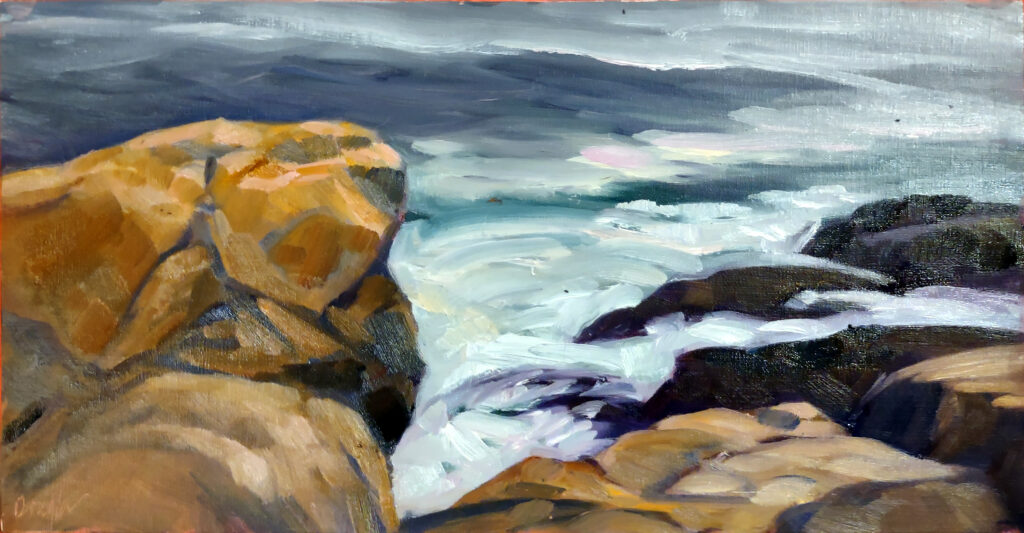
What do I mean, ‘advanced painting’?
In my advanced workshop, the goal is not just to learn technique. It’s to integrate it so thoroughly that you can work with authority. That means understanding color and composition, but also trusting your own judgment about what matters and what doesn’t. It means painting with enough conviction that you’re willing to let others see the result.
That’s why my workshops are structured with small groups, intensive daily painting, individual feedback and critique. You’re not just learning to paint; you’re learning to see more clearly and put down paint more decisively.
Showing our work isn’t about perfection. It’s about coherence and courage. Does the painting hold together? Does it say what it needs to say? Does it command attention, even quietly? If the answer is yes, you’ve succeeded.
In the end, the gallery wall is just another teacher.
I have just two workshops left in 2026! Reserve your spot:
- New! Color Clinic 2026 | Rockport, ME, October 3-4, 2026
- New! Composition Week 2026 | Rockport, ME, October 5-9, 2026
- High-Desert Light & Monumental Form | Sedona, AZ, Apr 26, 2027 – Apr 30, 2027
Can’t commit to a full workshop? Work online at your own pace:
Seaform is evocative. I can feel the movement of the waves…
Thank you so much!
Hey Carol,
I wish I had had the presence of mind to snap a picture of the first painting I sold. I was likely too delighted to even think about that. I vividly remember, however, the slight sense of terror I felt submitting my application for the Austin, Texas, Studio Tour. We have a lot of accomplished artists here. I was intimidated.
But I sold a few while talking to a lot of visitors on my patio. Five tours later, I am always surprised and amused by paintings I love that barely get a look while others I might call, “pretty decent” sell quickly. I am a better judge of my work for running that gauntlet. Eavesdropping while staring at people staring at my work has taught me a lot. When you sit with a painting on your patio for two weekends, you also see things you otherwise would not.
Best of all, knowing you are going to put your work in front of real, live people, including artists checking out other artists, causes me to look harder at my own work while painting–“Do I want my neighbor, Denise, an accomplished artist and founder of a local Atelier, seeing that?”
Thanks for some great teaching, Carol.
Mark
I wish I’D had the presence of mind to snap a photo of the first painting I sold–I honestly can’t remember what it was, and it would be fascinating now.
Savvy insights as always, Mark! Thank you.