Monday Morning Art School: glazing vs. scumbling

A very old painting by me, using indirect painting technique.

Being the World’s Oldest Living Person, I learned to paint from my old friend Rembrandt van Rijn. That meant I learned to paint indirectly, through glazes. When I went to the Art Students League, I jumped forward a few centuries and learned to paint directly, or alla prima.

A quick note before we get into it

It’s time to claim your spot in Advanced Plein Air Painting, July 13-17 in Rockport, ME. If you have any questions about whether you fit into an advanced class, just ask!

Alla Prima

Alla prima painting is done in a continuous pass, or as close as you can get within the limitations of size and time. You mix colors and put them down in their final form. It’s characterized by immediacy and loose brushwork.

Indirect painting is built in stages, layer over layer, with drying time in between. Each layer modifies but doesn’t obscure the one beneath it. Indirect painting trades immediacy for control.

Most painters end up using a hybrid approach, especially when working large. Scumbling and glazing are opposite in method and effect, but can appear in the same painting (see Rembrandt’s self-portraits, for example). However, it’s hard to glaze over impasto, as the glaze sits in the valleys of existing paint.

Glazing is very useful in making revisions on a dry painting, provided there is little texture.

What is glazing?

Glazing is transparent. You take a thin, translucent layer of paint and lay it over a dry underpainting. In oils and acrylics, that paint is thinned with medium, not solvent. In watercolor, it’s thinned with water. In gouache, it doesn’t work.

If the layer underneath isn’t completely set, you’re not glazing, you’re just mixing. You’ll end up with mud. A proper glaze allows light to pass through the new layer, bounce off the layers below, and return to the viewer’s eye. That’s what creates depth and luminosity.

White, yellow ochre and other opaque pigments have no place in glazing. Only transparent and semi-transparent pigments work. How do you know which is which? Good paint manufacturers put it right on the tube.

Glazing can build rich shadows, unify color passages, and create atmospheric distance. A cool glaze over a warm passage can push it back in space. Done well, glazing doesn’t sit on the surface; it seems to glow.

Glazing is slow. It requires more patience, planning, and restraint than I’m currently capable of. I can’t brute-force my way through an entire indirect painting, but I do use glazing to make editorial changes.

You can’t scumble if the paint is too wet.

What is scumbling?

Scumbling, on the other hand, starts with heftier paint. In watercolor, that means less water; in oils and acrylics it means opacity. (All pigments can be made opaque with a drop of white or yellow ochre.)

Drag a lighter, drier layer of paint across the surface so that it skips over the high points of the texture, allowing bits of the underlayer to show through. Scumbling is broken, irregular, and tactile. It’s a very lively texture.

Scumbling can suggest the roughness of stone, the sparkle of light on water, or the haze of distant atmosphere. It’s especially effective over a darker, dry layer, where the broken application creates a vibrating edge between colors. Unlike glazing, which deepens and unifies, scumbling disrupts and enlivens.

The drier the paint and the more horizontal the brush, the more the painted line will break.

It’s all technique

For glazing, use a soft brush, plenty of medium and a light touch. The paint film should be thin and even. Don’t scrub; if you break the surface of the lower layer, you’ll make mud.

For scumbling, use a stiffer brush and reduce the water or medium. Physically drag the paint, keeping the brush at a low angle to the surface. The brush should skip. If it’s laying down a smooth, continuous stroke, you’re not scumbling.

Either can be overused

Too many glazes, and everything turns murky. The transparency that once created depth becomes mud. Too much scumbling, and your painting can look overworked, with no clear hierarchy of edges or forms.

These are advanced topics, and if you want to learn more, you’re a candidate for Advanced Plein Air Painting in Rockport, ME, July 13-17, 2026. This is for experienced painters ready to level up: work side‑by‑side with experienced painters to deepen skill and spark new ideas.

Registration is now open for workshops in 2026! Reserve your spot:

Can’t commit to a full workshop? Work online at your own pace:
Seven Protocols for Successful Oil Painters

Monday Morning Art School: what is alla prima painting?

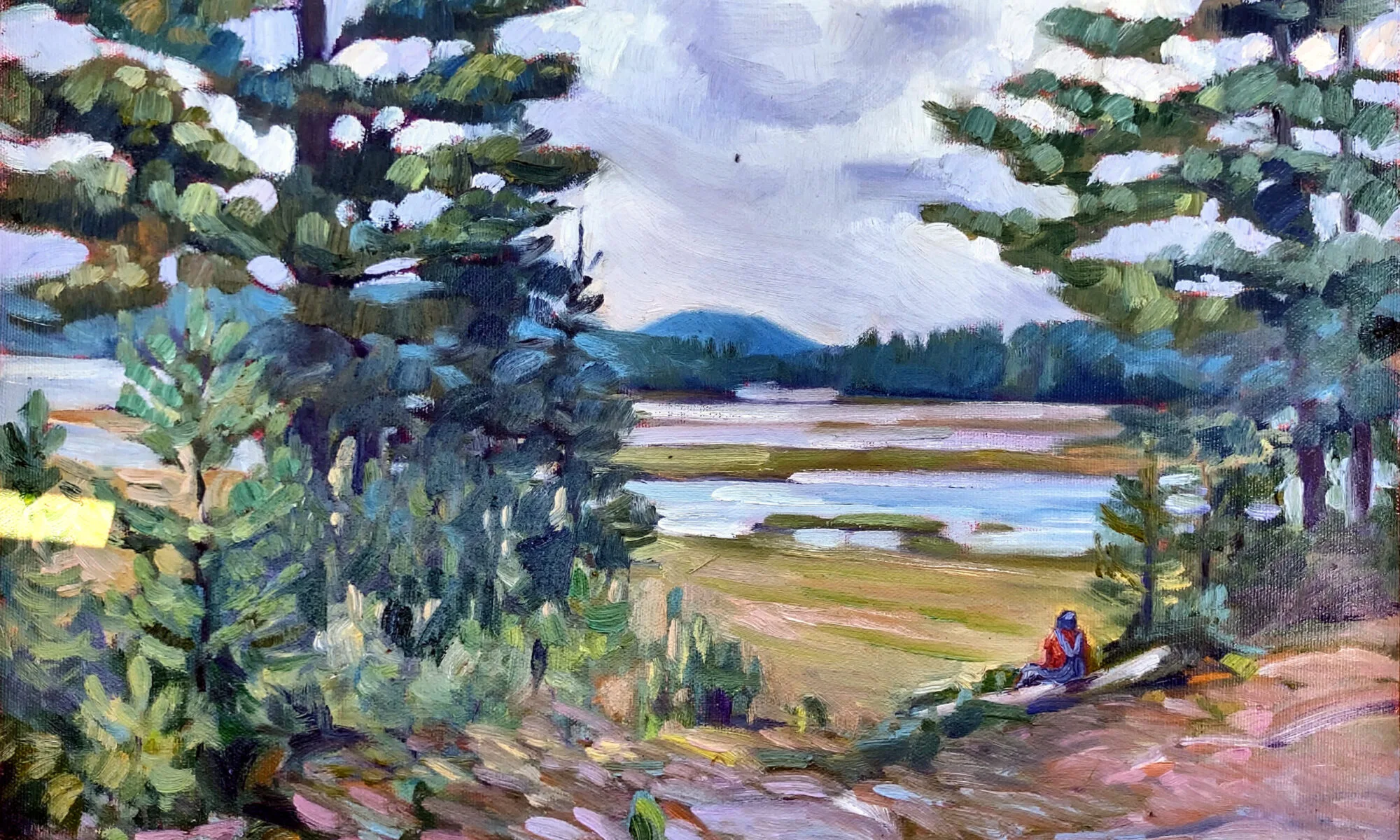
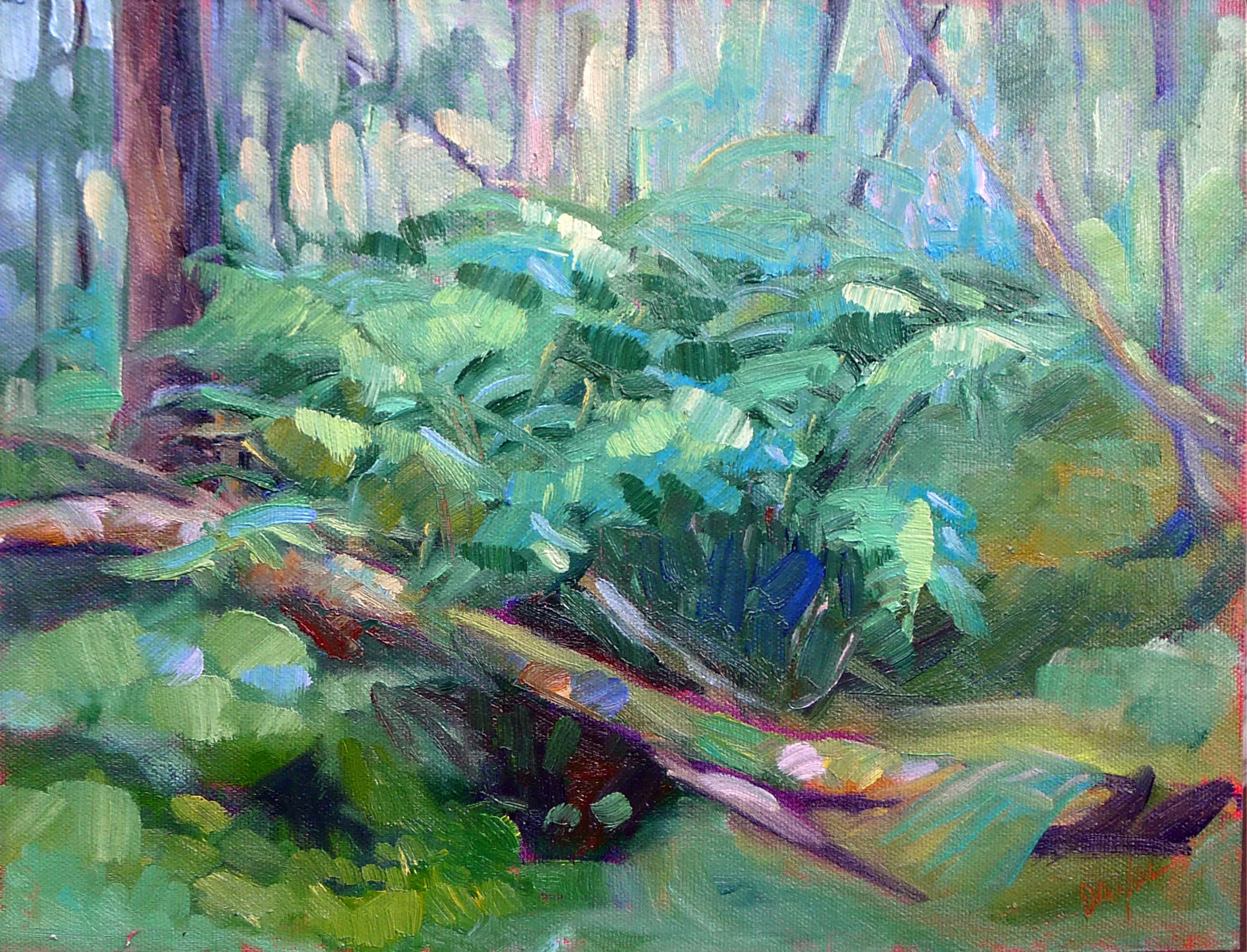
Cinnamon Fern, 9X12, oil on archival canvasboard, $869 framed includes shipping and handling in continental US.

Occasionally, I’ll hear someone fumble for a description of a painting and come up with plein air style. Plein air isn’t a style or technique; it simply means painting outdoors instead of in a studio. Plein air allows an artist to capture natural light and colors from direct observation, and it’s a very important movement in art history, starting with John Constable and still popular today.

What these people are groping for is the term alla prima. The confusion lies in the fact that most (although not all) plein air painters also use alla prima technique.

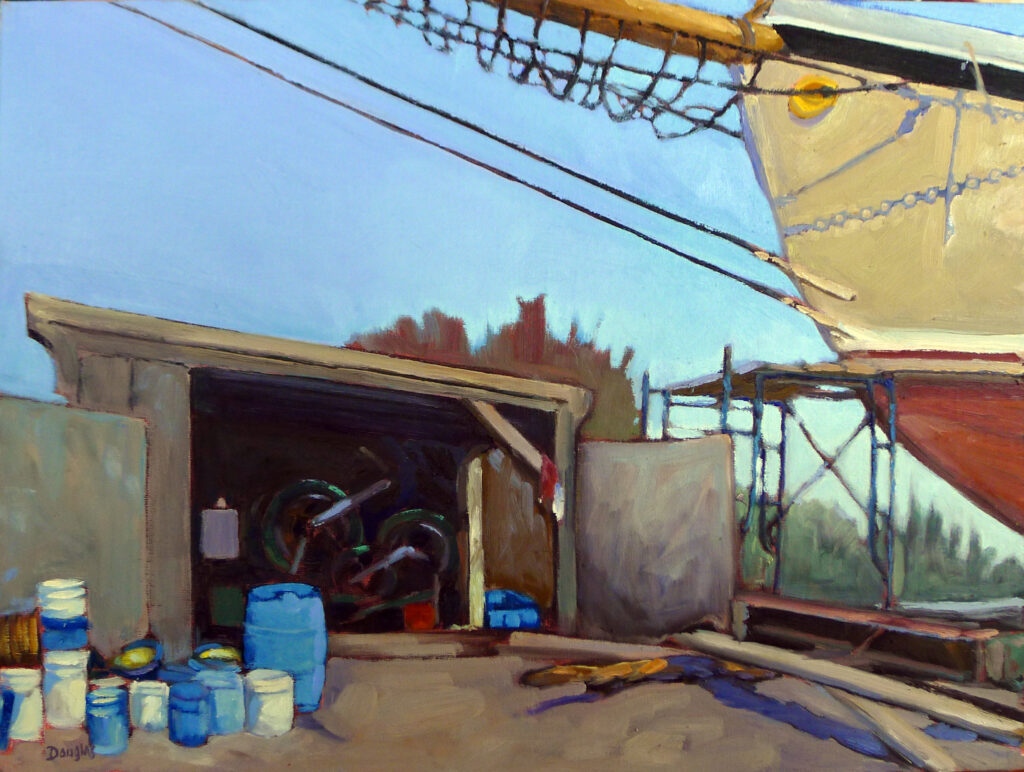
American Eagle in Drydock, 12X16, $1159 unframed includes shipping and handling in continental US.

What is alla prima?

Alla prima (also called au premier coup, wet-on-wet, or direct painting) is a technique where the artist applies paint directly onto the canvas without letting earlier layers dry. This contrasts with indirect painting, which I describe below.

Alla prima is used mostly in oil painting, but it has its equivalent in wet-on-wet watercolor. In alla prima painting, the artist strives for fast, incisive brushwork. It requires skill to avoid making mud, and the artist must work with confidence and speed.

Alla prima has been in use since the Early Netherlandish painters. It became popularized with the rise of Impressionism, but painters as disparate as Frans Hals, Claude Monet, Vincent van GoghJohn Singer Sargent, Chaïm Soutine and Willem de Kooning have all painted directly. Rembrandt van Rijn painted indirectly for the most part, but pointed up his work with alla prima passages.

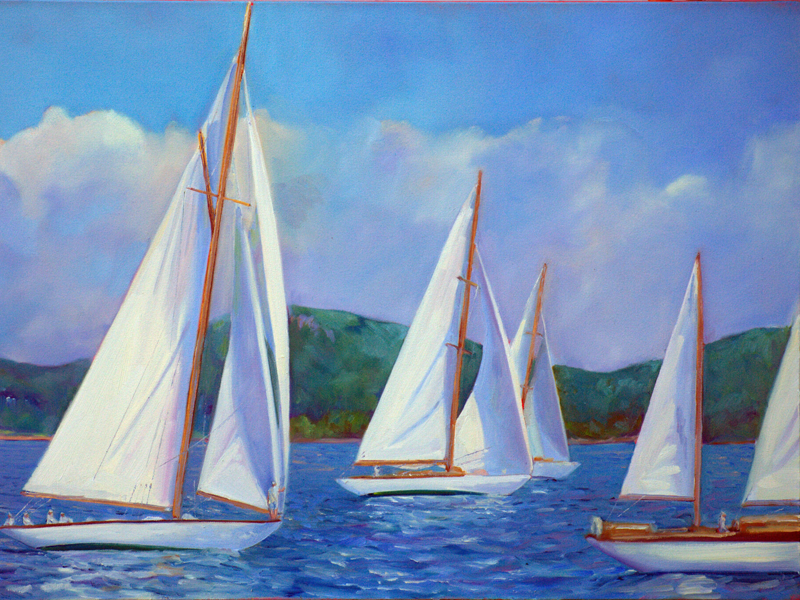
Skylarking, 24X36, oil on canvas, $3985 framed includes shipping and handling in continental US.

Alla prima paintings are not necessarily completed in one session, although the goal is to not let the bottom layers dry before adding more paint. There is minimal layering, and the focus is on capturing the essence of the subject with bold, confident strokes. It prioritizes expression and immediacy over meticulous detail.

This lends itself to a more expressive, loose style, with visible brushstrokes and a sense of movement. In fact, when people tell me their goal is to ‘get looser,’ what they generally mean is that they want to master alla prima painting.

Indirect painting

Before we had oil painting, we had egg tempera, encaustic, fresco and distemper, none of which lend themselves to bravura brushwork. It’s no surprise, then, that meticulous, detailed painting was the first form oil painting took. Just as tempera is layered, so was early oil painting.  

In indirect painting, the artist builds up the image with transparent layers. Each layer dries completely before the next one is applied. Indirect painting allows for a high level of control and detail. Artists can build up subtle transitions of color and light, creating a realistic, highly polished finish. Indirect painting’s great virtue is that it creates luminosity that’s impossible to achieve with direct painting. That comes, however, at the expense of brilliant color and brushwork.

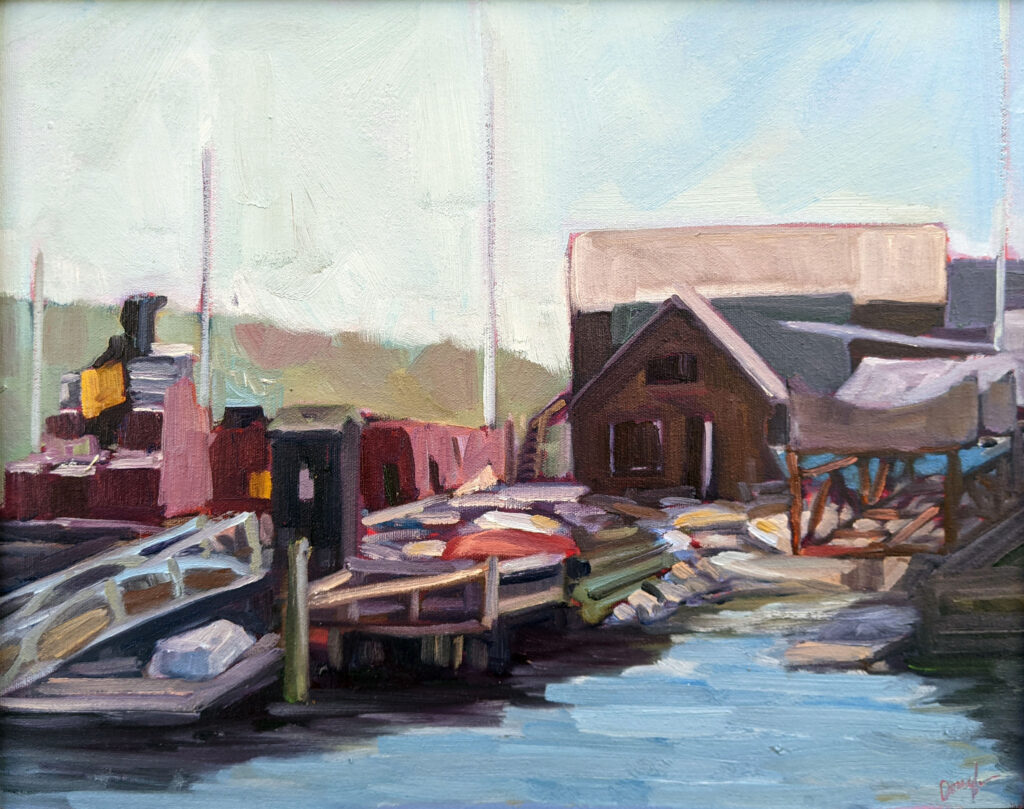
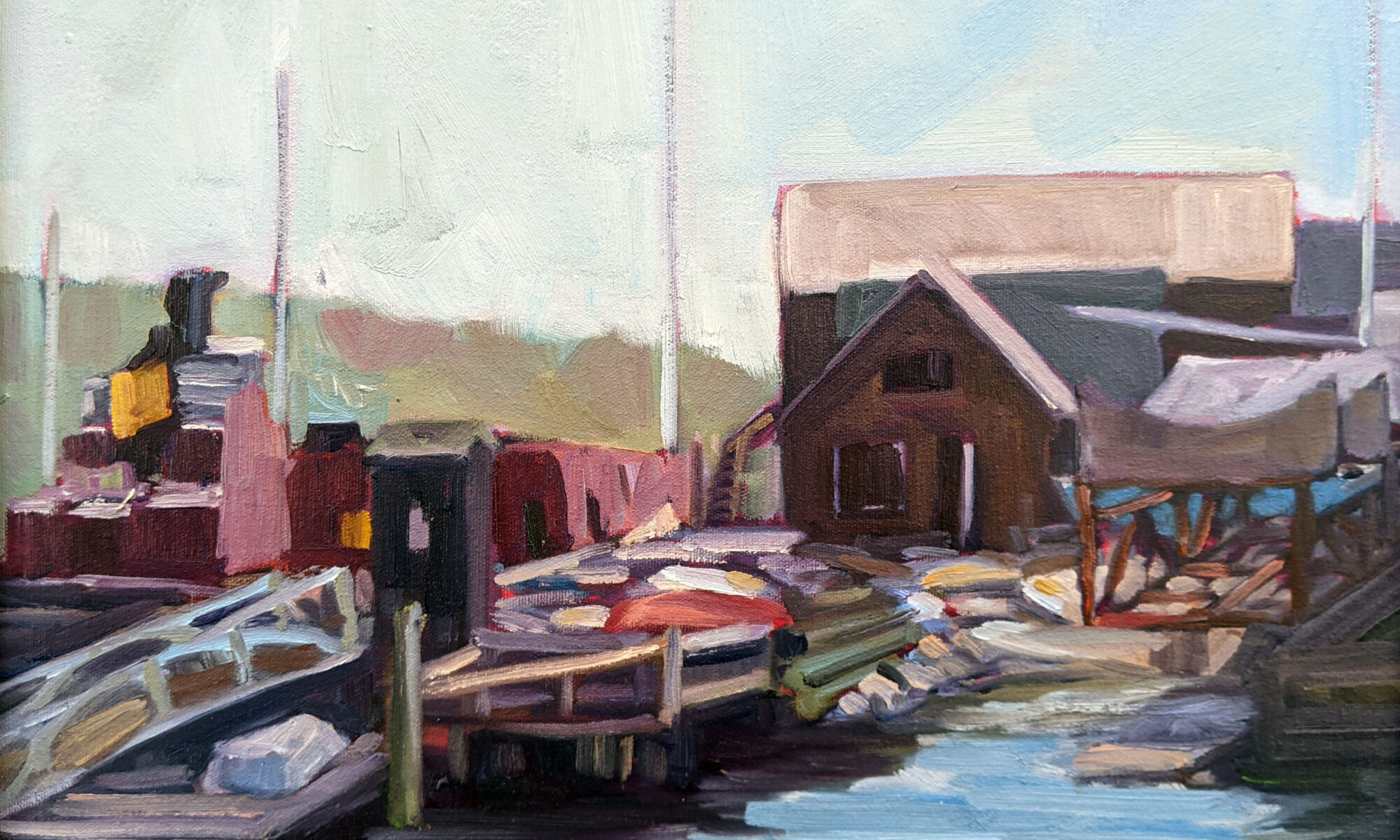
Belfast Harbor, oil on archival canvasboard, 14X18, $1,275 unframed includes shipping and handling in continental United States.

Indirect paintings start with a monochromatic underpainting or grisaille: While most direct painters do this as well, the grisaille in an indirect painting is intended to show through subsequent layers. This establishes the composition and tonal values retained throughout the piece.

This base layer is allowed to dry and is followed with diluted, transparent layers of paint (called glazes). These are applied over the underpainting to modify the color. Each glaze layer dries before the next is added. White is lousy for glazing, so in a well-painted indirect painting, the light is reflecting through the paint from the grisaille layer.

Indirect painting was widely used during the Renaissance and Baroque periods. (It’s the only way to achieve true chiaroscuro.) There are artists using it today, but they’re doing so almost self-consciously, as a throwback to earlier periods in painting history.

Back in the last millennium, I learned indirect painting first, alla prima second. (Rembrandt’s style was undergoing a miniature renaissance then.) Today, there are far more modern painters pursuing alla prima than indirect painting, but one isn’t inherently better than the other. In fact, with new materials solving the age-old problems of chroma and cracking, who knows if indirect painting is due for a rebirth?   

Registration is now open for workshops in 2026! Reserve your spot:

Can’t commit to a full workshop? Work online at your own pace:
Seven Protocols for Successful Oil Painters