Where does fear of failure come from?

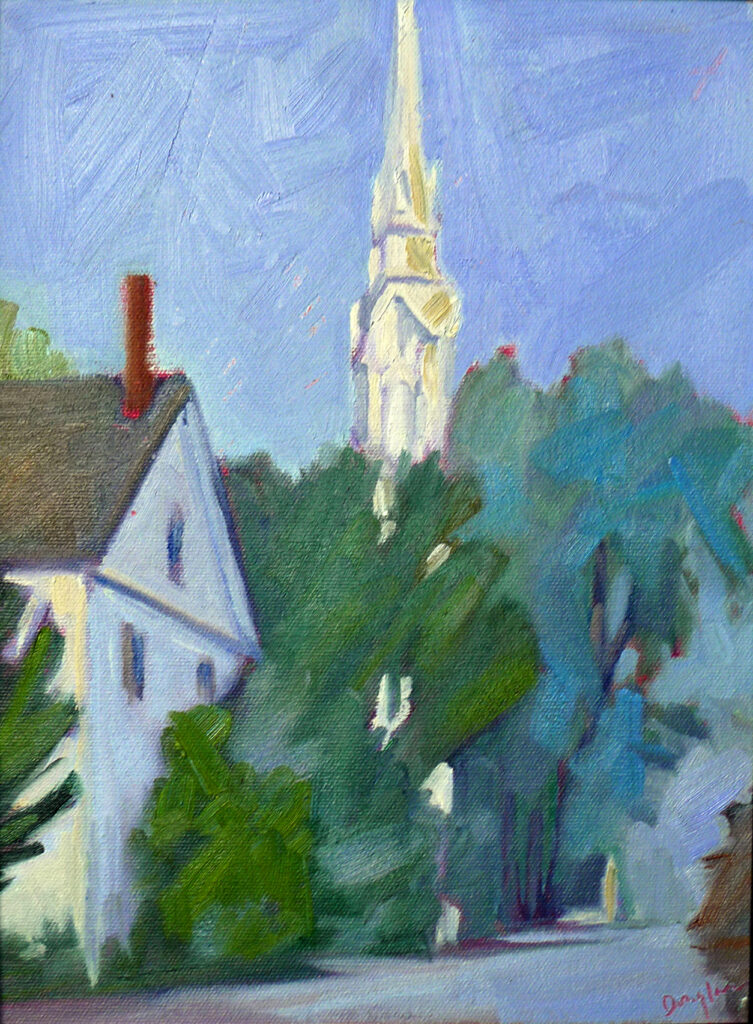
Sea Fog over Castine, Carol L. Douglas, 9X12, click on image for more details.

Fear of failure doesn’t come out of nowhere. It’s learned, layered and reinforced over time until it feels like part of our personalities. It isn’t and you don’t have to suffer from it.

At its core, fear of failure is about protection. One of the most important functions of the human mind is keeping us safe. However, when that extends to psychological safety, it can become counterproductive. Yes, we’d all like to be spared embarrassment, wasted effort or feeling like failures. Sadly, testing our limits in painting has the potential to trigger all these responses.

Some of us were praised for being good at art as children. Others, equally powerfully, were told we weren’t. We learned that art had a verdict attached to it—good (talented) or bad (you’d best take math classes instead). That kind of binary thinking helps nobody. Internalized, it means that every effort at art (or math) becomes a test of identity rather than an adventure.

Life doubles down on this. We try to avoid being wrong, because being wrong costs us something. We become careful. Then cautious. Then hesitant. That conditioning is always running in the background.
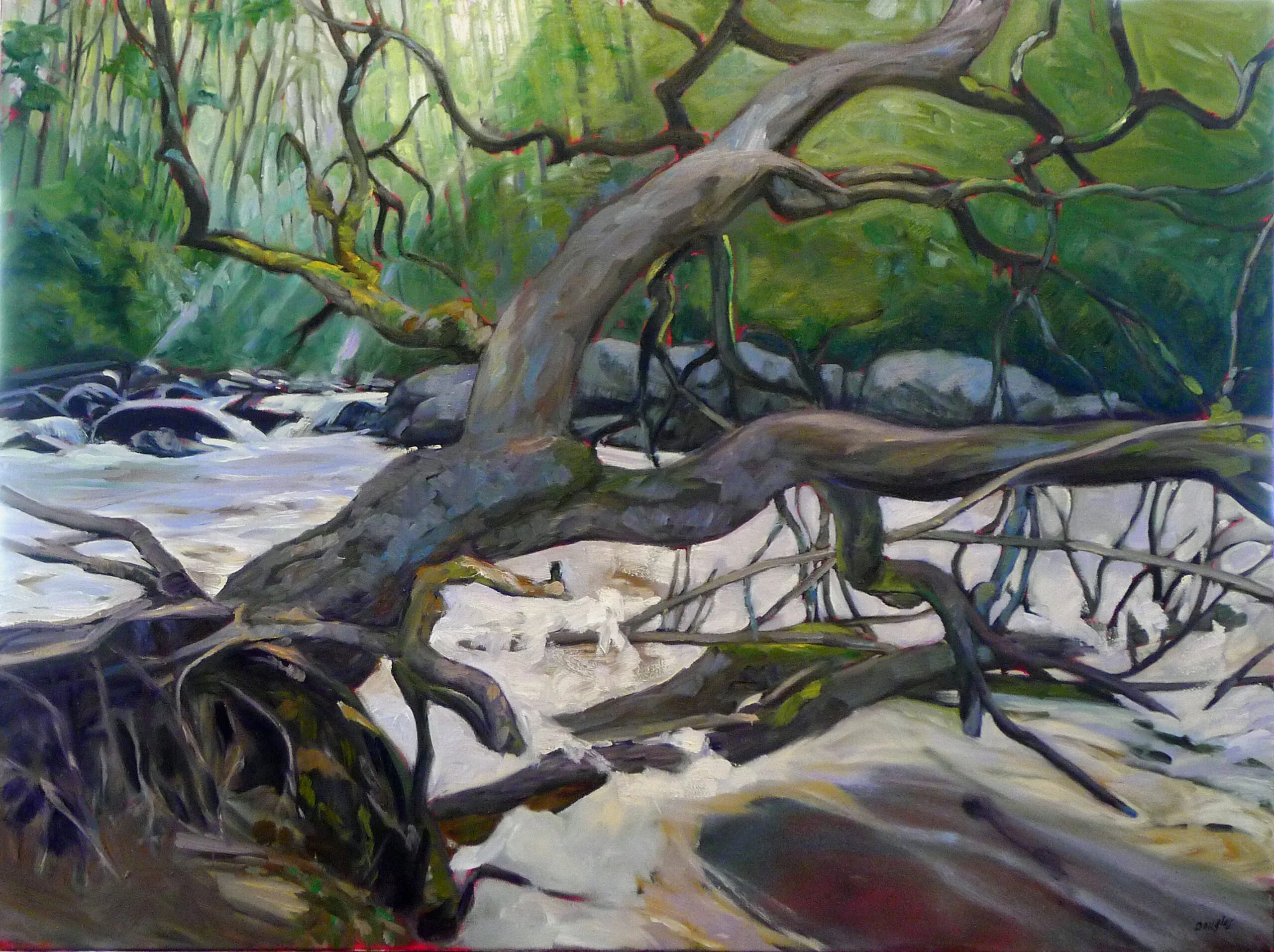
Deadwood, oil on linen, 30X40, click on image for more details.

Uncertainty intolerance

Uncertainty intolerance is our tendency to feel stressed, anxious or threatened when we don’t know what’s going to happen next. If you think you don’t do this, let me cancel your next flight and see how you react.

Often, things that don’t go according to plan are opportunities, not problems, but we still don’t like the feeling. Our brains crave predictability. Uncertainty is uncomfortable. It slows us down, urges us to control everything. Painting is full of moments of uncertainty, which is why we try to fix every passage before moving on. Overworking is more about resolving uncertainty than about seeking perfection.

Comparison

We’re constantly looking at others’ work online or in museums and galleries. It’s finished and polished. My messy middle can’t compare to someone else’s finished painting, so it’s easy to feel like I’m failing. The impulse is to force our paintings to a high level of finish way too early.
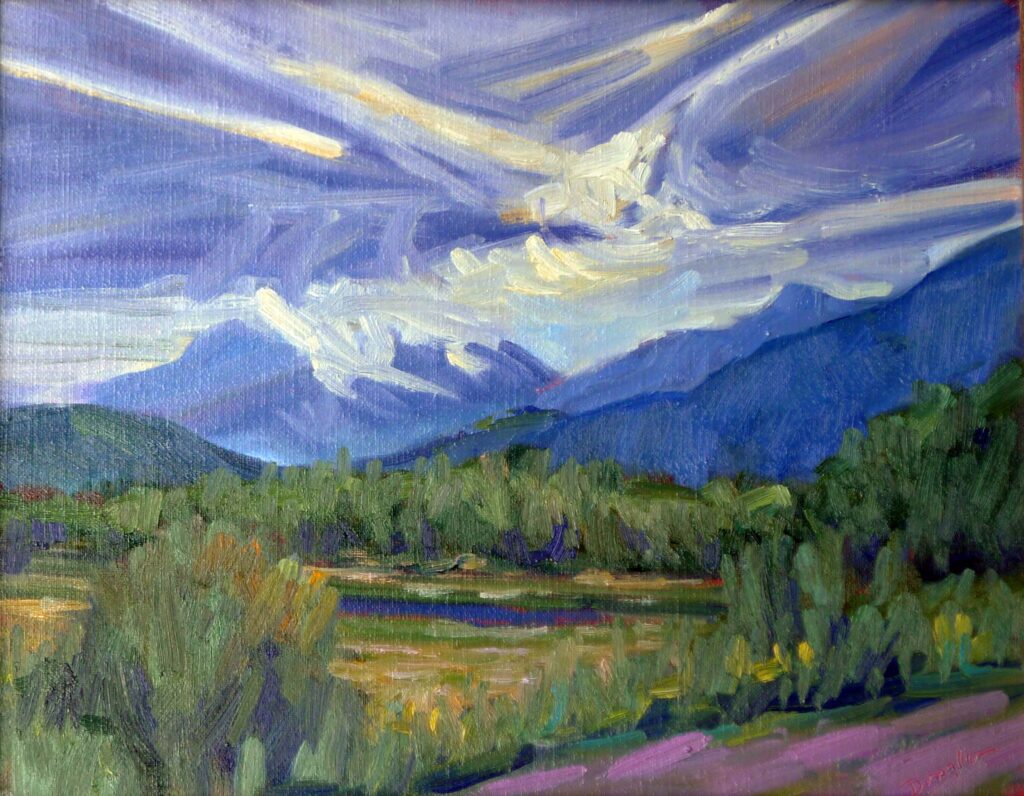
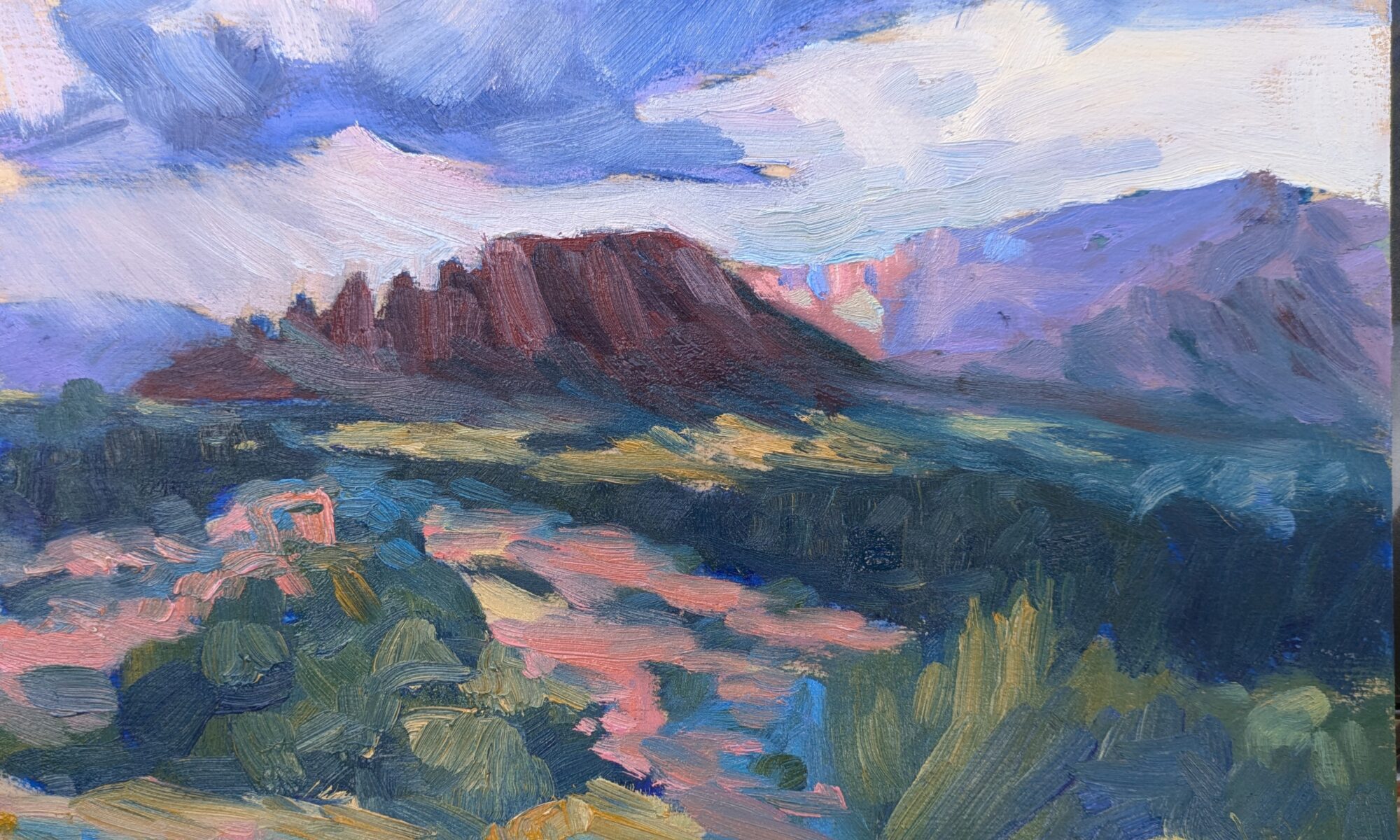
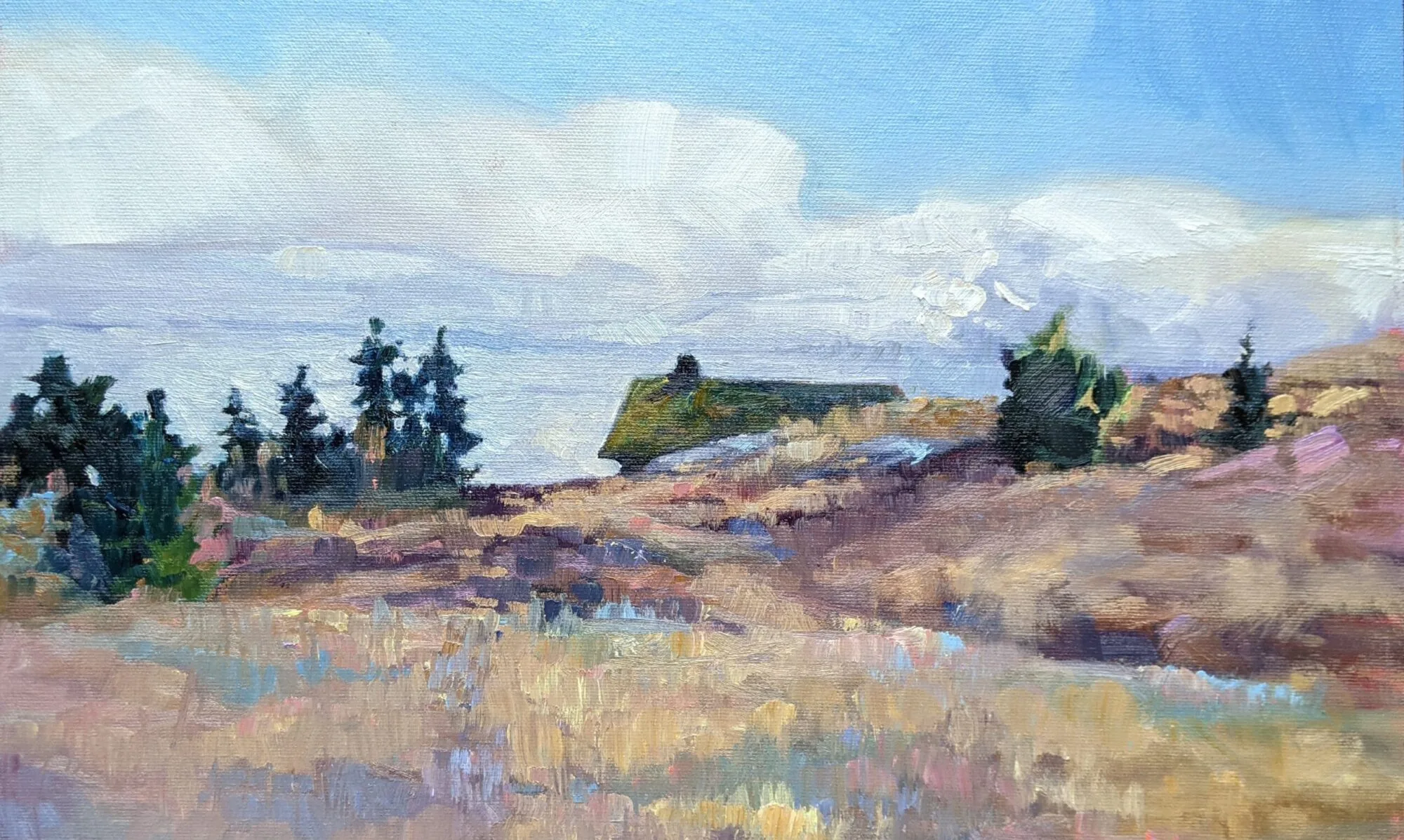
Fog over Whiteface Mountain, 11X14, click on image for more details.

Attachment

People don’t set out to get attached to outcomes—it happens gradually, almost invisibly, as meaning gets layered onto the whatever we’re doing. In painting, attachment forms when the work stops being a process and the final result becomes paramount.

When you spend hours on a piece, you naturally care about it and want it to turn out well. That’s good. But then a small, pernicious shift in mindset can happen: if this painting is good, I’m good, and if not, then maybe I’m not.

Fear of failure may not be a sign that you care too much; it can mean that you’ve tied your self-worth too tightly to the outcome.

Painters who move forward haven’t eliminated fear. They’ve changed their relationship to it. They expect things to go wrong. They build that into their process. A bad day of painting isn’t a verdict; it’s a data point.
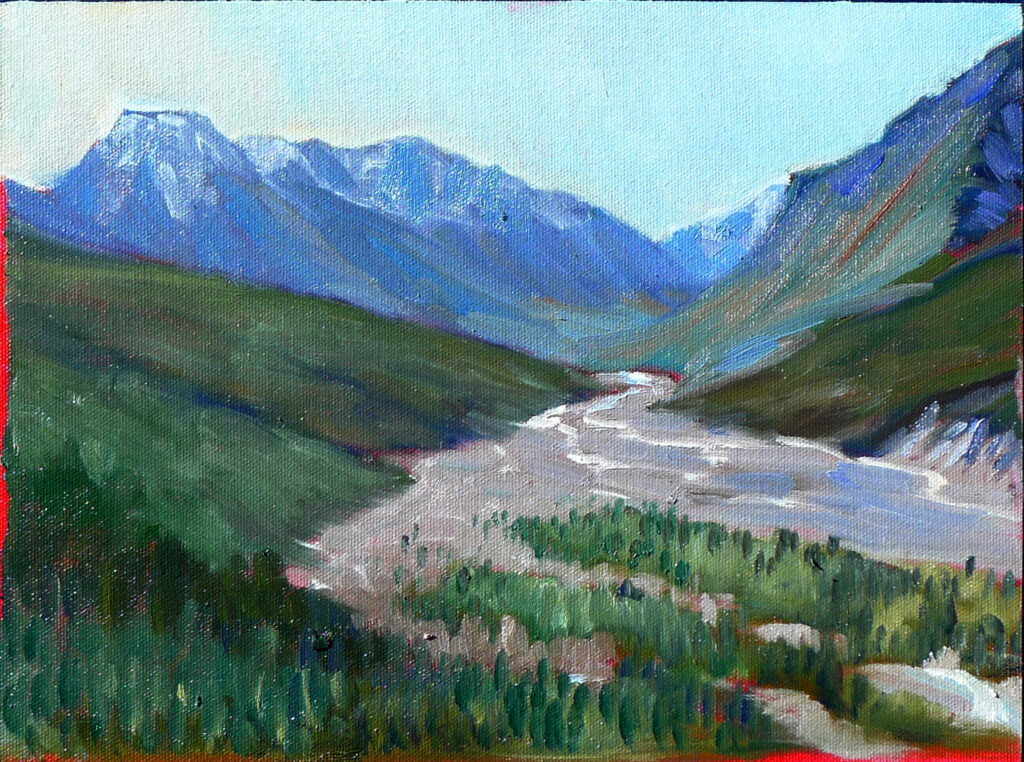
Avalanche Country, 9X12, oil on archival canvasboard, click on image for more details.

You can’t fail if you aren’t trying something difficult and new. If you start seeing failure as a positive, you can ride with it. Painting will no longer be a referendum on your ability.

It helps when you’re working in a framework where failure is part of the process. A supportive learning space, by which I mean good classes and workshops, can make all the difference. If you want that kind of structure, feedback, and encouragement, consider joining one of my workshops, below. Learn to trust your decisions, simplify your process, and, most importantly, keep moving forward.

Registration is now open for workshops in 2026! Reserve your spot:

Can’t commit to a full workshop? Work online at your own pace:
Seven Protocols for Successful Oil Painters

Fear is the most expensive mistake an artist can make

During last week’s workshop at Sedona Art Center, I talked to two artists about fear of failure. It’s a costly mistake. Every risk we avoid accrues a debt to ourselves that we can never repay.

Fear is itself failure, and it usually arrives quietly. It’s the painting you overwork because you’re afraid to stop. It’s timid color choice when boldness is called for. It’s the overly-safe composition that is dead on arrival.

If you’re going to mess up, go big

Years ago, my friend Brad Marshall showed me a bin full of failed paintings in his studio. It gave me a goal. There are 300-400 starts in my studio that I’ll never finish, I haven’t decided if I like or that are just plain awful. That’s an accomplishment, believe it or not. I no longer worry when things don’t work. That gives me freedom to keep working.

Of course, I still have crises of nerves. I’m having one right now as a matter of fact, which is why I stopped to write this post. But the only way to resolve it is to swallow my panic and get right back to work.

Painting, like all creative disciplines, is built on failure. As a painting teacher, I can reduce your failure rate by teaching you color mixing, value and composition, but in the end you have to do the work. That means a long trail of awkward, unresolved attempts. The artist who succeeds is not the one who avoids failure, but the one who metabolizes it.

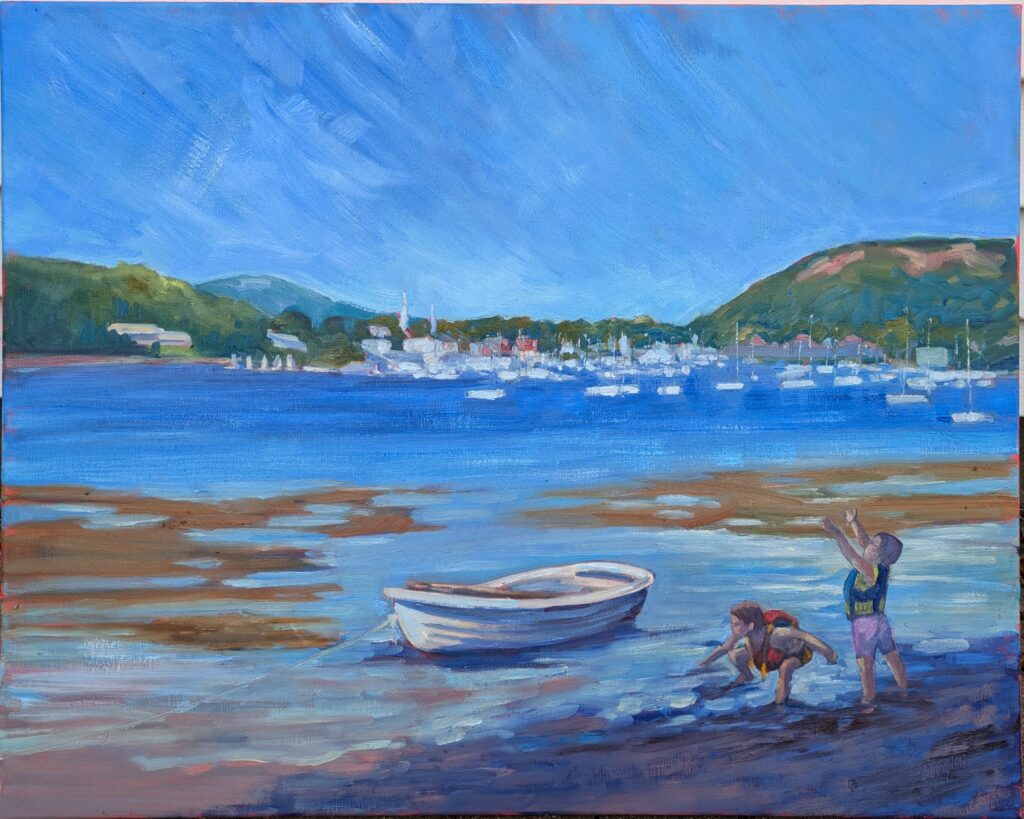
Camden Harbor from Curtis Island, oil on canvas, $2782 unframed includes shipping and handling in continental United States.

What fear does

“Days they force you/Back under those covers/Lazy mornings they multiply…” sang Needtobreathe. It’s easy to avoid facing our fears, but days can turn into weeks and then into years without challenging yourself to make art.

Even with brush in hand, fear changes your behavior in subtle ways. You hesitate. You second-guess. You fuss. Your brushwork tightens, your color dulls and your process stalls.

What if I’m not a genius after all?

As long as art exists mostly in our fantasies, we can tell ourselves that we would be great if only we had the time/space/money/support to pursue our art. What I’ve realized in my dotage is that I don’t have to be brilliant to make a contribution. I just have to keep working.

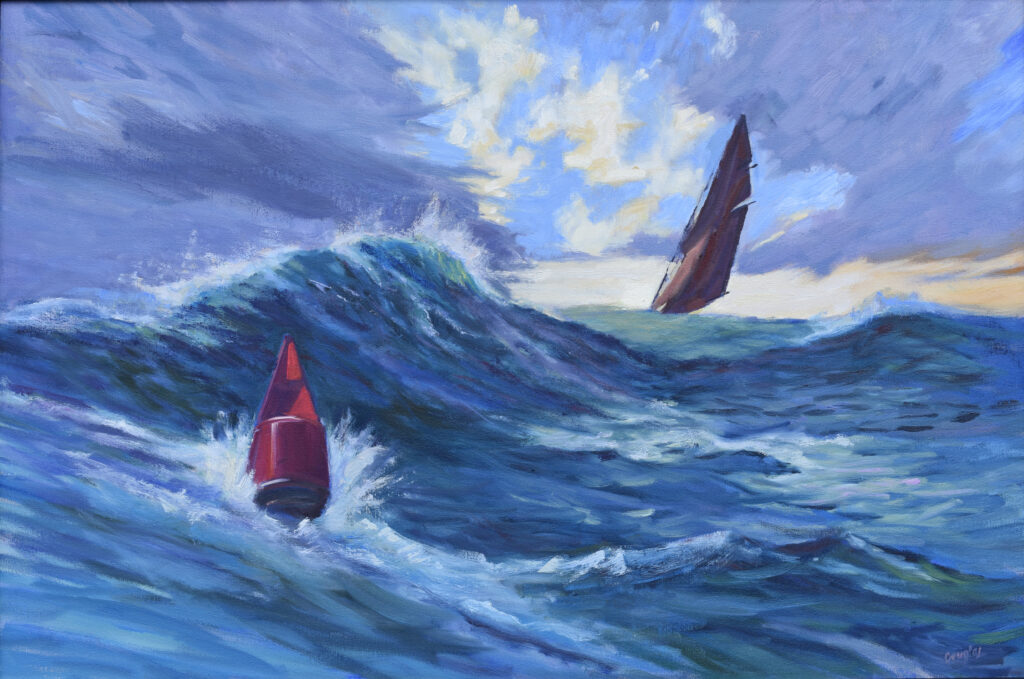
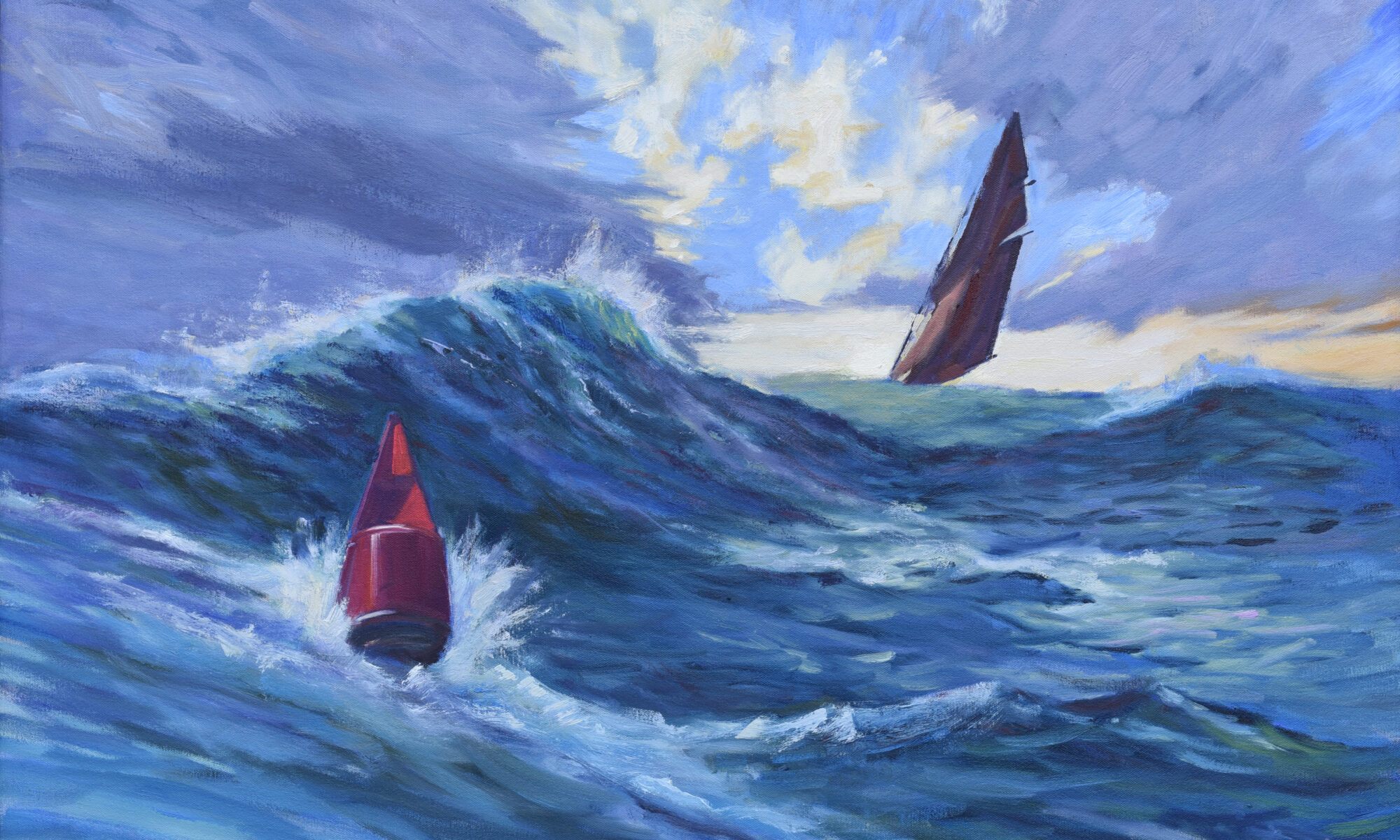
Heavy Weather (Ketch Angelique), 24X36, oil on canvas, framed, $3985 includes shipping and handling in continental US.

Painting is a numbers game

The more canvases we complete, the more problems we solve. The more problems we solve, the more fluent we become. Fear interrupts that cycle. It convinces us to linger too long, to over-polish work, to protect what should be risked.

So too, readiness is a myth. Confidence doesn’t precede action; it follows it. If you wait for fear to disappear, you will wait forever.

The solution is process and repetition. Painting or drawing a little bit every day helps you get over your dithering about getting started. A repeatable process means you’re less likely to spiral into doubt or self-loathing. Process doesn’t eliminate failure, but it makes it manageable.

Don’t try to avoid failure, outrun it

Equally important is momentum. Give yourself permission to move on from a painting that isn’t working. Start another and another. Each fresh surface is an opportunity to apply what the last failure taught you.

Moonrise, 12X16, $1159 includes shipping and handling in continental US.

Happy first day of spring

“March comes in like a lion and goes out like a lamb.” I’ve seen snow on Mother’s Day so each year I try to rewrite that proverb to express my disgust when winter refuses to let go. This year my version is, “March comes in like a lion and goes out like a lion with a thorn in its paw.” I invite you to do better.

Registration is now open for workshops in 2026! Reserve your spot:

Can’t commit to a full workshop? Work online at your own pace:

Seven Protocols for Successful Oil Painters

Challenge yourself

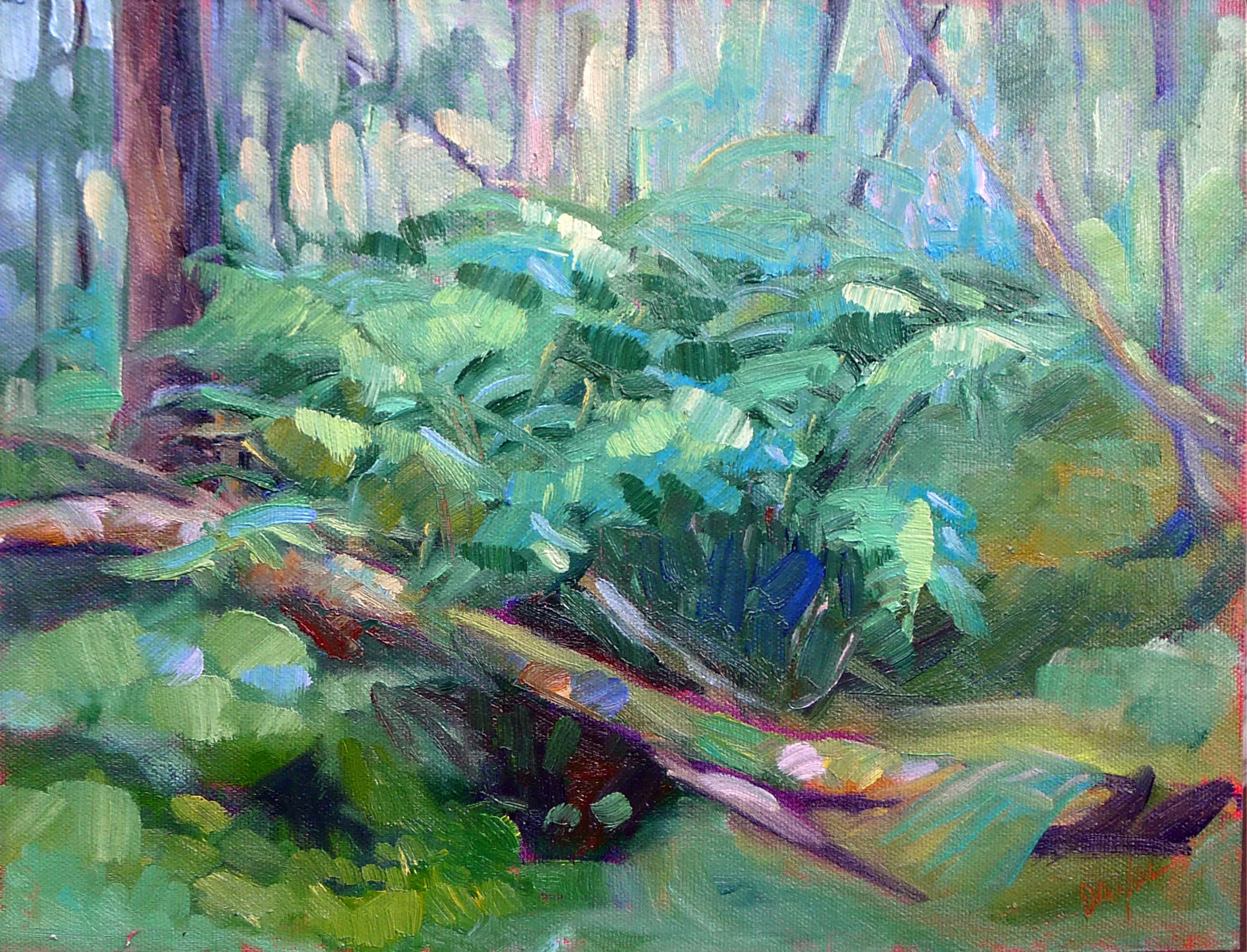
Cinnamon Fern, 9X12, oil on archival canvasboard, $869 framed includes shipping and handling in continental US.

I have a friend with the unfathomable habit of rereading Marcel Proust’s À la recherche du temps perdu once or twice a year. (I tried it once and didn’t get halfway through.) Recently I asked him why he finds the novel so compelling. “Any mental activity is easy if it need not be subjected to reality,” he answered.

This week I had a surprise visit from a man who studied painting with me during his junior and senior years in high school. He was an extremely disciplined, hard worker and had scholarship offers from the nation’s top art schools. He graduated from Rhode Island School of Design and after that he just stopped painting. He’s taken occasional workshops with me but he doesn’t stick with it, despite my nagging.

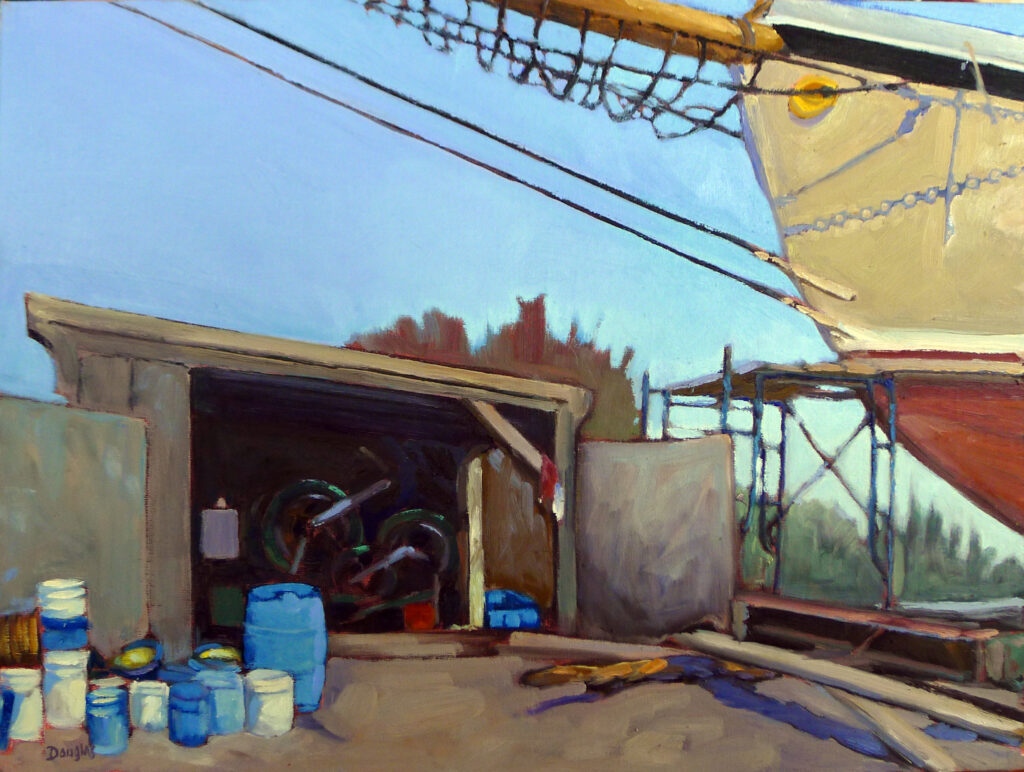
American Eagle in Drydock, 12X16, $1159 unframed includes shipping and handling in continental US.

There are many reasons people don’t pursue careers in art. They are worried about money (in particular, their student loans), competition, and the seemingly random way the market rewards artists. After all, for every thousand workaday artists like me, there’s a celebrity making bank off art.

Our society doesn’t respect art as a career, so many young artists are under social pressure to ‘get a real job’. Or, their guidance counselors push them into more stable career paths before they ever leave high school.

These are not foolish considerations. Anyone considering an art career ought to, at the minimum, take some business classes along the way.

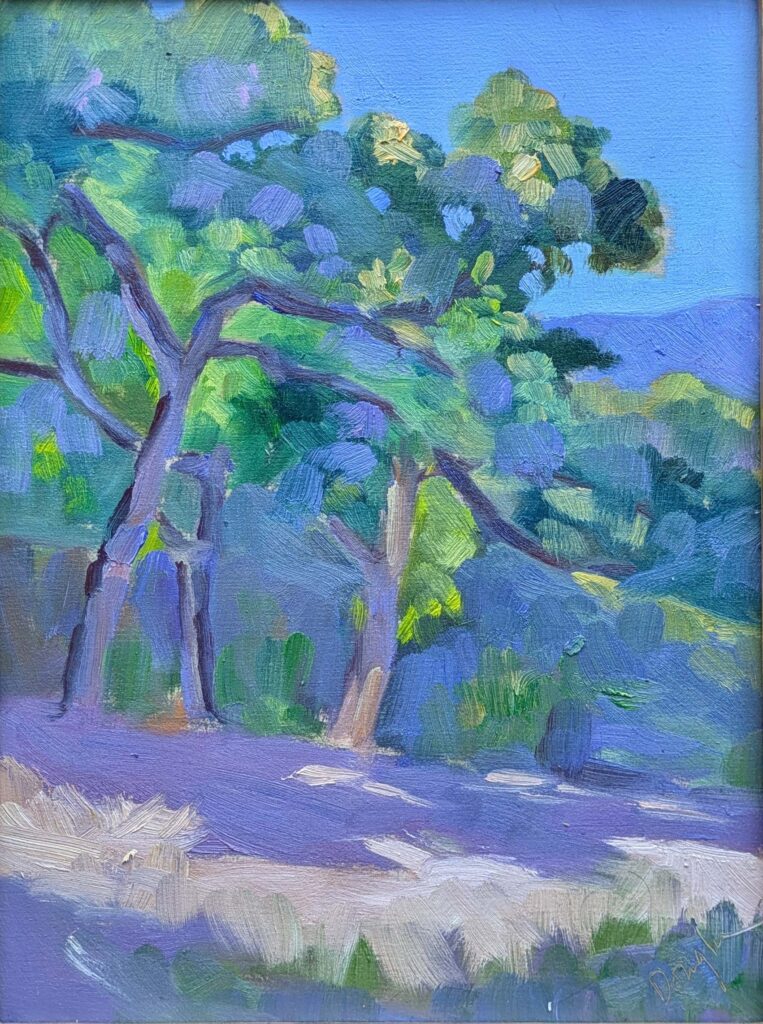
Cottonwoods along the Rio Verde, 9X12, oil on archivally-prepared Baltic birch, $696 includes shipping and handling in continental US.

Challenge yourself

The deepest problem of all lies in the perfection of our fantasy life. As long as I never pick up a brush, I’m a genius in my own mind. It’s that disconnect between our mental activity and reality that makes us so afraid to drill down.

Worrying about what others will think if you fail is one problem. Worrying about what you will think if you fail is even more crippling. We’re all under so much social pressure to succeed that failure seems like an unbearable outcome. What if I’m terrible… or even worse, mediocre?

That leads to setting extremely high standards for ourselves, where even our minor mistakes feel like failure. That would erode anyone’s confidence.

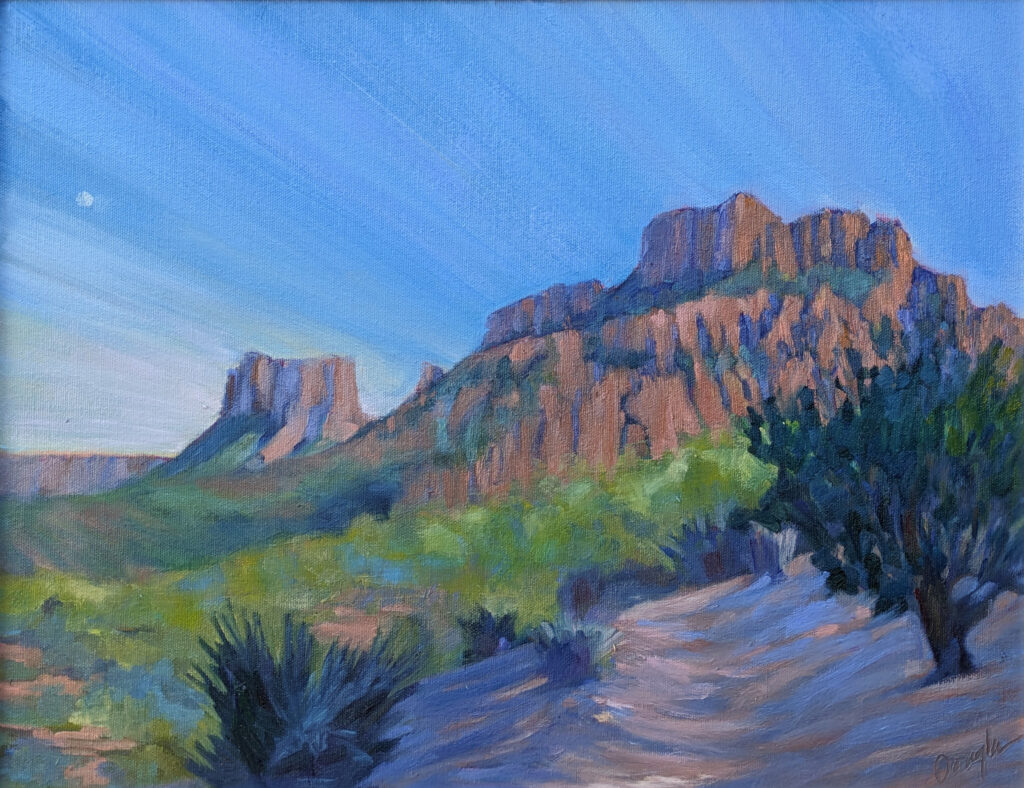
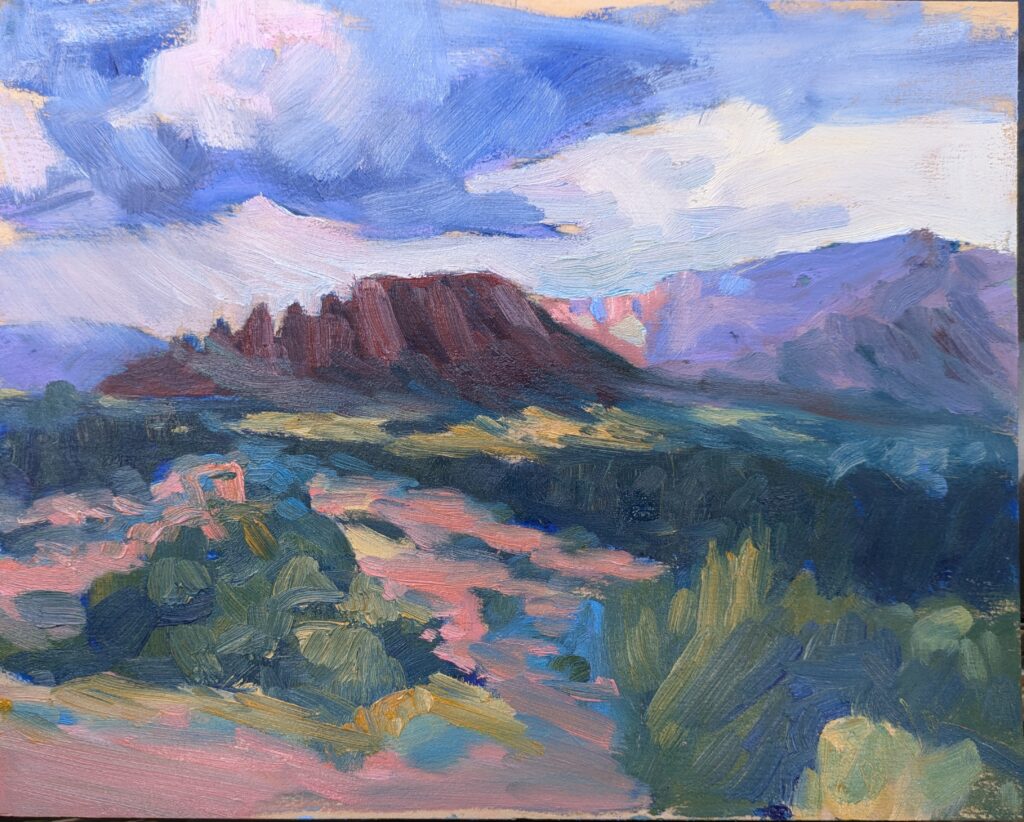
Hail hitting the Cockscomb Formation, Sedona, 8X10, oil on archivally-prepared Baltic birch, $522 includes shipping and handling in continental US.

What can we do about it?

Another artist who started about the same time as my young friend had nothing special in his early work. He did, however, have determination. He’s not overtly competitive and he didn’t get wrapped up in the end result. Instead, he kept quietly plugging away at the process. Today he’s painting beautifully and people are noticing. He’s an inspiration on the days when I just don’t feel like getting moving.

When we start pushing paint around, we all discover how flawed we really are. If you need reassurance on this point, look at Vincent van Gogh’s early work. There’s very little indication of the master he would ultimately become.

Insecurity is, sadly, the artist’s closest companion. That’s ultimately good; it means we’re constantly striving to be better. Still, it can overwhelm us, so it’s important to identify and challenge our self-defeating thoughts before they take root.

Registration is now open for workshops in 2026! Reserve your spot:

Can’t commit to a full workshop? Work online at your own pace:
Seven Protocols for Successful Oil Painters