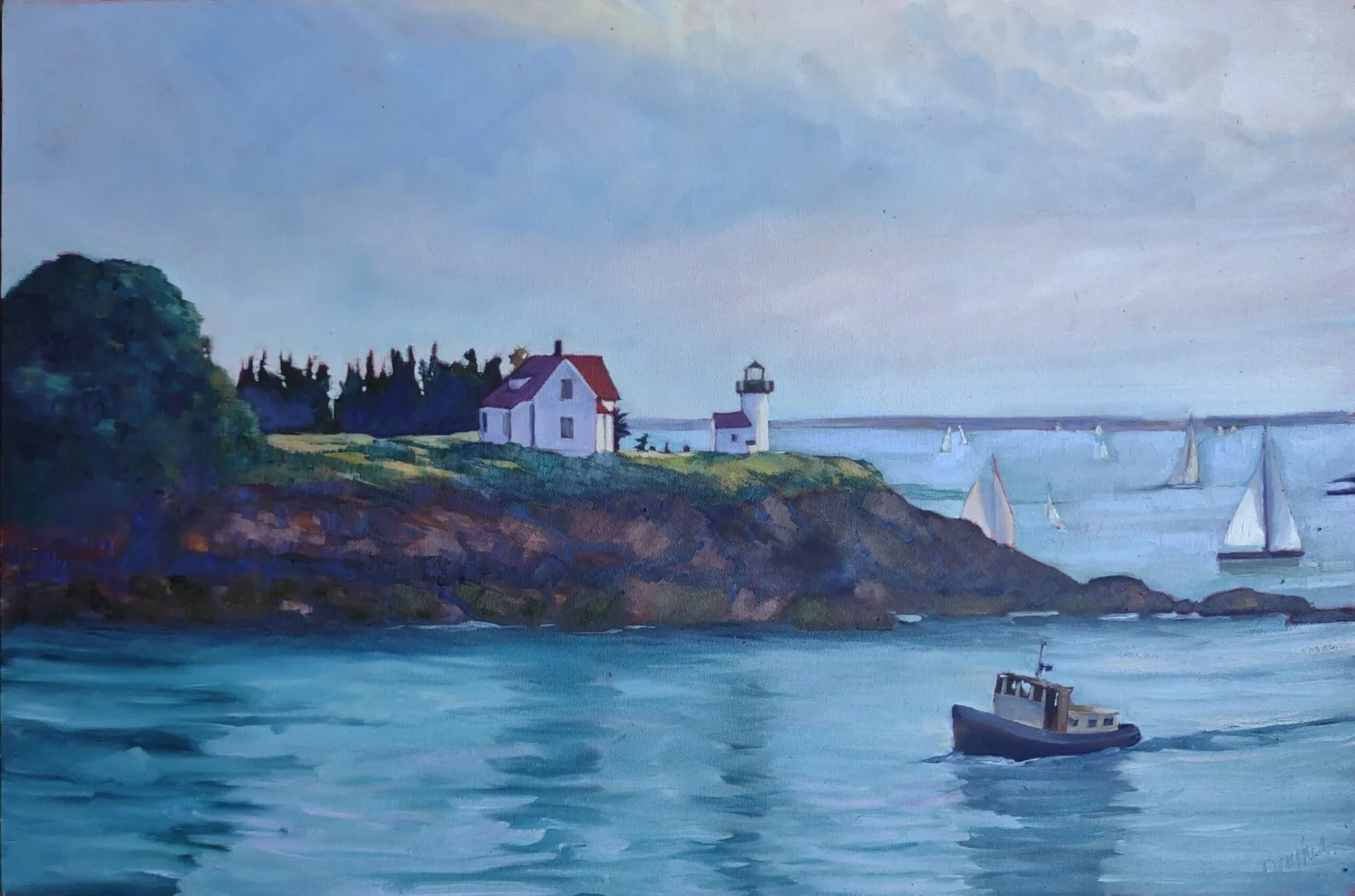
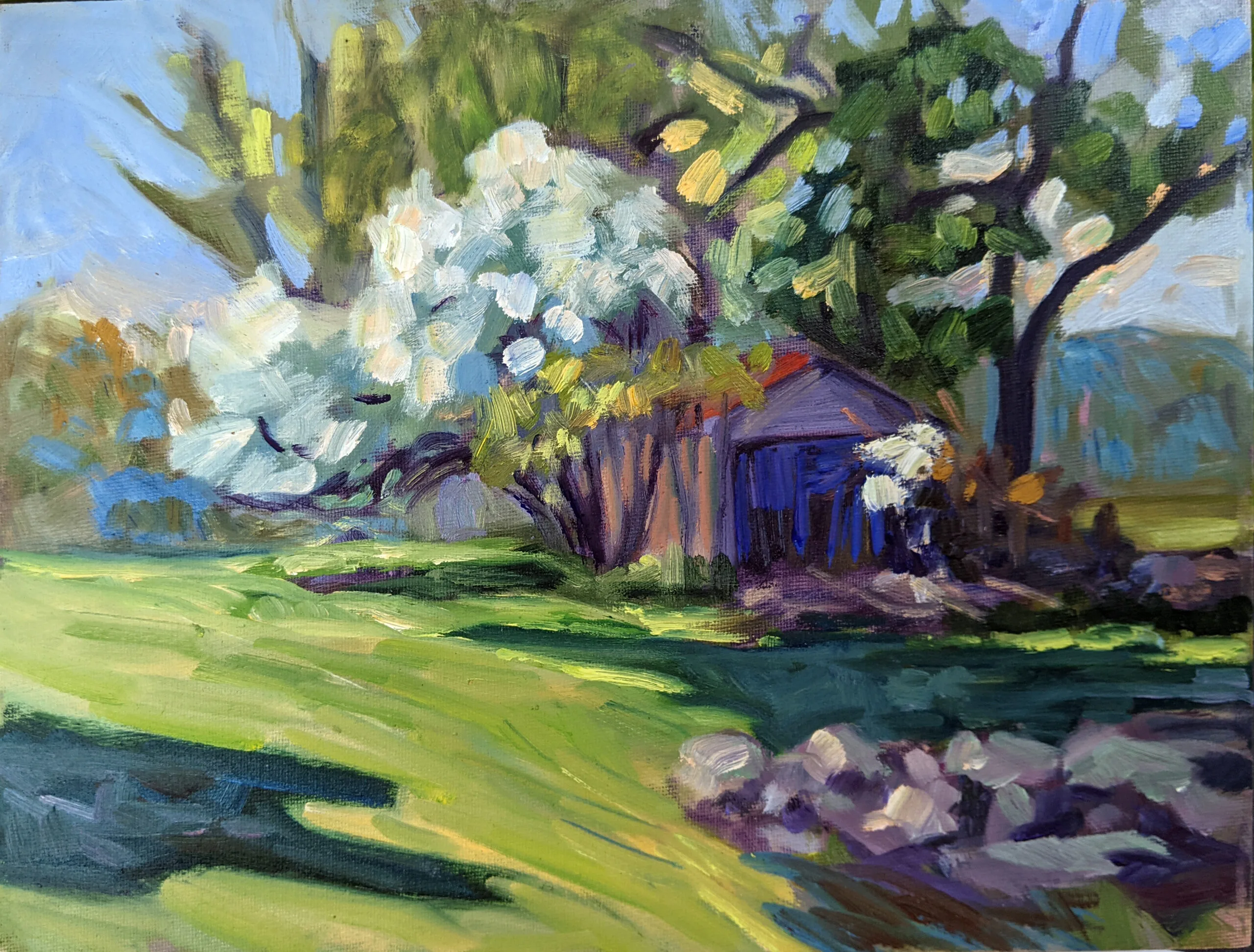
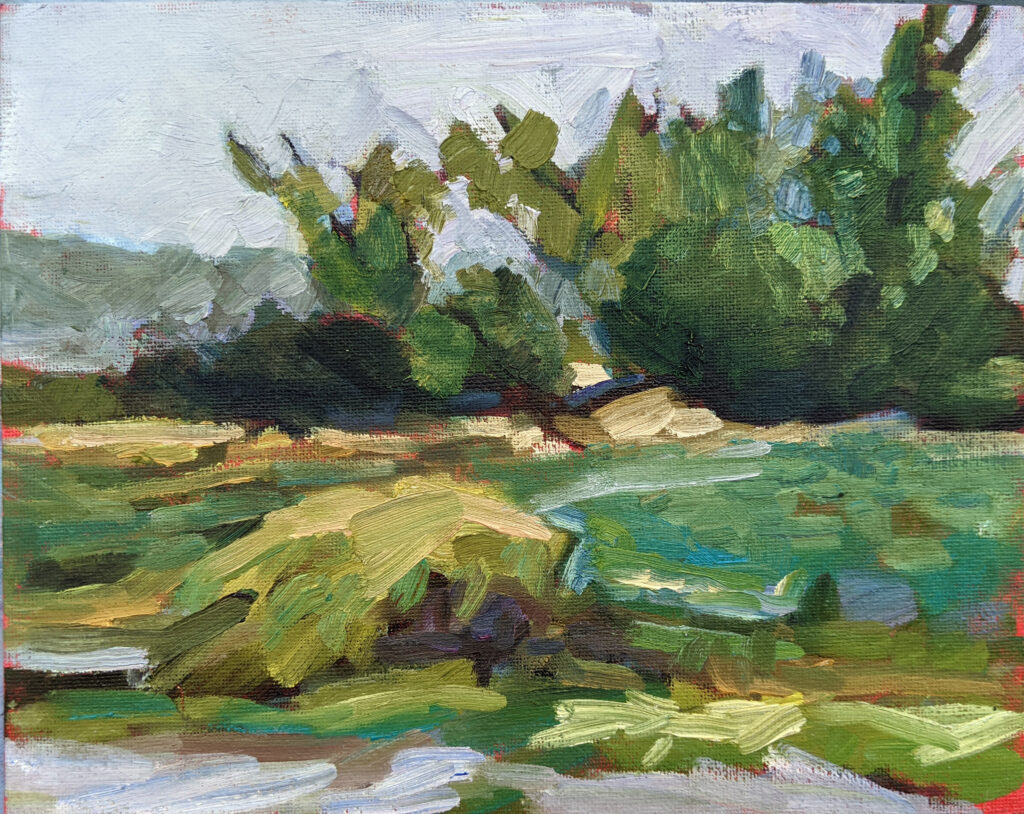
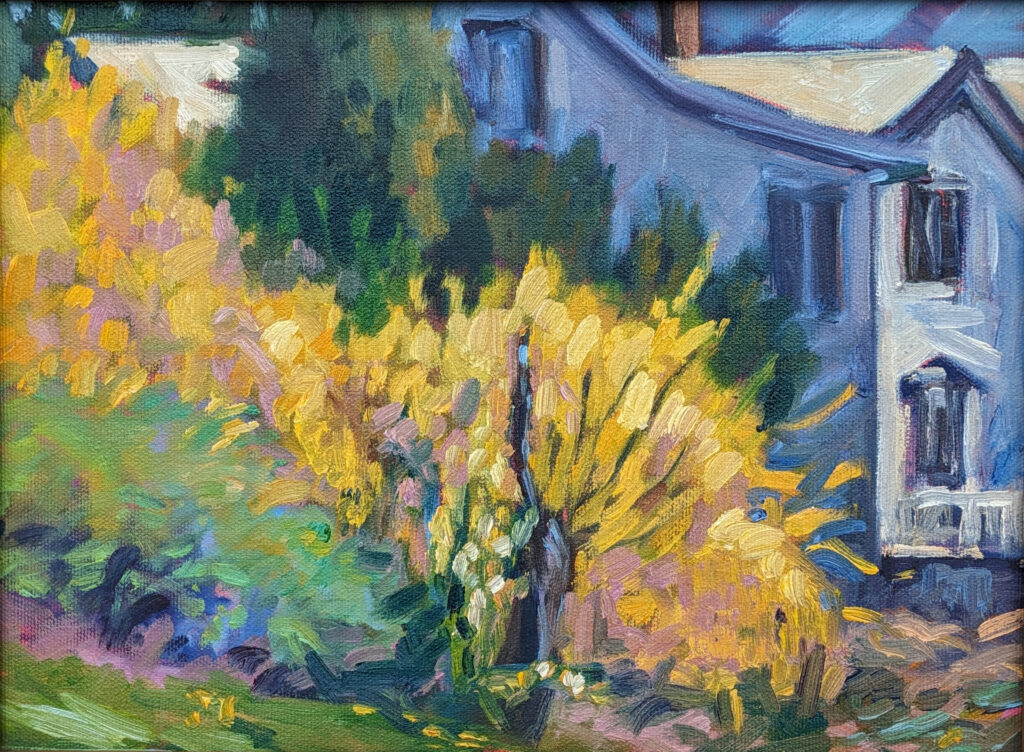
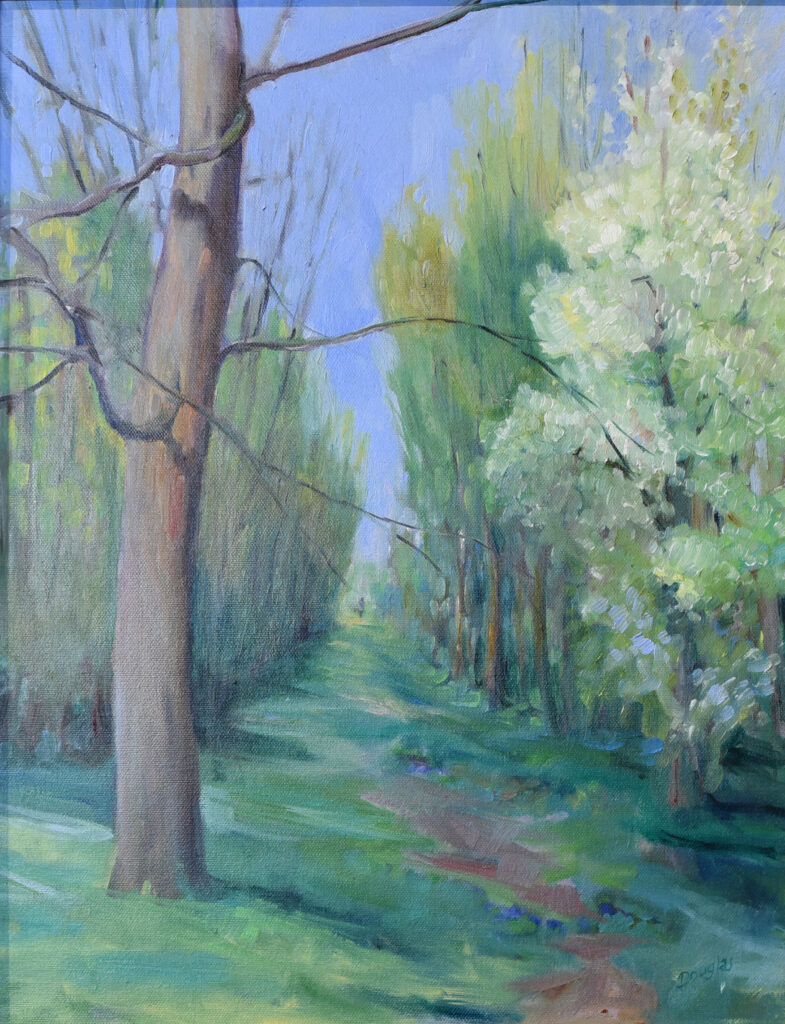
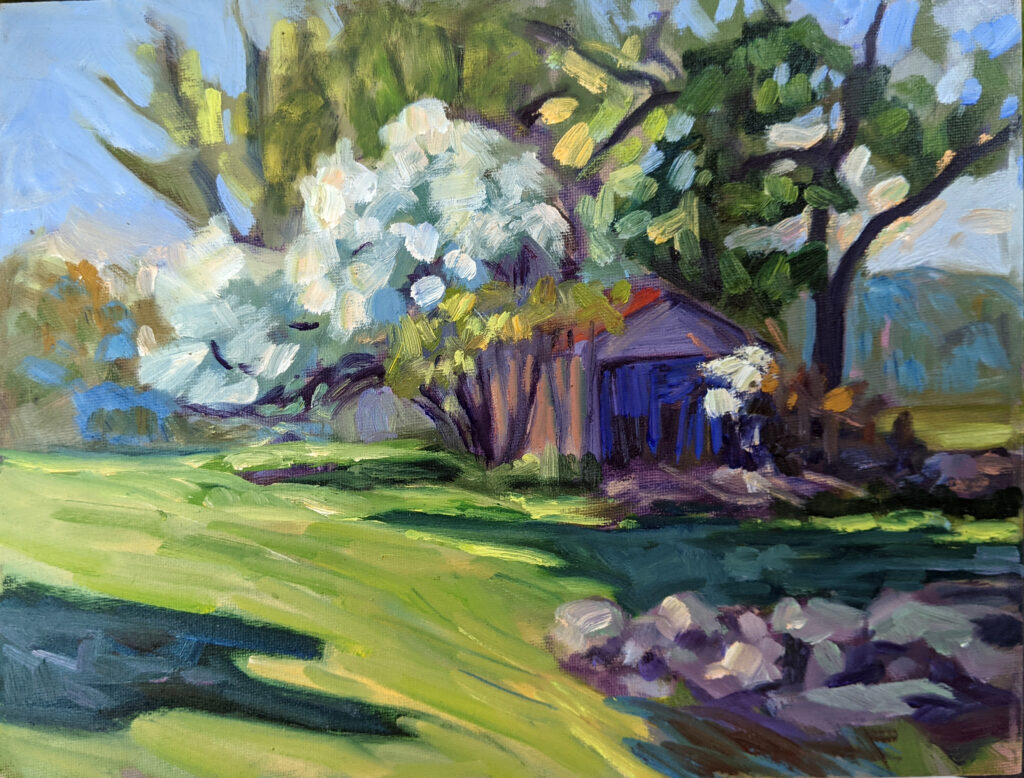
My friend asked me to teach a class on how to collect art. I haven’t fitted that in yet, but Maine’s season is almost upon us so it’s something I’m thinking about. (We did get about 6” of heavy wet snow this past weekend, so the paintings illustrating this post are all in open rebellion against Old Man Winter still kicking around.)
Collecting art isn’t about money, prestige or—heaven forfend—TikTok trends. It’s about learning to see and then trusting your judgment.
Start with what you like
Start with what arrests your attention. That’s not necessarily what a gallerist directs you to, but what makes you think, what you cycle back to in the gallery or online. If you find yourself lingering and wondering, that’s a good first clue.
Don’t discount your feelings. Barns and lighthouses are sometimes derided as hackneyed, but they give many people joy. Painted well, they can be wonderful.
Art should not fight with its setting, but don’t be afraid to make a bold statement. A good painting will make the room, not blend into it. If it challenges you, that’s a great sign. I’ve found, over and over, that paintings that immediately struck me as pleasant didn’t have staying power. The paintings that endured asked something of me from the start, and sometimes left me feeling uncomfortable.
Art appreciation
Art appreciates over time, but treating it like an investment only makes sense in the rarified world of so-called ‘investment art.’ That’s a big-money game based on reputation, scarcity, historical significance and market trends. (The investment art market is frequently a vehicle for money laundering because of its high-value transactions, secrecy, and lack of regulation. Even if I had the money, I’d be afraid to play.)
Still, the painting you buy today may appreciate significantly once the creator dies and market scarcity kicks in. My friends have paintings by James Morrison hanging in prominent places in their house. His work has steadily grown in value since his death, but that’s far less important than the joy those paintings bring to them and their visitors.
Investment strategy is no reason to buy a painting, especially if you plan to look at it, not store it in a vault. You’re going to see it every day. It needs power to not become just another household furnishing.
What makes powerful art?
Good art is resolved and assured. It has clarity of intent. The artist understands value, color and composition. There is structure, and enough mystique to keep you thinking. Ultimately, the best art says something, even if that something is a simple message.
Collecting is a practice
It’s absurd to wait until you can afford a masterpiece (especially since most of us will never get there). Start small. Buy studies, prints, or work by emerging artists. You’ll make mistakes. Everyone does. The goal is to develop discernment.
You will outgrow some of what you buy. That’s evidence that your eye is improving. Early purchases are your education, and you can pass those paintings along to others. As time goes by, you’ll see more, expect more and choose more carefully.
Where should you buy art?
Art sales have (like everything else) decentralized. Galleries, open studios, plein air events, or online are all fine places to buy art. The more art you look at, the better your judgment gets.
There’s no substitute for talking to artists. Ask about their process. Understanding how paintings are created sharpens your collector’s chops.
Take care of your purchase
This should go without saying, but take care of what you buy. Paintings need protection against excess moisture or dryness. Good framing helps protect the work.
Wanna buy a painting? You can start here.
I have just two workshops left in 2026! Reserve your spot:
- New! Color Clinic 2026 | Rockport, ME, October 3-4, 2026
- New! Composition Week 2026 | Rockport, ME, October 5-9, 2026
- High-Desert Light & Monumental Form | Sedona, AZ, Apr 26, 2027 – Apr 30, 2027
Can’t commit to a full workshop? Work online at your own pace: