What I’ve accomplished so far this week

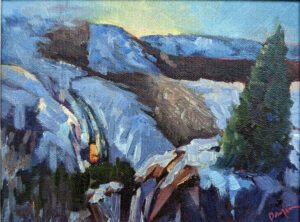
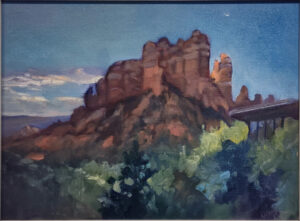
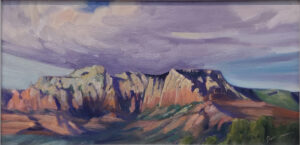
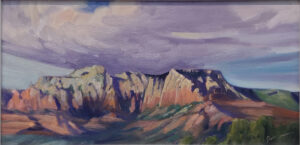
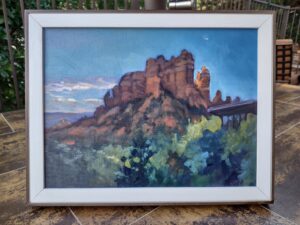
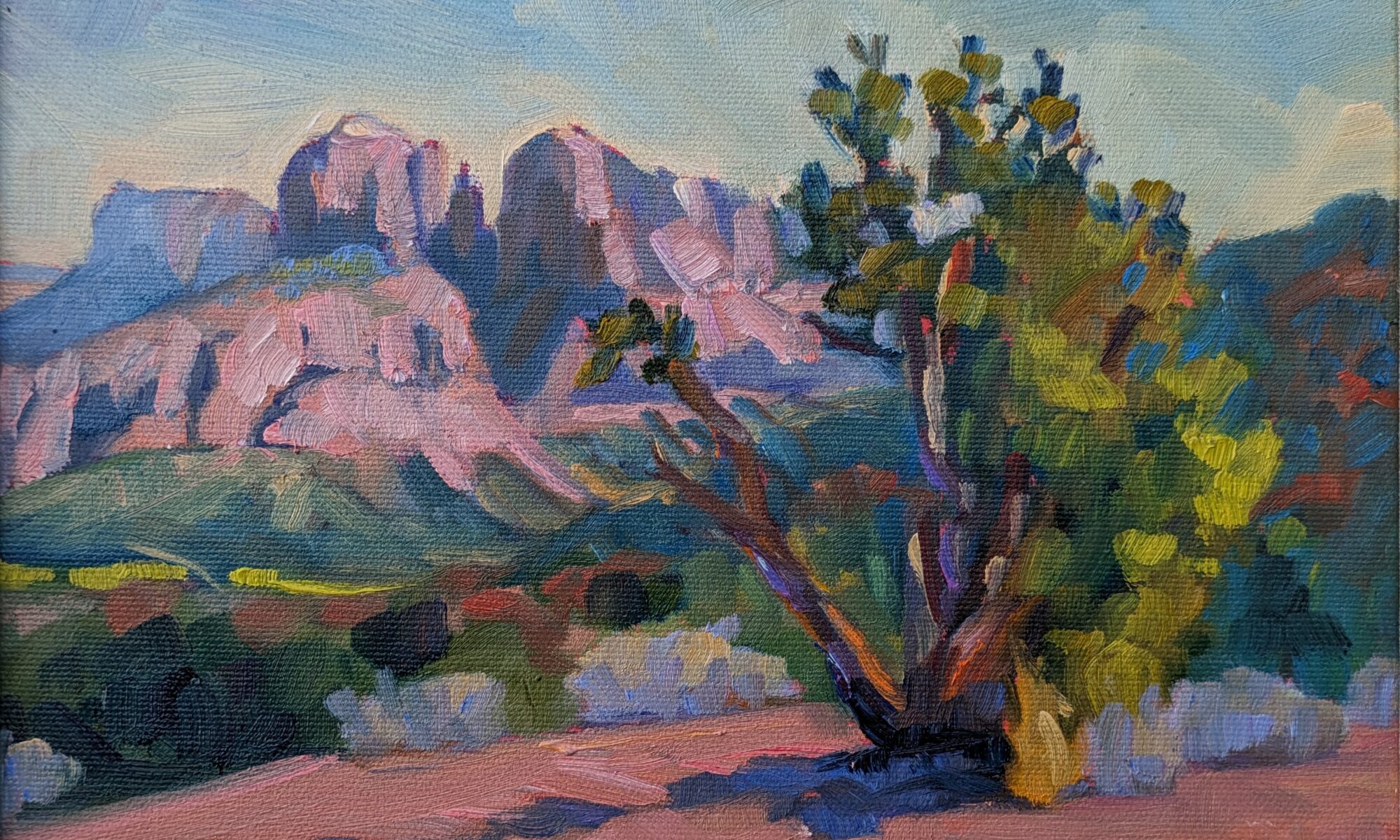
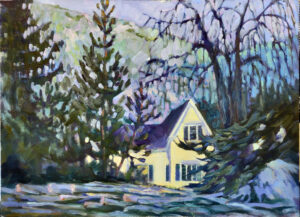
I wish I could remember the title of this piece.

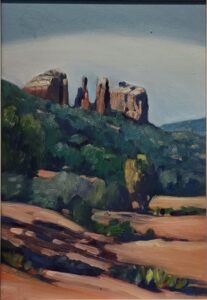
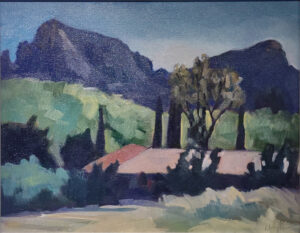
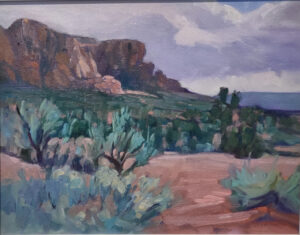
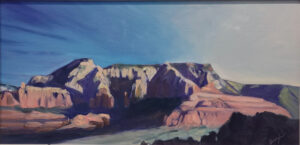
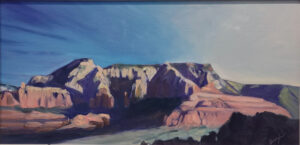
We’re down to the final stretch at the 19th annual Sedona Plein Air Festival. At this point, I haven’t the energy to wax philosophical, so I’ll just tell you a little story about each of these paintings, in the order in which I completed them.

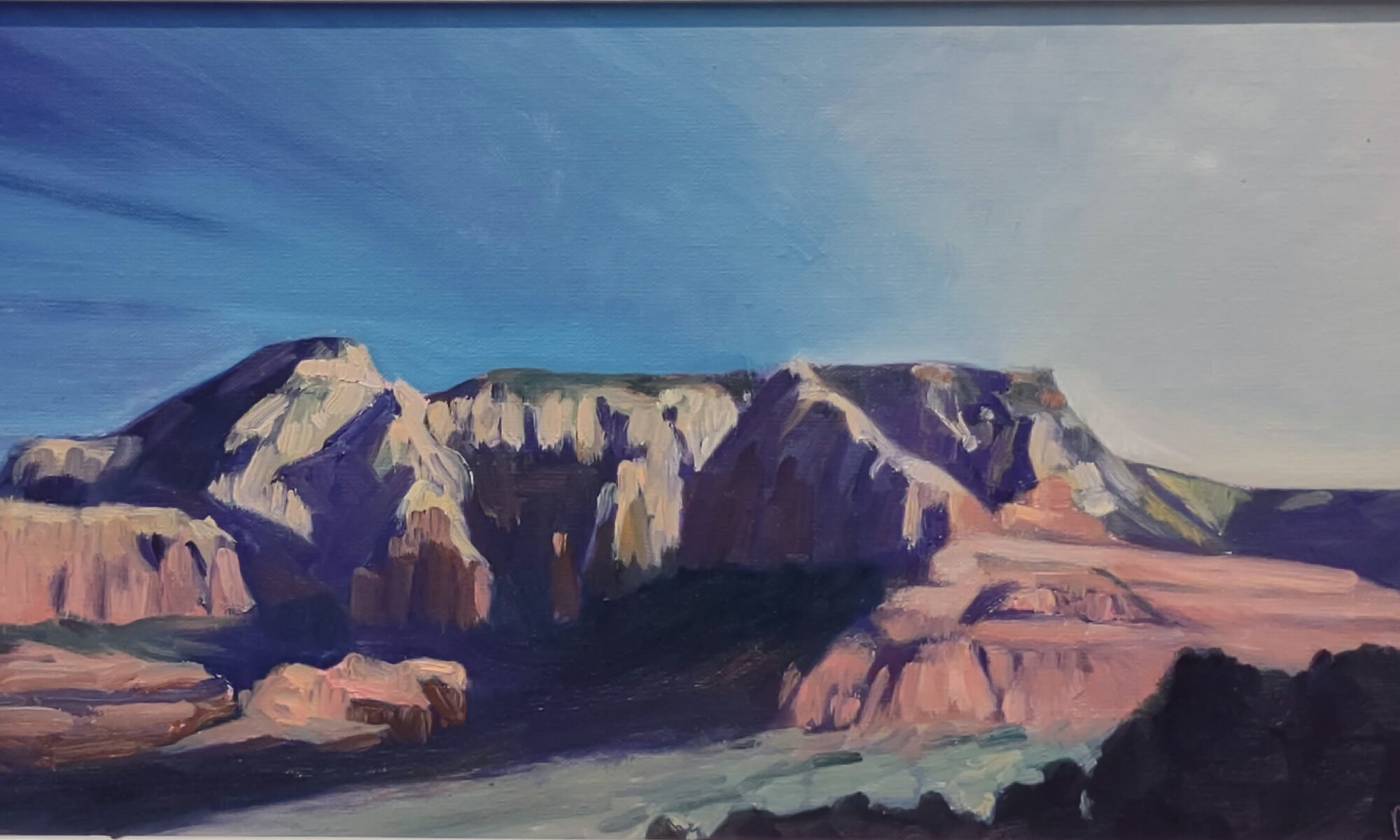
I can’t remember the title of the painting above. It was the first one I painted, and the first one I’ve sold. This is the painting where Casey Cheuvront and I were entertained by a series of spirit guides, which I wrote about here. I remain stubbornly unenlightened.
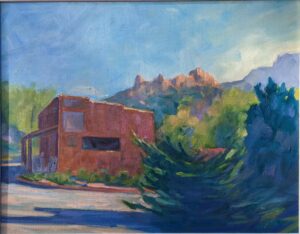
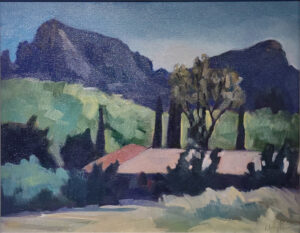
Early Light, 11X14, oil on archival canvasboard.

Early Light is of the building next to the Sedona Arts Center. To my eyes, it’s the most authentic building in downtown Sedona. The Jordan Family built it of red rock in 1938 to house their retail operations; their former fruit-processing barn is now part of the Sedona Arts Center. I doubt they could envision that it would one day offer Intuitive Psychic Readings or Reiki, Energy and Chakra Balancing, among other things. It’s 11X14, oil on archival canvasboard, available through Sedona Arts Center.
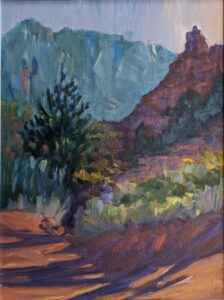
Dusk at the Merry-Go-Round, 11X14, oil on archival canvasboard.

Since my rental car was upgraded to a Jeep, Ed Buonvecchio, Casey and I decided to drive up Schnebly Hill Road. This track used to be the road to Flagstaff; today it’s barely fit for a high-clearance Jeep. It took us an hour to get to our destination, and we barely had teeth left. Heading down in the failing light, I realized I only had my sunglasses with me. Casey watched for obstacles while I steered. “Did you see that person on the side of the road?” she asked me. Ahem.

“It’s actually a little smoother if you take the washboards a little faster,” Casey told me. So, I did. “I didn’t mean the rocks!” she cried. Dusk at the Merry-Go-Round is 11X14, oil on archival canvasboard, available through Sedona Arts Center.
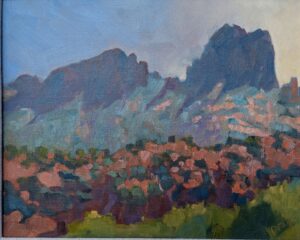
Pensive, 8X10, oil on archival canvasboard.

Pensive is an 8X10 which I did as a demo on Sunday, in concert with Hadley Rampton. “How did you feel when you were painting it?” a member of the audience asked.

“Larky,” I answered.

“That’s not larky; it’s pensive,” he replied. I didn’t realize I was pensive; I thought I was having a great time, but sometimes your subconscious has a mind of its own. Available through Sedona Arts Center.
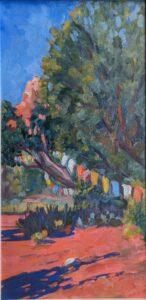
Peace, 8X16, oil on archival canvasboard.

I’ve been praying for peace for Israel and Ukraine. My friend told me that there were prayer flags along the trail near the Amitabha Stupa and Peace Park. Frankly, I was attracted to the bright colors fluttering among the piñons and junipers, but why not pray for peace while you’re painting in a peace park? Peace is 8X16, and available through Sedona Arts Center.
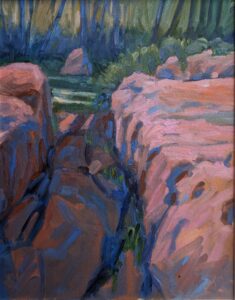
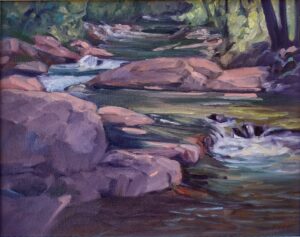
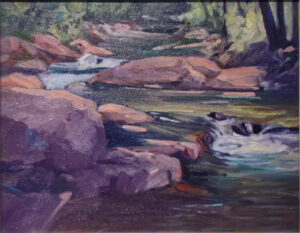
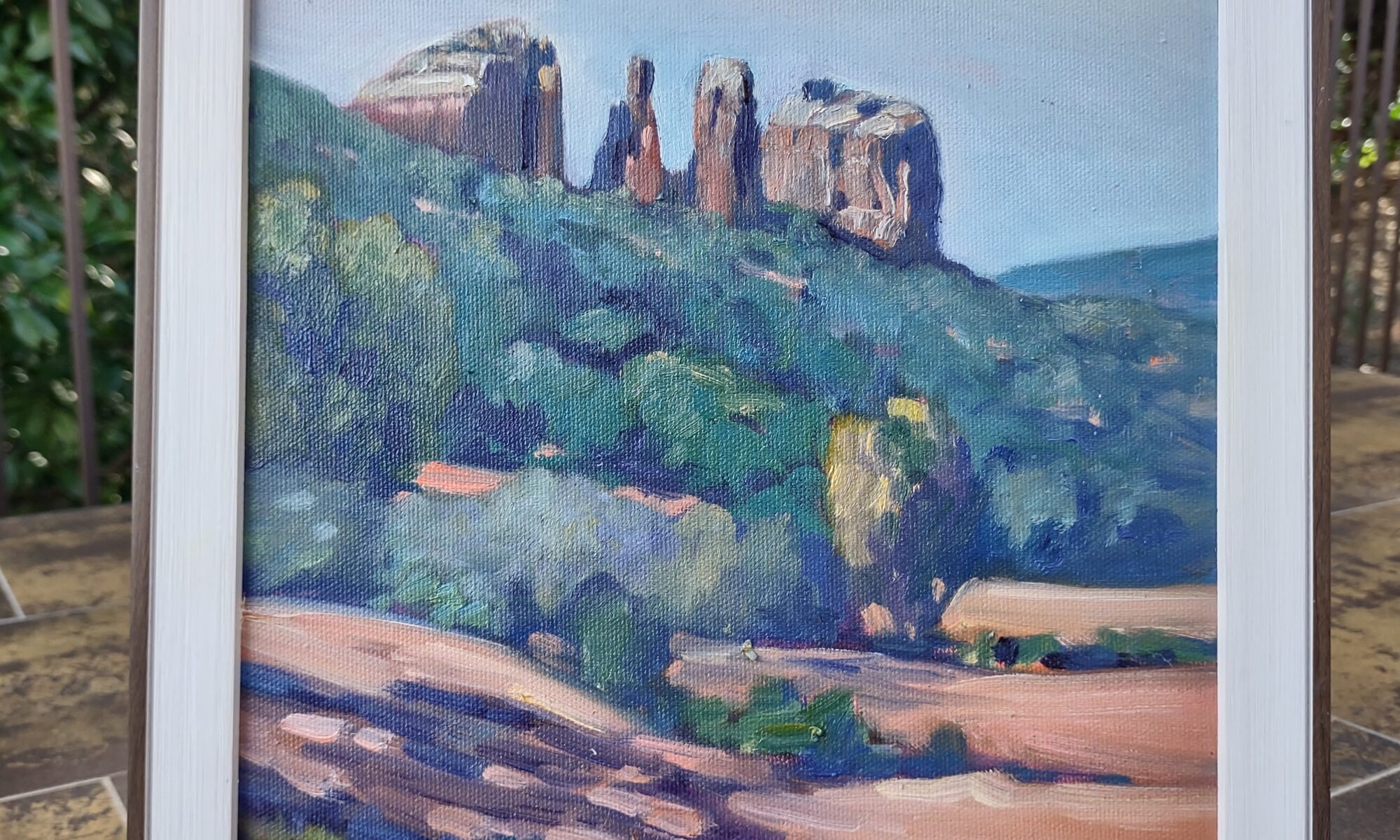
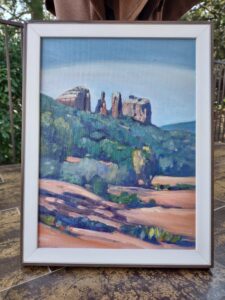
The Beauty of the Rocks, 11X14, oil on archival canvasboard.

The Beauty of the Rocks is 11X14, and was painted along Oak Creek behind L’Auberge de Sedona, which is a very swank resort. There’s one classic view, looking upstream, but I painted that last year. Why not drop down into a fissure and paint the diagonal gap in the rocks instead? Of course, I couldn’t back up to look at my work without killing myself, so I periodically called to Laura Martinez-Bianco to ask her if passages needed changing. This committee approach to painting apparently works; I’m pleased with both the color and composition.

I have to select three pieces for judging. Although I’ve still got two more days to paint, I’m interested in your opinion. What do you like best, and why?

Registration is now open for workshops in 2026! Reserve your spot:

Can’t commit to a full workshop? Work online at your own pace:
Seven Protocols for Successful Oil Painters

Monday Morning Art School: searching for meaning in Sedona

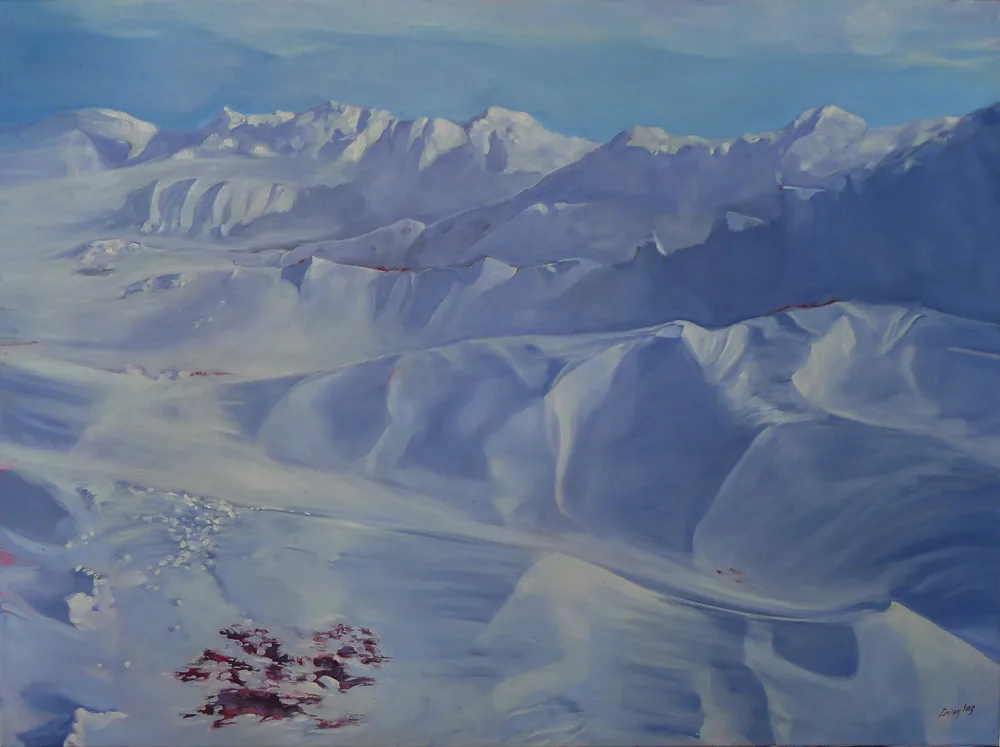
Winter Lambing, 36×48, oil on linen, $6231 framed includes shipping in continental US.

I’m in Sedona, AZ, painting in the 19th annual Sedona Plein Air Festival. I’ve written many times about how the question of meaning bedevils me. This place, with its crystals, vortexes, ley lines, and spiritualism ought to be chock full of meaning, but it’s not. That stuff is too glib and superficial for me.

For artists tucked into a corner of the Sedona landscape, it can be relentless. Casey Cheuvront was painting on a rocky promontory when a woman stopped in front of her to give her clients a spiel about the magnetic energy of the rocks. Another guide talked about how we were in a direct line between Cathedral Rock and Airport Mesa, which apparently confers special powers. Meanwhile, I was discussing reincarnation and non-attachment with a lovely gentleman from Princeton, NJ.

Midnight at the Wood Lot, oil on canvasboard, 12X16 $1,449.00 framed includes shipping in continental US.

Starting with an overarching concept like Sedona’s famous spirituality can easily veer into the sophomoric. That doesn’t mean that art can’t use symbols, metaphor, and allegory to convey deep layers of meaning. It’s just best to avoid the trite.

To me, one of the most important reasons to paint en plein air is to celebrate God’s creation. That has an emotional resonance with me; I am constantly struck anew by the variety and beauty of this world. Can I translate that in my paintings in a way that evokes an emotional response? Only if I paint something that also resonates with my viewers’ experiences and perspectives. Just as I am left cold by new age spirituality, others may be unable to engage with my deep feelings about the created world.

Lonely cabin, 8X10, oil on canvasboard, $652 framed includes shipping in continental US.

Ultimately, all we have is our own personal perspective. Our experiences, beliefs, and values add depth and authenticity to our creative expressions. That doesn’t mean I need to be overt about my ideas. They color my perception, and those who think the way I do will, hopefully, find my work relatable.

Of course, none of this works without paying attention to the formal elements of design. All meaning rests on technical skill. You may feel something deeply but be unable to communicate that to your viewer because you don’t have a cohesive visual language.

The Late Bus, 8X6, oil on canvasboard, $435 framed includes shipping in continental US.

Yesterday, Hadley Rampton and I demoed together at the Sedona Arts Center. It was an interesting way to do it, because our styles are very different, and the audience asked pertinent questions. When I finished, I asked the people watching what I should name my painting.

“How does it make you feel?” a man asked me.

“Oh, larky, I think, because I had a lot of fun painting it.”

“That’s not what it conveys to me at all,” he said. “To me, it’s pensive.”

Sometimes, what you think you’re painting is not at all what comes through. Other times, there is ambiguity or multiple tracks of meaning within the same painting. Viewers derive their own associations, and they may in fact be what you were thinking subconsciously all along. Although I’m having fun at this event, I have some serious matters clouding my immediate horizon.

The opposite of subtlety is intentional storytelling, where you’re crafting a narrative that’s explicit and easily comprehensible. Since a painting is essentially a snapshot that captures a moment in time, you must work to tell the before and after. Narrative painting can convey complex ideas, sometimes better than words can.

Registration is now open for workshops in 2026! Reserve your spot:

Can’t commit to a full workshop? Work online at your own pace:
Seven Protocols for Successful Oil Painters

The most important rule of painting

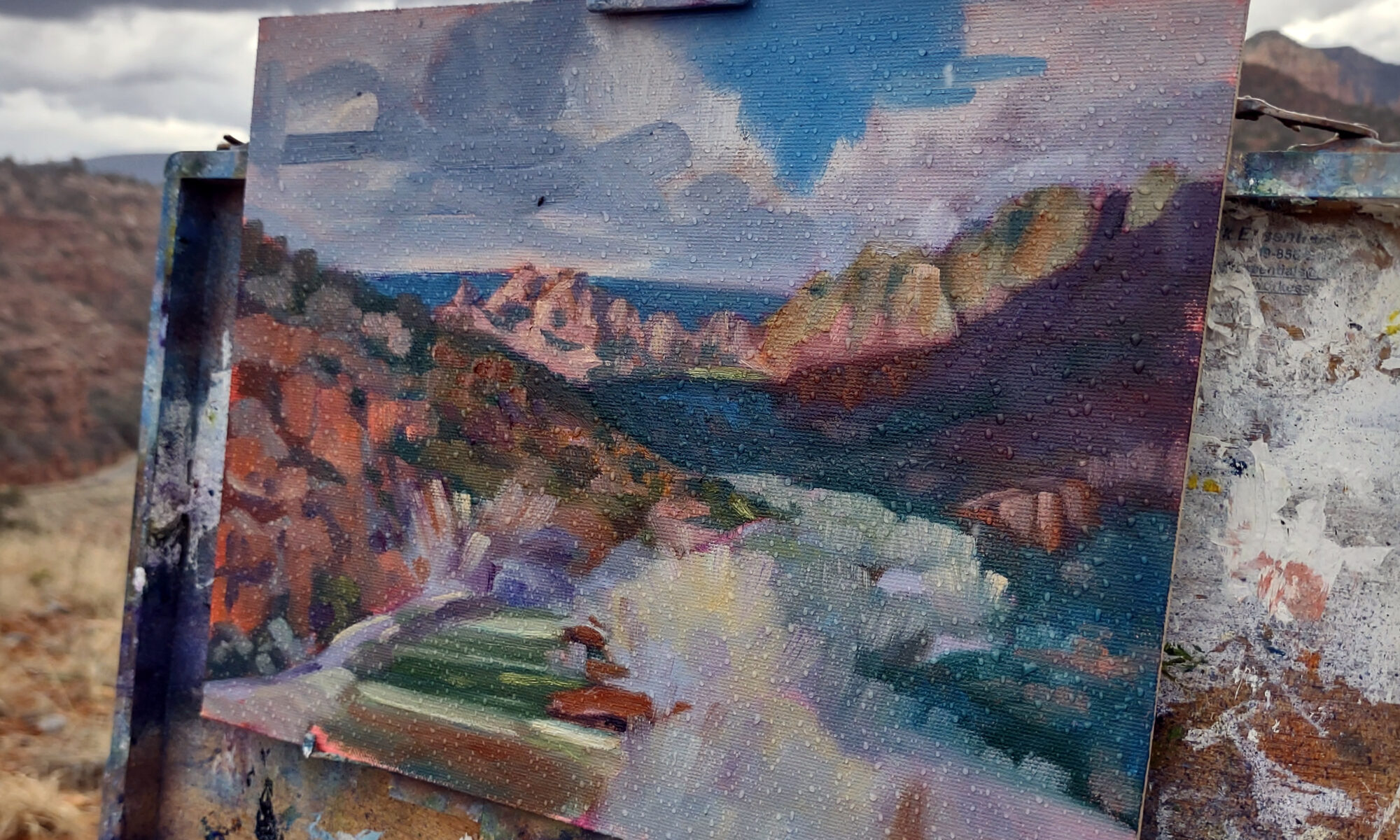
It’s a start. Maybe I can even finish it before I leave!

Last March when I taught in Sedona, it was t-shirt weather. Our biggest dilemma was which day we should visit the winery. This year the weather has been terrible. Even I, an incurable optimist, can’t deny that.

The historic snows and rains that have pounded California have not left Sedona unscathed. Flood-prone areas were on high alert yesterday. State Route 89A closed in both directions between Sedona and Flagstaff due to rock slides.

Arizona has close ties to California, and people here have shown me pictures of their favorite ski resorts in the Sierra Nevada, where some places have seen close to 100 inches of new snow in the month of March alone. I’m from Buffalo and that number astounds me.

We’re not getting that, but we have had mixed precipitation and cold weather all week. It’s maddening when we’ve invited people to paint en plein air and they’re stuck inside, as beautiful as the teaching studio is at Sedona Arts Center. I want my students to be happy, and circumstances beyond human control are making that difficult.

“It’s the beginning of a new Ice Age,” I grumbled, and my student Maggie laughed and agreed.

Snow is welcome in December; at the end of March it’s just annoying.

This weather isn’t helping my slump

Maggie and her pal Beth wisely decided to paint indoors yesterday. The rest joined me at Secret Slickrock trailhead. Rain eddied and blew through the massifs, and Oak Creek roared in its rain-swollen channel below us. It would have been magical if the weather hadn’t been so stubbornly uncooperative. One by one, my students retreated to the warmth of their cars until it was just Matthew, Laura and me left.

I’ve been in a painting slump recently. There are all kinds of reasons for slumps, including health problems, pressure at work, grief and much more. Being able to identify the cause doesn’t necessarily solve the problem, but it does help me to feel better. And I know why I’m here. I’m spending most of my creative energy developing an online painting course. I’m alright with that trade-off, but it’s frustrating when I can steal a moment to paint and dreck comes off my brush.

Matthew is wearing three layers under that boilersuit. It’s a wonder he can stand up and waddle to his car.

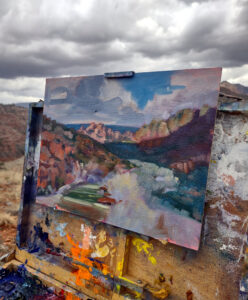
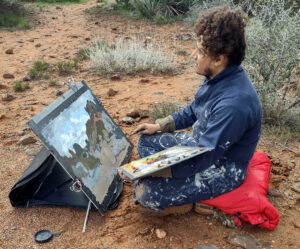
But here I was on the top of a bluff and most of my students had left. I laid in a quick painting, breaking rules I drill into my students. I made no preparatory value sketch because I’d loaned my sketchbook out and hadn’t retrieved it. I did major design surgery in the middle of the painting. The painting is unfinished, because the rain and snow started sheeting down on us again. (Oil paint turns into stodge when it absorbs enough water.) And of course I don’t have a reference photo; I never remember to take them.

Yet I’m happier with this start than with anything else I’ve done since January.

Sometimes we go through dry periods. Sometimes we break rules we know are important. But the most important rule of all is to show up. Yes, you’re very likely to make a bad painting when you’re in a slump, but you stand a zero chance of making a good one if you don’t paint at all.

Registration is now open for workshops in 2026! Reserve your spot:

Can’t commit to a full workshop? Work online at your own pace:
Seven Protocols for Successful Oil Painters

Okay, now it’s your turn to be the jury… you pick.

Dome of Light, 9X12, Carol L. Douglas, $869

I have completed eight paintings for this event, seven of which are in this blog post. By 9 AM Sedona-time (noon on the East Coast) I have to narrow it down to three for judges John Caggiano and Susan Lynn to view. We’re essentially pre-filtering; it’s far more difficult for a juror to filter through 300 paintings to determine what he or she likes.

River Light, 11X14, Carol L. Douglas, $1087

This is, for some of us, the hardest part of the event, so I’m turning it over to you. Think in terms of formal criticism, including:

  • Focal point
  • Line
  • Value
  • Color
  • Balance
  • Shape and form
  • Rhythm and movement
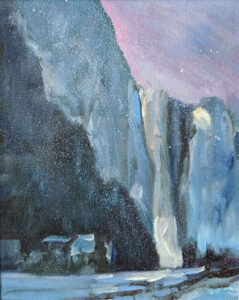
Crescent Moon, Dawn, 9X12, Carol L. Douglas, $869

Then ask yourself, “Does this painting move me?”

The photo quality isn’t the greatest; I took these indoors. But there’s enough information there for you to see the fundamental structure.

Let me know your answers in the comments below.

Cypresses and Sunlight, 11X14, Carol L. Douglas, $1087
Persistent clouds along the Upper Wash, 11X14, Carol L. Douglas, $1087
Sunrise, 8X16, Carol L. Douglas, $903
Sunset, 8X16, Carol L. Douglas, $903

Moving in with strangers

River Light, 11X14, oil on canvasboard, Carol L. Douglas, $1087, available through Sedona Arts Center.

Host housing is an imperative on the plein air circuit; buying a hotel room for ten days in a town like Sedona would wipe out any profit from the gig (and anyone playing at this level is in it for the money). But it’s difficult to show up at a stranger’s house, drop your paint-stained luggage in their entryway, and ask to be shown their guest room. Amazingly, it seems to work.

Earlier this month at Cape Ann Plein Air, I gamed the system by asking to stay with Rae O’Shea. I’d never met Rae in person, but we have a mutual friend in Jane Chapin and we’ve been Facebook friends for years. We’re both Anglophiles, so with the recent death of Queen Elizabeth we had a lot to talk about. Even with that, it was a little tough to pull into Rae’s driveway and announce, “Honey, I’m home!”

Sunrise, 8X16, oil on linenboard, Carol L. Douglas, $903, available through Sedona Arts Center.

I met Jane Chapin when she was my host for Santa Fe Plein Air Fiesta. I think she had six artists staying with her; wisely, her husband was elsewhere that week. As there is no cell service in the Santa Fe wilderness, we were frequently draped over her furniture, using her internet. Amazingly, she not only tolerated me then, we’ve become fast friends. We went to Patagonia together, where we were stranded at the start of COVID. There we developed giardiasis (so-called Beaver Fever). “Friends that suffer unremitting diarrhea together, stay together,” I always say.

Lisa BurgerLentz and I once shared an austere but beautifully-sited summer cottage at an event. It wasn’t being used by the owner, perhaps because it didn’t have potable water. We’d been warned; we were careful; we still managed to catch Beaver Fever. While I like extreme plein air painting, it can be tough on the gut.

Sunset, 8X16, oil on linenboard, Carol L. Douglas, $903, available through Sedona Arts Center.

My all-time favorite billet was a tiny cabin in the deep northern woods by a lake. There was an outhouse and an outdoor shower and I slept in a loft. I could have cooked as there was a propane stove, but as usual I made do with sandwiches.

Like most of us, I’m a creature of habit. I’m early to bed and early to rise; I don’t eat out, and I don’t watch television or movies. After a day interacting with strangers, I want to crawl into a hole to read. Depending on my hosts’ habits that can make me either a fabulous guest or a terrible one.

Cypresses and Sunlight, Carol L. Douglas, 14X18, oil on canvasboard, available through Sedona Arts Center.

This week I’m billeted with a lovely couple named Deb and Lisa at a luxurious home overlooking Sedona. Casey Cheuvront is also staying here, but she’s on another floor entirely. We could-if we chose-meet only by appointment. There’s a heated pool, a hot tub, and a gourmet kitchen. That last is completely wasted on me, but I have taken advantage of the pool.

Usually, our hosts are interested in the arts themselves, either because they’re artists or they volunteer for the organization hosting the event. Lisa is a jeweler herself, so she and Deb understand the nature of our days. And they’re wonderful company. Once more, I’m afraid, strangers have become my friends.

Monday Morning Art School: painting and flying

“Dome of Light,” 12X9, available through Sedona Arts Center.

I’m in Sedona, AZ for the 18th annual Sedona Plein Air Festival. My friend Jennifer mocks my packing list as unnecessarily exhaustive. However, it’s meant to be a complete list from which you choose what’s appropriate. For example, I bring foul-weather gear on my schooner workshops, but not dress clothes. This week, I brought a dress but no foul-weather gear. True to form, it rained yesterday.

“That’s all just materials and tools,” I hastened to tell a woman at the airport who watched me struggle with two large suitcases and a carry-on, her lips pursed. “Do I look like a person who owns three suitcases full of clothing?”

“Crescent Moon, Dawn,” 9X12, available through Sedona Arts Center.

At home I drive a full-size pickup truck and have more than 500 square feet of studio space. Here, my tools are crammed into a rental car. I don’t have the luxury of bringing everything I might want.

Travel is always a compromise between canvas size and practicality. I like to paint big, but the largest thing I can pack in a suitcase is 16/20 (in a very narrow frame). I’m carrying four sizes here in Sedona (16/20, 11/14, 9/12, and 8/16) and that’s too many. The less variation in size, the easier it is to pack.

Every art material comes with a Safety Data Sheet (SDS), an exhaustive document that is, for the most part, irrelevant to you as an artist. What matters is the flash point, which is in section nine, Physical and Chemical Properties. This tells you what you can and cannot fly with. A flash point at or below 140° F (60° C) indicates it is a flammable liquid and may not be carried in airline baggage.

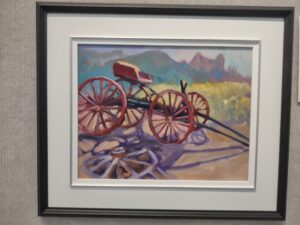
“Buckboard,” 11X14, Carol L. Douglas, available through Sedona Arts Center.

You’ll have to hunt, but all vendors are required to provide SDS for every product.

Not all solvents are created equal. Turpenoid has a flash point of 129° F (54° C), so it can’t fly. Gamsol’s flash point is 144°F (62°C) so it’s safe. I buy a fresh pint and wrap it in its SDS with the flash point highlighted.

My favorite painting medium (Grumbacher Quick Dry) has a flash point of 140° F, meaning it can’t fly. After buying countless bottles of it after the road that were ditched after using only a few drops, I switched to using linseed oil as a medium. That sacrifices dry time for convenience, but it hasn’t been a problem. Again, I wrap the bottle in its SDS with the flash point (500° F) highlighted.

A small tube of oil paint is 37 ml. or 1.25 oz, so is safe for your carry-on. A large tube is 150 ml., or 5 oz. It must be checked or it will be confiscated. I pack this handy label with my oil paints. Watercolor tubes are tiny and harmless, but the only trouble I’ve ever had flying with paints was with watercolors. An inspector at Heathrow dumped them back into my checked luggage without putting them in their plastic container. My clothes were stained on my return home.

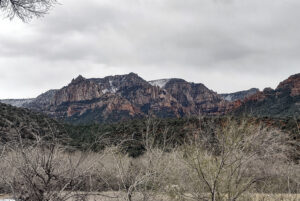
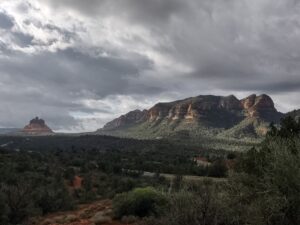
A glowering sky yesterday morning.

It’s very easy to forget your brushes in the heat of travel, and dried brushes are unredeemable. If you can do nothing else, rinse them thoroughly in solvent and wipe them down until you can treat them properly.

Most accommodations don’t have utility sinks. I sometimes take my brushes into the shower, where the force of the water clears away all lingering pigments. That’s not practical in places where water is a luxury. There, I use a superfatted soap and clean all residue from the sink when I’m done.

There are a number of portable painting racks, including RayMar’s DryAngle, but when painting in a festival, I simply snap the painting into its frame. If it doesn’t sell, it can travel home like that. Unframed work gets separated with waxed paper, taped together, and packed in my checked luggage. As long as the paint isn’t too thick, it won’t be harmed.