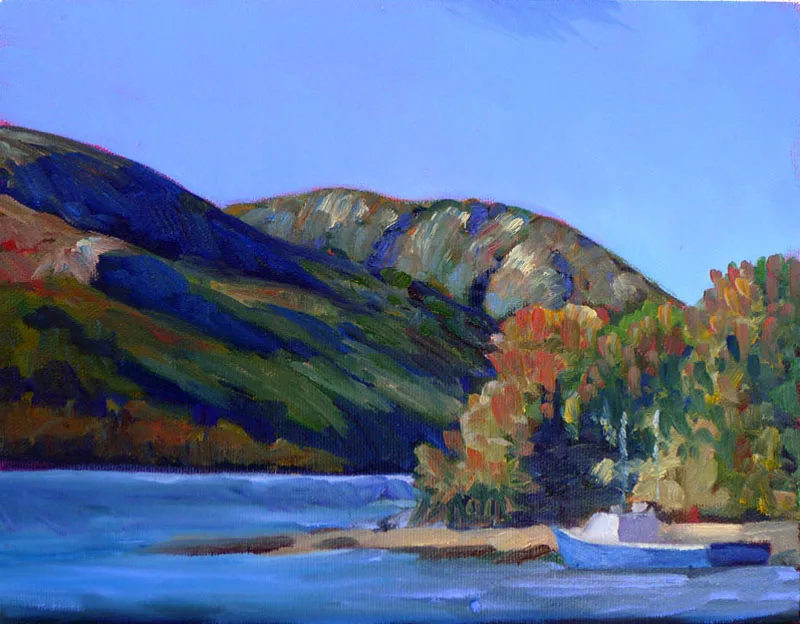

Executive function is a core concept in psychology. It means a set of mental processes and skills that allow us to manage tasks, regulate our emotions and achieve goals. These help us plan, focus and multitask.
Executive function is also a core concept in painting. It’s the ability to critique our work as we’re doing it. We secretly fear outside criticism. But without some way to measure ourselves against artistic principles, we repeat the same mistakes.
Each of us has experienced harsh or unfounded criticism. But harsh words have no place in formal criticism, which is a structured, time-tested tool for growth. (I became a happier person the day I forgave those people, but that’s another story, one of slowly learning to extend the same grace to others that I want for myself.)
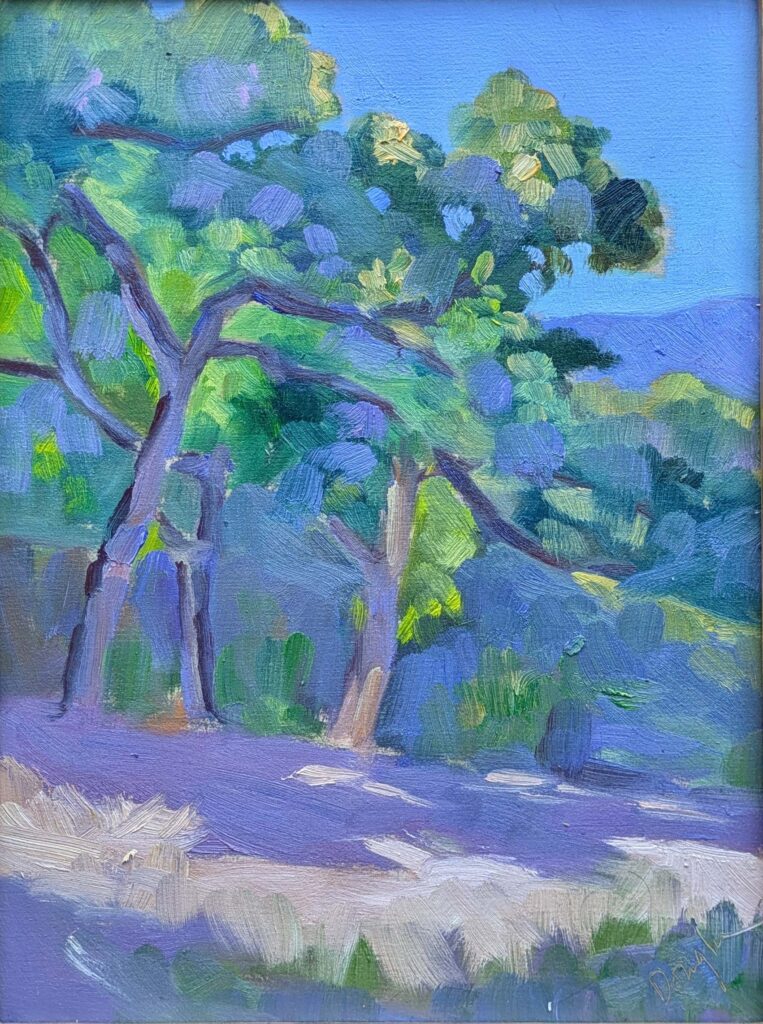
“Do you like this work?”
When we submit our work to thoughtful analysis, the question, “Do you like it?” becomes almost irrelevant. However, a strong negative reaction can mean something. The work may be objectively failing or it may prick others’ beliefs or values.
How can you set your ego aside to figure out which is happening? Ask how the work measures up against the elements of design and design principles. Once we learn to ask these questions while our work is in process, we have developed the ability to self-critique. This pulls us out of the haze of subjectivity.
These design elements and principles transcend style and preference; they are the bones of painting.

What are the elements of design?
The elements of design are line, shape, color, form/mass, edges, texture, perspective/depth/space. No painting excels in every area; we are mere humans. However, each of these can be strengthened as we get better at critiquing our own work.
What are the principles of design?
The principles of design are pattern, dominance/emphasis/focal points, unity/variety, harmony, balance, contrast, and rhythm and movement. These are different from the elements of design because they operate on a sliding scale, where neither end is best. For example, serenity and energy are both beautiful, but each serves different goals. The question is whether your painting goals are met by your approach.
Fresh eyes
My Painting Clouds class sold out in 24 hours; its goal is easily understood. That doesn’t make it more useful than Fresh Eyes (Critique). Critique is for experienced painters who want to get better, who want to develop that inner voice that guides their painting.
Not all critique is useful, and that goes double for self-doubt. That is vague, overly personal and usually just plain wrong. Disciplined critique is specific, grounded in the elements of design and delivered with clarity, objectivity and respect. It identifies strengths as well as weaknesses. Knowing what works is just as important as knowing what doesn’t.
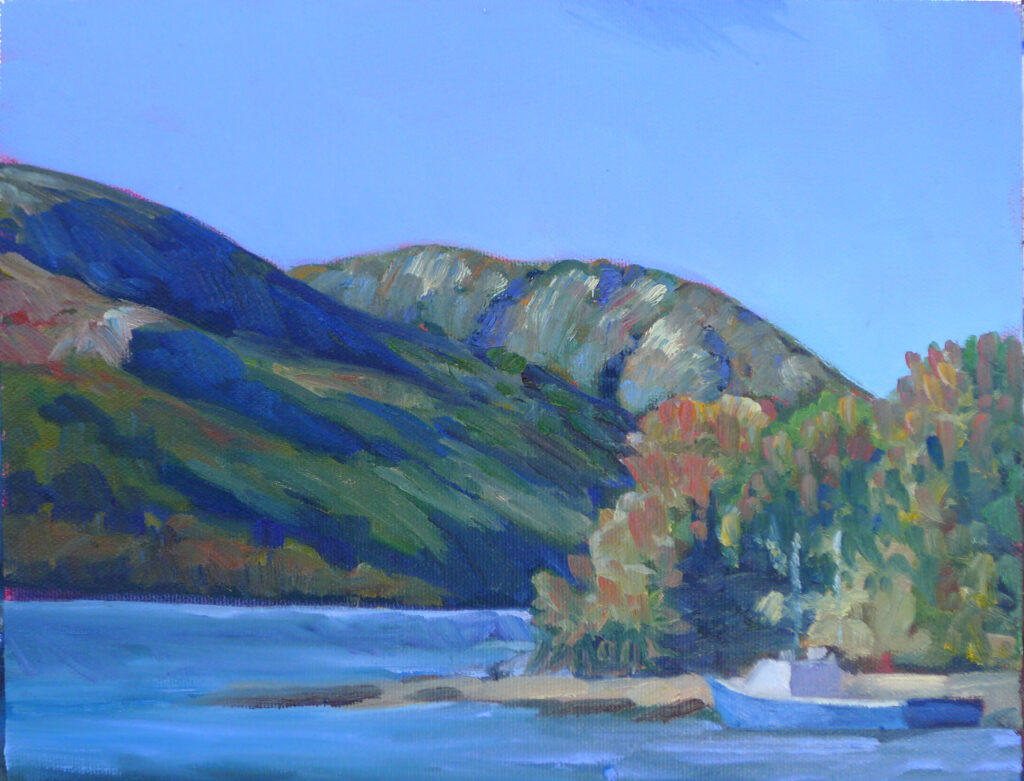
This is for everyone who’s ever asked me for private lessons
When you analyze someone else’s painting, you sharpen your own visual literacy. You begin to see patterns: what creates movement, what deadens a composition, how color relationships sing or collapse. You learn the language of art criticism. That transfers directly back into your own work. You become both painter and editor, creator and critic. You’re able to diagnose problems before they harden into habit. The shared experience accelerates learning in radical ways.
You’ll bring your own work to Fresh Eyes (Critique) and we’ll analyze it together. You’ll learn how to self-critique effectively, creating that executive function for painting. This is a short Zoom session (April 14, 21, 28) meeting from 6-9 PM, EST. If you’re ready to stop second-guessing and start seeing your work clearly, register now.
Registration is now open for workshops in 2026! Reserve your spot:
- Find your Authentic Voice in Plein Air | Berkshires, MA, August 10-14, 2026
- New! Color Clinic 2026 | Rockport, ME, October 3-4, 2026
- New! Composition Week 2026 | Rockport, ME, October 5-9, 2026
Can’t commit to a full workshop? Work online at your own pace: