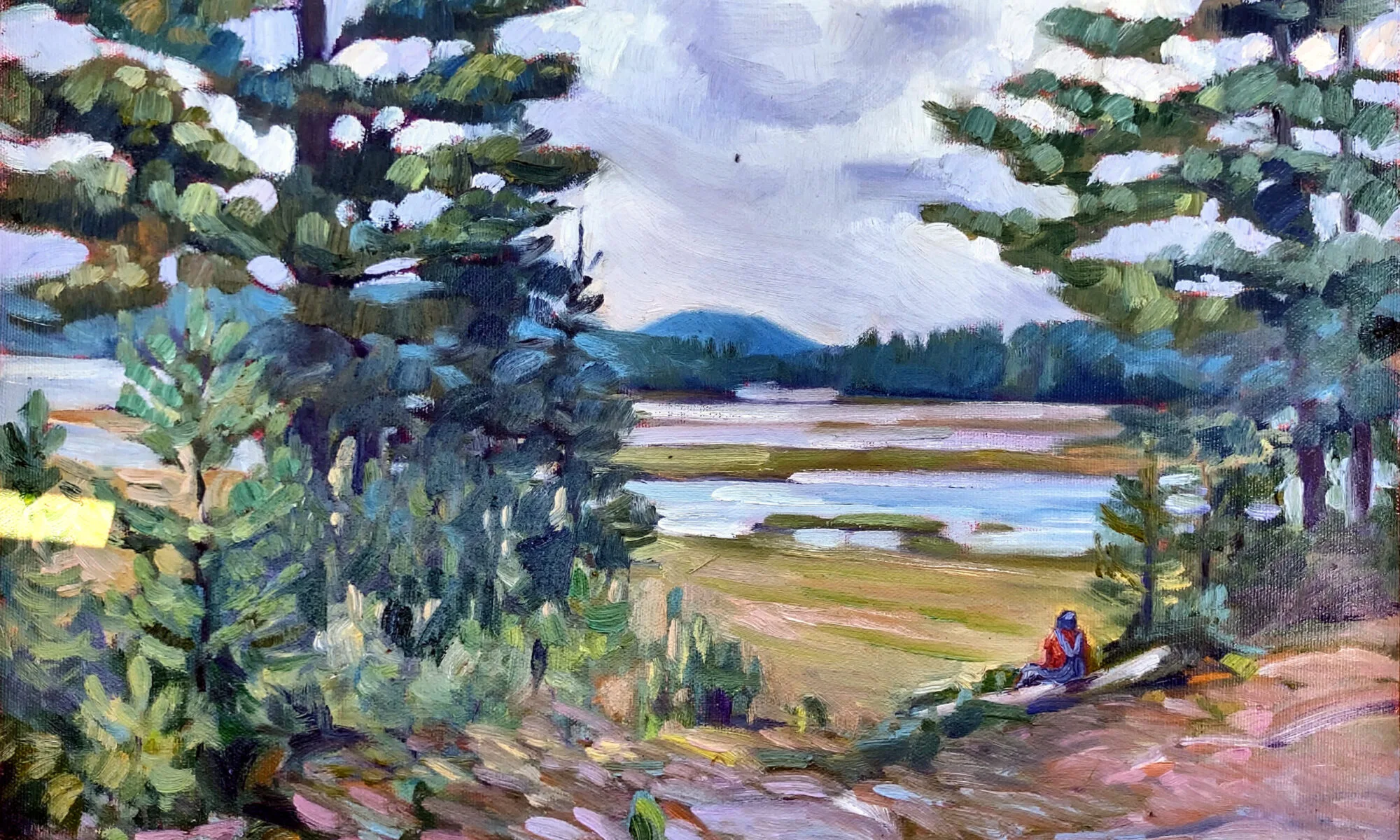


“Years ago, my favorite English teacher said, ‘You can write very well in defiance of the rules, but not in ignorance of them,’” my student Melody told me.
That idea applies to painting too. Every painter wants freedom. Every beginner wants to skip the tedious scaffolding—value studies, color theory, drawing skills—and get straight to expression. But what looks like freedom in a mature painting is usually built on a deep, almost invisible structure.
You can break painting rules. In fact, you should. But you can’t break rules you don’t understand.
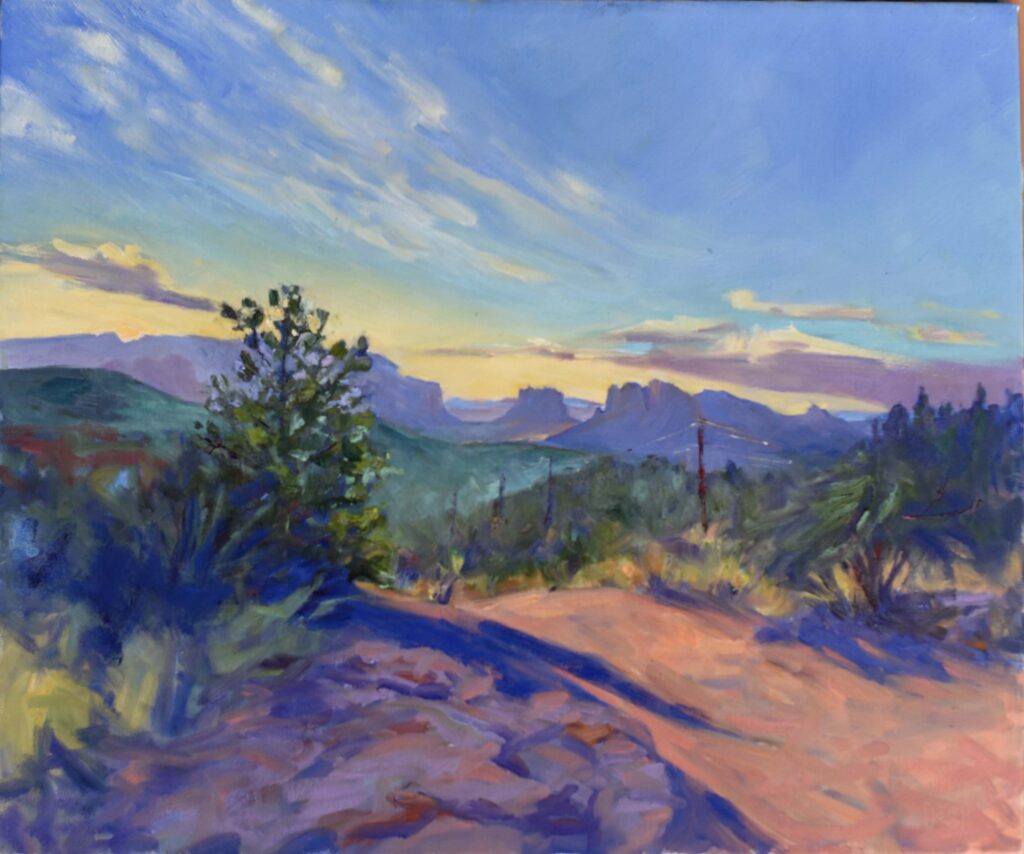
Take value
Beginners routinely ignore value, chasing an amorphous sense of ‘color’ instead. They load their canvases with bright pigments and wonder why their painting looks garish but at the same time flat. It takes time to learn to build a coherent value structure.
Experienced painters distort value relationships intentionally for design purposes, pushing shadows lighter or compressing contrast. They understand what those changes do to form and focus. Value structure isn’t a cage; it’s a tool. Without understanding it, breaking value rules just looks like bad design.
Drawing
All painting is based on an underpinning of drawing, and the looser the drawing the more likely that the artist learned traditional drawing first. “I’m going for a loose style,” is no justification for wobbly perspective or uncertain proportions. Looseness isn’t the absence of structure; it’s the confident simplification of it. A skilled painter can bend perspective, exaggerate gesture, or flatten space because they know exactly what they’re distorting. They’ve internalized drawing rules so thoroughly that they can play with them. Without that foundation, looseness collapses into confusion.

Color
Painters who don’t understand temperature, saturation, or simultaneous contrast (where adjacent colors or tones influence our perception) often produce work that feels brassy or muddy. Painters who understand color theory can subvert it, using unexpected color harmonies or clashing complements to create energy and tension. The difference is intention. Ignorance produces accidents—occasionally happy, but more often not. Knowledge produces choices.
Artistic oppression
Duffers think painting rules are a kind of artistic oppression, something imposed by the establishment to stifle creativity. But the more you understand the rules, the less you feel constrained by them.
In reality, painting rules are just observations about what works. They’re distilled experience. If you look at painters whose work feels fresh and original, you’ll find a strong underlying structure. Compositions are clear. Values are organized. Edges are controlled. Even when they appear to be improvising, there’s a logic holding everything together.
If your work feels inconsistent or if your style isn’t landing where you hoped, don’t double down on rule-breaking. Go back and learn what you skipped. Study value. Practice drawing. Mix color with intention. These aren’t detours; they’re the road.

Can I share an absolutely lovely email I got recently?
“I’ve never learned as much from any class or any teacher as I have from working with you. I feel like I’m home— like I have a map finally! I was just floundering before and all the classes in the world before this just felt disjointed from my center— like I was grabbing at shiny balloons and then they would pop in my hands.
“I finally feel like I’m laying down roots. Thank you kindly, my new friend!!”
Registration is now open for workshops in 2026! Reserve your spot:
- Advanced Plein Air Painting | Rockport, ME, July 13-17, 2026
- Sea & Sky | Acadia National Park, ME, August 2–7, 2026
- Find your Authentic Voice in Plein Air | Berkshires, MA, August 10-14, 2026
- New! Color Clinic 2026 | Rockport, ME, October 3-4, 2026
- New! Composition Week 2026 | Rockport, ME, October 5-9, 2026
Can’t commit to a full workshop? Work online at your own pace:
In your class Carol things start to make sense!
Thank you, Julie!