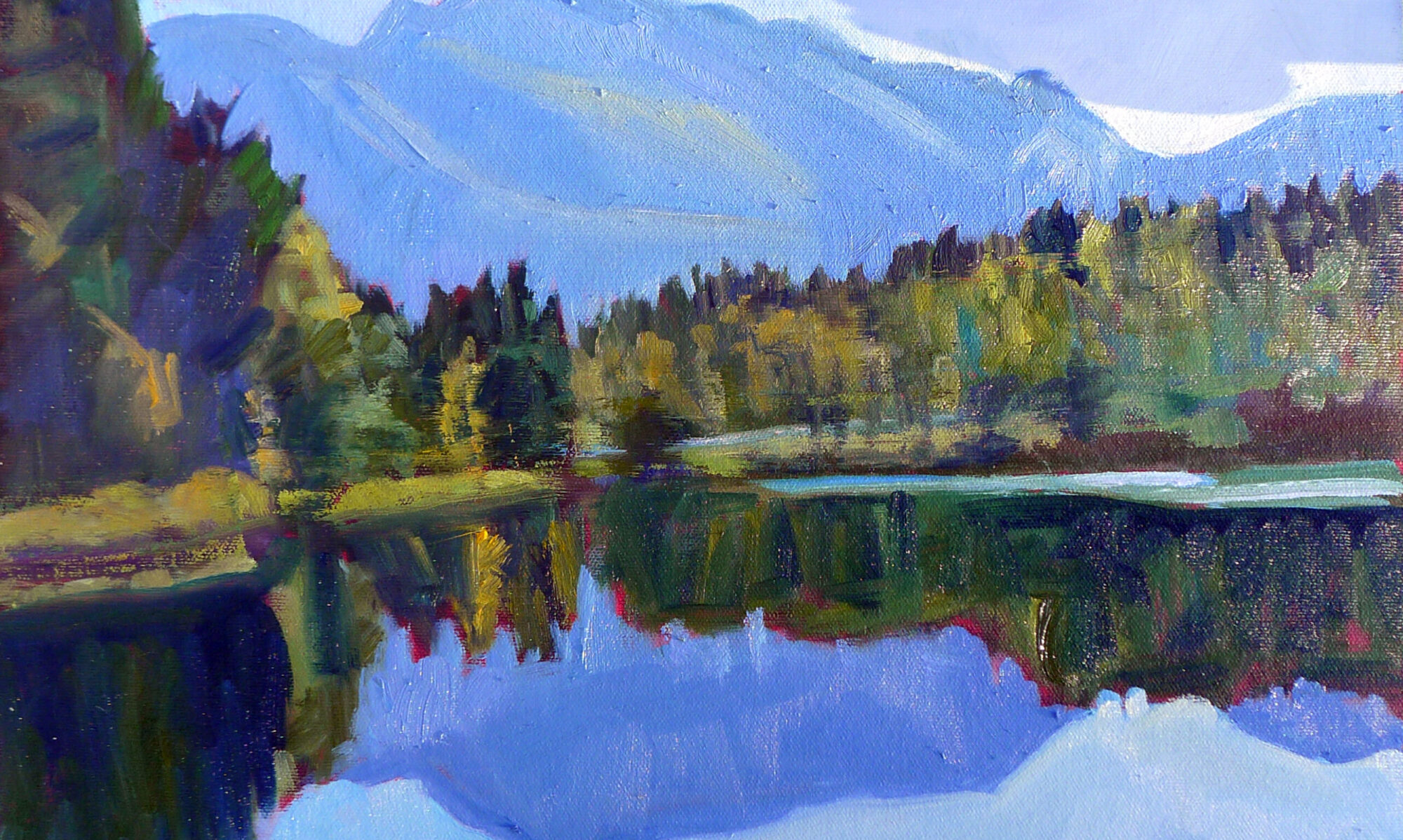
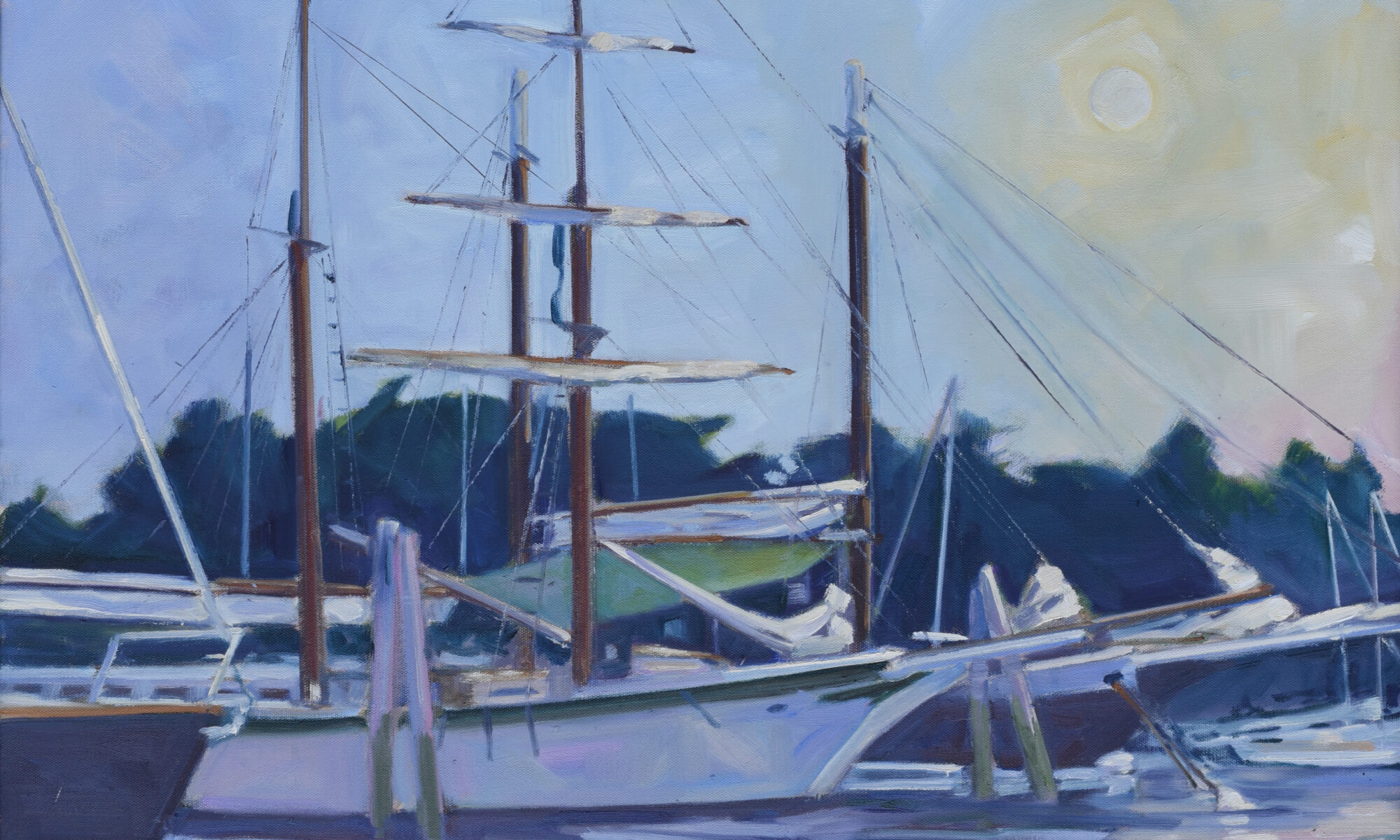
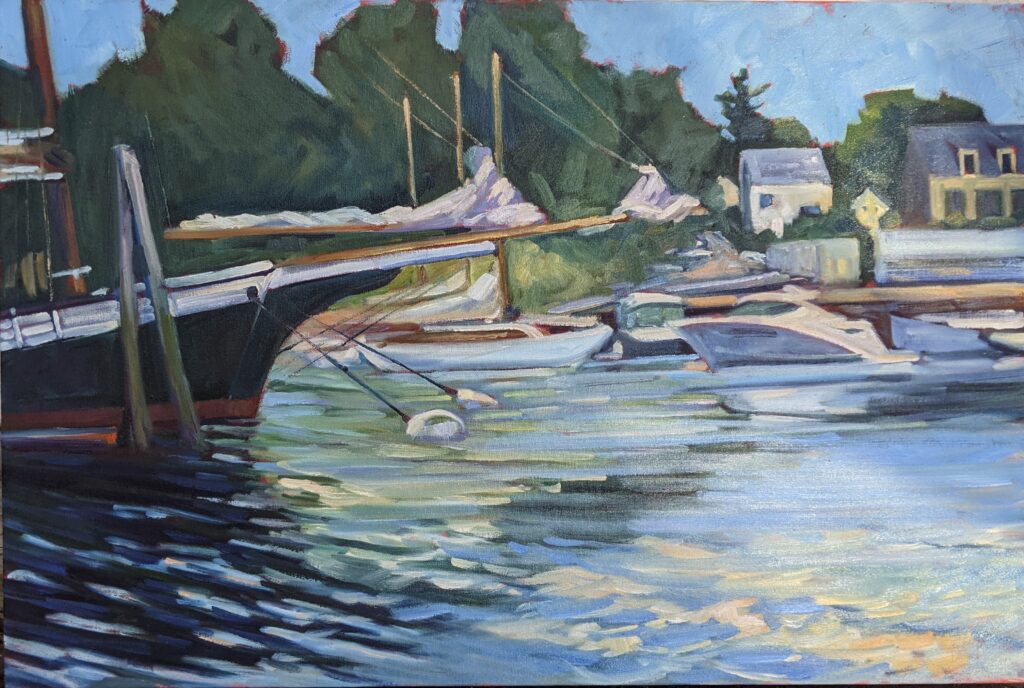
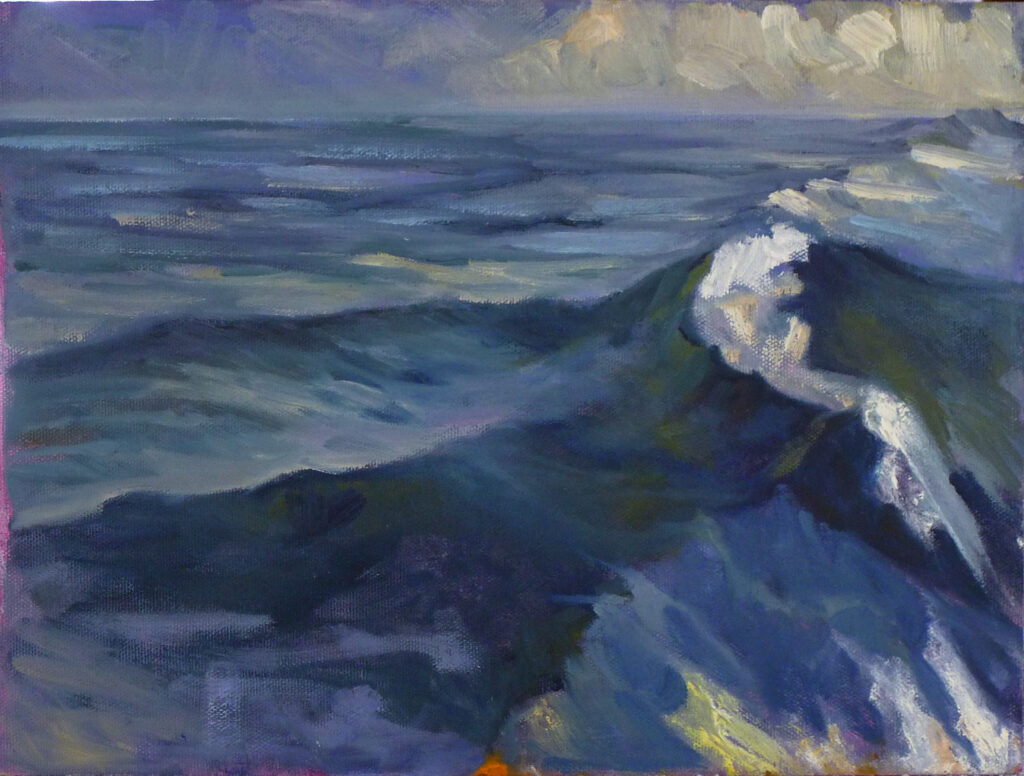
I’m juggling two different activities this week. I’m stripping the wallpaper and carpeting from my hallway in preparation for a bathroom renovation in September. (Yes, that’s mission creep.) I’m also packing my luggage, painting gear and teaching supplies for a two-week road trip. First, I’m teaching Sea & Sky at Schoodic Institute in Acadia National Park. Then I head south to teach Find your Authentic Voice in Plein Air in the Berkshires, from August 10-14.
What scares people the most about workshops
New students are afraid there will be better painters at hand and they’ll feel judged. But even the best painters are busy wrestling with their own painting problems. And plein air painters are—in my experience—overwhelmingly kind and generous.
What they’re really asking
The real question is, “What a painting workshop really like?” The unknown is intimidating. Will you be rushed? (No.) Will you spend the day watching demonstrations? (No.) Will there be enough individual help? (Yes.)
A quick note on weekly classes before we get into it
Claim your spot in Painting Nocturnes, Tuesday evenings or Painting Water, Monday evenings. Both are 6-9 PM, starting the week of August 17, 2026.
I upload videos of these online classes and you have access to them for as long as there’s YouTube. That means you can review them if you need a refresher or have to cut out early.
Let’s look at a typical day
Serious teachers spend a lot of time investigating great locations. I’ll use Home Farm at Undermountain in the Berkshires as my example. This location has farm animals, elegant Victorian barns, and a long view across Parson’s Marsh.
We meet at 9 AM. I start with a short demo to demystify perspective, because architecture can be scary when you don’t know the tricks. Then students separate and start work on their own paintings. I do rounds from painter to painter, timing myself so that I don’t overload them with information. We understand best when new information comes in small bites.
Home Farm at Undermountain is different every year. Perhaps horses will amble over to see what’s happening, or a riding lesson is in the outdoor ring. Goats or sheep graze by the old chicken house. There are always elegant horses in the barn.
We gather to eat our bagged lunches and talk about our work. After lunch, some painters look for another view. Others are still deeply engaged in their first painting, and as long as they stay true to their value sketch they can take as long as they want.
My walk gets longer as students spread out, but I like walking.
What kind of advice am I giving as I circulate? Maybe composition needs simplifying. Perhaps a student lost the shadows that made his sketch so joyful. Maybe her color temperature has drifted, or she’s struggling to establish a clear focal point. Each painter receives advice tailored to where they are, whether it’s their first plein air outing or they’ve been painting outdoors for decades.
At 4 PM, I offer to take anyone who’s interested to Parson’s Marsh for a short hike. It’s a lovely way to stretch our legs and chatter.
Some painters room together, others decide to have supper together, others go explore Lenox’s many charms. Friendships form quickly when people share long days outdoors doing what they love.

I didn’t invent this model
This model used by all good teachers, indoors or out. It’s remarkable how much growth can happen in only a few hours when we’re working alongside other motivated artists in a supportive environment.
After decades of teaching, I know that 15 is the absolute maximum number a class should include. Small groups allow individual attention without sacrificing the energy that comes from painting alongside other dedicated artists. Everyone gets daily one-on-one easel guidance.
Registration is now open for workshops in 2026! Reserve your spot:
- Find your Authentic Voice in Plein Air | Berkshires, MA, August 10-14, 2026
- New! Color Clinic 2026 | Rockport, ME, October 3-4, 2026
- New! Composition Week 2026 | Rockport, ME, October 5-9, 2026
Can’t commit to a full workshop? Work online at your own pace:
Hi Carol,
I’m reviewing my old dairies and now I’m on the year 2019. I’m reliving your events in South America and the great effort to get home during the covid crisis. Then when you finally did, the work on your house was not finished.
So glad you are still so involved with art and wish I could join your workshops. Will have to do my best here on line.
Susan Pickens
Centralia WA
Thank you so much, Susan!