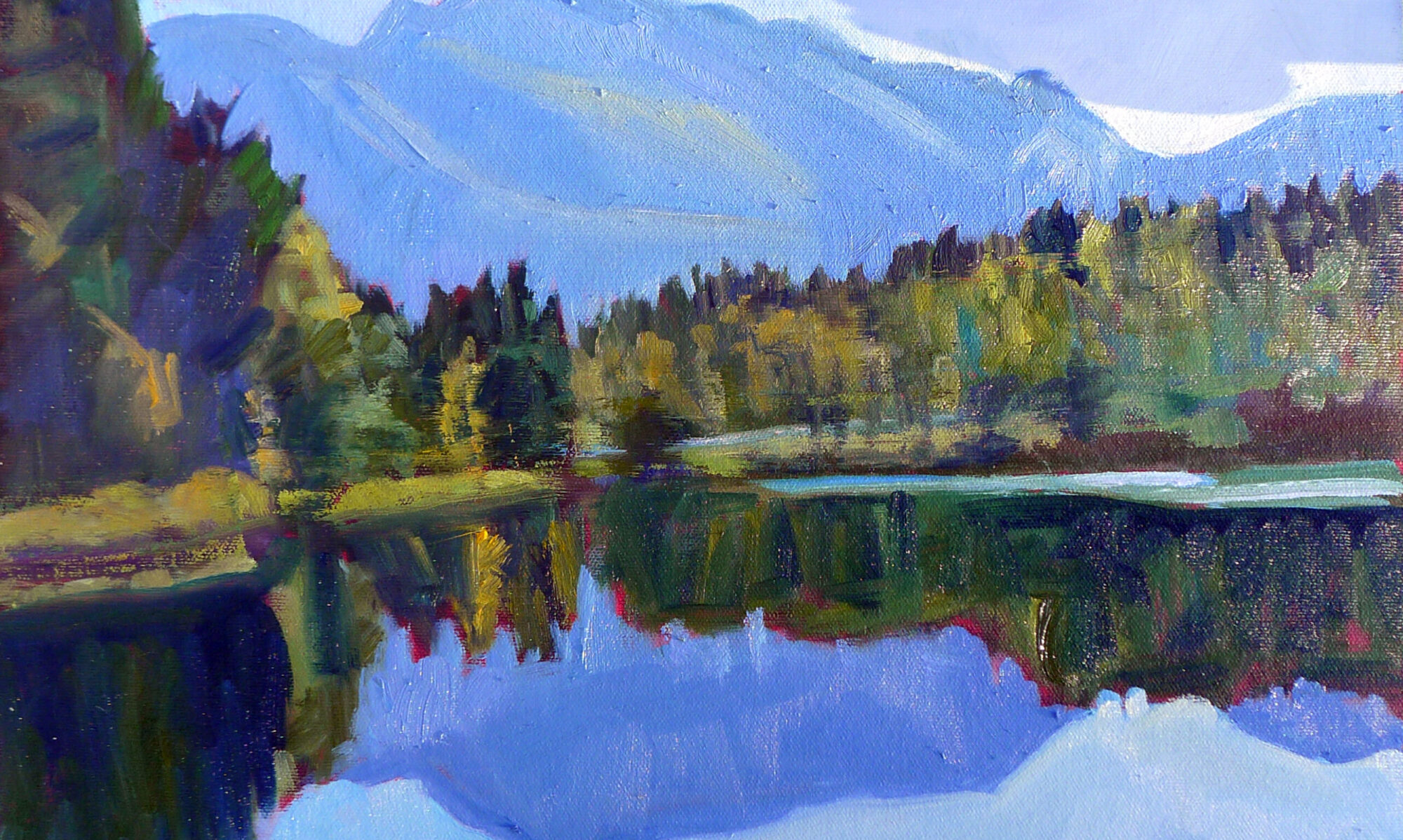
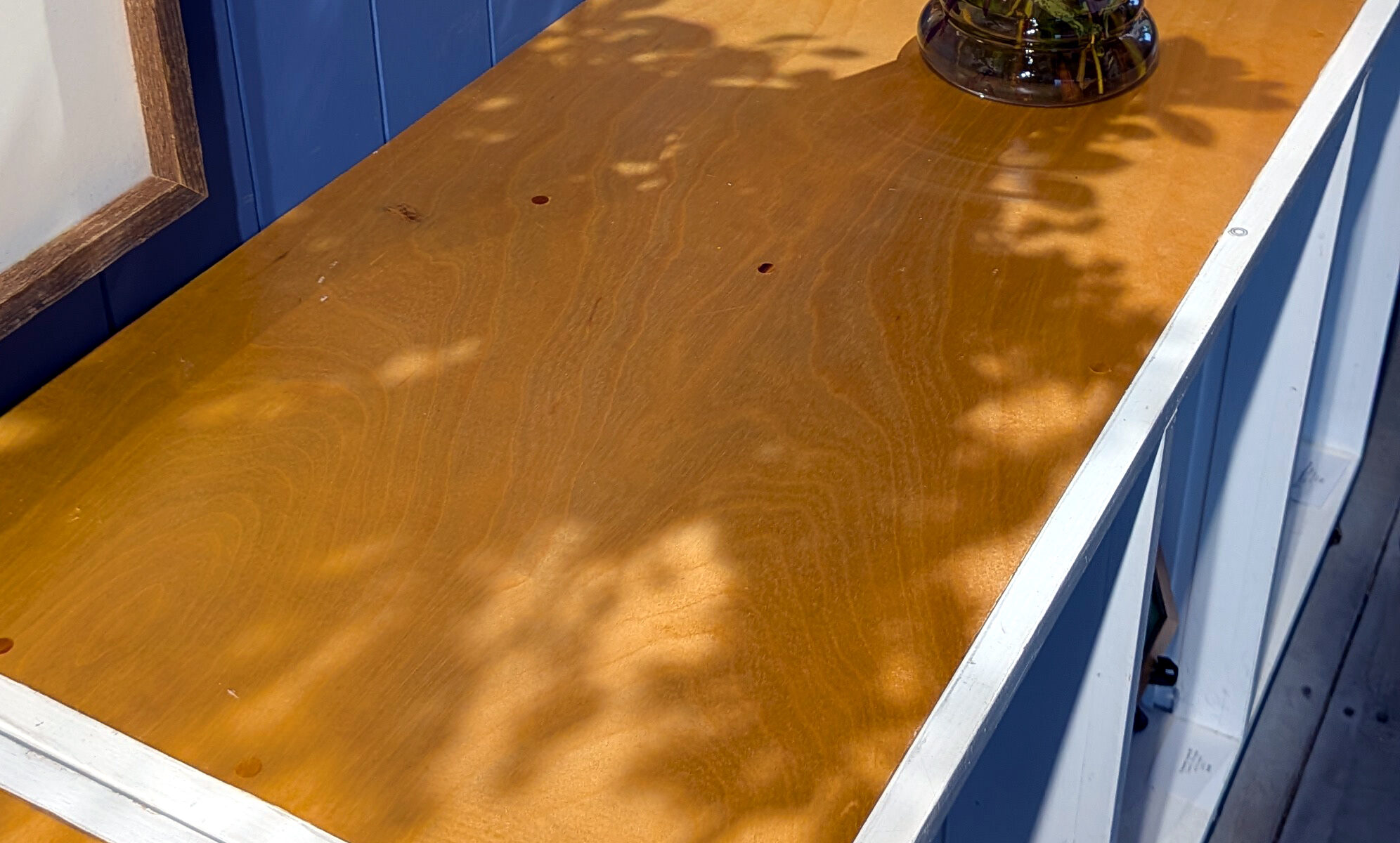
One of the hardest things about learning to draw is getting past what you know about an object.
You know a tree has a trunk and branches. You know a house has windows. You know a person’s eyes are roughly almond-shaped and that their nose sticks out from their face. You know that some dogs (including mine) have floppy ears while others’ ears stick up. Your brain helpfully categorizes and stores this information as you learn it, long before you think about drawing.
That’s useful for recognizing and navigating the world. It is counterproductive for drawing it.
When you’re learning to draw, it’s important to forget what you know and concentrate on what you see instead.
Here’s a simple exercise to help you make that switch.
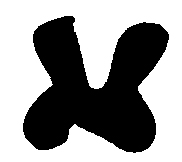
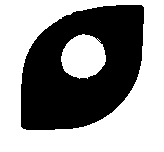
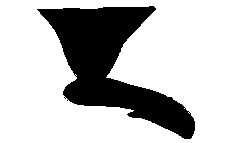
Copy an abstract shape
I’ve illustrated this post with six abstract shapes. You can use these, or find an abstract shape somewhere around you. It might be a shadow underneath a chair, the interstice between two branches or a patch of light on a wall. What it shouldn’t be is an object, i.e. anything that can be named.
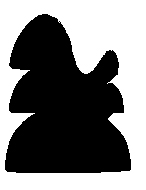
If you look at a shape and say, “That’s a maple leaf,” your brain will immediately start throwing up facts about maple leaves. While they might be true, they can also lead you astray. While all maples have lobes spreading from a point, there is great variety of leaf shape among the acers.
If you can look at a leaf and note that it has three, nine or 13 lobes, that it’s got serrated edges and deep veins, and that it is not symmetrical but its left side is slightly larger, you’re well on your way to drawing what you actually see.
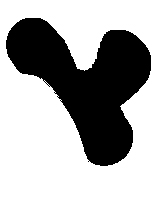
Your only job is to reproduce shapes
Look carefully at edges. Where do the lines turn? Are the curves gradual or abrupt? How wide is the shape at the top compared with the bottom? Where does one side stick out farther than the other?
What is the height-to-width relationship? Use a ruler if that helps. Is the shape twice as tall as it is wide? Does the little notch on the side occur halfway down or closer to the top?
When you’re done copying the shape, compare your drawing to the original shape. How close did you get? The more you practice, the better you’ll be.
This sounds almost absurdly simple, right? That’s the point.
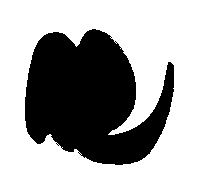
Your brain is sometimes too efficient
When you see something familiar, your mind fills in what it expects to see. That’s why children draw symbols for houses, people and trees long before they can actually observe them accurately.
Adults do the same thing; we just have more sophisticated symbols.
We know what a mountain should look like, so we draw a mountain instead of the particular mountain in front of us. We know what an eye looks like, so we draw our idea of an eye, and on and on.
An abstract shape gives you nothing to recognize. You have to look carefully to draw it.
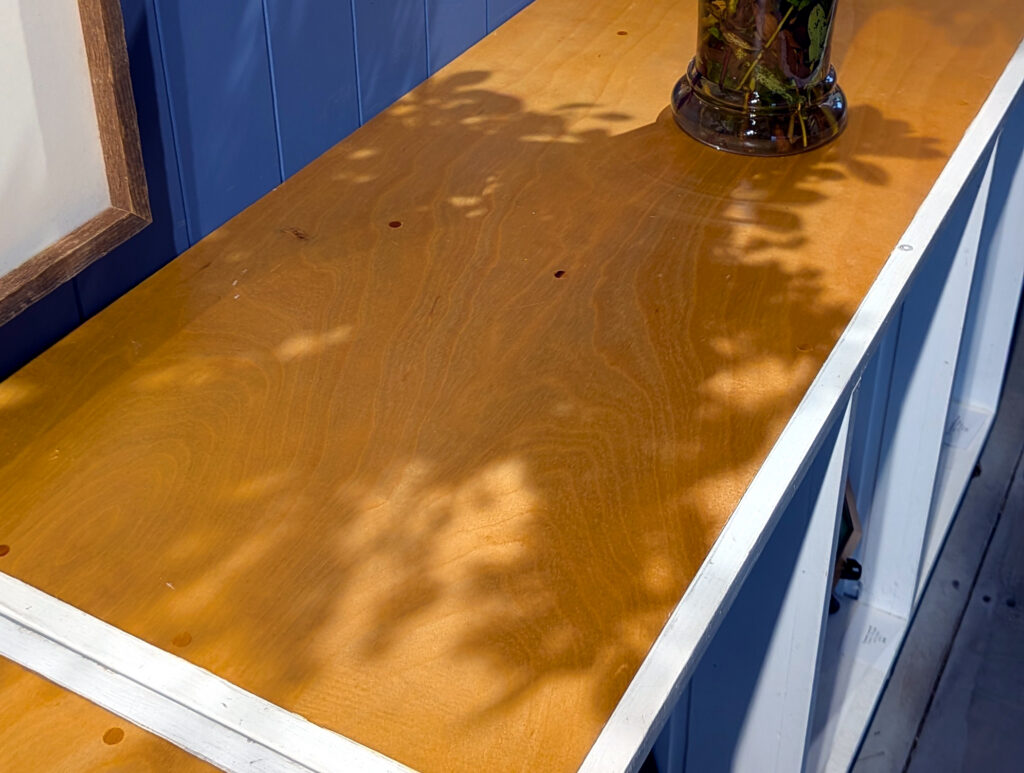
Now try it with reality
The next time you’re drawing, find three shapes that aren’t objects. That may be the shape of the sky between two objects or the shape of a shadow.
Draw these shapes carefully while consciously avoiding labeling them in your mind. If they are right, you’ve probably captured something important about the scene, even though you never drew an actual object.
Drawing is not a mechanical exercise; it’s a way of thinking. The more you discipline yourself to see in abstract shapes, the less your brain gets to superimpose what it knows on what’s actually there.
Online classes start again soon!
- Cozy Winter Painting, Monday evenings, 6-9 PM for three weeks starting November 2.
- Painting Figures in Real Spaces, Tuesday evenings, 6-9 PM for six weeks starting November 3.
- Painting Nocturnes, Monday evenings, 6-9 PM for three weeks starting November 30.
I have just two workshops left in 2026! Reserve your spot:
- New! Color Clinic 2026 | Rockport, ME, October 3-4, 2026
- New! Composition Week 2026 | Rockport, ME, October 5-9, 2026
- High-Desert Light & Monumental Form | Sedona, AZ, Apr 26, 2027 – Apr 30, 2027
Can’t commit to a full workshop? Work online at your own pace:
Great lesson!
Thank you!