Bespoke: the advantages of online learning

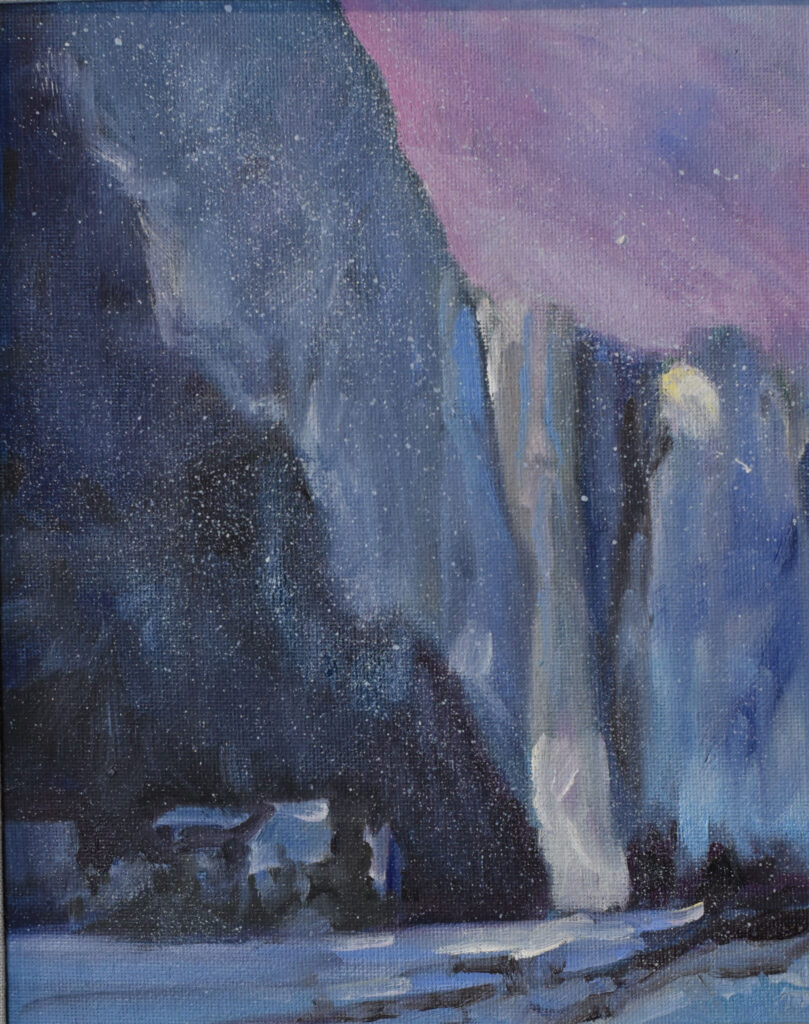
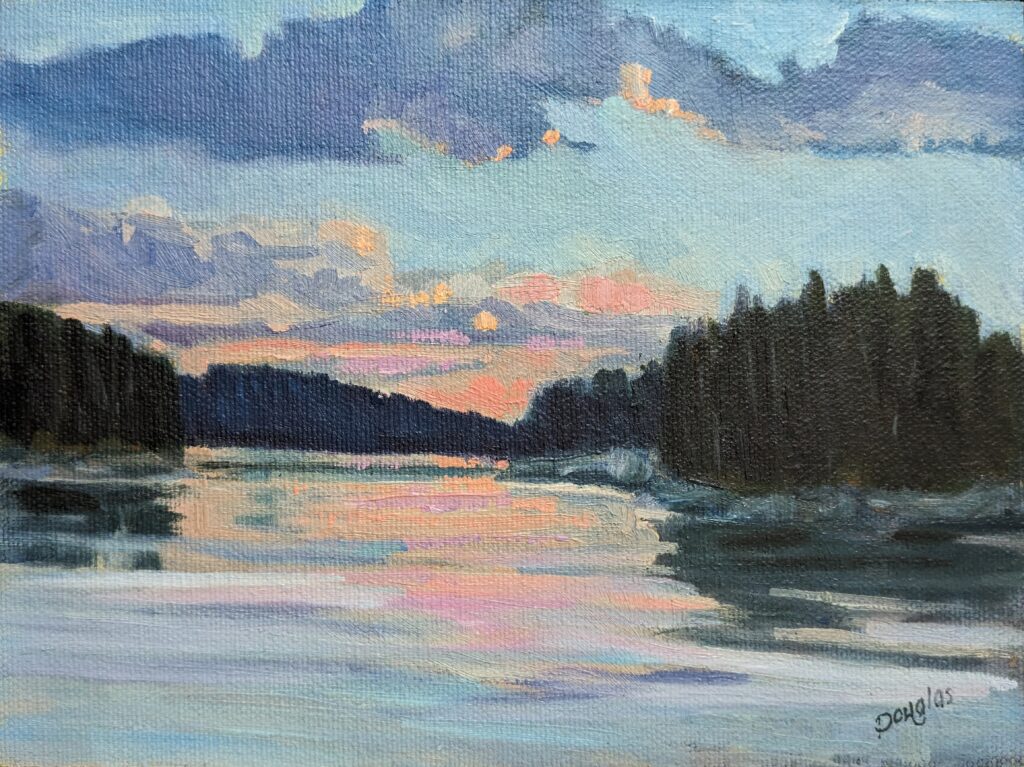
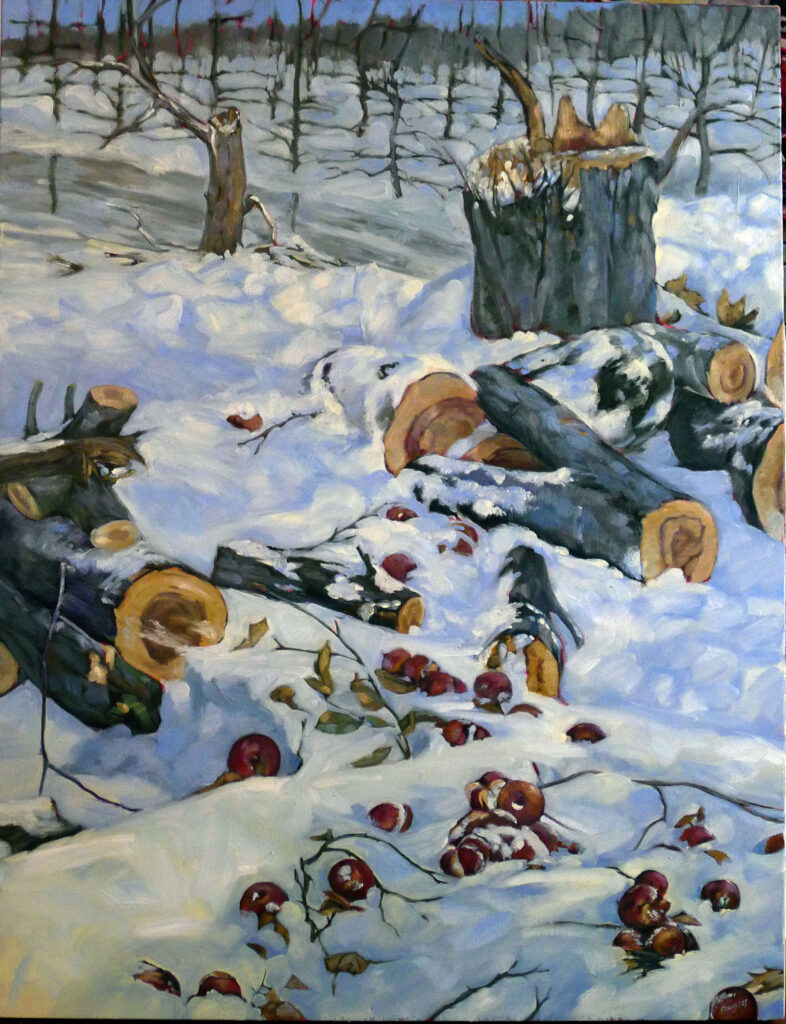
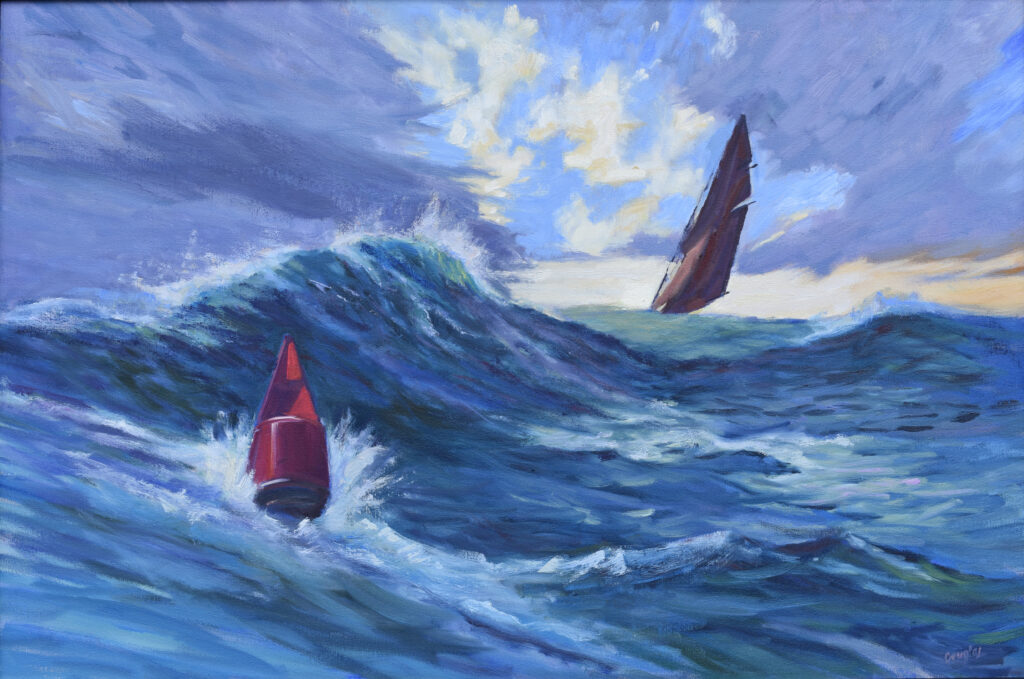
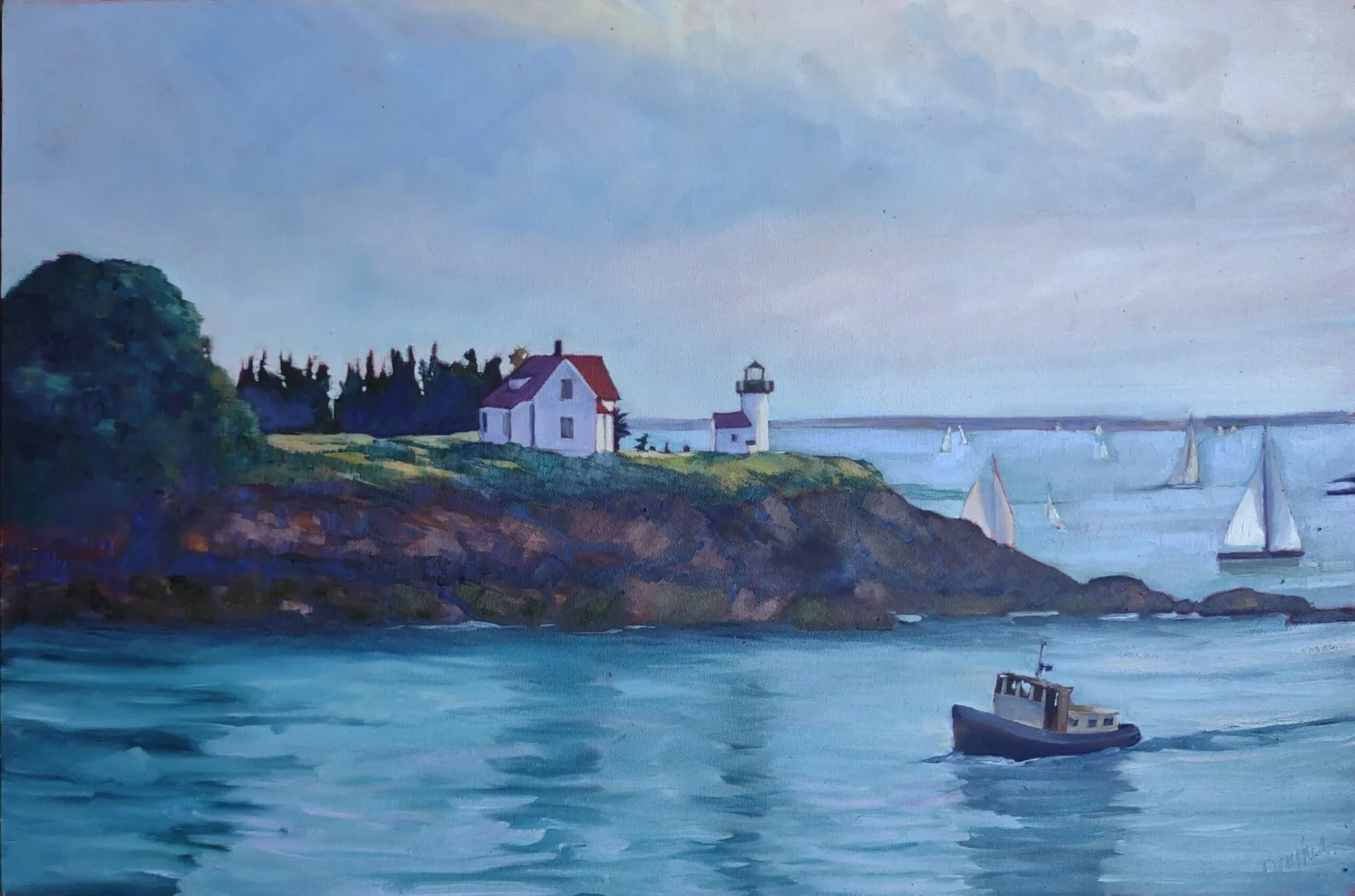
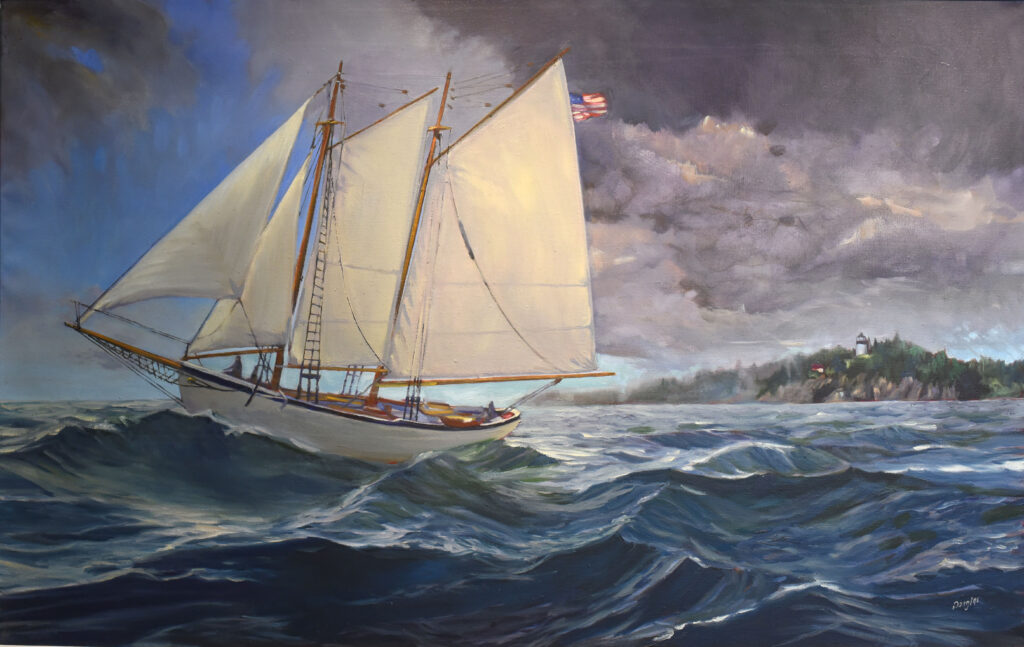
Breaking Storm, oil on linen, 30X48, $5579 framed includes shipping and handling in continental US.

“What will you be teaching in your Zoom class, Advance your painting skills,” asked a prospective student. Unlike most of my classes, I haven’t laid out the curriculum in the online class offering. That’s because it’s, as our British cousins say, going to be a bespoke class. That means it will be tailored to you—your strengths, your weaknesses, your needs, your aspirations.

I’ve been teaching painting online since the world’s annus horribilis, when COVID shut us all up in our little nuclear cells. At first, I thought I’d hate teaching online, but I rapidly became a convert.
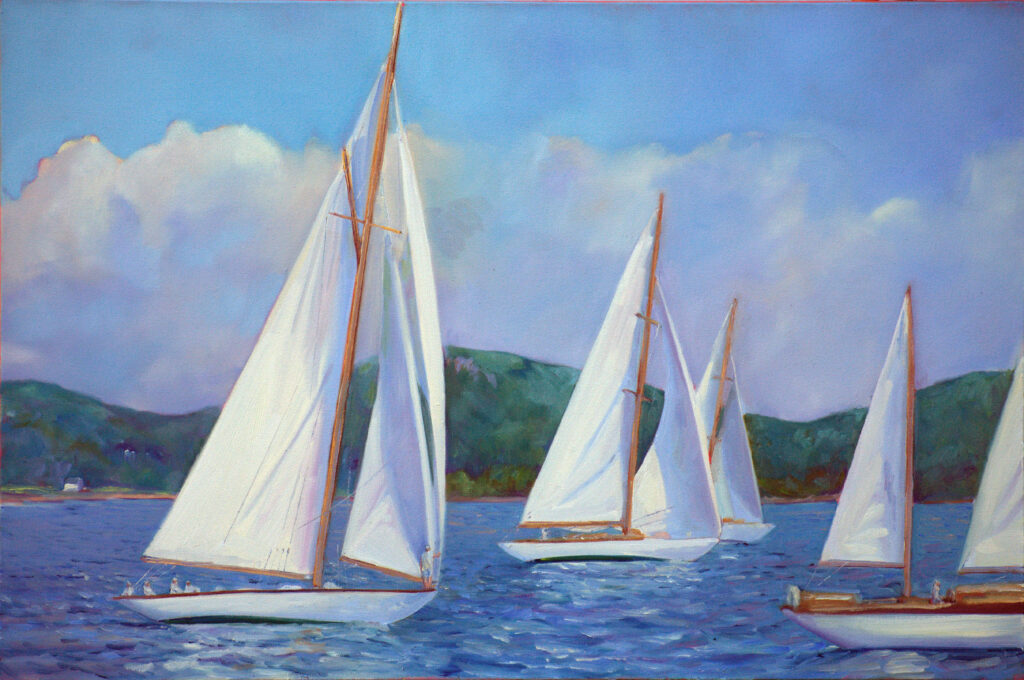
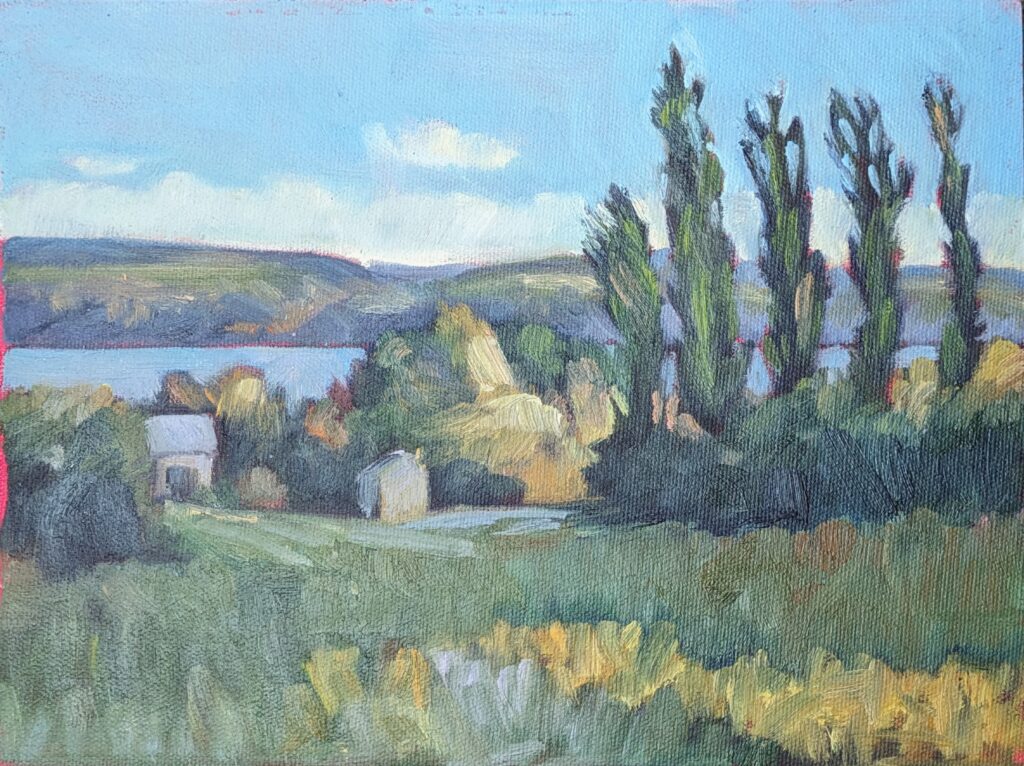
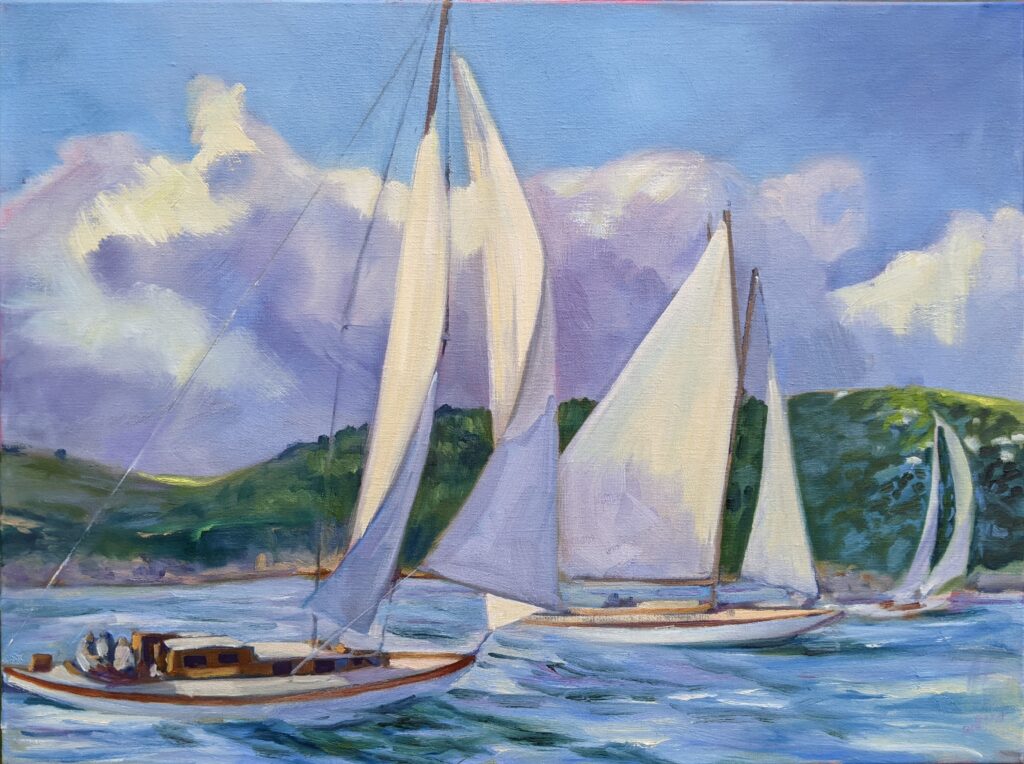
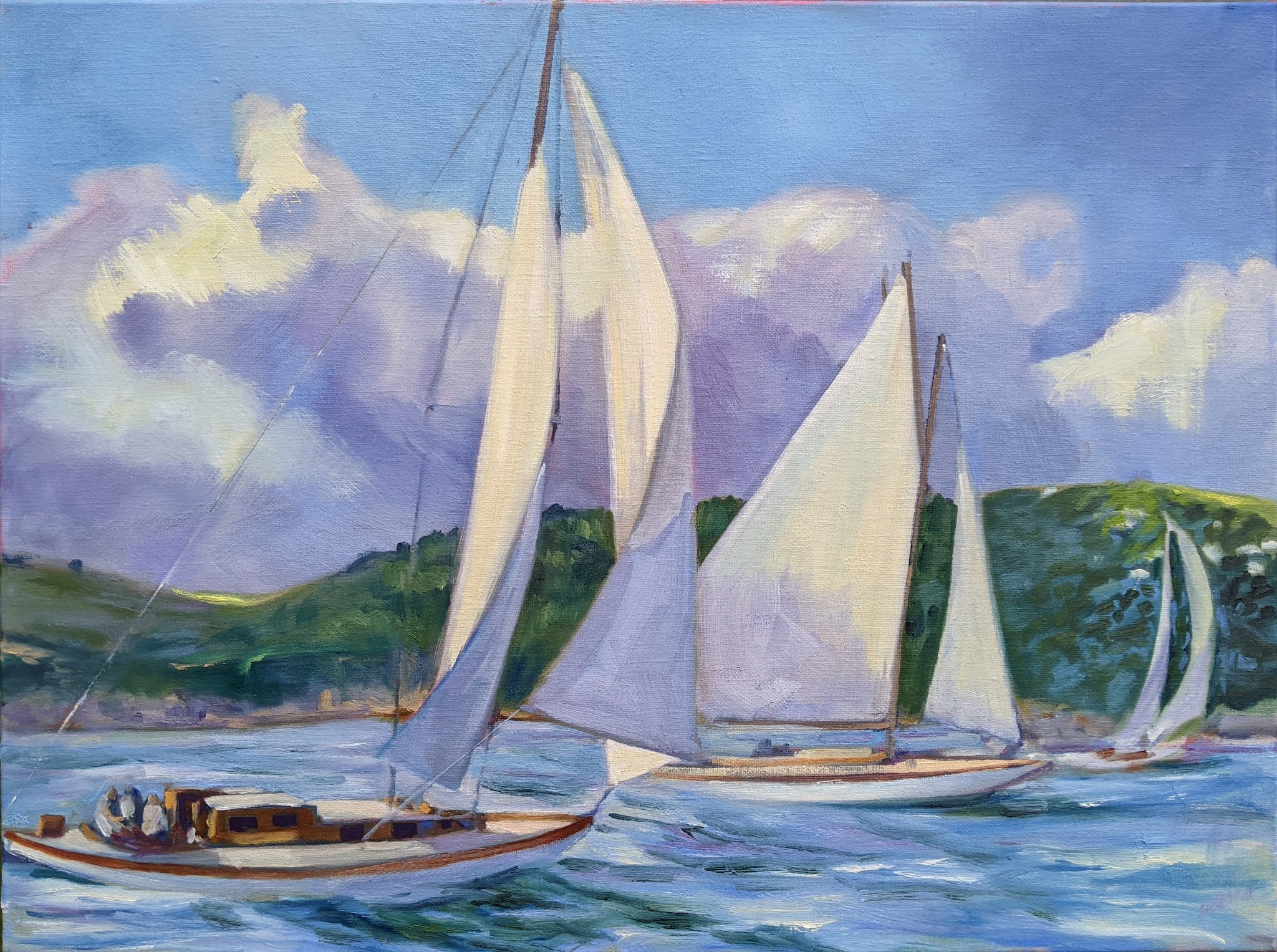
Skylarking, 24X36, oil on canvas, $3985 framed includes shipping and handling in continental US.

The advantages of online learning

In the old days, I’d tour my studio, quietly commenting on work, mentioning what was good and what needed improvement. If Beth overheard what I said to Lynda, that was a bonus, but most people remained in their own little working bubble. Occasionally, if I saw an essential truth that needed mentioning, I’d raise my voice, but that is tiresome for everyone.

That doesn’t happen in Zoom classes. If I tell Lynda, “You should restate the darks,” everyone in the class hears it and consciously or subconsciously checks their pattern of darks.

Students in my classes have come from the United States, Canada and Great Britain—in fact, anywhere there isn’t a language or time barrier. They’ve developed an esprit de corps that would be impossible in the old world of physical classes.

My students have access to recordings of the class, which means that if they must miss one, they can make it up at their leisure. Or, they can review it the class when they need to. That ability to access the content at any time going forward is invaluable. Students can just rewatch the videos until it clicks.
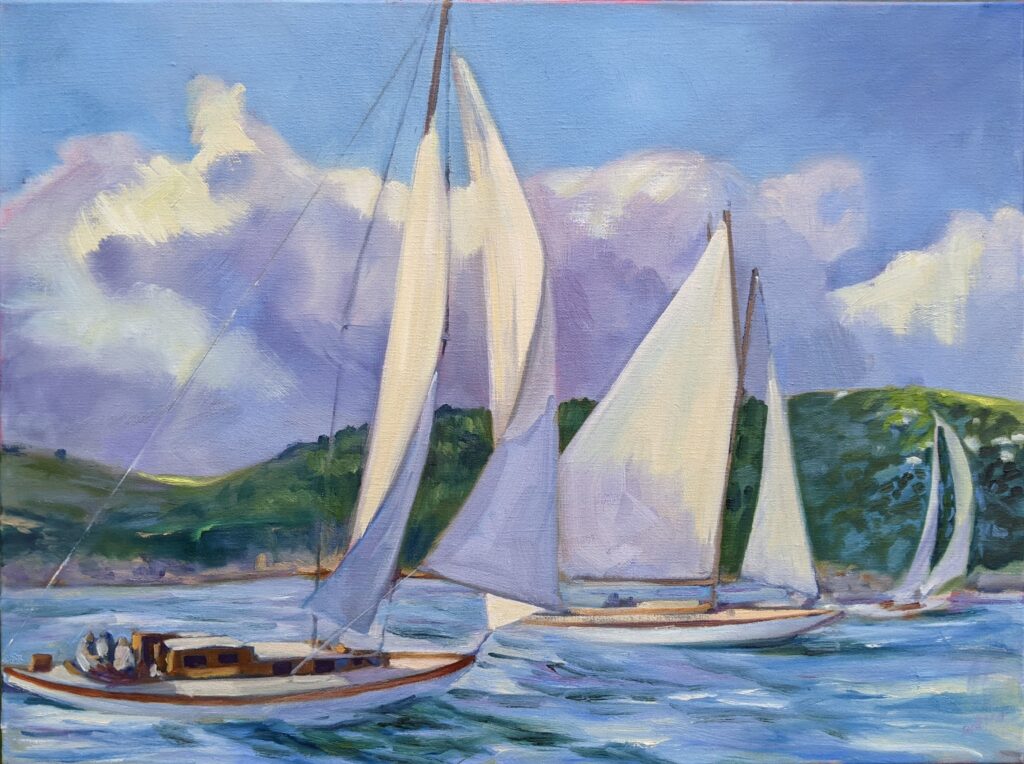
Skylarking II, 18×24, oil on linen, $1855, includes shipping in the continental US.

From the teacher’s standpoint, it’s helpful to see students working in their own environment, on their own easels. I have many times caught ergonomic issues in students’ setups that were hampering their ability to paint and draw.

And, of course, people can attend in their pajama pants—and dogs and cats are always welcome.

The internet sometimes gets terrible press… and I get it. There are problems with social media, but the availability of online art classes is a great boon. I started writing this post in Manchester, England, finished it in Reykjavik, Iceland, and you are reading it wherever you are on the globe. Isn’t that cool?
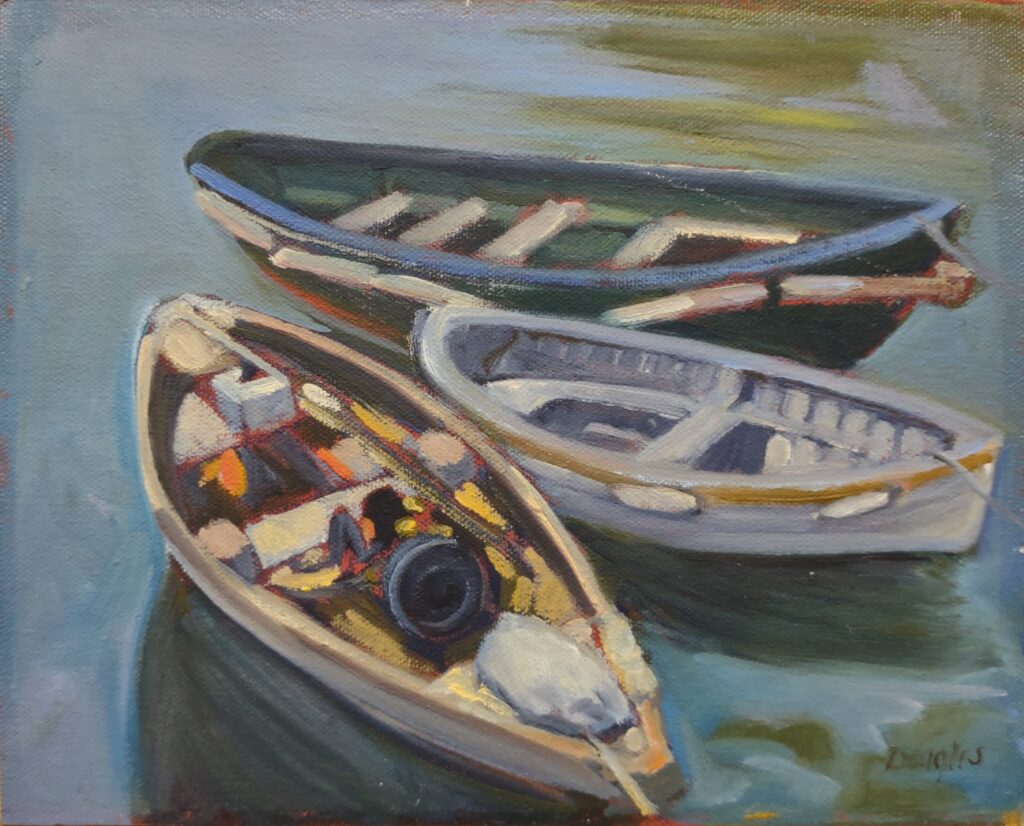
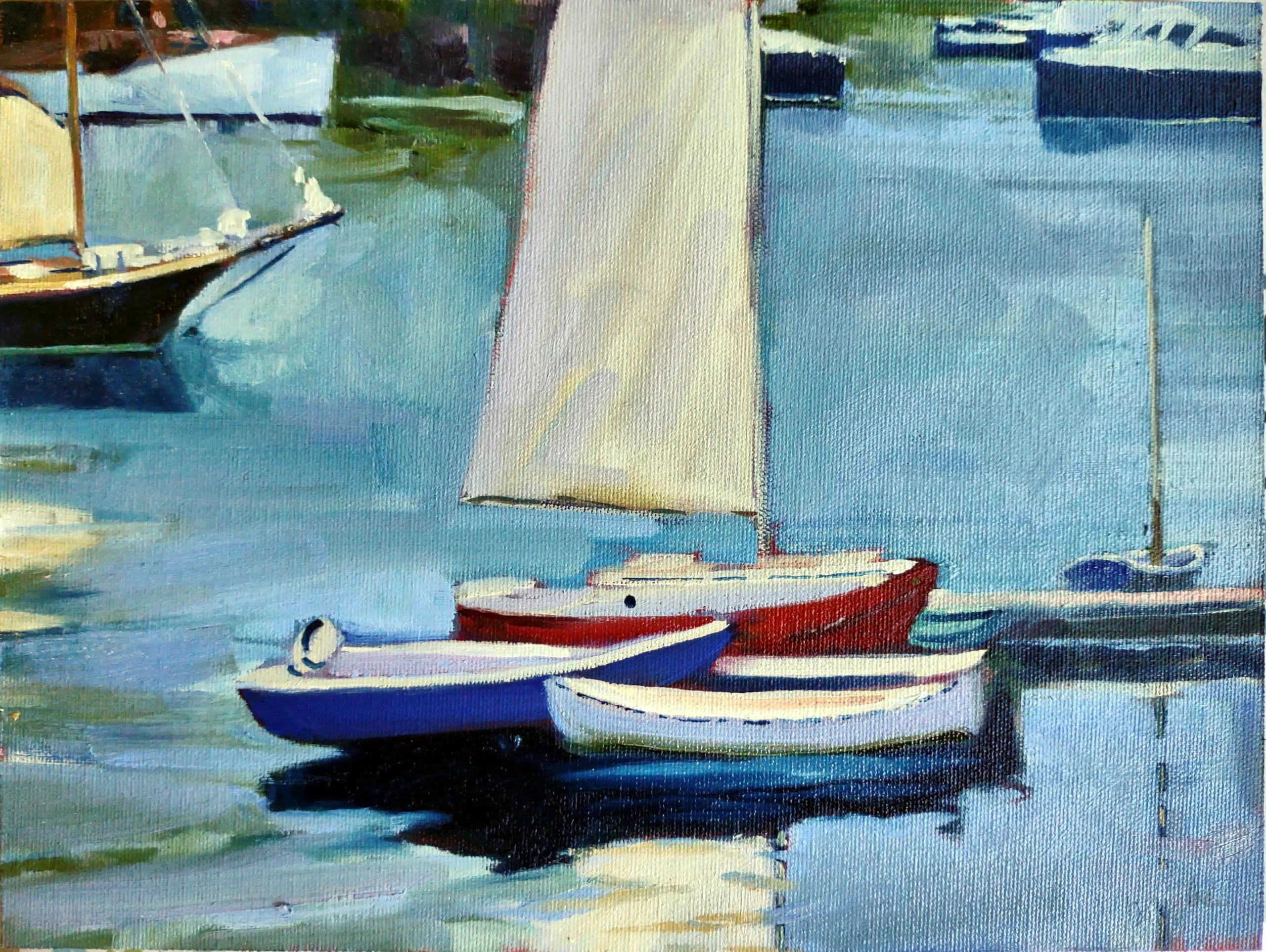
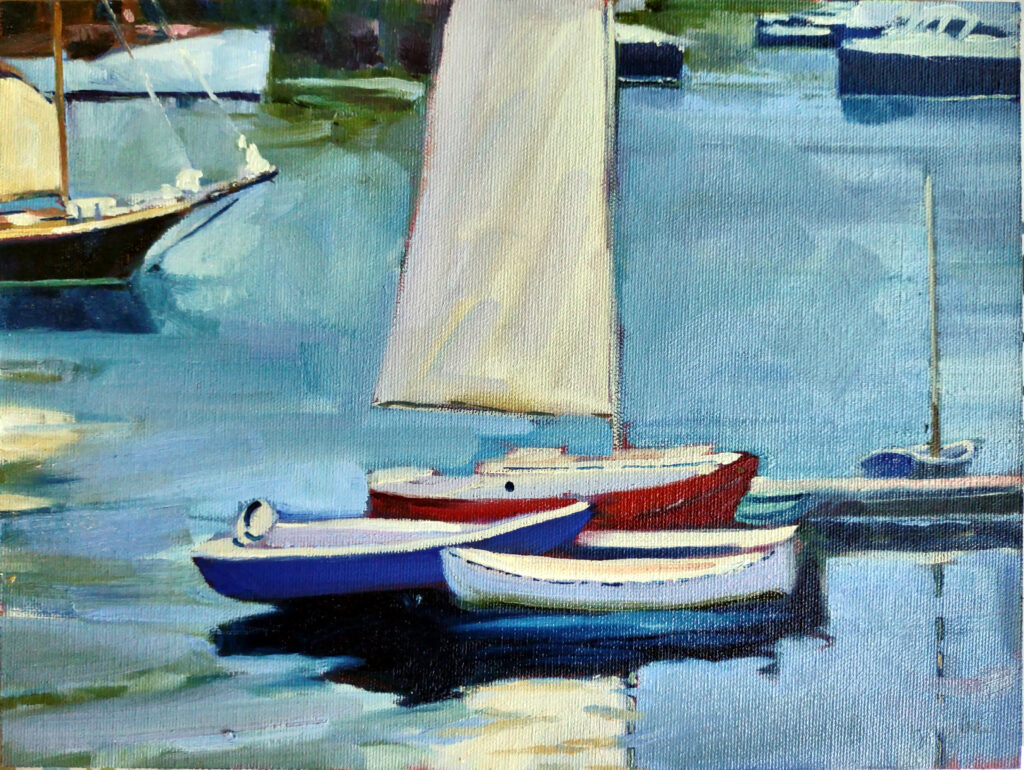
Dinghy Dock, 8X10 on archival canvasboard, $522 unframed includes shipping and handling in the continental US.

Why am I offering Advance your painting skills?

I’ve had a core group of students with me since I started teaching online in 2020. Many of them are now selling their work, making them professionals. I think it’s a feather in my cap to have helped so many students get to that level, but I need to make room for the next generation of great painters.

That’s why I’ve broken my offerings this spring into two sections. Signature series is intended for those advanced students to develop specific themes in their work. Advance your painting skills is intended to get the next group of painters to that level. You can start as a good emerging artist or a hesitant beginner; there’s a place for you here. Wherever you’re starting, in whatever medium, it’s an opportunity to take a step forward into better technique.

This spring’s painting classes

Zoom Class: Advance your painting skills

Mondays, 6 PM – 9 PM EST
April 28 to June 9

Advance your skills in oils, watercolor, gouache, acrylics and pastels with guided exercises in design, composition and execution.

This Zoom class not only has tailored instruction, it provides a supportive community where students share work and get positive feedback in an encouraging and collaborative space. 

Zoom class: Signature series

Tuesdays, 6 PM – 9 PM EST
April 29-June 10

This is a combination painting/critique class where students will take deep dives into finding their unique voices as artists, in an encouraging and collaborative space. The goal is to develop a nucleus of work as a springboard for further development.

Registration is now open for workshops in 2026! Reserve your spot:

Can’t commit to a full workshop? Work online at your own pace:

Seven Protocols for Successful Oil Painters

Monday Morning Art School: mixing beautiful greens

The rookie error for summer is to paint all foliage using the same basic color. You lose more points if it’s sap green.

Bracken Fern, by Carol L. Douglas, 9X12, oil on canvasboard, $869.

I’m in Malta, so I don’t know if this is timely or not, but we’re about due for the earliest color to start budding out in New England. It’s time to talk about mixing pretty and varied greens, although if it’s snowing again I’m deeply apologetic.

Michael Wilcox published a famous watercolor pigment guide called Blue and Yellow Don’t Make Green. It’s where I first got the idea to add back the banned black.

Mixed greens. Almost a salad.

His point was that there are many routes to the same destination, and that to really mix colors, you need to understand what pigments you’re using, not work from trade names for colors. Consider sap green, for example-a staple of many plein air painters’ toolkit. It’s really a convenience mix. The same is true of Hooker’s Green in watercolor.

The single-pigment (‘true’) greens available are chromium oxide green, viridian, and cobalt green. Chromium oxide green is a lovely, heavy, natural green. Unfortunately, it outweighs everything it’s mixed with. Viridian and cobalt green are lovely, but expensive. Beware viridian hue-it’s just another phthalo in disguise.

Chart courtesy of Victoria Brzustowicz

The rookie error is to paint all your greens using the same hue, modulating lighter or darker for highlights and shadows. You’ll have much more life in your trees if you know all the different ways you can get to leafy green. One of the most useful greens is black plus cadmium yellow lemon, or Hansa yellow, which is a non-toxic analog.

The best way to navigate the colors of foliage is to avoid greens out of a tube altogether. A system of paired primaries gives you more options, avoiding the acidity of phthalo, the weight of chromium oxide green, or the soul-sucking darkness of sap green.

In my experience, bad paint mixing causes paintings to go wrong faster than anything else. Constantly over-daubing to modulate the paint color distorts the original drawing and makes a grey mush. If you’re confident of the color, you can apply it fast and accurately.

I make my greens on a matrix, which I’ve shown you both mixed and on a chart. Note that blue/black pigments are much stronger than the yellows. You need about half the amount of blue or black as you do yellow.

Swatches by Jennifer Johnson

First mix greens according to the chart, and then modulate your resulting greens with tints (meaning a mix of white and a color). The specific tints are unimportant, but the most useful one for landscape is a mix of white, ultramarine and quinacridone violet, making a pale lavender. It is great for atmospheric perspective.

Your assignment is to hit paint swatches as closely as you can. 

The second exercise involves stopping at your local hardware store for a few paint swatches. These are Benjamin Moore brand, but you should be able to find similar ones elsewhere. There are two off-whites: one cool and one warm. There’s yellow, green, and two soft blues. Your assignment is to mix until you think you’ve hit the exact color. Then put a dot of it on the card to see how close you got. (If you’re working in watercolor, the dot goes on paper instead.)

Detail of Jennifer’s chart, above, showing her blue to sienna mixes.

I also have my students make neutrals using combinations of ultramarine blue with burnt sienna and raw sienna. I use ultramarine blue and burnt sienna as my standard dark-neutral, because it can go to the warm or cool side depending on how it is mixed. Raw sienna plus ultramarine is my go-to starting point for granite and the sands of our northern beaches.

This spring’s painting classes

Zoom Class: Advance your painting skills

Mondays, 6 PM – 9 PM EST
April 28 to June 9

Advance your skills in oils, watercolor, gouache, acrylics and pastels with guided exercises in design, composition and execution.

This Zoom class not only has tailored instruction, it provides a supportive community where students share work and get positive feedback in an encouraging and collaborative space. 

Zoom class: Signature series

Tuesdays, 6 PM – 9 PM EST
April 29-June 10

This is a combination painting/critique class where students will take deep dives into finding their unique voices as artists, in an encouraging and collaborative space. The goal is to develop a nucleus of work as a springboard for further development.

Registration is now open for workshops in 2026! Reserve your spot:

Can’t commit to a full workshop? Work online at your own pace:

Seven Protocols for Successful Oil Painters

Neolithic art, made by artists like me

Fishing net at Marsalforn. It’s nice to see working boats.

I’ve done just a few watercolor sketches along the shores at Gozo. They’re all fleeting and for my own amusement. Sketching (in pencil or paint) is how I observe my surroundings; serious painting for posterity is another matter entirely.

Malta and Gozo are the crossroads of the western Mediterranean. There are seven known megalithic sites on the two islands. The prehistoric civilization of Malta lasted a thousand years, starting around 4000 BC. We’ve burrowed deeply into this history; so far, we’ve visited the underground burial chambers of Ħal Saflieni Hypogeum and the Ħal Tarxien Prehistoric Complex on Malta, and the Ġgantija temple site on Gozo. Like so many others, I am mystified and humbled by the engineering, particularly the mathematical precision of the hypogeum’s Holy of Holies. But it is the small art objects that I find the most moving.

The luzzu is the traditional fishing boat of Malta, and comes in all sizes.

How does Malta’s neolithic art relate to the rest of the ancient world?

Western art is said to have started with Minoan and Cycladic art, both of which arose around the same time as Malta’s neolithic civilization. Since Malta is only about fifty miles from the coast of Sicily, that’s no surprise. Ġgantija had flint tools that could only have been acquired through sea-trade.

The earliest mariners had rafts, dugout canoes, and hide-covered coracles; sail-power was not introduced to the western Mediterranean until much later. The Mediterranean is a famously tempestuous sea; trade in small human-powered boats must have been a terrifying business.

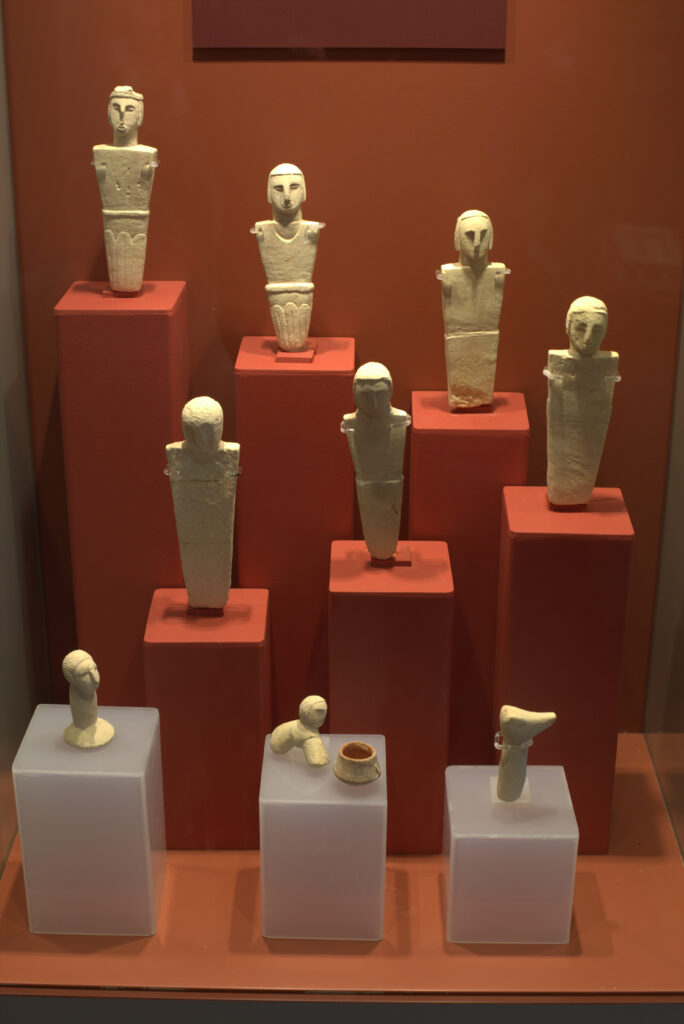
Figurines found at Ġgantija temples on Gozo, courtesy UNESCO World Heritage Site

Artists like me

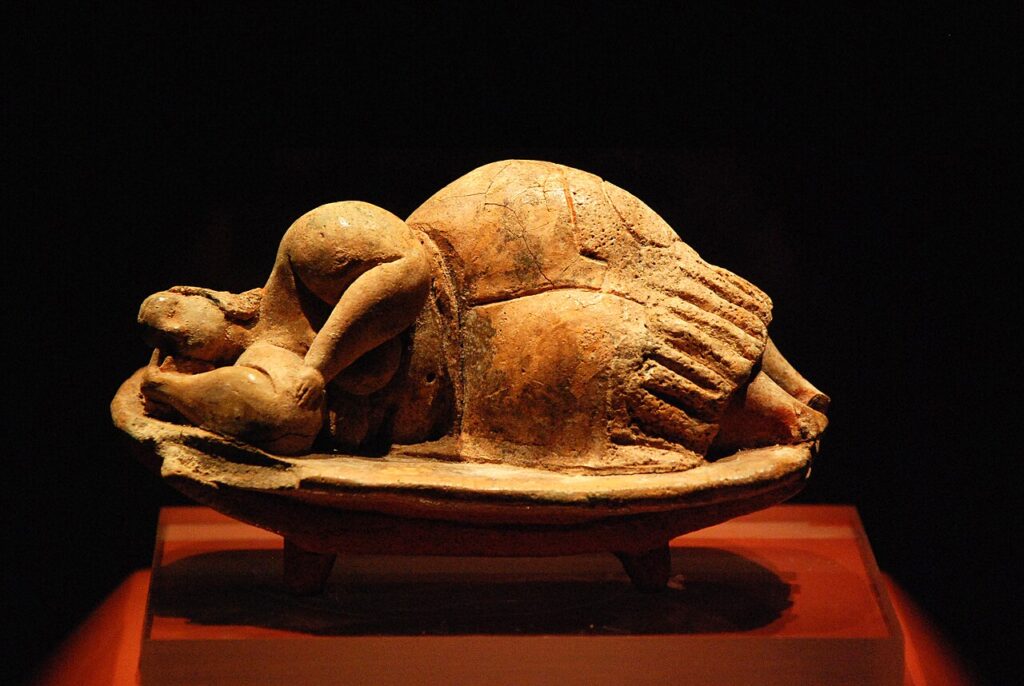
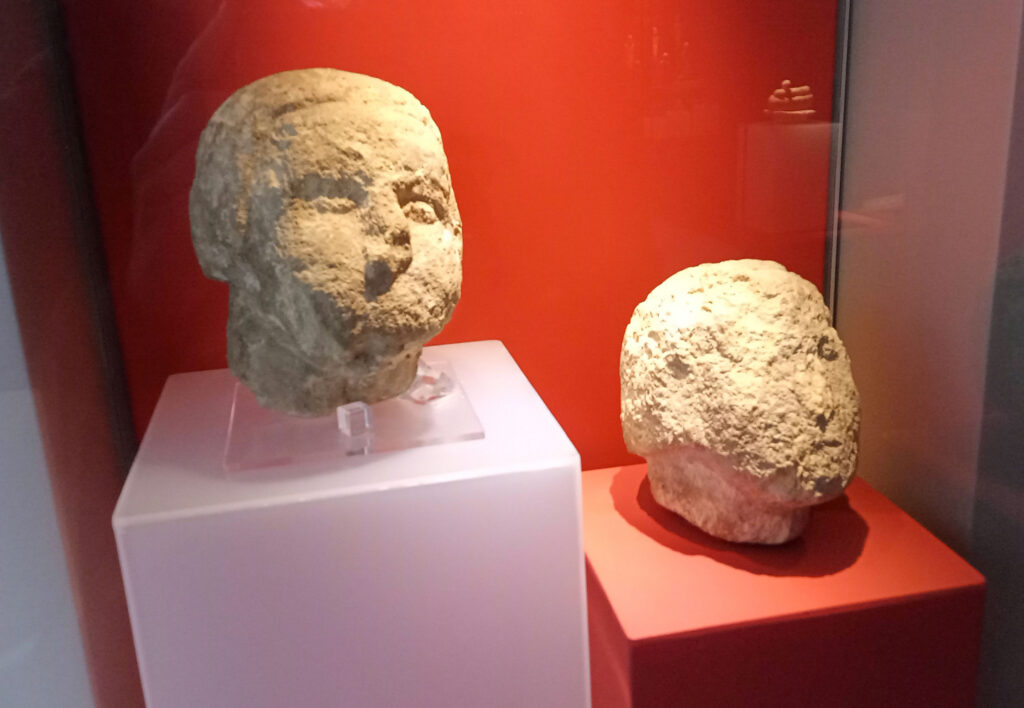
At Ħal Tarxien, there is a bas-relief of two fine bulls and a sow. It might have been ceremonial or it might have just been very fine kitchen décor. (Archaeologists have a tendency to explain away everything they don’t understand as being religious.) There are two half-size heads at Ġgantija with such poignant expressions that their feelings are visible through the weathering of five millennia. There are also figurines that tell us the ancients of Ġgantija looked much like modern Europeans. There are miniscule figurines carved of cow toe bones, and bead necklaces just for fun.

The Sleeping Lady of Ħal Saflieni, courtesy National Museum of ArchaeologyValletta

Each of these items was made by an artist like me. Similarly, artists like me painted the red ochre patterns on the ceilings and walls of the hypogeum, and carved the whorls in the temple sites.

Art requires that a civilization have leisure time. There must be time for artists to develop their craft, and spare resources to support those artists. There must be leisure time for audiences to look at and appreciate art. Societies that can produce art are civilized societies.

All that is left of neolithic art is that which was set in stone or pottery. There’s no trace left of painting, textile art, dance, or music. However, if sculpture existed, we can presume those other forms existed as well.

Likewise, the names and personalities of the creators are long gone—but, almost miraculously, their creations live on.

Two stone heads found at Ggantija, courtesy Ġgantija Interpretation Centre

This spring’s painting classes

Zoom Class: Advance your painting skills 

Mondays, 6 PM – 9 PM EST
April 28 to June 9

Advance your skills in oils, watercolor, gouache, acrylics and pastels with guided exercises in design, composition and execution.

This Zoom class not only has tailored instruction, it provides a supportive community where students share work and get positive feedback in an encouraging and collaborative space. 

Zoom class: Signature series

Tuesdays, 6 PM – 9 PM EST
April 29-June 10

This is a combination painting/critique class where students will take deep dives into finding their unique voices as artists, in an encouraging and collaborative space. The goal is to develop a nucleus of work as a springboard for further development.

Registration is now open for workshops in 2026! Reserve your spot:

Can’t commit to a full workshop? Work online at your own pace:

Seven Protocols for Successful Oil Painters

Our place in space

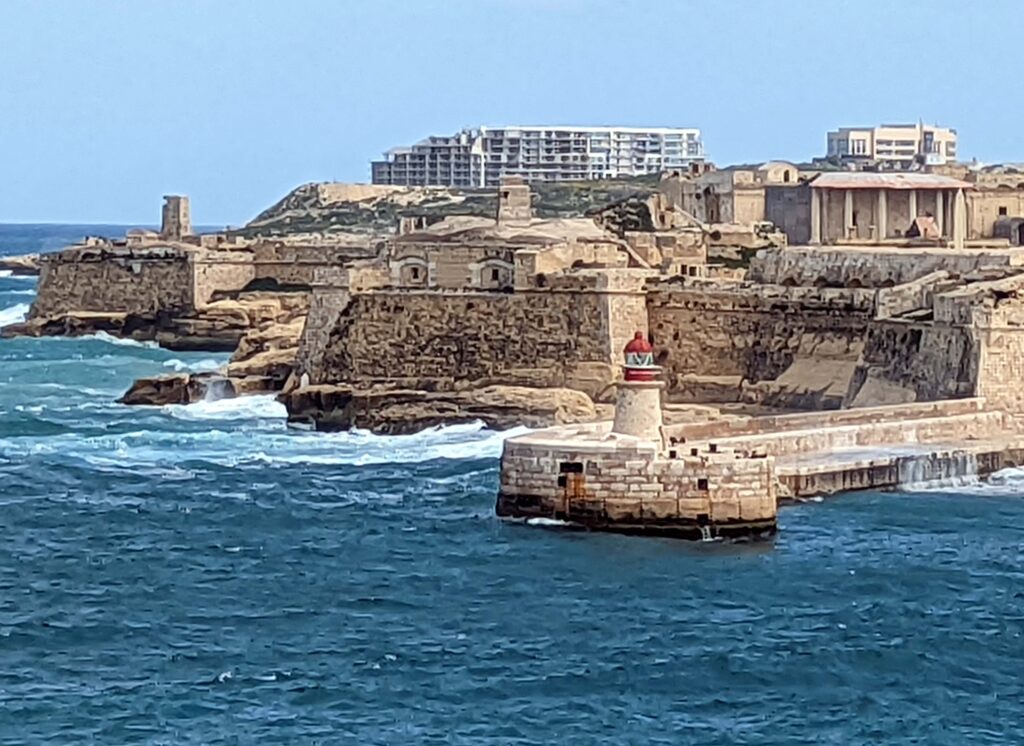
Fort Rinella, part of the ancient fortifications at Valletta’s harbor.

My watercolor kit is safely stowed in my backpack, but the idea that our Grand Master would allow me time to paint is a chivalric fantasy. I’m up at 6, out at 8, perambulating until 7, and safely stowed away in my monastic cell at 10.

To be fair, my friend Kenny is far more easy-going than the Grand Masters of the old Order of Knights of the Hospital of Saint John of Jerusalem (Knights Hospitaller), whose footsteps we are following on these ancient dusty hillsides. About the only preparation for this trip that I did was to read about the history of the Knights Hospitaller before the great Siege of Malta in 1565, in which they maintained a truly heroic defense against overwhelming forces.

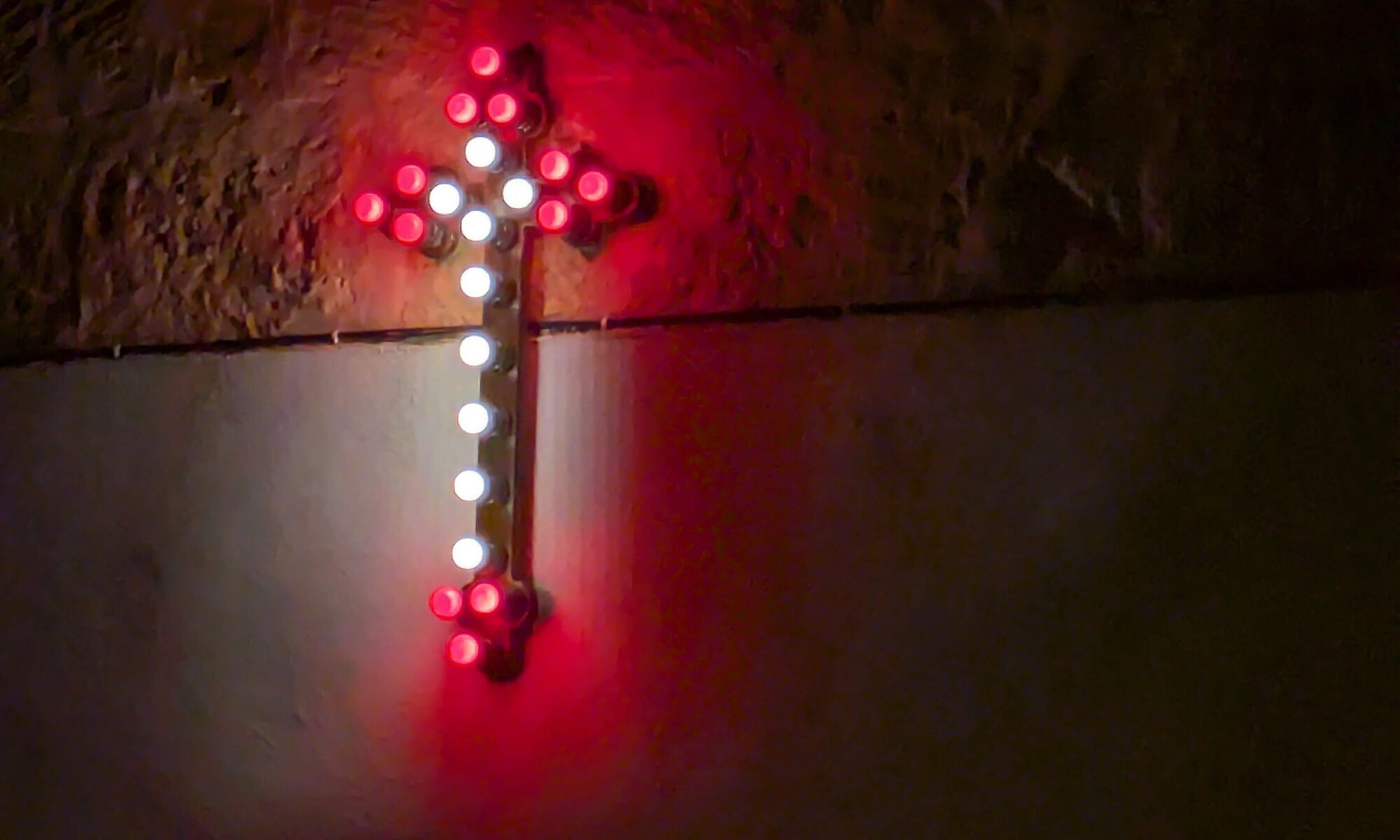
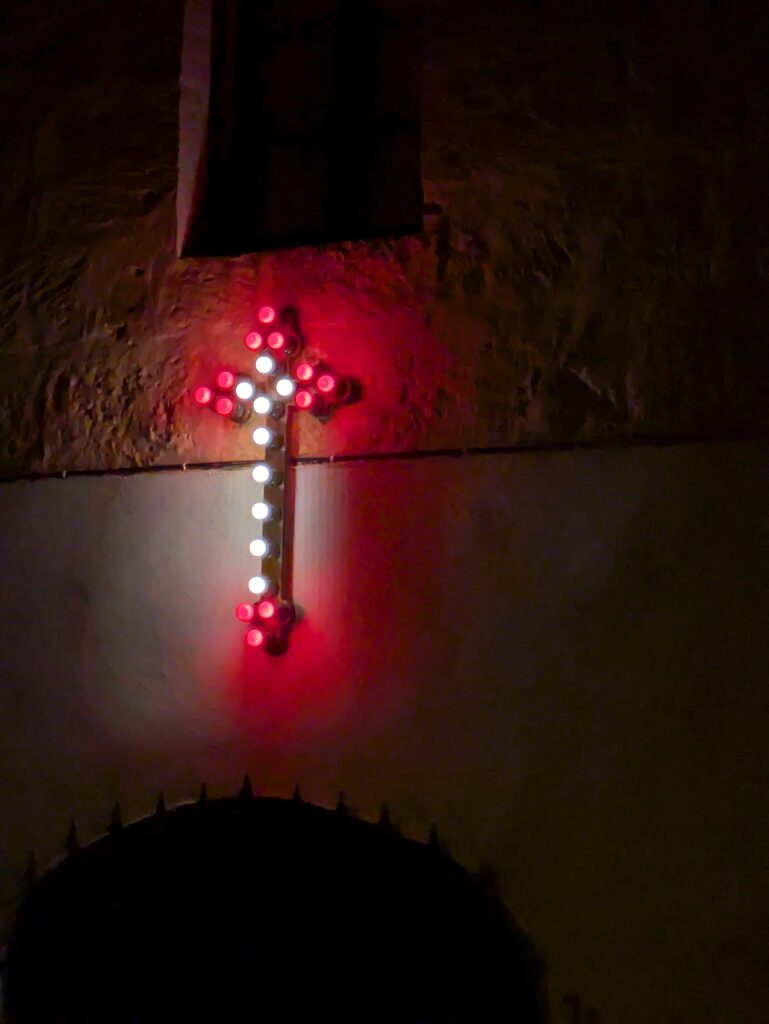
Malta is a very Catholic country, and at night is lighted by many crosses.

The shadows of the Knights Hospitaller are visible in Valletta and the ring of defensive towers that surround the islands. The Knights may have been the most colorful part of Malta’s history, but they were really only a short part of it. Malta was settled sometime around 5900 BC, by Neolithic people floating over from Europe. It’s been occupied by Phoenicians, Carthaginians, Romans, Christians, Arabs, and Christians again. Its modern people are a polyglot mixture from all over the Mediterranean.

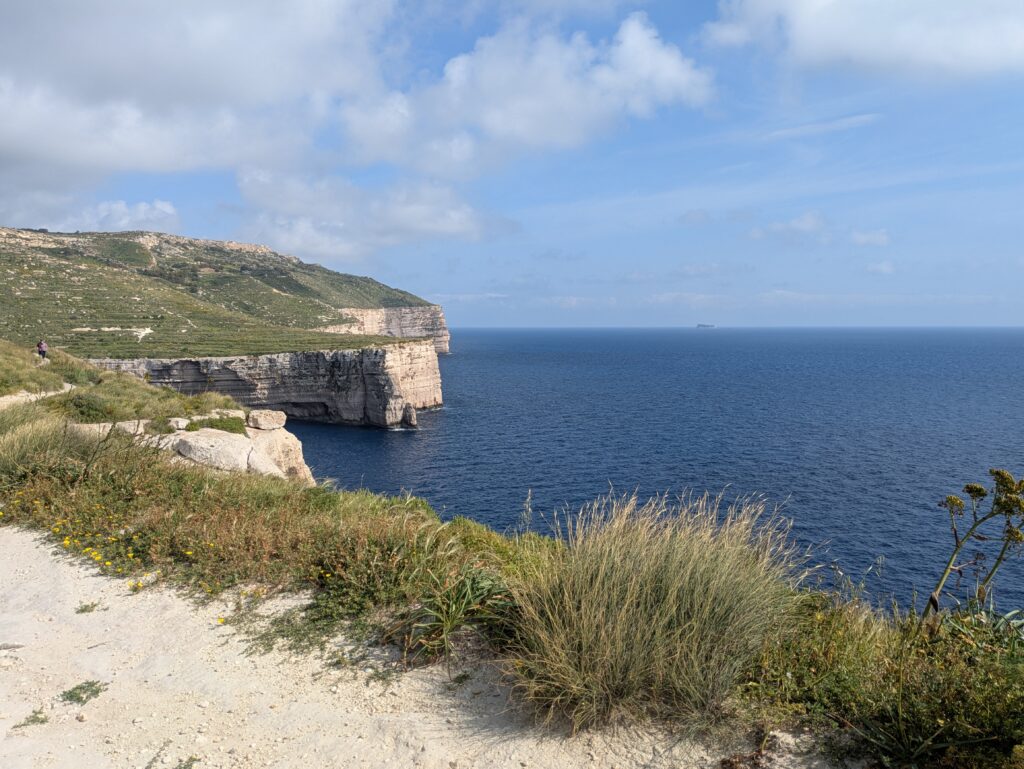
The Dingli Cliffs.

The valleys of Malta are obviously fertile, supporting much market gardening. Above them rise steep, rocky, fallow slopes. These are shaped by ancient agricultural terracing that dates from the Arab conquest of 827-1091 AD. (Since chattel slavery was a significant part of the medieval Muslim economy, I shudder to think these terraces were built and maintained involuntarily.)

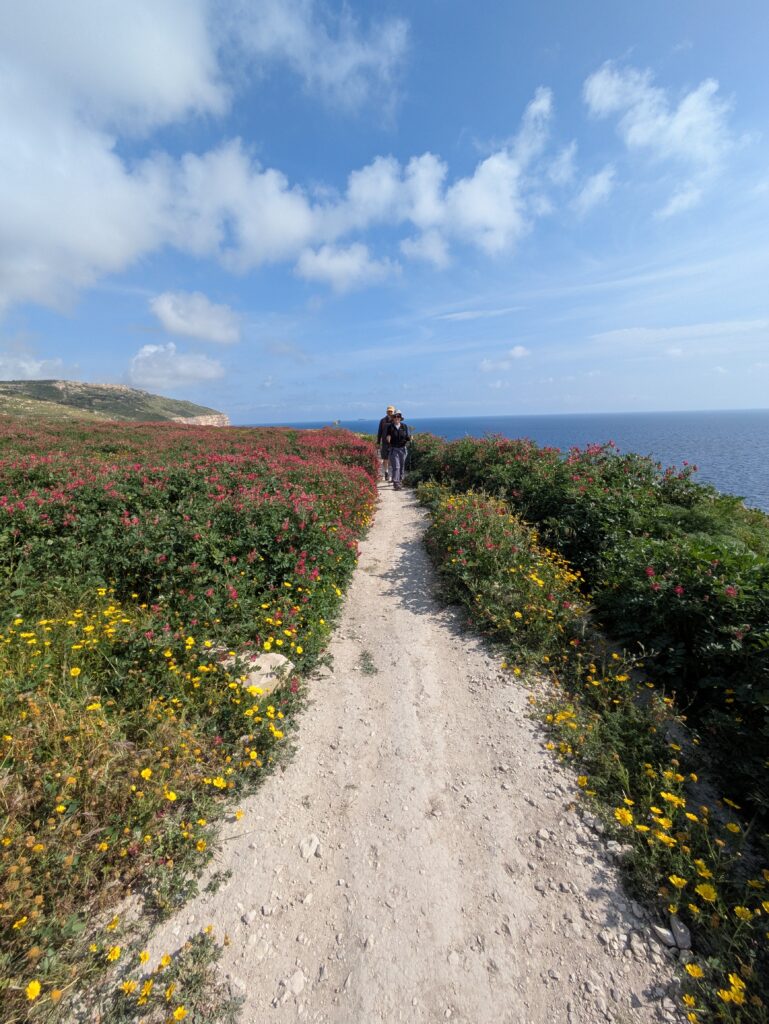
It’s spring in Malta and the wildflowers are blooming.

No photos can relate our place in space

I didn’t do much reading about Malta, but I did look at a lot of photos online. I was still ill-prepared for the reality.

Photos never capture our place in space. That’s a multisensory experience, coming from our balance, our eyesight, our hearing, and of course our binocular vision. Even the breeze plays a part.

There’s where plein air painting has the advantage, because it captures the impression of the place, rather than its mere physical details. Perhaps I’ll get a chance to paint before the week is out, but if not, I’m still having a lovely time.

Sometimes you wander on trails, and sometimes on city streets…

This spring’s painting classes

Zoom Class: Advance your painting skills (whoops, the link was wrong in last week’s posts)

Mondays, 6 PM – 9 PM EST
April 28 to June 9

Advance your skills in oils, watercolor, gouache, acrylics and pastels with guided exercises in design, composition and execution.

This Zoom class not only has tailored instruction, it provides a supportive community where students share work and get positive feedback in an encouraging and collaborative space. 

Zoom class: Signature series

Tuesdays, 6 PM – 9 PM EST
April 29-June 10

This is a combination painting/critique class where students will take deep dives into finding their unique voices as artists, in an encouraging and collaborative space. The goal is to develop a nucleus of work as a springboard for further development.

Registration is now open for workshops in 2026! Reserve your spot:

Can’t commit to a full workshop? Work online at your own pace:

Seven Protocols for Successful Oil Painters

Monday Morning Art School: how to choose the right art supplies

The Late Bus, oil on archival canvasboard, 6X8, $435.00 framed, includes shipping and handling in continental US.

L is the leader of a small rebellion among my students. They don’t like the constraints of single-pigment paints. Their motto is, “In the absence of a good idea, let’s buy art supplies.” Our last paint conversation went like this:

“That green cannot be mixed with the colors on your supply list.” L then pulled out a tube of permanent green recently purchased at the art supply store.

“Okay, what are the pigments in that tube?” (On reputable paints, there are tiny alphanumeric codes that starts with the letter P. These are more important than the poetical names on the tubes.)

“PG7+PY3…”

“And what are they when they’re at home?” I asked.

“Chlorinated copper phthalocyanine and arylide yellow.”

“Which are…” I lead.

“Phthalo green and Hansa yellow.”

“So why would you buy a mix of two pigments when you already have Hansa yellow on your palette?” I ask. And then demonstrated that the painting in question was mixed with phthalo blue and Hansa yellow in the first place.

The Logging Truck, oil on archival canvasboard, 16X20, $2029.00 framed includes shipping and handling in continental US.

The more experienced you are, you less stuff you buy

Buying excess art supplies can be fun, or it can be a form of flailing around. It can be a search for something that will elevate your art. It can also be displacement behavior; it’s simply easier than buckling down, especially when what’s on your easel isn’t going well. I speak from experience here. I have a large studio, and way too much of it is filled with stuff I never use.

How to choose the right art supplies

Start by knowing what it is you want to do. While this seems obvious, I have lots of art supplies in various media I’ll never pick up again. To a point, experimentation is good, but it can also be expensive.

Lonely Cabin, 8X10, oil on archival canvasboard, $652 includes shipping and handling in continental US.

How much are you willing to spend?

Art supplies range widely in price. While quality materials are expensive, it’s not true that the best materials cost the most. For example, while I paint with Gamblin’s artists oil range, I’m happy recommending their 1980 range as well. Likewise, I think Princeton Snap and Neptune line brushes are excellent and do not cost a fortune. And nobody who’s just learning needs a top-end archival oil-painting board.

Less is more

Three good brushes are worth more than a dozen very cheap ones. Likewise, you can get away with six colors in watercolor and seven in oil paint (those paired primaries plus white), if they’re decent quality paints. A set of 18 cheap paints is a very bad bargain.

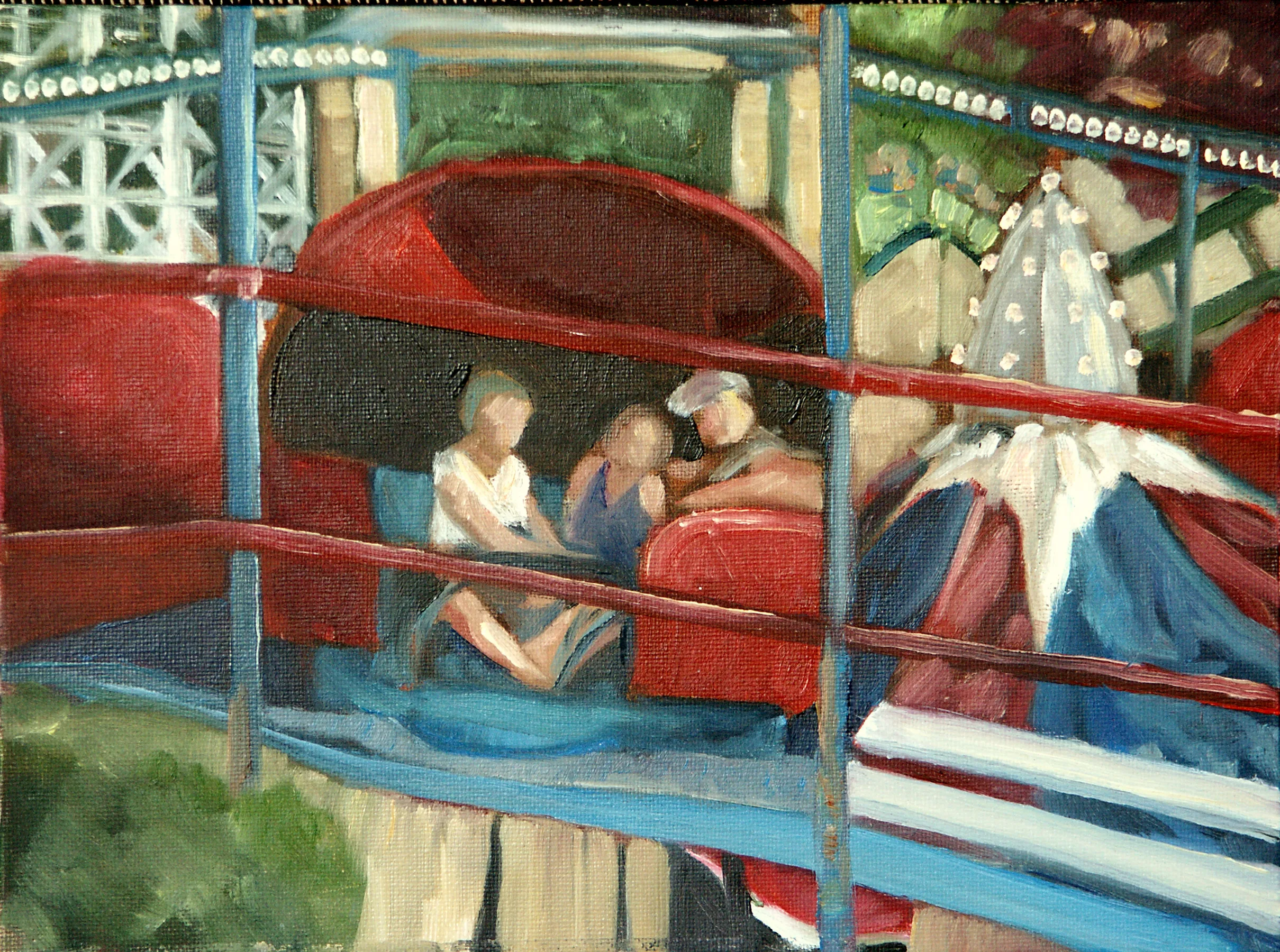
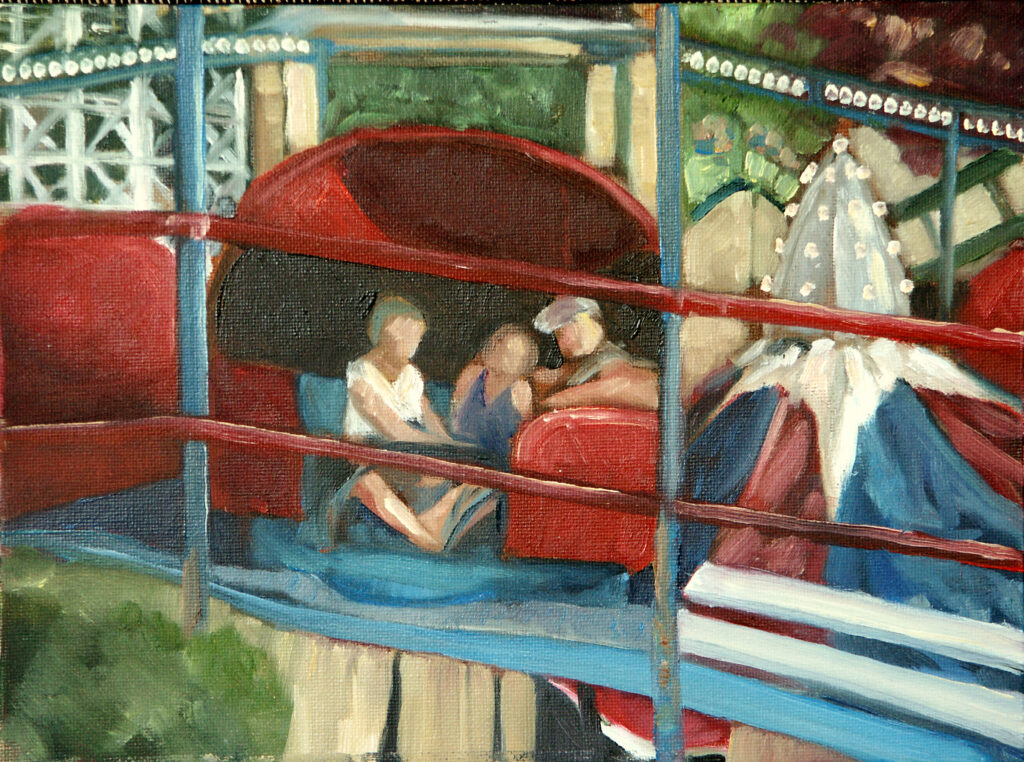
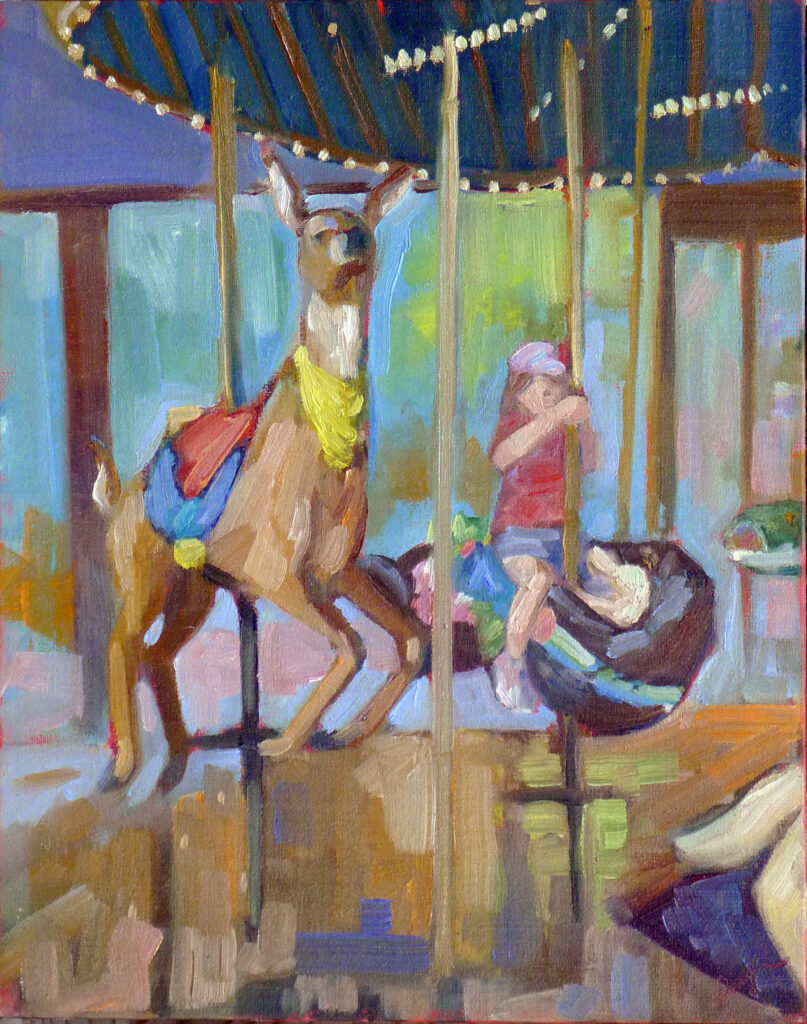
Tilt-A-Whirl, oil on archival canvasboard, $869 framed includes shipping and handling in continental US.

Research and Compare

I’m happy to share my supply lists with interested painters. (Here they are for oils, watercolors, pastels, and acrylics.) These are a moving target; my students give me feedback and I adjust them over time. Likewise, you should read reviews and ask for recommendations from other artists.  Look for online resources and tutorials that can help you learn about different materials. And never feel pressured to buy everything at once.

This spring’s painting classes

Zoom Class: Advance your painting skills (whoops, the link was wrong in last week’s posts)

Mondays, 6 PM – 9 PM EST
April 28 to June 9

Advance your skills in oils, watercolor, gouache, acrylics and pastels with guided exercises in design, composition and execution.

This Zoom class not only has tailored instruction, it provides a supportive community where students share work and get positive feedback in an encouraging and collaborative space. 

Zoom class: Signature series

Tuesdays, 6 PM – 9 PM EST
April 29-June 10

This is a combination painting/critique class where students will take deep dives into finding their unique voices as artists, in an encouraging and collaborative space. The goal is to develop a nucleus of work as a springboard for further development.

Registration is now open for workshops in 2026! Reserve your spot:

Can’t commit to a full workshop? Work online at your own pace:

Seven Protocols for Successful Oil Painters

The color of place

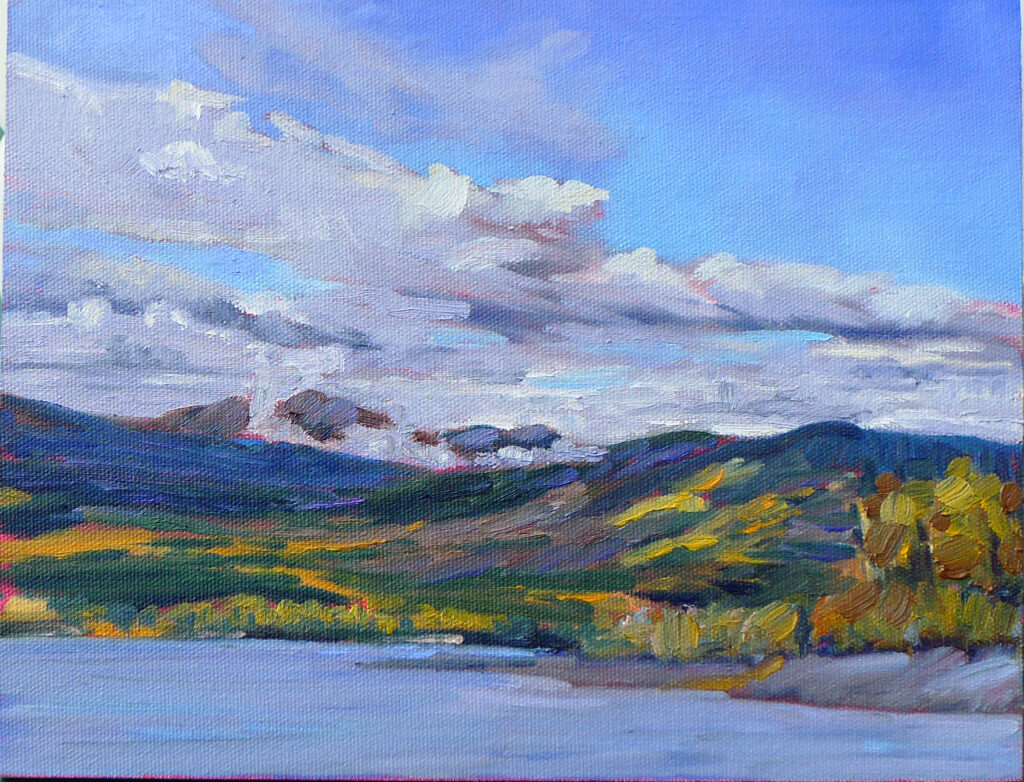
Teslin Lake, 8X10, oil on archival canvasboard, $522 includes shipping and handling in continental US.

Years ago, Bobbi Heath, Joelle Feldman and I went to the Bahamas to paint. There were many lovely things about that trip, including the warmth. However, I found myself absolutely uninspired for painting. Grand Bahama lacked three variables I crave in landscape painting: variety of foliage color, compelling architecture, and fascinating line. (I’m sure that if we’d been there in hurricane season, the weather would have spiced things up nicely, but alas, it was all calm seas and blue skies.) I have a limited interest in the beach and I came home with very little in the way of finished work.

It was also my first experience in a resort area, and I found it frankly disturbing to be in a place where visitors and natives were so cleanly separated. That’s not something I’d ever seek out again.

No Northern Lights Tonight, 6X8, oil on archival canvasboard, $348 includes shipping and handling in continental US.

An artist born in the tropics might love the subtle variations of turquoise for his landscape painting, whereas I found the gentle surf boring. He, in turn, might find the sulky violence of the Maine surf to be cold and forbidding. He undoubtedly would like conch, and I prefer cod.

If all goes well, as you read this I’m jetting from Manchester to Malta and Gozo for a week of hiking. I’ve no real idea what Malta looks like, although I’ve dutifully read up on its history. It will, I suppose, be dry, sandy, sunny, and more anciently-settled than most of the places I hike—not too different, I suppose, from the dusty village from whence my Calabrian ancestors emigrated.

Keeping my expectations low—hah!

I’ve painted in many corners of the world, and I always tell myself to keep my expectations low, that landscape painting in one place doesn’t necessarily translate automatically to another place.

That never actually works. I’m always carried away.

I’m not taking my oil painting kit, but I will have a sketchbook and a small watercolor kit. In the past on these hikes, I haven’t had time to do much painting. Even when I do, the results are just a passing fury. It’s not just a matter of focus, but of exploration. There’s a difference between landscape painting for finish and effect and plein air painting for exploration and thought. I never seem to move past the latter.

Consider the difference between Thomas Moran’s trail sketches from the Hayden Geological Survey of 1871 and his magnificent oil paintings of the same subject. The sketches are meant to record impressions; the paintings are meant to awe and inspire. Would Moran even have gotten into a major modern plein air event? Perhaps not.

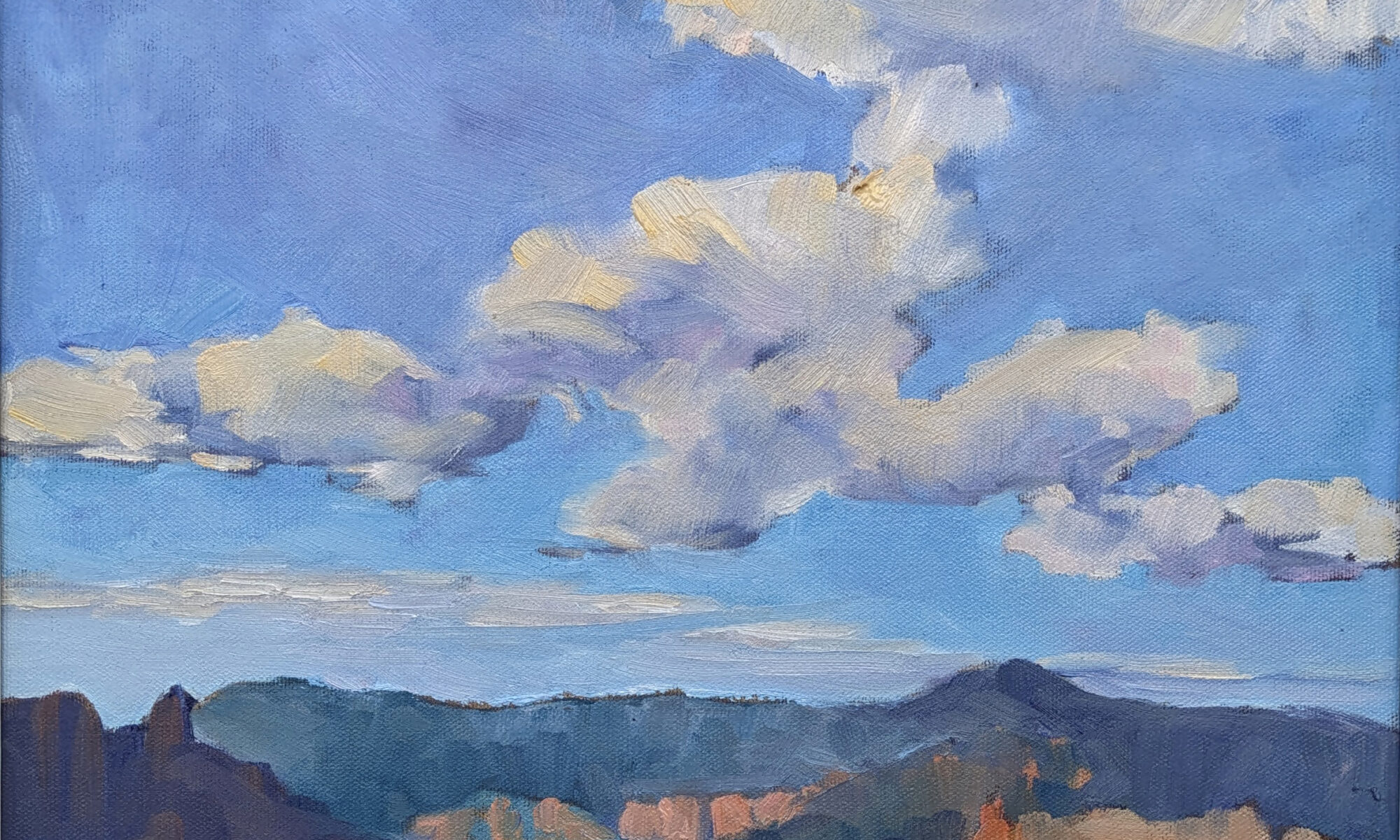
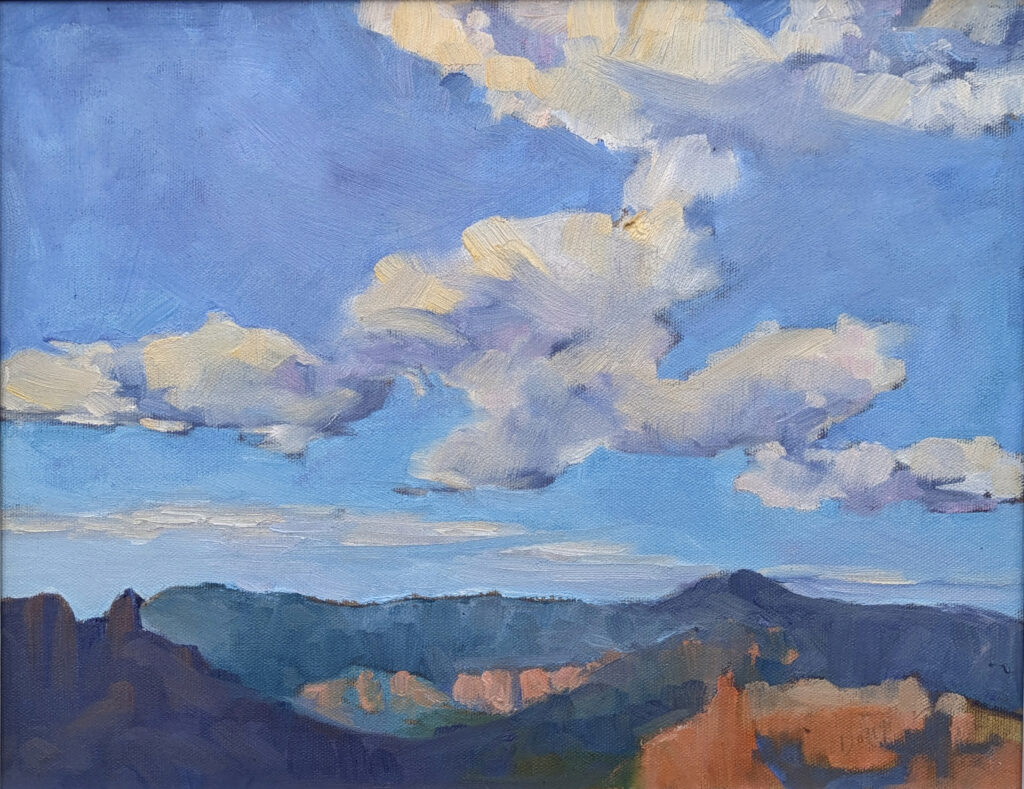
Maynard Dixon Clouds, 11X14, oil on archival canvas board, $869 includes shipping in continental US.

This spring’s painting classes

Zoom Class: Advance your painting skills (whoops, the link was wrong in last week’s posts)

Mondays, 6 PM – 9 PM EST
April 28 to June 9

Advance your skills in oils, watercolor, gouache, acrylics and pastels with guided exercises in design, composition and execution.

This Zoom class not only has tailored instruction, it provides a supportive community where students share work and get positive feedback in an encouraging and collaborative space. 

Zoom class: Signature series

Tuesdays, 6 PM – 9 PM EST
April 29-June 10

This is a combination painting/critique class where students will take deep dives into finding their unique voices as artists, in an encouraging and collaborative space. The goal is to develop a nucleus of work as a springboard for further development.

Registration is now open for workshops in 2026! Reserve your spot:

Can’t commit to a full workshop? Work online at your own pace:

Seven Protocols for Successful Oil Painters

Like the Left Bank, but with snow

Skylarking II, 18×24, oil on linen, $1855, includes shipping in the continental US.

A few weeks ago, Rachel Houlihan mentioned in one of my classes that she and another artist had run into me along the trail. “How many artists live near you?” another student marveled.

“Oh, lots,” she said. “Thousands. Many well-known ones,” and she proceeded list some of them. It’s true that you can’t throw a stick around here without hitting an artist (or attracting a dog).

I was reminded of this when walking nearby with Richard, a retired architect. “That’s the home of the actor Gabriel Byrne,” he said. (A few years ago, several people sent me this piece about him in the New York Times; I knew the locale intimately, but I still don’t know who Mr. Byrne is. His secret is safe with me.) It’s an arty place, and painting is only one aspect of it.

Camden Harbor, Midsummer, oil on canvas, 24X36 $3188 includes shipping in continental US.

The best business decision I ever made

“What was the best business decision you ever made?” I was asked at the Sedona Entrepreneurial Artist Development Program. That was a no-brainer: it was to relocate to an artist community. In my case, that is coastal Maine, but in yours, it might be Santa Fe, NM; Sedona, AZ; Fredericksburg, Texas; Des Moines, IA; or another community I’ve never heard of.

People are often drawn to an artist community—as I was—by the light, beauty, galleries, and the art scene, but there is always more to it. The more concentrated the art scene is, the more likely the work is to be directed towards a stylistic or thematic ideal. That’s how ‘schools’ of art develop. Iron sharpens iron, which means our own work gets stronger when we spark ideas off others.

Of course, you can seek community wherever you live, by working with the best artists you can find: at figure groups, plein air groups, ateliers and art associations. And five years of Zoom teaching has shown me how well the internet creates relationships between artists across the globe.

Skylarking, 24X36, oil on canvas, $3985 framed includes shipping and handling in continental US.

My mutual support system

I have three peers I communicate with almost daily (and paint with as much as possible). They’re among the few people to whom I’ll complain about not getting into a show or about the disappointment of a selling price at an auction—or who will congratulate me when things go well.

I can also ask them for constructive feedback because I trust them. And I suppose if I really needed someone to walk my dog, they’d do that for me too; I’d certainly do it for them.

More importantly, there’s a sense of accountability with them. If I’m in a slump, they drag me out of it, and I try to do the same for them. And even in the snowiest of winter months, I don’t feel totally isolated.

Drying Sails, 9X12, oil on canvasboard, $869 framed.

Networking

I loathe the word networking, but the fact remains that living in an artist community means more opportunities to connect with art collectors, gallery owners, and industry professionals. It means more events, open studios, galleries and shows.

There also tend to be residencies, workshops, and mentorships in places where artists congregate.

This spring’s painting classes

Zoom Class: Advance your painting skills (whoops, the link was wrong in last week’s posts)

Mondays, 6 PM – 9 PM EST
April 28 to June 9

Advance your skills in oils, watercolor, gouache, acrylics and pastels with guided exercises in design, composition and execution.

This Zoom class not only has tailored instruction, it provides a supportive community where students share work and get positive feedback in an encouraging and collaborative space. 

Zoom class: Signature series

Tuesdays, 6 PM – 9 PM EST
April 29-June 10

This is a combination painting/critique class where students will take deep dives into finding their unique voices as artists, in an encouraging and collaborative space. The goal is to develop a nucleus of work as a springboard for further development.

Registration is now open for workshops in 2026! Reserve your spot:

Can’t commit to a full workshop? Work online at your own pace:
Seven Protocols for Successful Oil Painters

Monday Morning Art School: what is a focal point in art?

All Flesh is as Grass, oil on linen, 30X40, $5072 framed, includes shipping and handling in continental US.

A focal point in art is the area of a composition that draws the viewer’s eye and holds his or her attention. It’s the visual center of interest.

Artists create focal points primarily with contrast in value, hue and chroma, but other elements of design also support focal points. These include lines that guide the viewer’s eye, textural changes, and placement. Detail and complexity will naturally draw the viewer, as will isolation (which is usually also an exercise in contrast). And everything else being equal, a large object will dominate.

Why do focal points matter?

A good visual composer, just like a good musician, guides his or her viewer through the composition. Focal points engage the viewer, and lead them through the space in a calculated way.

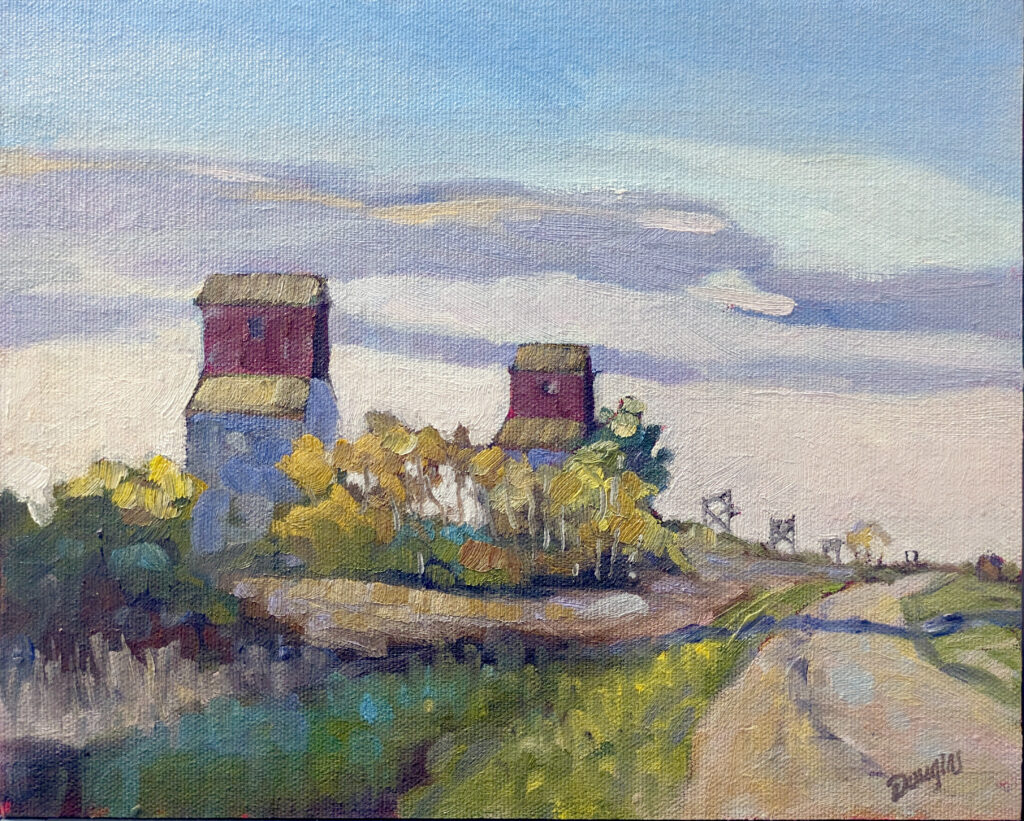
Saskatchewan Grain Elevators, oil on archival canvasboard, 8X10, $522 includes shipping and handling in continental US.

Should a work of art have just one focal point?

Generally, most paintings have more than one focal point, although occasionally an artist will let just one section of the canvas dominate. Good examples are Rembrandt van Rijn’s self-portraits, where humanity, as expressed through his face, is everything.

A single focal point creates a clear, strong emphasis, but the downside is that there’s no path forward into the painting. Multiple focal points create movement and tension, leading the viewer’s eye through the composition. The longer a person looks at an artwork, the more they engage with it.

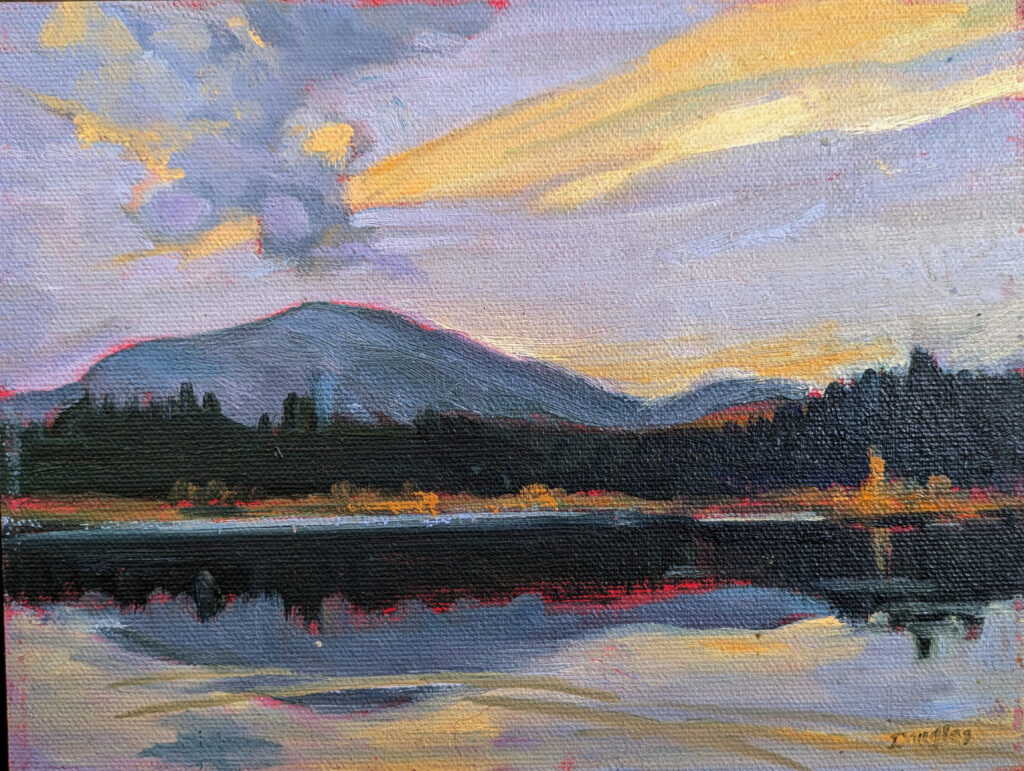
Early Morning at Moon Lake, 6X8, oil on archival canvasboard, $348 includes shipping and handling in continental US.

How to prioritize focal points

You, the artist, are the boss here. You should ponder the hierarchy of focal points before you ever pick up a brush. (That’s one reason for a good value sketch.) What is the strongest focal point? What is its spatial relationship to the others? One focal point should lead the band, the others should follow merrily along.

Make sure none of your focal points are at the edge of your canvas or leading off the page. Think of your focal points as elements that are connected compositionally, connected by color harmonies, lines, and value.

Are focal point and subject the same?

While focal point and subject often overlap, they are not always the same thing.

The subject is what the artwork is about—the main idea or theme. The focal point is where the viewer’s eye is drawn first.

In many situations, they might be identical; for example, a black dog running in the snow would be both the focal point and the subject. But in Johannes Vermeer’s Girl with a Red Hat, the subject is the girl and her stupendous hat, but the focal points are the side of her face, her lace fichu, and the flash of red at the far right of her hat. The focal points are masterfully drawn down the canvas by a single line of light. Rembrandt’s The Night Watch is a portrait of the militia of Frans Banning Cocq and Willem van Ruytenburch but none of the supporting militiamen are focal points at all.

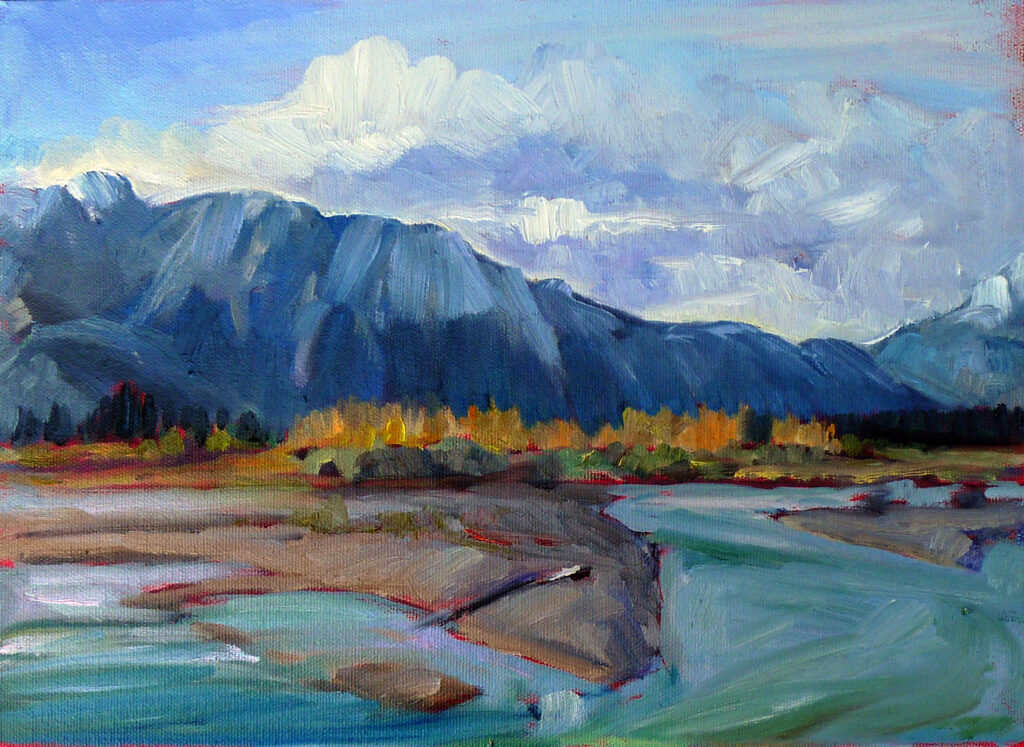
Athabasca River Confluence, 9X12, $696 includes shipping and handling in continental US.

How do you apply this?

In your next painting or drawing, make a conscious effort to set out and emphasize focal points, using value, hue, chroma and line. Can you articulate where they are and how you want the viewer to read them?

This spring’s painting classes

Zoom Class: Advance your painting skills (whoops, the link was wrong in last week’s posts)

Mondays, 6 PM – 9 PM EST
April 28 to June 9

Advance your skills in oils, watercolor, gouache, acrylics and pastels with guided exercises in design, composition and execution.

This Zoom class not only has tailored instruction, it provides a supportive community where students share work and get positive feedback in an encouraging and collaborative space. 

Zoom class: Signature series

Tuesdays, 6 PM – 9 PM EST
April 29-June 10

This is a combination painting/critique class where students will take deep dives into finding their unique voices as artists, in an encouraging and collaborative space. The goal is to develop a nucleus of work as a springboard for further development.

Registration is now open for workshops in 2026! Reserve your spot:

Can’t commit to a full workshop? Work online at your own pace:
Seven Protocols for Successful Oil Painters

Use it or lose it

Best Buds, 11X14, oil on canvasboard, $1087 framed includes shipping and handling in continental US.

“Use it up, wear it out, make it do or do without,” is a famous Yankee proverb. I love to sew but don’t much like mending. It hardly seems worth the effort, especially to replace the zipper in an already worn pair of trousers. If I was in any doubt about the infrequency of my sewing, my needle had spots of corrosion.

I was once a fairly adept seamstress. Imagine my annoyance, then, when I sewed the blasted zipper in wrong and had to rip it out. (It still looks awful, but that’s my husband’s problem. At these prices, he’s got nothing to complain about.)

There are some skills, like breathing, that you don’t forget. There are many others that get rusty if they’re not used. Use them or lose them.

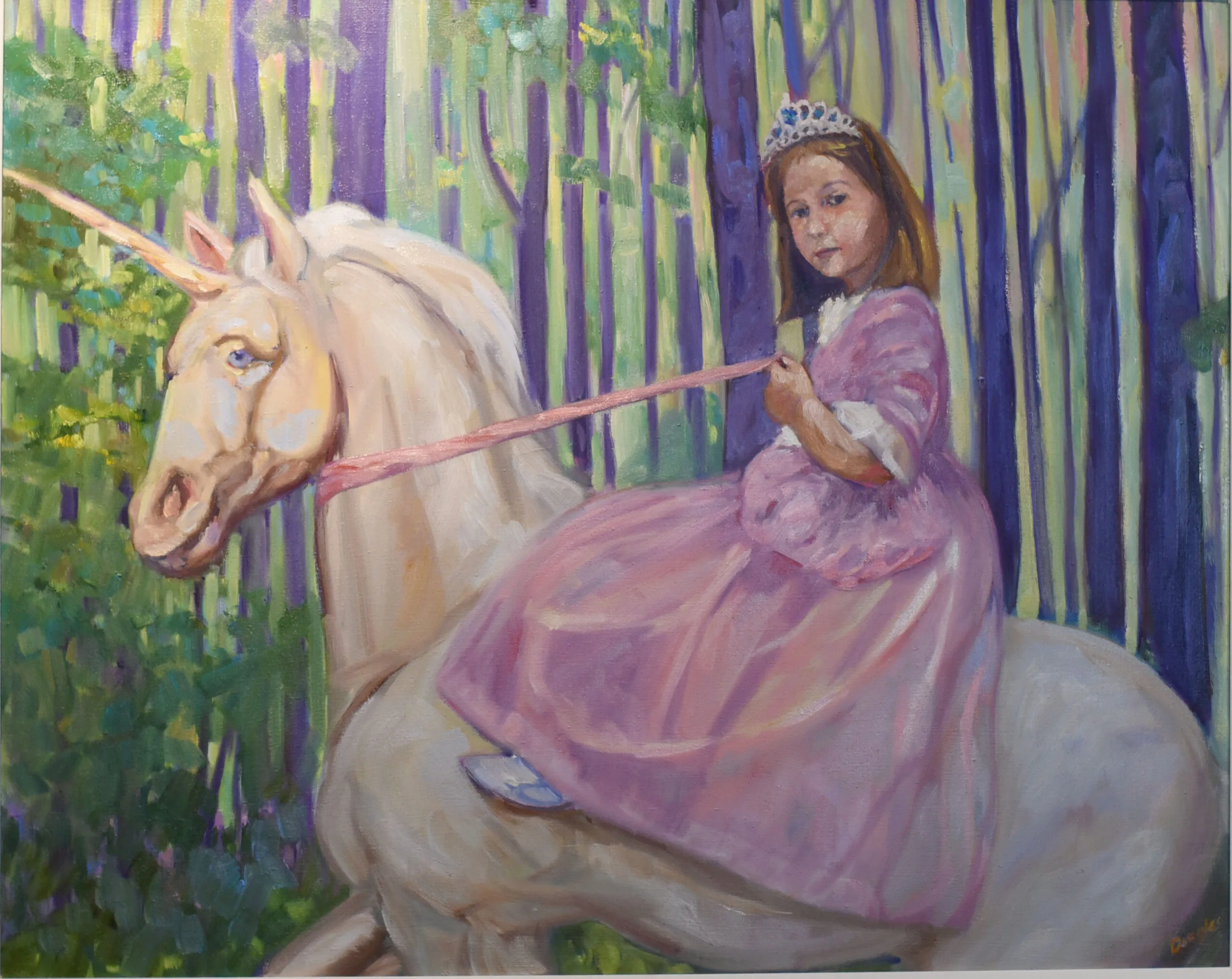
In Control (Grace and her Unicorn), 24X30, $3,478 framed, oil on canvas, includes shipping in continental United States.

What’s stopping you?

There are many reasons people don’t do creative work. The biggest of these is fear of failure. Starting something unknown means seeing all our flaws and shortcomings magnified. We worry that our work won’t be good enough. It’s easier to imagine what you might do than to take the risk of doing it.

Perfectionism is artistic expression’s greatest enemy. There are people who feel that if they can’t create something perfect, it’s not worth trying at all. But nobody has ever created perfect art; nor will they.

Perhaps you were told that you were a linear thinker rather than a creative one. That’s an absurdity; creativity, like any other form of thinking, takes practice. Or you were told that art is an innate talent. It isn’t, any more than understanding science or engineering is innate. They all take work.

“When I was young, I shied away from art because I mistakenly thought that either you had talent/ability or you didn’t. Period. It didn’t occur to me that like music or writing, you can take a bit of raw talent and get better at it with lessons and practice,” my student Sandy Sibley said.

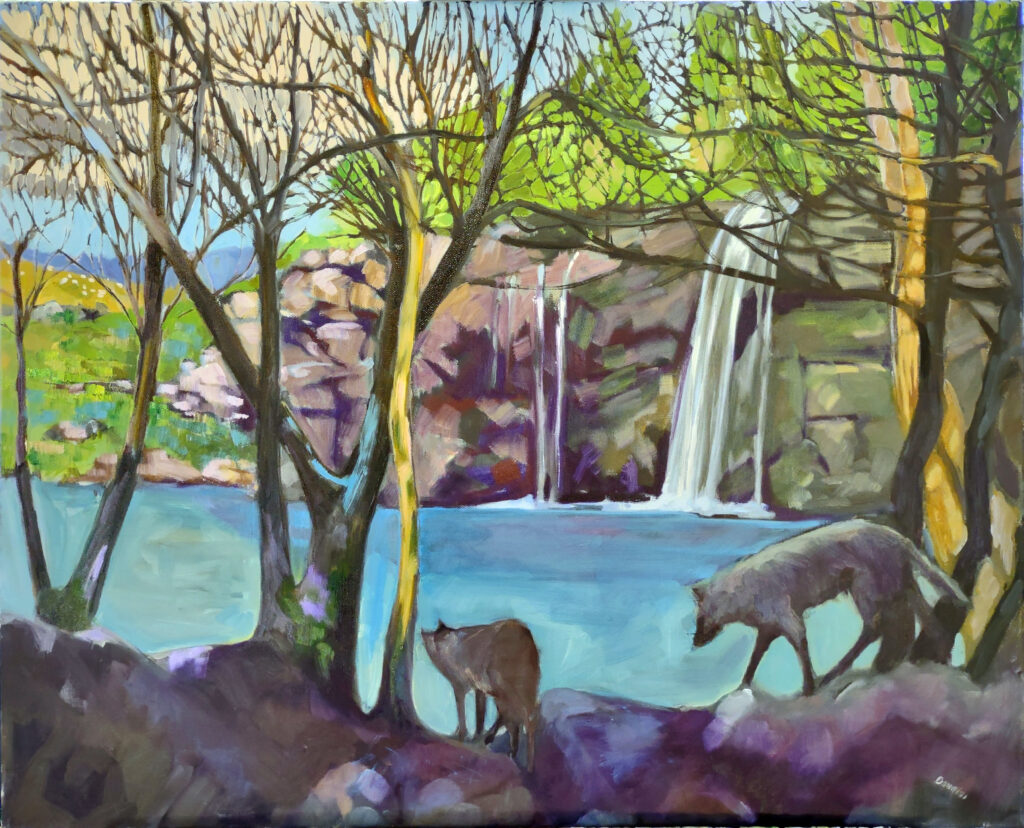
Ravenous Wolves, oil on canvas, 24X30, $3,478.00 framed includes shipping and handling in continental US.

If you’re someone who’s been discouraged from the creative arts, you may lack self-confidence. Social media doesn’t help. Just as we’re all set up to compare our looks to those of influencers, we’re all ambushed by the highly-polished works we see on the internet. (They may, in fact, be totally lacking in charm in the real world, but that’s a different issue.)

Lastly, your routine might not allow for creativity. I don’t sew now because I haven’t got the mental or physical space, so I understand if you can’t find a place to paint. But there’s always room to draw. It requires a sketchbook and a pencil.

Do you feel like you challenge your own creativity?

Yesterday I saw pussy willows along the trail. A new season means new opportunities, and I encourage you to find a way to express yourself this spring, through gardening, cooking, woodworking, sewing, painting, sculpting—in short, anything that brings you the joy of creating.

I’m offering two new classes this spring

Zoom Class: Advance your painting skills

Mondays, 6 PM – 9 PM EST
April 28 to June 9

Advance your skills in oils, watercolor, gouache, acrylics and pastels with guided exercises in design, composition and execution.

This Zoom class not only has tailored instruction, it provides a supportive community where students share work and get positive feedback in an encouraging and collaborative space. Learn More

Heavy Weather (Ketch Angelique), 24X36, oil on canvas, framed, $3985 includes shipping and handling in continental US.

Zoom class: Signature series

Tuesdays, 6 PM – 9 PM EST
April 29-June 10

This is a combination painting/critique class where students will take deep dives into finding their unique voices as artists, in an encouraging and collaborative space. The goal is to develop a nucleus of work as a springboard for further development.

We will examine work against both the formal standards of design and the artists’ stated goals. Learn More

The benefits of doodling

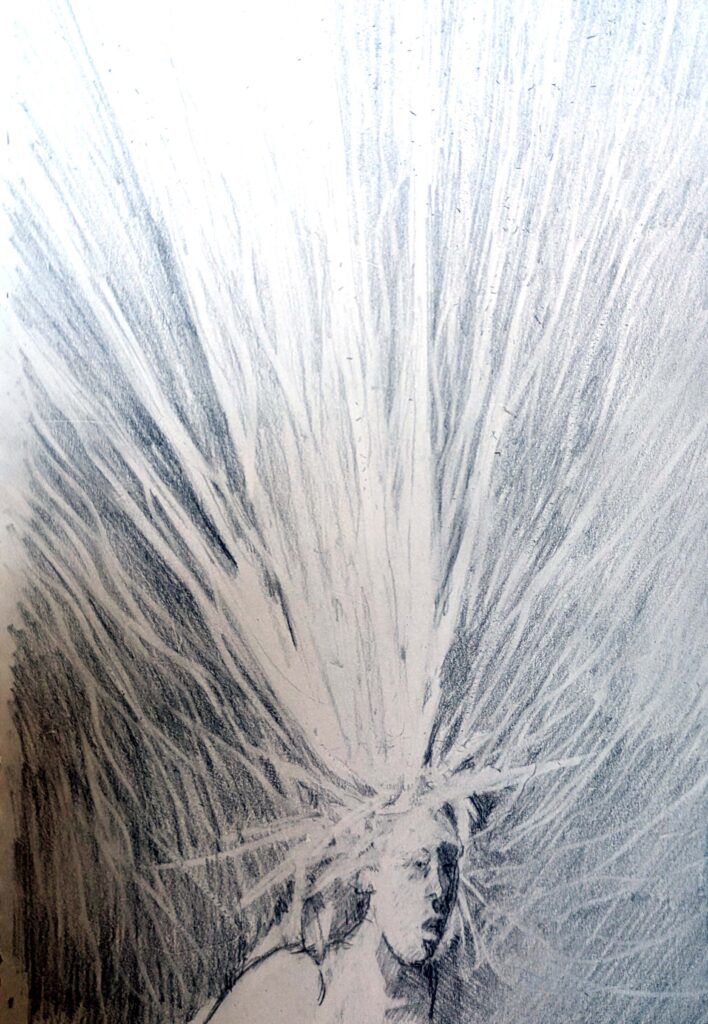
Some days my head feels like this.

The 1960s and ‘70s were no time to be a traumatized child. Drawing and doodling saved my sanity. So why do some educators persist in limiting doodling in their classrooms?

Doodles are found on the margins of ancient manuscripts and cave walls, which means that spontaneous acts of drawing have been with us for far longer than we’ve penned our kids up in school.

Research shows that doodling helps with memorization and concentration. Our minds are free to wander when our hands are busy. Of course, none of that was known when I was in school; I imagine my teachers just thought I was hopeless.

A 2009 study showed significantly better memory retention among doodlers than among non-doodlers. Perhaps that’s because drawing relieves stress.

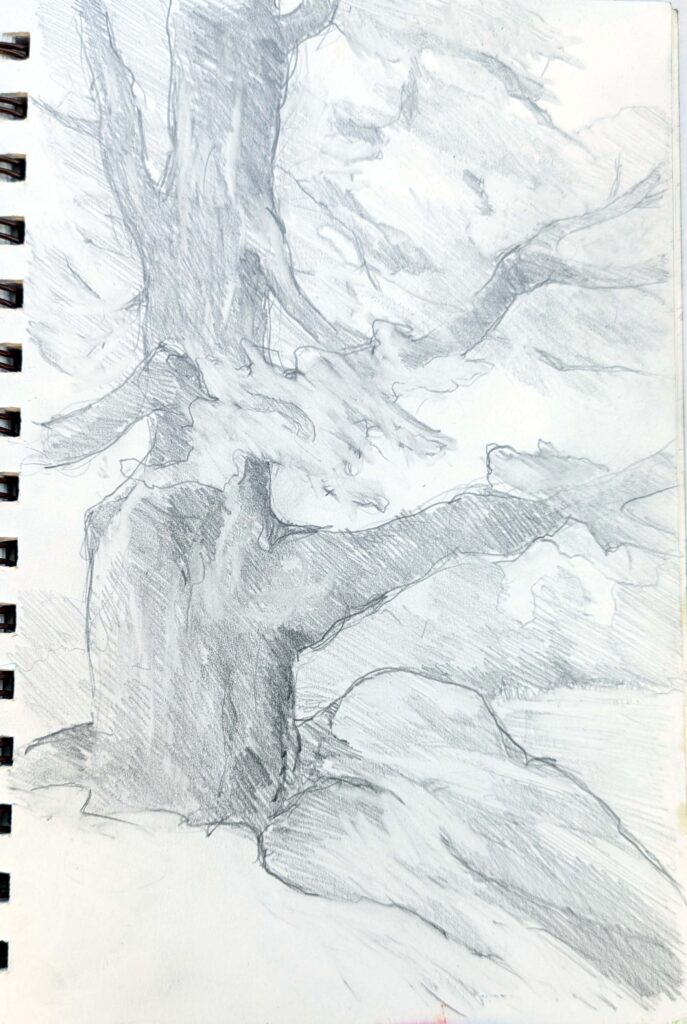
If there’s any subject I can draw mindlessly, it’s trees.

I take notes on my laptop, and it’s a terrible habit. Whether we ever look back at them or not, writing notes results in better retentionMore words are better than fewer, and writing by hand is better than tapping them out on a mechanical device. For one thing, you can’t draw all over your phone screen.

The key lies somewhere in our muscle memory, because drawing instead of writing results in even better memory retention. It doesn’t matter if what we’re drawing is ‘relevant’ or whether the pictures are objectively good.

Doodling and drawing (which I would classify as forms of active daydreaming) are means of bypassing conscious thinking. There are times when I’m drawing and listening and need to think out measurement, anatomy or perspective. However, I never tune out what’s being said.

Doodling is said to be a form of fidgeting. It’s less obnoxious than what I’d do without a sketchbook: whisper to my neighbor, tap my knee, or make faces at the kid in the next row. Even at 66, I’m not very good at sitting still.

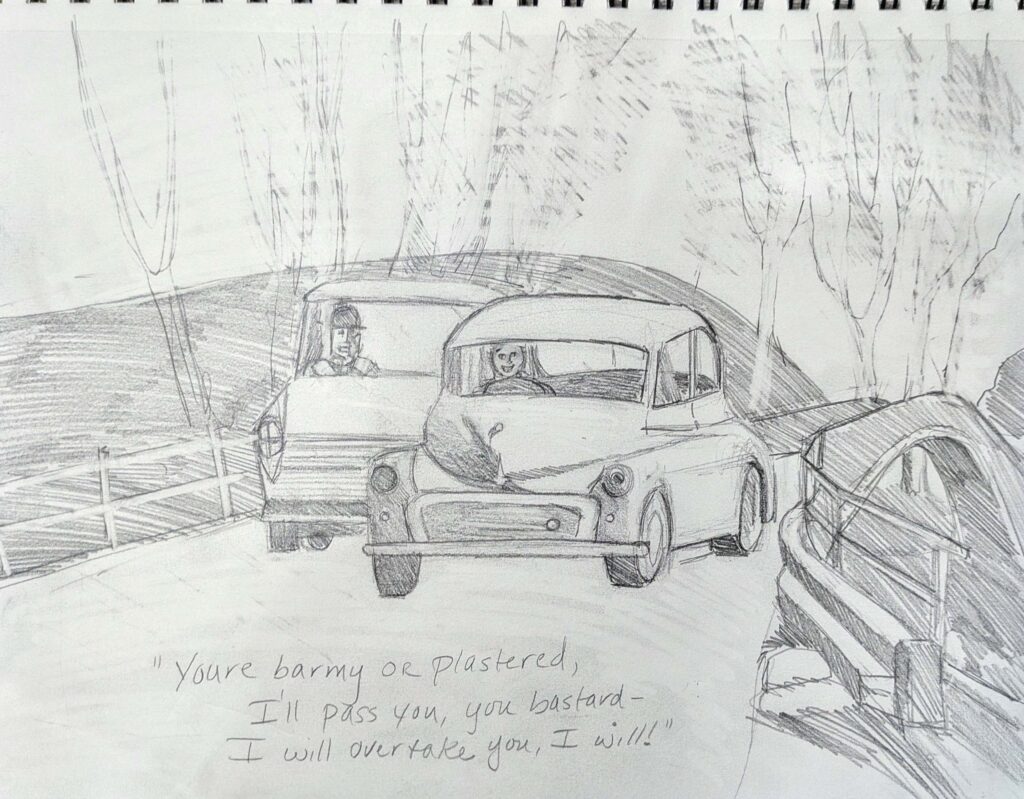
Sometimes it’s nonsense, and sometimes it’s sheer nonsense.

Why did the benefits of doodling go unrecognized for so long?

I had two high school painting students in the same year. M. was a stellar student and his teachers never minded him drawing in class. S. was, sadly, much more like me: a poster child for ADHD. He got in trouble for doodling. He needed the outlet and was perversely denied it because of his attention problems. To his teachers, he seemed inattentive or bored.

Doodling can be seen as a distraction. Teachers, like everyone else, have personal styles, and some prefer tightly-structured classrooms. Educators, so sorely-pressed to meet top-down academic standards, may think doodling undermines those objectives.

If the subject requires careful drafting, yes, I have to pay attention… at least for a while. But I’m still listening.

Embrace the benefits of doodling

My son-in-law recently thanked me for letting him know that “you’re allowed to draw in church as long as you’re an artist.”

I reminded him that an artist is someone who makes art, so by definition every doodler is an artist. Until the recent past, the definition of ‘artist’ or ‘musician’ was much more fluid, because people had to make their own entertainment, diagrams, and decorations. Is it coincidence that, as we’ve stopped drawing and making our own music, our society has become so anxiety-laden?

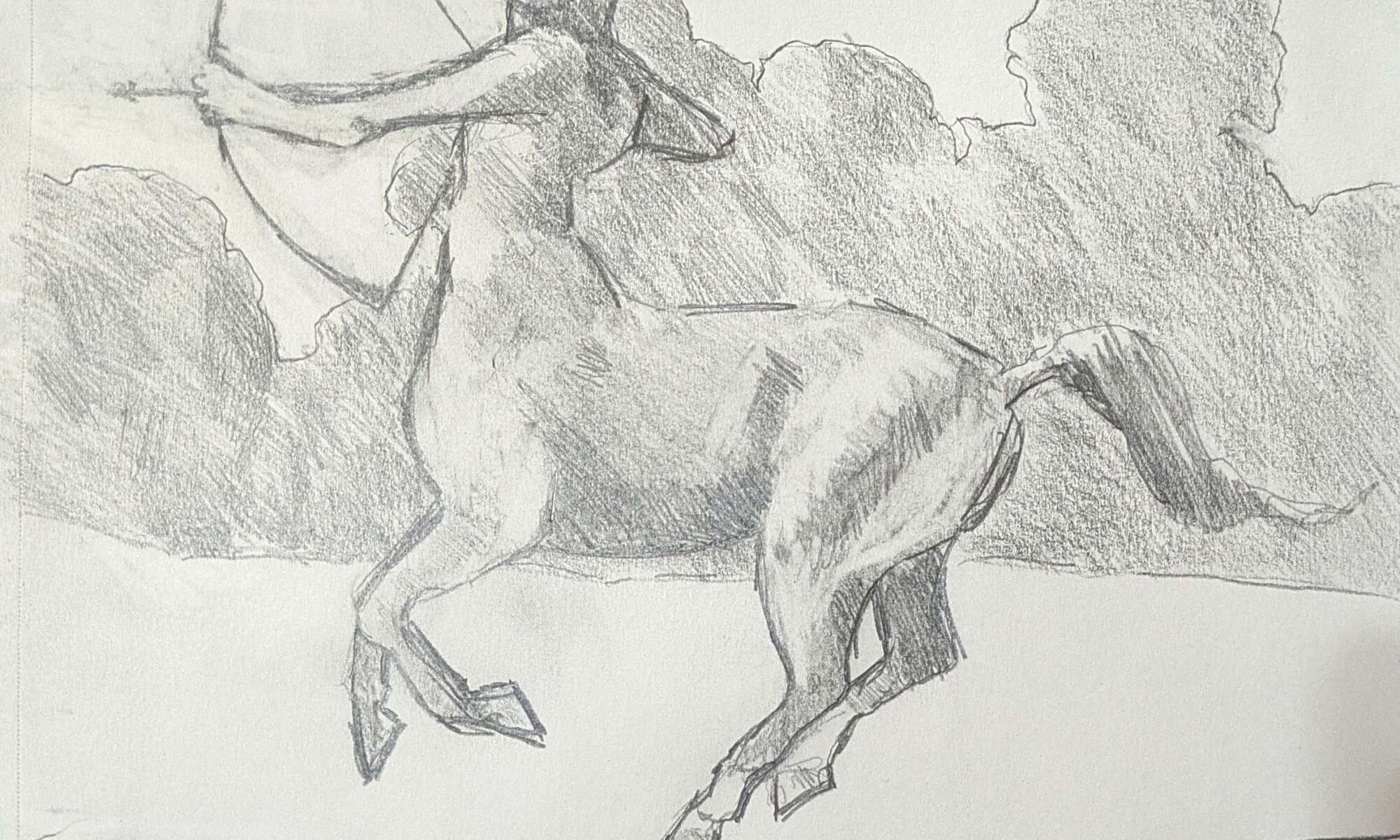
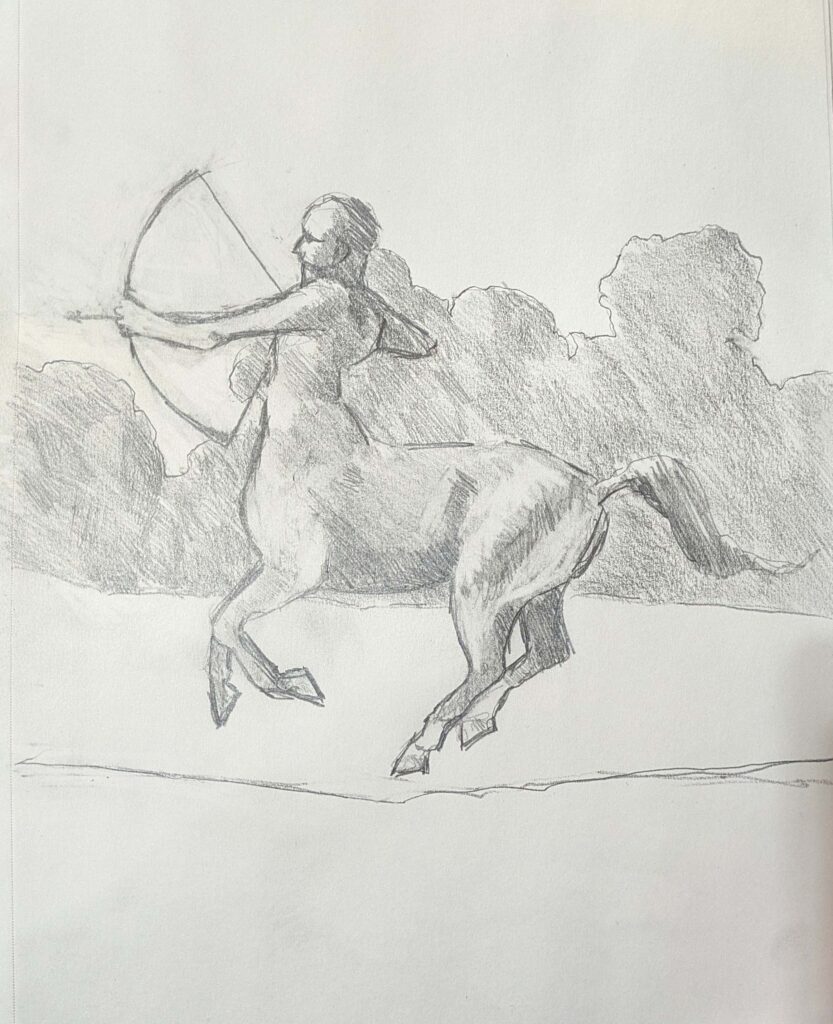
This centaur unexpectedly dropped into a recent drawing class (he was supposed to be a horse), and he still makes me smile.

Registration is now open for workshops in 2026! Reserve your spot:

Can’t commit to a full workshop? Work online at your own pace:
Seven Protocols for Successful Oil Painters