The ‘good enough’ trap

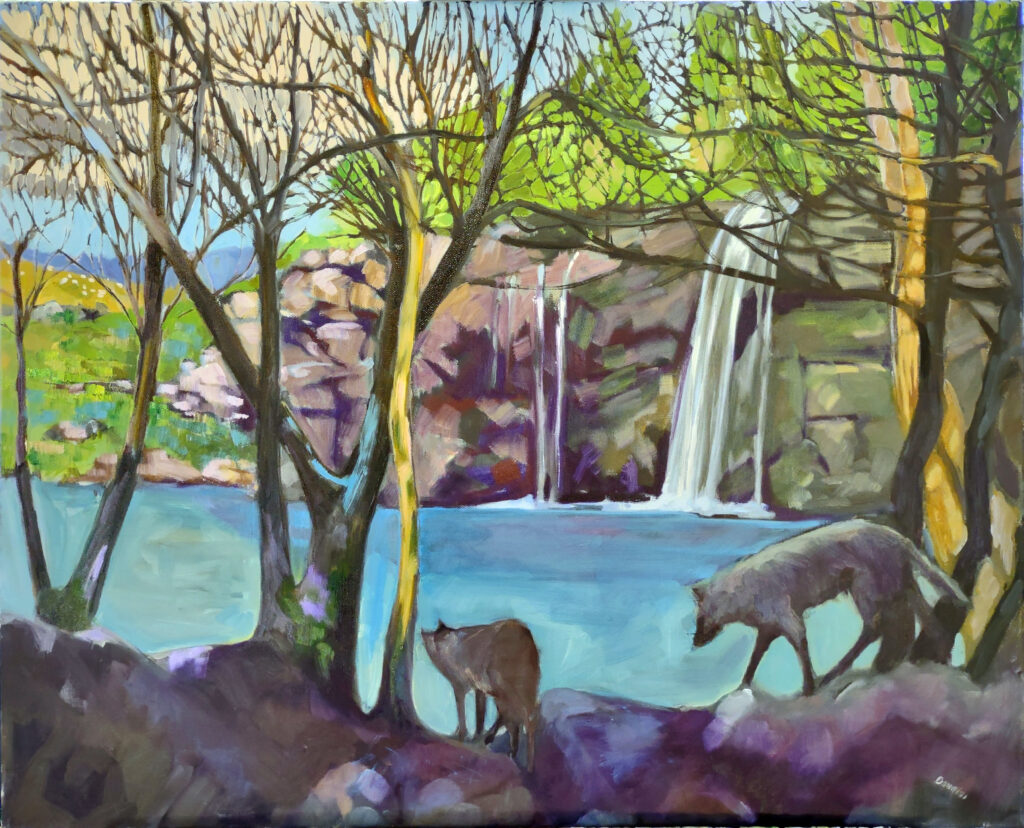
Ravenous Wolves, oil on canvas, 24X30. For more information, click on image.

Art & Fear: Observations on the Perils (and Rewards) of Artmaking is the best book I know about the artist mindset. One of its central ideas is that artists often stop growing because they become attached to outcomes: approval, consistency, or the need to avoid failure. Artists also gravitate toward what gains them positive feedback.

There’s a moment in every painter’s development when things start to work. Drawing is competent, values are accurate, color is no longer embarrassing. People compliment your work and some of it sells. You’ve arrived.
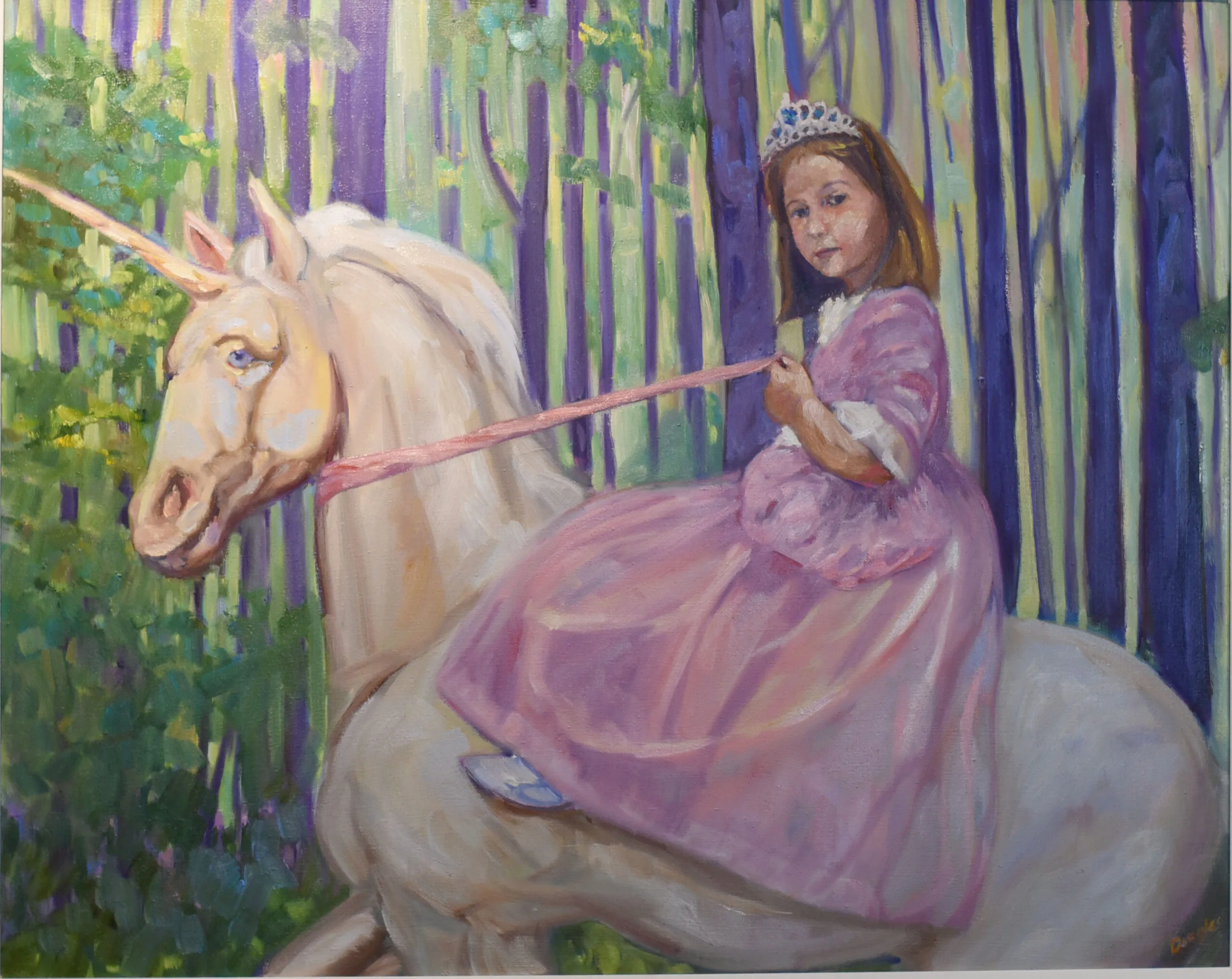
In Control (Grace and her Unicorn), 24X30. For more information, click on image.

Beware, it’s a trap.

It’s comfortable. You know how to solve most problems before they arise. You have a reliable process. Your paintings look like paintings. And because of that, it’s dangerously easy to stop pushing. After all, why fix what ain’t broke?

The problem is that technical proficiency, while necessary, is not the same thing as having an artistic voice. One is about solving visual problems. The other is about saying something that only you can say. They are very different goals.

You can be very good at painting and still produce work that feels generic. You lean into what you know works: safe compositions, familiar color harmonies, predictable brushwork. Over time, your paintings become polished, and interchangeable with so many others.

Hitting this point is an achievement, but it doesn’t mean you’ve arrived. Sadly, some never move beyond it. The way out isn’t more polish—it’s more risk.

If you’re ready to push past technical competence and start developing a stronger, more personal voice, I go much deeper into this in my advanced workshop in July. It’s all about voice, although we will discuss technical issues.
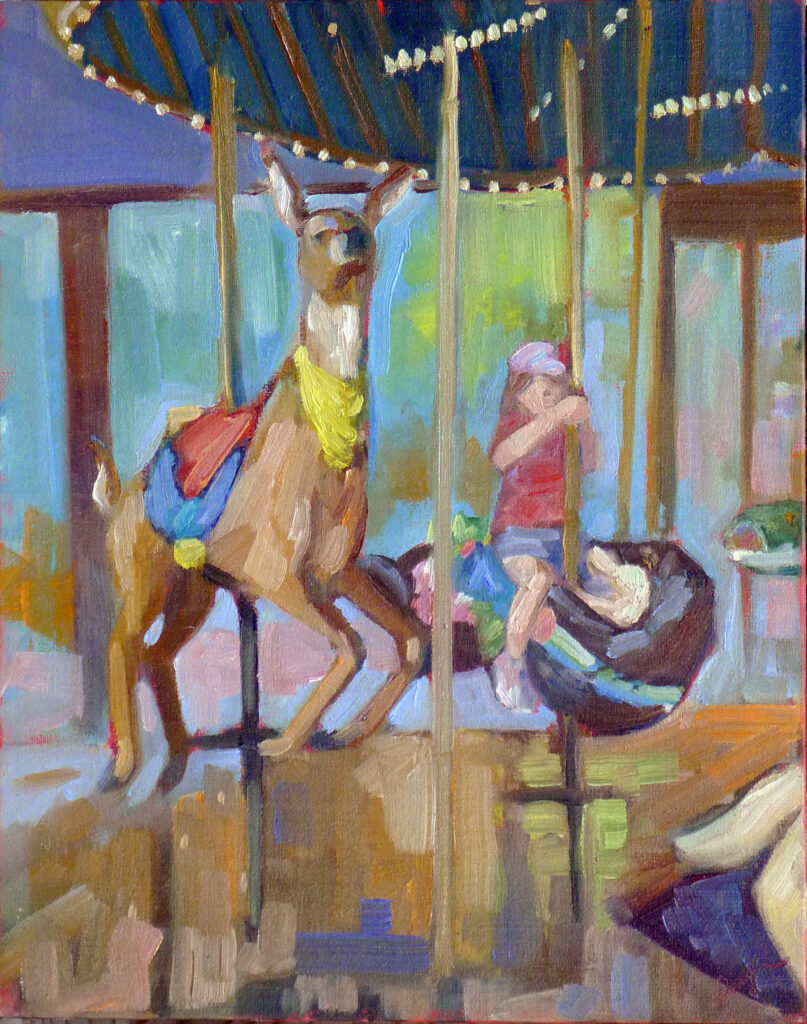
Best Buds, 11X14, oil on canvasboard. For more informatino, click on image.

You do you

An artistic voice means making decisions that aren’t strictly right (but based on a knowledge of the rules, as I mentioned last week). It means aggressively editing reality and choosing colors based on harmony, not because they’re really there. It means moving beyond the safety net and allowing yourself to fail.

I’ve watched many technically-proficient painters refuse this jump. They’ve worked so hard to minimize mistakes. Now I’m suggesting they reintroduce uncertainty. That feels like regression, but it isn’t.

Technique is about control. Voice is about intention. Without control, your intentions can’t be executed. But without intention, control is empty.

You can see this clearly when you compare paintings that are ‘correct’ with those that are compelling. The former check all the boxes—accurate drawing, believable light, competent handling. The latter might bend or even break some of those rules, but they carry conviction. They feel authored.
good enough trap, painting development, artist voice, advanced painting
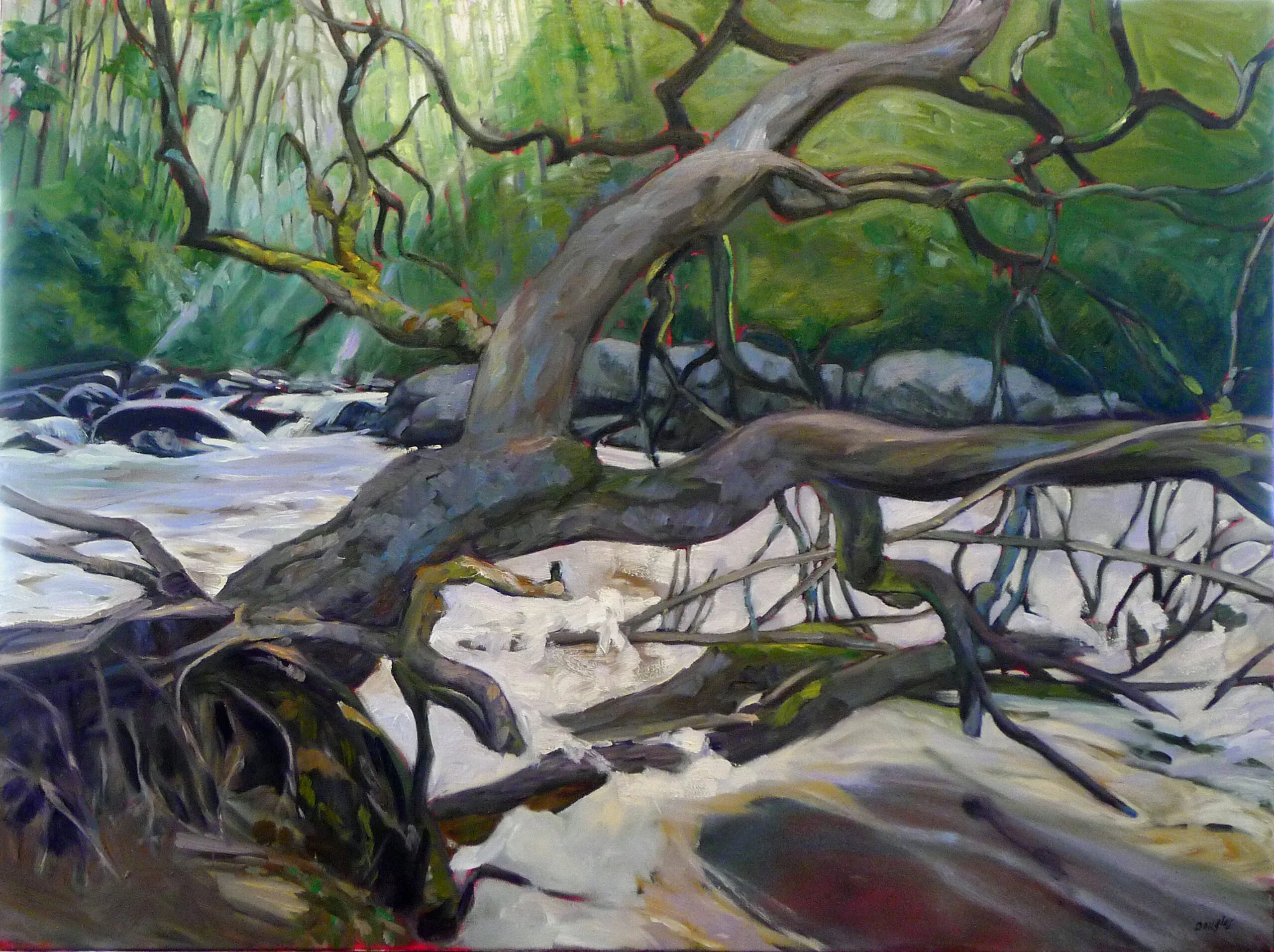
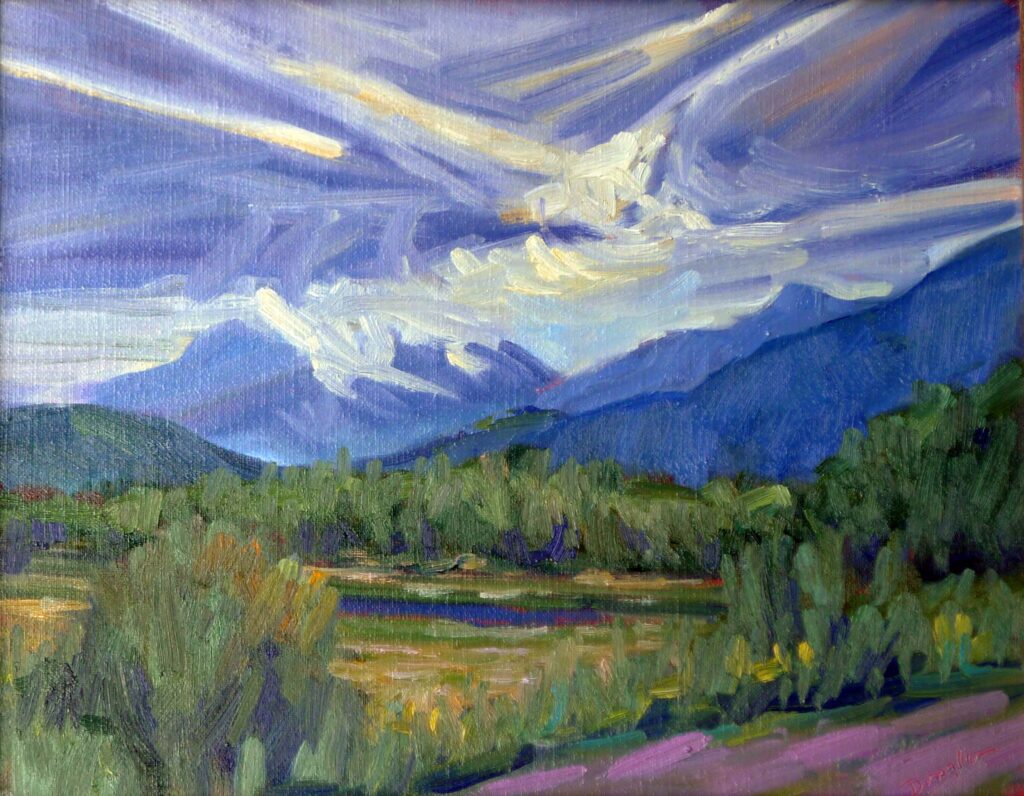
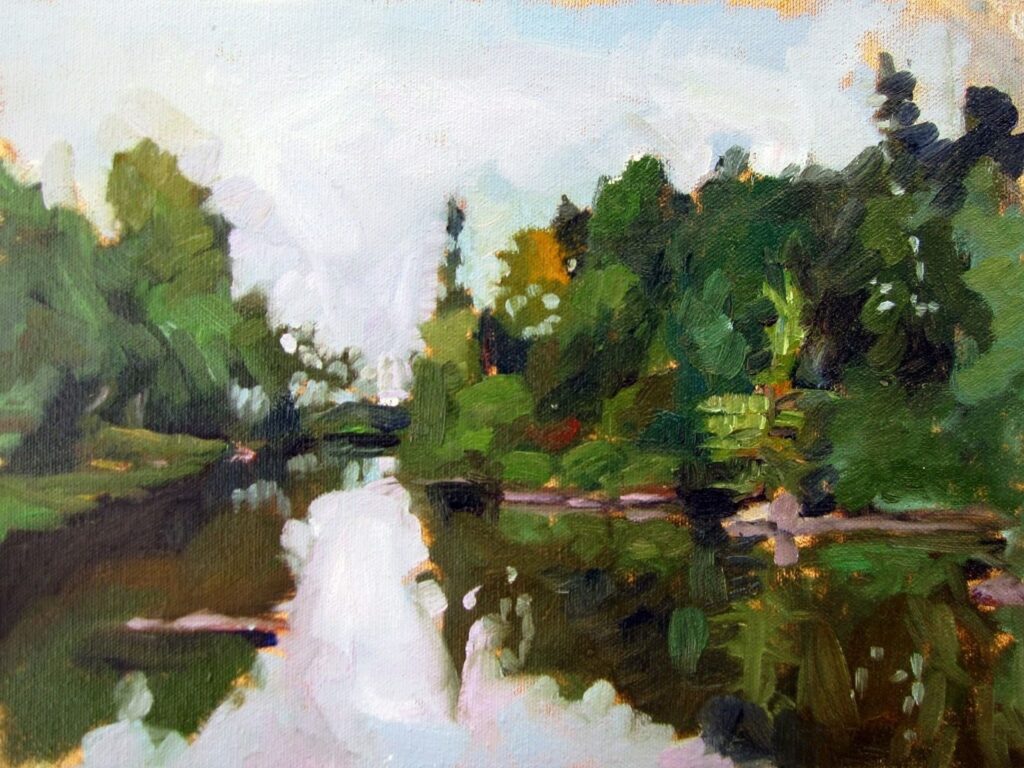
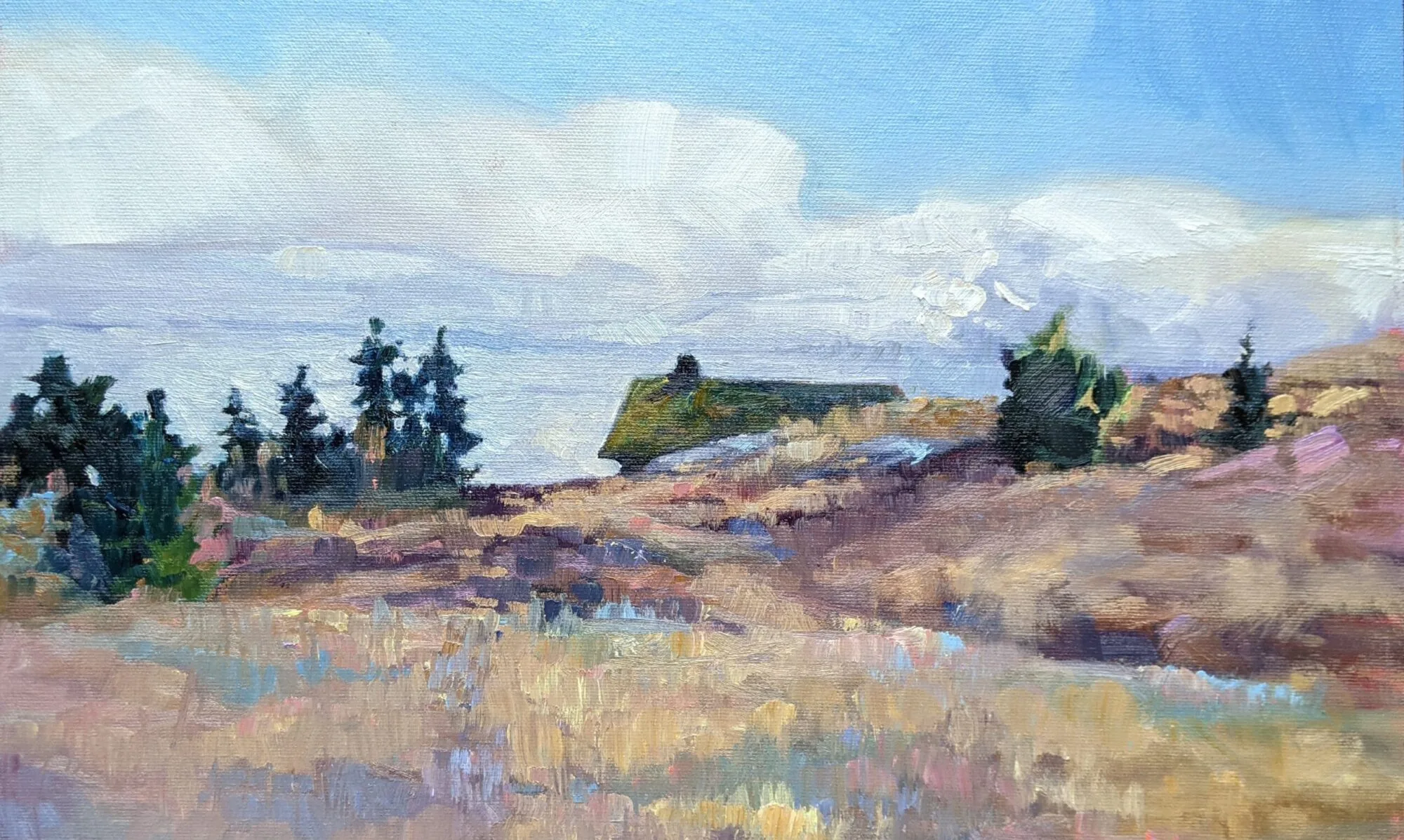
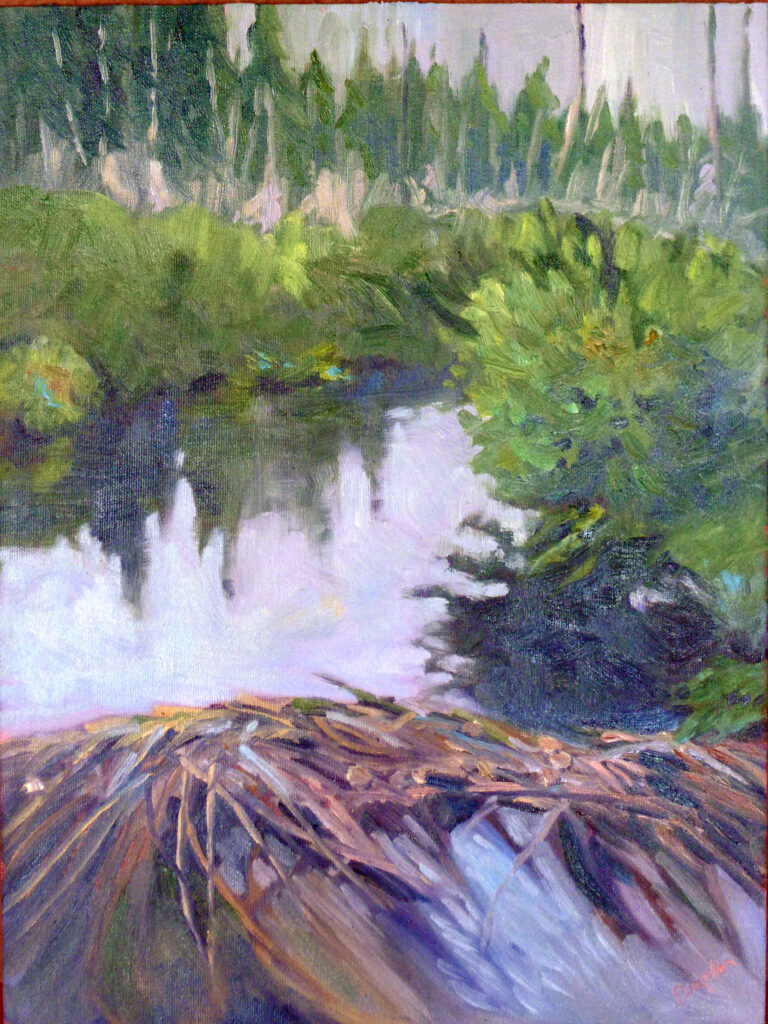
Quebec Brook, oil on archival canvasboard. For more information, click on image.

How to escape the ‘good enough’ trap

Start by noticing where you’re playing it safe. A little voice in your head will be saying, “but this might not work.” Do you avoid subjects because they’re too hard? Default to the same compositions? The same color harmonies? Those patterns are clues that show you where you’ve built comfort, and where you need to push.

Paint something you don’t fully understand. Exaggerate values. Simplify more than feels comfortable, or complicate something you normally simplify. The goal isn’t to make a masterpiece. It’s to stretch your decision-making beyond autopilot.

In the end, good-enough painting isn’t a technical problem. It’s a creative one. And the only way through it is to risk not being good enough—for a while—until you push yourself into greatness.

Registration is now open for workshops in 2026! Reserve your spot:

Can’t commit to a full workshop? Work online at your own pace:
Seven Protocols for Successful Oil Painters

Monday Morning Art School: cast versus form shadows

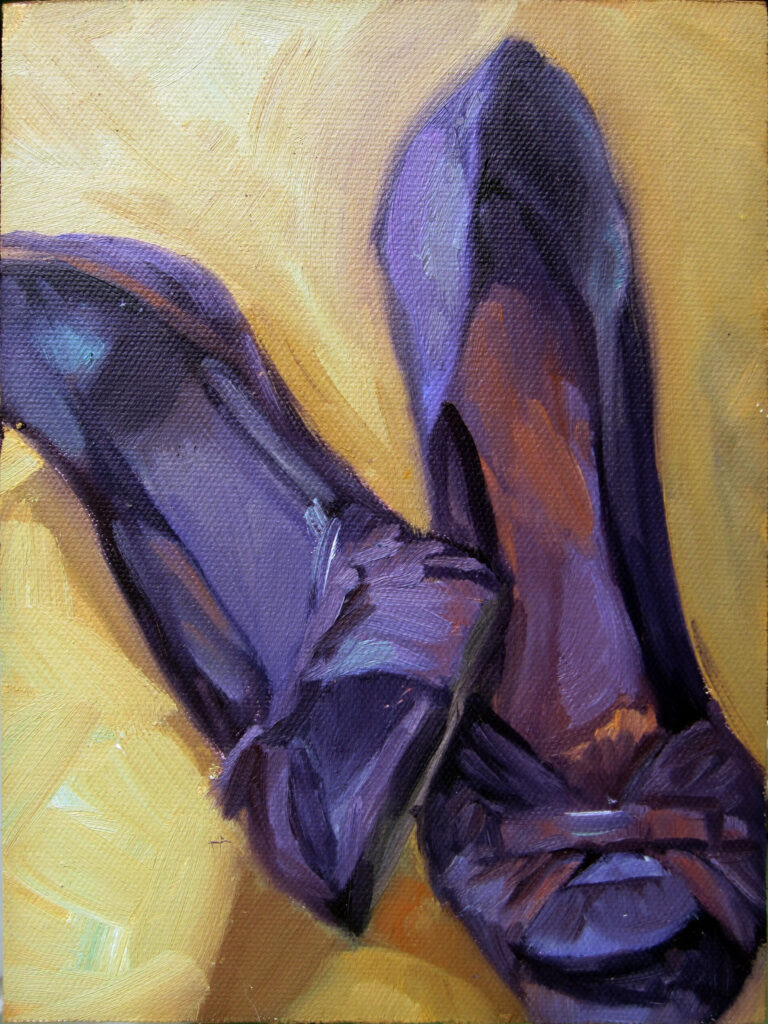
Prom Shoes 2, oil on archival canvasboard, click on image for more information. One of the great benefits of painting still life is that it teaches you to manage form vs. cast shadows.

We tend to lump shadows together into one vague, dark idea, kind of like Halloween. Despite the dangers of noun-thinking in painting I’m going to throw two more labels at you: cast shadows and form shadows. When you understand the difference, your paintings will sit solidly in space.

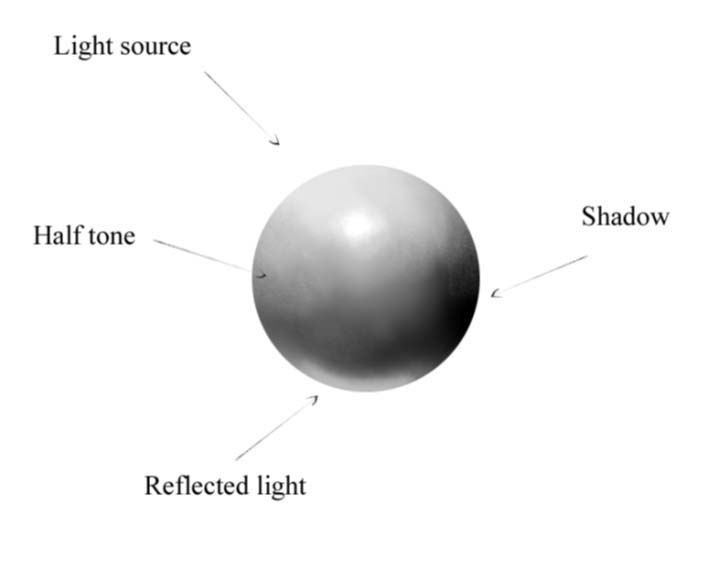
Form shadow on a sphere.

Form shadows belong to the object itself. They describe the turning of a surface away from the light. Above, I’ve illustrated a sphere: one side faces the light, the other gradually rolls into darkness. That transition—from light into halftone into shadow—is a form shadow. It’s soft, gradual, and tied directly to the geometry of the object. Form shadows are what give volume. They’re how a circle becomes a ball.

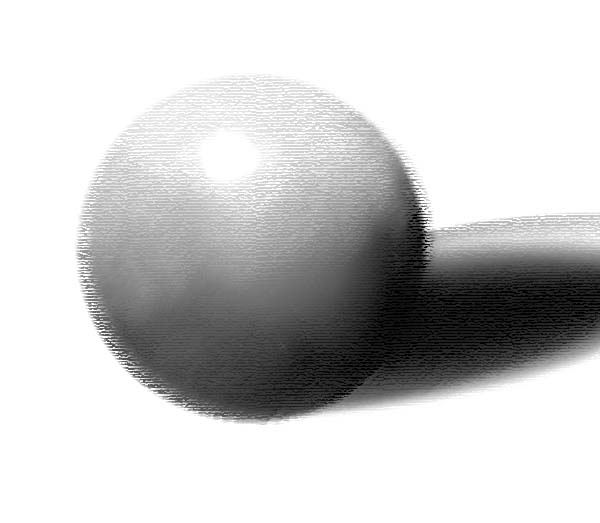
Cast shadows, on the other hand, are thrown by one object onto another surface. A tree casts a shadow on the ground. A nose casts a shadow across a cheek. These shadows are graphic and shape-driven. Their edges depend on the sharpness of the light source. They primarily describe the interruption of light rather than the turning of form.

Cast shadows are opposite the light source.

Not all shadows behave the same way

Form shadows will have softer edges when they are created by gradual changes in light across a curved surface. The more matte the surface, the softer the shadow. Even in strong light, the transitions of a form shadow are rarely abrupt. A hard edge in a form shadow will flatten the object. When we paint with form shadows, we’re doing what’s called ‘modeling’.

Cast shadows, especially close to their source, tend to have firmer edges. They can soften as they move away from the object, and the softer the light source, the softer the shadow. But cast shadows are usually crisp near the object that’s casting them. If you paint cast shadows with mushy edges, your painting loses definition. Everything feels vague and unanchored.

Form shadows are part of the object’s local color family, darker and often cooler. Cast shadows, however, can drop dramatically in value; they represent areas where light is blocked entirely. That said, they’re rarely as dark as beginners make them. There is almost always reflected light bouncing into them, especially outdoors.

Where cast and form shadows meet

There may be almost no differentiation where cast and form shadows meet; they can sometimes run into each other as an unbroken dark. A great example is Johannes Vermeer’s Girl with a Red Hat, which is a delightful exercise in lost and found edges.

Color temperature

Form shadows will generally shift cooler relative to the light, particularly in natural light. Cast shadows also follow this general rule. However, depending on the environment, they can pick up surprising color such as warm, reflected light.

In either case, shadows can have reflected color in them. For example, the insides of daffodils—despite being in shadow—will be a clear, deep yellow. They’re reflecting the yellow back on themselves.

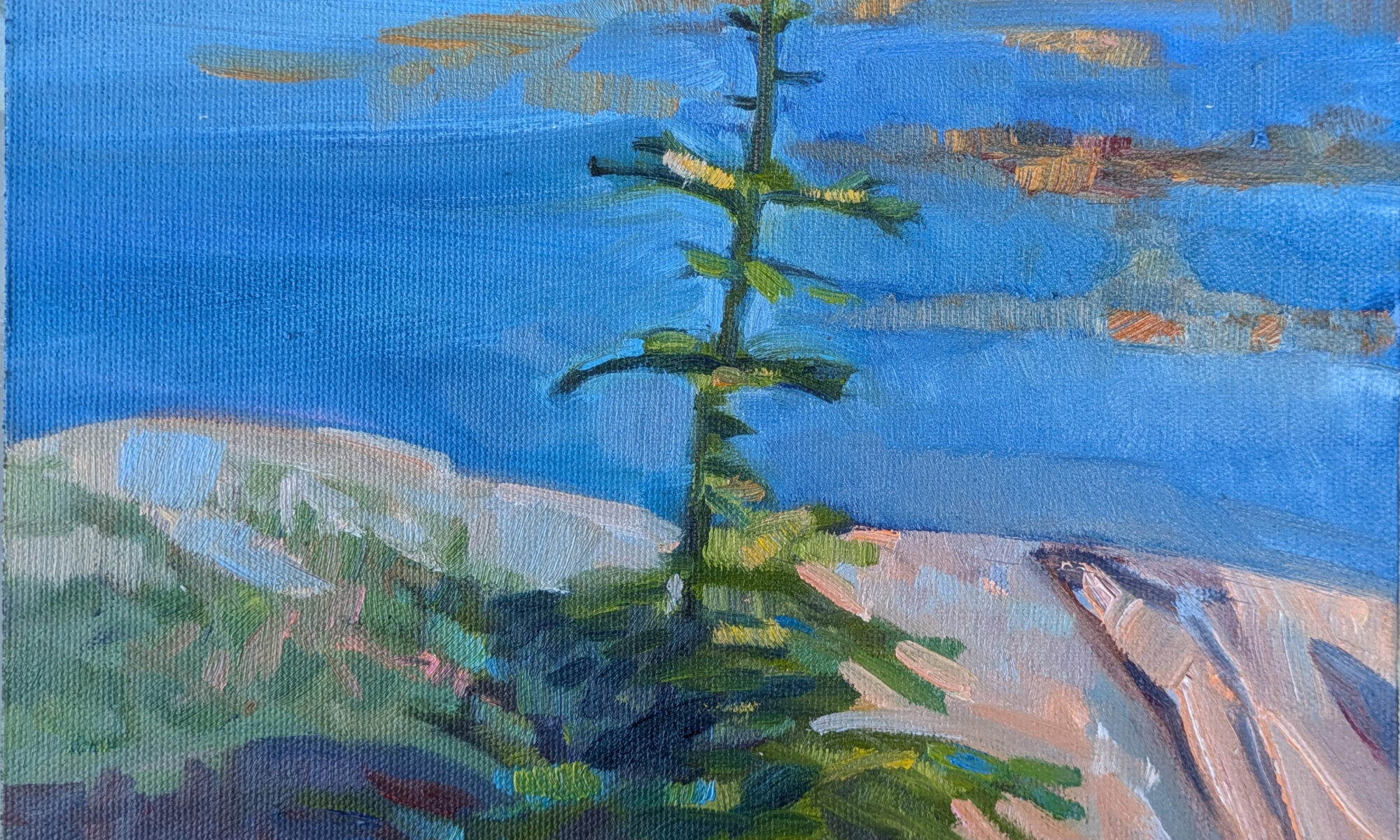
Baby spruce on the shoreline at Corea, 8X10, private collection.

This is a good place to ban black

Shadows may, in certain situations, appear black. If, for design purposes, that works for you, make yourself a chromatic black from ultramarine blue and burnt sienna or a blue-magenta-yellow combination if you’re working in severely-limited palette. Tube black is useful for making greens, for making tones and shades, or for painting your grand piano. But it has no place in your shadows.

But in any case, most shadows are simply more charming if they have color in them, or many colors in them.

Your practical takeaway

One of the great virtues of painting still life is learning to manage cast and form shadows differently. When you see a shadow, ask yourself what it’s doing. Is it describing the turning of a form, or is it being cast onto a surface? That will help you handle its edge crispness, its value and its color.

Registration is now open for workshops in 2026! Reserve your spot:

Can’t commit to a full workshop? Work online at your own pace:
Seven Protocols for Successful Oil Painters

Break painting rules, but only after you learn them

Mather Point at dawn, oil on canvasboard, 9X12. Click on image for more information.

“Years ago, my favorite English teacher said, ‘You can write very well in defiance of the rules, but not in ignorance of them,’” my student Melody told me.

That idea applies to painting too. Every painter wants freedom. Every beginner wants to skip the tedious scaffolding—value studies, color theory, drawing skills—and get straight to expression. But what looks like freedom in a mature painting is usually built on a deep, almost invisible structure.

You can break painting rules. In fact, you should. But you can’t break rules you don’t understand.

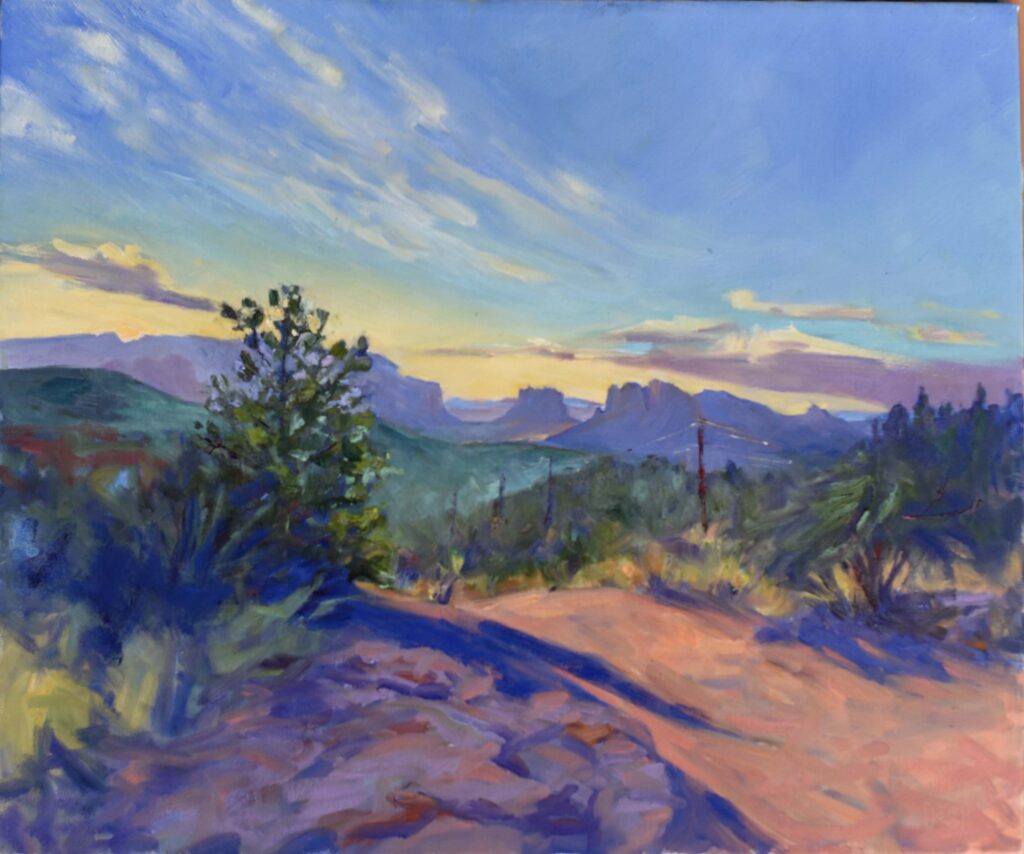
Dawn along Upper Red Rock Loop Road, Sedona, 20X24 oil on canvas. Click on image for more information.

Take value

Beginners routinely ignore value, chasing an amorphous sense of ‘color’ instead. They load their canvases with bright pigments and wonder why their painting looks garish but at the same time flat. It takes time to learn to build a coherent value structure.

Experienced painters distort value relationships intentionally for design purposes, pushing shadows lighter or compressing contrast. They understand what those changes do to form and focus. Value structure isn’t a cage; it’s a tool. Without understanding it, breaking value rules just looks like bad design.

Drawing

All painting is based on an underpinning of drawing, and the looser the drawing the more likely that the artist learned traditional drawing first. “I’m going for a loose style,” is no justification for wobbly perspective or uncertain proportions. Looseness isn’t the absence of structure; it’s the confident simplification of it. A skilled painter can bend perspective, exaggerate gesture, or flatten space because they know exactly what they’re distorting. They’ve internalized drawing rules so thoroughly that they can play with them. Without that foundation, looseness collapses into confusion.

Grand Canyon at sunset, oil on canvasboard, 9X12. Click on image for more information.

Color

Painters who don’t understand temperature, saturation, or simultaneous contrast (where adjacent colors or tones influence our perception) often produce work that feels brassy or muddy. Painters who understand color theory can subvert it, using unexpected color harmonies or clashing complements to create energy and tension. The difference is intention. Ignorance produces accidents—occasionally happy, but more often not. Knowledge produces choices.

Artistic oppression

Duffers think painting rules are a kind of artistic oppression, something imposed by the establishment to stifle creativity. But the more you understand the rules, the less you feel constrained by them.

In reality, painting rules are just observations about what works. They’re distilled experience. If you look at painters whose work feels fresh and original, you’ll find a strong underlying structure. Compositions are clear. Values are organized. Edges are controlled. Even when they appear to be improvising, there’s a logic holding everything together.

If your work feels inconsistent or if your style isn’t landing where you hoped, don’t double down on rule-breaking. Go back and learn what you skipped. Study value. Practice drawing. Mix color with intention. These aren’t detours; they’re the road.

Grand Canyon, late morning, 8X16, oil on archival linenboard. Click on image for more information.

Can I share an absolutely lovely email I got recently?

“I’ve never learned as much from any class or any teacher as I have from working with you. I feel like I’m home— like I have a map finally! I was just floundering before and all the classes in the world before this just felt disjointed from my center— like I was grabbing at shiny balloons and then they would pop in my hands. 

“I finally feel like I’m laying down roots. Thank you kindly, my new friend!!”

Registration is now open for workshops in 2026! Reserve your spot:

Can’t commit to a full workshop? Work online at your own pace:
Seven Protocols for Successful Oil Painters

Why group classes beat private painting lessons

Skylarking, 24X36, oil on canvas, click on image for more information.

I never give private lessons; they’re not good value for money. The hive intelligence in a class beats any painting critique I can come up with on my own. My students are uniformly polite, thoughtful and honest. (If they weren’t, I’d fire them). More importantly, they often have insights that would never occur to me.

When we evaluate student paintings, nobody cares much about experience or polish. Rather, we’re analyzing the decisions that were taken and decisions that will strengthen the work going forward.

Good painting isn’t magic; it’s the result of a series of clear choices. When something isn’t working, it’s because one of those choices needs to be revisited. My job as a teacher is to guide people to see them, and to develop the skills to self-critique. That is what happens in my classes and workshops.

Carol L. Douglas painting workshops 2026
Larky Morning at Rockport Harbor, 11X14, on linen, click on image for more information.

The first big question

Before color, before brushwork, before style, there’s structure. Does a painting hold together as a series of simple, readable shapes?

Beginner paintings often suffer from excessively democratic composition. Everything gets equal attention. Strong paintings have hierarchy. They tell the eye where to go and what matters most. If design isn’t clear, nothing will rescue it.

Value is the backbone of composition and where most paintings fall apart. I am constantly talking about this even when I’m primarily focused on something else. For example, this week I assigned my Monday students to paint a cloud picture with three values, two color temperatures and simplified shapes.

A grey soup of bland midtones may look to the outsider like a vision question, but it’s really the result of a series of bad choices about light sources, the proper balance of paint and medium, noodling after the paint is laid down, etc.

Likewise, if focal points aren’t working, it’s a question of line or contrast in value, hue or chroma. Those are the only tools we have to direct the eye.

Skylarking II, 18×24, oil on linen, click on image for more information.

Confusing style and technique

When I was a student painter, I didn’t know how to marry edges, which meant there was a hard line around everything. One teacher told me, “That’s your style.” But that was wrong; it was technical failure caused by lack of knowledge.

There can be two extremes in edges: everything is outlined and equally sharp or everything is blended into too much softness. Diagnosing that is the easy part; working out how to fix it is harder.

It all works together

Paintings are built in a series of discrete steps, but they aren’t a checklist. You can’t fix design (check), then values (check), then color harmony (check), then edges (check). All these issues are interconnected. In class, we focus on them one subject at a time, but in practice we’re making choices about them simultaneously.

It’s not easy to see these things clearly in your own work. What you intended makes it harder to see what’s actually there. My friend Brad Marshall recently said, “We base success and failure on what we were attempting to do, not the results others see. Paintings are never 100% successful, and how close we come to ‘getting it right’ is not the same as what the viewer experiences.”

Three Graces, oil on archival canvasboard, click on image for more information.

The importance of painting critique

Once you’ve gotten past the first technical steps of painting, learning to analyze choices is the most important part of classes and workshops. A workshop based on structured painting critique helps the student understand how paintings work. That enables them to make better decisions, faster.

If you’ve ever felt stuck, or unsure why a painting isn’t coming together, you’re not alone. And you don’t have to guess your way through it.

Registration is now open for workshops in 2026! Reserve your spot:

Can’t commit to a full workshop? Work online at your own pace:
Seven Protocols for Successful Oil Painters

Monday Morning Art School: what is hardest to paint?

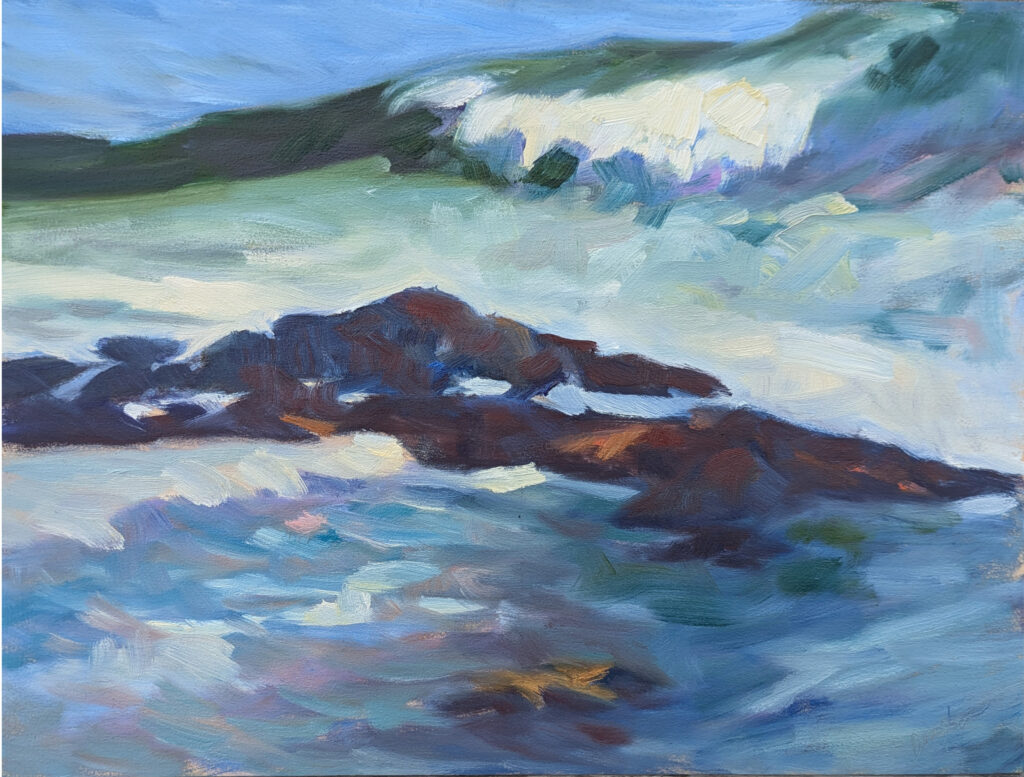
Surf’s Up is 12X16, on a prepared birch surface. Click on image for more details.

(The answer, of course, is ‘yes.’)                                         

Students ask me how to paint water, portraits, clouds, trees, rocks, animals and many other things. That’s thinking in nouns, not visually. Getting hung up on a subject (for example, “I can’t paint people”) is just psyching yourself out.

Every subject is equally difficult, or easy. While there are things to learn about the properties of these subjects, the overall process is universal:

  1. Observe carefully through drawing;
  2. Create a compositionally-strong value sketch;
  3. Organize color harmony;
  4. Commit to canvas or paper in the most-economical brushwork possible.
High surf, 12X16, oil on prepared Baltic birch surface. Click on image for more information.

Strong paintings are built on a foundation of strong shapes. The world doesn’t compose for you. Even the desert offers abundant visual imagery rather than austere elegance. Your job is to edit that down.

Think in terms of masses, not objects

Children paint in those aforementioned nouns—car, sun, tree, house, rainbow. When we paint what we know instead of what we see, we’re falling back into that childhood habit. But painting works better when you think in shapes and values.

When you shift from object-thinking to shape-thinking, drawing gets easier and composition starts to organize itself. “Every good picture is fundamentally an arrangement of three or four large masses – a design of masses or large blocks of color – light, dark and half dark or half light,” wrote John F. Carlson. If those shapes are clear and well-arranged, the painting will hold together, even without detail.

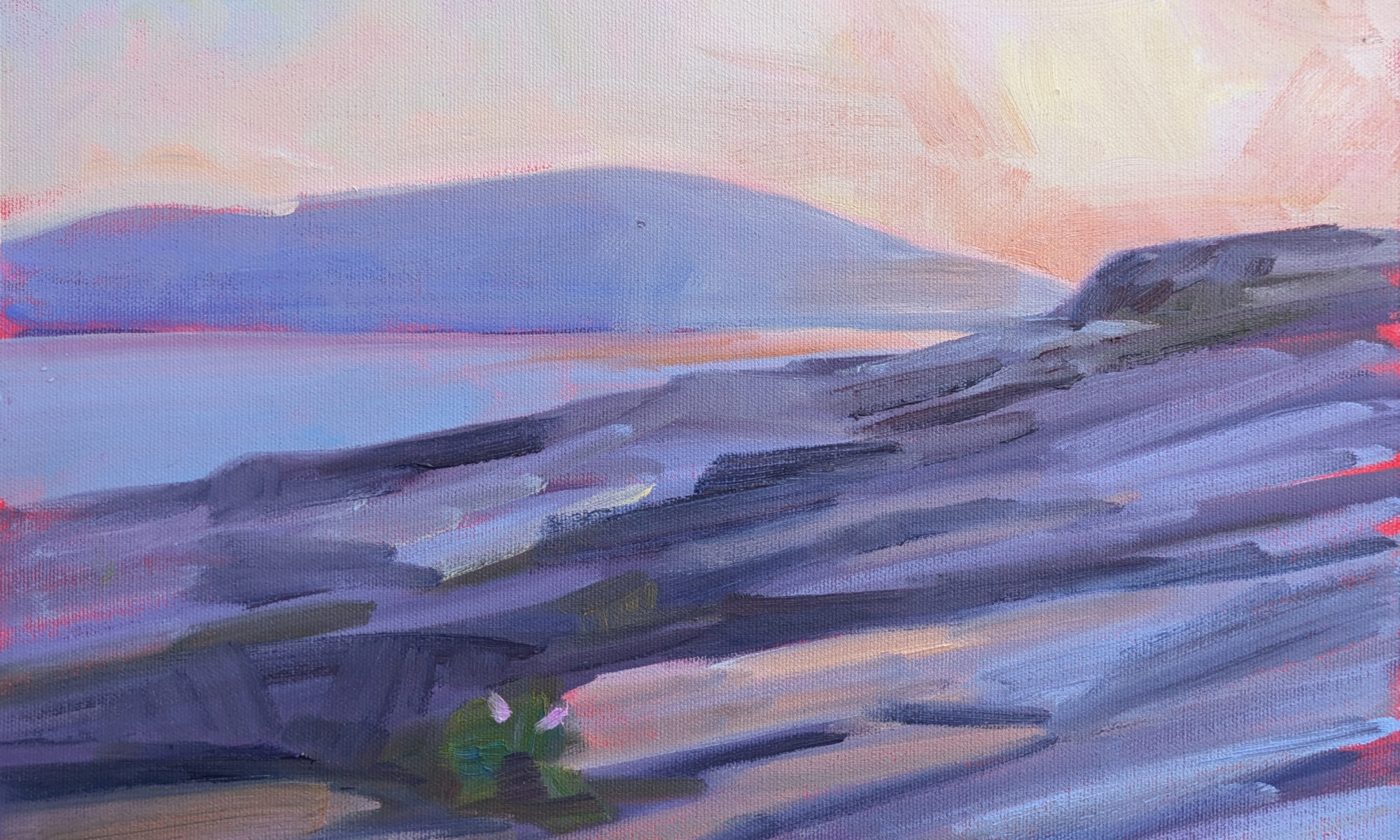
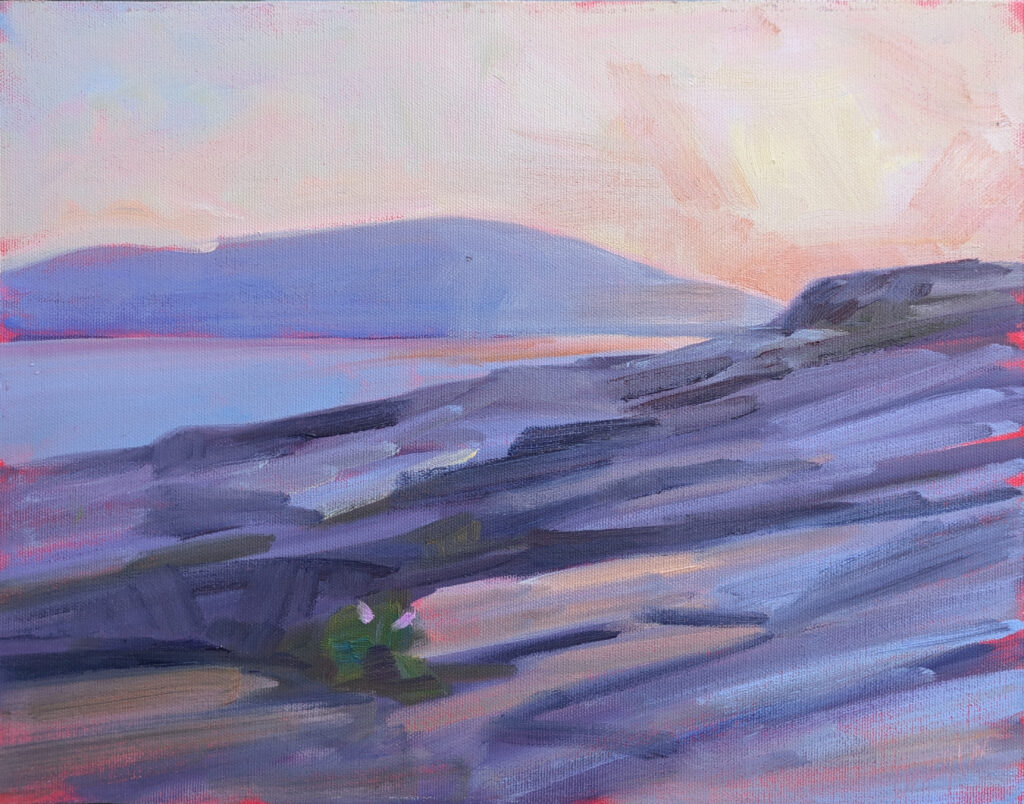
Sunset over Cadillac Mountain, oil on archival canvasboard. Click on image for more information.

Painting by design

A perfectly copied scene will still feel flat or confusing if the shapes aren’t well-organized. Feel free to move things around. Adjust the size of a shadow. Merge shapes. Eliminate distracting elements. Strengthen a silhouette.

Ask yourself:

  • Does this shape help or hinder the design?
  • Is there a clearer, more attractive way to group these elements?
  • Where do I want the viewer to look first? Second? Third? How am I encouraging that?

Simplification is about emphasis. When everything is important, nothing is.

Use edges and contrast to reinforce your shapes

Once you’ve established strong shapes, protect them. Avoid breaking them apart with unnecessary edges or fussy detail. Keep your major masses intact. You can always add complexity later, but it should sit on top of a clear structure.

Focal point is established by line and by contrast in value, hue and chroma. No intricate detail can draw the viewer’s eye as effectively as a sharp edge between two radically-different color masses.

Blueberry barrens, Clary Hill, oil on canvas, 24X36. Click on image for more information.

The value of value sketches

Practice doing quick, simplified sketches that map out value relationships. That means no color, no details, and just a few value levels. This trains your eye to see what matters.

Ultimately, painting is about seeing those relationships, and once you can do that, you can paint any subject with equal confidence.

These are skills I stress in my workshops (below) and online classes. Turning a complex subject into a paintable scene is not a talent questions. It’s a decision-making process you can learn, practice and refine.

Registration is now open for workshops in 2026! Reserve your spot:

Can’t commit to a full workshop? Work online at your own pace:

Seven Protocols for Successful Oil Painters

Where does fear of failure come from?

Sea Fog over Castine, Carol L. Douglas, 9X12, click on image for more details.

Fear of failure doesn’t come out of nowhere. It’s learned, layered and reinforced over time until it feels like part of our personalities. It isn’t and you don’t have to suffer from it.

At its core, fear of failure is about protection. One of the most important functions of the human mind is keeping us safe. However, when that extends to psychological safety, it can become counterproductive. Yes, we’d all like to be spared embarrassment, wasted effort or feeling like failures. Sadly, testing our limits in painting has the potential to trigger all these responses.

Some of us were praised for being good at art as children. Others, equally powerfully, were told we weren’t. We learned that art had a verdict attached to it—good (talented) or bad (you’d best take math classes instead). That kind of binary thinking helps nobody. Internalized, it means that every effort at art (or math) becomes a test of identity rather than an adventure.

Life doubles down on this. We try to avoid being wrong, because being wrong costs us something. We become careful. Then cautious. Then hesitant. That conditioning is always running in the background.

Deadwood, oil on linen, 30X40, click on image for more details.

Uncertainty intolerance

Uncertainty intolerance is our tendency to feel stressed, anxious or threatened when we don’t know what’s going to happen next. If you think you don’t do this, let me cancel your next flight and see how you react.

Often, things that don’t go according to plan are opportunities, not problems, but we still don’t like the feeling. Our brains crave predictability. Uncertainty is uncomfortable. It slows us down, urges us to control everything. Painting is full of moments of uncertainty, which is why we try to fix every passage before moving on. Overworking is more about resolving uncertainty than about seeking perfection.

Comparison

We’re constantly looking at others’ work online or in museums and galleries. It’s finished and polished. My messy middle can’t compare to someone else’s finished painting, so it’s easy to feel like I’m failing. The impulse is to force our paintings to a high level of finish way too early.

Fog over Whiteface Mountain, 11X14, click on image for more details.

Attachment

People don’t set out to get attached to outcomes—it happens gradually, almost invisibly, as meaning gets layered onto the whatever we’re doing. In painting, attachment forms when the work stops being a process and the final result becomes paramount.

When you spend hours on a piece, you naturally care about it and want it to turn out well. That’s good. But then a small, pernicious shift in mindset can happen: if this painting is good, I’m good, and if not, then maybe I’m not.

Fear of failure may not be a sign that you care too much; it can mean that you’ve tied your self-worth too tightly to the outcome.

Painters who move forward haven’t eliminated fear. They’ve changed their relationship to it. They expect things to go wrong. They build that into their process. A bad day of painting isn’t a verdict; it’s a data point.

Avalanche Country, 9X12, oil on archival canvasboard, click on image for more details.

You can’t fail if you aren’t trying something difficult and new. If you start seeing failure as a positive, you can ride with it. Painting will no longer be a referendum on your ability.

It helps when you’re working in a framework where failure is part of the process. A supportive learning space, by which I mean good classes and workshops, can make all the difference. If you want that kind of structure, feedback, and encouragement, consider joining one of my workshops, below. Learn to trust your decisions, simplify your process, and, most importantly, keep moving forward.

Registration is now open for workshops in 2026! Reserve your spot:

Can’t commit to a full workshop? Work online at your own pace:

Seven Protocols for Successful Oil Painters

The persistent myth of talent

Best Buds, 11X14, oil on canvasboard, click on image for details.

Talent is the most persistent myth in painting. Every time I write that, someone tells me I’m wrong, that there are talented people and untalented people, and they can tell the difference. I’ve been teaching painting for decades and I can’t tell the difference, so how can they?

Who started the myth of talent?

The myth of talent is part history, part culture and part pop psychology.

Historically, painters were seen as skilled laborers, closer to carpenters than visionaries. But starting with the Renaissance and exploding with the Enlightenment, art became an intellectual discipline. Artists were recast as geniuses, people touched by divine spark. That shift elevated the role of art in culture, but it also planted the idea that great ability comes from an innate, almost mystical source rather than disciplined training.

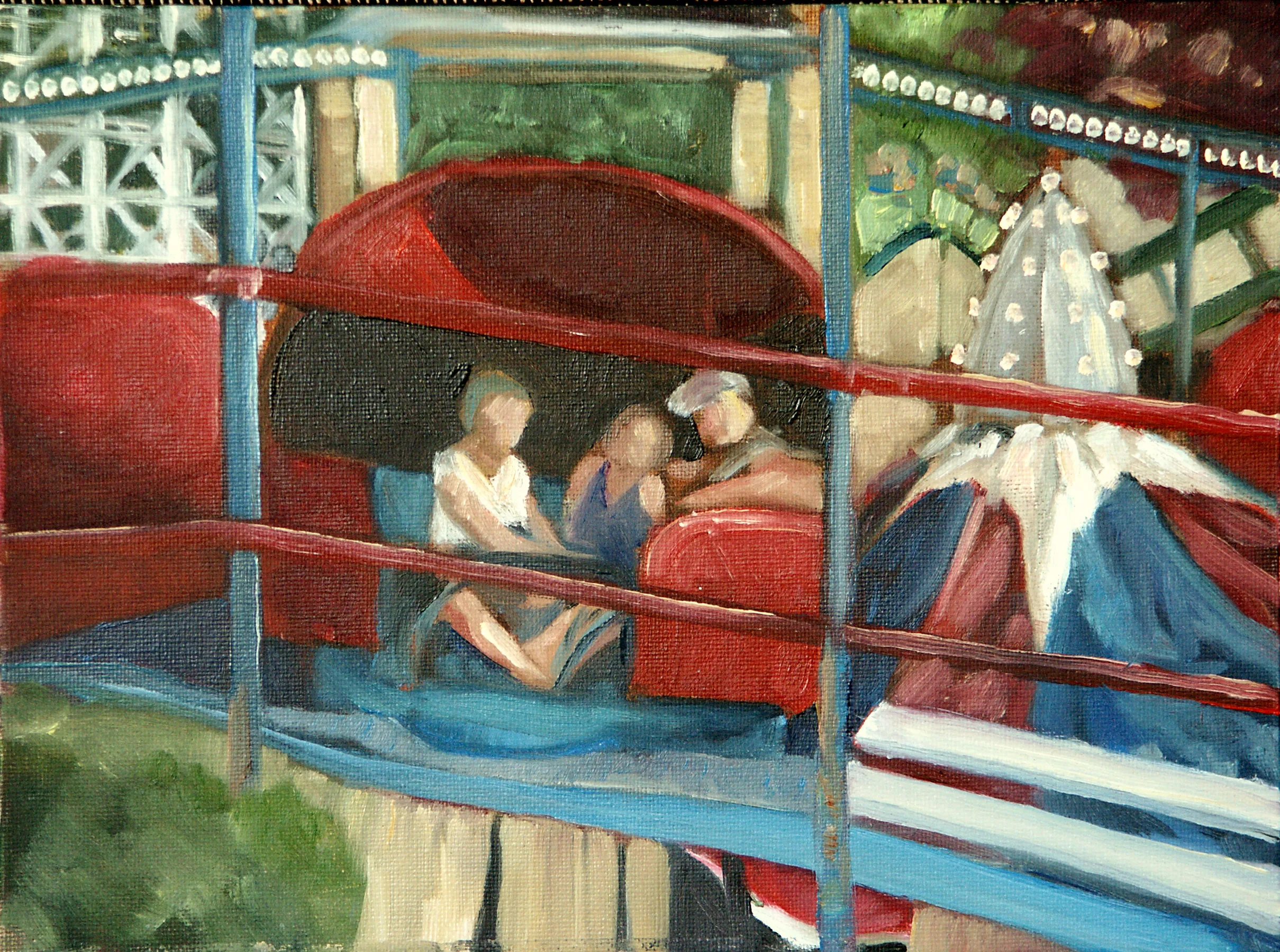
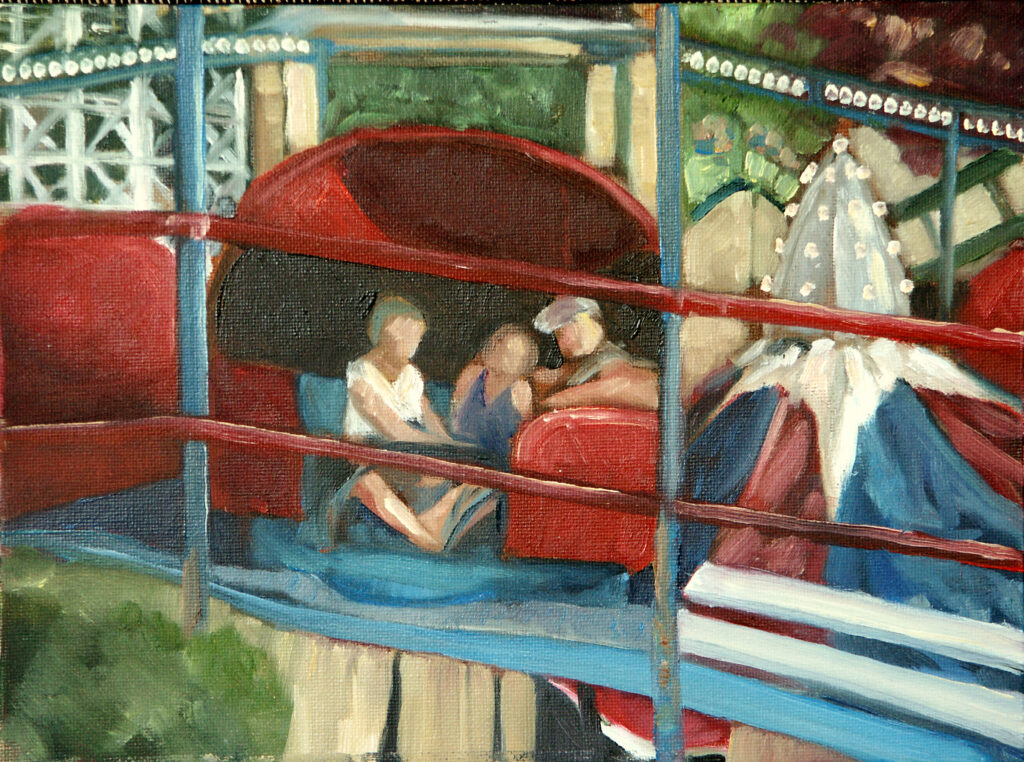
Tilt-A-Whirl, oil on archival canvasboard, click on image for details.

With the rise of Romanticism and artists like William Blake and Eugène Delacroix, artists began to be seen as emotional, inspired or even tortured. As absurd as it seems in light of the Romantic painters’ careful training, creativity became linked with sudden bursts of insight, not steady work. Talent became seen as rebellion against discipline.

Pop psychology reinforces this. Although research in learning and performance shows that high-level skill is the result of deliberate practice, we still prefer the talent narrative and like to bad-mouth discipline. The ‘tortured genius’ story is more dramatic.

Progress

When someone is early in their art education, improvement is visible and clumsy. Later, their improvement becomes subtle and refined. By the time we notice an artist, they often appear fully formed. We miss the long, uneven path that got them there. Talent becomes a retroactive explanation.

For painters specifically, progress is often invisible. We don’t publish our failed sketches and paintings along the way. All you see on Instagram are our successes. It looks effortless.

In Control (Grace and her Unicorn), 24X30, click on image for details.

A useful excuse

The myth of talent is a polite fiction to explain why someone else is better, or why we’re not as good as we should be. I’d rather believe my friend is more talented than me than that he works harder than I do. It lets me off the hook. If talent is fixed, then effort is optional.

Inspiration may start a painting (and I have a hundred good ideas every week), but practice finishes it. Painters sometimes wait to ‘feel like it’ before they begin. That, to me, is magical thinking. It’s wanting a guarantee that what we try will work. But that’s backwards, and it makes for overly-cautious paintings. The more hours I spend in my studio, the more likely I am to succeed. The confidence to make a huge leap comes from surviving my inevitable disasters.

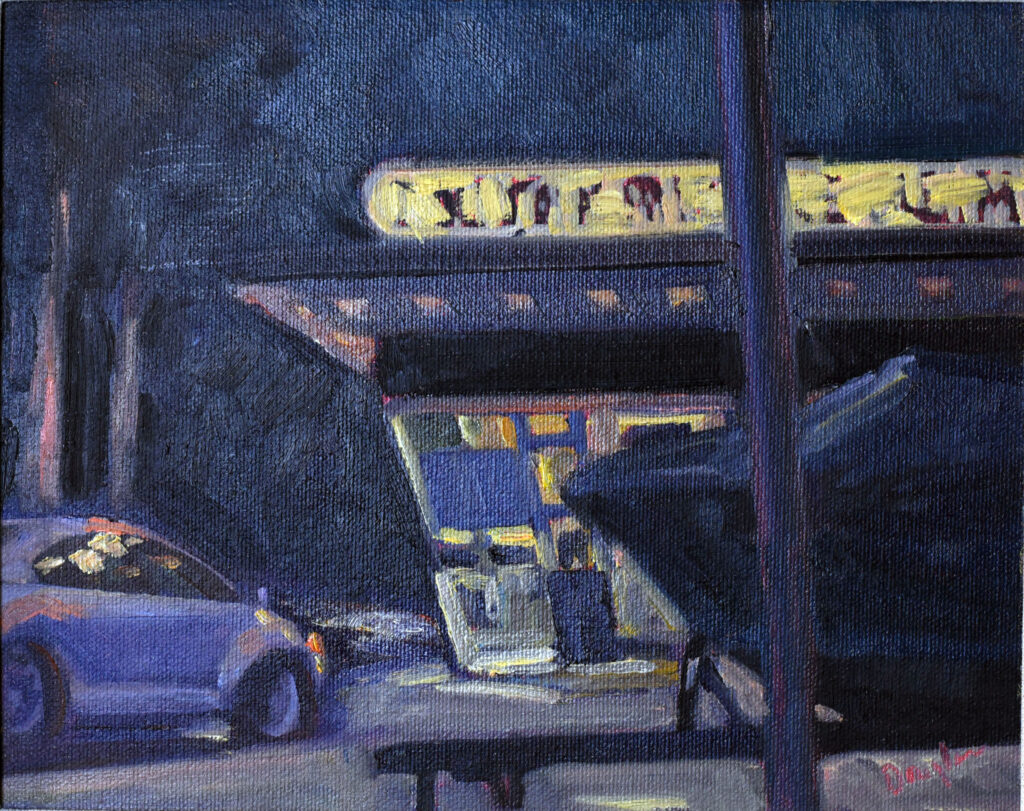
Ice Cream Stand, oil on archival canvasboard, click on image for details.

Psyching ourselves out

If you believe your ability is fixed, then every bad painting feels like a verdict. But when you understand that skill is built, mistakes become bumps in the road, or even better, the roadmap. Instead of telling yourself, “I’m no good” you start asking, “where am I going?”

Inspiration is a highly-unreliable lover. It shows up when it feels like it. Practice is there for you every day. It doesn’t require you to feel or be anything but true to yourself.

The myth of talent is comforting, but it’s also extremely limiting. It suggests a ceiling through which you can’t break. Practice blows that idea wide open. It replaces mystery with method, anxiety with action.

Registration is now open for workshops in 2026! Reserve your spot:

Can’t commit to a full workshop? Work online at your own pace:

Seven Protocols for Successful Oil Painters

Monday Morning Art School: why most beginner paintings fail

Inlet, 9X12, oil on archival canvasboard, click on image for details.

Most beginner paintings don’t fail because of lack of hard work. In fact, the problem is often the opposite: too much effort in the wrong places. Careful rendering and earnest attention can’t fix a fundamentally-flawed painting.

Detail is seductive

I’ve only known one painter who could start from a single detail and work outward; even he doesn’t always succeed. Most artists end up floundering when they do that. Of course, when you’re new to painting, detail is seductive; it’s just so much fun to focus on the apple rather than the branch. But when you do that, you’re overwhelmingly likely to put that apple in the wrong spot or use the wrong values. And then, you’ll either get to repaint the whole thing or admit defeat.

There have been times when I’ve been tempted to ignore this rule, for example when storm clouds are rolling in. I have learned from sad experience that this never works.

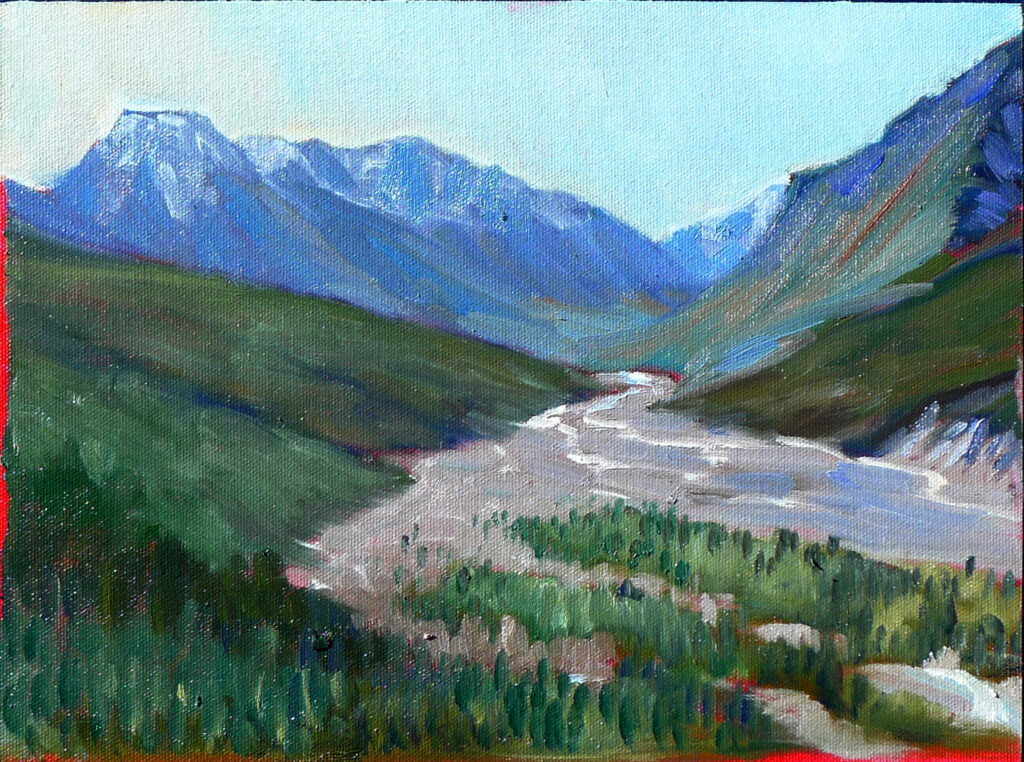
Eastern Manitoba River, 6X8, oil on archival canvasboard, click on image for details.

Good paintings are built from big shapes, not tiny parts. If the underlying structure isn’t solid, no amount of detail will fix it. And painting any one area to completion without considering its relationship to the whole is a recipe for failure.

Learn the art of aggressive simplification. Use a big brush and don’t pick up its smaller cousin until all your shapes are blocked in. Take your glasses off while looking at your subject, or, if you’re cursed with perfect vision, squint.

Value is king

Color has three facets:

  • Value—how light or dark something is;
  • Hue—the position on the color wheel (i.e., red, blue, yellow, etc.);
  • Chroma—the intensity of the color.
Île d’Orléans waterfront farm, 8X10, oil on archival canvasboard, click on image for details.

You can play fast and loose with hue, but if you don’t have a good value structure, your painting will collapse. Value is the bones of all 2-D art.  

Beginner paintings often suffer from compressing the value range into a narrow band of midtones. The result is flat, muddy, and lifeless. That’s first an observational question, but it’s also an issue of design. The painter hasn’t considered whether there is an interesting pattern of lights and darks.

Start with a sketch limited to just four values. Make sure it’s attractive and interesting before you move on to paint. Then, establish your value range early and stick to it. Work the whole canvas at once, comparing constantly. Ask yourself: should this shape be lighter or darker than the one next to it? That simple question can transform your painting.

Step back frequently. If you can’t do that, use your cellphone to take a picture of your work in progress; that can sometimes give you the necessary distance. If you’re really in doubt, convert that photo to greyscale and see what it tells you.

Grand Canyon at sunset, oil on canvasboard, 9X12, click on image for more details.

You can’t fix a weak painting by adding more paint

No amount of detail or bravura brushwork can salvage a weak composition. Instead, stop and figure out what’s wrong. If you can train yourself to see big shapes first and organize your values with intention, your paintings will immediately improve.

Registration is now open for workshops in 2026! Reserve your spot:

Can’t commit to a full workshop? Work online at your own pace:
Seven Protocols for Successful Oil Painters

How to buy a painting you’ll still find interesting in 20 years

Main Street, Owl’s Head, oil on archival canvasboard. Click on image for more details.

We artists and gallerists work hard to ensure buying a painting is easy. Yes, we’ll take your credit card; yes, we’ll pack and ship it.

Living with the painting you bought is the real test. I have a houseful of paintings myself; some have endured the test of time, others I hardly notice, and still others have quietly left the room. Even with a strong background in art I still make mistakes.

Sentiment plays a big role in art purchases

Sentiment is not a weakness. My house is full of portraits of people and dogs, and I wouldn’t have it any other way. A painting that’s tied to a memory, place or moment has staying power. That said, sentiment can work for you or against you.

At its best, sentiment deepens your relationship with a painting. Maybe you bought it on a trip or it reminds you of a landscape you love. Or, you met the artist and you clicked. Those layers don’t disappear. Twenty years on, they are a marker of who you were and what mattered to you at that time. That kind of resonance is impossible to fake.

Skylarking, 24X36, oil on canvas. Click on image for more details.

Sentiment can cloud your judgment

A common mistake is buying something solely because of what it represents, rather than its formal qualities. A great example is the multitude of bad paintings of lighthouses in this world. The problem isn’t the subject; it’s that they’re so emotionally-resonant and easy to sell that artists of all abilities paint them.

If the composition is weak or the values are muddy, you will find yourself disengaging over time. The emotional hook got you in the door, but it didn’t keep you there.

Paintings must stand on their own, with strong design, clear value structure and a sense of intention. They also need to speak to you personally. When those two things align, you get something rare: a painting that is both visually compelling and emotionally durable.

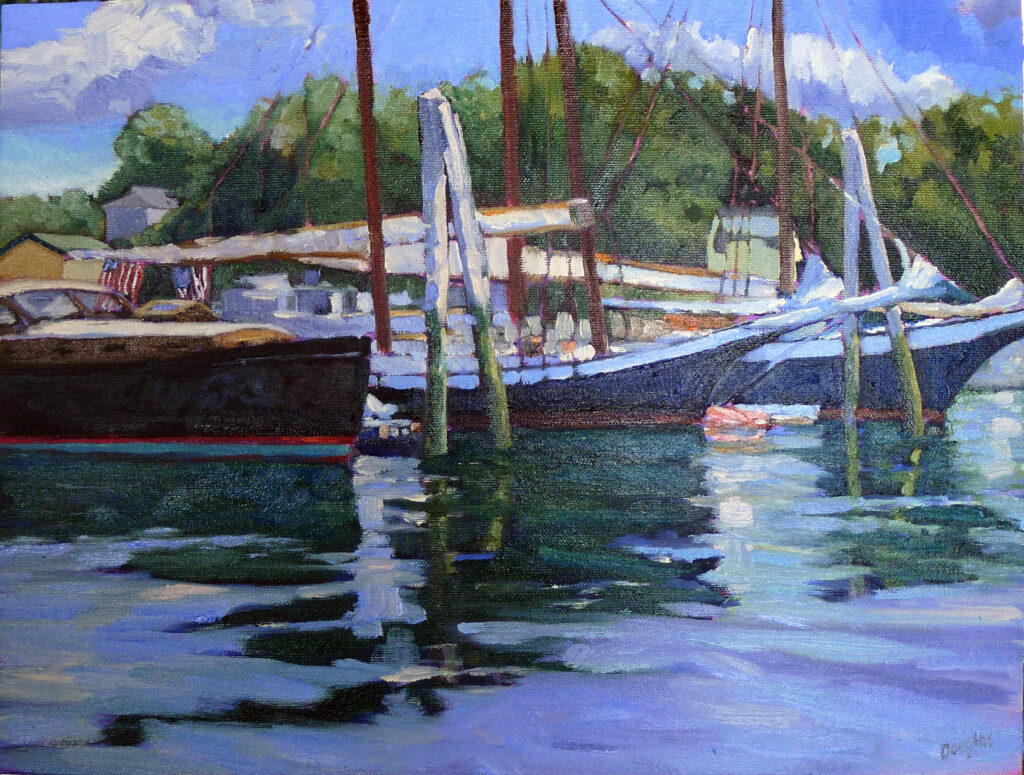
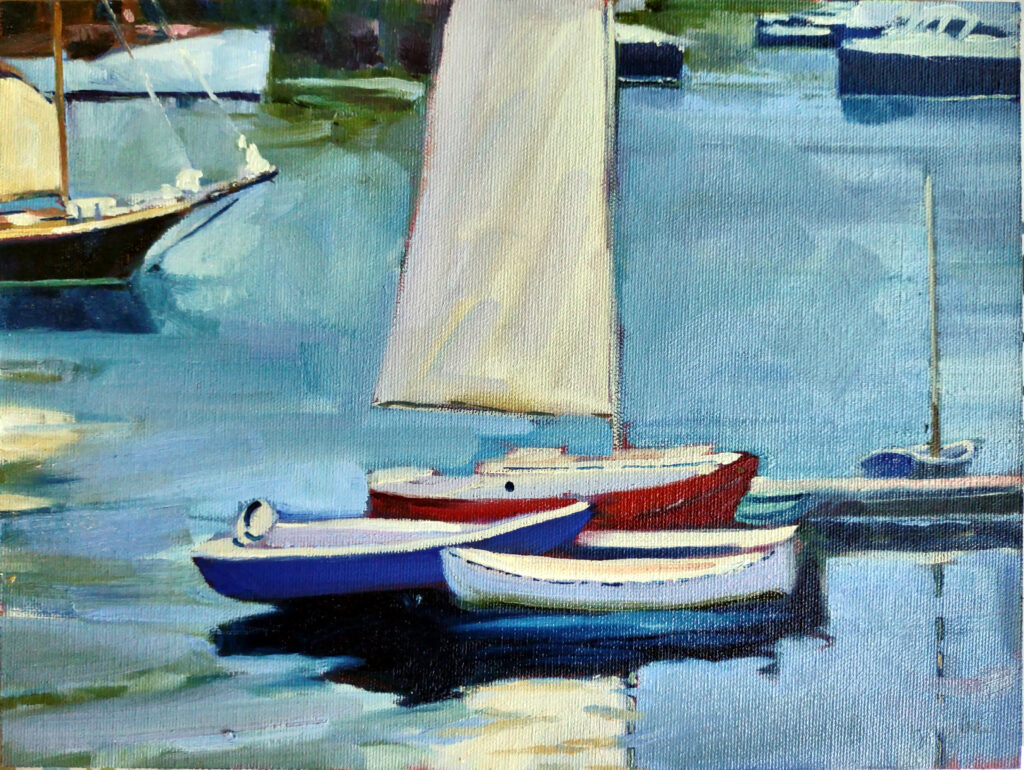
Drying Sails, 9X12, oil on canvasboard. Click on image for more details.

Paintings that last

Paintings based on trends tend to fade fast. Trends may carry a piece for a moment but can’t sustain long-term interest. Instead, look for work that has depth, subtle shifts in color and a sense of intelligent decision-making. These hold your attention because they don’t give everything away at once.

Strong paintings are built on good bones. Even if you don’t know the formal language of composition, you can probably educate yourself on the subject (starting with this blog). Does your eye move through the painting, or does it get stuck? Does it feel balanced without being static? Are there areas of definition and areas that aren’t spelled out? A well-designed painting will continue to engage you because your eye can travel it in different ways over time.

Paintings with clear, intentional light patterns read well from across the room but also reward closer inspection. That keeps them alive in your space.

The paintings that last are the ones that leave room for you. They suggest rather than insist. They allow your mood, your memory and your changing perspective to interact with them. In twenty years, you will not be the same person you are today. Your painting should be able to meet you there.

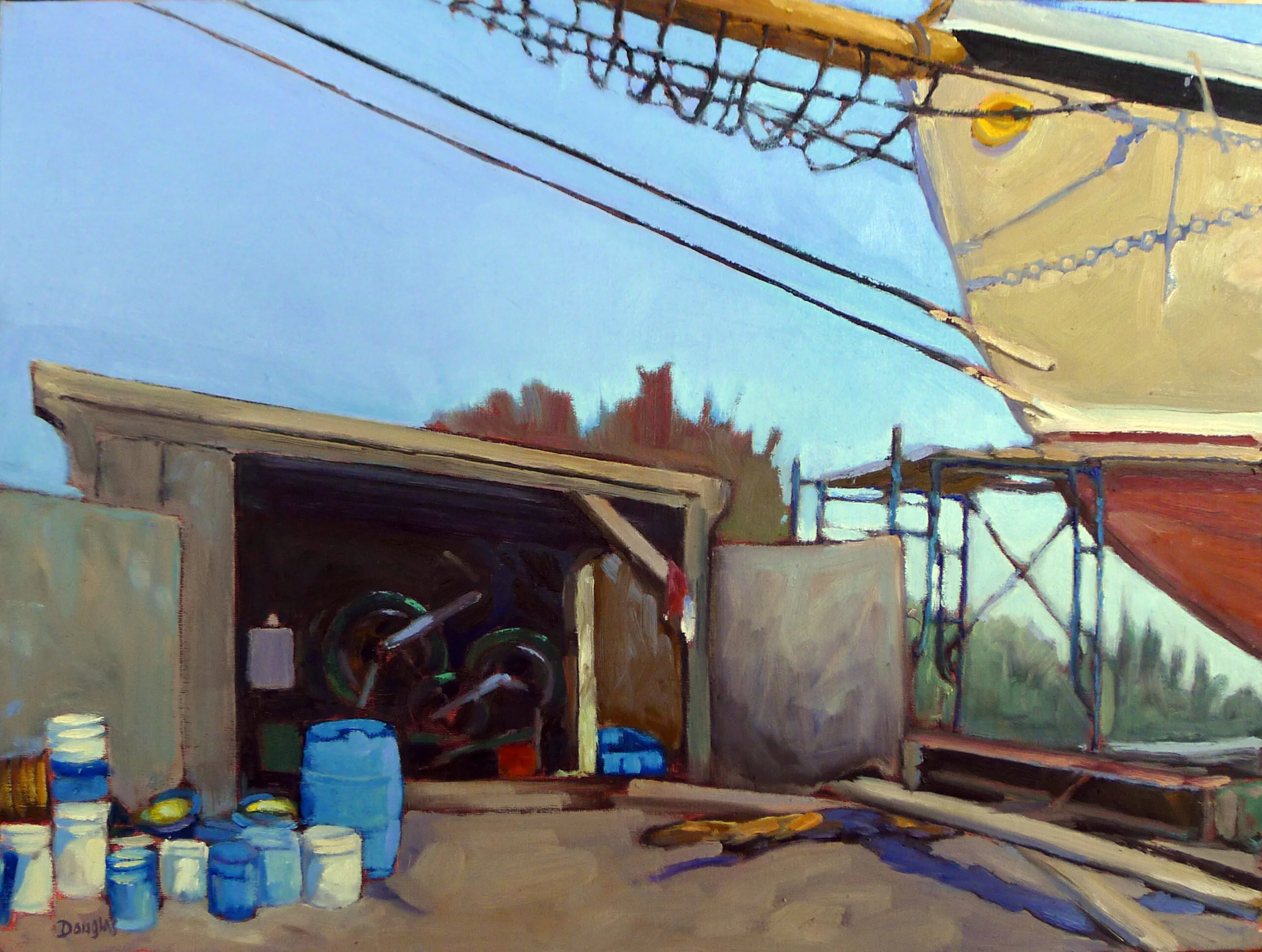
American Eagle in Drydock, 12X16, click on image for more details.

Finally, if you can (and it’s not always possible), walk away and come back. A painting that still pulls you in after a day or a week is worth serious consideration. The initial spark matters, but so does the slow burn.

Hey, painters!

If you’re ready to sharpen your eye and start seeing your paintings with more clarity, I invite you to join my Fresh Eyes Critique Zoom class on Tuesday evenings, 6-9 PM on April 14, 21 and 28. After that, you’re on your own for a few weeks, because I’ll be in the Cotswolds.

Registration is now open for workshops in 2026! Reserve your spot:

Can’t commit to a full workshop? Work online at your own pace:

Seven Protocols for Successful Oil Painters

What good paintings have in common (it’s not talent)

Early Spring on Beech Hill, oil on canvasboard, Carol L. Douglas, private collection

People talk to you when you’re painting outdoors. I don’t mind, but sometimes people say strange things.

“I used to paint, but I had to get a real job.”

“That looks like so much fun!” (Especially comforting when you’re struggling.)

“You’re so lucky to have talent!”

Talent is a comforting lie. If someone else has talent and we don’t, we’re off the hook. But after decades of teaching and painting, I know that good paintings have very little to do with innate talent and everything to do with habits, decisions, and ways of seeing.

Early Spring, Beech Hill
Early Spring, Beech Hill, 8X10, oil on canvasboard, private collection.

Clarity of intent

Good paintings start with knowing what we want to say. That isn’t ideological; last week I was painting solely about the feathery tops of leafless trees.  Good paintings have subject and direction. They’re edited to support that.

They also share strong design. This is the quiet architecture underneath the painting. Beginners chase detail, but experienced painters simplify. They block in big shapes first, establish a clear value pattern, and make sure the composition reads from across the room. If it doesn’t work at ten feet, it ain’t gonna work at any distance.

Pine Tree State, 6X8, oil on archival canvasboard, click on image for details.

Value and edges

Good paintings have a clear range from dark to light, with intentional value groupings. The artist is organizing from the sketch forward. Whether or not a painting is detailed has nothing to do with this; all paintings start with value structure.

Good painters understand that lines direct the viewer’s eye. The lost-and-found edge is often more compelling than literal lines. Good paintings are soft where they should recede and sharp where they need attention.

Backing off the throttle

Restraint might be the hardest thing to learn. Good paintings don’t spell out everything. They leave space for the viewer to participate. At some point, the painter has to stop futzing and trust his or her own work. This is where experience—not talent—comes into play.

Good paintings are internally consistent. That doesn’t mean they’re boring, and there’s certainly room for surprises. But brushwork, color harmony, composition and the degree of finish all go together. There’s a unity of vision that makes the piece feel resolved. It doesn’t look like a collection of parts; it looks like a whole.

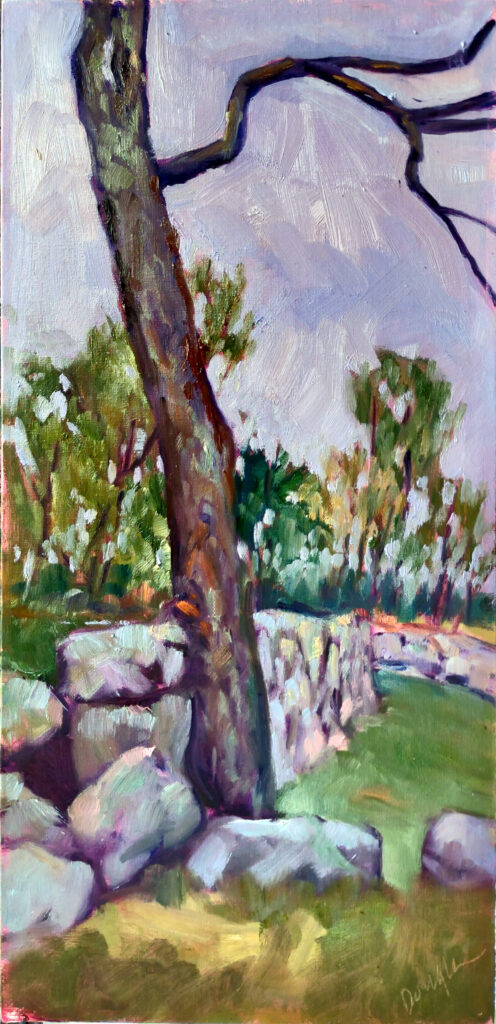
Walnut tree, stone wall, 8X16, oil on linenboard, click on image for details.

Bad passages can be repainted, but timid paintings never come to life. Confidence is earned. It comes from miles of canvas, from making and correcting mistakes and from sometimes overworking paintings. Painters who produce strong work are building on heaps and heaps of failure.

None of this is mysterious or requires magical talent. It requires practice, patience and a willingness to look honestly at your own work.

If you want to make better paintings, start paying attention to these fundamentals. Slow down. Simplify. Be deliberate. That’s the real common ground of good painting—and it’s available to anyone willing to do the work.

If you’re ready to sharpen your eye and start seeing your paintings with more clarity, I invite you to join my Fresh Eyes Critique Zoom class on Tuesday evenings, 6-9 PM on April 14, 21 and 28. After that, you’re on your own for a few weeks, because I’ll be in the Cotswolds.

Registration is now open for workshops in 2026! Reserve your spot:

Can’t commit to a full workshop? Work online at your own pace:

Seven Protocols for Successful Oil Painters