Laura points out that I’ve been painting up a storm this summer but nothing has made it on my website. That is no way to run a railroad! So, once a week, I’m going to talk in detail about a painting I’ve done, and get that painting into my inventory.
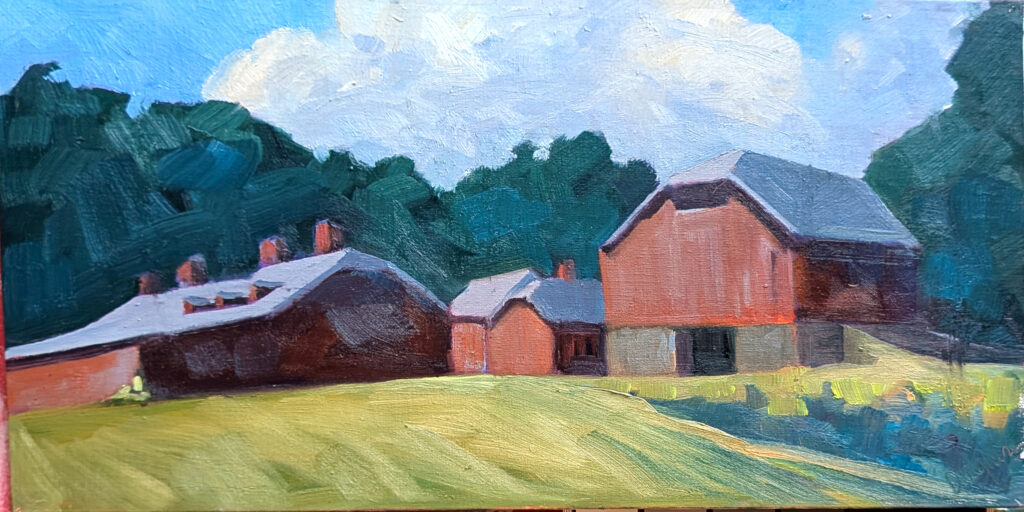
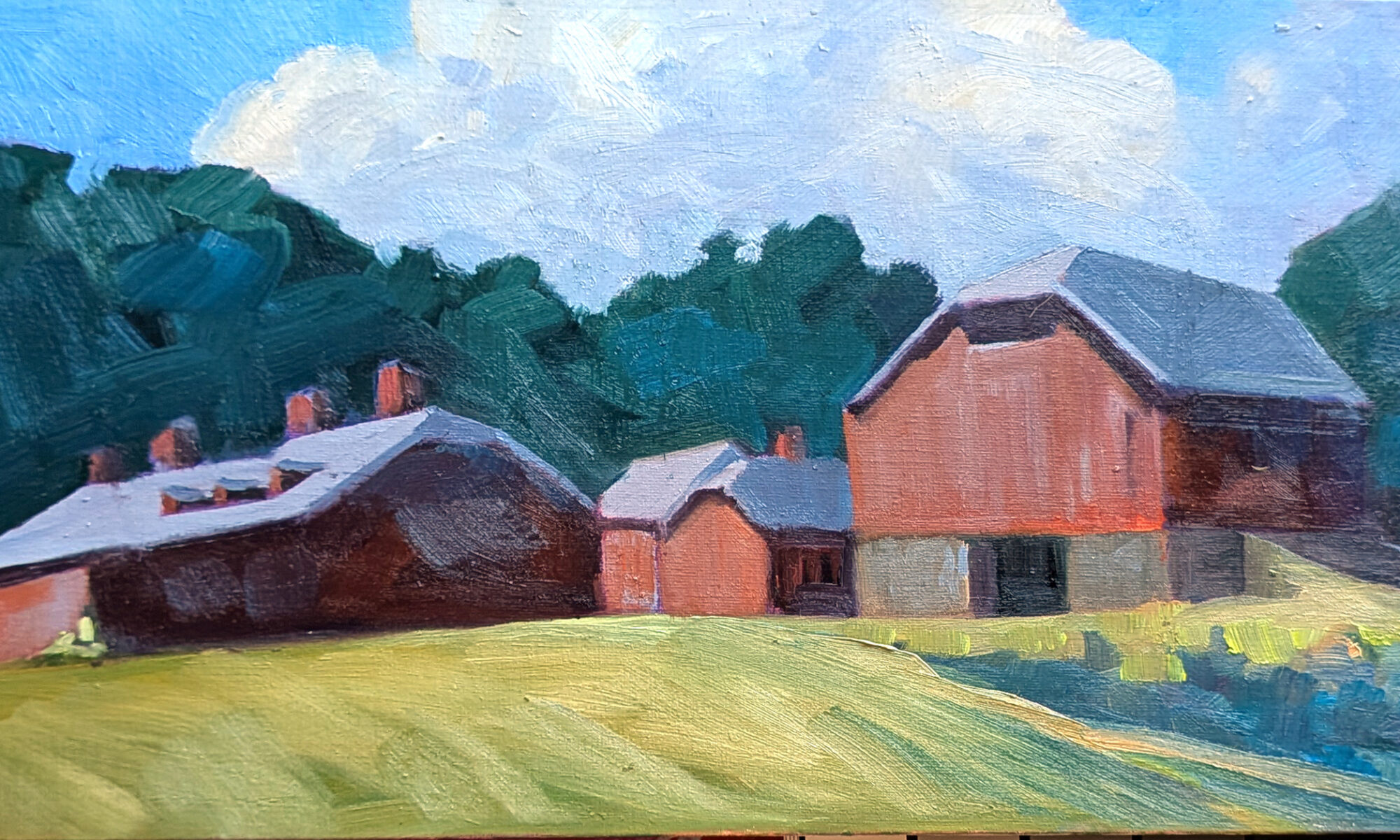
I painted this barn after teaching in the Berkshires this summer. It’s based on a barn I see every summer and have painted before. However, it’s not a literal transcription of the place.
I was raised on a farm but not born in a barn
I was born in Buffalo, NY and in 1965 my parents bought a 50-acre farm in nearby Niagara County, NY. I grew up in and around barns. I know what they look like and more importantly, I know how they feel, both in the landscape and up close.
A barn has a relationship with the land around it. It sits on its plot of land for a reason. Either someone is using it for hay, or it’s functioning as a byre (a place for cattle), or it’s an overgrown tool shed. It’s been placed for drainage and convenience, because it’s a working building. It is not good to romanticize barns; they’re primarily industrial and have a rhythm and beauty from that, which we should respect.
When I was painting this Berkshires barn, I wasn’t interested in simply reproducing the architecture. I was interested in making the landscape talk about my own experience.
Adding the barn hill
I altered the composition to include a barn hill. This particular barn didn’t have one because it’s on a steep rise and the hayloft is accessible through the back. I have never peered into the ground floor, but I don’t have to—the pattern of eastern barns is hayloft up top, animal stanchions or stalls below.
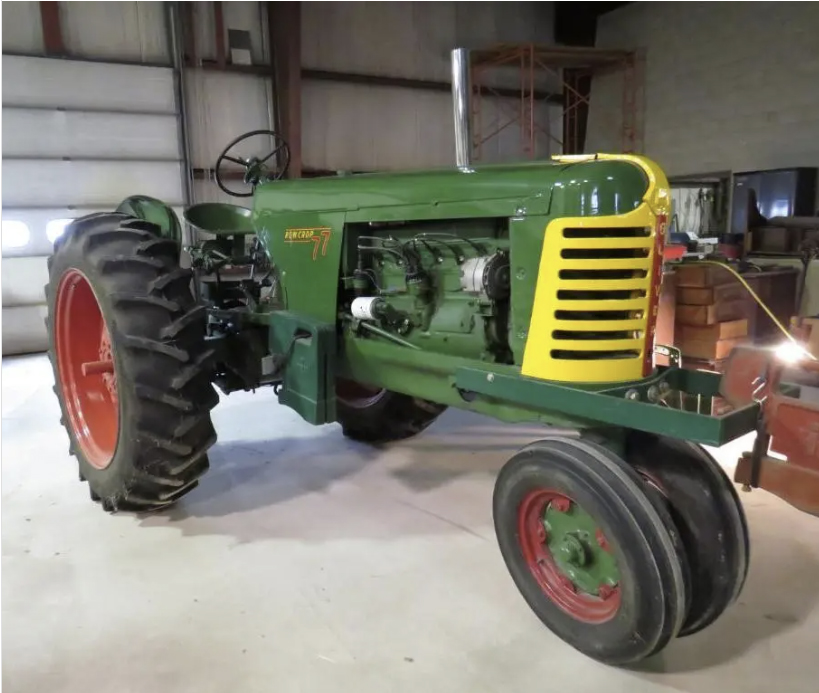
I spent the summers of my youth putting up hay, and it’s a job I miss. Using our elderly Oliver Row Crop 77, we backed a loaded wagon up the barn hill. Three or four people worked together: tossing the bales down off the wagon, putting them on the bale elevator, yanking them off on the hayloft (which was about twenty feet off the ground) and stacking them in an interlocking pattern. Bales are heavy, so they’re moved with hooks.
Safety equipment? Railings? Hah. And much of this work was done by children, including me. I was driving a tractor by the time I was twelve. I don’t really advocate dangerous work for children, but I am adept because of it.
Painting the place as I know it
Painting doesn’t have to be a literal record of what is in front of you. I taught in the Berkshires, and the barn gave me a starting point. My own history supplied the rest.
I know about barns and barn hills. I know how afternoon light falls across pasture and how a group of farm buildings is a single, organic unit.
My experiences influenced what I chose to keep and what I chose to change. The result is not exactly the barn I saw in the Berkshires, nor is it a farm from my childhood. It’s not an archetype, nor is it highly specific. It’s where my observation and memory meet.
Online classes start again soon!
- Cozy Winter Painting, Monday evenings, 6-9 PM for three weeks starting November 2.
- Painting Figures in Real Spaces, Tuesday evenings, 6-9 PM for six weeks starting November 3.
- Painting Nocturnes, Monday evenings, 6-9 PM for three weeks starting November 30.
I have just two workshops left in 2026! Reserve your spot:
- New! Color Clinic 2026 | Rockport, ME, October 3-4, 2026
- New! Composition Week 2026 | Rockport, ME, October 5-9, 2026
- High-Desert Light & Monumental Form | Sedona, AZ, Apr 26, 2027 – Apr 30, 2027
Can’t commit to a full workshop? Work online at your own pace: