I’m getting supply lists ready for my October workshop students. My watercolor students will be shocked that I’m actually going to suggest cheaper paper for color exercises. I generally say the opposite. Good materials matter more when you’re learning to paint than when you already know what you’re doing.
Nobody needs super-expensive brushes, paints, canvases or easels. But they need to be good enough to actually work. What are the best art supplies for beginners, and how can you tell where you should spend your money?
Learning to paint is hard enough without fighting your tools and supplies
If paint is weakly pigmented, you will never get the intensity you’re striving for. If it’s a ‘hue’ (a copy of a pricey pigment) you can’t mix to where you need to go. If a canvas is too cheap, it will suck up paint or feel unpleasant under your brush. Bad watercolor paper makes washes, lifting and dry scumbling dang near impossible. If brushes are badly made, you will never achieve the marks you’re seeking.
When these things happen, new painters often blame themselves. But they may not be the whole problem.
Where I do and don’t spend money in painting
Buy the best paint you can reasonably afford. 20th century pigments are cheaper and tend to be less toxic and more light-stable. You absolutely don’t need every color in the catalog. A carefully chosen paired primary palette of good paint is far more useful than a giant collection of mediocre colors.
Beginning painters buy too many different colors of poor-quality paint rather than a targeted few high-quality pigments; the net cost is the same, but the results are worse.
Many expensive pigments are, in fact, limited in application. The cadmiums are heavy and can be muddy. Others, like cerulean blue, can be mimicked quite successfully with less expensive pigments.
I don’t ever cut corners on brushes, but I don’t need a lot of them, either. I paint with a mixture of Princeton, which is reasonably priced, and Isabey and Rosemary brushes. You need fewer brushes than you think—a handful of shapes in different sizes.
And, for heaven’s sake, keep your brushes clean! Letting them harden up is a total waste of money.
Generally, I find that I’ve finished a painting using only two or three brushes. But good brushes teach you about pressure, paint handling, edges and brushwork.
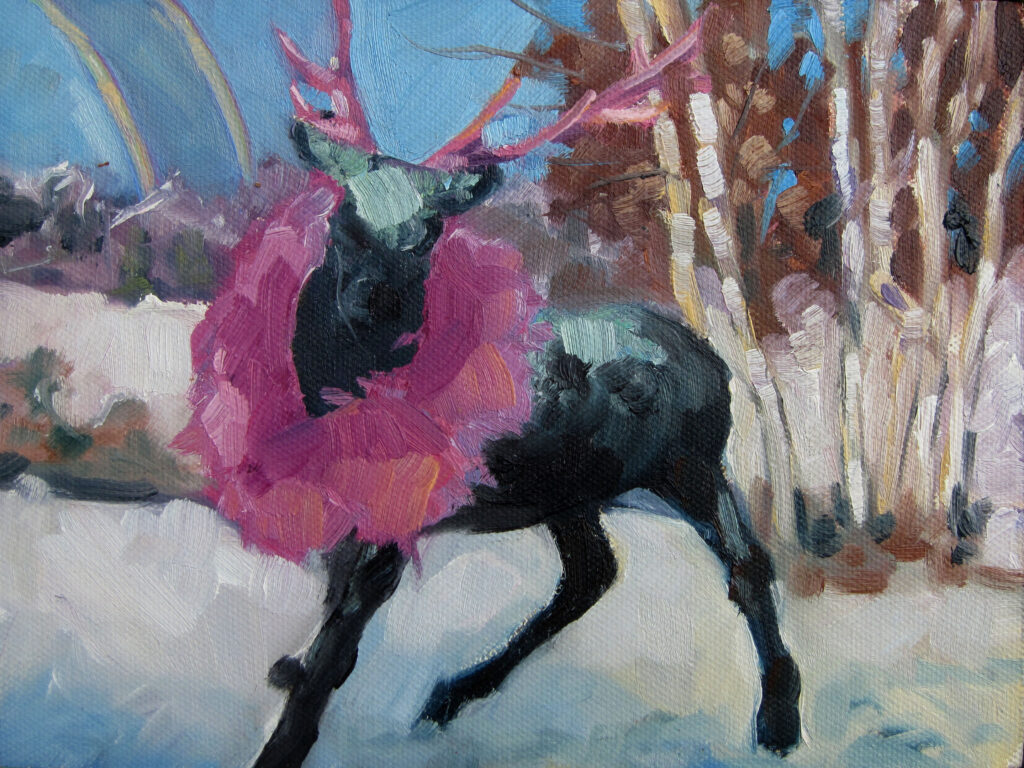
Painting surfaces.
A properly prepared surface makes an enormous difference. This is particularly important for students because you’re trying to learn how paint behaves. Oil painters can add a coat of gesso to cheap boards, or make boards themselves. Sadly, watercolor students really need to buy good paper from the outset.
Quality, not quantity
Artists have been making excellent paintings with battered equipment for centuries. Some of the tools I’m using were my father’s. Once you know what kind of easel you want, look at Facebook marketplace; I bought my good Gloucester-style easel there. But beware of bad field easels available on Amazon; they’re a complete waste of money.
You can absolutely save money by making some things yourself. I sometimes make my own panels and many artists I know have fashioned their own wet-canvas carriers and brush rolls.
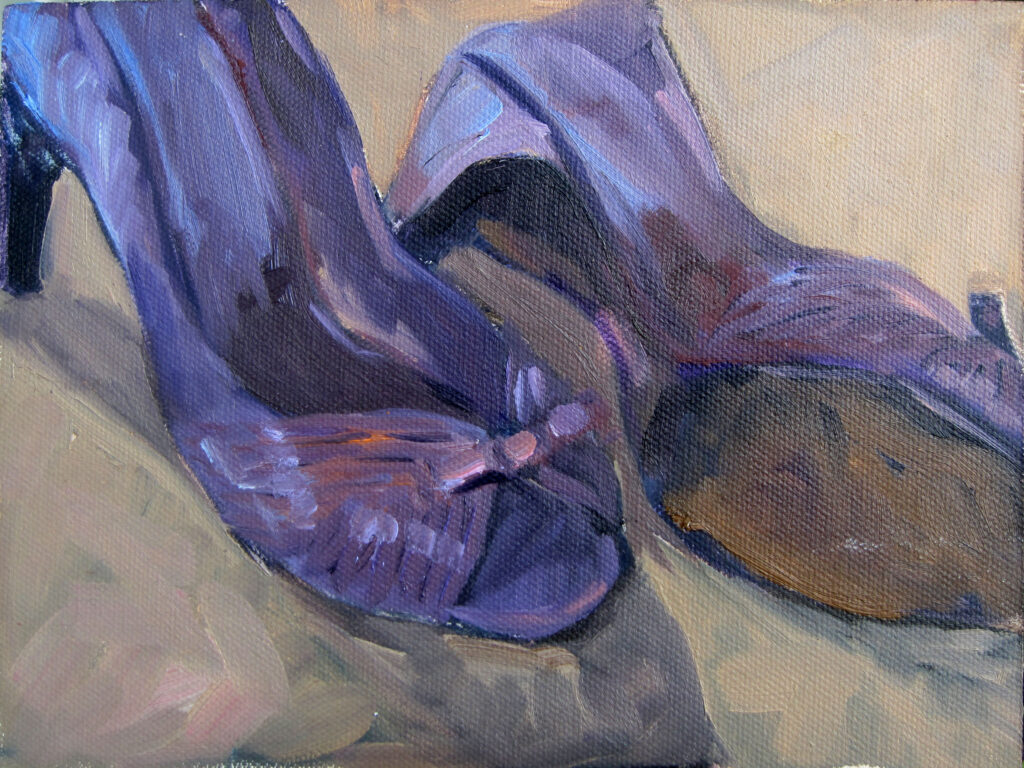
Cheap materials are often expensive materials in disguise.
If a brush splays after your first painting, it was a rotten waste of money. Cheap watercolor paper may stop you from ever mastering washes.
I’m using up some burnt sienna oil paint I was given. It shocks me how much paint I need to equal the intensity of my regular brand (RGH). In watercolor, cheap paints will probably never give the intensity you seek at all.
Figuring out the best art supplies for beginners means figuring out where it’s safe to cut corners, and where it will hurt. This is where a good teacher is invaluable. As a student, you’re investing in something more important than materials: your ability to learn. Give yourself materials that support you, rather than hinder you.
I have just two workshops left in 2026! Reserve your spot:
- New! Color Clinic 2026 | Rockport, ME, October 3-4, 2026
- New! Composition Week 2026 | Rockport, ME, October 5-9, 2026
- High-Desert Light & Monumental Form | Sedona, AZ, Apr 26, 2027 – Apr 30, 2027
Can’t commit to a full workshop? Work online at your own pace: