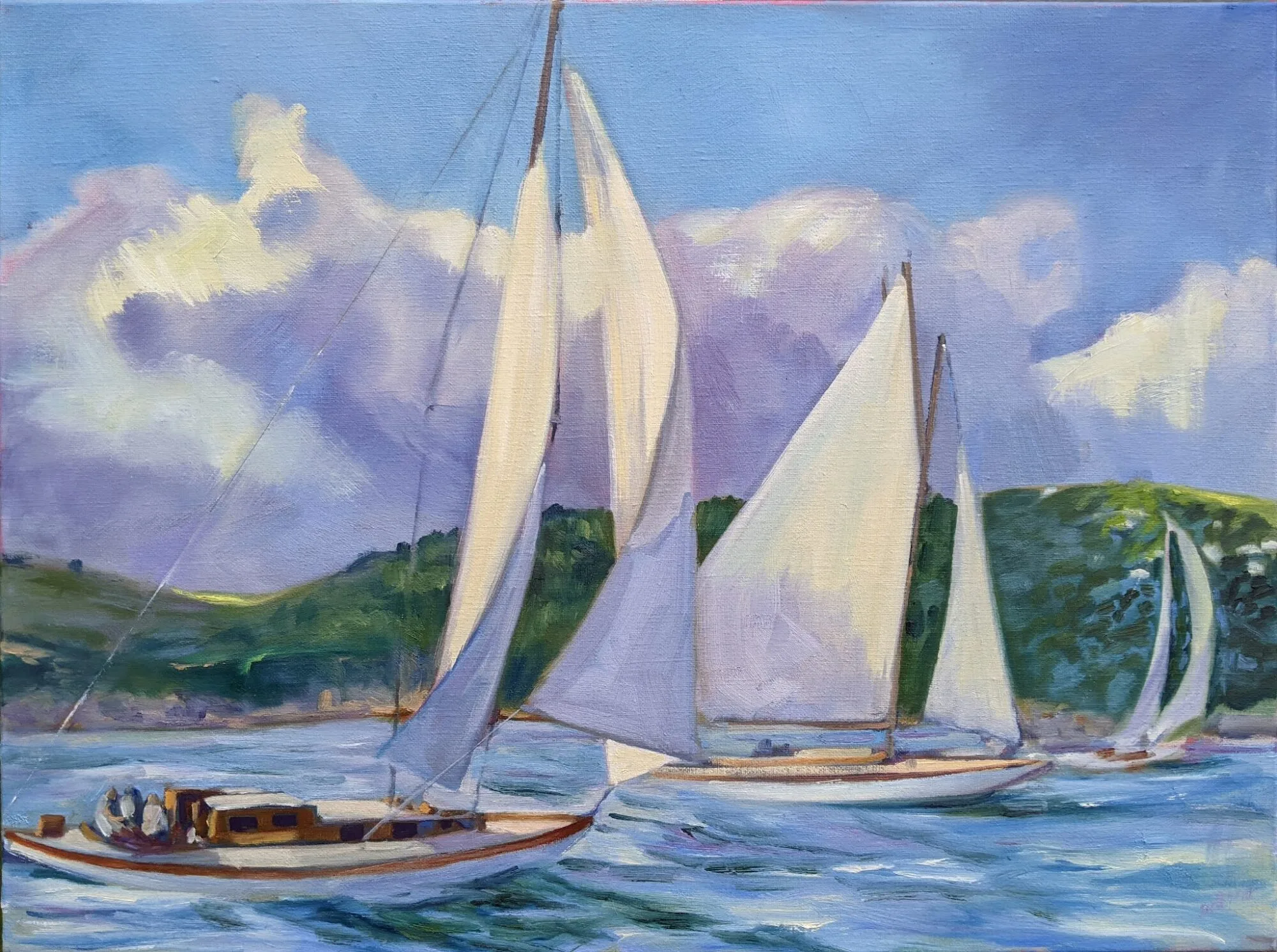


I’ve spent the last two weeks painting dreck. It’s not bothering me, although I may be driving Bobbi Heath nuts with my process photos.
I’m experimenting with brushwork. Suddenly everything I know has gone phut. My compositions are poor, I can’t keep darks and lights separated, and I’m covered head-to-toe with paint (always a sign that it’s not working, and dangerous in a house with a white sofa).
A quick note on classes before we get into it
Claim your spot in Painting clouds, which starts this evening. There are just two seats left and this is my last Zoom class before fall.
By the way, you can always go back to watch the videos of these classes. That’s also true for those who’ve taken Seven Protocols for Successful Oil Painters. As long as there’s YouTube, the lessons will be available to those who’ve taken the classes.
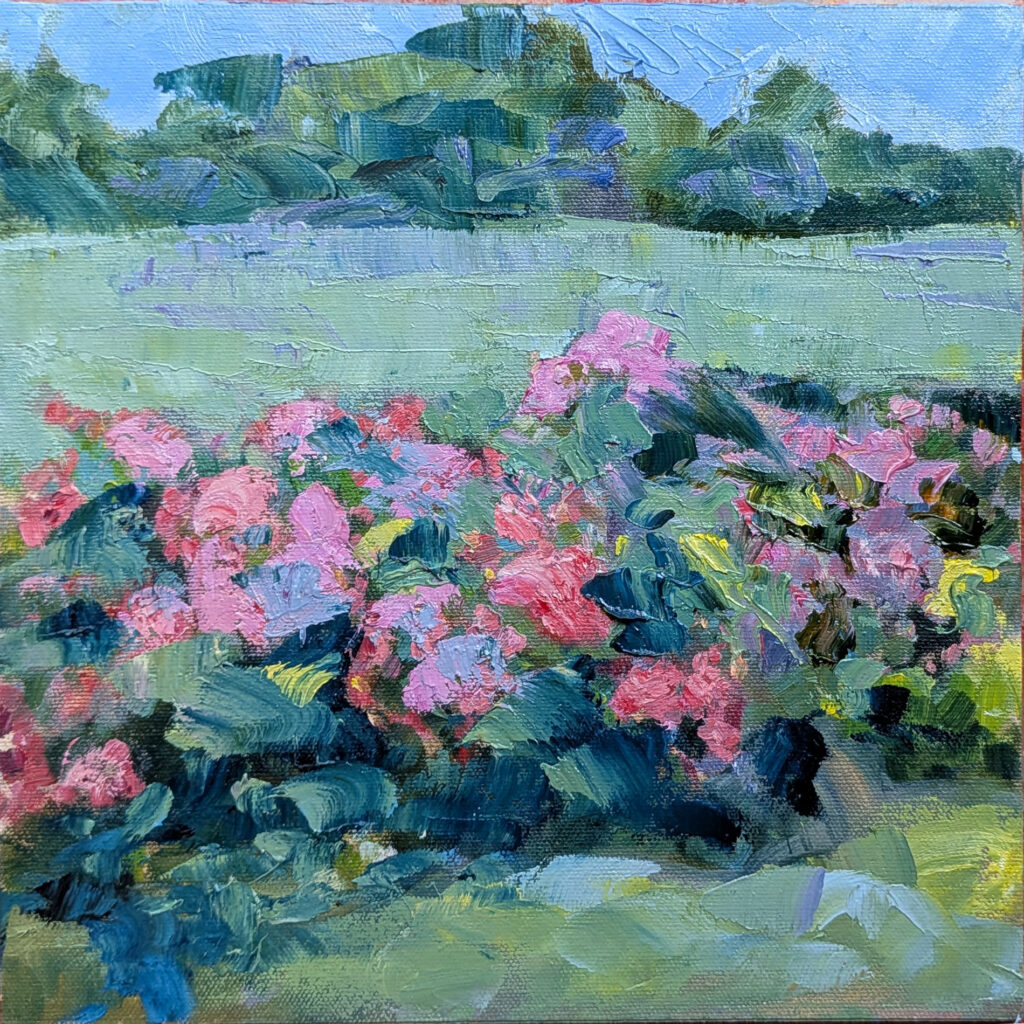
I’m not worried
I used to play baroque keyboard music. I’d run through the left-hand part a few times, then I’d do the same with my right hand. No problem. Then I’d put them together and it felt like a train wreck.
I don’t know why the human brain is wired like that, but complicated skills don’t operate in isolation. Change one thing in your process and it can feel as if you’ve forgotten everything you know. It’s easy to psych ourselves out when that happens.
Painting isn’t a collection of isolated skills. It’s a network. Composition affects drawing; drawing affects value; value affects color; color affects edge handling; edge handling affects brushwork; brushwork affects composition… Pull one thread and the whole tapestry temporarily unravels.
Perhaps you’ve painted from photographs for years and are trying plein air. Perhaps you’ve abandoned your tiny brushes and are forcing yourself to work with giant flats. Your new challenge disrupts all the little compensations you’ve developed over time. It feels uncomfortable. Many artists mistake this discomfort for failure. Don’t give up; it’s actually evidence that learning is taking place.

I’m cheerfully incompetent right now
Painting through an intentional challenge is not fun. It’s so much easier to slip back into what one knows, where one feels competent and larky.
Our brains like efficiency far more than struggle. Once we’ve learned a process, we bundle dozens of small decisions together and run them automatically. That’s wonderful, but it can be self-limiting. Growth sometimes requires unpacking those decisions and examining them one at a time.
Unfortunately, that can feel like negative progress.
However, I’m a wily old bird who’s done this before. I know I haven’t suddenly become a worse painter overnight. I’ve simply moved into unfamiliar territory.
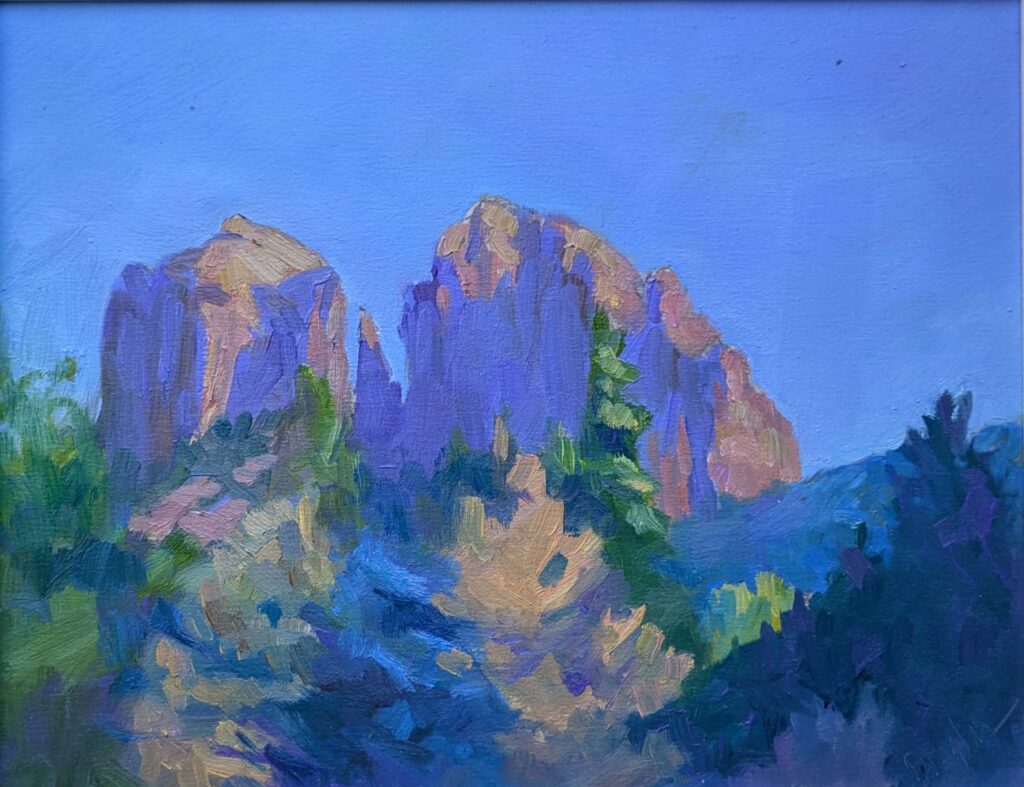
How long does this last?
Generally, it doesn’t last nearly as long as you fear. The first few paintings after a process change are usually terrible. The next few are awkward. Then, almost without noticing, your new skill begins to integrate itself with everything else you already know.
Your prior knowledge didn’t desert you; your brain simply had to reorganize itself around the new information.
“Just try it my way for one week,” I ask my workshop students. Then I watch their first painting with this new process come out pretty awful. I don’t enjoy watching them be temporarily disheartened. However, it always seems to work; they manage to integrate their new knowledge and come out better, stronger painters. Since that’s my job, I’m satisfied.
If every painting feels easy, you’re probably repeating yourself. Growth can feel very uncomfortable, but keep going anyway.
Experienced painters embrace a cycle of failure. We know that today’s clumsy experiment may become next year’s indispensable technique. The trick is to not panic.
Online classes start again soon!
- Cozy Winter Painting, Monday evenings, 6-9 PM for three weeks starting November 2.
- Painting Figures in Real Spaces, Tuesday evenings, 6-9 PM for six weeks starting November 3.
- Painting Nocturnes, Monday evenings, 6-9 PM for three weeks starting November 30.
I have just two workshops left in 2026! Reserve your spot:
- New! Color Clinic 2026 | Rockport, ME, October 3-4, 2026
- New! Composition Week 2026 | Rockport, ME, October 5-9, 2026
- High-Desert Light & Monumental Form | Sedona, AZ, Apr 26, 2027 – Apr 30, 2027
Can’t commit to a full workshop? Work online at your own pace:
Love this. So true – I often think if I can work through a few more bad paintings, there’s usually some kind of breakthrough ahead. I have a whole bin of non-breakthrough paintings for my troubles.
This morning I decided my current idea was a bad idea, only to get an email from a regular reader saying she loves the Beach Roses. So I’ll give it a little more time. 😉
You must have written this for me – I’ve felt this way for several months. Hoping to see the other side soon. Thanks for the encouragement.
I miss seeing your smiling face, Linda!
I like the way your new process is heading! I was just catching up on my “painting a day for a year” book after my trip and saw a Cezanne that brought your new process to mind.
I’m looking forward to watching the video of last night’s class and seeing you next Monday in Painting Clouds.
Thank you, Lynda. What, may I ask, was the Cezanne?