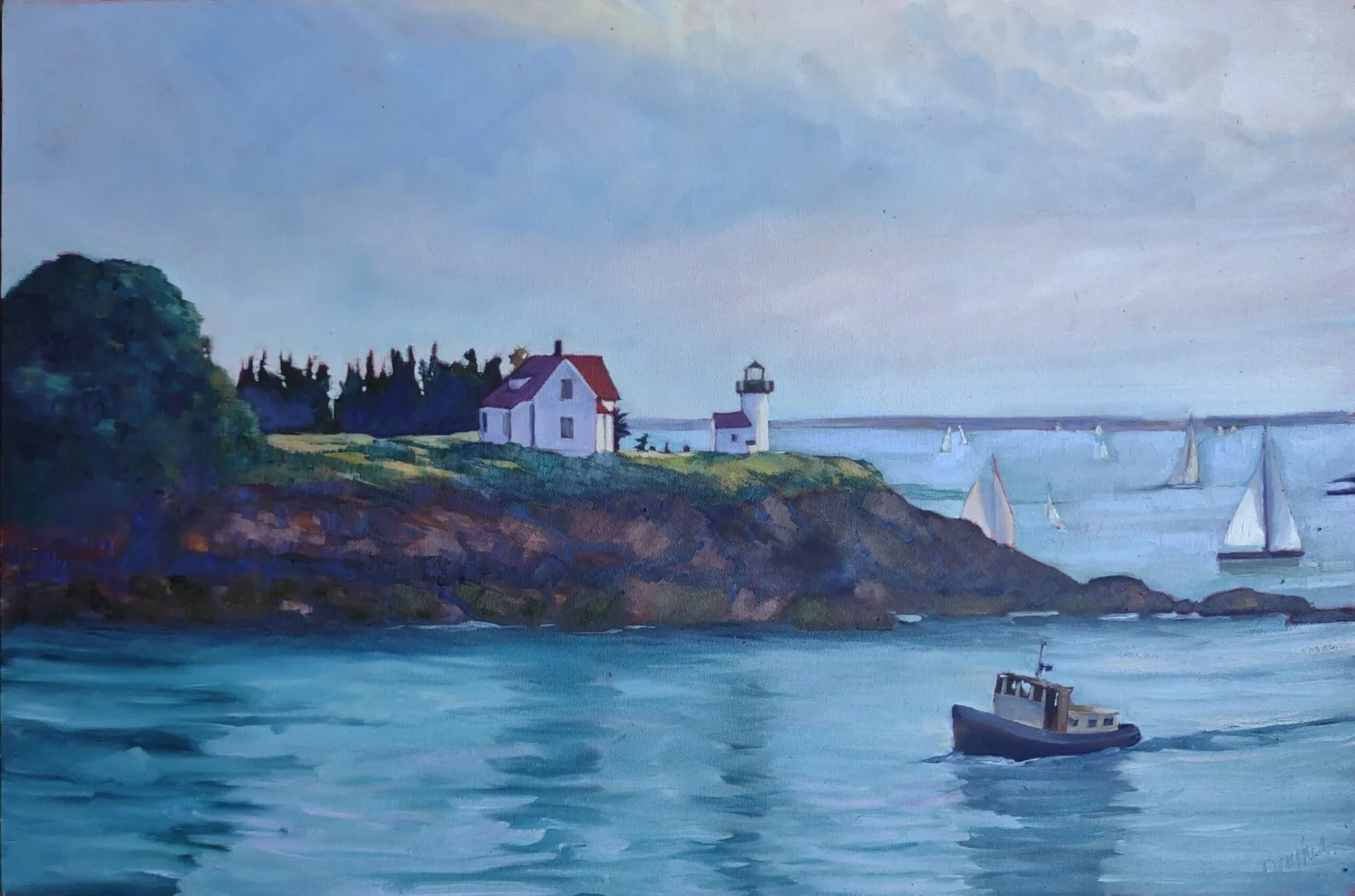
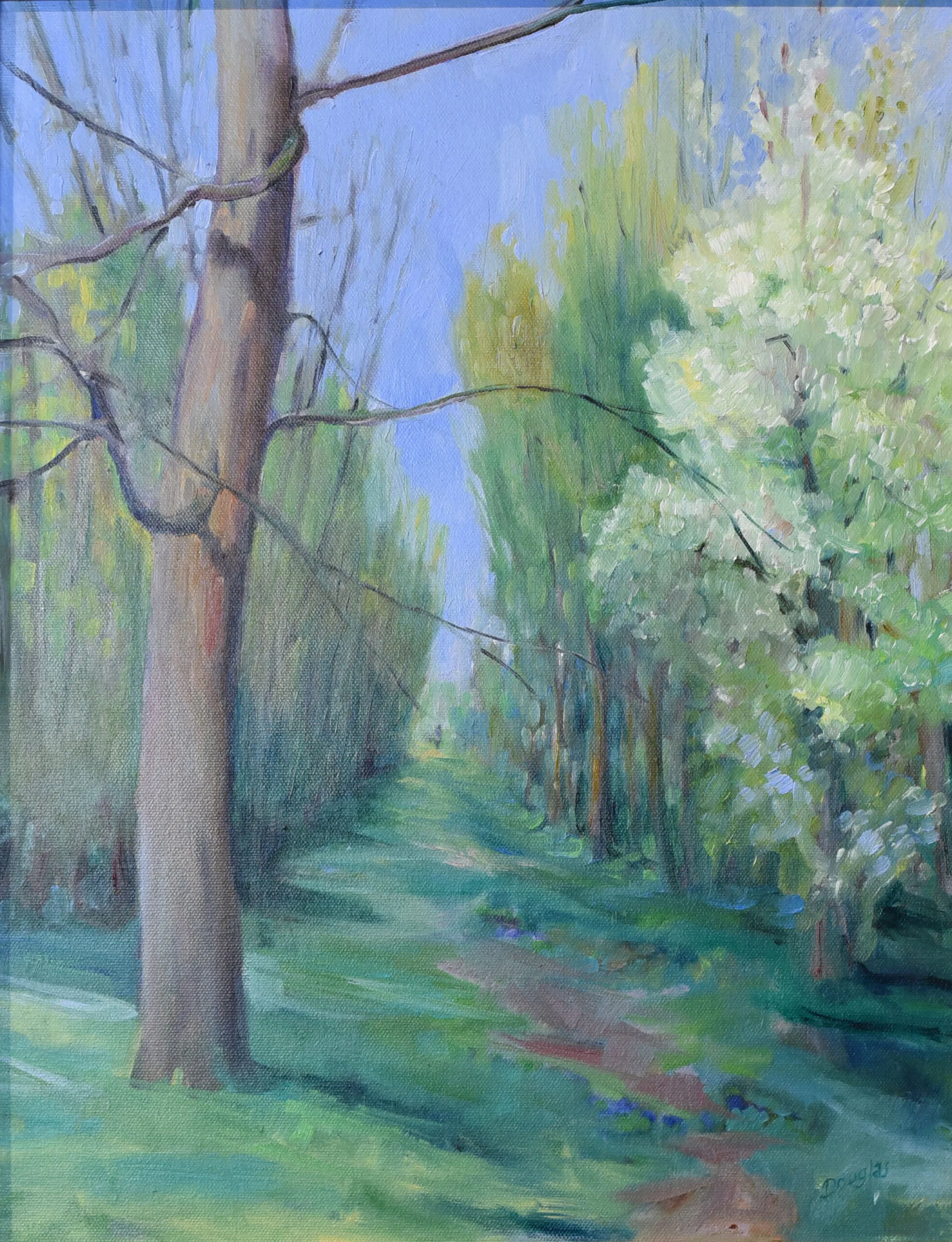
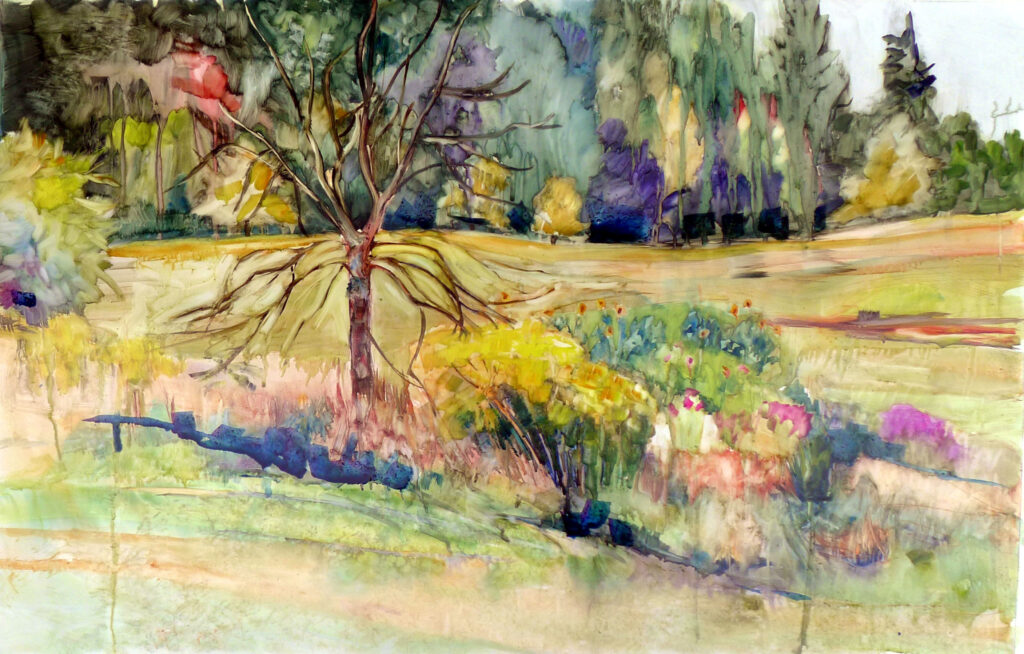
The other day I ran into an artist buddy on the trail. He lamented that he was rejected from a show he really wanted to get into, but told me that he got into one that I think of as tougher. Like all of us, he tried to parse why. If I had any great insights, I’d have shared them, but jurying paintings can be mystifying and maddening.
A quick note before we get into it
It’s time to claim your spot in Advanced Plein Air Painting, July 13-17 in Rockport, ME. If you have any questions about whether you fit into an advanced class, just ask!
What is jurying?
Painters get nervous about the word jurying, as if it’s a verdict on their worth. It helps to think of it as a sorting tool. I’ve juried people into shows and for awards. At present, I’m jurying paintings for my Advanced Plein Air Workshop. It’s not about whether you’re the best or even good enough. The question is whether you’re appropriate for that particular event.
That can involve factors that artists never think about, such as whether there are enough watercolorists or geographical distribution. It can involve style, for no good show has everything look the same. And, frankly, it can be subjective. A lot of paintings we now acknowledge as masterpieces were rejected by jurors in their day.
Your recent work
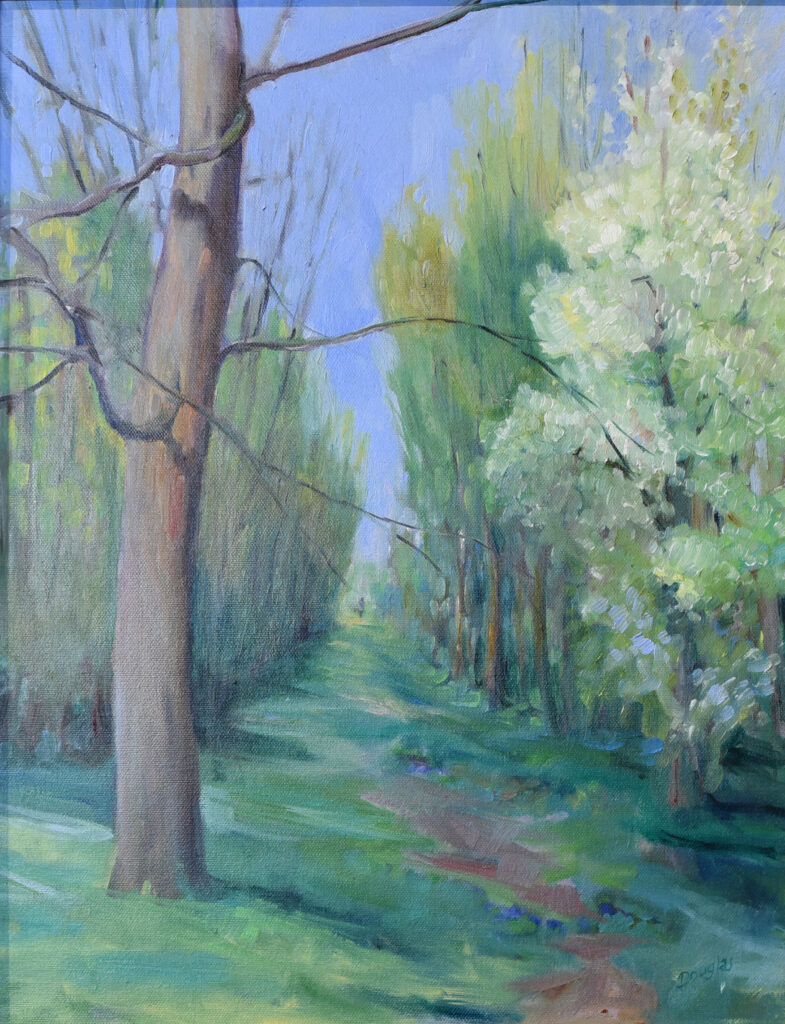
Jurors usually ask that work be done in the last two or three years. That’s because the juror doesn’t really want to know where you’ve been; he or she wants to know where you’re going.
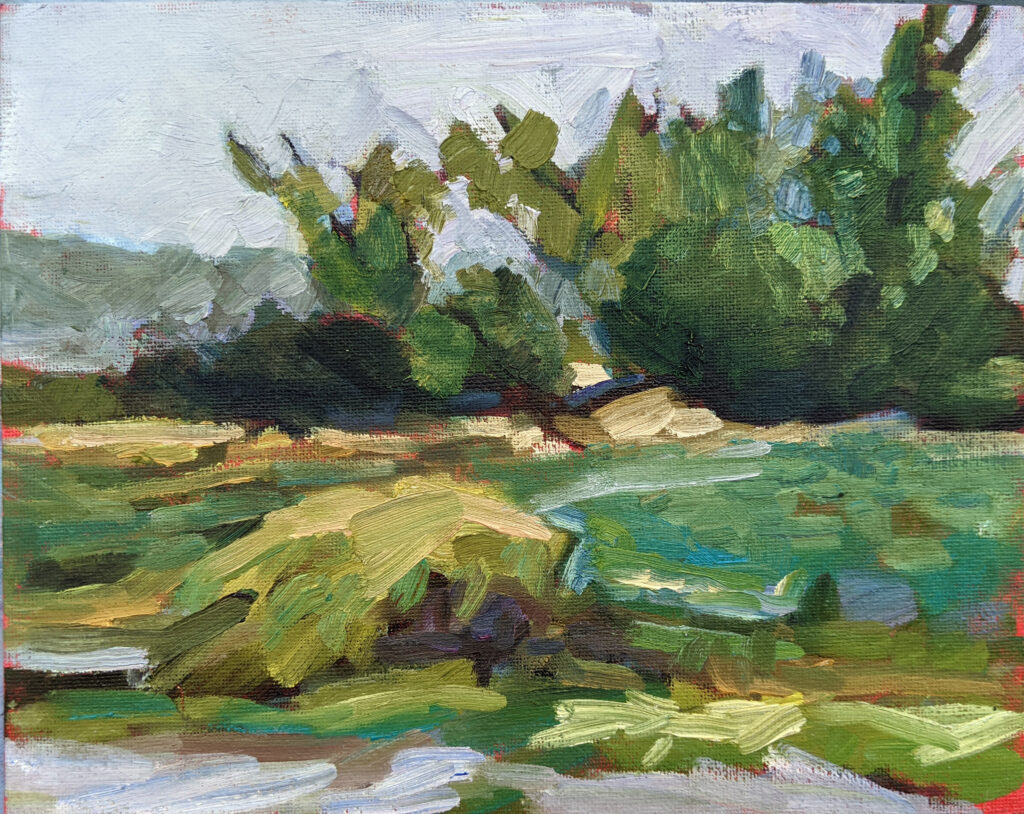
I’m generally scanning for patterns: how you organize value, whether your compositions hold together, how you handle edges, and whether your color decisions are intentional or reactive. I’m also looking for consistency.
What I’m not doing is rewarding polish. In fact, overly-finished work can be a red flag to me. It can mean the painter has settled into a formula that works. Growth requires the ability to take risks.
Practically speaking
Jurors look at a lot of work, often on their phones, and the first pass is usually at thumbnail size. If it doesn’t compel in that tiny format, nobody is going to give it a second look. As my gallerist friend Bernadette says, there are minimum standards, including cropping out extraneous background, lighting the work properly, and submitting it in a reasonably large file format.
Why am I asking for your portfolio?
An advanced plein air class only works if the whole cohort operates on the same level. That doesn’t mean painting in identical styles or having the same goals. It means a shared ability to see, simplify and execute. If half the group is still wrestling with basic drawing and the other half is trying to refine subtle color relationships, nobody gets what they came for. The class is fragmented and I lose my mind.
A strong, solid group changes everything. When everyone can handle the fundamentals, the conversation shifts. We’re no longer fixing obvious errors; we’re discussing choices. Why this composition instead of that one? Why compress the value range here and expand it there? Why push color in one passage and neutralize it in another? Those are advanced questions, and they require painters who can engage at that level.
If you’re ready for an advanced class, where the feedback is specific, the expectations are high and the group itself becomes part of the teaching team you can learn more here.
The process
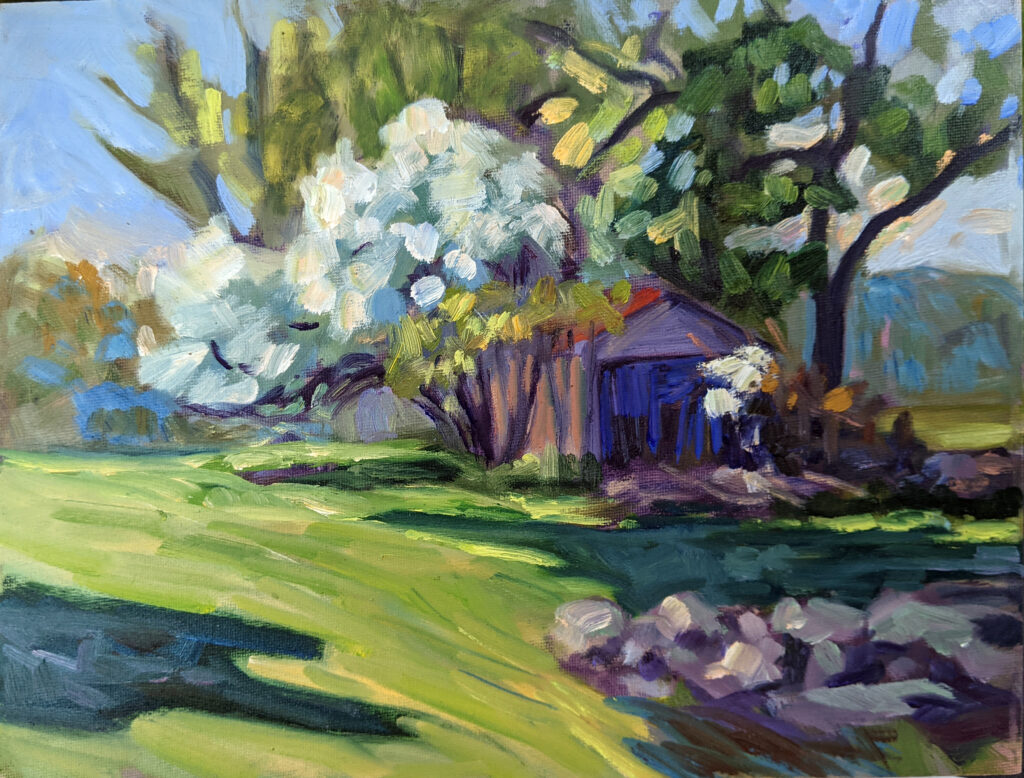
When I review a portfolio, I’m looking for evidence of decision-making under pressure. Plein air painting is unforgiving. Light changes, weather shifts, time compresses. Can you simplify quickly? Do your value masses read from a distance? Are your edges controlled, or are they a byproduct of hesitation? These aren’t abstract ideas; they’re visible in the work.
I’m also paying attention to range. Do you always default to the same composition or the same depth and distance? Comfort can stall growth, and I want to challenge that.
Finally, I’m looking for readiness: the ability to hear feedback, test it and adjust without losing the thread of your own intent.
I have just two workshops left in 2026! Reserve your spot:
- New! Color Clinic 2026 | Rockport, ME, October 3-4, 2026
- New! Composition Week 2026 | Rockport, ME, October 5-9, 2026
- High-Desert Light & Monumental Form | Sedona, AZ, Apr 26, 2027 – Apr 30, 2027
Can’t commit to a full workshop? Work online at your own pace:
It’s also true that in some cases the jurors of entry are chosen out of local people, and that can be deadly for anyone but their friends and a particular slant.
I guess I don’t paint blue horses…
One never knows, does one?
Gwen you paint some terrific stuff! Even if it isn’t blue. 😉 But yes, it’s easy to see that judges can be seduced by the familiar. I do my best when judging to move in the opposite direction and be signature blind, so to speak. Easier said than done but if you lean on the basics that Carol is describing her you really can’t go wrong.
Familiarity in both individual painters and in broad ideas… Living in some past era of painting, or out-of-touch idea of what constitutes art.
“The class is fragmented and I lose my mind” – preaching to the choir here, it is so challenging when you have a breath of accomplishment in the student body. I can’t imagine you being anything but competent at any time, however.
Thank you.
I generally don’t mind teaching all levels but I do reserve this one workshop a year for more advanced painters.
We were just last week in Paris- Musee de Orsay and saw a lot of “rejected” works- “The Impressionists”, a name first applied as an insult to their work. What a rush to see so much in person in one place. Part of the constant learning curve is seeing what others have done whether a hundred plus years ago or last week. Sounds like a great class. Too insane a summer so I will work on the inspiration of those old guys and gals. Fill that class up!
Thanks, Diane!