Monday Morning Art School: you asked ChatGPT what?

My students love to send me things they know will interest me, but sometimes they send me things to make my hair stand on end. As a courtesy, I’ve obliterated the OP’s name and photograph, but you really asked ChatGPT to tell you what paints to buy? And you put 32 paints on your palette? And now you want to know about color theory?

Assuming OP bought regular-size tubes of paints, they set her back $15-20 each. For 32 paints, that’s between $480 and $640. All those paints won’t make her a better painter. They’ll make her a worse painter, because she’ll never learn about color theory and color mixing.

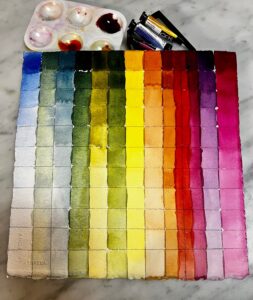
A few years ago, I mailed a small sample of paints to a student in South Carolina. She was frustrated with her paints and I was equally frustrated watching her try and fail to hit color notes. What I sent her was a simple, primary-color limited palette: QoR brand Ultramarine BlueNickel Azo Yellow, and Quinacridone Magenta. This is what she did with them:

A color chart done with just three pigments: ultramarine blue, nickel-azo yellow, and quinacridone magenta.

Learn to love limited palette

A limited palette sounds like a restriction, but it’s a shortcut to clarity and cohesiveness. Instead of dabbing in all those paint pots, you learn to mix and marry color.

Learning to mix color teaches you more about color theory than any color wheel. You discover how complements neutralize each other, how color temperature works to create form, and how value does the heavy lifting in painting.

Color harmony and consistency

When all your colors are mixed from the same small family, they are innately related—that’s a shortcut to color harmony. There are no out-of-tune notes screaming for attention. For beginners, who often struggle with garish or muddy color, limited palette creates a more consistent color voice.

Painters need to learn the working characteristics of their paints, including hue, value, chroma, transparency, granulation (in watercolor) and dry time (in oils). That’s hard enough to master for just a few paints.

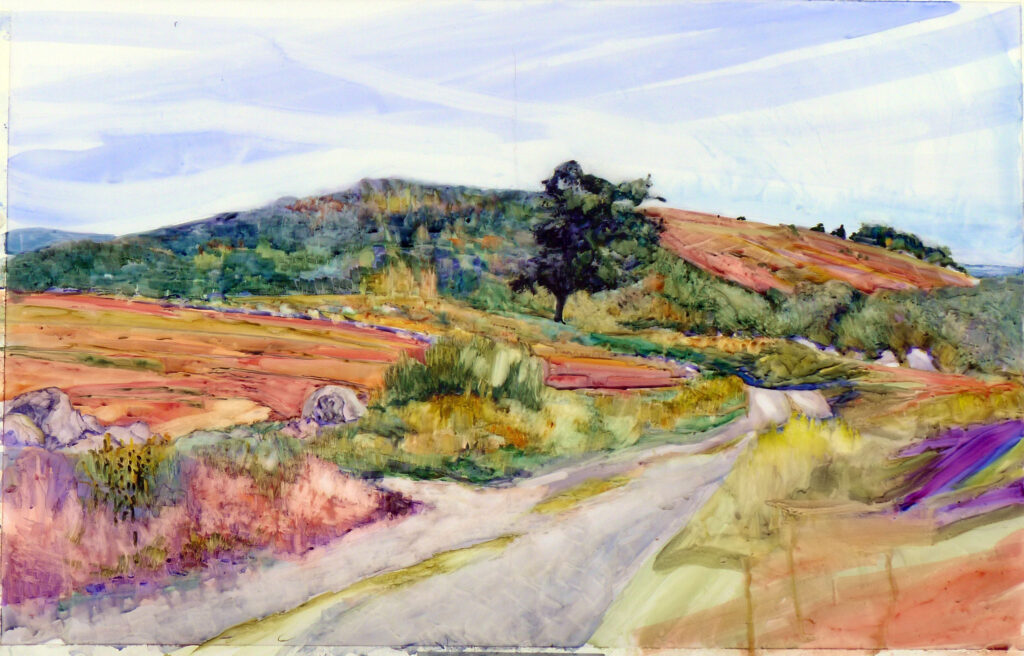
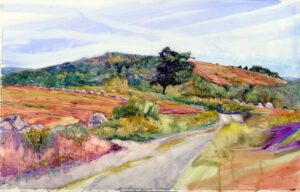
Clary Hill Blueberry Barrens, watercolor on Yupo, ~24X36, $3985 framed includes shipping and handling in continental US.

Decisiveness

With fewer choices, you spend less time dithering and more time painting. That’s invaluable in alla prima and plein air, but it matters any time you pick up a brush. You’re not hunting for the perfect color on your oversized palette; you’re learning to make what you need. This builds confidence and speed.

We can play fast and loose with hue if value is right, which is why pink or yellow skies can make perfect sense in paintings. When pigment options are reduced, we’re forced to shift our attention to value, which is more important than hue.

By stripping color back to basics, we also see form, edges and composition more clearly.

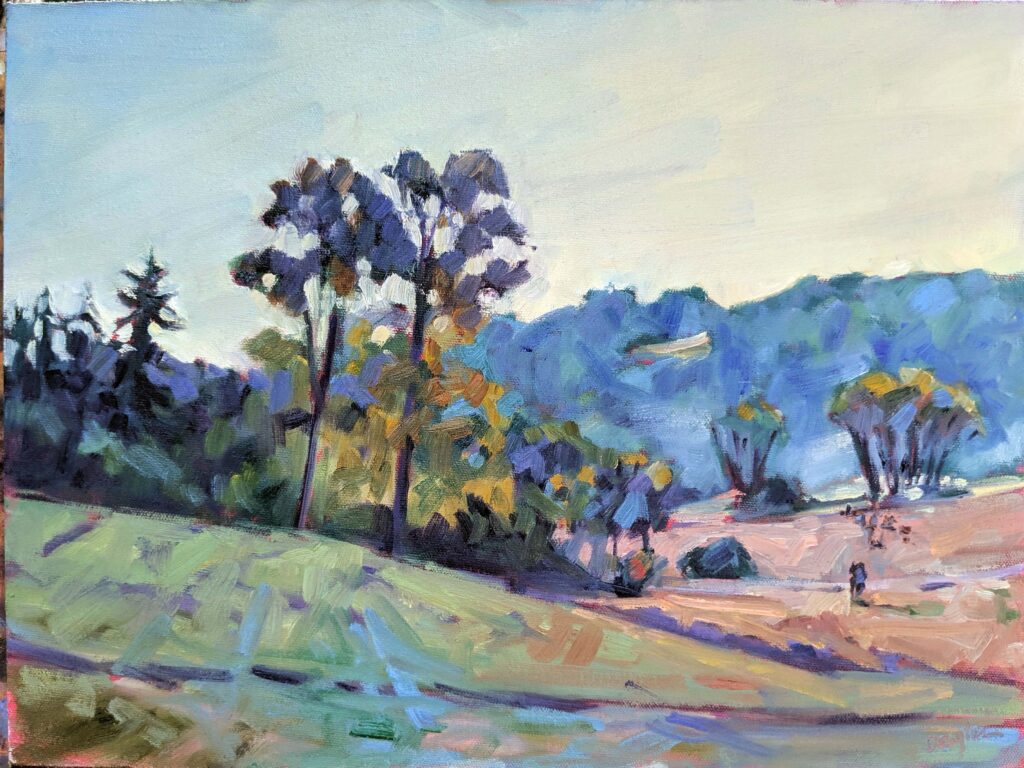
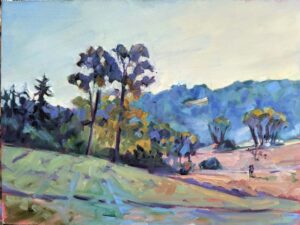
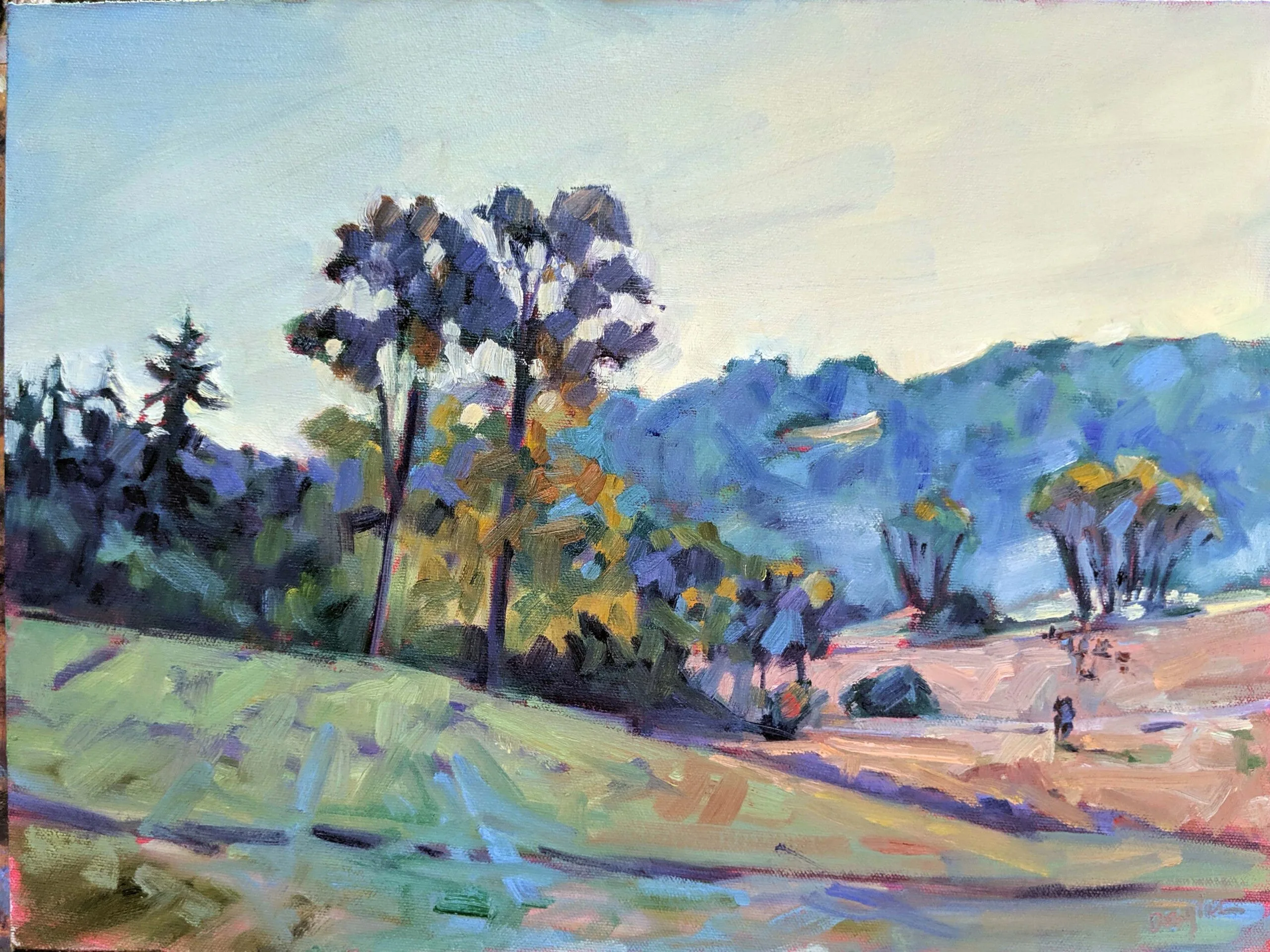
Autumn Farm, Evening Blues, oil on canvasboard, $1449 framed includes shipping and handling in continental US.

A limited palette is a tool, not a moral position

Once you understand what each pigment on your palette does, you can expand with intention. But I’ll note that I’m using the same number of paints I was thirty years ago, with very few modifications. They’re simply not necessary.

In the end, a limited palette isn’t about limitation at all. It’s about focus. By reducing choices, you sharpen your eye, strengthen your technique, and let painting be about seeing rather than collecting colors. That’s a lesson worth revisiting at every stage of an artist’s journey.

And, by the way, I’d have freely shared my palette recommendations with this artist. She’d have had hundred of bucks to spend more intelligently… and most of her paint wells would have remained empty.

Registration is now open for workshops in 2026! Reserve your spot:

Can’t commit to a full workshop? Work online at your own pace:

Seven Protocols for Successful Oil Painters

Monday Morning Art School: 5 simple things you can do to instantly improve your paintings

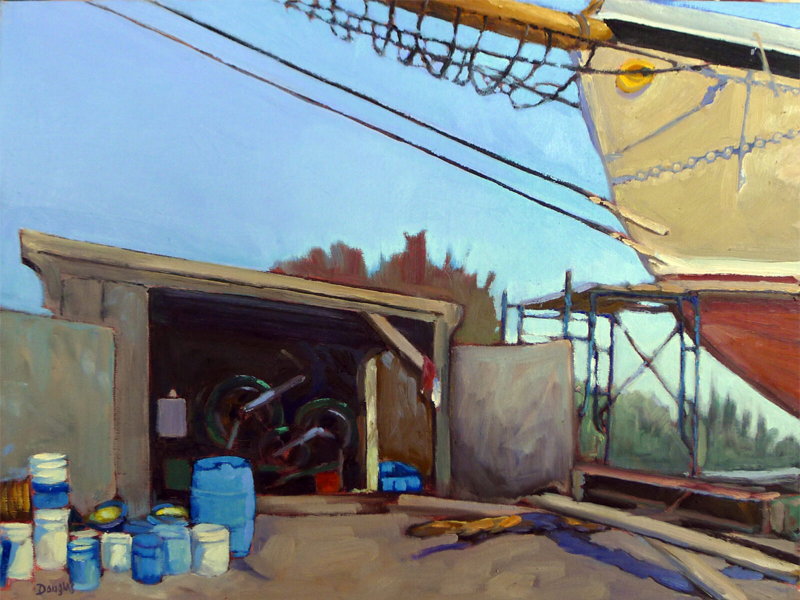
American Eagle in Drydock, 12X16, $1159 unframed includes shipping and handling in continental US.

Improvement doesn’t necessarily come from grand gestures like buying new brushes. The biggest leaps come from simple, repeatable, immediate actions. These are things you can do today to make tomorrow’s paintings stronger. Here are five that never fail.

Skylarking, 24X36, oil on canvas, $3985 framed includes shipping and handling in continental US.

Take off your glasses or squint

I’m nearsighted; I paint with my glasses on a string around my neck and they’re there only because I need them to drive home. Some of you were unfortunately born with perfect eyesight. For you there’s only one remedy: squint.

Blurriness simplifies the world. It mutes unnecessary detail and helps you see big shapes, value relationships and underlying design. Paintings fall apart when we chase every detail without considering how they fit into the whole. Before you touch your brush, remove your glasses or squint until you see only three or four major value shapes. Then paint those. Detail is for the end of a painting, and it’s not always necessary.

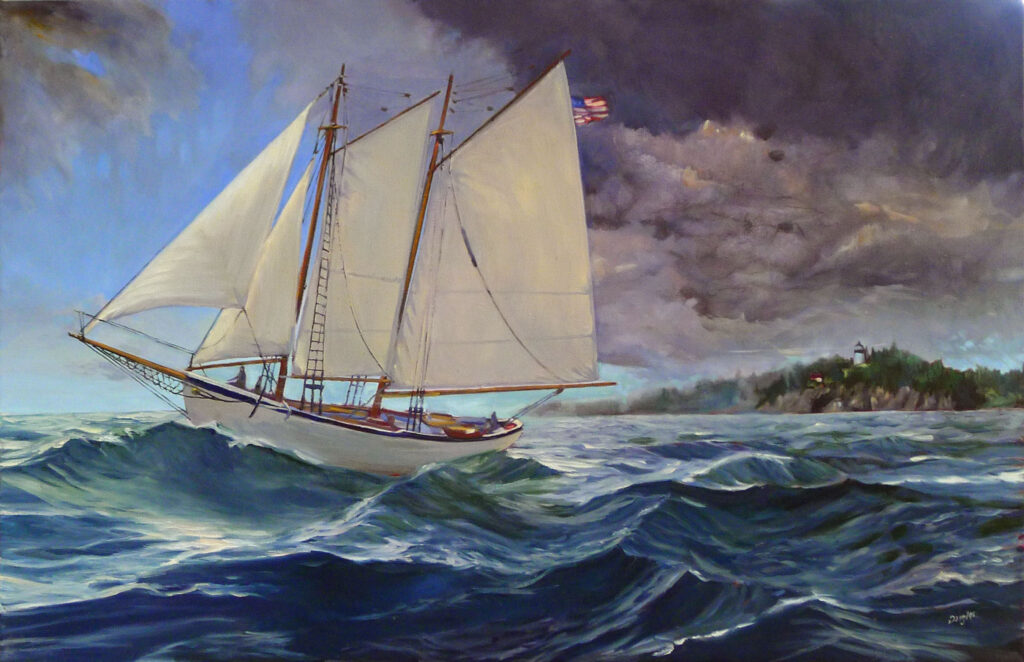
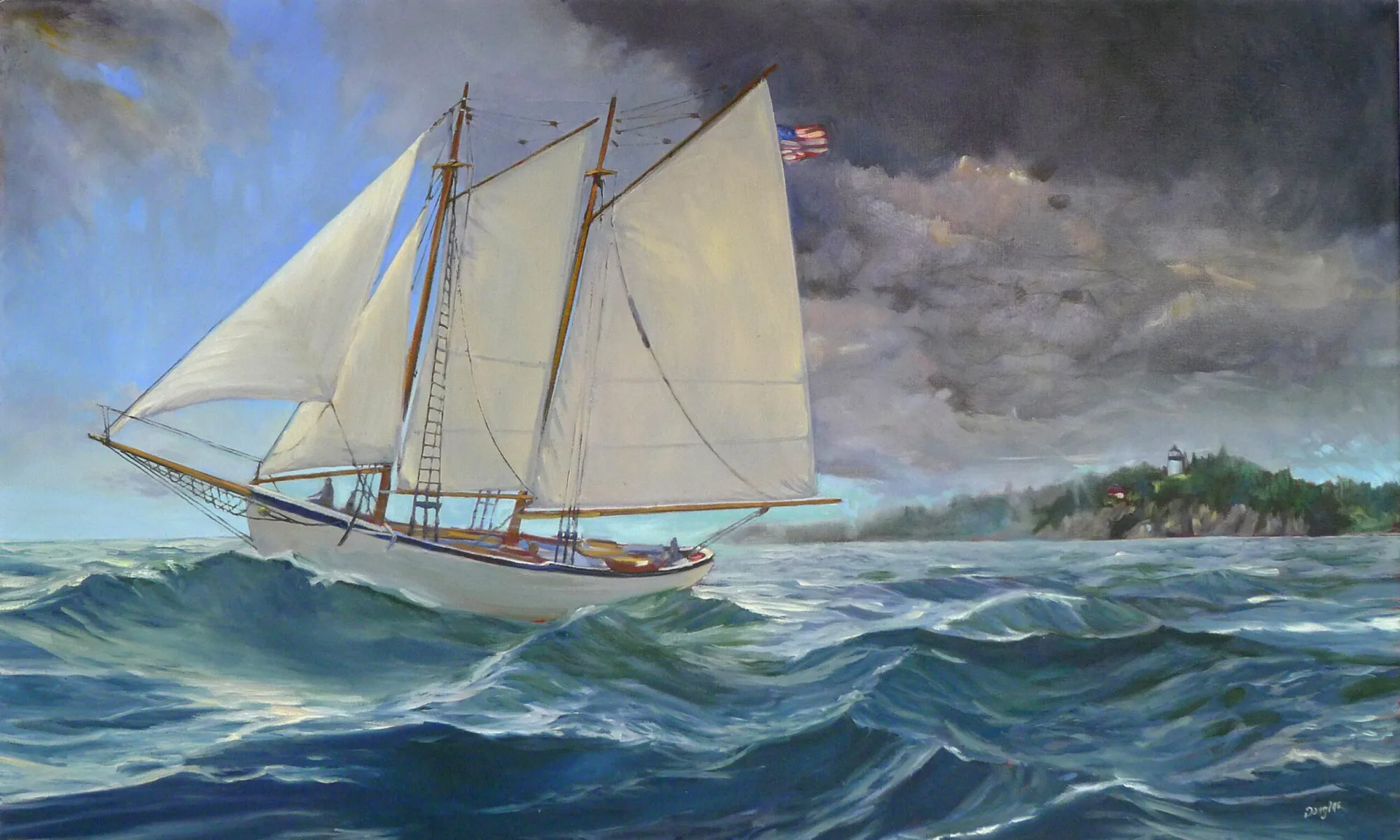
Breaking Storm, oil on linen, 30X48, $5579 framed includes shipping and handling in continental US.

Stop buying more paint

You don’t need three trays of watercolors or 40 tubes of oil paint to make great color. In fact, that just stops you from learning color theory. That’s why I suggest paired primaries, which are just a warm and cool version of each primary. I augment them with a few earth pigments because they’re cheap and versatile, and (in solid media) white. Mixing within them teaches you, whereas buying lots of paint just impoverishes you.

Buying more paint can be a form of flailing around. It can be displacement behavior; it’s simply easier than buckling down, especially when what’s on your easel isn’t going well.

Step back and look

There’s a maxim that a painting should compel from thirty feet, three feet, and three inches. That just means it needs to draw you in from across the room and hold your interest once you’re close. It’s amazing how different a painting looks from a few feet away. Up close, a passage can look and feel like a struggle to the death. From a distance, it’s just a patch of color in either the right or wrong place.

Make stepping back part of your rhythm. If, say, you’re standing on a cliff and you can’t back up, take a photo on your phone. That creates an emotional distance that’s almost as useful.

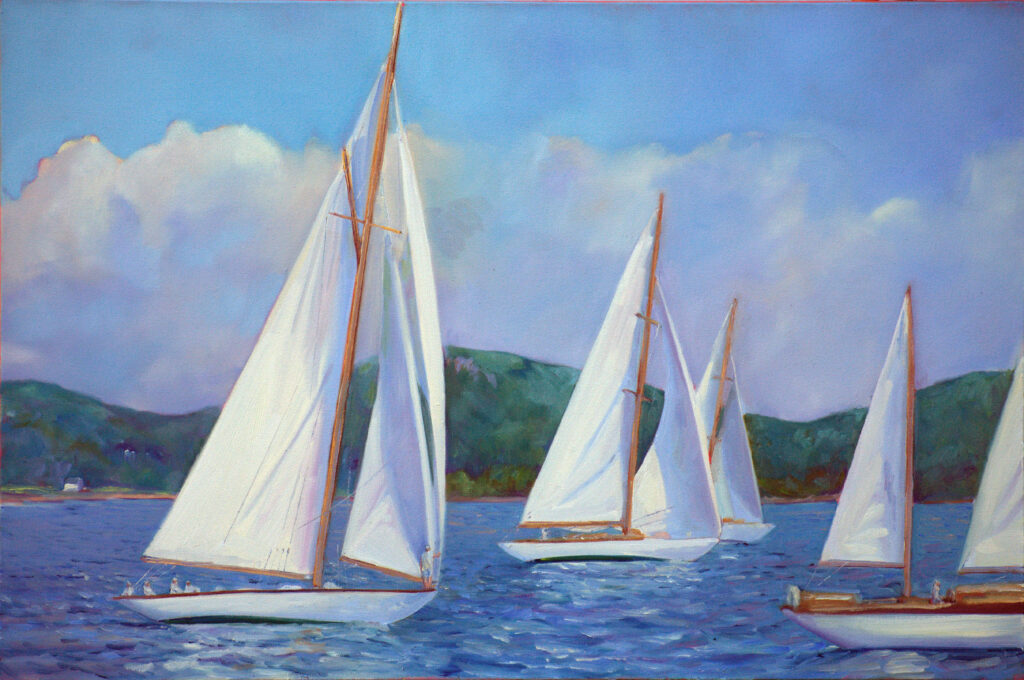
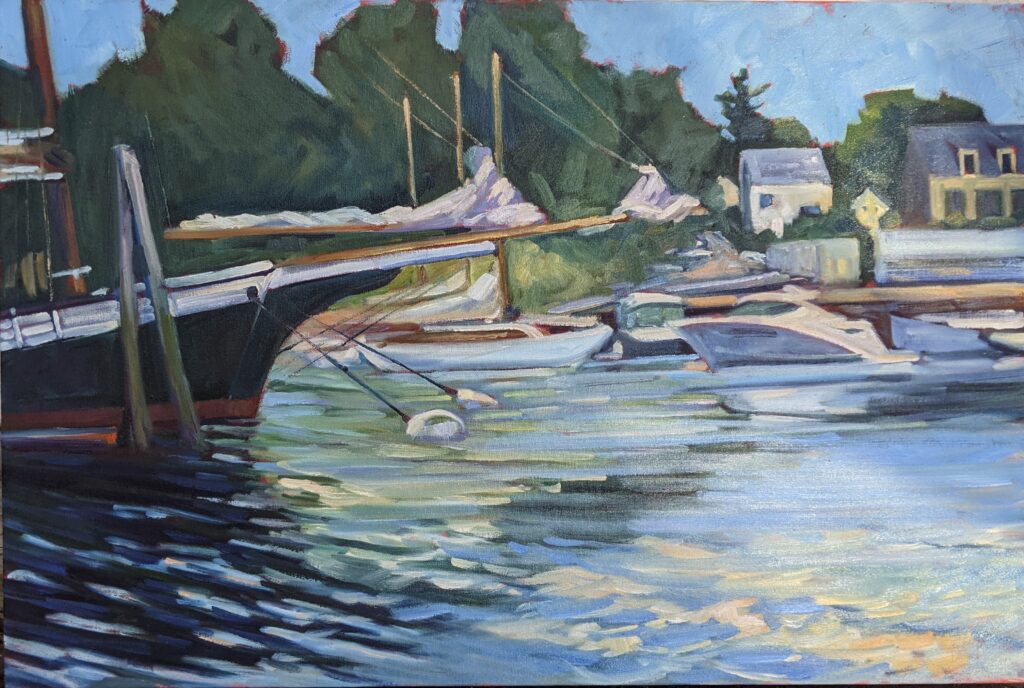
Camden Harbor, Midsummer, oil on canvas, 24X36 $3188 includes shipping in continental US.

Simplify, simplify

Every painting ought to be a distillation of a truth, not a transcript of an event. Ask yourself, what is the story? Then edit out the extraneous detail that doesn’t support it. If your painting is about an old house, don’t get lost in the weeds. If your painting is about those blackberry brambles, don’t get lost in the house’s trim.

Those are decisions that should be made in the composition phase. Everything irrelevant should be subservient to the point you’re trying to convey.

Paint more

Skill doesn’t arrive like a thunderclap. It grows, one session at a time. You can read, talk, and think about art all day long, but there’s no substitute for time in front of a canvas. Twenty minutes of focused drawing or painting will move you forward faster than hours of browsing. Set your alarm early tomorrow and paint something small. You’ll surprise yourself. That’s why daily paint challenges are so helpful; they get us moving even when we don’t feel like it.

Improving as a painter isn’t about waiting for inspiration or reinventing your technique. It’s about building better habits, right now, with what you already have.

So go ahead—squint, simplify, mix from a smaller palette, step back, and paint more often. Those five small choices will do more for your art than any magic brush ever could.

Five plein air challenges to make you a better painter

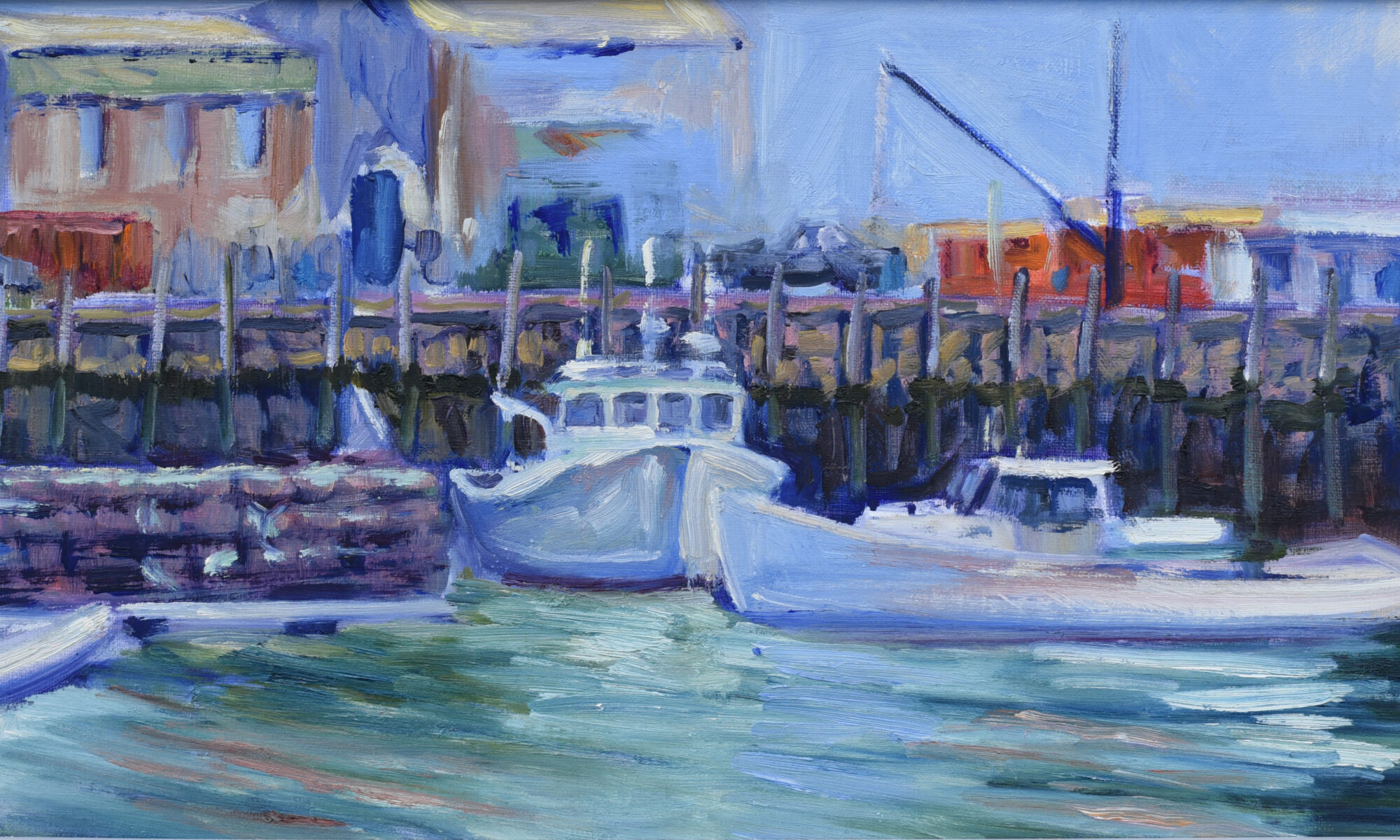
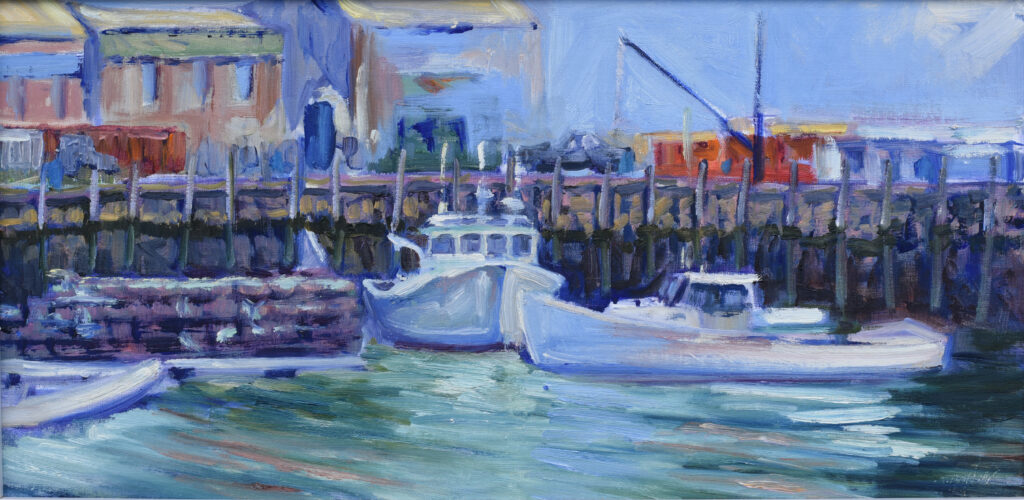
Lobster Wharf, 8X16, oil on archival linenboard, framed, $903 includes shipping and handling in continental US.

Here are five plein air challenges that will help us all loosen up for the summer painting season. Enjoy!

1. Limited Palette Challenge

Objective: Use a limited palette of only three five colors plus white.

In oils (or other solid media:

In watercolor:

Benefits: This challenge forces us to focus on color mixing, understand color relationships, and create harmony in our paintings. It also helps improve our ability to convey light and atmosphere with a simplified color range.

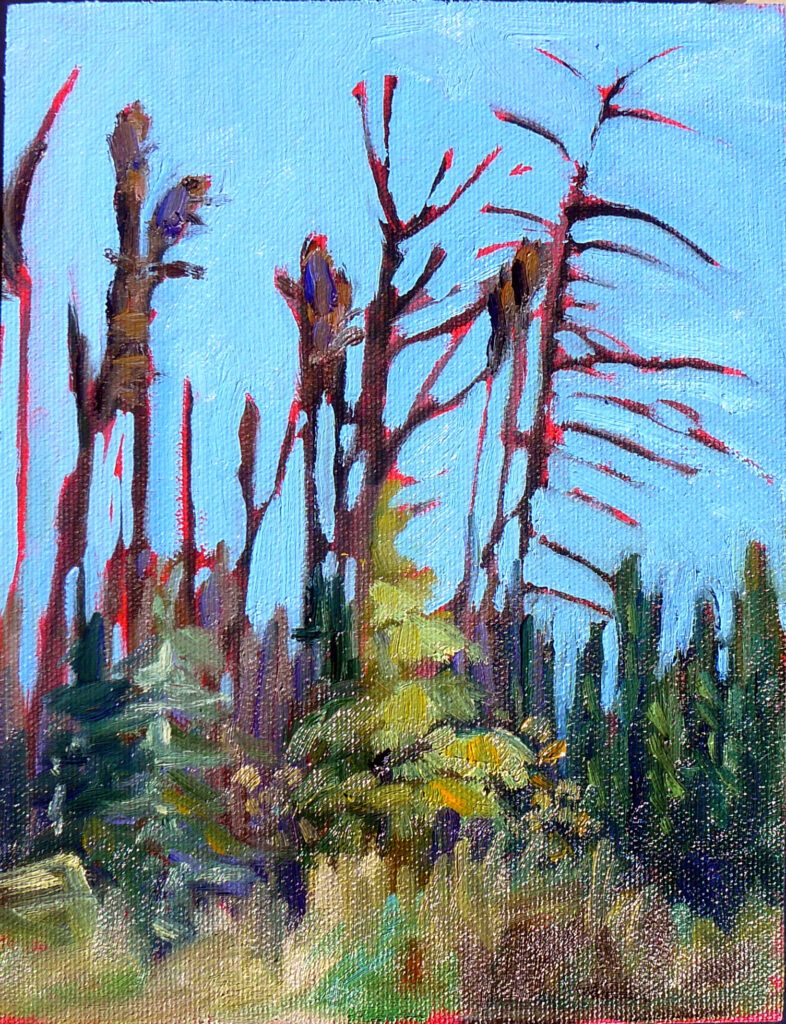
Regrowth and regeneration (Borrow Pit #4), 6X8, oil on archival canvasboard, $348 includes shipping and handling in continental US.

2. Time Constraint Challenge

Objective: Complete a painting in under an hour. Then do the same subject again in under thirty minutes.

Benefits: Working quickly encourages decisive decisions and helps us capture the essence of the scene without overworking.

3. Different Times of Day Challenge

Objective: Paint the same scene at different times of the day (morning, midday, evening).

Benefits: This challenge enhances our observation skills and understanding of how light changes throughout the day. It teaches us to depict different lighting conditions, shadows, and atmospheric effects.

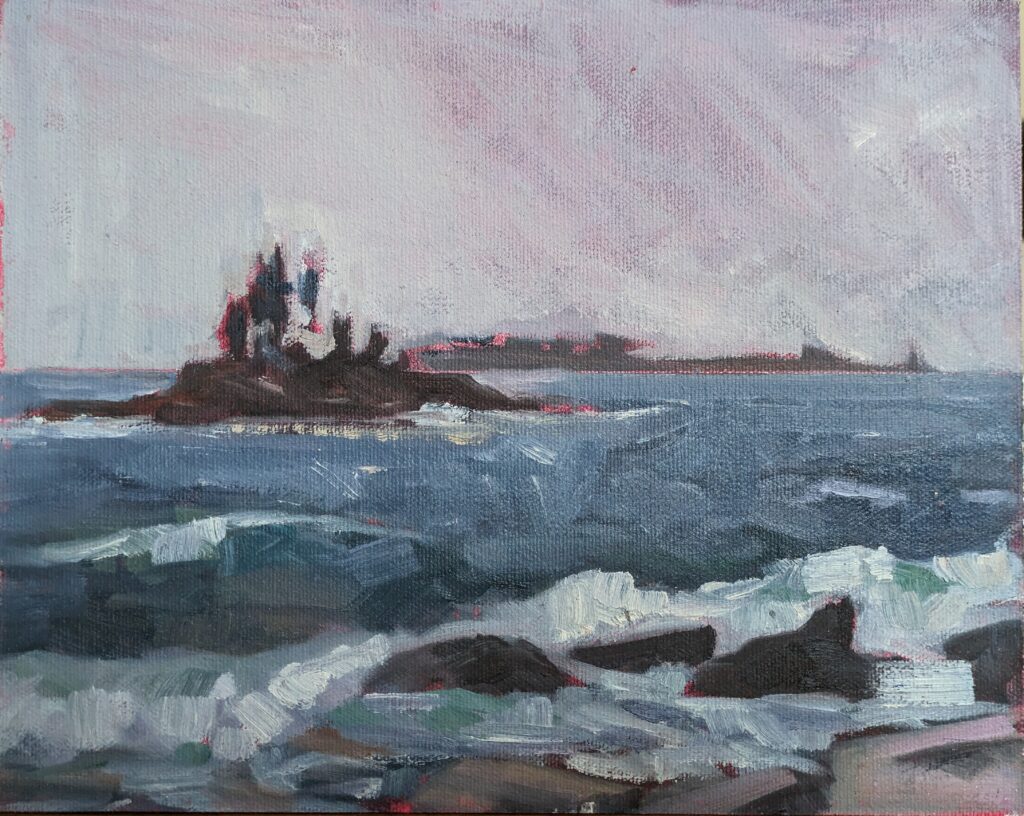
Brooding Skies, 8X10, oil on archival canvasboard, $522

4. Weather Conditions Challenge

Objective: Paint the same scene in sunny, rainy, and/or cloudy conditions. (As they say, if you don’t like the weather, wait fifteen minutes.)

Benefits: Painting under different weather conditions pushes us to adapt to the changing environment and learn to represent different atmospheres and moods.

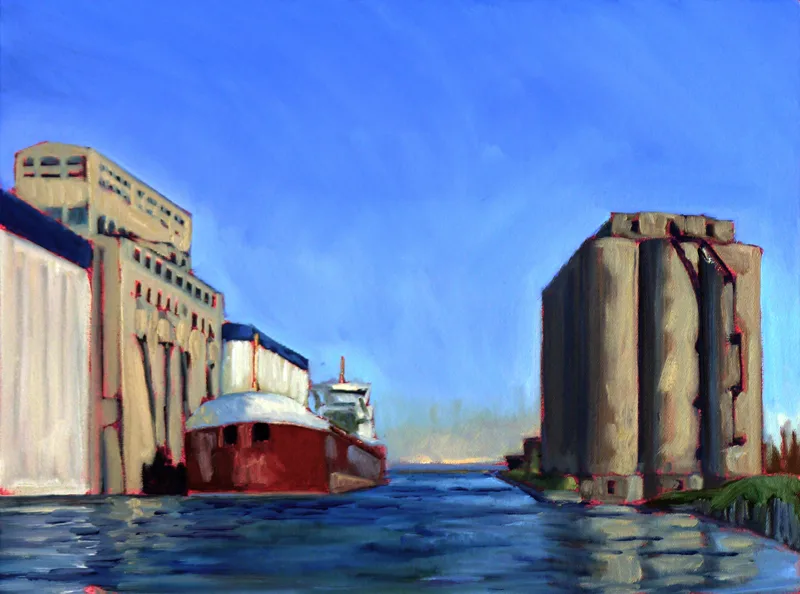
“Thunder Bay Freighter,” Thunder Bay, Ontario

5. Same scene, different subjects

Objective: After choosing your view, paint two different studies focusing on two different subjects within that view. If there’s something in the view that you’d typically shy away from, try making it a focal point. (Except trash; nobody wants to look at trash.)

Benefits: This discourages us from trying to cram everything into a painting. It forces us to spend more time on composition.

Some quick tips for success

If you haven’t already done so, it’s time to set up your kit for summer. One of my resolutions for this year is to repack my kit every time I get home from a session, rather than fussing with it in the morning when I should be painting.

Spend time sitting with your scene before you start painting. The more you look, the better you’ll paint.

Consistency is key. The more you paint, the easier it gets. Don’t get discouraged; think of every painting, good or bad, as a learning opportunity.

Assuming all went well, I got back to Boston last night from my lovely, long, blister-inducing hike. Laura should still be running the office. Just email me as usual if you have questions or problems registering for a class or workshop. (Who am I kidding? She fixes all that stuff anyway.)

Registration is now open for workshops in 2026! Reserve your spot:

Can’t commit to a full workshop? Work online at your own pace:

Seven Protocols for Successful Oil Painters

Let’s talk limited palette

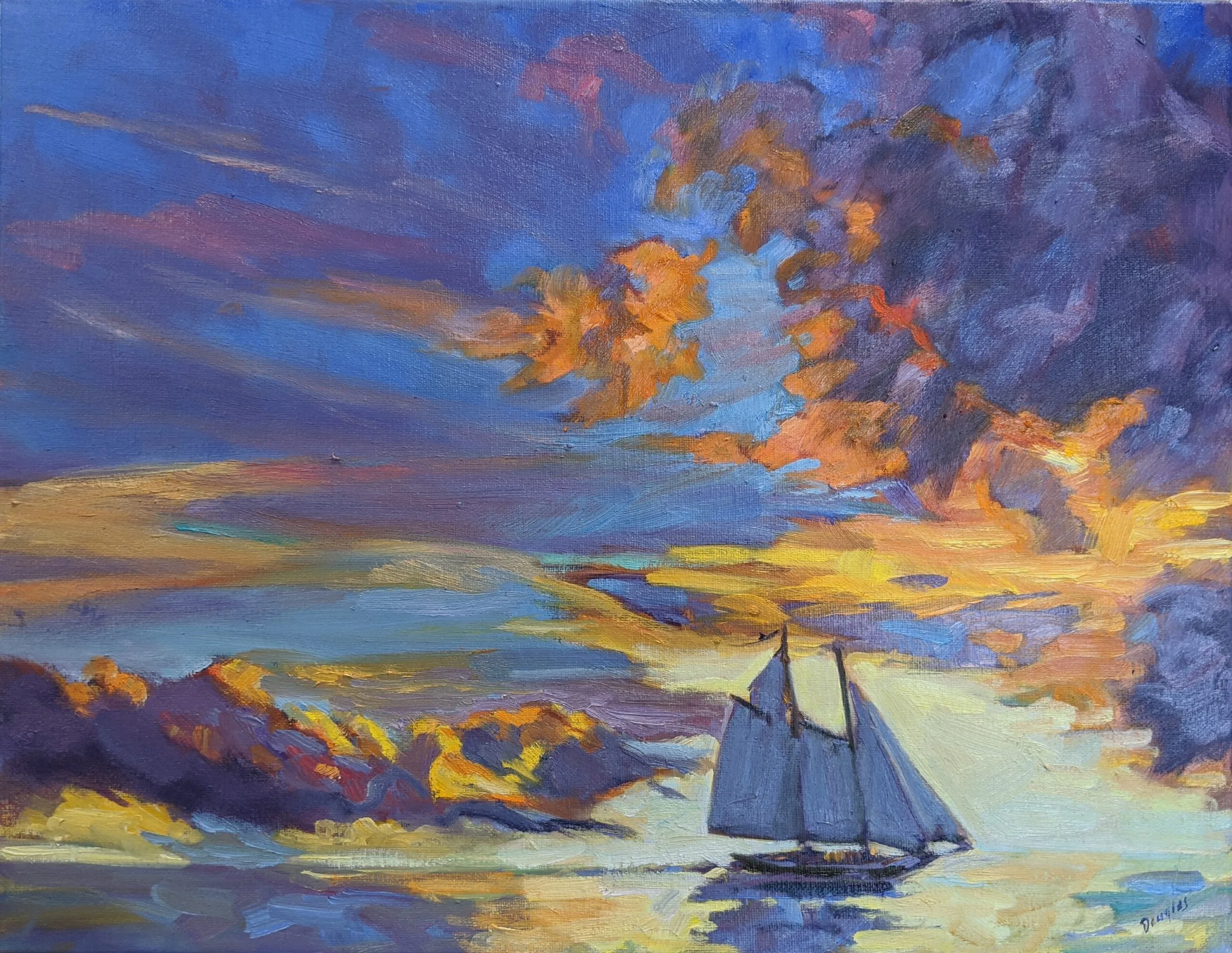
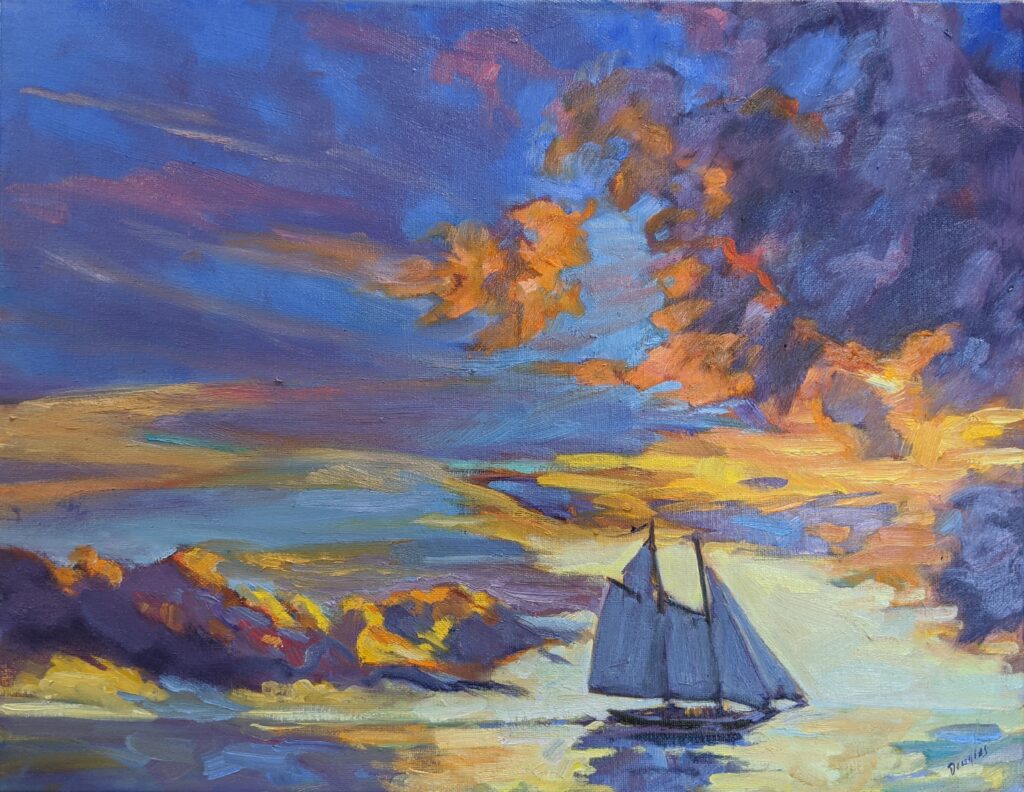
Sunset sail, 14X18, oil on linen, $1594 framed includes shipping and handling in the continental US.

Last week I mailed a small sample of paints to a student in South Carolina. She was frustrated with her paints and I was equally frustrated watching her try and fail to hit color notes. What I sent her was a simple, primary-color limited palette: QoR brand Ultramarine Blue, Nickel Azo Yellow, and Quinacridone Magenta. This is what she did with them:

A color chart done with just three pigments: ultramarine blue, nickel-azo yellow, and quinacridone magenta.

There are disadvantages to limited palette-for example D. couldn’t hit a brilliant green because the red tones in her blue and yellow partially cancel out green. (I’ve explained that in greater depth here.) But the range she did hit is amazing.

Quality, please

You’re far better off with a high-pigment-load, professional-quality limited palette than a dozen badly-chosen paints. Yes, I know the lure of the bargain bin at the art store, but those pigments are in there because they’re unnecessary or, worse, useless.

Sometimes you’ll read rapturous nonsense about pigments. For example, cobalt violet is sometimes described as “deep, richly glowing, and unmatchable by mixing.” I like the color but not enough to bypass my desire to avoid metal pigments wherever possible. Cobalt violet has a lovely weightiness in oils, but it’s hardly unmatchable. In fact, D. did it in the second column from the right, with just magenta and blue.

Clary Hill Blueberry Barrens, watercolor on Yupo, ~24X36, $3985 framed includes shipping and handling in continental US.

Tastes differ

I like my paint to be able to hit intensely saturated colors, because you can always kill chroma, but you can never intensify it. A more traditional palette, like my Winsor & Newton field kit, never seems brilliant enough. It has convenience mixes like Sap Green and Payne’s Grey, along with umbers and alizarin crimson. Those colors cannot compete with knockout 20th century pigments. When I weigh the convenience of sliding a palette in my pocket vs. having the colors I want, I invariably come down on the side of more color.

Autumn Farm, Evening Blues, oil on canvasboard, $1449 framed includes shipping and handling in continental US.

I’ve observed that the more experienced I get, the less stuff I buy. I know what I need, and I’m not tempted to deviate. Having said that, I recently updated my supply lists to replace Prussian blue with phthalo blue. Their color profiles are very similar, but phthalo is just a little clearer than Prussian. The downside is that phthalo is a more heavily-staining pigment. But after dithering for years, I’ve finally decided that clarity outweighs staining. Of course, both are excellent pigments, and can easily substitute for each other (except in acrylic, where Prussian blue is not available).

I make my supply lists for watercolors, oils, pastels, acrylic and gouache freely available to my readers (although this is copyrighted material; you don’t have permission to appropriate them and pass them off as your own). These are paired primary palettes with limited earths added, just because they’re cheap and useful. I have an entire cabinet of samples, gifts and bad purchases myself; I never touch any of them. These pigments are sufficient.

Registration is now open for workshops in 2026! Reserve your spot:

Can’t commit to a full workshop? Work online at your own pace:
Seven Protocols for Successful Oil Painters