I recommend hog bristle brushes for oil painters, but recently my friend and student Jeanne-Marie told me she couldn’t get them at her local art store. “There’s a worldwide shortage of hog bristle brushes,” she told me. It turns out she’s absolutely right.
Hog bristle brushes really are getting harder to find. To understand why, you have to look far beyond the art supply aisle.
Where hog bristle actually comes from
The stiff, springy hairs that make a good oil painting brush usually come from hogs raised in northern China, where cold climates produce the strong, resilient bristles prized by artists. These hairs—often called Chungking bristle—are sorted, cleaned, and bundled before being shipped to brush makers around the world.
China produces the vast majority of the world’s natural hog bristle; estimates run as high as 80% of global supply. That concentration means any disruption ripples through the entire brush market.
Disease, farming shifts, and shrinking supply
African swine fever devastated pig populations in China, reducing the country’s hog herd dramatically and cutting the supply of usable bristle. Some estimates suggest the herd fell by about 40% during the epidemic, which pushed bristle prices sharply upward.
Even after herds recovered, the market never quite returned to normal. Pig farming changed, supply chains tightened, and the amount of high-quality brush hair remained limited. In recent years, exports have dropped by more than 12%, tightening the market for manufacturers who depend on those bristles. If you’re a brush maker, that meant an unpleasant choice: raise prices or compromise on materials. Or both.
When demand rises but quality falls
The shortage isn’t just felt by painters. Hog hair is also used in cosmetic brushes and industrial products, which increases competition for the same raw material. The demand for cosmetic brushes has increased significantly (thanks, Mary). This growth is driven by rising interest in professional-grade, high-quality brushes, social media-driven makeup trends and growing consumer awareness of beauty hygiene.
When demand rises and supply shrinks, manufacturers sometimes resort to blending in lower-grade bristle or shortening the hair bundles. That can produce brushes that feel scratchier, lose their shape sooner and splaying more quickly.
Some artists report that modern bristle brushes simply aren’t as durable or consistent as older ones they’ve kept for years.
If you have a fine hog bristle brush, care for it carefully. Above all, keep it clean.
The rise of synthetic alternatives
Some modern synthetics claim to mimic the stiffness and paint-holding capacity of hog bristle, though I’ve yet to meet one that replaces the spring and stiffness of Chungking bristle brushes. For painters who love muscular brushwork, especially in alla prima oil painting, hog bristle remains the gold standard.
What painters should do
In practical terms, the shortage means a few things for working artists:
- Buy good brushes when you find them.
- Take better care of the ones you have.
- Be open to trying synthetics for certain tasks.
Mostly, this shortage is a reminder that painting materials are part of a much larger world of agriculture, manufacturing, and global trade. The pigments, canvas, linen and brushes you use are all products that start in the natural world. Your humble brush has traveled a long way to reach your studio.
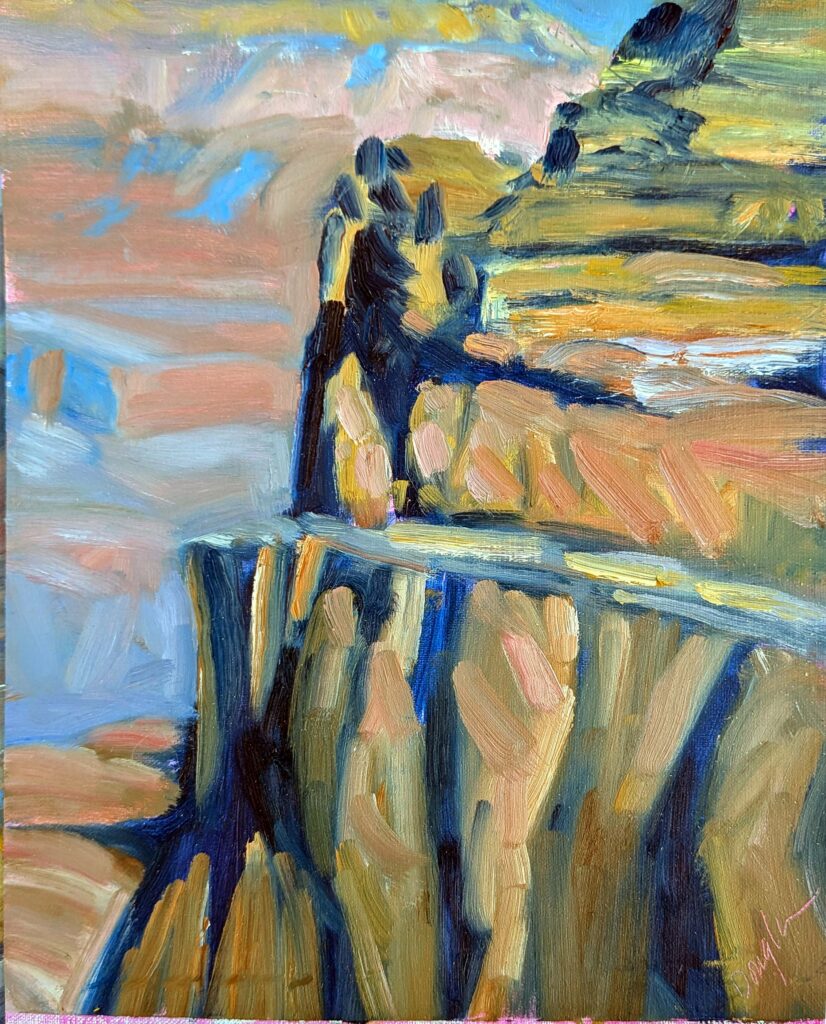
I have just two workshops left in 2026! Reserve your spot:
- New! Color Clinic 2026 | Rockport, ME, October 3-4, 2026
- New! Composition Week 2026 | Rockport, ME, October 5-9, 2026
- High-Desert Light & Monumental Form | Sedona, AZ, Apr 26, 2027 – Apr 30, 2027
Can’t commit to a full workshop? Work online at your own pace:
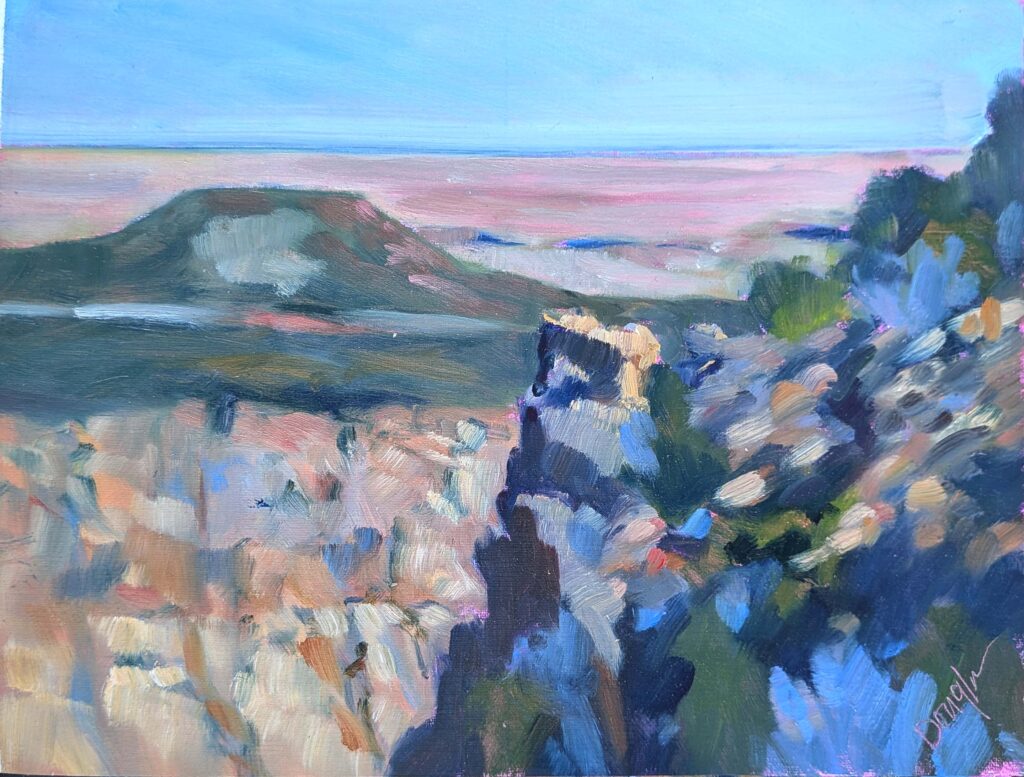
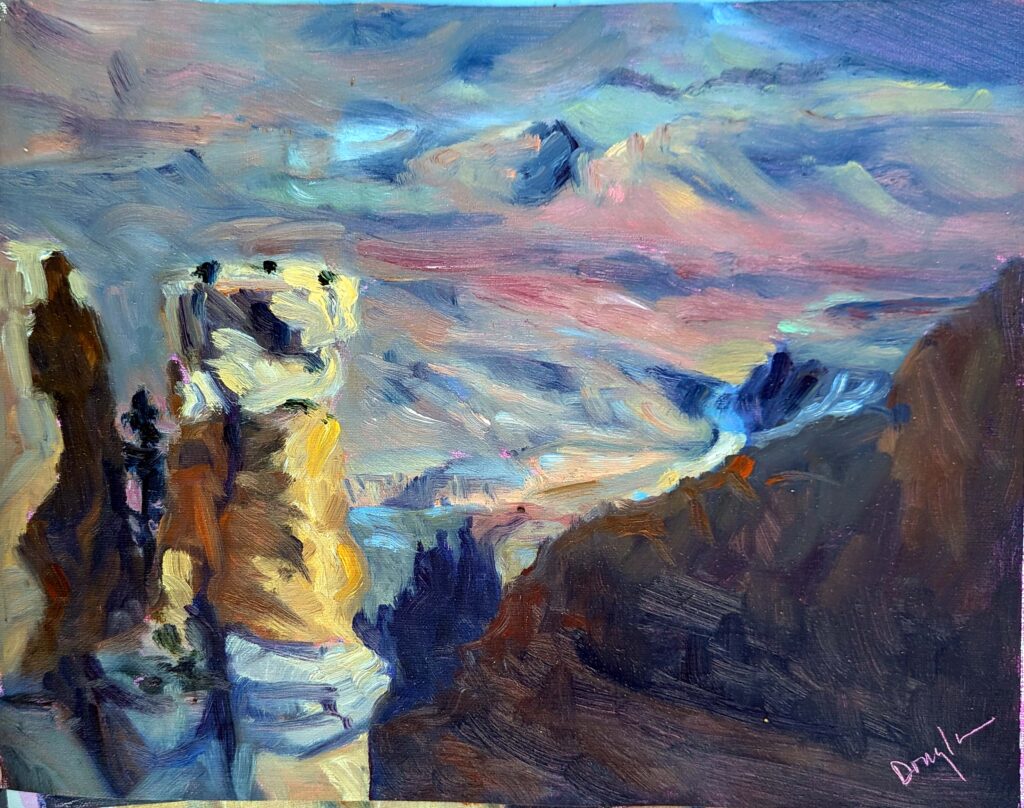
The Desert View painting’s horizon line is so captivating and balanced with the foreground. It must have been thrilling to be there, painting, painting, painting!
I find it the most difficult and interesting place to paint, because all the normal realities are suspended, and the scale of creation and time are visible. I particularly loved the Desert View overlook because the canyon is narrowing towards the Painted Desert. I’ll try to return there to work for a quick day or two as long as Sedona Art Center wants me back!
Thank you.
I am so glad I learned early from you to take good care of my brushes. I’m still painting with most of my Robert Simmons hog bristle brushes that are 17 years old, and my Princeton brushes that are at least 10 years old. The secret to maintaining them, IMO, is use solvent or oil to loosen the pigment and wash with a soap that doesn’t strip the oil out of the bristles. I’ve actually been using a locally produced liquid saddle soap to clean my brushes for close to 10 years with great results. And I agree that natural bristle brushes work better for oil. Synthetic brushes just don’t hold the paint in the same way.
Thank you, Sandy.
Wow!! Love ” Moran Point”. Spectacular!! It captures the scale of the grandeur so well. My eyes really move from the foreground, miles away down the canyon, and back. Some day i hope to get to paint there myself!!
Thank you, Jen!
I really hope you have that opportunity, Jen.
Thank you for your kind comment.
I don’t know if these are the brushes you are referring to but Utrecht seems to have them. https://www.utrechtart.com/products/utrecht-rhenish-pure-hog-bristle-brushes/
I think it varies by manufacturer, Amy, but thank you for the link.