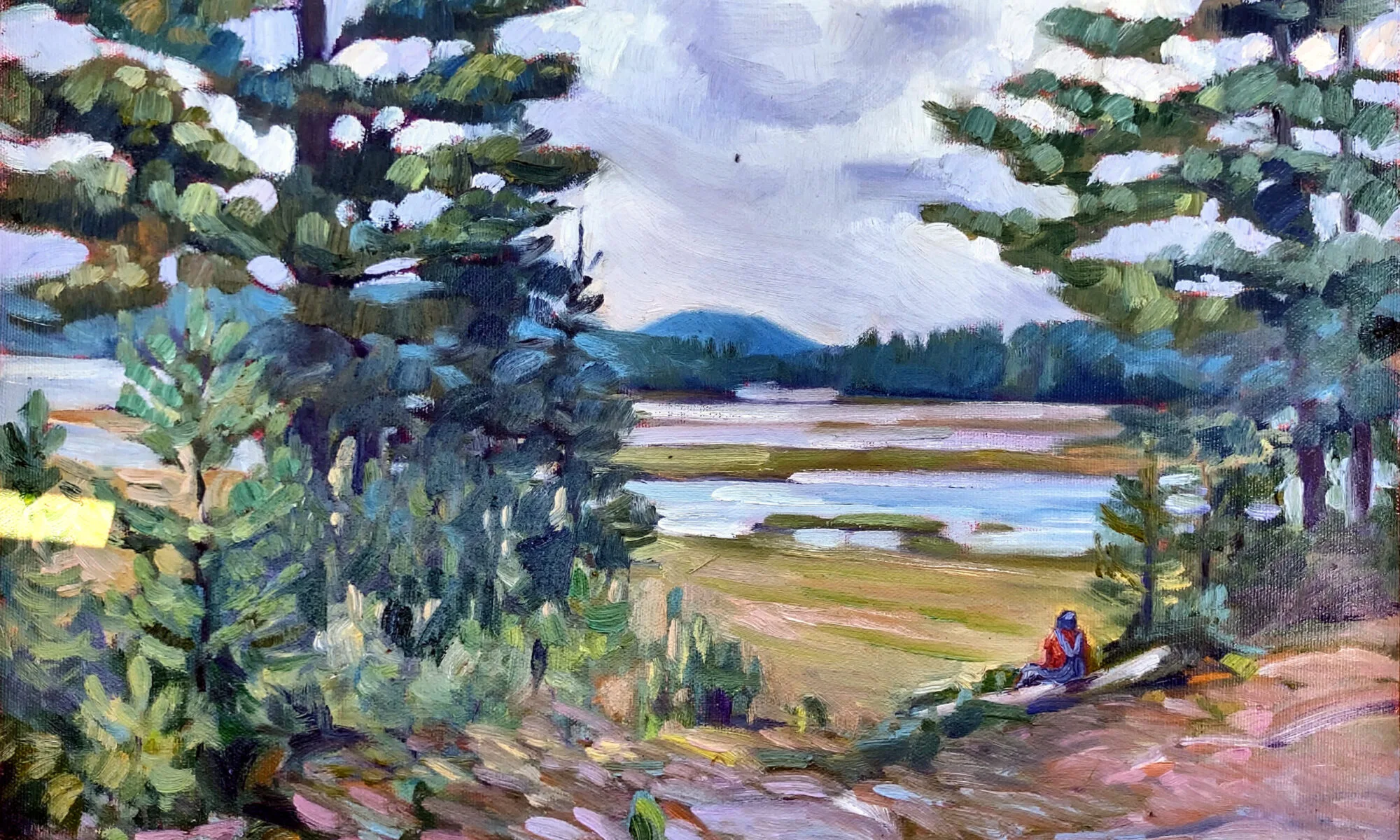
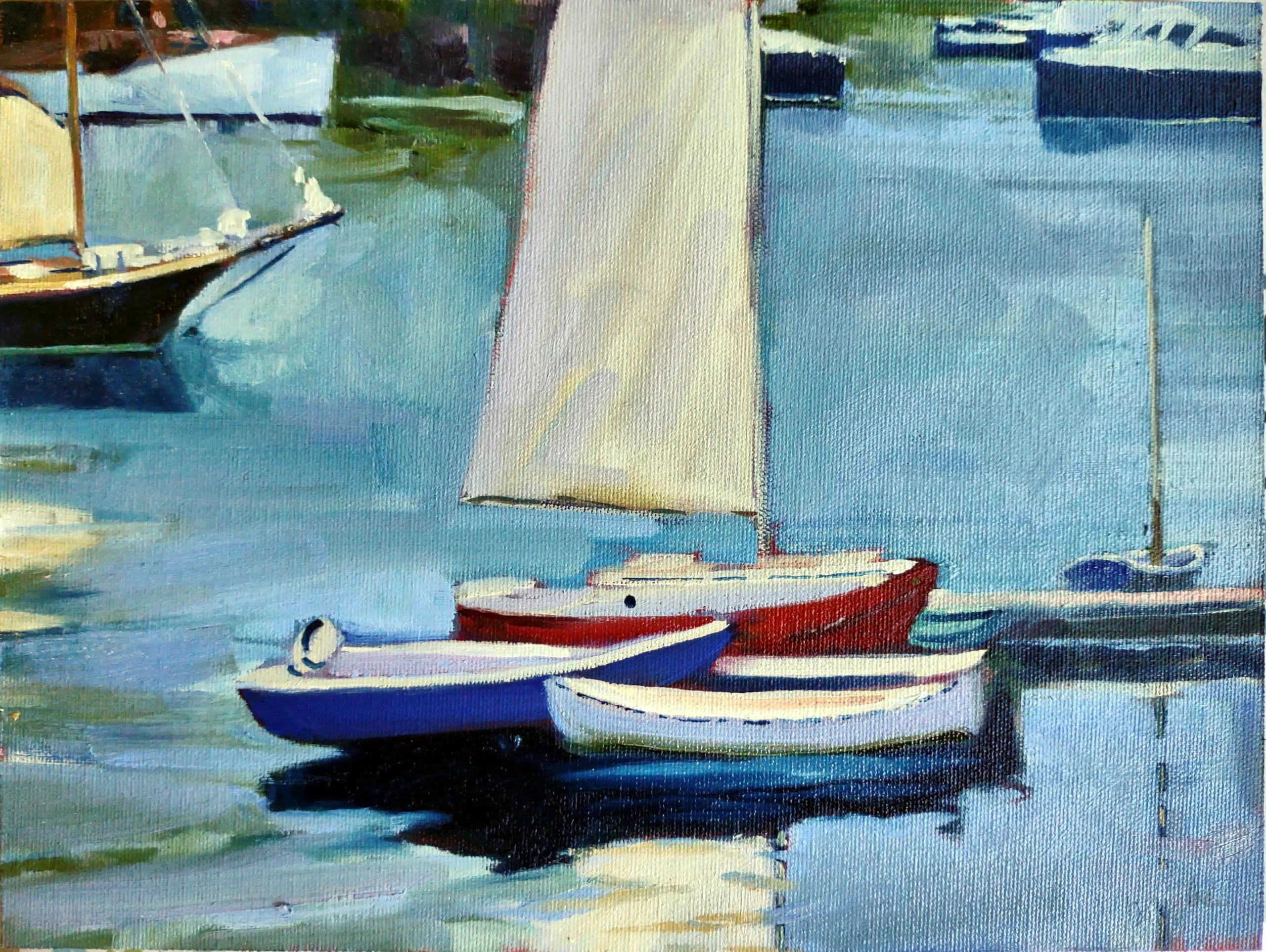
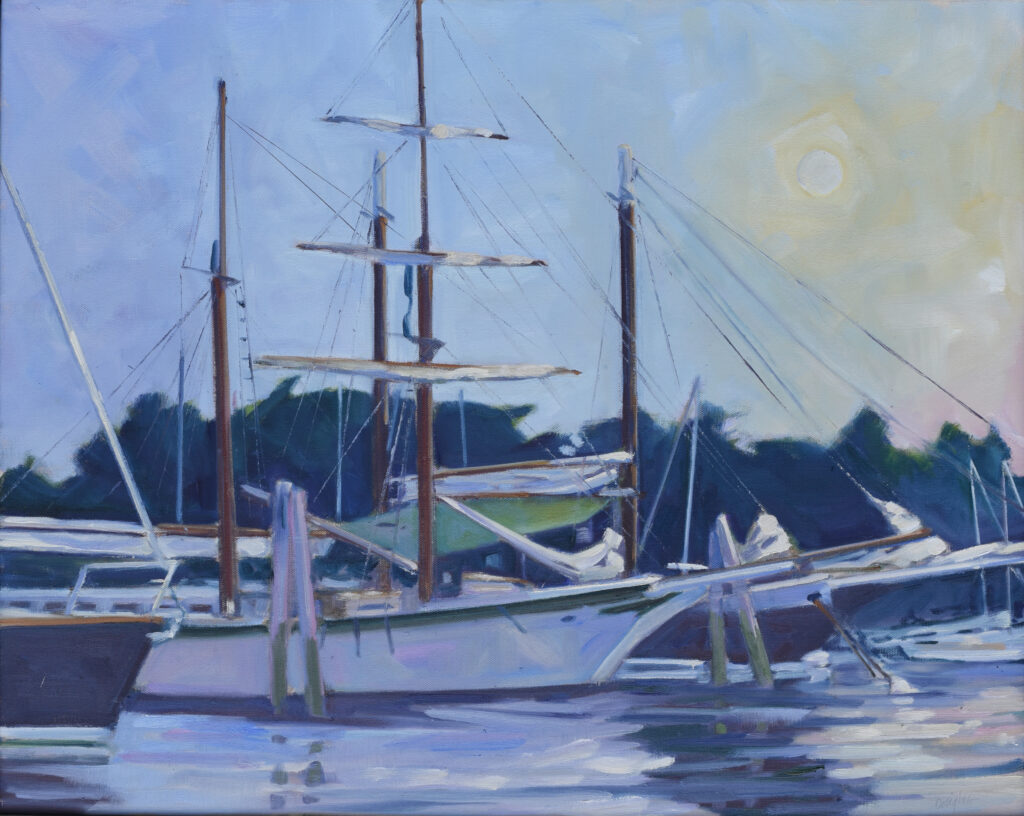
I close out my local painting workshops with student shows in my own gallery (and wish I could do that everywhere I teach). Student gallery shows are about far more than just hanging paintings on the wall. Many of my students are professionals; for them, gallery shows are old hat. But for others, the leap from easel to gallery is mysterious. What does it feel like to have work hung with intention? How do others respond when they see your vision in a professional setting, rather than just propped up somewhere?
Why does work look different in a gallery?
On the easel, a painting lives in the context of wet brushes, dirty rags and the rush of choices you’ve been making in real time. You’ve been staring at it for hours, judging every brushstroke and second-guessing every passage. It feels like an extension of your tired head: intimate, unfinished, maybe even uncertain.
But in a gallery show? Suddenly your painting is scrubbed up and dressed for company. It lives independently of you. It hangs against clean (hopefully) walls with space around it. It’s no longer just something you’re working on. It’s a complete statement, a thing to be contemplated. Sometimes that means it has attributes and meaning you the creator never expected. Strangers stop, look, and give it the attention you couldn’t afford when you were wrestling with it.
That change of setting is immensely clarifying. Sometimes you’re astonished by how strong your painting looks in a gallery. Other times, you see where it wobbles. Either way, the gallery strips away the clutter and distraction of process and lets the painting speak for itself.
That’s why it’s so important to get your work out of the studio and onto a wall. A painting isn’t truly finished until it’s in the world, doing the job it was meant to do: communicating with viewers.
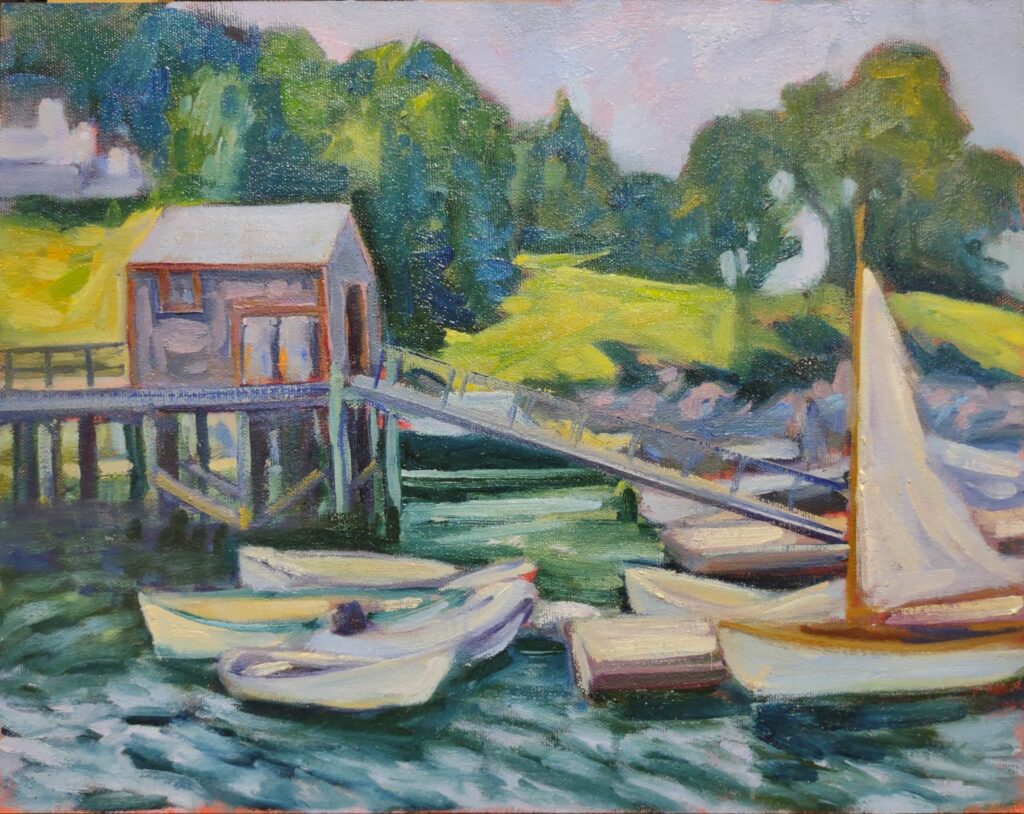
A student show is more than just critique
I believe in reasoned, intelligent critique. It’s critical not just for the painting under discussion but for developing your executive function as an artist.
In critique, the audience is small, sympathetic and hopefully knowledgeable. Critique is about growth, not display. It’s a safe place to experiment, fall short and try again.
A gallery show, on the other hand, is about putting your work in front of people who don’t know your process or your struggle. They don’t care how many times you scraped out that sky; they just respond to what’s on the wall.
Critique is rehearsal. The show is performance. You need both in your life as a developing artist.
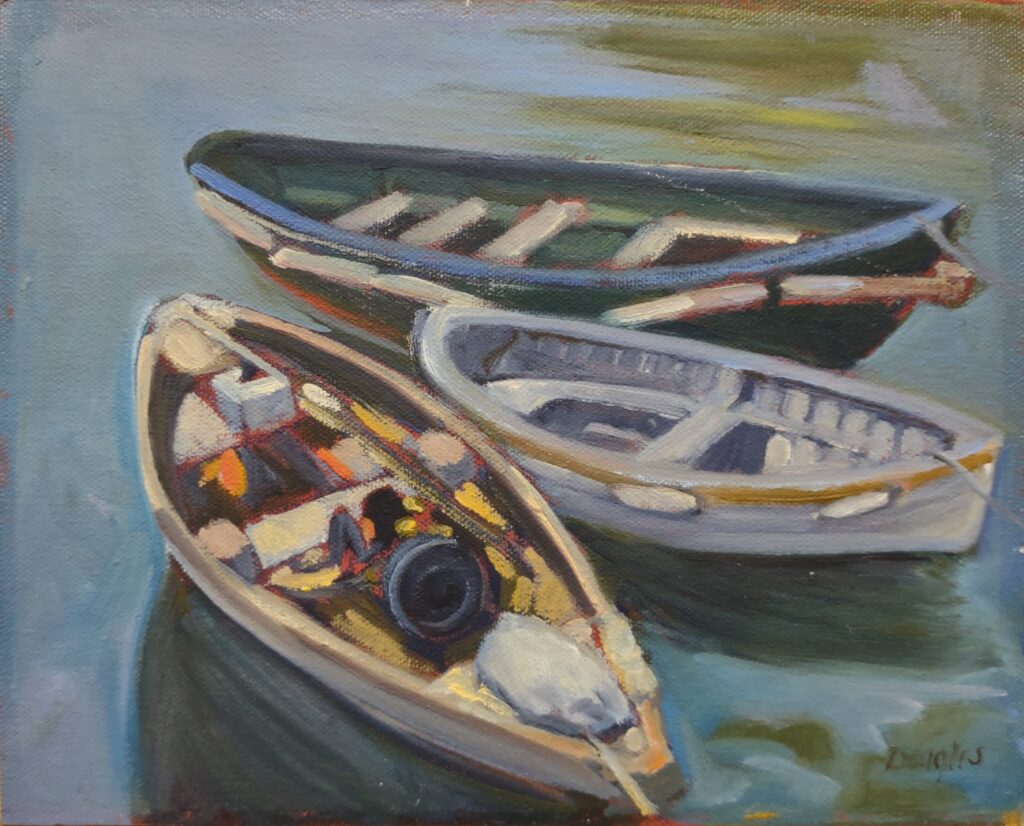
And then there’s the opening itself. I gave up cooking 24 years ago, but I can serve hors d’oeuvres with the best of them. An opening is a party to which all your besties are invited. Standing in my gallery, you will discover an essential truth: art isn’t complete until it’s seen. That tells us something I can’t predict, which is the public’s emotional response to your art.
Want that experience for yourself? Join me for my upcoming immersive plein air workshop in Rockport, ME, which will culminate in seeing your own work on my gallery walls.