

Truthiness was the Word of the Year in 2005, but it really should be the word of the first quarter of this century. That’s especially true where AI images are concerned. “A hotel in North Conway [NH] just opened,” a student texted me. “In their photo deck was a stock image with the stock numbers still attached. The accompanying text encouraged tourists to come see the elk frolicking in winter in New Hampshire.”
Elk have a vast range that includes central Asia through Siberia, east Asia and North America. However, the ones from New England are extinct. Elk were briefly, unsuccessfully introduced to New Hampshire in the 1950s. There are none in the wild, although there are lots of other fascinating beasts, including moose, deer, black bears, beavers, bobcats and foxes.
No visitor is going to chance upon an elk while hiking in the New Hampshire woods. Furthermore, that poor imaginary animal is the victim of extreme social-media body-image pressure. He’s severely underweight for a bull elk. And, while we’re on the subject, that’s awfully languid water for the Granite State.
My student recognized this as fraudulent because she’s a New Hampshire native. But someone who comes from elsewhere expecting to see elk frolicking at Lake Winnipesaukee will be mighty cheesed off.

As of late 2025, approximately 30-33% of ad creatives were built or enhanced using generative AI, a figure projected to rise to nearly 40% in 2026. Separate data indicates that up to 71% of all images shared on social media may be AI-generated.
Truth vs. Truthiness
Truthiness is the feeling that something is true. The term was popularized by Stephen Colbert to describe claims that sound right, align with our beliefs or flatter our instincts without being supported by evidence.

Truthiness relies on intuition, emotion and, above all, repetition. It’s persuasive rather than accurate. Nothing is truthier than AI imagery. I hate to bring up politics, but do you remember the brief period when the internet was flooded with AI images of Joe Biden and Donald Trump buddying up? They were so warm and fuzzy that no informed voter could have believed them, but they played on our longing for human connection, civility and normality.
AI imagery borrows the language of reality without the substance, just as truthiness in rhetoric does.

But aren’t artists already practicing truthiness?
A statement is objectively true when it accurately describes how things actually are. We immediately think of scientific (measurable evidence) truth, but truth may also be moral, ethical or emotional. That’s why we have the concept of absolute truth, which is objective (exists whether or not you believe it), universal (applies everywhere, not just in a particular culture or era) and unchanging.
Truth remains true even if it’s unpopular, inconvenient, or boring. And that’s the artist’s job, even when he or she uses imagination to express it.
I have just two workshops left in 2026! Reserve your spot:
- New! Color Clinic 2026 | Rockport, ME, October 3-4, 2026
- New! Composition Week 2026 | Rockport, ME, October 5-9, 2026
- High-Desert Light & Monumental Form | Sedona, AZ, Apr 26, 2027 – Apr 30, 2027
Can’t commit to a full workshop? Work online at your own pace:
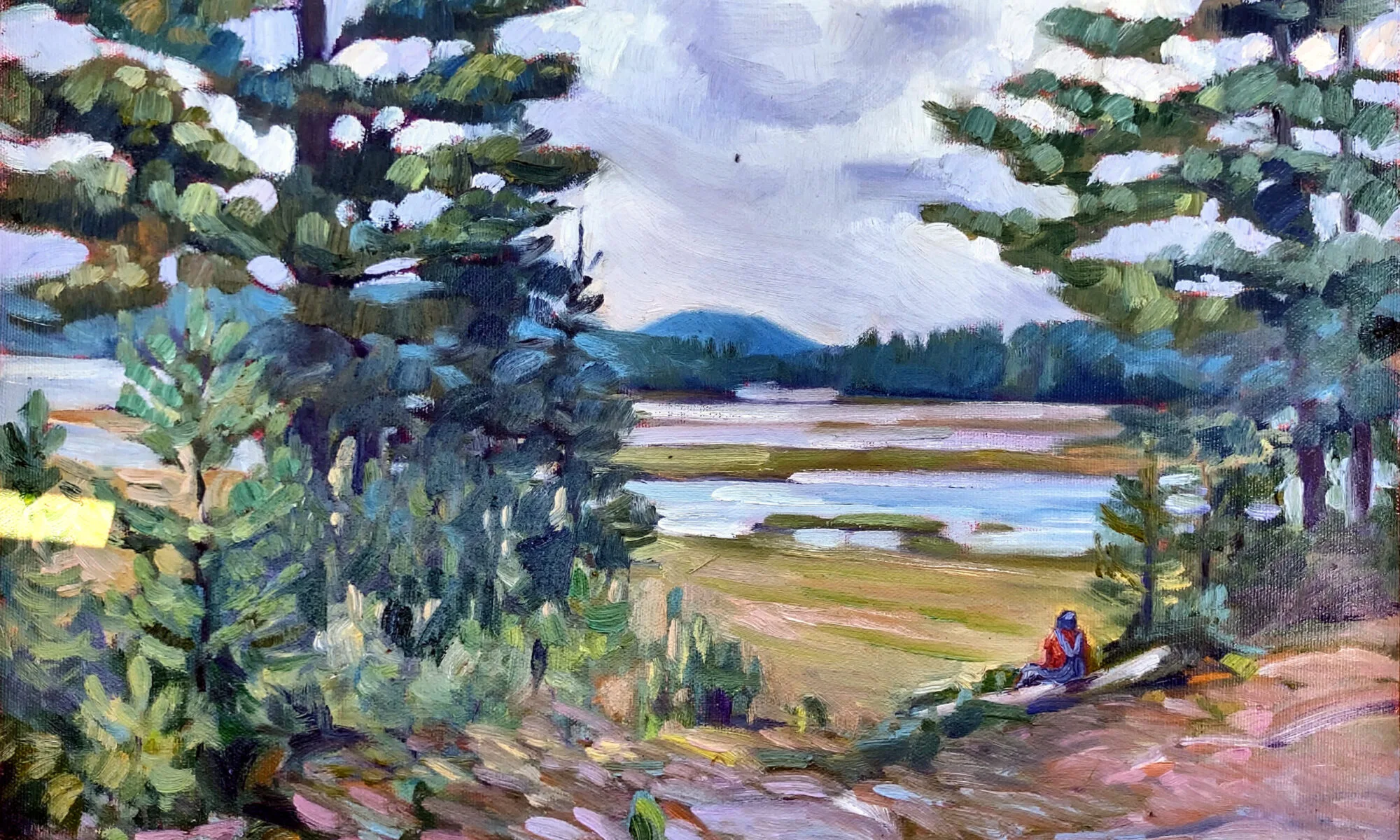
I’ll put the “truth” of my painting up against any AI any day of the week. At least there’s a human involved.
So much AI imagery would be improved if a human actually engaged his or her brain while directing the computers.
Ah but it would still be AI no matter how many finger prints are on it. I am wondering if this just gets worse or evens out to being a little more honest. One can hope right?
The cynic in me thinks there’s always the potential to get worse. 😕